 F2P · Live
Lineage 2
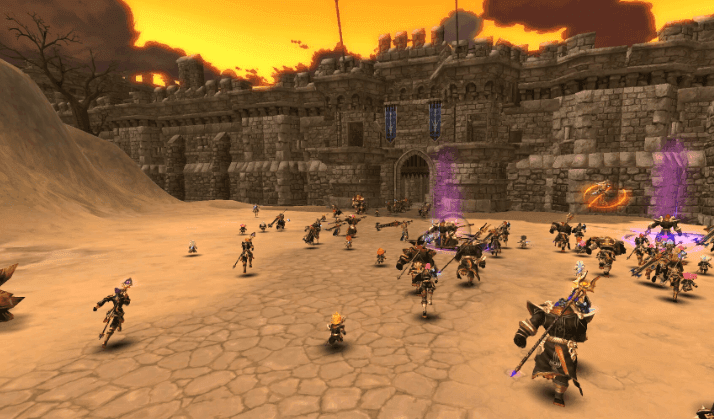
Aden's castles never stay in the same hands for long, and Lineage II has built an entire twenty-three-year…
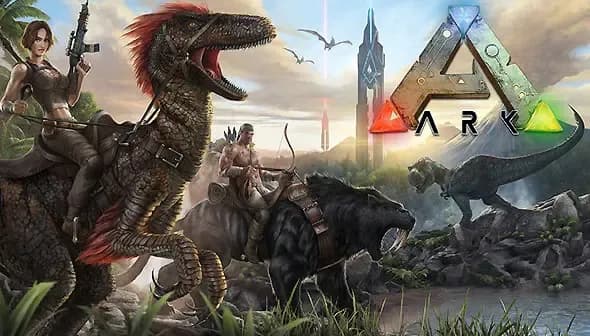
Released by Studio Wildcard in 2017, ARK: Survival Evolved puts players on a prehistoric island where taming, breeding, and riding over a hundred dinosaur species is the key to surviving alongside the...
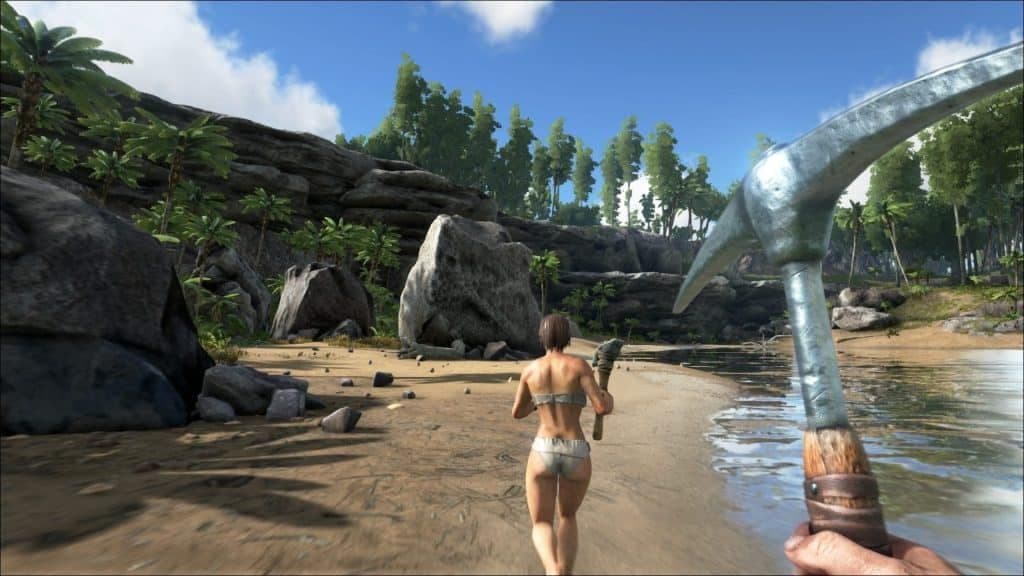
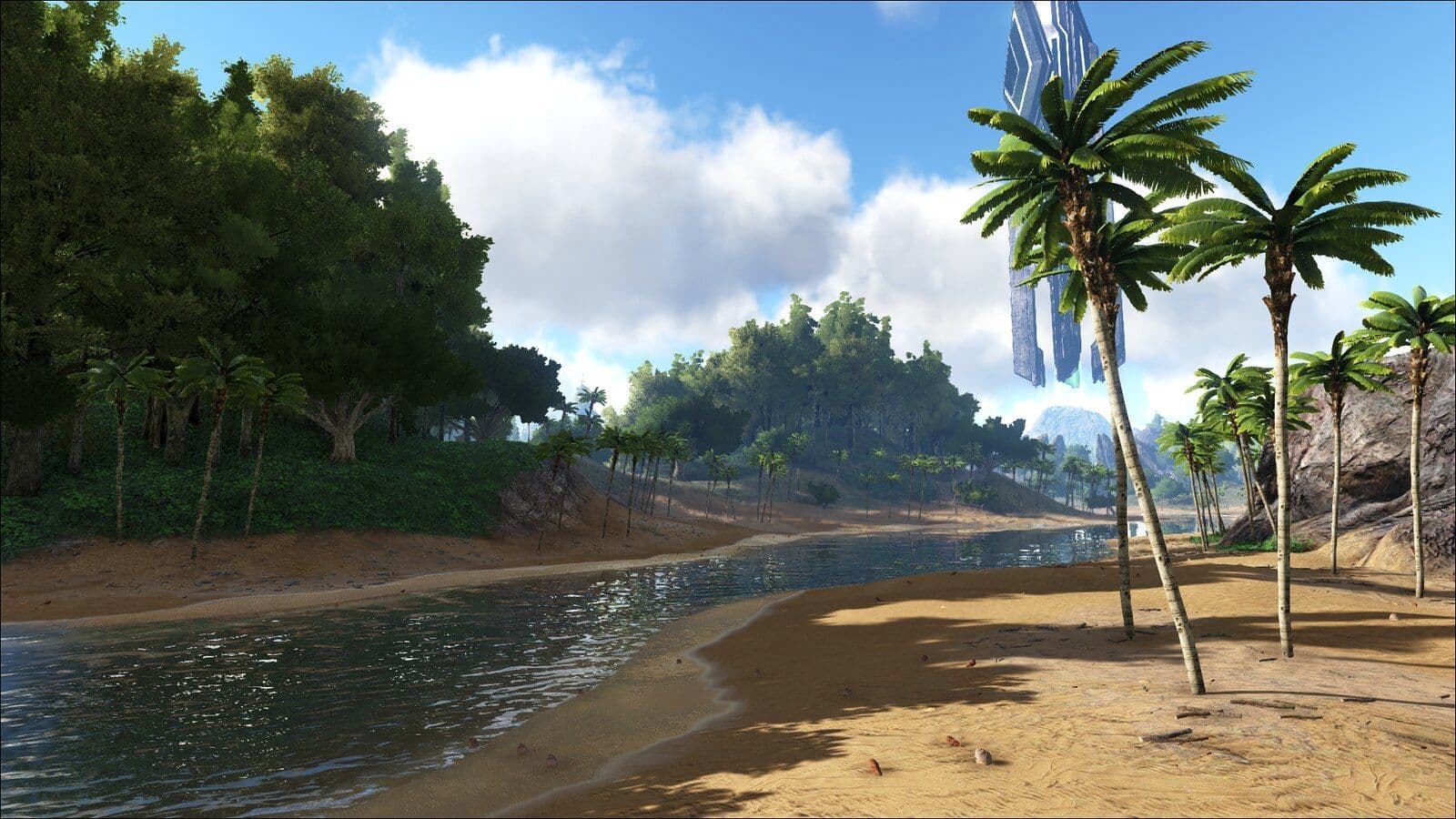
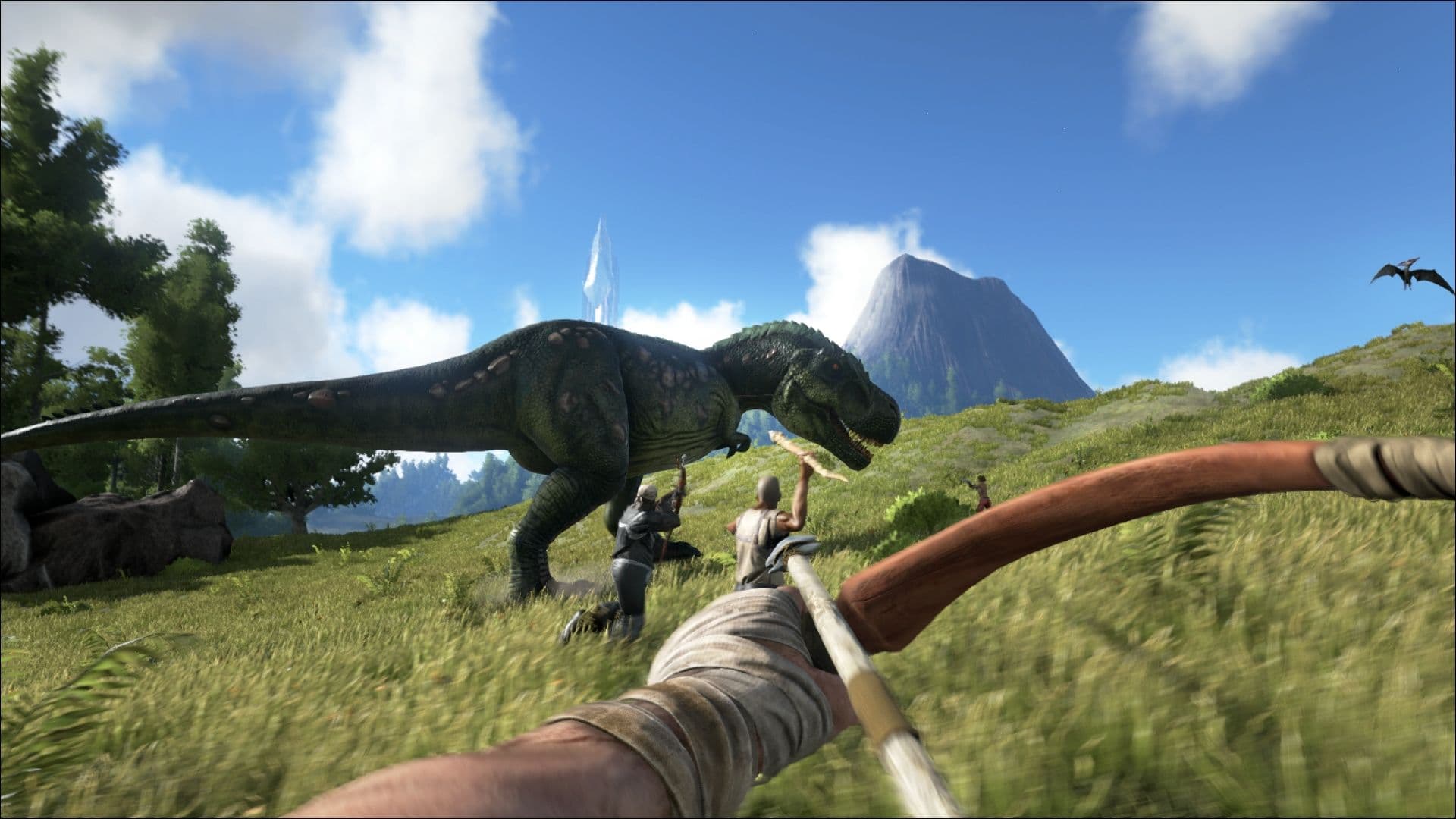
ARK: Survival Evolved is a dinosaur survival game from Studio Wildcard, built with support from Instinct Games and Efecto Studios and released on August 27, 2017 after two years in Early Access. It drops players naked on a prehistoric island and asks them to tame, build, and fight their way up a food chain that includes over a hundred tameable creatures, running on Unreal Engine 4. Nine years later, the game is technically a legacy product — its official servers are gone, and Studio Wildcard's attention has shifted to a paid remaster — but a stable player base still logs in every day, on their own terms.
Quick take: ARK: Survival Evolved is still one of the deepest taming-and-building sandboxes on the market, and its low price makes it an easy recommendation for solo play or a small private server. Just go in knowing the official server infrastructure closed in 2023, and that the newer ARK: Survival Ascended is a separate, full-price purchase rather than a free upgrade.
On a populated PvP cluster, the moment that defines ARK isn't the first tame or the first base — it's the night someone else's tribe decides your walls are worth breaching. Attackers plant C4 or fire rockets at a load-bearing pillar, and if the structure integrity check fails, an entire wing of the base can collapse in seconds. Death here means losing almost everything carried: a raided tribe can watch weeks of gear vanish into someone else's storage box before the sun comes up. It's full-loot, open-world PvP in the oldest, least forgiving sense of the term, and a single bad night can undo dozens of hours of progress. There's no built-in offline raid protection on official-style rule sets — a base is just as vulnerable while its owners are asleep as it is while they're watching, which is exactly why so much of the endgame revolves around scheduling defenses around real-world sleep patterns rather than in-game ones.
Tribes exist because none of this is survivable alone. A group pools tamed creatures, shared storage, and defensive turrets, and splits admin permissions so a raid doesn't require every member to be logged in at once. On PvE servers the same structure exists purely for convenience — cooperative taming runs, shared crafting benches — but on PvP clusters, a tribe is closer to a standing army than a guild, and going it solo against an organized group is close to a death sentence.
ARK's version of endgame group content is the boss fight: summon a creature like the Broodmother, the Megapithecus, or a corrupted dragon by feeding a sacrificial altar the right combination of rare resources, then bring a prepared team of players and high-level tames into an arena to bring it down. There's no matchmaking and no difficulty slider in the traditional sense — the fight scales with the resources sacrificed, and going in underprepared usually means a wipe. Clearing a boss typically unlocks travel to the next map in the game's Explorer Note storyline, which gives these fights a structural purpose beyond loot. On official-style rule sets a defeated boss also awards Tekgrams — recipes for the game's highest tier of gear, permanently unavailable through any other means, which is the real reason organized tribes keep grinding the same fights long after the loot itself stops mattering.
None of that matters on day one, when a fresh character wakes up with nothing but bare hands and a hunger meter. The first few minutes are punching trees for wood and rocks for flint, crafting a stone axe and pick from a blueprint list, then racing to build a fire before the temperature drops. Hunger, thirst, and body temperature are tracked constantly and honestly — ignore any of the three for too long and a character can die from something as mundane as a cold night, long before a raptor ever gets close.
Progression runs on experience levels and a system called Engrams: crafting recipes unlocked one at a time as the character levels up, and remembered permanently even after death. There are no fixed classes. A player can spend points on gathering tools one hour and building components the next, reshaping their role on the fly as long as the points hold out. On default settings, a character's own level caps out a bit past a hundred; everything above that comes from gear and tamed creatures rather than raw stats.
Where a new survivor starts depends entirely on the map: The Island opens on a temperate beach, Scorched Earth drops players into open desert where an unshaded midday can cook a character alive, and Aberration begins in toxic underground tunnels where the normal survival rules barely apply and even basic movement has to be relearned. Picking a different map is close to picking a different opening act for the same game, which is one reason returning players tend to rotate through maps rather than replaying the same one repeatedly.
Taming is ARK's real signature mechanic, and almost nothing else in the game works without it. Wild creatures have to be knocked unconscious first — with a blunt weapon, a tranquilizer dart, or bare fists on something small enough — then fed the specific food type that species prefers while a taming meter fills. A small herbivore can be tamed in five minutes; a large predator can eat an entire evening, and feeding it the wrong item resets progress. Over a hundred creature species can be tamed, and once tamed, a creature can gather resources, carry cargo, fight on command, or simply serve as transportation, with different species built for different jobs.
Breeding takes this further: tamed creatures can be paired to produce offspring through a recombinant inheritance system, with eggs or live birth depending on the species. Veteran breeders spend weeks isolating perfect stat lines and hunting for beneficial mutations, but a newcomer only needs one reasonably competent gatherer to make early survival noticeably easier.
Structures snap together piece by piece — foundations, walls, ramps, gates — and the game runs an honest load-bearing check on them: destroy the wrong support and an entire section can come down. Everything degrades with use and needs repair, and bases can be painted, tagged with hand-drawn signs, and decorated well past the point of pure function. Crafted items also roll a quality tier at the moment of creation, climbing from Primitive through Ramshackle, Apprentice, Journeyman, and Mastercraft up to Ascendant, so the same blueprint for the same rifle can come out mediocre or exceptional depending on luck and the crafting station used.
Later game systems add generators, wiring, industrial forges, and automated turrets with adjustable aggression settings, turning a wooden shelter into something closer to a small factory. There's a slower, non-violent path too — planting crops, watering and fertilizing them, and cooking the harvest into meals and tonics — which lets a player progress through most of the early game without hunting a single creature, a genuinely unusual option in a genre built around killing wildlife for parts.
For a committed subset of the community, breeding and stat optimization effectively become a second game layered on top of the first. Dedicated breeding servers exist purely to trade high-stat lines, and some tribes run multi-generation projects the way other games run guild raids — a slow, deliberate hobby rather than a combat loop.
The Island, the original launch map, is just one of roughly ten now available. Some arrived as paid expansions — Scorched Earth swaps the temperate island for a desert with sandstorms and no open water, Aberration drops players into a radioactive underground labyrinth where flying creatures don't work at all — while others, like Ragnarok, Valguero, and Fjordur, were added free over time. A separate procedural generation mode builds an entirely new archipelago from stock biome pieces on request, so no two runs need look the same.
Underground and underwater cave systems function as ARK's closest equivalent to dungeons, each demanding specific gear to survive heat, cold, or radiation before the artifacts and rare resources inside are worth the trip. Explorer Notes scattered across every map slowly assemble a shared backstory about the island's creators, culminating in the Genesis story arc, where actor David Tennant voices a major supporting role. The lore is never delivered through cutscenes or dialogue trees — it's collected in fragments, which suits a sandbox but won't satisfy anyone expecting a cinematic narrative.
Unreal Engine 4 circa 2017 is not a subtle thing to look at in 2026 — animations can be stiff, foliage pop-in is common on lower settings, and traversal on foot feels slow until a flying or fast-running tame enters the picture. None of that has changed with age, and it's worth setting expectations accordingly before buying. What has aged better is the hardware requirement: eight gigabytes of RAM and a GTX 670-class card are still listed as minimum specs, numbers that were already modest by 2017 standards and now make the game an easy fit for a laptop that would struggle with almost anything newer.
Console and mobile versions share the same underlying systems as the PC edition but run their own update schedule and monetization rules, and they typically lag behind PC on new content. That's a separate consideration from the server shutdowns above — someone buying on Switch or mobile today is buying into a build that will keep receiving less attention than the PC version, independent of which servers happen to be open.
Yes, for a specific kind of player: someone who wants deep taming and building systems, doesn't mind dated visuals, and is comfortable choosing between single-player, a private server with friends, or a community-run cluster instead of an official one. Studio Wildcard shut down the official PC, PlayStation, and Xbox servers on September 29, 2023, when the Unreal Engine 5 remaster ARK: Survival Ascended launched as a separate paid product rather than a free upgrade — official Nintendo Switch servers followed on August 31, 2026, closing out the last first-party infrastructure the original ever had. Single-player and unofficial servers were never affected, and that's where the current player base lives now.
The numbers back up the "still alive" half of that answer. Concurrent Steam players typically run somewhere in the 12,000 to 20,000 range on any given day, a solid figure for a game this old, and recent Steam reviews sit in Very Positive territory. What's less reassuring is the studio's newest paid content: a tenth-anniversary underwater expansion called Aquatica launched in July 2025 to a 13% positive rating on Steam, after players ran into broken saves, reset settings, and mod incompatibilities that hit people who hadn't even bought the DLC. One player with roughly 35,000 hours logged in ARK posted a scathing negative review over the issue — a rare case of the complaint coming from someone who effectively lives in the game rather than a casual buyer. Studio Wildcard acknowledged the mess and promised fixes, but the incident is a reasonable argument for waiting on reviews before buying any future ARK expansion on day one.
ARK's PC version ships with Steam Workshop support and a modding toolkit built on Unreal Engine, and a decade of community work has produced everything from quality-of-life tweaks like Structures Plus to full total conversions. Primitive+ strips the tech tree down to a pre-industrial cap with no firearms or electricity, while mods like Primal Fear add entirely new boss creatures and progression branches on top of the base game. That modding scene is a big part of why some players stick with the original instead of moving to the remaster — not every major community project has made the jump to the newer engine yet.
Unofficial clusters vary considerably in the rules they run: some triple or quadruple resource rates for a faster pace, others cap the number of structures per tribe or protect new players for their first day on the server. Reading a server's rules before committing time to it matters more here than in most multiplayer games, since the difference between clusters can be as large as the difference between ARK and an entirely different survival game.
Newer names have entered the taming-and-survival space since 2017 — Palworld brought a friendlier, more automated take on creature collection, and Enshrouded leaned into a tighter, more curated survival loop — but neither one tried to match ARK's raw scope: the sheer creature count, the breeding depth, or the number of finished maps available at once. Most competitors chose a more compact, welcoming format instead, which has left ARK's specific promise — spend a hundred hours figuring it out yourself — with surprisingly little direct competition.
No, not in the traditional sense. ARK: Survival Evolved is Buy-to-Play with a one-time purchase and separately sold map expansions; there's no subscription, no loot box currency, and nothing in the storefront that raises a character's stats or grants exclusive combat power. The closest thing to an advantage-for-money argument is server choice itself — some unofficial clusters run boosted rates that make progression faster than official rates ever were — but that's a server administrator's decision, not a purchase Studio Wildcard sells directly.
No. It's a paid, Buy-to-Play title currently listed at $14.99, with additional paid map expansions sold separately or bundled together at a discount.
No. Official servers closed on PC, PlayStation, and Xbox in September 2023, and on Nintendo Switch in August 2026. Single-player, private servers, and community-run unofficial clusters remain available on every platform.
That depends on priorities: Survival Evolved is cheaper, has a decade of mods behind it, and runs on lighter hardware, while Ascended offers current-generation visuals and active studio support but costs more and launched with less content than the original eventually accumulated.
Yes. Single-player and non-dedicated sessions include the full taming, building, and story content, and difficulty settings can be adjusted freely without any PvP risk from other players.
Ten years on, the fairest way to describe ARK: Survival Evolved is as a well-maintained ruin: the official city gates are closed, but the streets inside are still standing, still populated, and still worth walking through if the visuals don't scare you off. Anyone chasing the newest tech or a studio-backed live service should look at Ascended instead. Anyone who just wants the deepest taming sandbox in the genre, at a fraction of a modern game's price, will find the original still open for business — provided they're willing to pick their own front door.