 F2P · Live
Lineage 2 Essence
Lineage 2 Essence is NCSoft's free-to-play take on the classic Korean MMORPG Lineage II, built around faster…
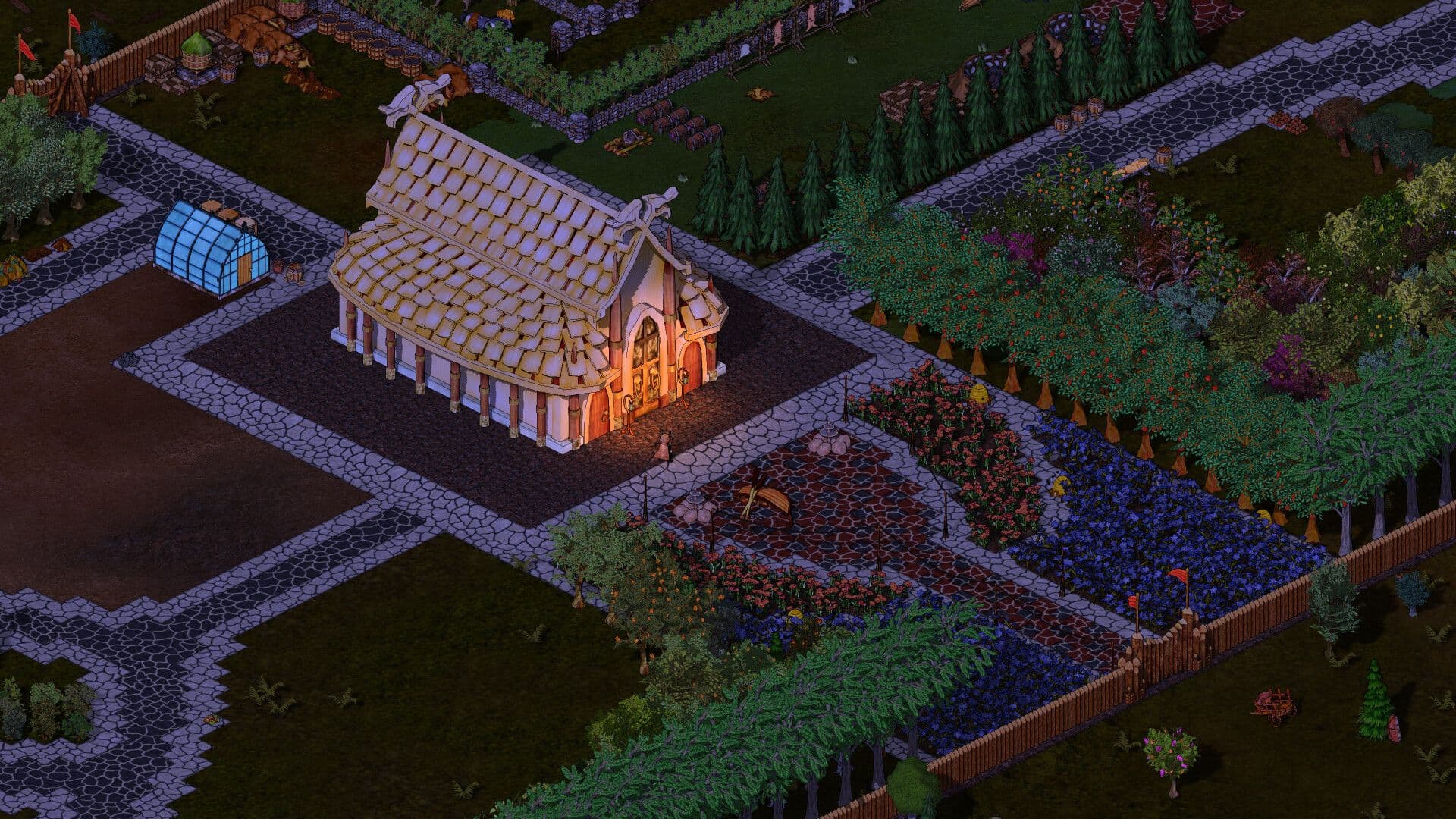
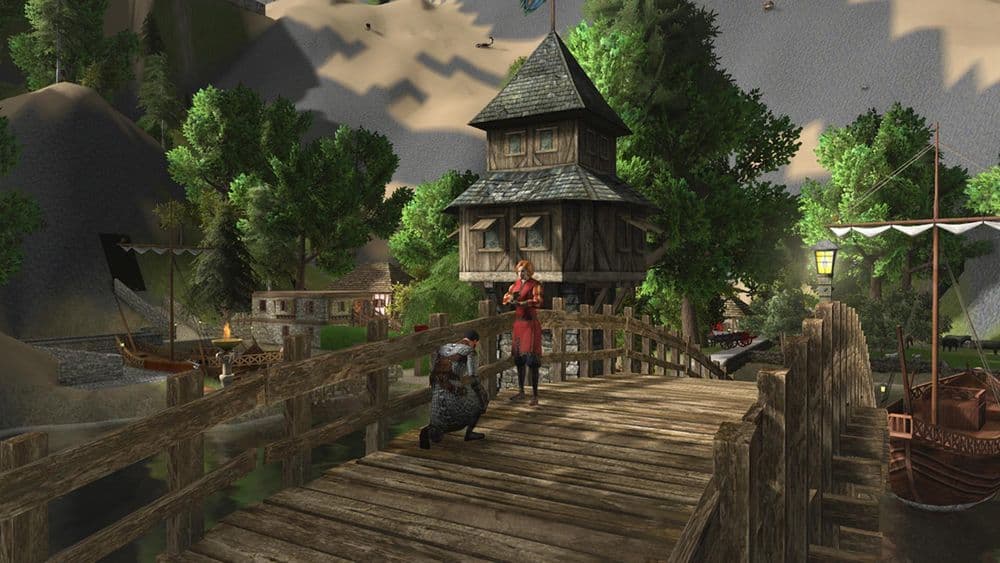
Haven & Hearth is a sandbox MMORPG of foraging, crafting and settlement-building in a world drawn from Slavic and Germanic myth, made by two Swedish developers and running since 2009. There are no lev...
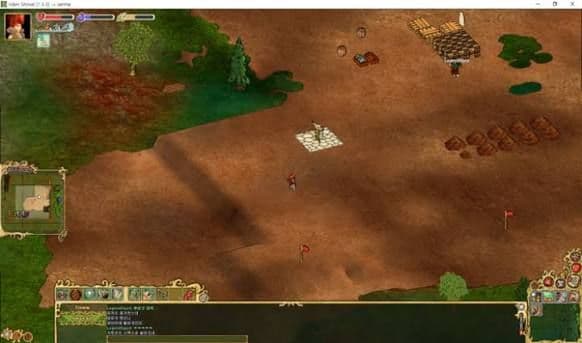
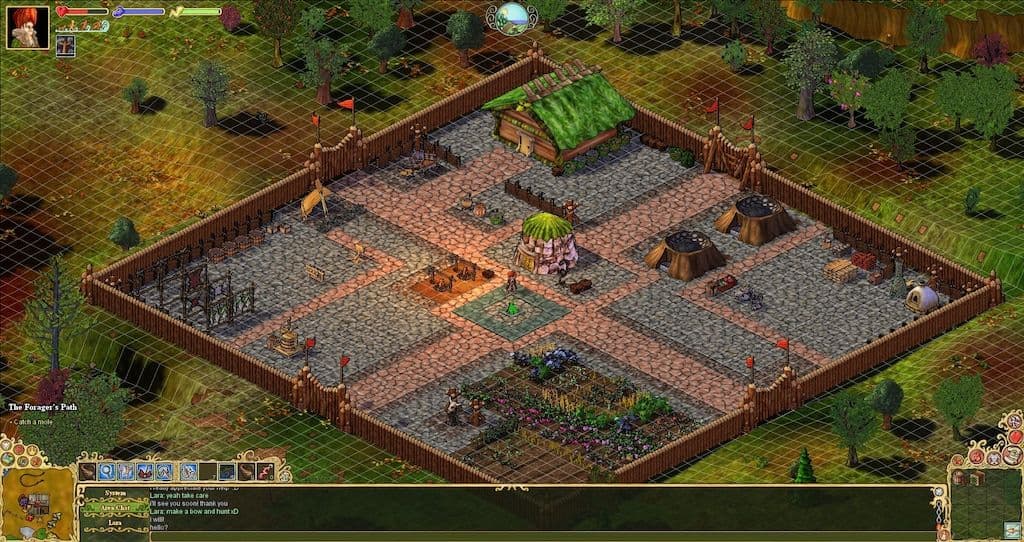
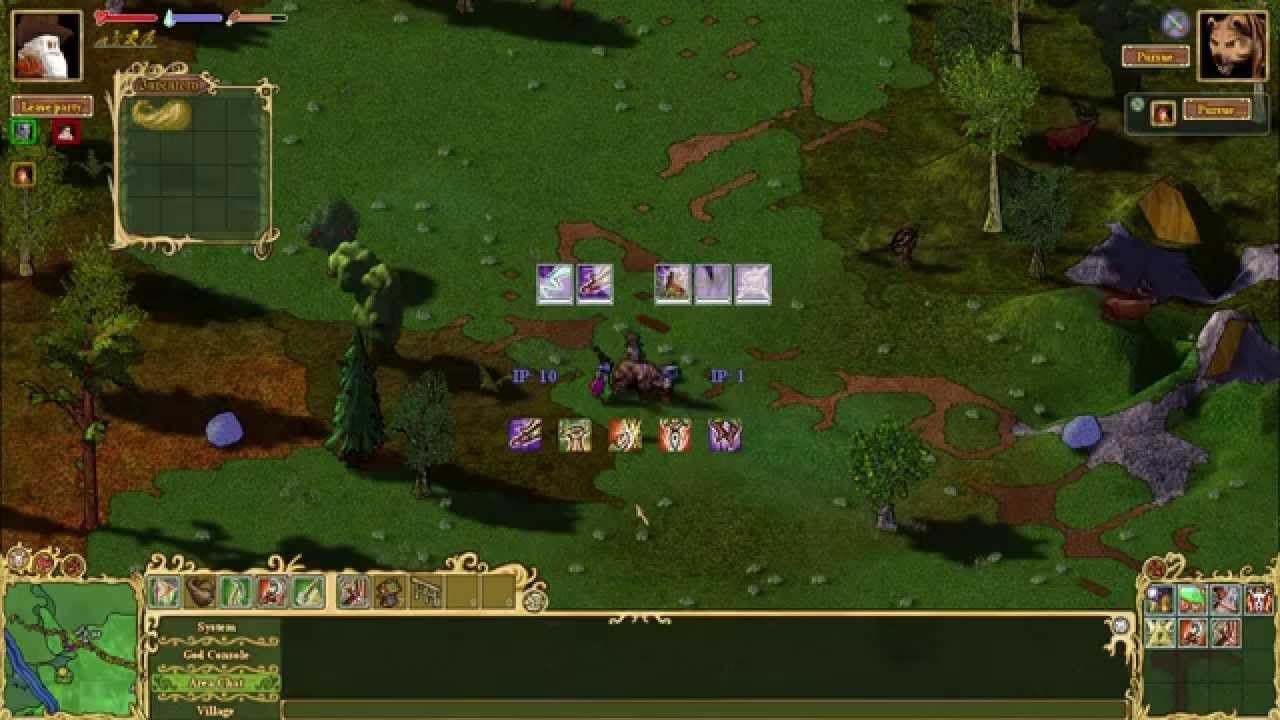
Haven & Hearth is a sandbox MMORPG made by two Swedish developers — Björn Johannesson and Fredrik Tolf, working under the name Seatribe — whose first public world opened in April 2009. The game was rebuilt on a 3D engine in 2015, arrived on Steam in November 2024, and still calls itself an eternal alpha rather than a finished product. Its world draws loosely on Slavic and Germanic myth, the camera looks down from an isometric angle, characters die permanently, and the game worlds themselves are periodically deleted and regenerated from scratch.
The current main world has run since 1 November 2024, and a second, faster-paced world numbered 16.2 launched on 14 August 2026 beside it with a deliberately limited lifespan. What follows is organised the way the game reveals itself — by playtime, because the Haven & Hearth of your first hour and the Haven & Hearth of your hundredth are barely the same product.
You begin as a floating orb of purple light in an instanced room, not in the world. A path runs north to a river, and the fork you take there sets your character's sex. A reflecting pool fixes hair permanently, a wizard asks your name, and stepping into a fire burns you into the world proper. Two side stops are easy to walk past: a graveyard, where a new character inherits from a dead ancestor, and a skull pole that sets your spawn.
Then you are standing in a forest with an empty inventory — anything crafted in the creation room is stripped on entry. Every base attribute sits at 10, every ability at 1, and you own no skills at all; you cannot even swing at a rabbit until you buy Hunting. Progress in that first hour comes from touching things: pick a branch, strip bark, dig clay, chip a stone, pick blueberries. Each first contact with a new object is a discovery, and discoveries pay Learning Points.
One detail sets the tone better than any tutorial could. You cannot hunt without the skill, but foxes hunt for themselves and leave their kills intact — spot one chasing a rabbit on the minimap, follow it, and the carcass is yours. The game rarely hands you anything. It leaves things lying around for anyone paying attention.
Character development runs on two resources earned in completely different ways, and confusing them is the classic beginner mistake. Learning Points buy skills and abilities; Experience Points are spent on studying curiosities and on Hearth Magic.
Experience arrives through lores — small events triggered by ordinary activity. Quenching your thirst fires often. Catching the scent of flowers might fire once every few days. The design quietly rewards variety, which is why experienced players mix their tasks instead of spending eight hours felling the same stand of trees.
Learning Points, once the easy discoveries dry up, come almost entirely from curiosities: small objects you forage, catch or craft. Dandelions, ladybugs, dice, a cow figure made from a pine cone. They go into a 4x4 mental inventory and study themselves in real time while you do something else, with Intelligence setting how many fit at once. Each finished curiosity consumes Experience and pays out Learning Points.
So your character learns around the clock and your job is keeping that background stocked. Abilities cost 100 LP multiplied by the next level, and nothing is refundable. Skills are hierarchical, so reaching Smithing means paying for everything beneath it. On top sits the Credo system — professions taken one at a time, each with five stages gated behind quests and permanent bonuses at the end.
Strength, Agility, Intelligence and the rest do not come from levelling, because Haven & Hearth has no levels. They come from eating. Every dish grants Food Event Points toward particular attributes, and once you have accumulated as many FEPs as your highest current attribute, one stat rises by a point — chosen probabilistically, weighted by what you have been eating. Any surplus is discarded.
That is where cooking stops being flavour text. Each food satiates its own category, so repetition steadily reduces returns, and hunger tiers invert the usual logic: a ravenous character takes triple value from a meal while a stuffed one gets a tenth. Efficient eating means arriving at the table hungry with the widest menu you can manage.
Which explains the gap between a new player roasting a rabbit over a campfire and a settled one running ovens, cauldrons, a smoke shed and a meat grinder, tracking satiation and sitting down to a dozen dishes at once. Cooking here is the primary route to a stronger character — and the point where many newcomers quit, because nothing in the interface tells you so.
Nearly every item and object carries a quality value, defaulting to 10 for anything natural, and quality has no upper limit. Better weapons hit harder, better food yields more FEPs, better armour absorbs more. The scaling is a square root, though: the multiplier doubles at Q40, triples at Q90 and quadruples at Q160, so each step costs far more than the last.
Two ceilings govern how quality moves. A softcap applies when a product would come out better than your relevant stat allows, averaging the material's quality with your skill level. A hardcap truncates the result at whatever your tool or ability permits. Dig clay where the true quality is 36 with a Masonry of 20 and you will never pull anything above 20 out of that ground.
Everything in the late game grows out of that constraint. Better clay needs Masonry, Masonry needs Learning Points, faster Learning Points need better curiosities, and better curiosities need the materials you were trying to improve. Nothing rises in isolation; the whole spread has to come up together, slowly, which is why veterans answer "what are you doing" with a number rather than a goal. It is also the least legible system in the game — none of it is explained in-game, and the community wiki is not optional reading but a second window you keep open.
Crafting is structured as production rather than as a recipe list. Clay comes off a riverbank, onto a potter's wheel, into a kiln. Ore is mined, smelted into bars, refined in a finery forge and turned into steel in a crucible where one fuel tick runs forty minutes instead of five. Fuel is a planning problem in itself: a branch burns one tick, a block of wood five, tarsticks twenty.
Materials are not interchangeable either. A rocking chair built from cherry, maple or oak looks different, each species carrying its own wood colour, and custom images can be uploaded onto banners, capes and sails — which is why established settlements move around in matching heraldry.
Agriculture runs in parallel. Wild seeds become domesticated crops — wheat, carrots, peas, grapes — and animals are tamed and bred, with herd quality climbing across generations. Cows, pigs, goats, reindeer, rideable horses with saddlebags, a bull with a pack rack. There is silk farming, and fishing deep enough to warrant a 36-slot creel that holds nothing else.
A fair amount of this is manual labour without embellishment. Chop, carry, load, wait. Players who settle into that rhythm stay for years; players who don't leave on the second evening, and no amount of system depth changes that.
Anything built in open country eventually rots. The defence is a personal claim, anchored by a bond that permanently occupies a slot in your study inventory. On claimed and paved ground structures stop decaying, and equipment like anvils, looms and meat grinders also needs a roof.
Terrain is fully editable — paved in brick, stone or metal, ploughed into fields, seeded with grass or stomped back to dirt, with land surveys to raise, lower and level whole areas. The difference between a beginner and a veteran is visible from the air: a crooked hut behind a rough palisade, or a levelled site with paved streets, warehouses, indoor workshops and visitor gates.
Walls are not decoration. Every structure has a soak value, and breaking one demands strength scaling with the square of the gap between that soak and your tool's bonus — an axe counts for 1, a pickaxe 2, a sledgehammer 4, a battering ram 20, and rams can be worked by several players at once. Siege warfare falls straight out of that formula: a lone raider never breaches a good wall, an organised group does it in an evening.
Underneath it all are the mines, dug downward level by level, where cave-ins grow more damaging with depth and kill outright on the lower floors. A miner's helm reduces that risk without removing it, and trolls live further down. Alongside mines sit dungeons — beaver lodges, bat caves, ant hills. Water is the other common way to die stupidly: run out of stamina while swimming and asphyxiation strips a fifth of your maximum health every second, leaving a corpse that sinks its contents if nobody recovers it within about a day.
Partly, and less than its defenders claim. Combat runs on a deck of moves rather than a hotbar: up to ten different cards totalling thirty points, the same card stackable five times for extra power, and five saved decks to switch between. Moves are not bought with Learning Points — they drop from beating animals, or are taught by players willing to share them.
Inside a fight, initiative points accumulate from some moves and get spent on stronger ones. Health splits into soft and hard pools: emptying the soft pool knocks you out with a concussion, emptying the hard pool kills you. A knockout leaves you a minute and three choices — teleport to your hearth fire and abandon whatever is on the ground, including your horse; log out where you lie and hope the animal wanders off; or stand up with a single hitpoint. While you are down, anyone can search you, curiosities included.
Whether this is good design is a question the developers answer themselves: their Early Access notes state plainly that they are dissatisfied with the current combat and mean to rework it. That candour is rare. It is also cold comfort for anyone playing now, because card exchanges remain the most opaque part of the game and the one the wiki helps with least.
You cannot attack another player casually. Doing so requires the Rage skill, and Rage alone only lets you knock someone unconscious; killing them requires Murder on top, which enables a heightened state with far more grievous damage. Both leave traces, and so do theft, vandalism and walking onto claimed land.
This is where the design gets unusual: every crime leaves a scent at the scene. A player with enough Perception and Exploration and the tracking toggle on can follow that trail back toward whoever left it, and pursue retaliation up to sending an avenging spirit after the culprit. An outlawed character cannot log out to wait things out. The system does not prevent crime — it enables revenge, which means it works only if someone is willing to come after you.
Permadeath is the other half. Characters die often — bears, cave-ins, drowning, other players — and a replacement inherits an amount that depends on how the body was handled. No rites return 15% of spent Learning Points and attributes. A buried skull alone raises that to 25%, a body without its skull to 35%, and an intact buried body to 45% of a dead character's progress. A state funeral reaches the same 45% with no body at all, at considerable cost. Failing that, an ancestral shrine lets you lament the dead in stages at 6% per prayer with an escalating price, and separately restore memories of contacts, thingwalls, discoveries and combat moves.
So a corpse is an asset. Players go back under fire to retrieve a friend's body, and leaving an enemy's where it fell impoverishes their next character. Few games turn funeral rites into tactics this literally.
Social structure begins with a hearth secret — a string you hand to someone so they can register you as kin. Kin get colours, and colours carry permissions: who may enter your land, who may take from your containers, who gets nothing. Above that sit villages with a shared claim and a chieftain, and above them realms, which capture thingwalls to claim provinces and grant citizens buffs and a shared Experience bank.
Trade is assembled from the ground up too. The Trade skill gives you barter stands and coin minting: one metal bar presses into a hundred coins carrying that bar's quality, and a hundred coins melt back into a bar. Players build markets on thingwalls, issue their own currencies, charge stall commissions and argue about counterfeiting. Charter stones let traders memorise a market and return to it directly, which is the only reason long-distance commerce works at this scale.
Here is the decision that filters the audience hardest. World resets erase everything: the map, every character, settlement, road, herd and hard-won quality number. World 1 in 2009 lasted 156 days. World 8, which brought the 3D rebuild in August 2015, ran 173. World 10 held out over two years. World 16 has been going since November 2024.
Only account-level purchases survive a wipe, retrieved from your hearth fire in the new world. Nothing else does. The developers do not hide this — their Early Access notes call the project an eternal alpha, name longer-lived worlds as a still-unrealised goal, and put 1.0 at no less than five years away.
For some players that is the fatal flaw: hundreds of hours of construction deleted on schedule. For others it is the whole appeal, because every new world returns everyone to the same starting line with the same branch in hand, and the race begins honestly again.
The free account is genuinely free and unrestricted — full gameplay, no content locked away, normal development speed. A one-off $15 verification adds an inventory column, 20% to development and 50% to what the game calls convenience. A subscription adds an inventory row, 30% to development and 100% to convenience, from $7 a month at Bronze up to $35 at Gold. The bonuses stack.
Convenience is not vague: it is the speed of crafting, building, felling trees, sawing boards, fishing, paving, butchering and chipping stone. Paying buys no stronger weapons and no gated zones, but it compresses the time cost of everything else — and in a game where attributes decide fights, faster attribute growth is an advantage. The community has argued for over a decade about whether that counts as pay-to-win without settling it. Subscription tokens can also be gifted in-game, and the store warns openly that they can be stolen like any other item.
Player numbers are harder to pin down than in most MMOs. Steam only received the game in late 2024 and shows a few dozen concurrent players against a launch peak near a thousand, but much of the community has used the standalone client from the official site for years, plus third-party clients the developers tolerate — so Steam figures understate the real population by an unknown margin, and Seatribe publishes no totals. What is measurable suggests a small, stable project rather than a dying one: Steam reviews sit in the low seventies percent positive across roughly a thousand ratings, and patches land close to weekly under names like Duckwall and Radish Butchery.
Ask a narrower question first: what do you want from the hours you put in? If the answer involves keeping what you build, this is the wrong game, and no amount of depth compensates for a scheduled deletion date. If you want the building itself to be difficult, consequential and genuinely yours while it lasts, little else in the genre competes.
Do you want a game that explains itself? Then no. Haven & Hearth will not tell you that food raises your stats, that eating hungry triples the return, or that your Masonry is silently capping the clay you dig. It expects you to read, ask, and lose a character learning. Wurm Online is the nearest comparison for anyone weighing sandboxes of this kind, and it is the friendlier of the two.
And do you want to be left alone? You won't be. PvP cannot be opted out of, your walls are a maths problem someone else can solve with enough friends, and the crime system avenges you rather than protecting you. What the game offers in exchange is a world where no number was handed to you, where any object can be traced back to the hands and materials that made it, and where loss is real enough to give everything else weight. Two developers have spent fifteen years declining to make that more comfortable. That is either the reason to install it or the reason not to.
Yes. Free accounts have unrestricted access to all content at normal progression speed. Optional payments — a one-time $15 verification and subscriptions from $7 a month — raise development rate, crafting speed and inventory size. Characters are still permanently lost on death regardless of what you pay.
They do. Every map, character and structure is erased when a world ends. Past worlds have lasted from five months to more than two years, and only account-linked purchases carry over.
It is worth playing if you want an unusually deep crafting and settlement sandbox and can accept open PvP, permadeath and eventual world wipes. It suits nobody who wants guided progression, a tutorial that covers its own systems, or permanent possession of what they build.