 F2P · Live
Lineage 2
Aden's castles never stay in the same hands for long, and Lineage II has built an entire twenty-three-year…

A hardcore old-school isometric sandbox MMORPG reviving the uncompromised spirit of genre classics. Set in the open realm of Celador, Legends of Aria: Eternal features a completely classless skill-gai...
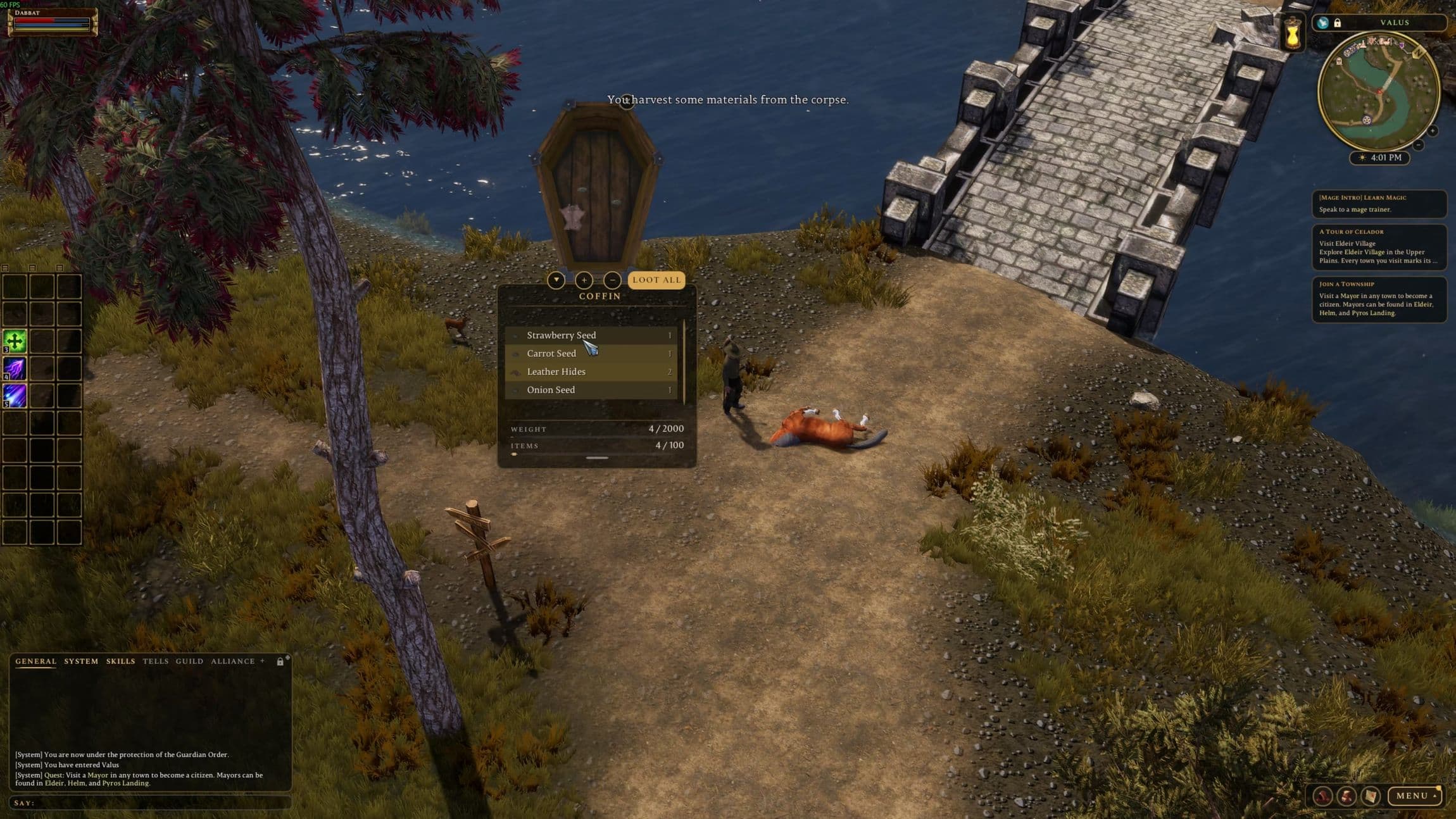
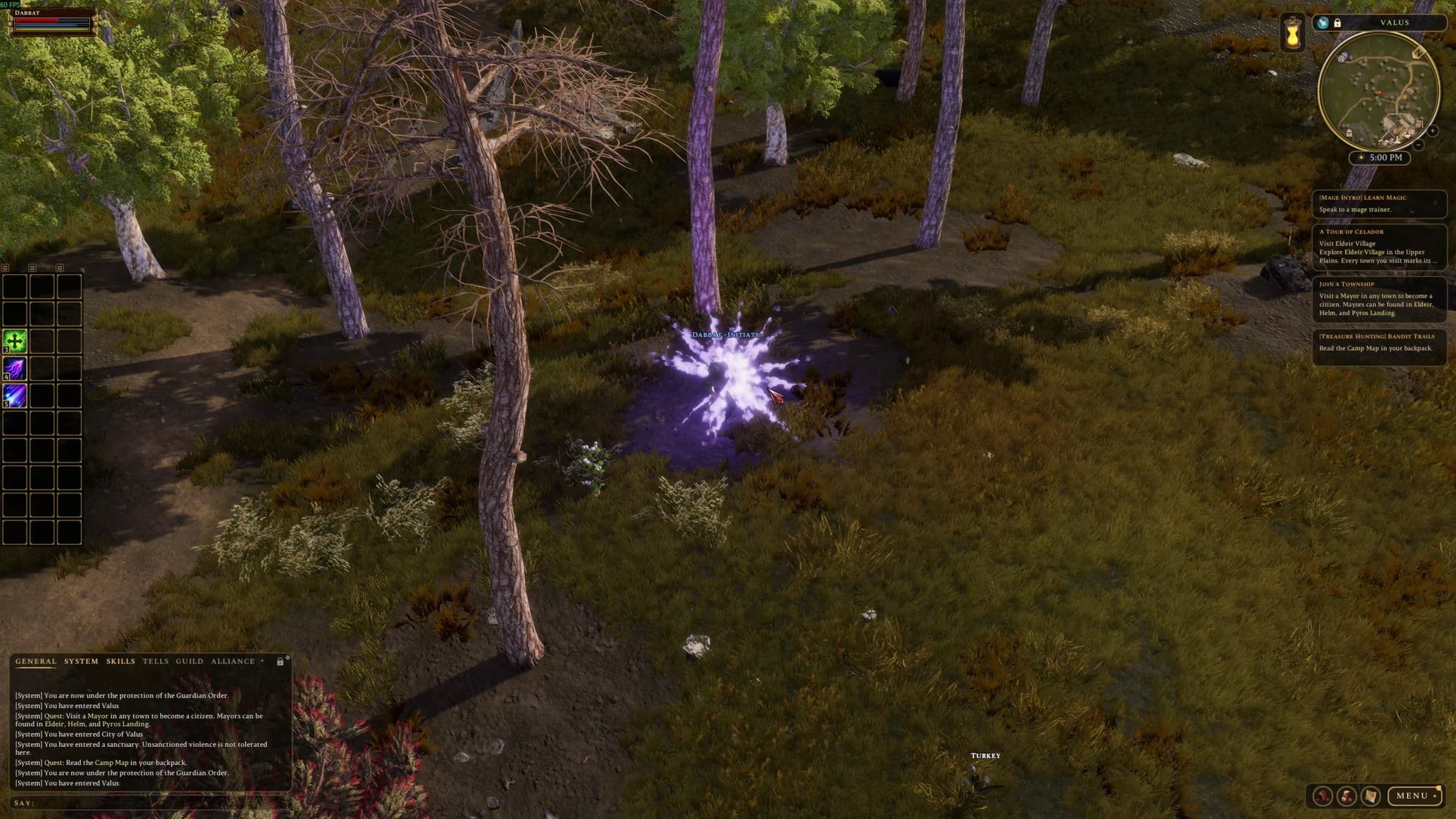
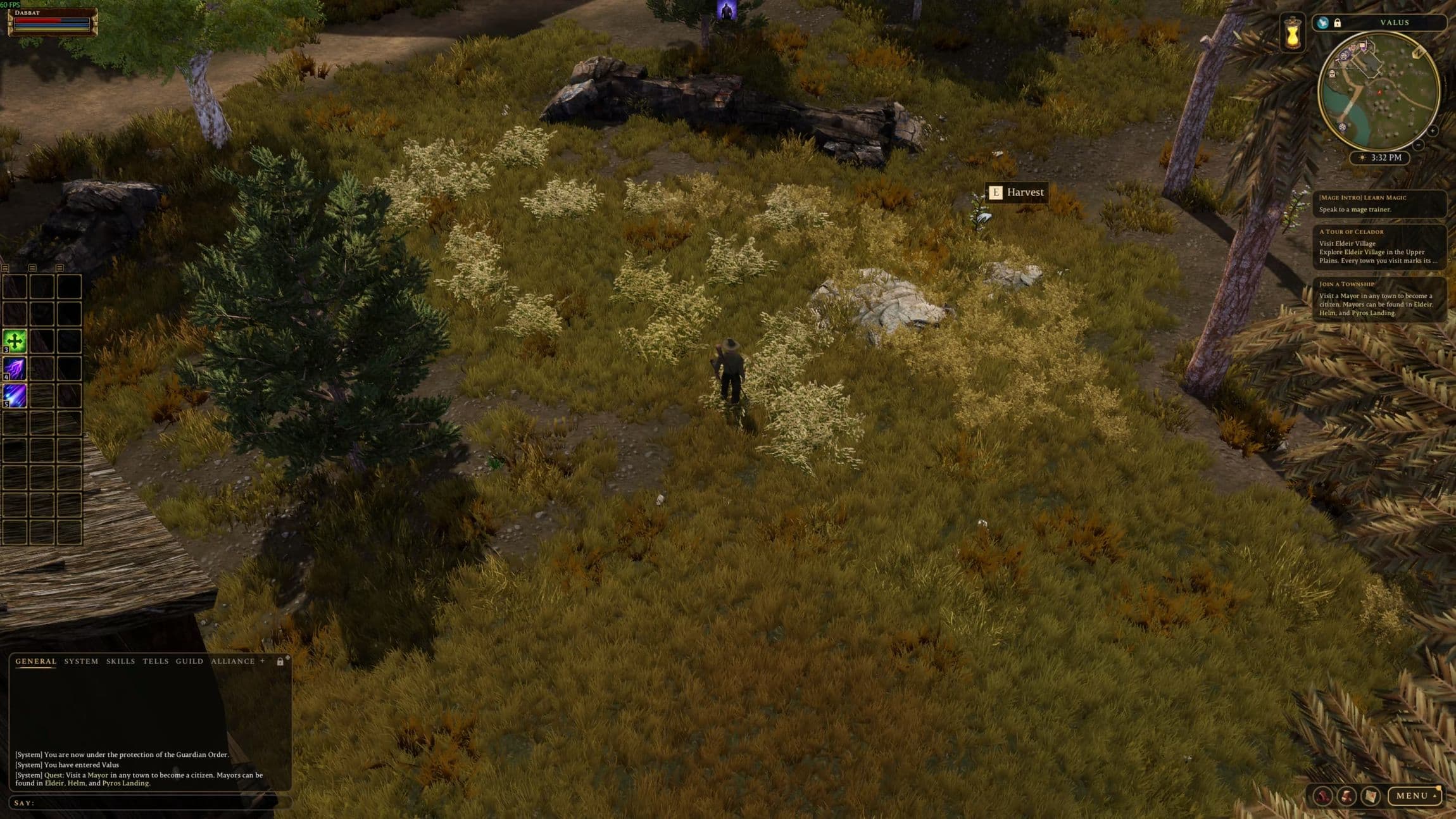
Quick take: Legends of Aria: Eternal is an uncompromising, old-school isometric sandbox MMORPG designed as a spiritual successor to the legendary Ultima Online. The game delivers complete progression freedom without rigid class locks, an authentic artisan-driven economy free from raid gear inflation, seamless non-instanced housing across the open continent of Celador, and brutal open-world PvP with unforgiving Full Loot consequences. Following a chaotic twelve-year development journey and a disastrous blockchain detour, the project resurfaced on Steam in September 2026: purged of microtransactions and subscriptions, built on a clean Buy-to-Play model, and bundling a complimentary suite of dedicated server hosting tools directly in players' hands.
The development saga of Legends of Aria: Eternal reads like an unvarnished post-mortem of indie ambitions, industry hype cycles, and hard-won redemption. The journey traces back to 2014, when former Ultima Online lead developer Derek "Supreem" Brinkmann launched a Kickstarter campaign under the moniker Shards Online. The pitch was an alluring fusion of two golden eras: marrying the emergent, classless simulation of UO with the modular, user-administered shard hosting model popularized by Neverwinter Nights.
Yet the road to commercial viability proved treacherous. Attempting to compete with corporate theme parks, the team rebranded the project to Legends of Aria, pivoted toward a centralized megaserver infrastructure, and entered Steam Early Access in 2018. Visually Spartan, mechanically unpolished, and dogged by performance bottlenecks, the game struggled to retain mainstream numbers. The true existential crisis erupted in 2022, when leadership attempted to ride the speculative Web3 bubble. Grafting blockchain ledgers, non-fungible tokens (NFTs), and tokenized economies onto an already fragile sandbox triggered a fierce community revolt, culminating in the title's unceremonious removal from Steam.
When the crypto market collapsed into irrelevance, studio Emergent Worlds executed the only viable pivot: a complete, surgical excision of all blockchain remnants and a public return to classic principles. Operational governance of the official public realm was handed over to the Aria Collective, an administrative council comprised of veteran community leaders and volunteer game masters. The culmination of this rebirth arrived in September 2026 with the release of Legends of Aria: Eternal. Returning to Steam with an untainted business model, the game abolished subscriptions, cash shops, and pay-for-convenience perks in favor of an honest Buy-to-Play license granting perpetual access to the entire game.
What fundamentally distinguishes Legends of Aria: Eternal from the crowded field of disposable online games is not high-end graphical fidelity, but an unyielding commitment to player sovereignty. For the first time in the franchise's turbulent history, the administrative iron curtain has been dismantled: every player who purchases the game on Steam instantly receives the Legends of Aria Dedicated Server Launcher in their Steam Library tools.
The proprietary Shards Engine is no longer an inaccessible black box. Any individual, gaming guild, or independent collective can spin up a fully persistent, customized shard on local hardware or hosted virtual servers. Whether you want to configure an uncompromising hardcore world where death strips every possession and open wilderness murder goes unpunished, or establish a tranquil sanctuary dedicated to agrarian crafting and cooperative dungeon delves, the configuration files grant granular authority over the rules of engagement. Furthermore, native modding support and scripting through Python and Lua have empowered community creators to undertake monumental conversions, including faithful recreations of the classic Britannia landscape.
This design architecture liberates the game from the perennial specter haunting modern live-service titles: the inevitable shutdown of official corporate servers. While corporate publishers routinely sunset multiplayer projects into digital oblivion, Legends of Aria: Eternal guarantees permanent survivability. Even if the official cluster should someday close its doors, the realm of Celador will endure indefinitely across private, community-hosted shards, preserving the legacy of late-nineties virtual worlds for decades to come.
Modern MMORPGs have largely conditioned players to follow rigid developmental tracks: you select a pre-packaged class archetype from an initial menu, after which an automated interface ushers your avatar along a linear progression path toward maximum level. Legends of Aria: Eternal decisively repudiates these contemporary guardrails. There are no overall character levels, no arbitrary class trees, and no artificial gear restrictions based on character origin. Progression is governed entirely by an authentic use-based system (Use-based progression) - a design ethos immediately recognizable to anyone who spent formative gaming hours smithing daggers or chopping timber in nineties virtual worlds.
The foundational anatomy of every wanderer in Celador rests upon three primary attributes: Strength (Strength), Dexterity (Dexterity), and Intelligence (Intelligence). The cumulative attribute cap (Stat Cap) is strictly bounded at 225 total points, with an individual ceiling of 100 points per attribute. This restriction enforces early, deliberate specialization. Strength directly expands maximum health, encumbrance capacity, and heavy weapon damage; Dexterity accelerates stamina pools, auto-attack cadence, and casting speed; while Intelligence dictates maximum mana, natural mana regeneration, and the destructive potency of arcane spells. Attempting to build an all-around generalist inevitably yields a compromised hybrid, leading martial combatants to emphasize Strength and Dexterity while spellcasters maximize Intelligence at the expense of survivability.
Above these fundamental attributes sits an intricate hierarchy of more than thirty distinct disciplines. Progression occurs organically through active practice: cleaving a skeleton with a broadsword cultivates your proficiency in slashing weapons (Slashing); deflecting incoming blows with a buckler advances shield defense (Shield); and channeling magical scrolls improves your commanding mastery over magic (Magery). Hovering over every avatar, however, is a rigid universal skill cap (Skill Cap) set at exactly 600 total points. Reaching the pinnacle rank of 100 points in any single discipline bestows the venerable title of Grandmaster (Grandmaster / GM).
This mathematical constraint enforces strict tactical balance: a character can simultaneously maintain six Grandmaster ranks at 100 points, or distribute their 600 points across a nuanced mosaic of hybrid disciplines (such as stabilizing weapon skill at 90, tactics at 85, and allocating the remainder toward magic resistance and combat bandages). The skill interface manages this balance through three toggles beside each skill: an upward arrow (advancing through practice), a padlock (locking the current value), and a downward arrow. Once your 600-point reservoir is full, training a new discipline like alchemy will gradually siphon points from skills flagged with the downward arrow, providing flexibility at the cost of deliberate planning.
In earlier incarnations of Legends of Aria, character progression was an agonizing slog that alienated newcomers and cultivated a notorious culture of unattended gameplay. Skill gains were so glacial that players felt compelled to leave client instances running overnight, utilizing automated macros to endlessly whack wooden training dummies or pick the locks on practice chests inside private basements.
In Eternal, studio Emergent Worlds and the Aria Collective overhauled this progression curve. Skill gain velocity has been dramatically accelerated: bringing a core combat discipline into the viable 70–80 proficiency range now requires a few evenings of active dungeon crawling rather than weeks of automated AFK macroing. The revamped loop explicitly incentivizes adventurous wilderness exploration and group combat over static script exploitation.
The progression zenith is crowned by a retuned Prestige System (Prestige System). When an avatar pushes synergistic disciplines to Grandmaster tier - such as combining heavy martial prowess, advanced anatomy, and knightly chivalry - they unlock specialized prestige masteries and unique passive traits. These capstones transform a generic sellsword into a deadly Paladin, Dread Knight, or Archmage, injecting high-tier tactical flavor into guild skirmishes without compromising the underlying classless sandbox.
The uncompromising 600-point cap gives rise to the game's central design dilemma: no single character can achieve total self-sufficiency. If you dedicate your avatar's life to peaceful domestic crafts by pursuing Grandmaster honors in mining (Mining), blacksmithing (Blacksmithing), and carpentry (Carpentry), you consume half of your entire skill allocation. Your master craftsman will remain defenseless when ambushed by an ordinary woodland goblin, let alone an experienced player killer.
Consequently, serious adventurers in Celador must either integrate into coordinated guilds featuring strict labor specialization or maintain dedicated crafting alternate characters relegated to city walls and mining veins. Progression freedom in Legends of Aria: Eternal does not mean effortless omnipotence; it demands full accountability for every single allocated skill point.
For players conditioned by modern action MMOs - where avatars execute aerial flips, deluge screens in blinding damage numbers, and chain invulnerability frames through endless dodge rolls - the combat loop of Legends of Aria: Eternal delivers an icy reality check. Button-mashing will get you killed in seconds. Combat in Celador is a measured, deliberate isometric duel where every weapon swing, every step through terrain, and every second spent channeling incantations carries immense consequence.
Physical engagement is grounded in calculated timing. Once you engage a target, your avatar executes auto-attacks at intervals determined by weapon weight and Dexterity (Dexterity). A massive two-handed warhammer inflicts devastating, armor-crushing impacts capable of halving a robe-clad mage's health pool, but its recovery swing is agonizingly slow. In contrast, swift daggers and rapiers pepper targets with rapid thrusts, functioning as relentless tools to disrupt enemy concentration.
Layered over basic attacks is an arsenal of specialized martial techniques. Every weapon discipline - including slashing (Slashing), piercing (Piercing), bashing (Bashing), and archery (Archery) - boasts distinct situational maneuvers. An experienced swordsman never expends their full ability bar at once; they patiently track spacing to hamstring (Hamstring) a fleeing target or deliver a pommel strike to interrupt a deadly enemy combo. The fuel powering all tactical maneuvers and rapid sprinting is Stamina (Stamina). Allowing your stamina pool to hit zero is an immediate death sentence: your avatar loses the ability to sprint and degenerates into an immobilized target unable to raise a shield for blocking.
Magic in Legends of Aria: Eternal is an exacting, resource-intensive science. Rather than drawing purely from a self-regenerating blue mana pool, the school of Magery (Magery) honors classic hardcore conventions. To cast spells across the arcane circles, a wizard must carry physical reagents (Reagents) in their backpack: pungent garlic (Garlic), toxic nightshade (Nightshade), mandrake root (Mandrake Root), revitalizing ginseng (Ginseng), spiders silk (Spiders Silk), and volcanic black pearl (Black Pearl).
Every incantation relies on a strict chemical formula. If your supply of nightshade runs dry in the depths of a crypt, your direct-damage offensive capabilities vanish on the spot, leaving you stranded with an ineffective staff. Compounding this logistical vulnerability is the unforgiving mechanic of spell disruption (Spell Fizzle / Interrupts). High-circle spells - ranging from piercing fireballs to towering fire columns (Flamestrike) and demonic summons - require substantial cast times. Any incoming damage suffered during the channeling window immediately disrupts the incantation, wasting precious reagents and mana. Mastery over arcane combat demands sharp spatial awareness, line-of-sight manipulation around environmental obstacles, and the strategic mastery of holding pre-cast spells (Pre-casting).
A vital cornerstone of the tactical ecosystem is Animal Taming (Animal Taming) paired with Animal Lore (Animal Lore). Tamed beasts are not ornamental vanity companions; they function as terrifying combat units. An accomplished beastmaster can subjugate dire bears, venomous spiders, and apex cave drakes. A bonded drake absorbs incoming boss attacks, shreds enemy armor, and guards its master during recovery. However, companion loyalty requires constant feeding and attention: neglected or starved pets will break their bond and turn feral in the heat of battle.
Personal sustain is equally unforgiving. Chugging healing potions back-to-back is impossible due to hard cooldown timers. The primary mechanism of combat medicine is manual bandaging (Healing), whose speed and potency scale directly with anatomical knowledge (Anatomy). Applying a fresh bandage requires several uninterrupted seconds, during which heavy blows can loosen the dressing. If an enemy rogue coats their blade in lethal poison (Poisoning), basic bandaging fails entirely: the victim must ingest a curative potion or receive an antivenom spell before standard healing can resume, all while the toxic status rapidly eats away their vitality.
This tactical depth creates a daunting barrier for casual players: combat offers zero margin for error or high latency. In a high-stakes duel, life or death is decided in a two-to-three-second window. Forgetting to restock your reagent pouch before leaving town means certain demise. Letting a mace-wielding brawler close distance in a narrow dungeon corridor means getting stun-locked to death. Suffering a 150-millisecond network stutter during a crucial defensive cast means dropping on the spot.
The combat floor in Celador is relentlessly steep. There are no emergency invulnerability shields or forgiving second chances, and the penalty for defeat is not a polite checkpoint respawn, but the total stripping of your corpse.
In the vast majority of modern virtual worlds, crafting has been reduced to an afterthought. Game developers relegate gathering to a mindless leveling chore, ensuring that the very first dungeon boss rewards a glowing raid sword that renders local blacksmithing obsolete. In Legends of Aria: Eternal, this disregard for craftsmen has been dismantled. Here, the masters of the anvil, loom, and woodworking bench are the undisputed titans of the realm, anchoring the foundational lifeblood of the entire server economy.
The single most transformative economic reform executed by studio Emergent Worlds and the Aria Collective in the Eternal framework centers on monster drop tables (Loot Tables). In previous iterations of the game, dungeon monsters routinely dropped completed magical weapons and armor, crashing commodity values and leaving artisan stalls desolate. In Eternal, that destructive loop has been permanently broken: fallen skeletons, dungeon liches, and roaming dragons across Celador no longer drop completed top-tier equipment.
Slain monsters yield raw materials, uncut gems, ancient blueprints, and distilled magical essences. To strap on a suit of gleaming plate armor, swing a razor-sharp battleaxe, or draw a reinforced composite bow, a warrior must commission their loadout directly from an active player artisan. Monsters provide the raw ingredients, but true combat lethality is forged exclusively by the player's hand.
The manufacturing ecosystem functions with logistical authenticity. The pipeline begins at the resource extraction tier: prospectors swinging heavy pickaxes (Mining) comb mountain ridges for iron, copper, silver, and rare veins of mythril, while lumberjacks (Lumberjacking) fell mature oak and yew trees in dense forests. Raw materials possess immense physical weight: an overloaded miner immediately suffers crippling encumbrance penalties, transforming pack horses and secure transport corridors into vital requirements.
From extraction, materials feed directly into primary processing trades:
The zenith of domestic production is the crafting of exceptional items (Exceptional Quality). A master crafter at Grandmaster rank has a defined probability to produce a masterwork piece boasting expanded durability and elevated baseline attributes. Crucially, every exceptional piece is permanently stamped with the artisan's personal signature (Maker's Mark). Marching into battle adorned in plate mail bearing the seal of a renowned server armorer is the ultimate hallmark of prestige.
The capstone of endgame progression is the revamped Enchanting discipline (Enchanting). In Eternal, enchanting is not an automated NPC service; it is an autonomous, demanding profession. An enchanter takes an exceptional player-crafted weapon and uses pure elemental essences harvested from deep Catacombs expeditions to weave magical affixes directly into the metal: life-leeching properties, lightning damage, armor penetration, or magical resistance.
Endgame gear is fundamentally multi-layered: a legendary blade is forged at the crossroads of a daring miner extracting rare ores, a grandmaster blacksmith shaping flawless steel, and an enchanter infusing arcane resonance. This manufacturing interdependence permanently cements guild alliances and trade agreements.
Yet life as a craftsman in Legends of Aria: Eternal is far from a sheltered existence. The richest mineral veins and prime timber groves are situated beyond the safety of municipal guard zones - out in the lawless wilderness (Outlands) where roaming bands of brigands hunt. A prospector laden with hundreds of stones of precious metal represents the ultimate prize for an opportunistic player killer.
Furthermore, equipment undergoes permanent wear and tear: gear cannot be repaired indefinitely, as each restoration cycle reduces maximum durability. Coupled with the reality that open-world PvP strips the fallen of everything in their pack, the demand for freshly crafted armor and weapons never dries up. Artisans in Celador amass colossal fortunes, but every ingot is purchased with constant vigilance and wagons defended on wilderness trails.
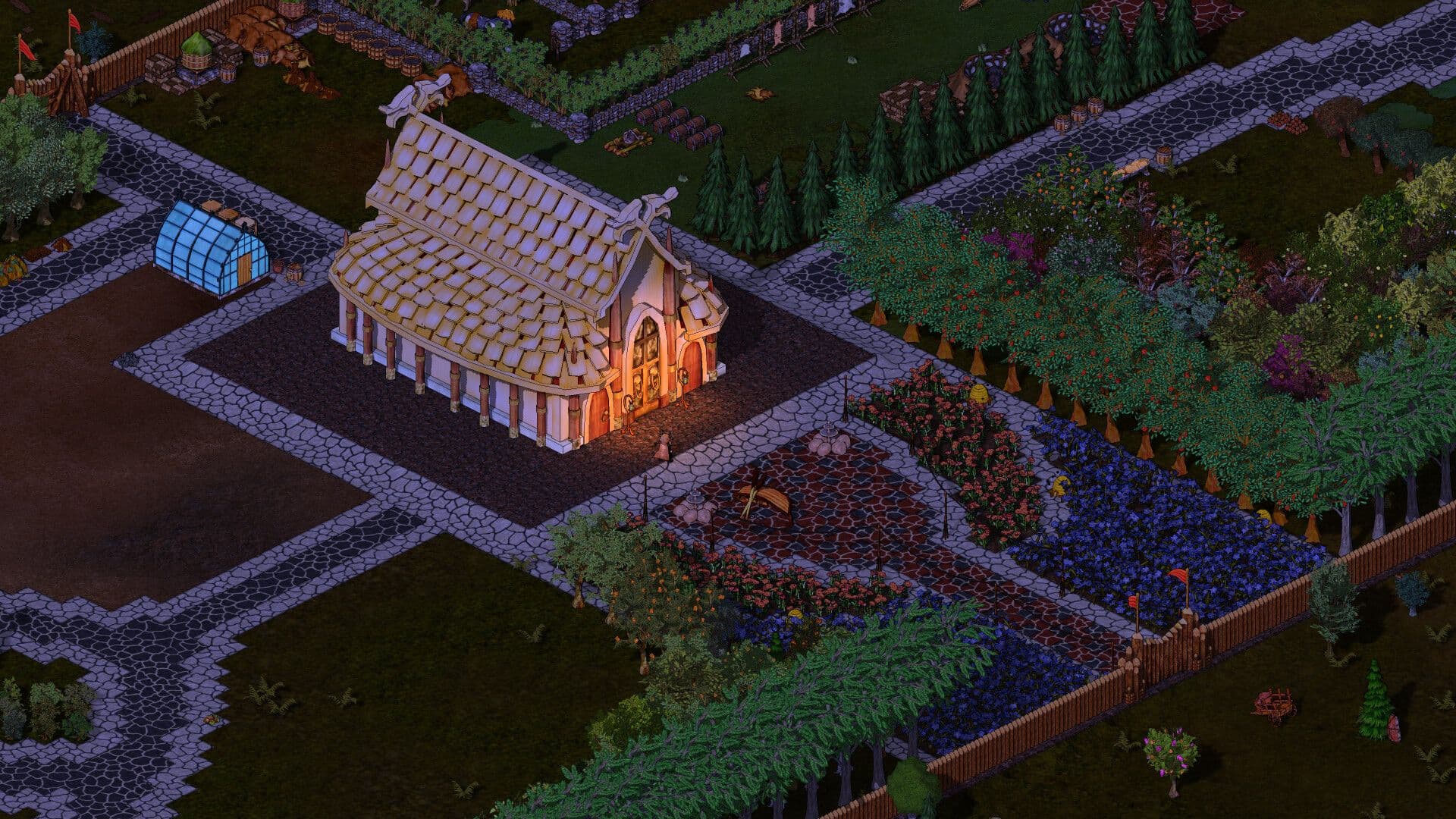
For most modern gamers, housing in an MMO evokes sterile, instanced apartments: you interact with a generic municipal portal, select an option from a drop-down menu, and load into a private cell segregated from the shared world. In Legends of Aria: Eternal, that design philosophy is considered anathema. Here, player housing is an organic, physical component of the continuous overland topography of Celador. Riding along the main highway from the coastal port of Helm to the central crossroads of Eldeir Village, you pass tangible stone villas, timbered lodges, and fortified guild keeps erected directly on grassy plains and forested ridges by fellow players.
Claiming personal territory mirrors a frontier land rush. Establishing a homestead begins by procuring or commissioning an official architectural deed (House Deed), which dictates the physical foundation footprint - ranging from modest one-room cottages to sprawling multi-story villas equipped with rooftop terraces. Then comes the real challenge: scouting available acreage across the open world.
Plots require reasonably flat terrain free from natural obstacles, resource nodes, and neighboring zoning boundaries. Once an ideal woodland clearing or coastal bluff is surveyed, the player unrolls their deed to place the foundation. Instantly, that plot of public soil transforms into sovereign private territory. The security system provides granular access control: owners can deadbolt their front doors, admit trusted guildmates as co-owners, or designate their estate as an open public landmark.
A private estate delivers four vital operational utilities:
Legends of Aria: Eternal completely eschews the convenience of a global, server-wide auction house. The economy is rigorously decentralized, powered at the street level by hired player merchants (Player Vendors).
A homeowner can hire an NPC clerk for a modest wage, station them on their front porch or lawn, and customize their wardrobe. The vendor's inventory is stocked with player-crafted armor sets, refined weapons, bundles of curative potions, raw minerals, or rare spell scrolls, each labeled with a custom gold price. These vendors maintain an unceasing 24/7 vigil: any wanderer riding past your estate can click on your clerk, browse your wares, and conduct instant commerce.
This decentralized commerce creates emergent trade geographies. Homes strategically positioned along high-traffic pilgrimage routes or adjacent to high-risk dungeons like the Catacombs evolve into bustling, organic retail hubs. Guilds aggressively contest, purchase, and defend prime real estate along crucial geographic chokepoints to dominate server-wide commodity flows.
Unrestricted open-world housing inherently faces a fatal design constraint: continent territory is finite, while player ambition is limitless. Without systemic clearing mechanisms, the landscape would rapidly devolve into an impassable sprawl of abandoned ghost houses left behind by inactive accounts. To maintain dynamic real estate turnover, the game implements an unforgiving decay and tax cycle.
Every standing property incurs a recurring gold upkeep tax. If an owner's escrow account runs empty, the structure enters a progressive state of structural decay, descending through visual stages of wear until it reaches a catastrophic status: In Danger of Collapsing (IDOC). When an estate is flagged as IDOC, word spreads like wildfire across guild Discords and treasure-hunting circles.
Armed scavengers and rival guilds converge on the perimeter, initiating an anxious vigil awaiting the final server decay tick. When the internal timer strikes zero, the house collapses with a thunderous roar, completely vanishing from the map and violently dumping years of hoarded chests, rare armaments, raw ingots, and vanity collectibles directly onto the grass. The collapse instantly triggers a chaotic, bloody free-for-all as looters brawl to seize the exposed spoils. If you take an extended hiatus from the game and neglect your property taxes, you will return to find nothing but an empty meadow and your neighbors flaunting your former wealth.
In a genre where defeat rarely costs more than a brief jog from a nearby checkpoint and equipment remains permanently soulbound to your avatar, the thrill of victory hollows out. Legends of Aria: Eternal restores that forgotten, primal adrenaline: behind every bend in the forest trail lurks not merely a virtual opponent, but the very real threat of forfeiting your entire inventory in a split second.
Societal order across Celador is maintained through a classic, tri-colored reputation framework (Karma System) inherited from the golden age of virtual worlds. Every adventurer encountered on the road displays a color-coded nametag that immediately signals their moral standing and legal vulnerability:
The geography of mortal peril is strictly zoned. Within major metropolitan settlements - such as the bustling harbor of Helm or the tranquil enclave of Eldeir Village - municipal law operates under guarded zone parameters (Guarded Area). Shouting the macro command "Guards!" summons heavy sentries out of thin air, who immediately cleave the offending felon into ribbons with a single strike. These settlements serve as vital commercial havens where artisans trade safely and beginners find their bearings.
Yet cross beyond the perimeter guard towers, and civil protection evaporates entirely. Across the wild frontier (Outlands), the shadow-choked canopy of the Black Forest, and the subterranean labyrinth of the Catacombs, only brute strength reigns. Here, the law of absolute full loot (Full Loot) governs all interactions.
Dying in the wilderness strips away all illusions: your lifeless avatar collapses into a physical corpse container, allowing any passing player to empty your possessions down to the last copper coin - stripped armor, enchanted weapons, carefully cultivated runebooks, precious potions, and gathered reagents. Your consciousness separates into a wandering, disembodied ghost, forced to drift across the wilderness in search of a resurrection shrine or a compassionate cleric. By the time you successfully manifest back into the physical realm, opportunistic scavengers will have already divided your spoils.
The Full Loot ruleset serves as the ultimate litmus test separating hardened sandbox veterans from the casual mainstream. For players accustomed to modern protective mechanics, watching an armor set that took an entire week of dedicated crafting vanish in a thirty-second ambush triggers profound psychological shock, often ending in an enraged uninstall. The suffocating fear of asset forfeiture (Gear Fear) paralyzes unprepared wanderers, confining them to peaceful farmland.
Thriving in Celador demands a total mental recalibration. Gear in this universe is not a sacred personal monument or a permanent trophy; it is a consumable resource, functional ammunition identical to bullets in a tactical shooter. Experienced veterans never venture into deep crypts wearing their single most valuable suit of armor. Their household chests remain stocked with half a dozen standardized, functional combat kits ready for immediate deployment following an ambush. If you cannot embrace gear loss as a natural element of the emergent narrative, Legends of Aria: Eternal will break your spirit on your very first expedition.
Most traditional MMORPGs operate as centralized autocracies: studio executives unilaterally dictate class balance, decide how much experience an encounter yields, and decree when underpopulated servers must be forcibly consolidated. If an update destabilizes your favorite playstyle, your sole recourse is to close the client and quit. Legends of Aria: Eternal establishes an entirely different operating philosophy, dividing its universe into two complementary poles: an official flagship realm curated by veteran players and an expansive galaxy of autonomous community shards.
The anchor of the title is its official server cluster, whose daily administration has been entrusted to the Aria Collective. This arrangement represents a rare paradigm in the gaming industry: rather than relying on detached corporate product managers, executive control rests in the hands of veteran game masters, guild leaders, and passionate modders who have scrutinized every line of code since 2014.
The council's mandate is to forge a balanced, authentic environment for the classic sandbox. In the months following the September 2026 Steam launch, the Aria Collective has systematically refined the rules of engagement: fine-tuning murder count penalties, rebalancing the progression curve of Enchanting (Enchanting), calibrating municipal tax rates, and conducting structured beta testing wipes to ensure economic health before locking in permanent persistence.
Yet if the official ruleset feels too conservative or overly punishing, players are never held captive to developer whims. Leveraging the bundled Dedicated Server Launcher on Steam, the player base has deployed an array of specialized private shards catering to distinct philosophies:
The inevitable cost of complete server autonomy is community fragmentation. When an active player base is distributed across an official hub and dozens of private community shards, geographic density thins out. On smaller custom shards, an adventurer can spend hours traversing the forests of Celador without spotting a living soul, and organizing large-scale fifty-man castle sieges requires intensive coordination across external Discord networks.
Furthermore, committing to an independent shard ties your progression to the reliability of its private host. If a server administrator loses enthusiasm, neglects monthly hosting bills, or abuses their administrative tools to favor personal friends with god-tier armaments, months of character investment can vanish overnight. Deciding between the stable, moderated continuity of the Aria Collective and the anarchic creative freedom of custom shards remains the defining choice for every wanderer in Celador.
Evaluating Legends of Aria: Eternal through the glossy lens of multi-million dollar contemporary blockbusters is an exercise in futility. This is an endurance project, an unvarnished pilgrim that carried its Spartan manifesto through twelve years of production storms, catastrophic missteps, and hard-earned resurrection. First impressions will inevitably deliver aesthetic shock to modern gamers, yet beneath its modest exterior lies a mechanical depth rarely found in 2026, explaining why hundreds of veterans continue to call Celador their virtual home.
The visual presentation undeniably shows its age. Powered by the Unity engine, the game looks like a vintage title from the mid-2010s: angular character geometry, stiff movement and weapon animations, static tree canopies, and utilitarian spell particle effects that eschew blinding screen clutter. The realm of Celador is graphically austere, yet this visual restraint delivers exceptional tactical clarity in isometric projection, ensuring that enemy silhouettes, spell circles, and terrain choke points remain immediately legible during chaotic skirmishes.
The clear upside of this aesthetic austerity is minimal hardware overhead. The game launches effortlessly on modest office desktops and older laptops: achieving a consistent 60 FPS requires only an Intel Core i3 processor, 8 GB of system RAM, and an entry-level graphics card comparable to a GeForce GTX 960. With a compact 12 GB footprint, it respects your drive and runs smoothly without mandating high-end NVMe SSDs.
Conversely, user interface ergonomics retain all the quirks of the nineties. Inventory management adheres to the classic "bag-within-a-bag" paradigm: reagents, bandages, potions, and house keys must be sorted manually into sub-pouches inside your backpack. Pathfinding (Pathfinding) around dense residential settlements can cause avatars to hitch awkwardly on fence corners, while connecting to overseas servers introduces noticeable spatial desynchronization (Desync), requiring combatants to anticipate positional delays.
Legends of Aria: Eternal makes no apologies for what it is. There are no cinematic cutscenes, no voice-acted exposition, no automated dungeon matchmaking queues, and no linear story tracks leading you by the hand. It is an uncompromising, rugged monument to the dawn of virtual worlds.
By purging the toxic blockchain experiment and returning to Steam with an honest Buy-to-Play license, Legends of Aria: Eternal achieved something vital: proving that an impassioned community can resurrect a cherished sandbox from the grave. It does not redefine the future of the genre; instead, it preserves its untamed, dangerous, and authentic beating heart against all odds.