Key points
- The Quinfall v1.4.0.2 introduced territorial Castle Sieges and rideable siege golems
- The engine shifted to 100% Server Authority alongside complete removal of XIGNCODE
- Install footprint was reduced from 108 to 71 GB, and thrall workers gained auto-healing
- Patch Version
- v1.4.0.2
- Siege Duration
- 90 minutes
- Throne Capture
- 10 minutes
- Install Footprint
- 71 GB (was 108 GB)
- Game status
- Released
- Model
- Buy To Play
What's new
- + AddedCastle Sieges: territorial fortress warfare granting regional taxes with 10-minute throne capture mechanics
- + AddedSiege Arsenal: cannons, catapults, battering rams and construct golems carving craters into the terrain
- ~ ChangedServer Authority: transition to 100% Server Authority blocking client-side speedhacks, teleports and desync
- − RemovedXIGNCODE Anti-Cheat: complete removal of kernel-level anti-cheat in favor of proprietary server-side validation
- ~ ChangedAltar Rework: transition from feeding materials to paying territorial rent to the ruling castle treasury
- ~ ChangedThrall Retainers: autonomous potion consumption with a 10-second cooldown and dancer buff retention
- ~ ChangedInstall Footprint: client storage optimization reducing total disk install footprint from 108 GB to 71 GB
Vawraek Technology has rolled out a landmark update, v1.4.0.2, for its medieval MMORPG The Quinfall, silencing skeptics and transforming the title into an unforgiving proving ground for guild warfare. The update introduces full-fledged Castle Sieges backed by territorial tax control, colossal siege golems, procedural terrain deformation, and an aggressive client size reduction trimming the install from 108 GB down to 71 GB. The crowning achievement, however, is a fundamental overhaul of the networking architecture to 100% server-authoritative simulation, coupled with the complete removal of XIGNCODE and all kernel-level drivers.
Anatomy of Castle Sieges: 90 Minutes for Regional Dominion
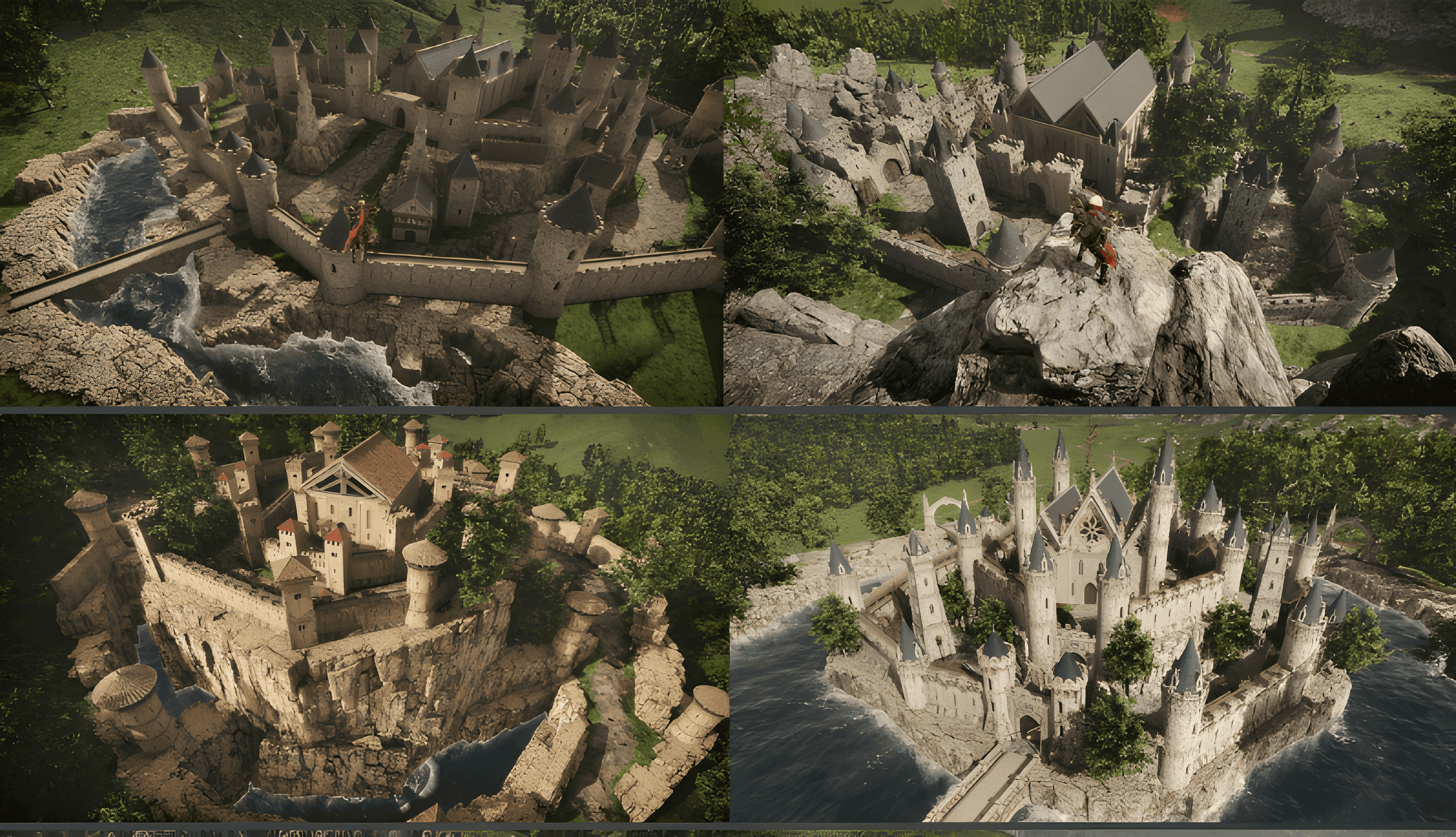
Castles across The Quinfall are no longer passive landmarks on the horizon. Every fortress is now tethered to its surrounding region, serving as a hub of immense wealth. The ruling clan dictates tax rates on city NPC transactions, Central Market sales, and fees levied on regional altars. All revenue funnels directly into the castle treasury, accessible by clan leadership for war efforts. Castle ownership also unlocks direct teleportation into the throne room and gates restricted exclusively to clan members.
Sieges trigger automatically at 21:00 server time on Thursdays and Sundays for EU and Asian realms, and on Wednesdays and Sundays for North American servers, running for a grueling 90 minutes. Claiming a fortress demands more than brute force: an attacking clan member must reach the throne and survive for 10 consecutive minutes under relentless enemy fire. In an upcoming dedicated Castle Siege Guide on our website, we will dissect tactical deployment strategies, capture timings, and vehicle compositions in depth, but the baseline siege mechanics already present a formidable challenge.
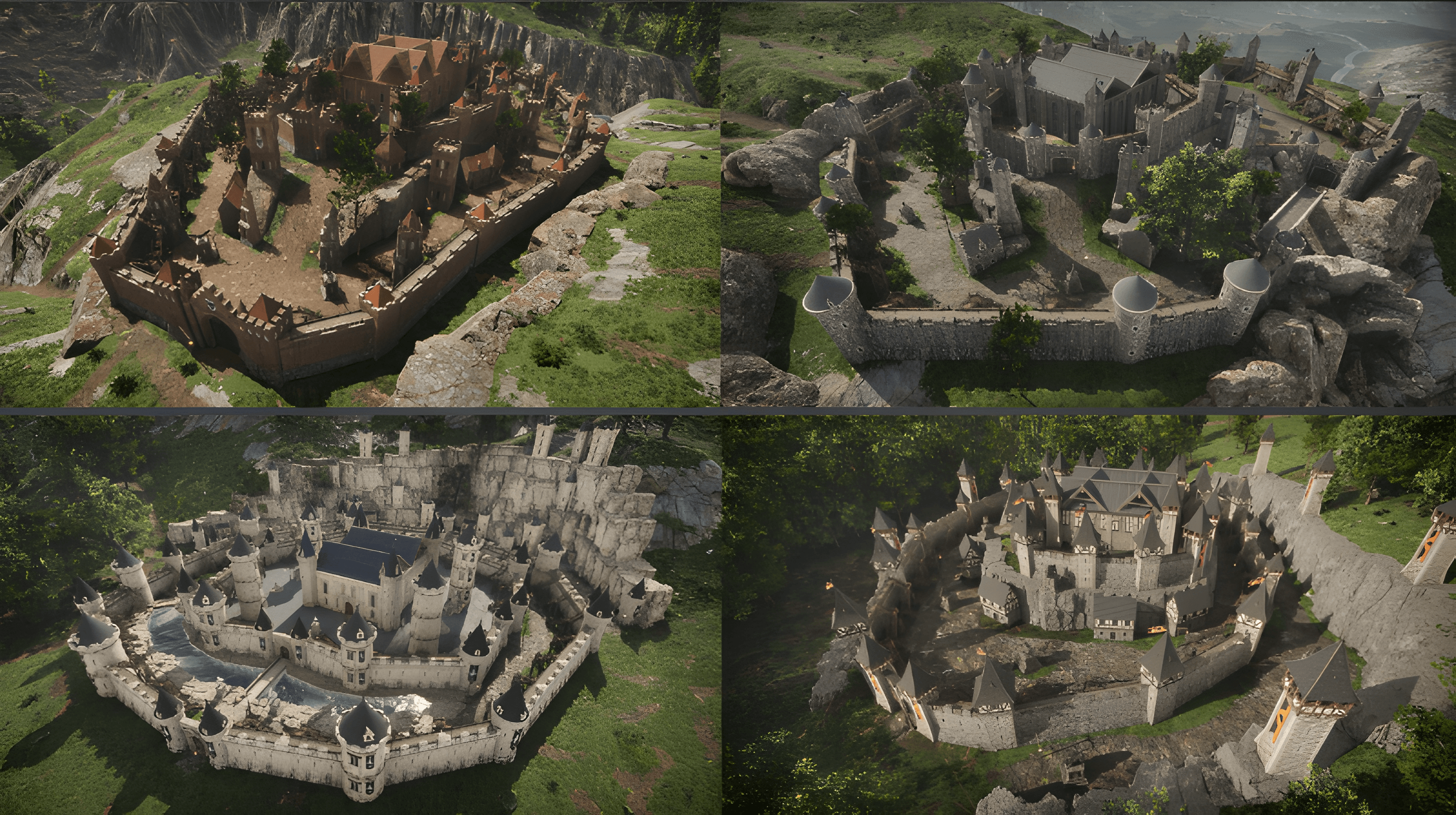
Fortress structures are reinforced to the extreme. Outer walls and gates are vulnerable solely during active siege windows, completely ignoring standard character combat abilities. Damage can only be inflicted via basic attacks, specialized Explosive Arrows dealing triple damage, and heavy siege machinery. Defending clans are strictly prevented from damaging their own walls.
The Siege Arsenal: Artillery, Battering Rams, and Titans
Siege operations rely heavily on the Engineering profession at the Tinkering Workbench. Direct-fire Cannons, arcing Catapults with a 150-meter engagement range, and reinforced Battering Rams require Engineering Level 30. The pinnacle of battlefield engineering belongs to mechanized golems, unlocked at Engineering Level 50.
Constructed titans fulfill two distinct battlefield roles: Defensive Golems boast staggering durability, demolishing walls with stone fists and flattening infantry lines via their Ground Slam ability, while Offensive Golems unleash devastating streams of Flame Breath powered by volatile Flame Oil. Most impressively, cannonballs, boulders, and golem strikes visibly carve craters into the ground, permanently altering the terrain throughout the battle. Vehicles can be upgraded across Tier 1 through Tier 10, undergoing radical visual evolutions at Tiers 5 and 10, with maximum tiering requiring rare Energy-Core Alloy.
The Fuel Death Clock: Permanent Vehicle Destruction
Fielding heavy machinery carries severe economic risk. Every crafted vehicle comes pre-loaded with 200 units of Fuel, lasting exactly one real-world day of deployment. Fuel depletes continuously, even when a machine is recalled to storage. The penalty for negligence is absolute: if fuel hits zero, the vehicle is permanently destroyed, vaporizing all invested crafting materials and upgrades.
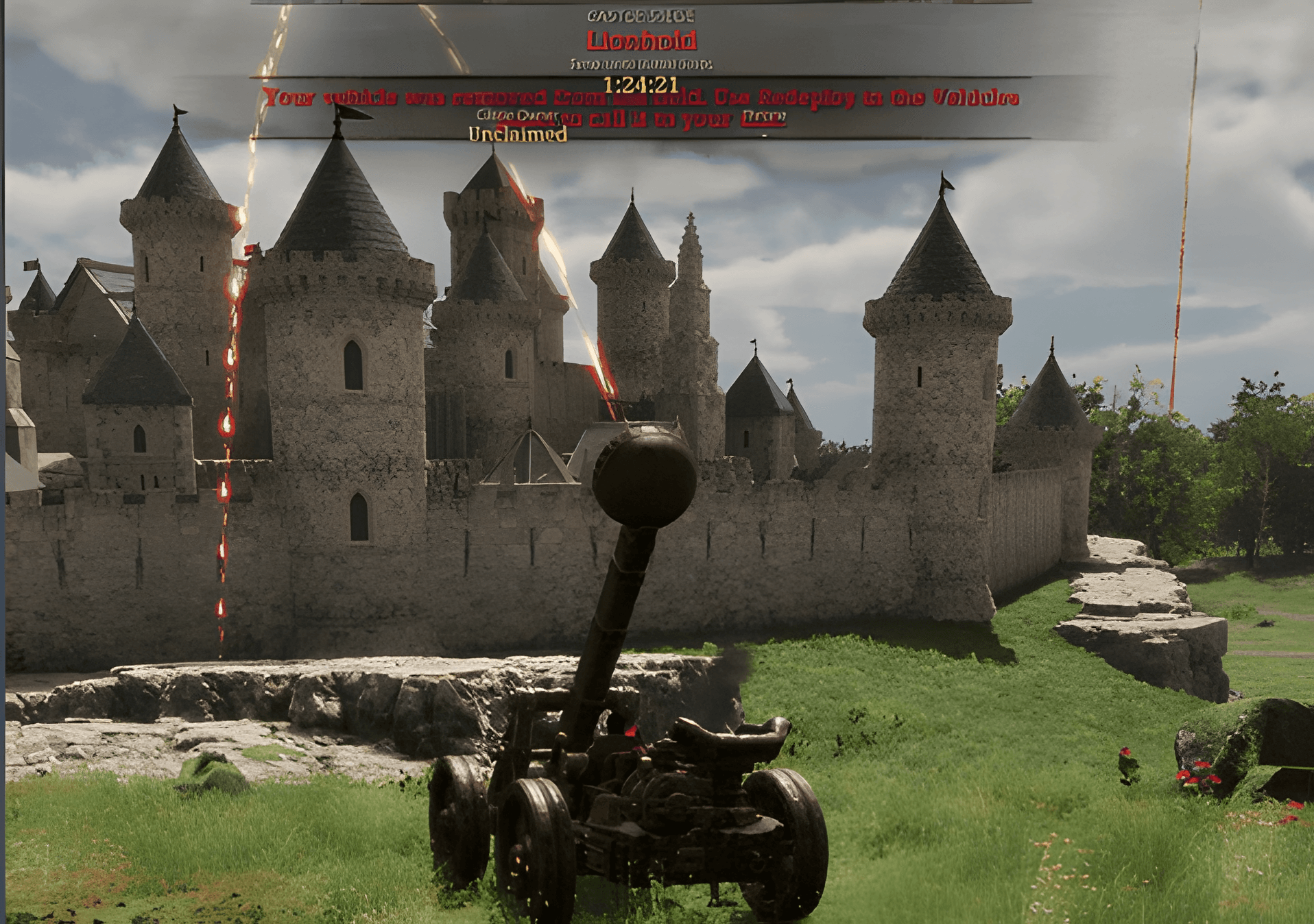
Abandoning equipment on the front lines is equally perilous. If an owner strays beyond 50 meters or disconnects, the machine lingers in the field for 30 minutes, exposed to enemy assault. Field repairs demand crafted Repair Parts, restoring 10% maximum HP per charge. However, repairing, recalling, or redeploying vehicles while under fire is impossible; taking or dealing damage triggers a strict 60-second cooldown lock.
Altar Overhaul: Territorial Rent Replaces Derelict Bases
Alongside castles, Vawraek restructured the altar infrastructure. Previously, maintaining personal altars required continuous material feeding, cluttering the map with abandoned structures from inactive players. The system now mirrors feudal tenure: altars operate on periodic currency rent determined by base tier and local tax rates set by the region's ruling castle.
Existing stored materials were automatically converted into credited rent balances. Altars whose owners fail to pay tribute to the territorial lords will be dismantled, purging dead structures and clearing prime real estate for active, competing guilds.
Server Authority Overhaul: Eradicating Cheats and XIGNCODE
The most consequential engineering feat lies within the engine architecture. The Quinfall transitioned to a high-concurrency, multithreaded simulation governed by 100% Server Authority. The game client has been stripped of autonomous calculation, operating strictly as a visual terminal: positional coordinates, animation timing, and combat math are validated server-side. Client-side speed hacks, memory editing, and teleportation exploits are rendered inert, as the server outright rejects unauthorized packets.
This architectural shift enabled the studio to execute a long-demanded community wish: XIGNCODE was completely excised, terminating all kernel-level monitoring drivers. Deep OS-level hooks, startup compatibility crashes, and intrusive loading screens have been eliminated. Security is now managed via proprietary server-side validation modules achieving a claimed 99.9% detection rate, simultaneously eliminating desynchronized ship positions and invulnerable phantom monsters in naval raids.
Synchronized Ocean Physics and Visual Fidelity
Ocean simulation has similarly migrated to the server. Water bodies were rebuilt entirely: dynamic wave displacement, coastal foam, and shallow-water color blending generate procedurally. Crucially, ocean swell is no longer calculated locally per client. Ship pitching, rolling, and wake turbulence are synchronized globally, ensuring identical line-of-sight and naval physics for every vessel engaged in open-sea warfare.
Terrestrial rendering gains visual sharpness through Virtual Shadow Maps (VSM) and SDF AO (Signed Distance Field Ambient Occlusion). Sunlight and artificial lanterns cast crisp, artifact-free shadows across all distances. Contact shading in cave recesses and beneath dense canopies eliminates floating object artifacts, delivering grounded environmental depth without compromising GPU throughput.
Thrall Upgrades: Autonomous Healing and Friendly Fire Fixes
The developers also refined the thrall follower mechanics introduced in our previous coverage of the thrall worker system and 22 GB patch. In v1.4.0.2, captured NPC retainers received substantial survivability improvements.
Thrall followers can now carry health potions in their personal inventories, automatically consuming them when injured with a 10-second cooldown. Buffs granted by Dancer thralls no longer purge upon swapping weapon sets, and their active aura radius is clearly projected via ground decals. Furthermore, lasso pathing bugs, friendly fire hits from allied archers, and boss damage immunity glitches were resolved across the board.
37 GB Footprint Reduction: Engine Streamlining
Wrapping up the technical overhaul is a massive reduction in storage overhead. Vawraek rebuilt its archive compression and eliminated duplicate assets, slashing The Quinfall's disk footprint from 108 GB down to 71 GB. While downloading the overhaul requires a near-complete client refresh, reclaiming 37 gigabytes of solid-state storage is an unequivocal triumph.
Patch v1.4.0.2 delivers a rare example of foundational engineering prioritization in the indie MMO space. By addressing server authority, territorial warfare, and bloated client footprints in a single stroke, Vawraek has provided The Quinfall with the structural backbone it desperately needed. Whether these systems can sustain long-term player retention will be proven on the battlefield during this weekend's inaugural sieges.