 F2P · Live
Lineage 2
Aden's castles never stay in the same hands for long, and Lineage II has built an entire twenty-three-year…
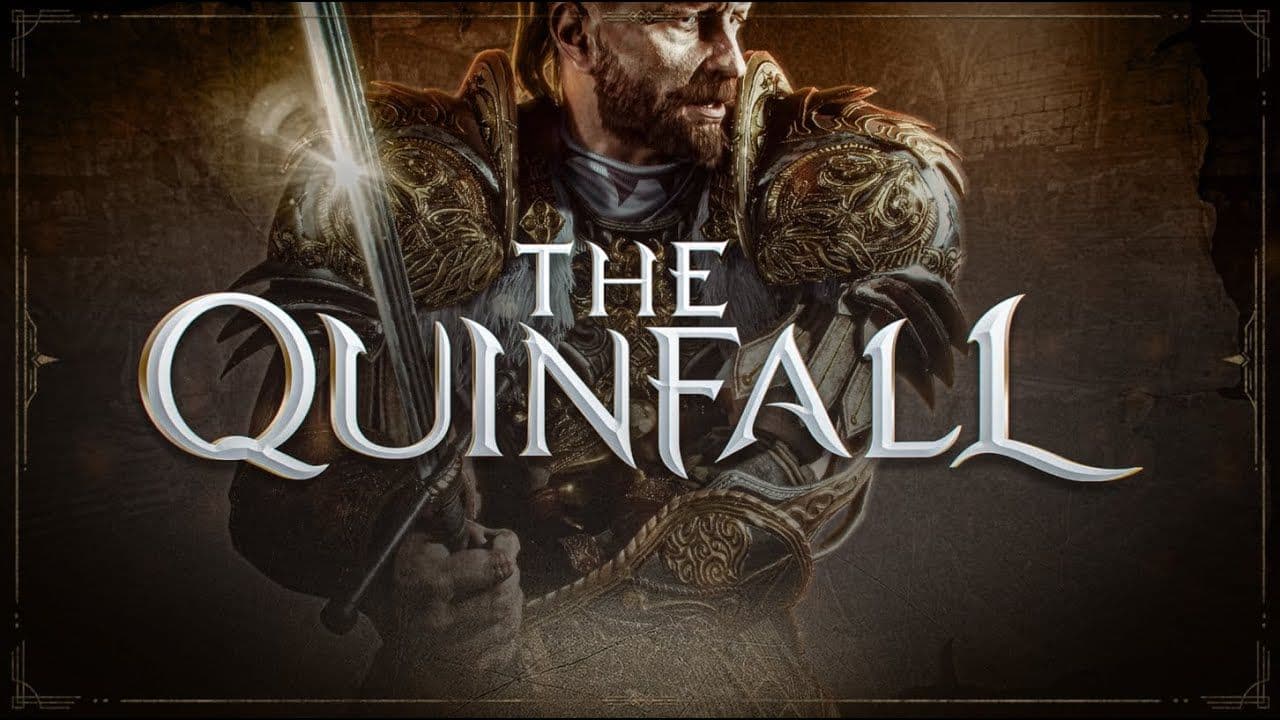
The Quinfall exited Early Access and launched its 1.0 version on February 6, 2026, and developer Vawraek Technology has kept up an unusually aggressive patch cadence ever since, shipping roughly 20 up...
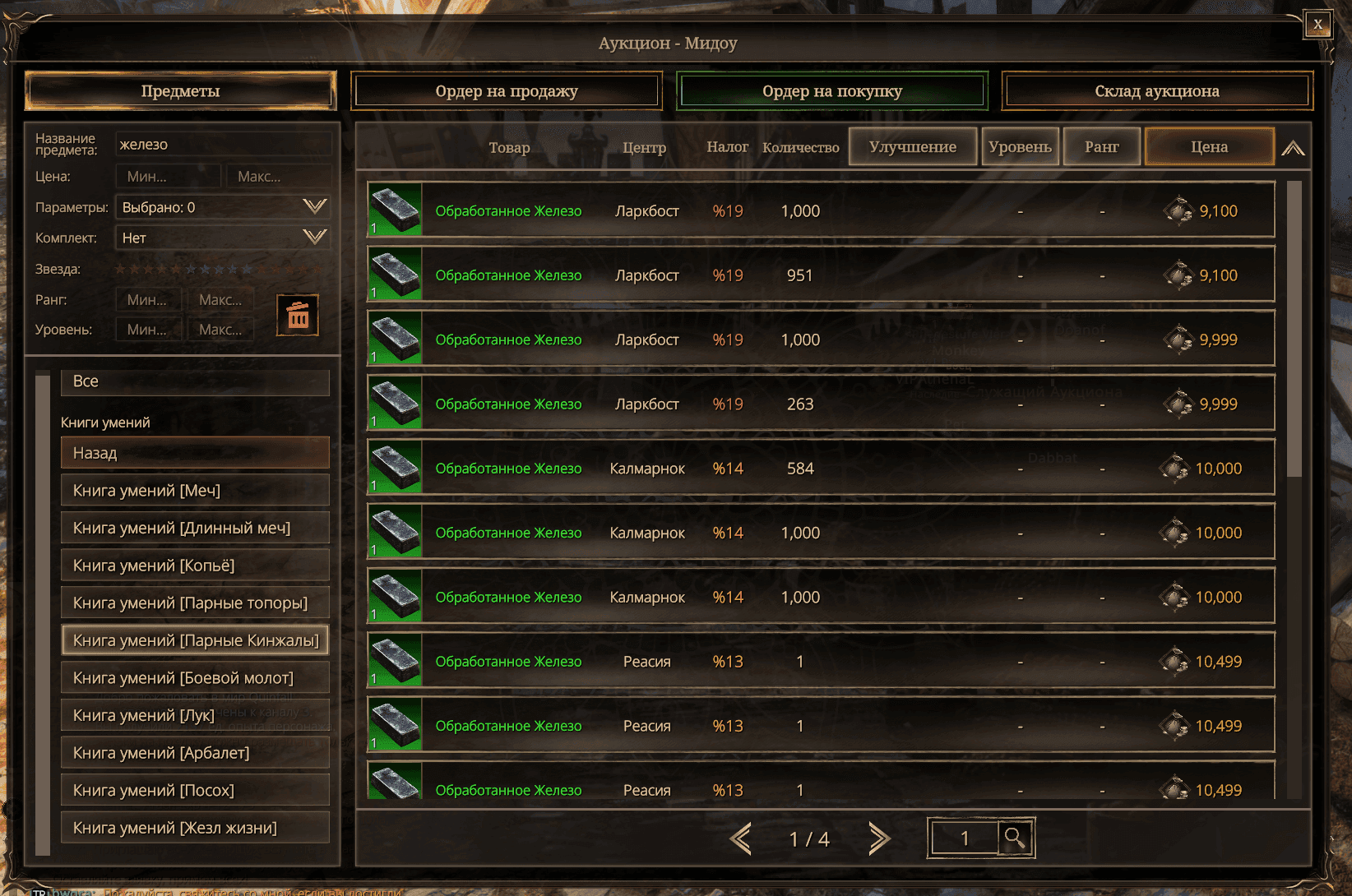
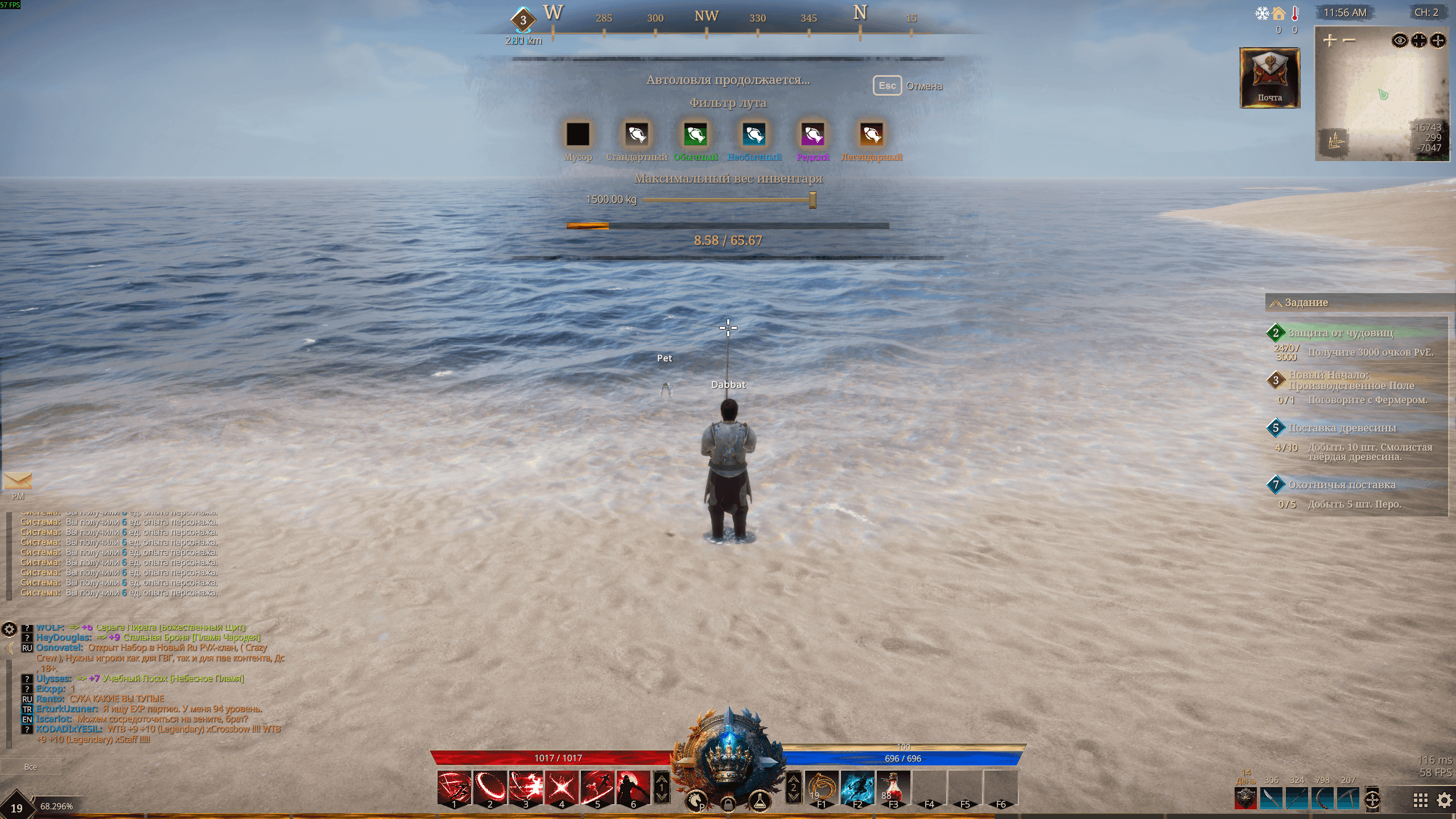
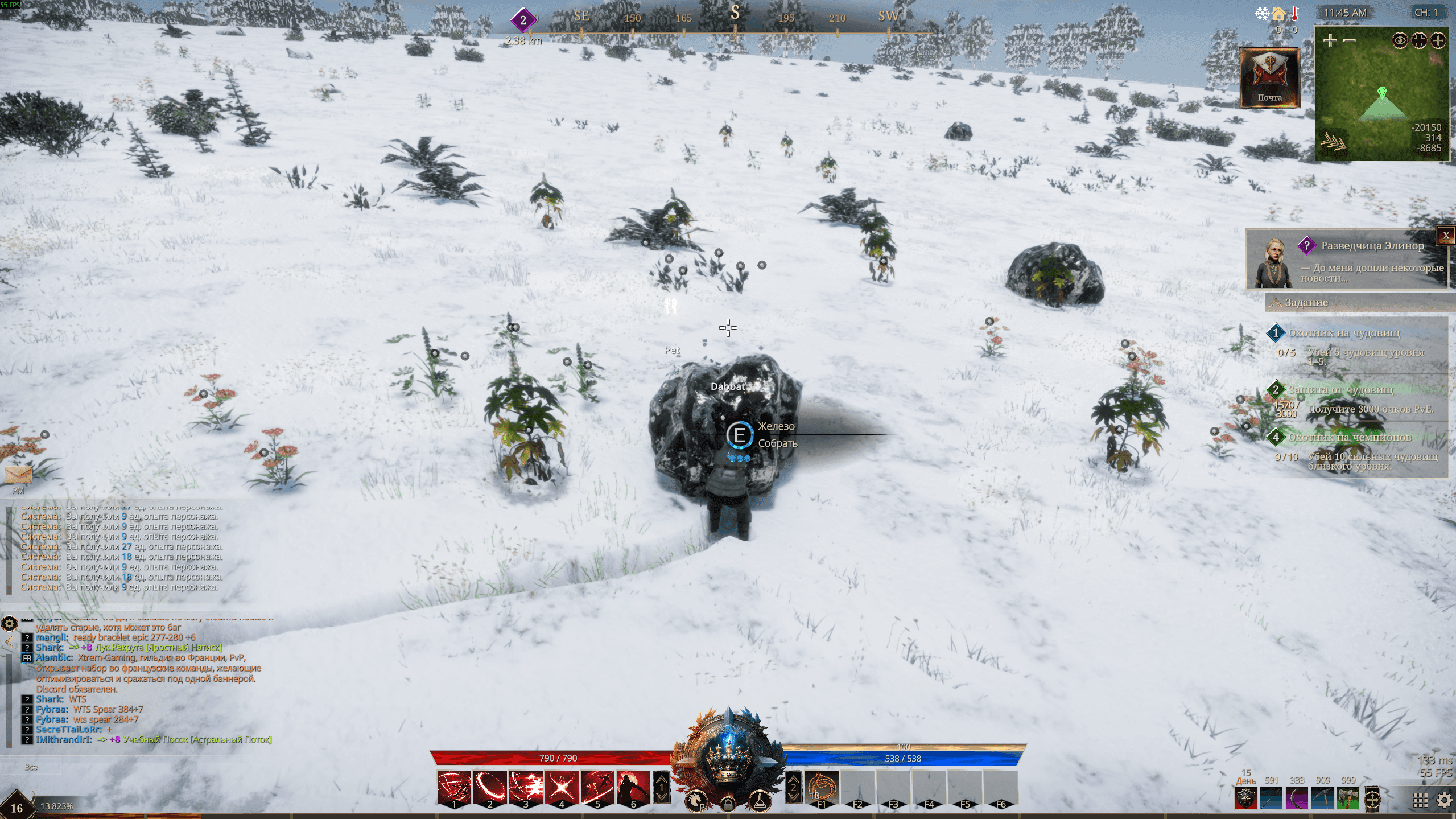
The Quinfall is a medieval sandbox MMORPG developed and published by Vawraek Technology, a small Turkish studio that entered Steam Early Access on January 24, 2025, and reached its full 1.0 release on February 6, 2026. It arrived promising the largest continuous map the genre has ever shipped, non-target combat, player-built ships, and sixteen professions spread across a living, seasonal world. Getting there took five rocky years, an Early Access launch that Steam users rated Mostly Negative within days, and a 1.0 relaunch that wiped every character on the server to start over. This review traces that arc and asks the only question that matters now: does the game underneath all that turbulence actually hold up in mid-2026?
Vawraek Technology wasn't a new name to MMO watchers when The Quinfall was revealed in March 2022 — it was a new name attached to an old, unfinished project. The studio's previous game, Kayra Online, was a Turkish-market MMORPG built in Unity that never reached a full commercial release and was quietly shelved around 2021. Several of the same developers carried that experience into The Quinfall, and the studio has been open about reusing lessons, if not code, from Kayra's testing phases. What it hasn't always been transparent about is asset sourcing: early trailers leaned heavily on store-bought Unreal Engine assets rather than original art, a detail that shadowed the project from its first announcement and gave skeptics an easy line of attack before a single player had logged in.
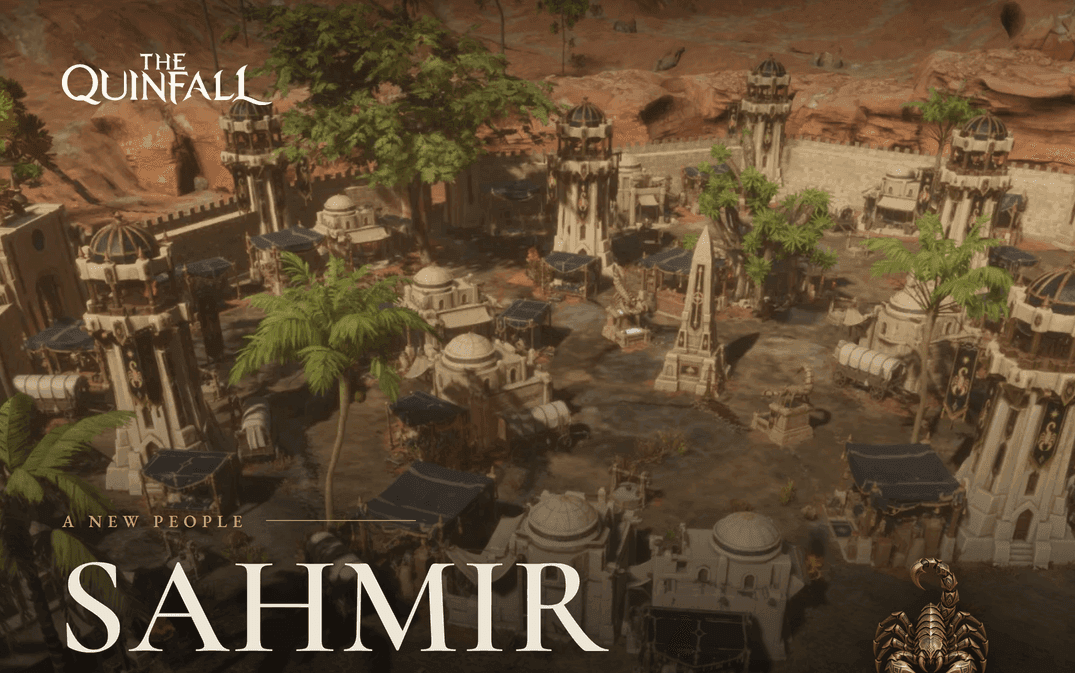
The pitch, though, was hard to ignore. A 56-person studio was promising a seamless 2,016 square kilometer world — by comparison, roughly ten times the size of classic World of Warcraft's Azeroth and more than three times ArcheAge's explorable space — spread across five climate regions with a full day-night cycle and four shifting seasons that would alter resource spawns and even flood or freeze parts of the map. Alongside that came a non-target combat system built around manual aim and dodge timing rather than tab-targeting, castle sieges fought with trebuchets and other war machines, and naval combat where players could crew player-built ships against pirates, sea monsters, and each other. Ambitious does not begin to cover it, and the gap between that pitch and what a first-time indie studio could plausibly deliver was, from day one, the central story of The Quinfall.
Vawraek held closed betas through 2024 and priced Early Access at $19.99 for its January 2025 launch — buy-to-play, with a V Coin cash shop the studio insisted upfront would never sell power. Within a day, the game had logged nearly a thousand Steam reviews at roughly 23% positive; within the first week, that settled into a "Mostly Negative" rating across more than 1,500 reviews. The complaints were the kind that sink a launch fast rather than slow: multi-hour login queues on only three servers, disconnections mid-session, broken character creation, missing NPCs, and quests that simply couldn't be completed. Paying nearly twenty dollars for a build in that state, on top of a cash shop already active during Early Access, turned a rough launch into a genuine trust problem.
The part of that story worth stating plainly, because it's easy to lose in the review-bomb noise, is that the underlying idea survived contact with reality better than the servers did. Strip away the connection issues and the map really was enormous, the base-building genuinely open-ended in a way that recalled Rust more than a typical themepark, and the profession list — sixteen trades from blacksmithing and alchemy to more novel roles like hired transporter — deep enough to support a real economy if the technical foundation ever caught up. That gap between promising bones and a broken shell defined the entire first year of Early Access.
Credit where it's earned: Vawraek didn't disappear after the bad headlines. Over the following year the studio shipped a steady stream of stability and optimization patches, and by February 2026 concurrent Steam player counts had climbed as high as roughly 7,500 during peak events — a real audience, even if a fraction of the launch-week curiosity spike. Community sentiment through late 2025 shifted from open hostility to cautious, "they're actually fixing it" acknowledgment, the kind of slow rehabilitation that rarely makes headlines but matters more than any single patch note.
The Quinfall left Early Access on February 6, 2026, and did something unusual for a 1.0 launch: it deleted everyone's progress. Vawraek framed the full character, structure, and inventory wipe as necessary to make a year of reworked combat, class structures, and economic balancing compatible across the whole playerbase, rather than patch around a live economy built on a broken foundation. The studio initially floated a sliding-scale refund for V Coins based on purchase date, then reversed course after player backlash and refunded every cash-shop purchase in full. It was a defensible technical decision handled clumsily at first and corrected under pressure — a pattern that, by this point, reads as fairly characteristic of how Vawraek operates.
What actually changed under the hood was substantial. Combat was reworked around ten weapon-based classes — Sword and Shield, Dual Axe, Dagger, Bow, Crossbow, Two-Handed Sword, War Hammer, Spear, Arcane Staff, and Life Staff — each splitting into two subclasses that lean toward different roles. There's no traditional class-select screen; your weapon and subclass choice define your kit, and the current post-1.0 meta has Dagger and Crossbow rated as the strongest solo picks, Sword and Shield as the safest beginner tank, and Life Staff as close to mandatory in any organized group content thanks to its Healer and Magic Warden subclasses. Building systems, storage, and the profession-grade progression all got expanded passes as well, based directly on a year of Early Access feedback rather than a fixed pre-launch roadmap.
A fresh 1.0 character starts with a weapon choice and a skill tree that unlocks abilities as you level, alongside an early quest board pointing toward the Deepest Maze dungeon as a benchmark for beginners. The loop from there is straightforward sandbox fare: gather and hunt to fund your first gear, capture and train a horse or pet for faster travel and combat support, and start dipping into whichever of the sixteen professions matches your interest — gathering trades like mining, lumberjacking, and fishing feed directly into crafting trades like blacksmithing and alchemy, and the game is explicit that professions run independently of your combat build, so a Dagger main can also be the server's best trader without any penalty for splitting attention.
Housing and building unlock reasonably early and lean sandbox rather than themepark — plots, workshops, and storage expansions all matter for a serious crafter, and ship construction opens up naval trade routes and piracy once a player has the capital and materials to invest. The seasonal system is more than set dressing: winter genuinely changes what's huntable and gatherable in a given region, and the developers have leaned on that to keep veteran crafters returning to zones they'd otherwise ignore. None of this is revolutionary on paper, but the execution — an actual living economy tied to actual resource scarcity — is closer to what ArcheAge attempted a decade ago than to the theme-park crafting-as-checkbox systems more common today.
Non-target combat is the system Vawraek staked the most credibility on, and it lands somewhere between promising and unfinished depending on which patch you catch it in. Dodging, timed blocks, and weapon-specific combo chains genuinely reward reflexes over gear checks in a way tab-targeting never could, and the post-1.0 rework noticeably tightened hit registration that Early Access players had rightly flagged as sloppy. It still isn't as polished as combat-focused competitors that have had a decade to iterate, and animation stiffness shows up most in group content, where reading eight or more overlapping attack telegraphs at once remains a genuine visual and mechanical challenge for the engine.
Where the ambition pays off most convincingly is in large-scale conflict. Castle sieges bring trebuchets and other siege engines into the mix rather than reducing the fight to a stat check, and naval combat — ship-to-ship cannon fire, boarding, and the ever-present risk of sea monsters or rival crews — is a genuinely rare feature set for a game this young. It's not flawless: server load during the biggest sieges still produces the kind of rubberbanding and stutter that a 2,016 square kilometer seamless world was always going to risk, and Vawraek's own optimization patch notes through 2026 make clear this is an ongoing fight rather than a solved problem. But when it works, watching a coordinated fleet break a fortress's naval blockade is the kind of moment few other MMORPGs on the market can currently offer.
The Quinfall is buy-to-play — the base game plus a V Coin cash shop, with no subscription and no free-to-play option currently planned. Vawraek has repeated its no-pay-to-win position consistently since 2024, and the shop's contents so far back that up: cosmetics, storage and convenience items, and V Coins that Steam-based purchasing was specifically designed to keep separate from third-party gold-selling middlemen. The studio also built an in-game path to premium currency through Token trading with profession merchants, letting dedicated crafters and traders earn some cash-shop value without paying, which is a meaningfully pro-consumer design choice for a genre where that's often an afterthought.
The honest caveat is that a paid Early Access period with an active cash shop already running before the game was finished — while technically not pay-to-win by the letter of what was sold — is the kind of sequencing that erodes goodwill regardless of intent, and it's part of why trust took a full year to rebuild. Post-1.0, with the wipe and full refunds behind it, the monetization model reads as one of the fairer buy-to-play setups currently in the genre. Whether that holds as the studio looks for revenue beyond the initial box price is the thing worth watching over the next year, not the thing to worry about today.
Concurrent Steam numbers have cooled considerably since the 1.0 launch spike — trackers put the game in the range of roughly 1,900 to 2,000 concurrent players through June and July 2026, down sharply from a post-relaunch peak north of 7,500, with monthly averages continuing to slide month over month. Steam's aggregate review score across more than 12,000 reviews sits in "Mixed" territory, generally in the low-to-mid 50s out of 100 — a real improvement on the Mostly Negative days of early Early Access, but still a signal that a meaningful share of the playerbase remains unconvinced. Exact regional data varies by tracker, but United States, Turkey, and Indonesia consistently show up as the largest player bases, and a genuinely engaged fan community has since built independent resources — build guides, profession trackers, and housing calculators — that wouldn't exist around a game nobody cared to keep playing.
That's the honest middle ground The Quinfall occupies right now: not the disaster its launch week suggested, not the genre-redefining sandbox its 2023 trailers promised, but a functioning, actively patched MMORPG with real systems underneath a still-recovering reputation.
If you're the kind of MMORPG player who wants a real player-built economy, open-world naval warfare, and sieges that lean on more than a gear-score check — and you're willing to tolerate a smaller, still-growing population and the occasional rough patch on a genuinely ambitious engine — The Quinfall in its post-wipe state is worth a serious look, especially at its now heavily discounted price. If you were burned by the January 2025 launch and haven't checked back since, the game you'd find today is materially different: reworked combat, a fresh economy, and a studio that has spent a year proving it can fix what it breaks. If you want a combat system as tight as a decade-old market leader, or a population dense enough to guarantee a packed server at every hour, this isn't there yet, and it's fair to wait another year and see whether Vawraek can turn "recovering" into "thriving."