 F2P · Live
Lineage 2 Essence
Lineage 2 Essence is NCSoft's free-to-play take on the classic Korean MMORPG Lineage II, built around faster…
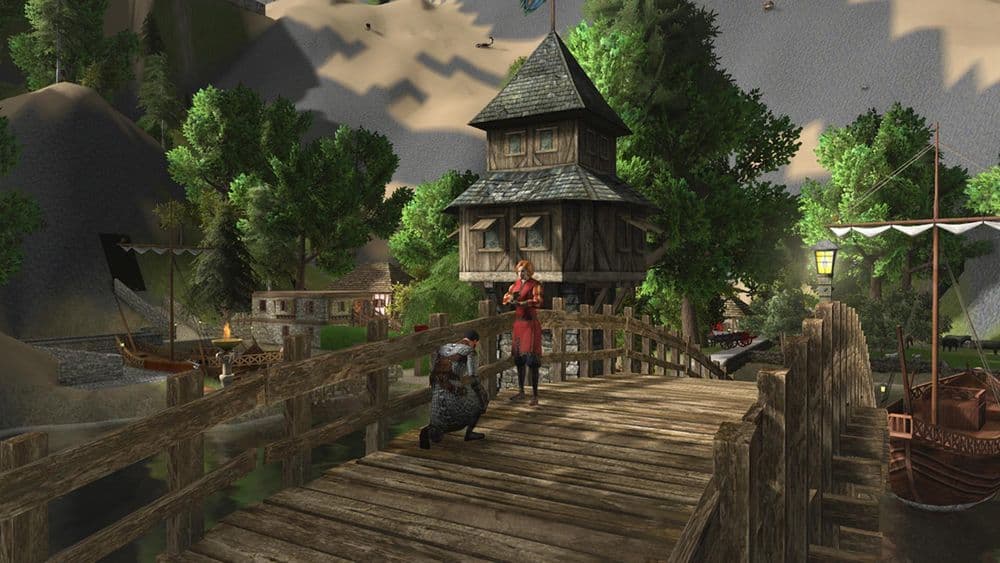
Pick a hillside, and Wurm Online lets you flatten it, tunnel through it or pave a road across it — permanently, on a map where every structure was built by another player. Over a hundred skills grow p...
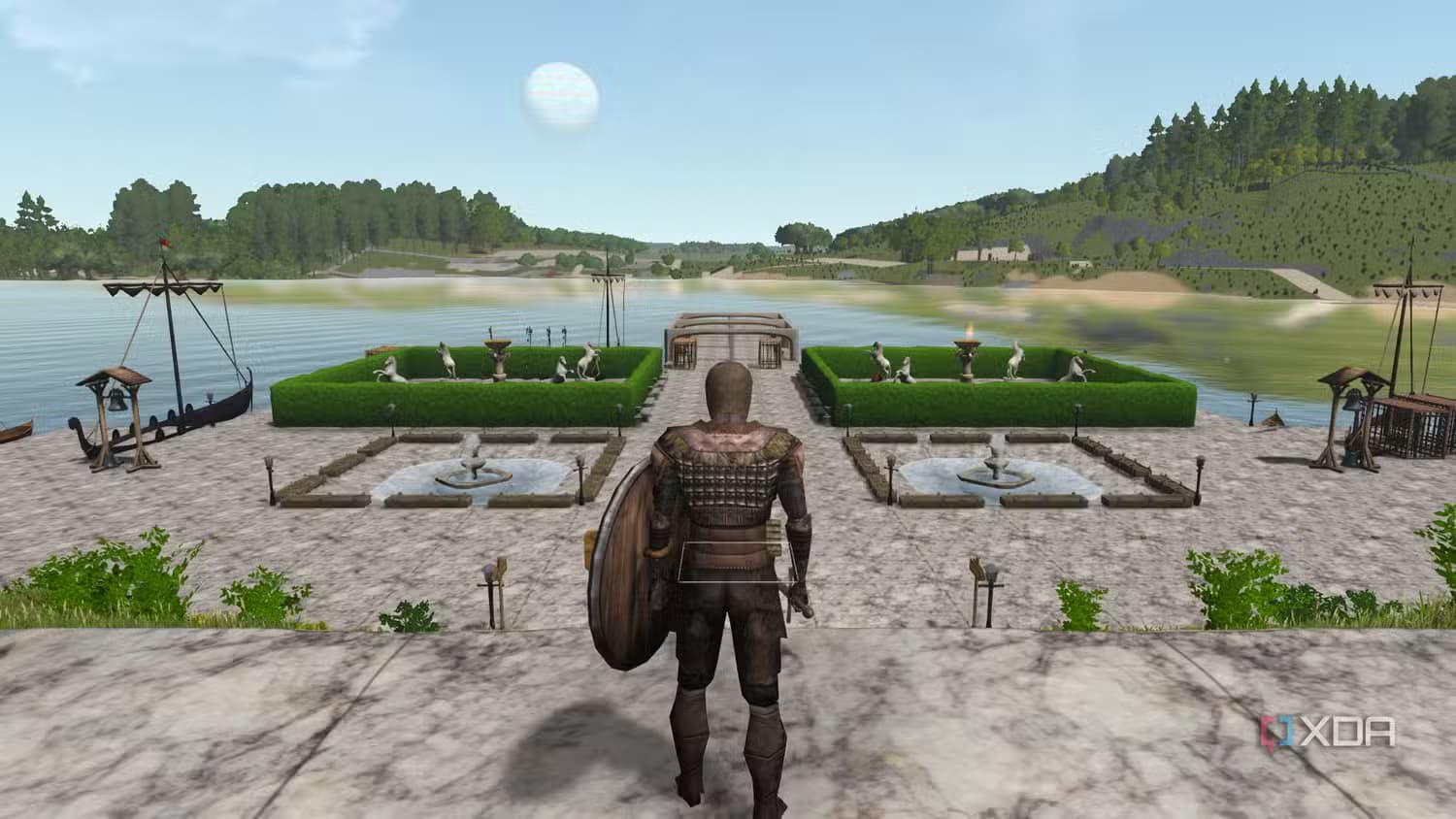
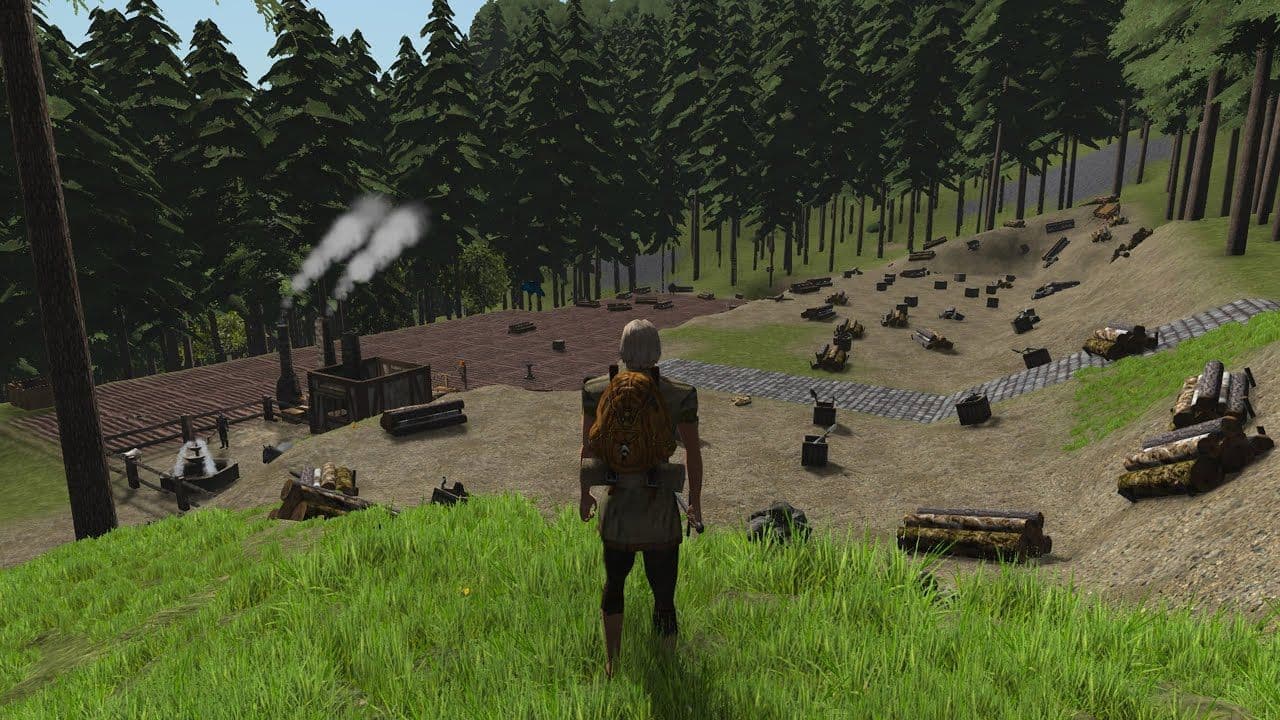
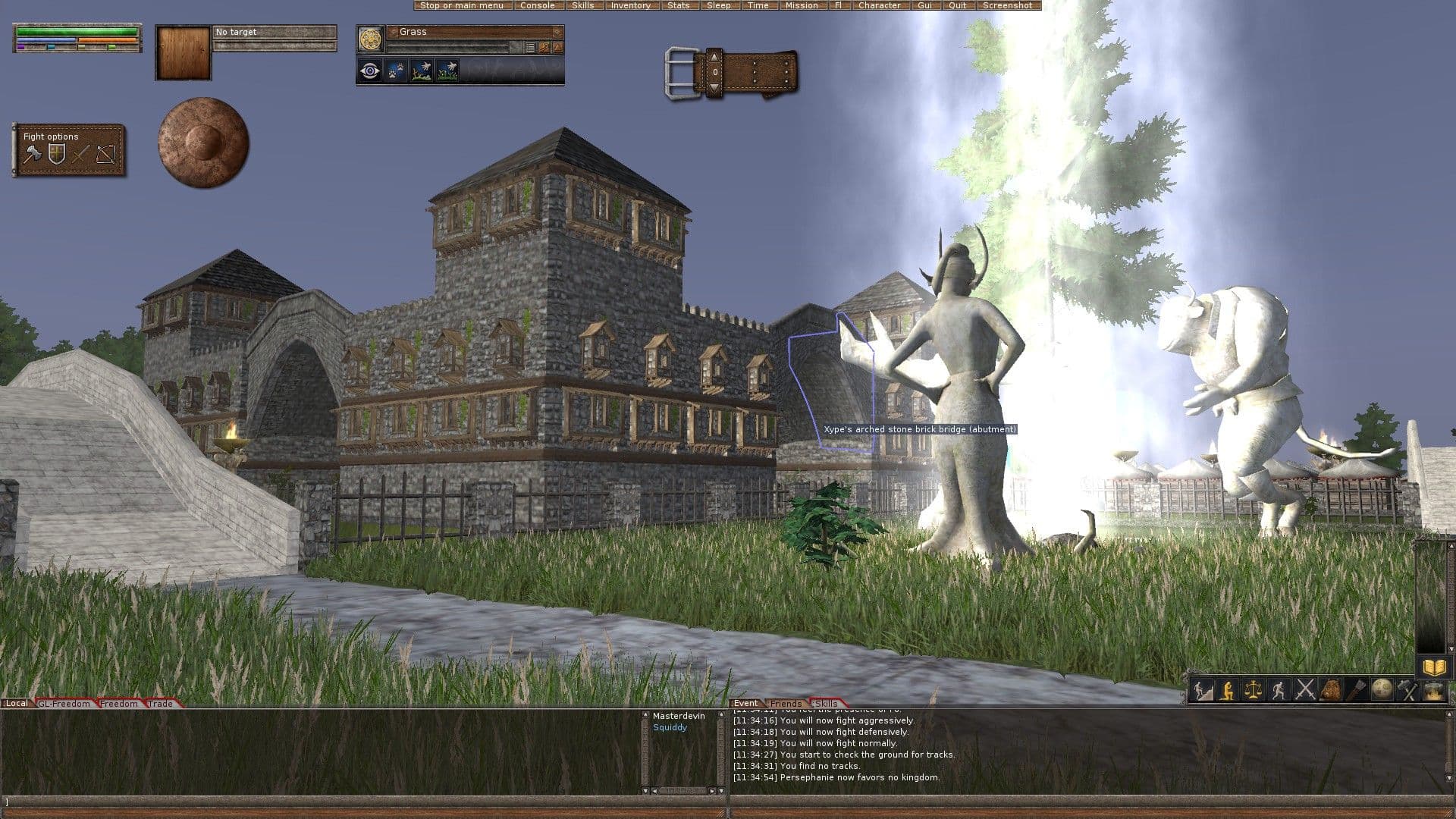
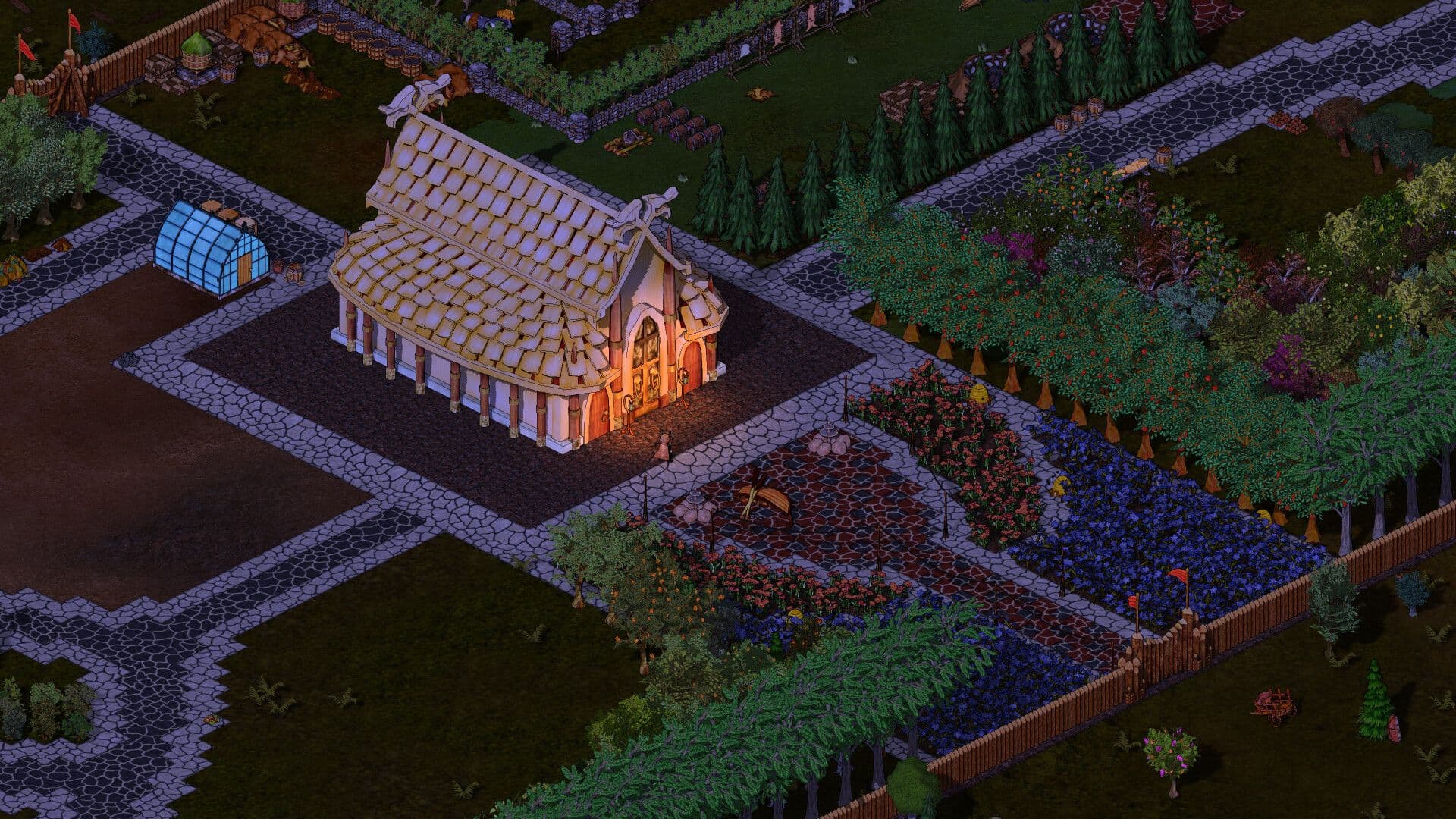
Wurm Online is a sandbox MMORPG from Swedish studio Code Club AB, running without interruption since 2006 and co-founded by Rolf Jansson and Markus Persson, who left a few years later to make Minecraft. Its defining feature is that almost nothing in the world was authored by a designer: the roads, tunnels, farms, harbours and reshaped hillsides are all player work, cut into terrain that can be raised, lowered or hollowed out one tile at a time. Two decades in, it still ships patches — the animation system was rewritten in July 2026 — while its population sits in the dozens per server, not the thousands.
The clearest way to explain what that means is to walk through one day on a Freedom server, login to logout — Wurm's systems make sense in the order a player runs into them, and a feature list hides the thing that matters most, which is how long everything takes.
You log in on a continent that exists as a persistent island, connected to its neighbours by open ocean rather than a loading screen. The southern cluster holds the old ground — Independence, Deliverance, Exodus, Celebration, Pristine, Release and the enormous Xanadu, plus the PvP server Chaos, where kingdoms have been at war since 2007. The northern cluster arrived with the 2020 Steam launch, deliberately cut off so new players would build alongside other new players: Harmony, Melody and Cadence for peaceful settlement, Defiance for war.
What surrounds you on that first morning is mostly other people's decisions. The paved road past your door was laid tile by tile by someone who no longer plays. The flat shelf your house sits on used to be a slope. The tunnel through the ridge took a stranger two months. Wurm's terrain is stored as a grid of tile corners with editable heights, which makes terraforming a basic verb rather than a feature — a shovel is a world-editing tool, and there is no undo command anywhere in the game.
That single choice explains most of what follows. Because nothing resets, anything built stays until another player removes it — and because permanence would otherwise choke the map, a decay system runs underneath. Items left outdoors degrade, unmaintained buildings collapse, and an abandoned village becomes overgrown foundations within a couple of years, opening the land up for whoever comes next.
Wurm runs a classless skill system with no character level at all. There are over a hundred separate skills — blacksmithing, carpentry, digging, masonry, cooking, cloth tailoring, animal husbandry, fishing, paving — plus seven underlying characteristics such as body strength and mind logic. Every one of them grows only through use. Your character is not built by a menu at creation; it is the accumulated record of what you spent your evenings doing.
A typical morning's work looks unglamorous written down. You mine iron ore, smelt it into a lump, forge a pickaxe head, attach a shaft. Each action is a timer of several seconds and a log line saying mining went from 12.44 to 12.61 — no fanfare, no level-up chime, nothing acknowledging that you did anything. What the game offers instead is arithmetic, and the arithmetic compounds: a month later that same ore takes half as many swings.
Sitting on top of the skills is the mechanic that ties the whole economy together. Every object in Wurm carries a quality rating from 1 to 100, and quality governs performance: a 20-quality axe chops at roughly half the speed of a 60-quality one, low-quality iron tools break faster, and a house built from poor planks needs constant repair. The quality you can produce is capped by your skill and by the quality of your materials, and those materials were gathered with tools whose quality depended on someone else's skill. The chain closes on itself. You cannot shortcut into good gear because good gear requires good gear.
Improvement is the release valve. Any finished item can be worked on indefinitely — filed, polished, hammered — gaining fractions of a point each pass, with a real chance of damaging it instead. A blacksmith at 90 skill can spend an hour turning your mediocre pickaxe into something that outlasts your subscription. It is the most honest depiction of craft in the genre and an activity that looks, from outside, like clicking one button for three hours. Which of those you notice will decide whether you stay.
Sooner or later you stop squatting and found a settlement, which players call a deed. You plant a stake, open a form, set your borders, name the place and define who may open your doors, take your items or dig your land.
The arrangement is a lease rather than a purchase. A minimum-size deed costs 4 silver and 21 copper, of which 3 silver goes into the settlement coffers as upkeep, and each month the game deducts rent for the tiles you occupy. Let the coffers empty and the deed disbands, after which decay eats everything you built. Keep them funded and the whole area is exempt from decay and closed to strangers. A little extra hires guards, who chase off wildlife on peaceful servers and form the first line of defence on hostile ones.
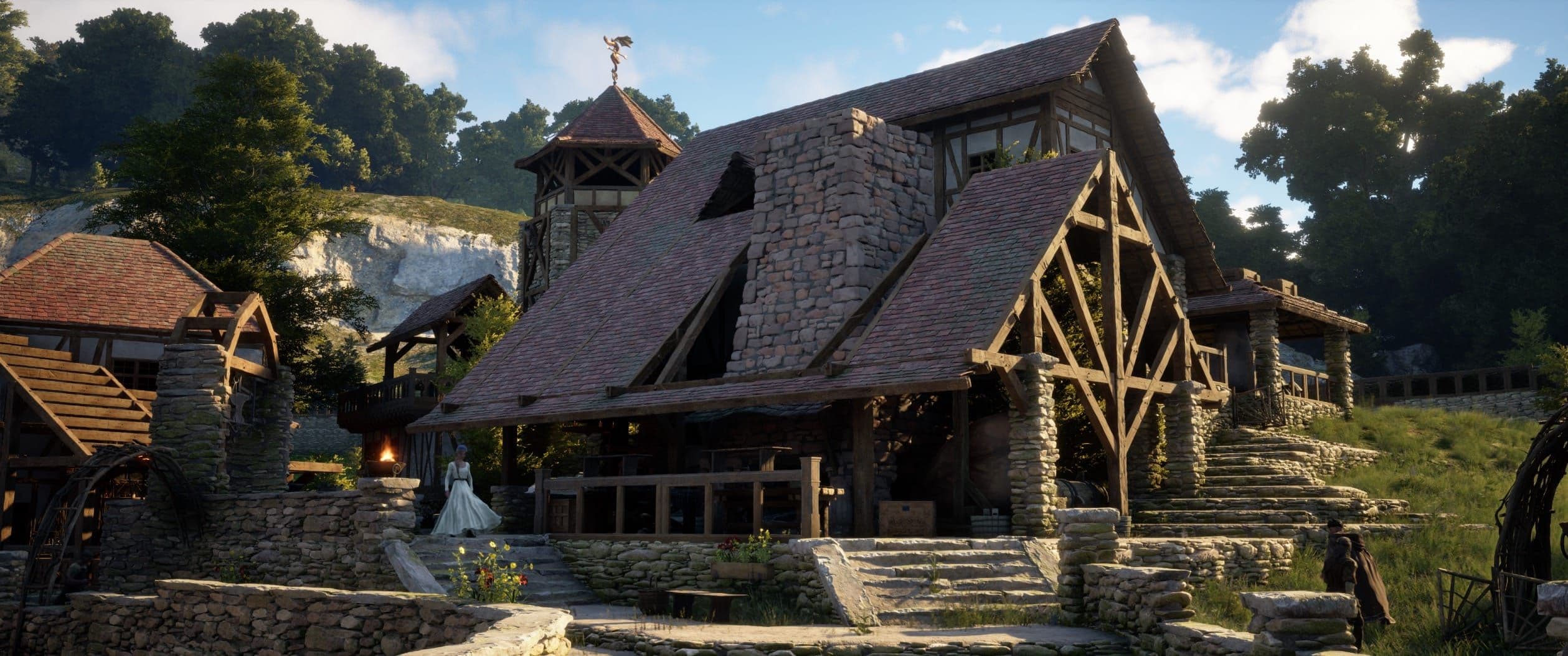
Building is done piece by piece rather than by placing a prefab. You raise a house frame, then construct each wall individually — plain, windowed, doored — then floors, a roof, stairs to the second storey. Stone construction requires masonry 30, out of reach for free accounts. Bridges across ravines are built the same way and generally take a group.
Yes, and the gap is wide enough to be the main reason people play Wurm Online rather than a survival game with similar surface features. The difference is that crafting here is not a subsystem serving combat; it is the content, with several professions deep enough to occupy a player permanently.
Farming runs on seasons — you plough, sow wheat, corn, flax or cotton, wait for ripeness, harvest with a scythe. Your character eats and drinks, hunger and thirst tracked separately, and a varied diet raises a nutrition value governing how fast stamina returns. That feeds cooking, which is unexpectedly involved: ovens, pots, pans, dozens of recipes and an affinity system where a well-made dish grants a temporary bonus to one skill. A high-level cook is a useful member of a village rather than a novelty.
Animal husbandry is equally detailed. Creatures are tamed, fed, bred and groomed, offspring inherit traits like speed or stamina, and the game warns you when a pairing is too closely related. Horses are branded, shod and hitched to carts. Fishing was rebuilt into a profession of its own, with rods, reels, bait, species that bite in different water, and deep-sea trips for the larger catches.
The criticism worth making is that none of it is documented in-game. Wurm ships with almost no tutorial past the first ten minutes, and the practical manual is the community-maintained Wurmpedia plus whoever answers you in chat. Players who enjoy reverse-engineering systems will count that as part of the appeal; players who expect a game to explain itself will bounce hard.
Travel is where Wurm's collective side becomes visible. Roads do not appear by themselves: somebody flattened the slope, paved every tile, then converted the strip into an official highway by planting a waystone at each end and linking them with markers called catseyes.
The requirements are strict: at least two tiles wide, slope no steeper than 20 straight or 14 diagonally, paving skill above 20 to plant the markers. In return the route becomes protected ground nobody can build over, carts gain automatic pathing, and NPC wagoners haul goods between connected settlements. The highway network on the older servers is years of unpaid collective labour by hundreds of people, and it works as real infrastructure. Very few MMOs let players construct a public good this literally.
Everything that moves is built too. Wheelbarrows and carts for hauling, large carts drawn by paired horses, wagons. On water the range runs from a crude canoe up to a caravel crewed by thirteen players, capable of carrying cargo and passengers to a neighbouring server. There is no teleport between islands. There is open sea, a compass, and your ability to read a map.
Magic exists, framed as religion with a price attached. Four gods are available — Fo, Vynora and Magranon of the white light, Libila of the black. You begin as a follower, accumulate faith through prayer and sacrifice, and at 30 faith with active premium you can take priesthood, either from an advisor in a starter town or by pilgrimage to an altar on a PvP server.
Priests get a long spell list covering healing, item enchantment, crop growth, combat magic and wall reinforcement. What they give up is ordinary work: a Vynora priest cannot mine, a Fo priest cannot cut trees, and priests of Magranon and Libila can neither improve items nor dig. That is a career change rather than a restriction — the character stops being a craftsman and becomes a specialist the village supports in exchange for enchantments. Many players solve it with a second account, which is also a second subscription.
Meditation runs alongside it and is easy to miss entirely. You locate a special tile, sit on it, and after enough successful attempts commit to a path — among those available are Love, Knowledge, Power and Insanity. Knowledge protects against skill loss on death and permanently raises skill gain, Power doubles stamina, Love allows enchanting grass. Advancing takes months, because long cooldowns sit between levels.
Evenings are also when the server's shared events happen. Rifts tear open at random points on the map, spilling waves of dangerous creatures that have to be beaten back collectively; the reward is rift material used for jewellery with useful properties. Uniques — the red dragon, the kyklops, the troll king — spawn on no schedule, and a discovered one is usually kept quiet until enough people can be assembled. Killing a dragon distributes blood and scale to every premium player in the area, which is how the best armour in the game enters circulation. On a server with fifty active players, this is genuine news.
The quieter counterpart is archaeology. Investigating a tile yields fragments that a restoration subskill reassembles into whole items, but the better output is information: the game tells you which settlements once stood there, how long they lasted and when they vanished. Twenty years of abandoned ambitions sit in the ground as retrievable data.
Everything above describes the peaceful Freedom servers, where fighting other players requires mutual consent. Wurm's actual PvP lives on separate maps: Chaos in the south, Defiance in the north, Elevation in the Epic cluster.
It is organised by faction. Three kingdoms — Jenn-Kellon, Mol Rehan and the Horde of the Summoned — share one map and contest territory, with player-founded kingdoms also permitted on Chaos. Influence is anchored to guard towers and deeds, so pushing a border means dismantling what the enemy built. Defiance imposes no mechanical penalty for killing; the consequences are social, which in a community this small is not nothing.
War here is siege work rather than skirmishing. Taking a settlement means killing its hired guards, breaking through walls, picking locks and draining the treasury through its token, and preparation runs to weeks — a fortified staging deed nearby, gear stockpiled, people coordinated into one time zone. The loser drops the contents of their corpse and takes a skill hit. Chaos, the oldest PvP map, moves at a pace where meaningful standing takes years; Epic doubles skill gain so newcomers can close the gap, and even there progress is measured in months.
The honest problem is population. Wurm's PvP servers are thinner than its peaceful ones and the barrier to entry is close to prohibitive: you need a developed character, prepared equipment and a group willing to bring you along. Alone, you are loot.
Wurm's currency carries more weight than most because silver converts in two directions. It pays your deed's upkeep and it buys premium time directly at a settlement token, so a player who learns to earn in-game can fund both land and subscription without touching a card.
People earn it by selling high-quality tools and armour, moving bulk materials, shipping other players' cargo and hiring out services — item improvement, enchantments, opening ore veins. There is no auction house, and that absence is structural. Trade happens through NPC merchants players place on their own land and stock themselves, through forum classifieds and through direct conversation. Nobody regulates prices, and finding a buyer is sometimes harder than making the goods.
For a newcomer this is the roughest stretch of the game: while your skills are low, nothing you produce is worth buying, and silver accumulates painfully slowly. The usual route is to work for your own settlement first and enter the market later, once you can make something the neighbours cannot.
Wurm Online is free to download and play indefinitely, but the free tier works as an unlimited demo rather than a full version. Basic accounts are capped at skill level 20 across the board, with faith capped at 30. They cannot become priests, brand animals, accept citizens into a settlement or take ownership of an existing one. Stone houses are out, since masonry 30 is required. Riding is limited to donkeys, mules and cows, and captaining to a crude canoe or rowing boat.
Premium removes all of it. Per the Steam store page, pricing starts at 4 euro per month under a starter offer for new accounts, and buying through the shop adds one sleep powder monthly for faster skill gain. Nothing sold gives a combat advantage — silver buys land, time and other people's labour, never skill. Pretending money changes nothing would be dishonest, though: a full set of high-quality tools bought from a veteran removes a large slice of the early grind.
Wurm Unlimited, released in 2015, is the same game sold once for private servers with mods and adjustable skill rates. Those worlds are not shared and can vanish with their host, but for learning the systems or playing with a small group it works.
If you have ever wanted a game where the reward is a thing that stays put, Wurm Online is the only place still offering it at this scale — not a cosmetic house instanced away from the world, but a hill you flattened, a road strangers drive along, a workshop whose tools beat your neighbour's because you put in more hours. Twenty years of player labour sit on those maps, and adding to them is the whole proposition.
If what you want from an MMO is momentum — visible progress inside a single session, combat that carries the experience, a designer supplying you with goals — look elsewhere, and look without regret. Wurm will not convert you. The first evening genuinely does consist of chopping wood and watching a number climb by hundredths, and the game makes no apology for that. Try Pax Dei for a gentler take on the medieval sandbox, or Mortal Online 2 if the appeal was the hardcore edge rather than the building.
If you are somewhere in between, give it a fortnight of real evenings before deciding. The point where Wurm clicks is usually the moment you finish something you could not have finished a month earlier. It asks for patience and returns ownership, and it is one of very few MMOs where that word means anything concrete.
For players who want deep crafting and a persistently editable world, yes — the game is still patched regularly and the developers returned to content work in May 2026 after a period of bug fixing. Anyone looking for an active, populated MMO with fast progression should look at other options.
Exact totals are not published, and available figures disagree. The official server counter for Harmony showed roughly fifty players online in August 2026 with a weekly peak in the nineties, while Steam tracking recorded a daily peak around 150 — but Steam is only one of two clients, and the total is spread across more than a dozen maps.
Yes, on dedicated servers only. Chaos, Defiance and Elevation run kingdom-versus-kingdom warfare with deed sieges and item loss on death, while all other servers are peaceful and require consent for player combat.
No in any direct sense — skills cannot be purchased and no cash item confers a combat advantage. Money does buy silver, which purchases land, premium time and goods made by other players, so a paying player can skip a portion of the early grind.