 F2P · Live
Lineage 2 Essence
Lineage 2 Essence is NCSoft's free-to-play take on the classic Korean MMORPG Lineage II, built around faster…
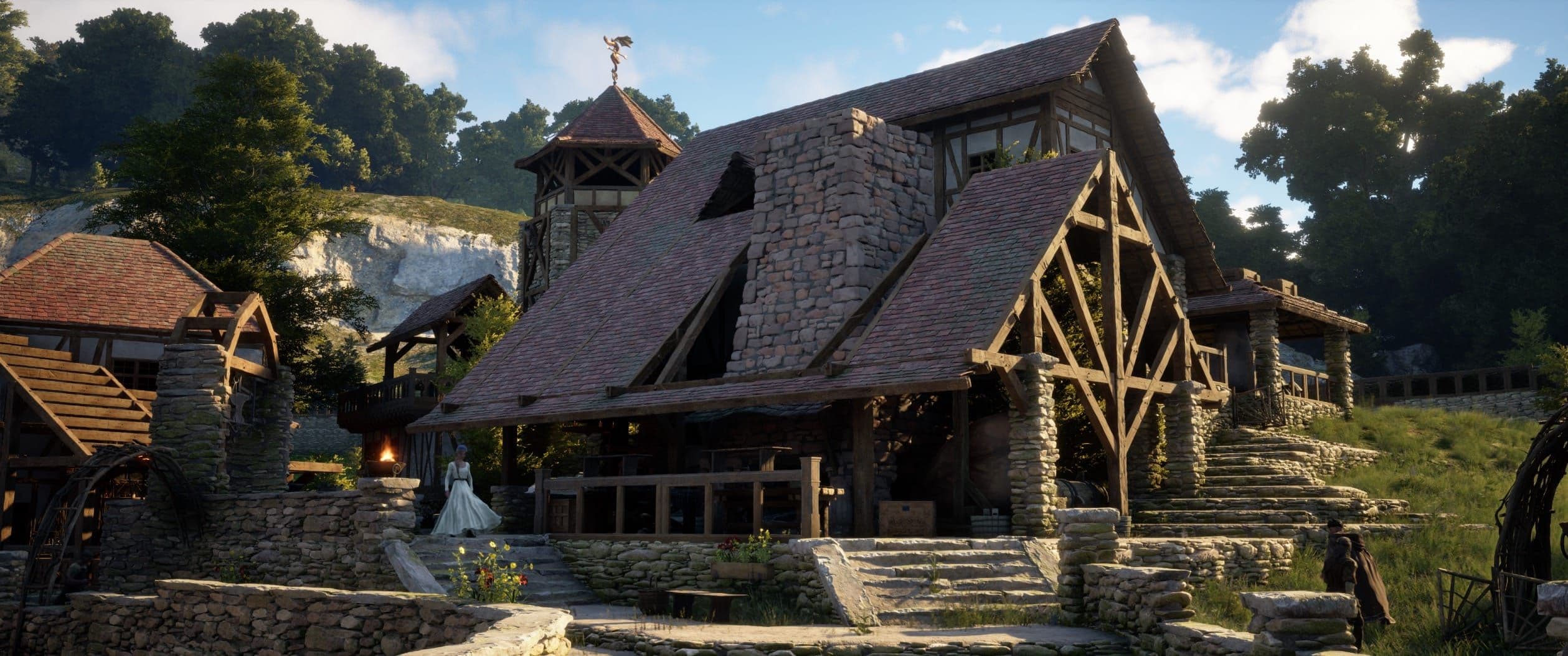
Land plots, master crafting, and player-built settlements are the backbone of Pax Dei, Mainframe Industries' medieval sandbox MMO where nearly everything a player uses is made, not looted. The game le...
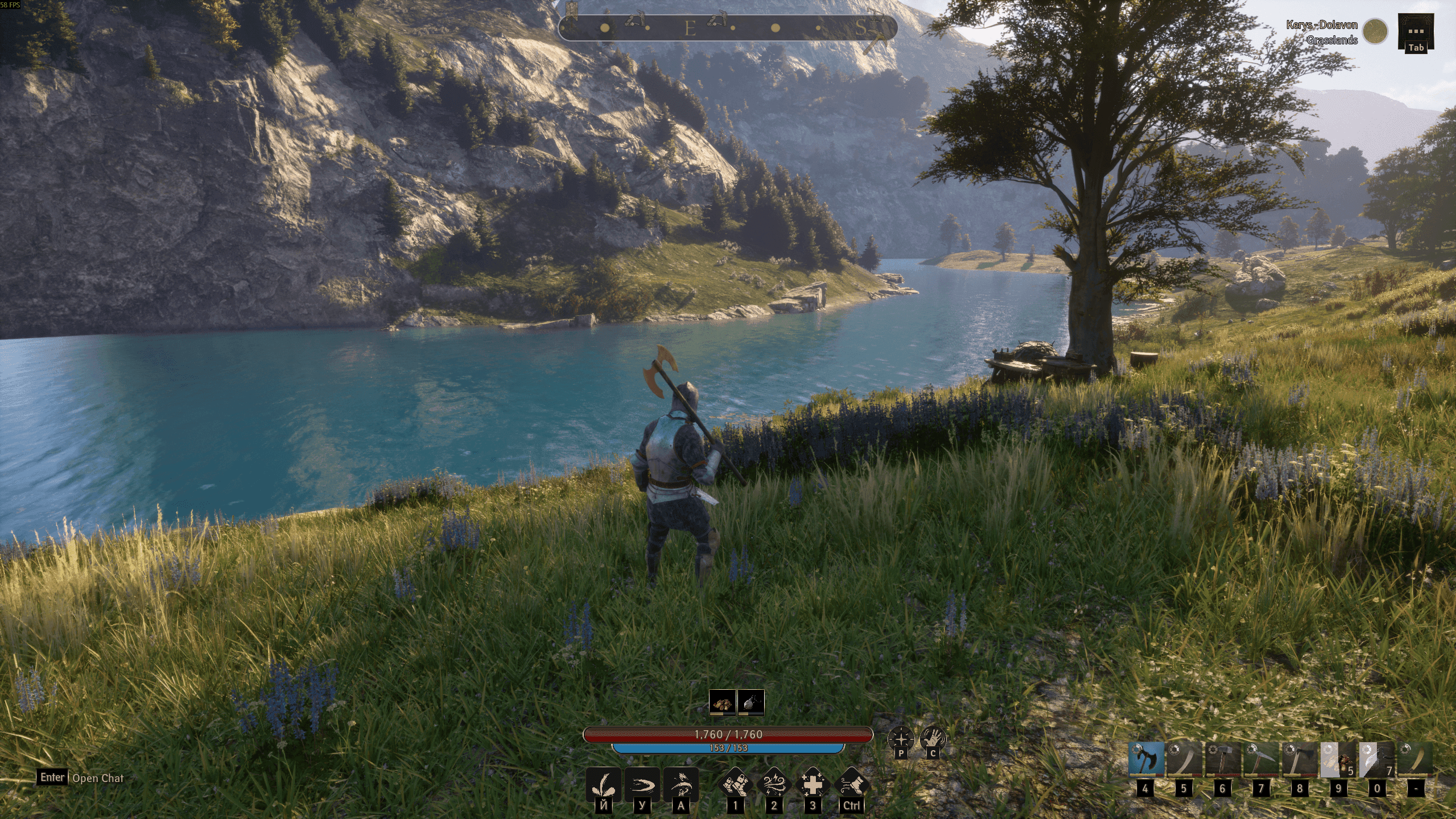
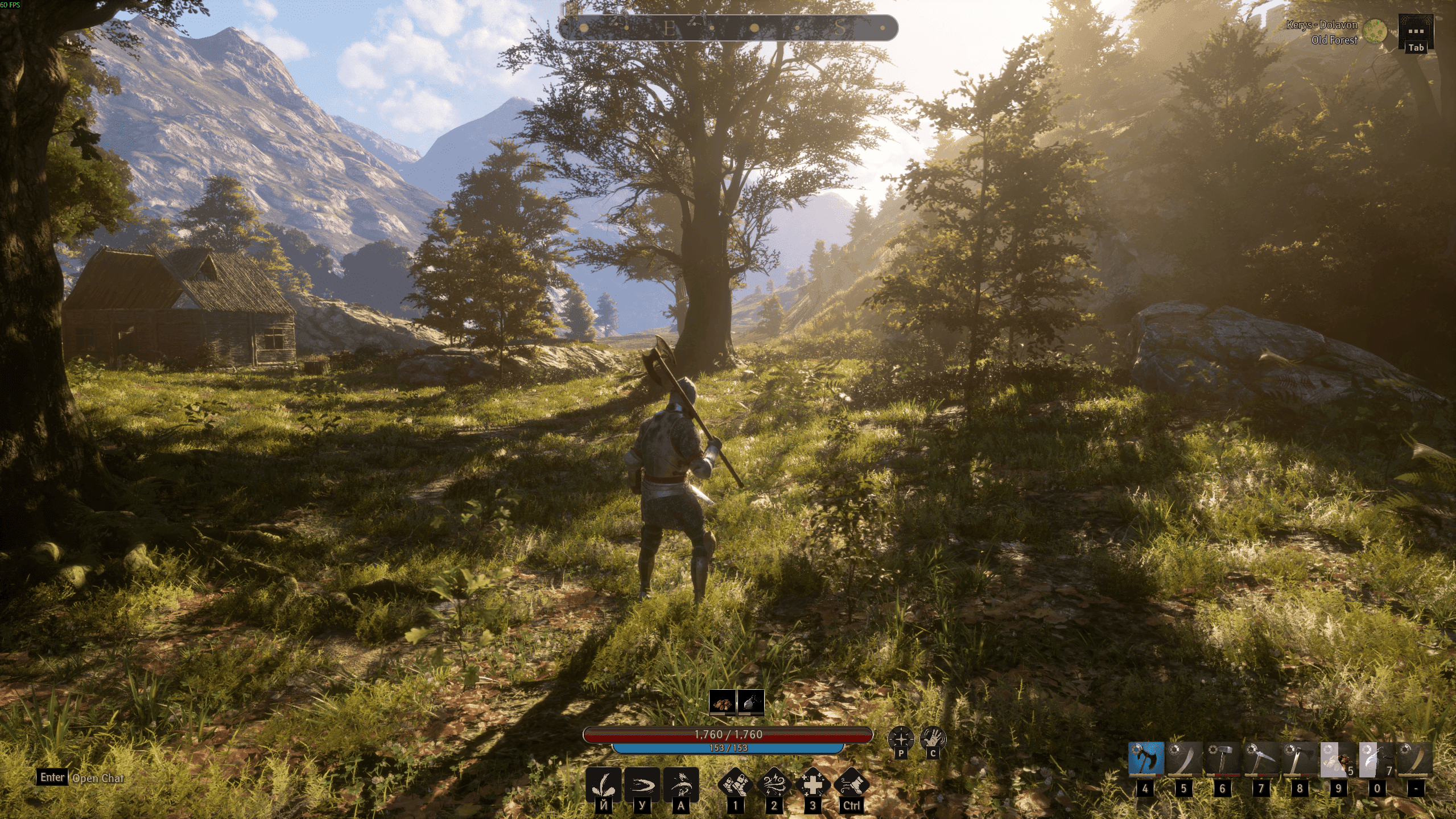
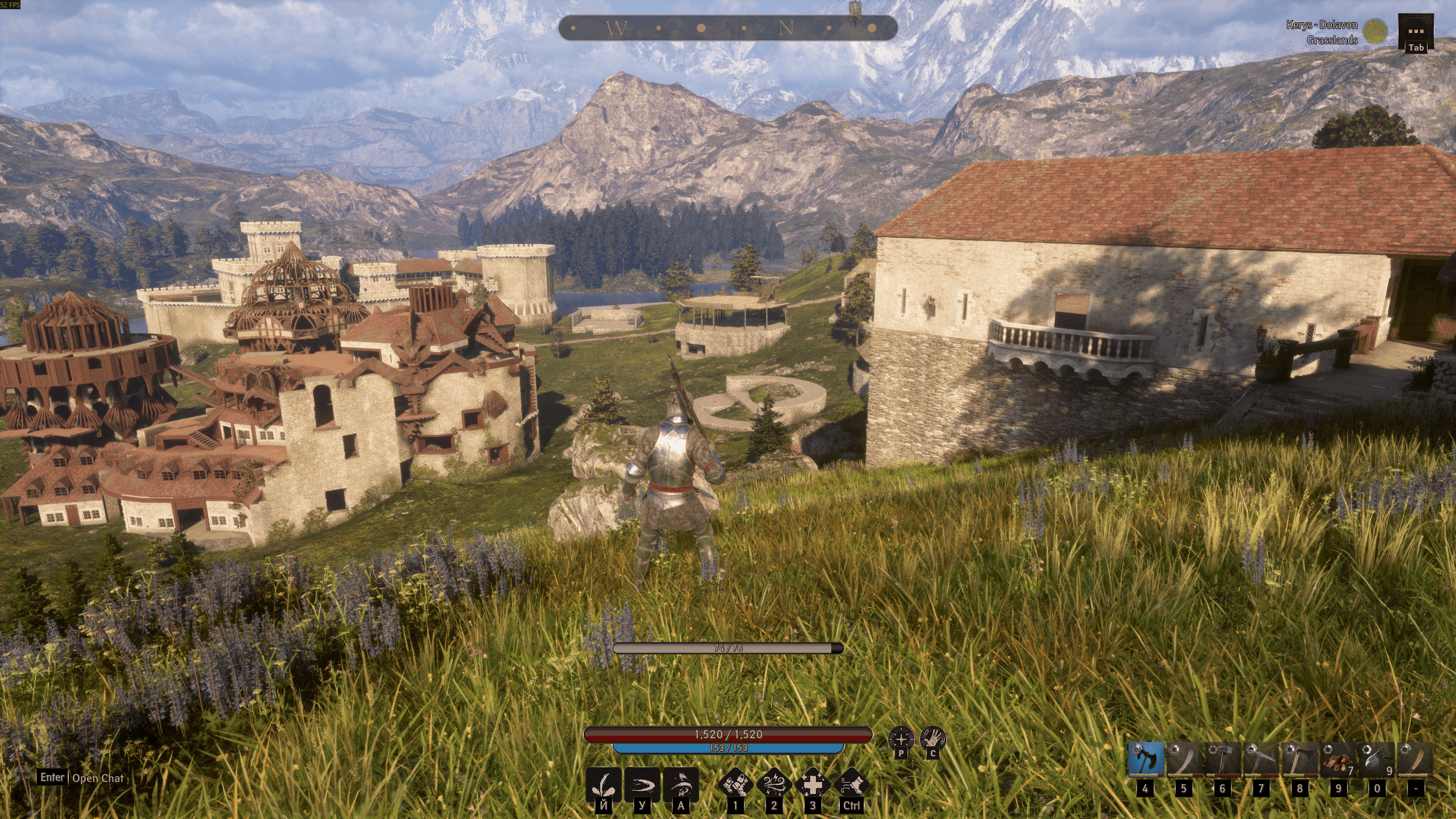
Pax Dei is a social sandbox MMO from Mainframe Industries, a studio with offices in Helsinki, Reykjavík, and Paris, built on Unreal Engine 5. It entered Steam Early Access on June 18, 2024, and left it for a full 1.0 release on October 16, 2025. What sets it apart in a genre crowded with theme-park MMORPGs is the near-total absence of developer-placed content past the starting altars: there are no NPC towns, no quest givers, and no scripted storyline to follow. Every house, market stall, and fortified village belongs to a player or a clan, and the game's central bet is that a medieval world with almost nothing pre-built will feel alive precisely because players have to build it themselves. Two years after that bet was placed, the results are mixed enough that a straight answer to "is it worth playing" depends heavily on what kind of player is asking.
Pax Dei's lore is deliberately thin, and the game seems to prefer it that way. The founding myth centers on Pope Mellephaneous and the Petrae Dei — stone altars scattered across the Valleys of Galas that serve as the only fast-travel and respawn points in the world. Beyond that inscription, there's little in the way of formal narrative: ghosts are treated as real, minor miracles are an accepted part of daily life, and old ruins hint at a lost golden age without ever explaining it outright. Players who go looking for lore mostly find silence, guarded by monsters tough enough to discourage casual sightseeing.
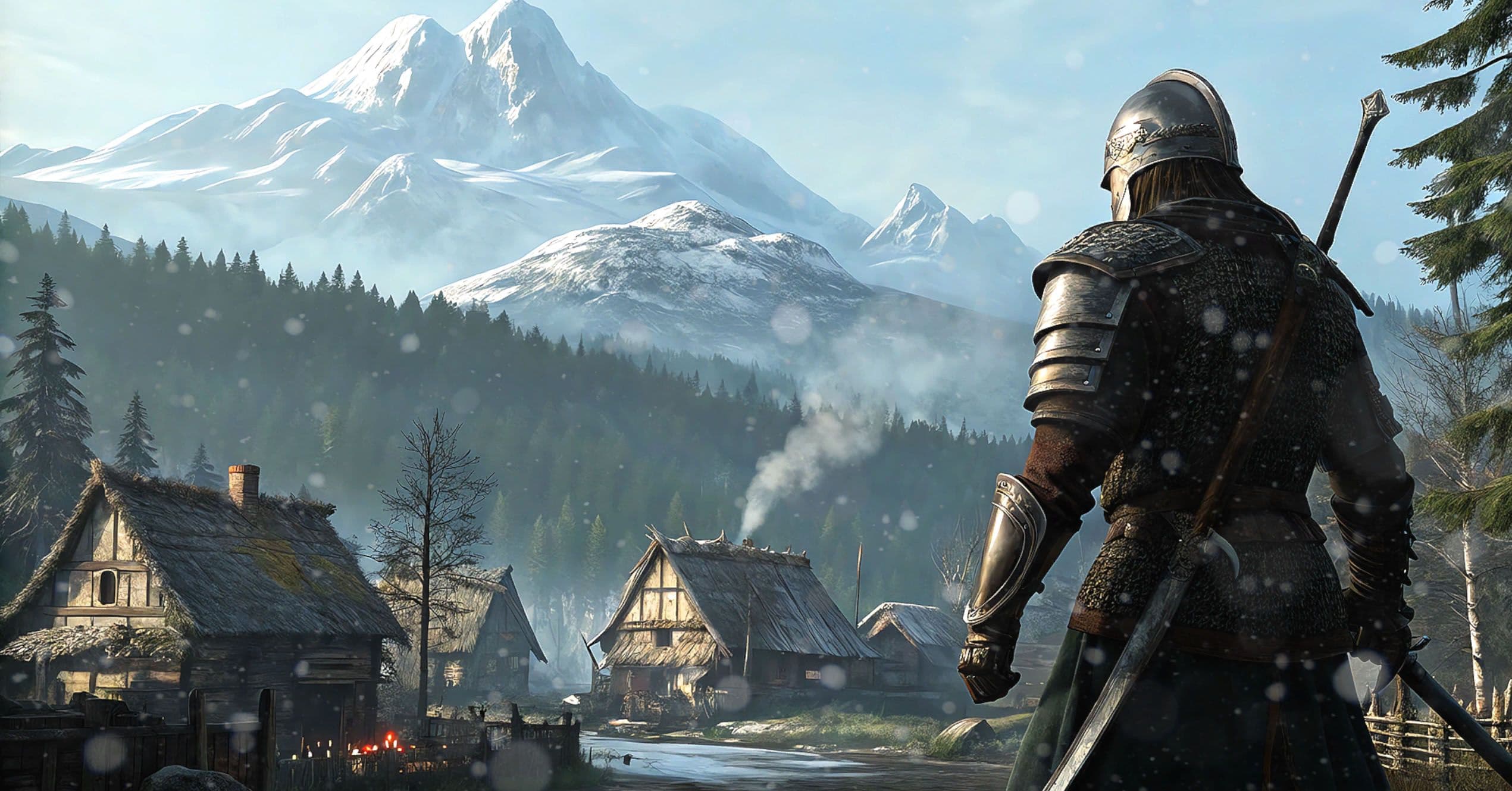
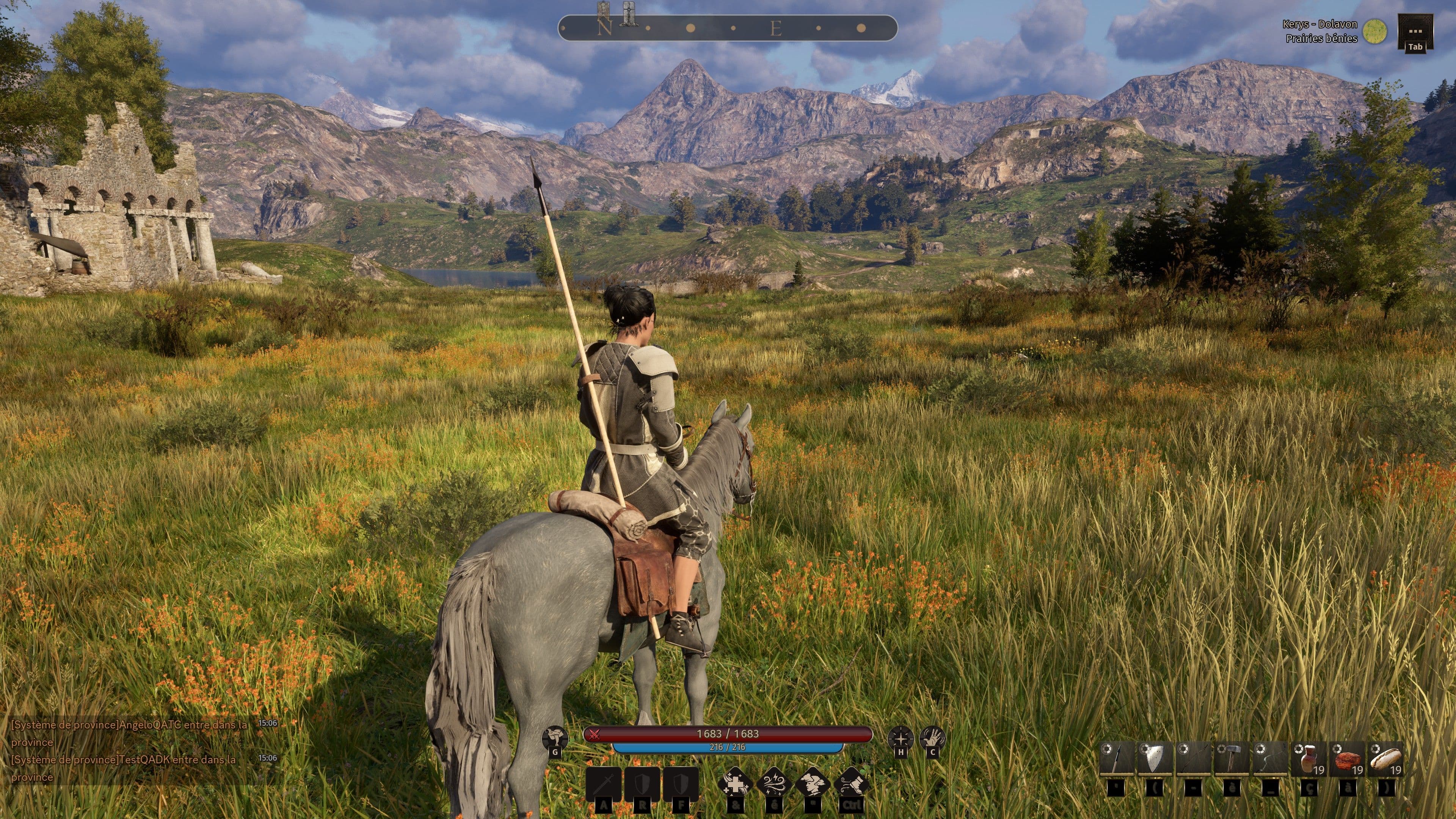
Geographically, the world splits into two very different halves. The Home Valleys — sometimes called the Heartlands — are the permanent, unwiped zones where most players actually live: plots, villages, and public crafting stations cluster here, protected from open combat. Lyonesse, the contested frontier, is where the game's PvP ambitions live, running on seasonal resets that currently last roughly six months apiece. The visual presentation leans toward grounded medieval realism rather than the stylized fantasy of most competitors — muddy fields, timber-frame buildings, low stone walls — and Unreal Engine 5 renders it with a soft, overcast lighting palette that suits the tone even when the frame rate doesn't always cooperate.
Log in near your plot on a Tuesday evening and there's no quest marker waiting for you — just whatever you left half-finished the day before. Maybe that's a granary roof, maybe it's a stack of raw iron ore sitting by the forge. The day typically starts with upkeep: check the crafting queue, top off Grace at the altar if you've got Gold to spare, and see whether anyone in the clan chat needs materials. From there the loop branches into gathering — mining, woodcutting, herbalism — with each resource feeding a specific refining chain before it becomes anything usable. A felled tree doesn't build a wall on its own; it becomes planks, and the planks become a frame, and the frame needs someone with carpentry leveled high enough to finish the job properly.
Combat, when it happens, is almost entirely melee. Swords, maces, spears, and greatmauls carry the weight of the weapon roster, each granting a handful of weapon-bound techniques — Earthquake, Forceful Strike, Guardbreaker — that show up alongside spellcasting in the same ability interface. There's no dedicated mage archetype; instead, players assemble a kit from gear-granted abilities and decide how much Grace to spend on Miracles, a parallel divine-power system that layers heals, buffs, and battlefield control on top of whatever your equipped items already do. Healing magic — Divine Orb, Consecrated Ground — is functional and reasonably deep, but offensive spellcasting has been stripped back over multiple patches; an early fireball spell was pulled during testing, and as of the most recent combat pass, damage-dealing magic is still described by the developers as planned rather than delivered. There's also no dodge roll by design — Mainframe has said outright that it wants group positioning and timing to matter more than individual reflexes, and any dodge added later would carry a punishing cooldown rather than function as a spammable escape.
By nightfall, a productive session usually ends with a trip toward the frontier: hunting boars and badgers for pelts near home, or pushing closer to Lyonesse for the pure iron nodes that don't spawn anywhere safe. Whether that trip ends in loot or a corpse run depends entirely on who else had the same idea.
The crafting system is where Pax Dei's design philosophy shows most clearly, for better and worse. Professions are split across gathering, processing, and finished-goods tiers, and the chain between them is intentionally interdependent — no single player can realistically cover mining, smelting, and blacksmithing at a competitive level, which pushes clans toward specialization almost by necessity. Mainframe has leaned into this with recent additions like Comfort and Rest, systems that tie tangible crafting bonuses to how well a building is designed rather than just what materials went into it, so a poorly planned roof genuinely costs you something beyond aesthetics.
The friction shows up in the details the systems haven't caught up to yet. Items produced while leveling a profession can't be broken down for partial material return or sacrificed for Grace, so a beginner grinding out fifty pairs of cloth gloves is left with fifty pairs of cloth gloves and nowhere useful to put them. The studio's own year-end letter to players openly names crafting-profession rebalancing and "less developed professions" as ongoing work rather than finished business, which is an honest admission but also a real caveat for anyone hoping the economy already runs smoothly.
PvE content outside the building loop centers on hidden ruins and dungeons scattered through the Wildlands — group-oriented by necessity, since the monster camps guarding them are built to punish anyone who wanders in solo. This is not an MMO with a raid tier or a gear-score ladder; the closest thing to endgame progression is simply better equipment funneled through the crafting chain, worn into harder fights.
Lyonesse is the sharper edge of the game. Full PvP rules apply there, the loot is worth fighting over, and recent updates have started layering territorial stakes on top of open skirmishing: feudal shrine control points let clans claim and defend fixed pieces of the map, with a broader Alliance system — letting multiple clans band together for shared territory rather than just shared combat — slated as one of 2026's headline additions. Unlike the Home Valleys, Lyonesse runs on seasons rather than permanence: land claimed there resets roughly every six months, which keeps the frontier from calcifying into whoever staked it out first but also means nothing built out there is truly safe long-term. It's a promising direction on paper, and it's also, as of this writing, still mostly a roadmap item rather than a lived experience for most players. Reviewers who covered the 1.0 launch and the months since have consistently flagged the same gap: the moment-to-moment loop of gathering and building is more developed than the reasons to actually fight over what you've built, and Mainframe's own 2026 planning post lists mid-game engagement and content pacing among the things it still needs to fix.
Pax Dei is not built for solo play, and it doesn't pretend otherwise. A single plot can technically be maintained alone, but clans are where the interesting version of the game actually happens — pooled plots forming genuine villages, coordinated supply chains, joint defense of a claimed shrine. The game leans on Discord integration rather than a robust in-client social layer, which works fine for organized groups and does very little for a player who logs in without one. Clan permissions and access controls have historically been a sore point, and Mainframe has acknowledged that improving them is a prerequisite for the Alliance system it wants to ship later this year.
The short answer is no, not in the way that phrase usually implies — but the structure underneath it is unusual enough to need explaining. Pax Dei is buy-to-play: a one-time $29.99 purchase grants permanent access to every system in the game, PvE and PvP and crafting and building included, along with two character slots and a starter month of Premium status plus one Plot Token. Nothing beyond that purchase is required to play the full game.
Where it gets unusual is land. Claiming and maintaining a plot costs either an in-game Grace payment or a Plot Token, and Plot Tokens come bundled into optional subscription tiers priced at roughly $6.99, $10.99, and $18.99 a month for one, two, or four plots respectively. Subscribing also grants Premium status — a flat 50% boost to Grace earned from daily login and Gold offerings, plus a 50% experience bonus — none of which unlocks exclusive gear or power the way a true pay-to-win system would. You can absolutely keep a house running on Grace earned purely through play; it's just slower, and the game's own community reacted loudly at launch to the idea of an ongoing rent-style cost sitting on top of an already-paid box price, drawing more than a few comparisons to subscription-model MMOs it otherwise doesn't resemble. It's a fair model by the numbers, but it's also one that asks new players to understand a small flowchart of Premium status, Plot Tokens, and Grace economy before they fully grasp what they're paying for and why.
Pax Dei's Steam standing has settled into "Mixed," hovering in the mid-50s percent positive across a review pool that's grown past ten thousand since launch — a real recovery from the "Mostly Negative" reception it drew in its first Early Access week, when a $40 asking price collided with performance issues and a genuine shortage of things to do. Population is a harder number to pin down. Third-party trackers disagree sharply depending on the hour and the source: some show concurrent counts in the low hundreds, others closer to twelve or thirteen hundred during evening peaks, and all of them agree the game is running well below the roughly 11,500 concurrent players it drew during its Early Access launch week. Lifetime ownership estimates land somewhere in the low hundreds of thousands, though Mainframe hasn't published exact figures, so treat any specific number here as a rough signal rather than a precise count.
What's notable is how candid the studio has been about the gap between ambition and current state. Its own year-end post to players names progression pacing, mid-game engagement, and update cadence as unfinished business heading into 2026, with a stated focus on smoothing the grind, improving social tooling, and delivering the Alliance system that's meant to give clans a reason to cooperate beyond combat. Community sentiment tends to split along the same fault line as the Steam numbers: players who found a clan early and stuck around describe a game that's slowly getting better patch by patch, while players who bounced off a quiet solo start rarely come back to check whether that's still true. That's a reasonable roadmap, and a believable read on why the playerbase looks the way it does. Whether the pace of delivery is fast enough to hold on to the players still checking in is the open question, and it's one Mainframe itself doesn't claim to have answered yet.
Here's the question worth asking yourself before you buy in: do you get genuine satisfaction from watching a system slowly get built out from underneath you, bugs and gaps included, or do you want a finished game the moment you install it? Pax Dei rewards the first kind of player and will frustrate the second. The building and crafting loop is legitimately compelling when you've got a clan feeding the supply chain around you, and Lyonesse hints at something worth defending. But the studio itself will tell you, in writing, that progression pacing and mid-game content aren't where they need to be yet, and a shrinking concurrent population means the "with a clan" caveat matters more now than it did at launch. If you go in expecting a living medieval world already humming along, you'll be disappointed. If you go in expecting a construction site with real potential and a dev team that's honest about the gaps, Pax Dei might be exactly the kind of unfinished thing worth investing in early.