 F2P · Live
Lineage 2 Essence
Lineage 2 Essence is NCSoft's free-to-play take on the classic Korean MMORPG Lineage II, built around faster…
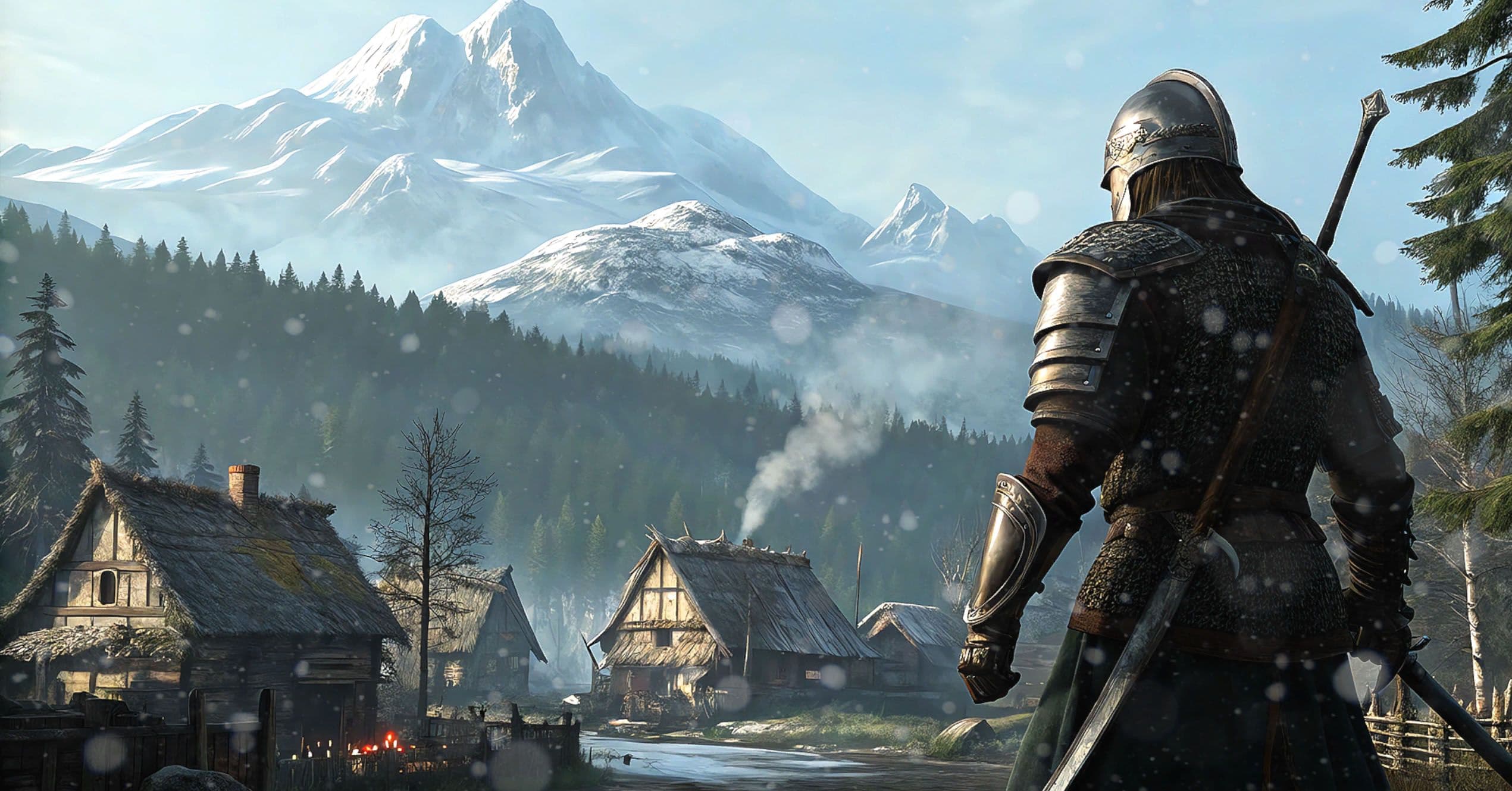
The Story Page is built and maintained by a single solo developer working under the name SPR-Games, an open-world online RPG that launched into Early Access on February 19, 2026 for $5.99. Set in a go...
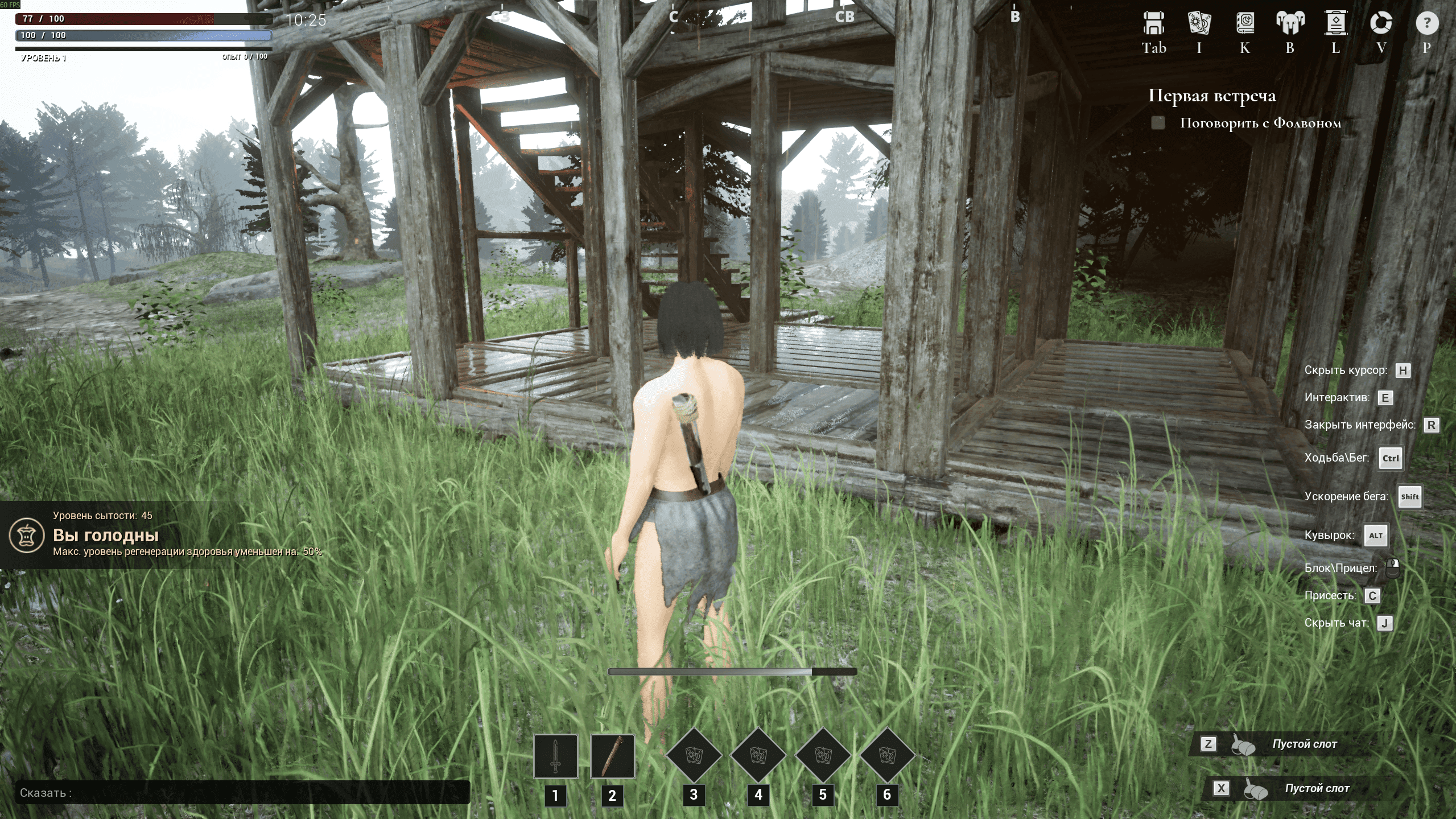
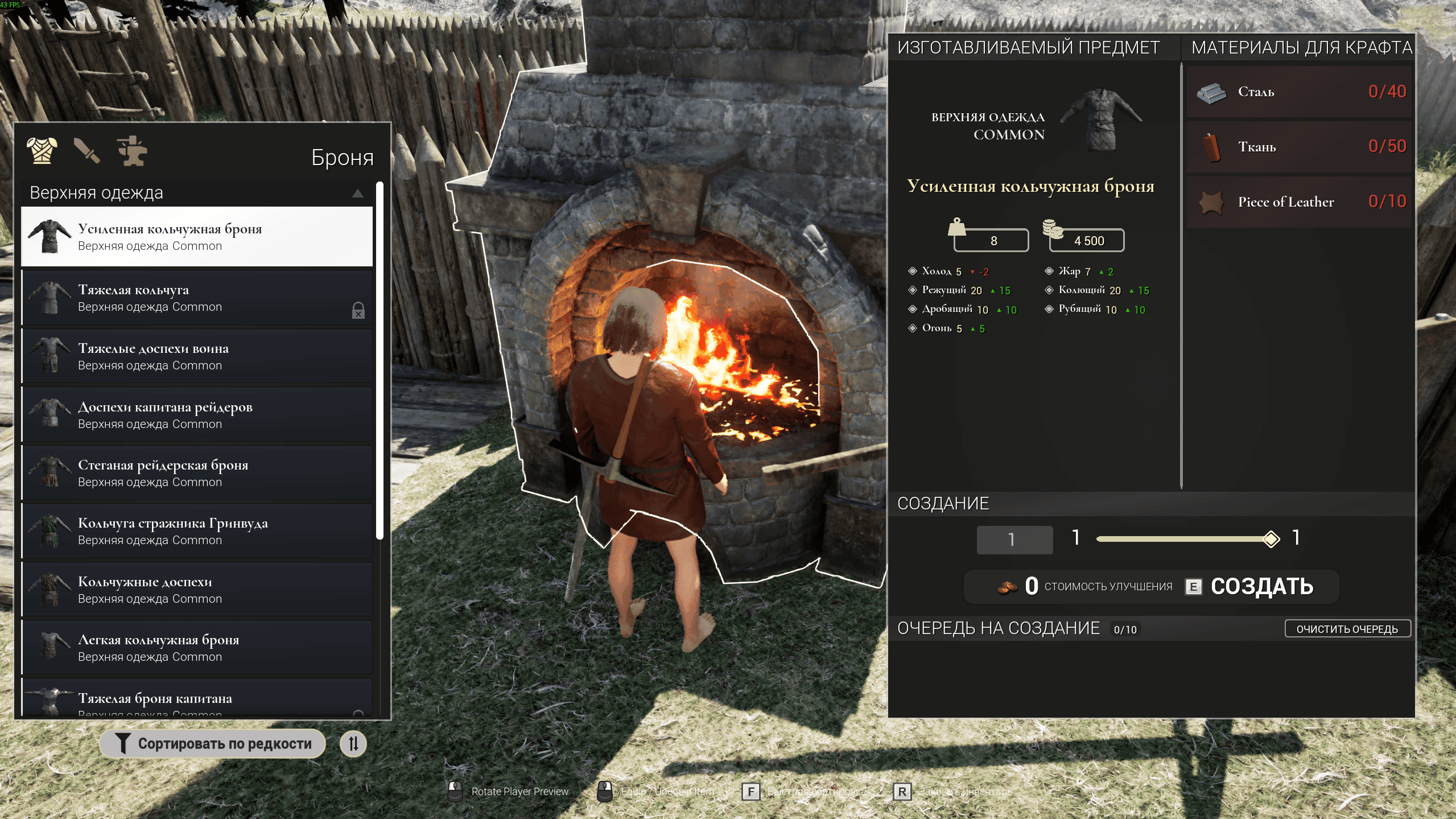
The Story Page is an open-world MMORPG developed and published by SPR-Games, a solo developer working under a small studio label, released into Steam Early Access on February 19, 2026. It sets itself apart from most genre debuts by refusing to pick a lane: it's part role-playing sandbox, part life sim, part economy game, letting a player fish, cook, run a tavern, join the city guard, or just start fights, all inside one persistent shared world with no class system locking any of it away. Five months into Early Access, the ambition is intact and the population is tiny, and this review treats both facts as equally worth knowing before you spend a cent.
SPR-Games hasn't given its setting a proper name the way most fantasy MMORPGs do — there's no branded continent, no founding myth splashed across a loading screen. What exists instead is a functional medieval backdrop: forests, farmland, and settlements populated by NPCs who, per the developer's own pitch, live out a daily routine rather than standing frozen next to a quest marker. They work, sleep, socialize, and react to what the player does nearby, which is a genuinely ambitious system for one person to have built from scratch. The tone leans dark fantasy — Steam's own tag list includes Gothic and Demons alongside the expected Medieval and Fantasy descriptors — though the current build spends more time on farmsteads and market stalls than on anything overtly demonic. Weather rolls through on its own schedule rather than as a scripted event, day turns to night at a steady real-time pace, and the map is large enough that crossing it on foot is a genuine commitment. Large stretches of that map are currently sparse on things to actually do once you arrive, which is the recurring shape of almost every system in this review: the scaffolding for something big is visibly in place, and the furniture hasn't fully moved in yet.
That single-developer context matters for how you should read everything that follows. This isn't a studio with concept artists and a combat design team; it's one person's take on what a role-playing sandbox should contain, built up feature by feature since the game entered testing. Judge the ambition against that scale, and a lot of what's here looks impressive. Judge it against Wurm Online veterans or a Chris Roberts pitch deck, and it looks thin. Both reactions are correct at once.
A fresh session starts at the character editor, which is the game's strongest first impression — sliders for build, face, and coloring go deep enough that two players rarely end up looking alike, a rarity for a project this size. There's no class selection screen, because The Story Page doesn't use classes; instead you pick a starting kit loosely themed around a lifestyle — fighter, gatherer, trader — that mostly just decides your opening inventory rather than locking you into a build. Everything you'll actually become is earned through what you spend your time doing, not a menu choice made in the first ninety seconds.
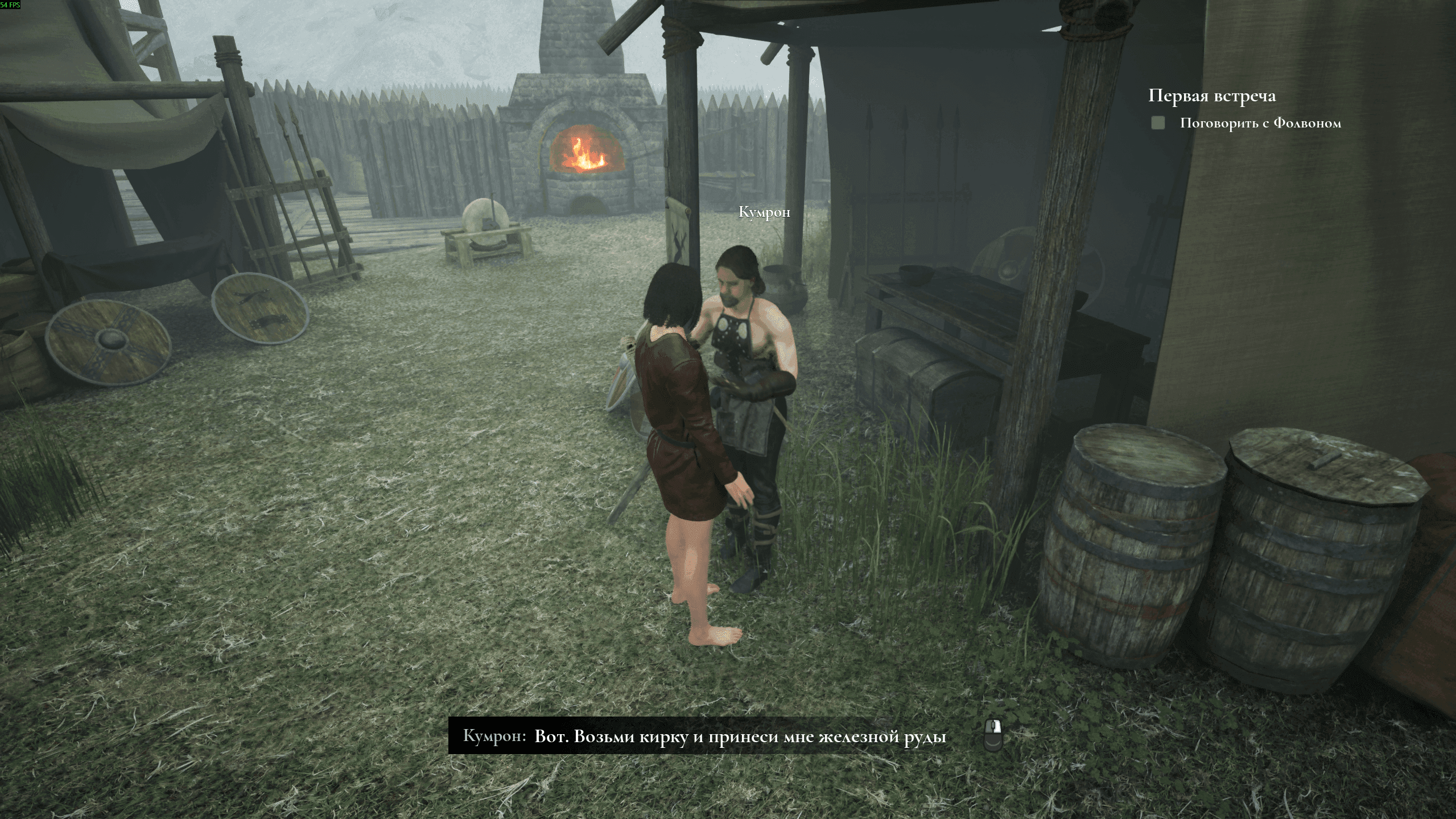
Dropped into the world proper, the game hands you a short string of introductory tasks that double as a tour: talk to a merchant, chop some wood, kill a low-tier hostile creature. None of it is dressed up with cutscenes. The dialogue system does support branching responses, and NPCs will occasionally remember how a conversation went, which is a nice touch that most projects this size skip entirely — but the writing itself is functional rather than gripping, more placeholder-adjacent than polished. It gets the job done without making a case for itself as the reason to play.
Character growth runs on a straightforward level-and-stat system layered under the classless kit choice: killing creatures, finishing tasks for merchants, and completing quest chains all feed a single experience bar, and points earned get poured into whichever characteristics you actually want — strength for a bigger swing, dexterity for aim and speed, whatever a given build calls for. There's no talent tree gating a build behind a hard commitment, and nothing stops a character built around fishing and cooking from picking up a sword later and investing points into combat stats instead. It's a flexible system, and flexibility is really the design's whole pitch — the game would rather let you drift between lifestyles than lock you into one on day one.
The tradeoff is that flexibility without much friction can feel directionless in the early hours. There's no strong signpost pushing a new character toward a specific goal beyond "here are some tasks, here is a large world, go." Players who like an MMORPG to hand them a critical path will feel the absence of one; players who came from sandbox-leaning genres like Wurm Online or early Mortal Online will likely recognize the shape immediately and settle in faster.
By midday a session settles into its actual identity, which is closer to a life sim with combat bolted on than a combat game with side activities. The headline system is business ownership: a player with enough coin can buy a tavern, or eventually a larger holding, and run it — stocking goods, setting prices, managing whatever staff or upkeep the current build supports. It's a rare thing to see in an MMORPG at any budget, let alone a solo one, and it's the single feature most likely to make The Story Page's Steam page stand out in a crowd of interchangeable fantasy sandboxes.
The friction shows up once you start comparing the pitch to the current build. Owning a tavern is satisfying for the first sitting and thin by the third, because the surrounding economy — the number of NPCs who'll actually patronize it, the depth of what you can stock and price — is still early. The developer has been upfront that this is one of the systems planned to expand rather than one considered finished, and the roadmap explicitly lists more crafting and more locations as coming attractions rather than shipped content. Treat the business system as a genuinely interesting foundation rather than a complete game loop, because right now that's what it is.
Resource work fills out the rest of a session: felling trees for lumber, mining stone, catching fish at a riverbank, all of it feeding into cooking and equipment crafting rather than sitting as separate, disconnected minigames. Food isn't cosmetic — there's an active consumption system, and a heat-and-cold mechanic layered on top means what you're wearing and what you've eaten both matter depending on where and when you're outdoors. Day-night cycles and shifting weather aren't just visual flourish; they change what a given stretch of the map asks of you, which is more systemic ambition than most sandbox MMORPGs bother with this early in development.
Where the seams show is depth per system. Gathering nodes are still relatively sparse in variety, the crafting recipe list is short enough that a dedicated afternoon session can see most of what's currently available, and the heat-and-cold system reads more like a proof of concept than a fully tuned survival layer. None of that is damning for an Early Access title five months old — it's exactly what "more crafting" on the official roadmap is meant to fix — but a player expecting Wurm Online-tier depth on day one will be disappointed by what's live right now.
As afternoon activities wind down, combat is where the day's momentum either holds or drops off. The Story Page runs on a non-target combat system — no clicking an enemy to lock a reticle onto them, no auto-facing; swords, axes, and bows all require actually aiming and positioning, and enemies swing back with real hitboxes rather than a guaranteed-to-connect animation. It's a meaningfully harder design goal than tab-targeting, and getting it to feel responsive is the kind of thing that sinks far better-funded projects.
The current build gets partway there. Basic combat against wildlife and low-tier hostiles is functional and occasionally satisfying, particularly once a fight against a faction of NPCs with their own aggression rules — some hostile to the player outright, some neutral unless provoked — turns into something closer to an ambush than a scripted encounter. Dungeons and bosses exist, though the roster is modest, and a solo developer's combat animation budget shows most clearly here: hit reactions can feel stiff, and enemy variety thins out fast once you've cleared what's currently available. Magic fares better than melee does — the skill tree branches into effects with real personality, like a sphere that slows time for anything caught inside it, and casting one for the first time is a better argument for the game than most of its combat against trash mobs.
The social layer exists on paper — guilds, group play, a working chat system, direct trade between players — but it runs into the same wall that colors the entire review: almost nobody is around to use it with. Third-party tracking has clocked The Story Page's concurrent player count in the low single digits on a typical day, with an all-time peak in the teens since launch. That's not a jab at the game's quality so much as an honest description of an indie Early Access title without a marketing budget, five months into a stated two-to-three-year development window. Guilds and open-server trade are systems waiting for a population that hasn't arrived yet.
The developer built an escape hatch for exactly this problem: private cooperative lobbies let a small group of friends play together without touching the public server at all, sidestepping the empty-world issue entirely for anyone who brings their own party. If you're hoping to log into a living open server full of strangers building rival taverns, that's not the game that exists in July 2026 — but if you're looking for a sandbox to explore with two or three friends on your own terms, the private-lobby option makes that a genuinely reasonable way to play right now.
The Story Page is a buy-to-play MMORPG, not free-to-play — a flat $5.99 purchase with no cash shop, no gacha, and no subscription layered on top, currently discounted to $2.99 during a promotional sale. There's nothing resembling a pay-to-win system to critique because there's nothing to buy after the initial purchase; three Steam achievements exist as the only post-purchase Steam-side hooks. The developer has stated plainly that the price will climb as more content ships, which is the honest version of an Early Access pricing model — pay less now for less game, pay more later for more of it, rather than disguising a subscription as microtransactions behind a free download. For a genre where "is it pay to win" is usually the first question worth asking, The Story Page's answer is refreshingly simple: there's nothing here to pay to win at, and nothing planned that would change that without the developer reversing a stated design position.
SPR-Games has been candid that the current build is a checkpoint, not a destination — the developer's own public roadmap lists a full siege system for cities and castles, expanded crafting, new locations, and additional language support as planned rather than shipped, alongside an explicit two-to-three-year Early Access window that leaves plenty of runway for the game to either grow into its ambitions or stall out under the weight of a one-person team. Steam's review trend reflects that uncertainty honestly: the lifetime score sits at a healthy Mostly Positive across roughly ninety reviews, but the most recent thirty days have dipped into Mixed territory, which usually signals either a rough patch or a wave of new players hitting the game's current content ceiling faster than expected. Either read is plausible for a project this early and this small.
Language support is another honest marker of a young project scaling up in real time. Full voiced audio currently covers English and Russian, with interface and subtitle support extending to a handful of other European languages and more promised as development continues — a sensible order of operations for a developer handling localization alongside everything else. None of this is unusual for a one-person Early Access title; what's worth flagging is how directly the developer has communicated it, rather than papering over the gaps with vague marketing language.
Here's the plain version: you are not buying a finished MMORPG for six dollars, and anyone who tells you otherwise is selling something. What you're buying is a working proof of concept for an unusually ambitious idea — non-target combat, a living NPC daily cycle, and a player-run tavern economy, all built by one person who has been transparent about exactly how far along it is. Judged as a finished product, it's a modest game with a near-empty world. Judged as a bet on where a solo developer's roadmap might land in two years, it's one of the more interesting long-shots currently sitting in Steam's Massively Multiplayer category. Buy it if you want to watch a genuinely personal project grow from the ground floor, or if a private lobby with two friends and no strangers sounds appealing on its own terms. Skip it if "MMO" needs to mean thousands of other players sharing your server, because right now, that part of the promise hasn't shown up yet.