 Buy To Play
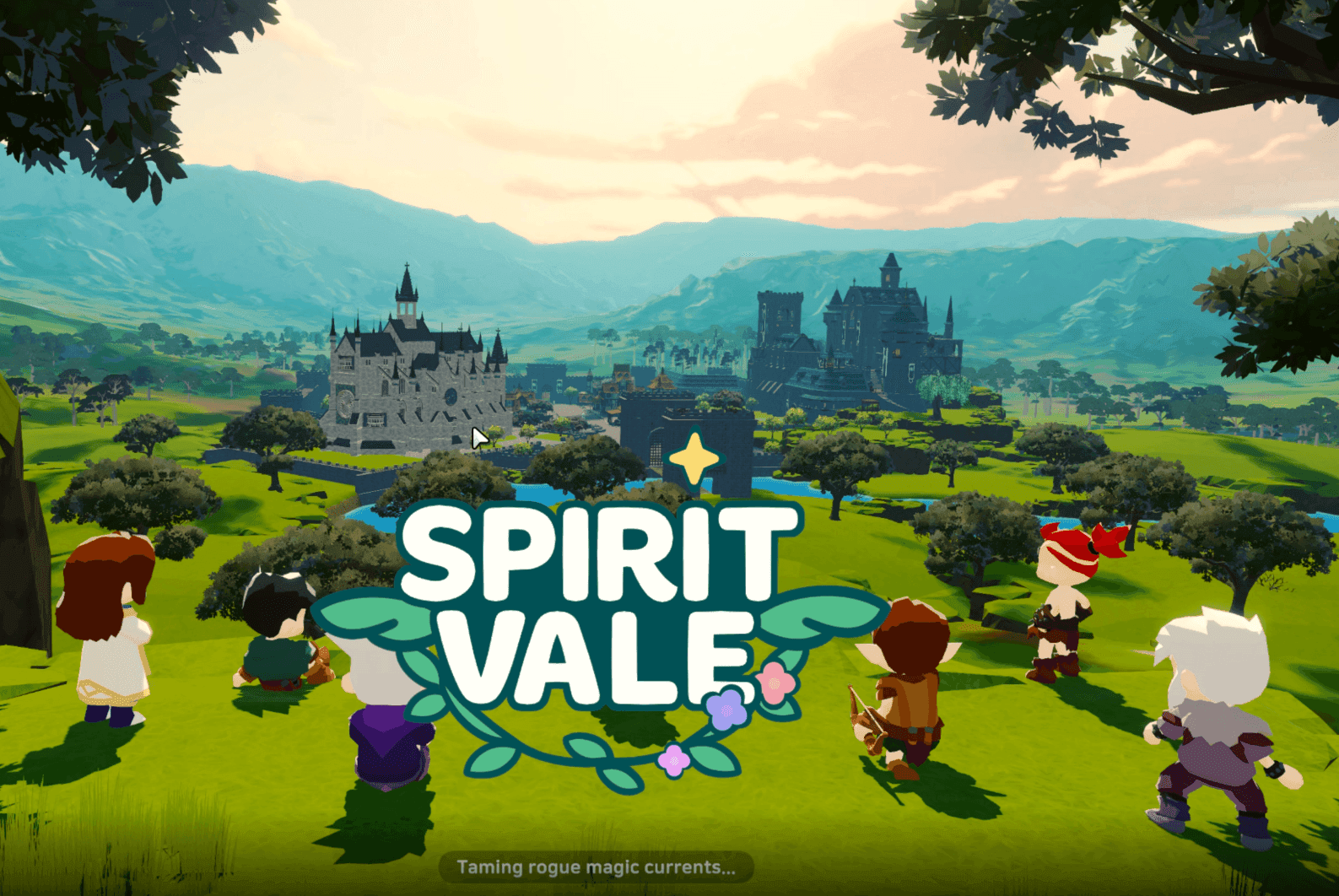
SpiritVale
MMORPGEarly access
SpiritVale is a class-based action MMORPG from Australian indie studio Baikun Interactive, set in the fractured world of Nevaris. Choose from seven cl...
If your PC can run this game, you'll also be able to play these:
Buy To PlaySpiritVale is a class-based action MMORPG from Australian indie studio Baikun Interactive, set in the fractured world of Nevaris. Choose from seven cl...
 Free To Play
MapleStory is a free-to-play 2D side-scrolling MMORPG from Nexon that has run continuously since 2003, now home to more than 260 million registered ac...
 Free To Play
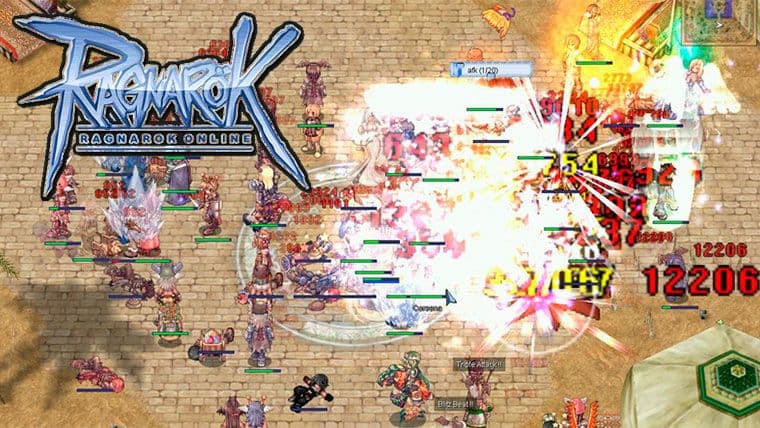
Ragnarok Online has been running since 2002, and the card system it introduced — socketing monster drops into weapons and armor — is still one of the ...
Lost Ark runs on Unreal Engine 3, an engine that predates every card on its own spec sheet, and the requirements only make sense once you account for what Smilegate built on top of it. This is an isometric action RPG with a fixed camera, which removes an entire category of rendering cost — there is no free-look camera pulling distant geometry into frame, no first-person detail budget, no seamless streaming across continents. What replaces that cost is density: eight players firing full skill kits at a single boss, Chaos Dungeons spawning several dozen enemies at once, and capital cities where a hundred players stand in the same square with active cosmetics, pets, mounts, and title effects. The spec sheet is priced for those moments, not for the quiet ones.
The minimum GPU tier is low by 2026 standards for a reason: the renderer is a DirectX 11 update to a DirectX 9-era engine, and its per-frame geometry load is modest. Fixed camera angles mean the artists know exactly what will be on screen at any point in a zone, so the engine draws hand-composed scenes instead of speculatively streaming a wide radius of terrain. What punishes weaker cards is overdraw from stacked transparent effects. Lost Ark's combat identity is built on large, layered, semi-transparent particle work — Awakening skills that fill the screen, support buff auras layered over damage indicators, boss floor telegraphs painted underneath all of it — and eight of those running simultaneously in a raid gate is where a 4 GB card starts dropping frames. The gap between the two 1080p presets reflects that directly: the CPU barely moves, while the recommended card roughly doubles the effects headroom the minimum one has.
Lost Ark is server-authoritative for combat resolution, so the client is not simulating physics or damage maths for anyone else. What it does carry is a heavy per-frame bookkeeping load: every player and NPC in view has active skill states, buff and debuff timers, engraving and gem modifiers, and cosmetic effect instances that all have to be resolved before the frame draws. Chaos Dungeons and crowded city hubs are the worst cases, and both are effectively single-thread-bound animation and effect updates rather than parallel workloads. That explains the shape of the CPU column — four cores clear the minimum bar, six cores cover the recommendation, and neither preset asks for anything higher. Buying more cores for this game does very little; buying stronger per-core performance is what smooths out a packed Vern Castle.
Because combat is resolved server-side, latency shows up in Lost Ark as input delay on the exact actions the game asks you to time precisely. Raid mechanics are built around narrow response windows — a counter-attack landed while the boss glows blue, a directional dodge through an attack that lands in under a second, a stagger check that has to be filled by four people at once. A stable connection matters far more than a fast one, since the client sends small, frequent inputs rather than streaming bulk data. This also means the game has no meaningful bandwidth requirement beyond broadband, but it is unusually sensitive to jitter and packet loss: a spike that would be invisible while running Guardian Raids solo is a wipe during a Kazeros gate.
The 16 GB minimum is the most modern-looking number on the sheet, and it comes from breadth rather than scene complexity. A veteran account keeps a roster of six or more characters with separate gear, gems, engravings, and skill loadouts; the client holds an auction house and market UI, a stronghold management layer, a card catalogue, and a collections tab that all stay resident alongside the 3D world. Add the widespread habit of playing with a build guide or an Ark Grid calculator open in a browser and 8 GB stops being comfortable, which is presumably why the current sheet raised the floor. Note that 16 GB is listed for both presets — memory here is a floor to clear rather than a dial you scale with settings.
Storage is the requirement that has grown fastest. The install now sits at 110 GB — four years of added continents, raid instances, class kits, and an enormous cosmetic library, none of which the game removes as content ages. An SSD is optional at the minimum tier and specified outright at the recommended one, and that is honest: zone transitions and raid instance loads are the game's main disk-bound moments, and on a mechanical drive you will be the last person into the gate.