 F2P · Live
Lineage 2
Aden's castles never stay in the same hands for long, and Lineage II has built an entire twenty-three-year…
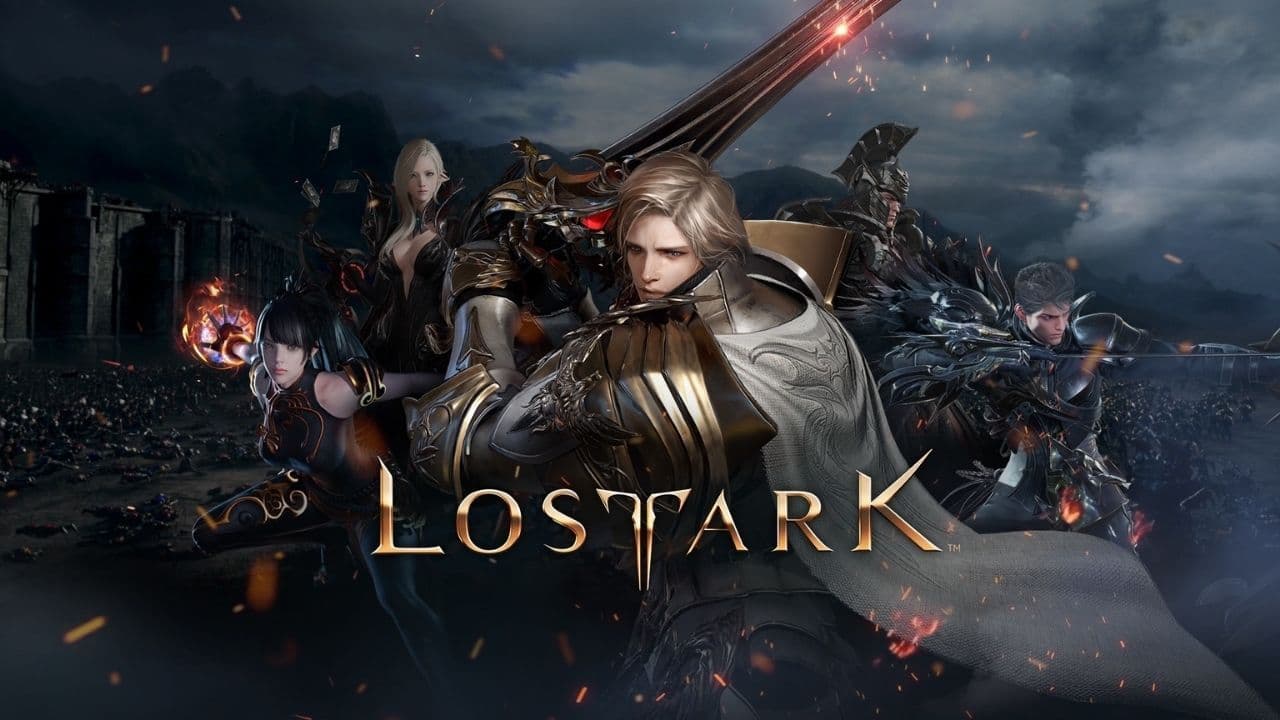
Lost Ark launched in Korea in 2019 and has grown into one of the most mechanically dense action MMORPGs on the market, built by Smilegate RPG around isometric combat and a distinct class for nearly ev...
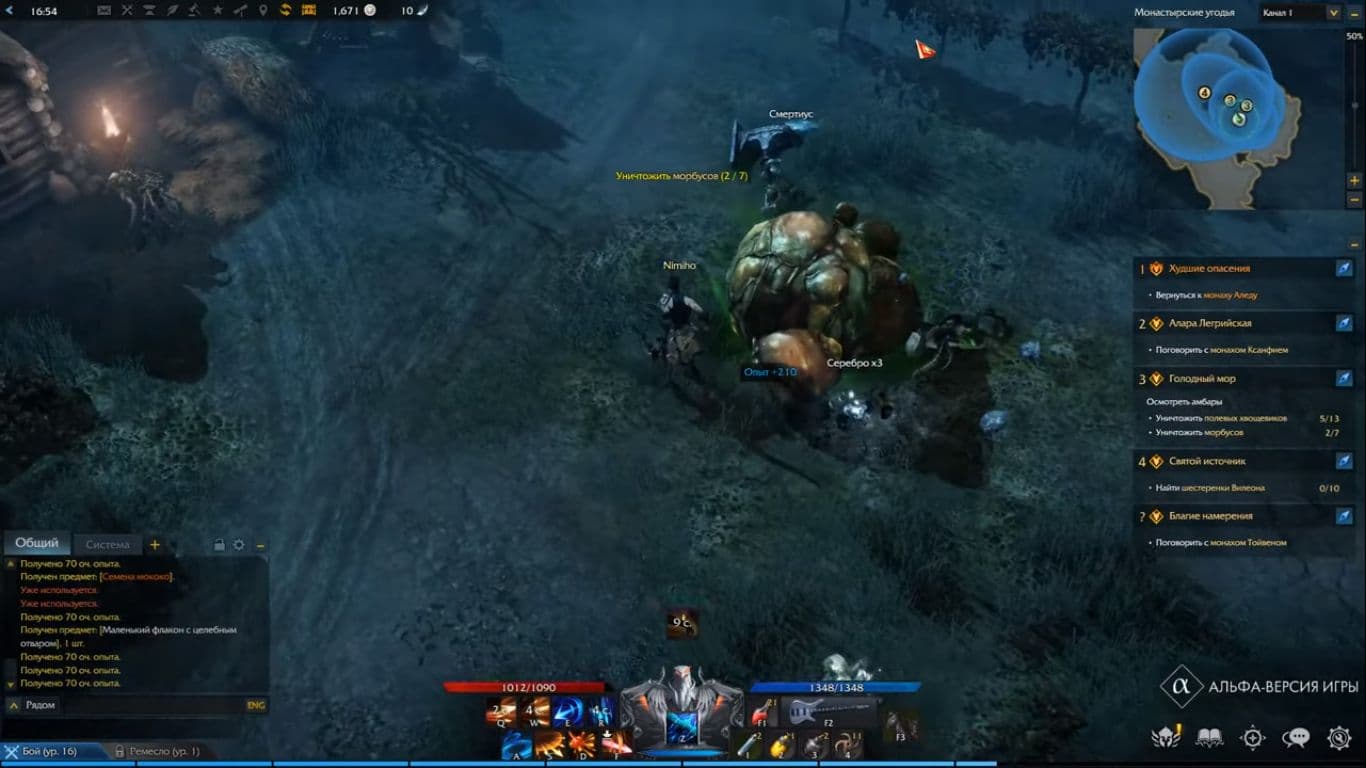
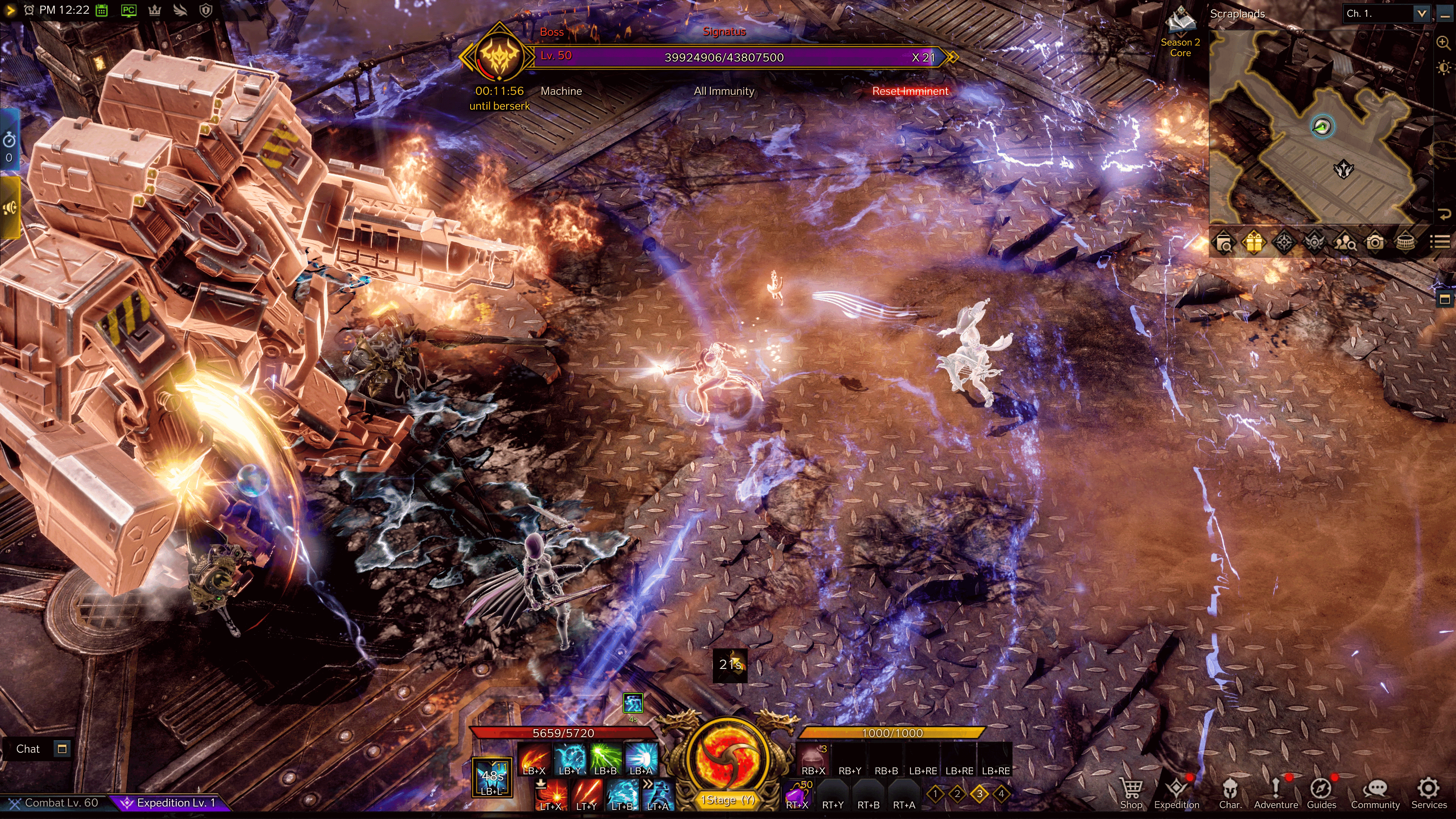
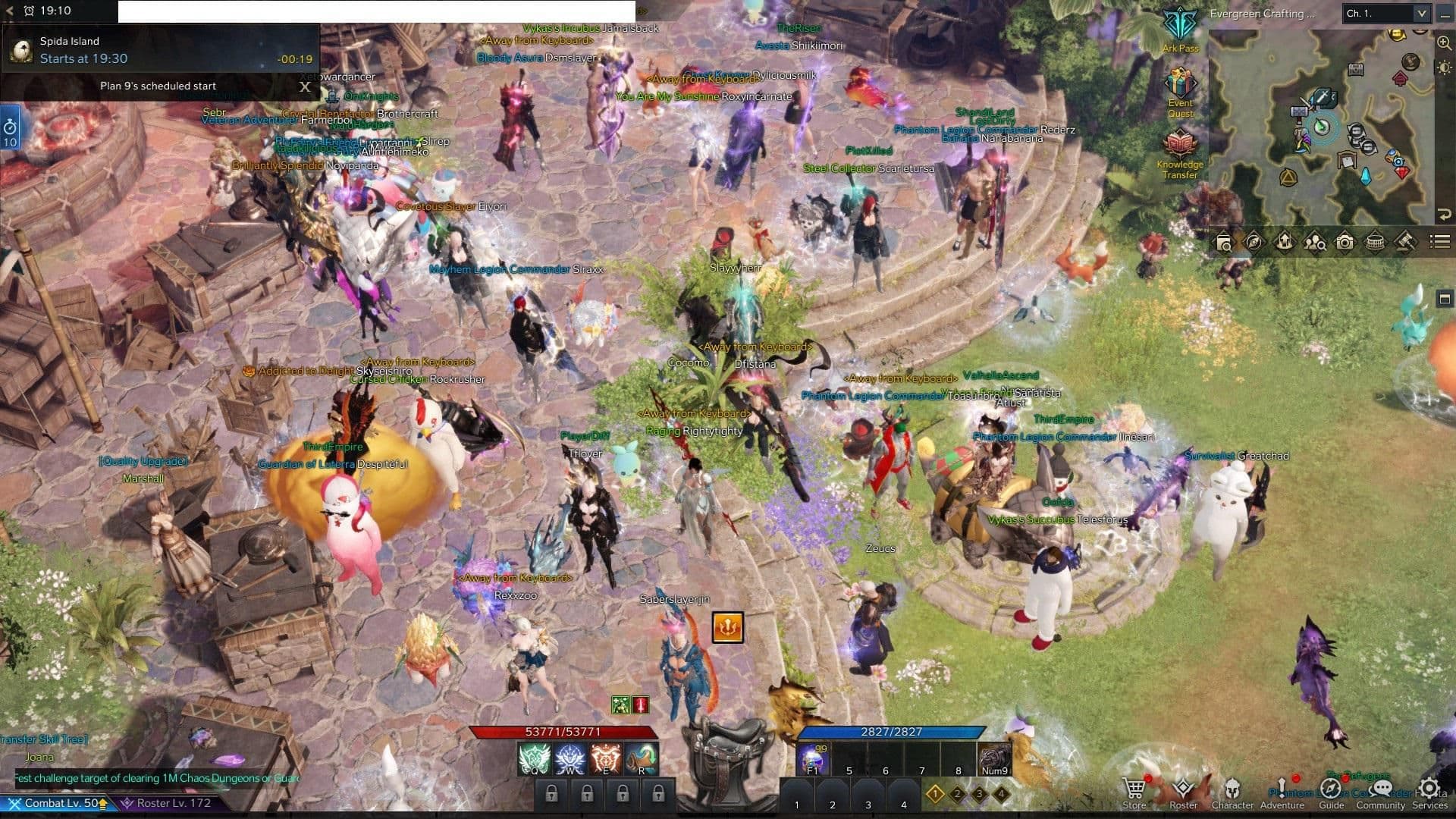
Lost Ark is an isometric action MMORPG from South Korean studio Smilegate RPG, built with Tripod Studio and published in the West by Amazon Games since February 2022. It combines the camera angle, click-to-move controls, and loot cadence of an ARPG with the raid calendar, guild structures, and long-tail gear progression of a subscription-era MMO — a hybrid nobody else in the genre has managed to copy convincingly. Four years into its Western life it runs on a monthly patch cycle, a quarterly roadmap, and a much smaller playerbase than the record-breaking crowd it opened with.
What follows walks the game the way a returning player would actually experience it: by progression checkpoint rather than by feature list, because in Lost Ark the number attached to your gear determines which game you are playing.
The setting is Arkesia, a continent-spanning fantasy world where seven Arks — divine artifacts scattered after a war against the demon Kazeros — hold back the return of his legions. The story around them is competent Korean high fantasy: prophecies, betrayals, a demon king's daughters, several thousand lines of voiced dialogue that most veterans skip with the spacebar. It works best in individual chapters rather than as a whole. Continents such as Shushire's frozen mining towns and Rohendel's elf-haunted forest each land their own tone, and a few late-campaign set pieces are shot with more ambition than the genre usually musters.
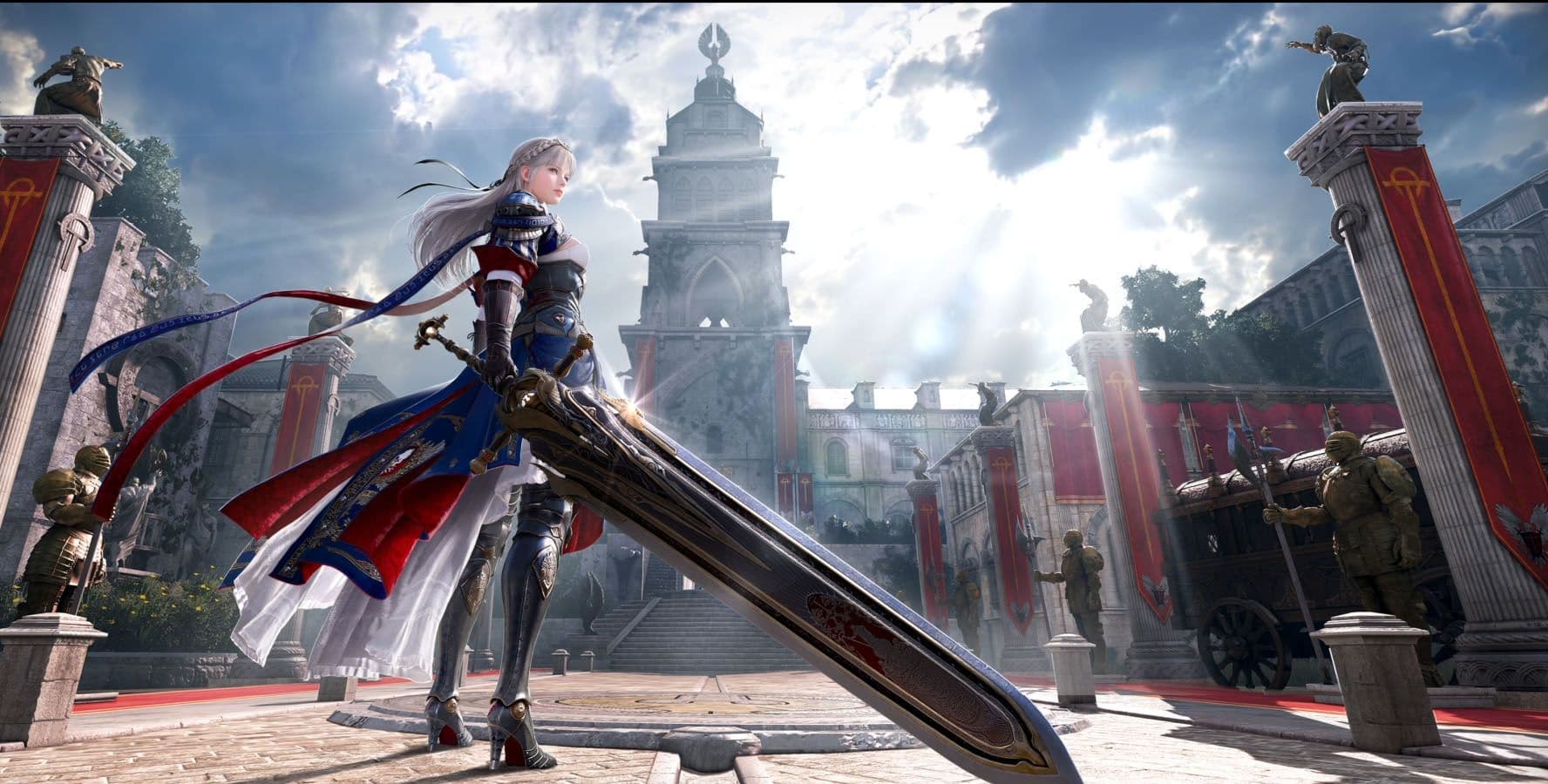
Presentation is where the game still wins arguments. Running on Unreal Engine 3 — old technology, deployed with unusual discipline — Arkesia looks hand-arranged rather than procedurally filled. Fixed camera angles let the artists compose every screen, so a harbour at dusk or a cathedral interior reads like an illustration you happen to be walking through. Skill effects are loud without turning the screen into soup, and that matters when eight players are stacking abilities on a boss the size of a building.
The world is delivered in zones connected by triports and, more distinctively, by open water. You get your own ship early, and sailing between continents past storm zones and sea monsters ties the map together in a way fast travel alone never could. It is also where the game's collection layer lives: dozens of islands, each with its own quest, token, or seasonal event, sitting off the main route for anyone curious enough to steer that way.
Character creation opens with an archetype — Warrior, Mage, Martial Artist, Gunner, Assassin, Specialist — that immediately splits into advanced classes, and the advanced class is the real choice. A Warrior becomes a Berserker swinging a two-handed sword, a shield-locked Gunlancer, a Paladin healing and buffing a party, or a Destroyer with a hammer that trades all mobility for detonations. The Western roster now sits at roughly 27 advanced classes after the Dragonknight's February 2026 arrival, with the time-and-space-bending Warpweaver scheduled for September.
The prologue itself is short and does its job: an hour of clicking through demon-infested countryside while the game teaches you that skills are bound to keyboard keys rather than a hotbar rotation, that dodging is a directional roll on a cooldown, and that most bosses telegraph attacks in coloured floor patterns you are expected to read and step out of. Combat is fast from the first fight and gets faster.
Depth arrives through the Tripod system. Every skill carries three tiers of modifiers, and each tier offers a branching choice: make a charge attack release earlier, convert its damage type, add a stagger effect, or trade cast time for a bigger area. A Sorceress fireball can be tuned into a fast poke or a slow detonation with double the radius. Layer class engravings on top — each advanced class has two, and they rewrite how a class generates and spends resources — and the same character name can describe two entirely different playstyles.
Levelling to 50 takes roughly ten to fifteen hours through the main quest, and 50 to the cap of 60 arrives passively while you do endgame content. Nobody should linger over that stretch. The campaign is skippable by design after your first character: Powerpasses and express events hand new and returning accounts a pre-geared character on the doorstep of current content, and the Base Camp event arriving in September takes that further, guiding players to Item Level 1700 with pre-enhanced gear and no manual upgrading required.
Here is the thing nobody tells new players clearly enough: character level in Lost Ark is a tutorial number. Item level is the real one, and it governs which raids will let you through the door.
Item level rises through honing, the upgrade process applied to each gear piece using materials farmed from daily content. Traditional honing is a probability roll with a pity counter — every failure raises your odds slightly until a success is guaranteed — while the Advanced Honing system layered on top swaps dice for a progress bar that fills at a fixed rate, trading excitement for predictability. That change, alongside the broader Tier 4 gear reset, was Smilegate's answer to years of complaints that progression was a slot machine with a subscription fee attached. It helped. It did not make the grind small.
The daily loop that feeds it is compact and repeatable: run a Chaos Dungeon — a timed wave-clearing sprint that takes about six minutes and drops honing shards and leapstones — then a Guardian Raid, an eight-to-fifteen-minute boss hunt across one arena with no adds, no trash, and a hard timer. Both are gated per day. Both can be done solo or matchmade. Do them on your main, do them again on alts, feed everything into the honing UI, and watch a two-digit number crawl upward.
Above 1700, progression moves into the Ark Grid, the Tier 4 endgame system that replaced the older elixir and transcendence minigames. You collect Cores and Astrogems from Shadow Raids and slot them into a grid whose combinations unlock unique effects, which is a more legible system than what came before but still a spreadsheet by any honest description. Nobody optimizes an Ark Grid without a browser tab open.
Once your gear clears the entry threshold, Lost Ark reveals what it has been building toward. Legion Raids and their successors — the Kazeros arc has run through 2025 and 2026 in acts, culminating in the Denouement — are eight-player, multi-gate encounters that ask for choreography rather than gear checks. Bosses spawn pattern sequences that must be answered with specific counters: someone breaks a body part before a cast completes, someone else stands in the correct quadrant, the whole party stacks and then scatters on a two-second window. Wipe mechanics are common and unforgiving. A first clear on a new gate is one of the better feelings available in the genre.
Difficulty is now tiered deliberately: Normal exists to teach the fight without dropping progression materials, Hard sits in the middle, Nightmare handles the veteran audience, and July 2026 added the first Extreme tier against Aegir, the Oppressor — one attempt per roster per week, no second chances, a Legendary title for the players who clear it. That lockout has split the community neatly down the middle, since one attempt a week is a prestige gate and also the removal of the practice repetitions most groups rely on to learn anything.
Parallel to that sits the accessibility track, and it has widened who can realistically play this game. Solo Raid versions of the story raids now stretch through the Kazeros acts, letting a player clear the narrative and a reduced reward package without ever assembling a party. Shadow Raid: Serca gained a matchmaking mode in July with unlimited revives and no full-party wipe condition. Paradise, now heading into its fourth season, goes further still — it discards your honing progress entirely and runs on six mode-specific equipment slots and a Legacy of Paradise score, which means a lapsed player can drop in and compete on content-specific gear rather than four years of accumulated materials.
The tension is obvious once you have played both halves. The eight-player raids are the reason the game has a devoted following; the solo and seasonal layers exist because that following kept shrinking. Amazon and Smilegate have spent two years building ramps around their own wall, and the ramps work — but they also produce a strange endgame where the most impressive content in the game is the part fewest people see.
Set the raid calendar aside and a second game surfaces underneath, one that Lost Ark's reputation rarely mentions. Roughly a hundred islands are scattered across the seas, each self-contained: a rhythm-game dance festival, a stealth island patrolled by guards, a PvP free-for-all that only opens on a schedule, a hidden story about a lighthouse keeper. Their rewards feed a permanent account-wide layer — skill point potions, stat-boosting cards, engraving recipes, mounts, pets — that the community calls horizontal progression, because it never expires and never gets replaced by the next tier of gear.
The Stronghold is your private base and the closest thing here to housing. It is a small island you decorate, but more practically it is a production facility: you dispatch NPC crews on timed expeditions, research upgrades that shorten every other timer, and craft honing support materials, battle items, and food while you are logged out. Life skills fill the same background role — mining ore, felling logs, fishing, hunting, foraging, and excavating relics all consume a slowly regenerating Life Energy pool and feed the crafting chain, which in turn feeds the auction house.
The economy runs on two currencies that matter: silver, which is abundant and mostly a tax on your other activities, and gold, which is earned from weekly raid clears and buys almost everything worth buying. That design decision explains more about Lost Ark than any other single fact. Gold comes from raids; gear upgrades cost gold; raids require gear. The loop is closed, and everything in the monetization conversation below hangs off it.
Proving Grounds is the competitive mode, and its best decision is equalization — gear, gems, and engravings are normalized on entry, so a match is decided by class knowledge, cooldown discipline, and positioning rather than by honing budget. Three-versus-three team elimination is the format the mode is built around, run in seasons with its own ranked ladder and reward track. It is properly skill-expressive, and it is also a side dish: the population is small, queues are slower outside prime hours, and the game asks nothing of you if you never touch it.
Outside the arena, PvP is thin. The Tulubik Battlefield offers a large open-world objective zone on a schedule, guild-versus-guild content exists in a limited form, and that is close to the whole list. Anyone searching for whether Lost Ark is a PvP MMO has the answer: it is a PvE game with a well-built arena attached, and it has never pretended otherwise.
Guilds provide weekly research projects, guild-wide buffs, a token shop, and — more importantly — the seven other people you need for a raid. Everything social in this game is downstream of that requirement.
Which brings up the friction that dominates community discussion. Most raid groups form through Party Finder, and leaders can see your item level, your engravings, your gems, and your clear titles before accepting you. The predictable result is gatekeeping: on new content, applicants without a prior clear on the same raid get passed over in favour of applicants who have one, which is a closed loop for anyone trying to break in. Solo Raids, matchmaking modes, and the Mokoko Bootcamp event — which rewards veterans for taking newer players through raids — are all direct responses to this, and they have softened it rather than solved it. Joining an active guild or a community Discord remains the single highest-impact thing a new player can do, and it should not have to be.
Answering the search query without hedging: yes, partially, and the mechanism is specific. Lost Ark is free-to-play and sells Royal Crystals for real money. Royal Crystals convert to Crystals, and Crystals trade against gold with other players on an in-game exchange. Since gold is what buys honing materials, gems, engraving books, and accessories on the auction house, real money converts into item level at a market rate the players themselves set. You cannot buy a raid clear. You can absolutely buy the gear that gets you into the raid months earlier than a free account would manage.
Around that sit the softer layers: Crystalline Aura, a 30-day convenience subscription covering free triport travel, faster stronghold timers, extra rapport actions and similar quality-of-life items, now joined by a Crystalline Aura Plus tier with additional perks; the Ark Pass, a seasonal reward track sold in free and paid versions; and a cosmetic store where individual skins are priced well above what most Western players expect from an MMO. Skins in particular carry small stat bonuses, which keeps them from being purely decorative.
The counterweight is real and worth stating plainly. Every piece of content in the game is reachable without spending, gold income from weekly raids is substantial once you are established, and the Tier 4 rework, express events, and Paradise seasons have compressed the catch-up curve dramatically compared to 2023. A patient free account playing three or four characters through the weekly calendar keeps pace with current content. The cost of that patience is time, and Lost Ark asks for a great deal of it: the standard advice for staying current is a roster of several characters, each with daily and weekly obligations, which is how a hobby quietly becomes a schedule.
Lost Ark's Western launch produced one of the largest concurrent player counts in Steam's history — around 1.32 million in February 2022, still among the platform's all-time highest. Four years later, daily Steam concurrents in mid-2026 have generally moved between roughly four thousand and eleven thousand depending on time of day and patch cycle, with monthly peaks over the past year running from about twelve thousand to just under thirty thousand.
Those numbers describe a game that lost the tourists and kept the residents, which is the normal shape of an MMO's fourth year rather than a crisis. In practice you will find matchmaking populated for current-tier content, a functioning auction house, and quiet older zones — hence the August server merges, which consolidate populations onto fewer servers precisely so the busy content stays busy. The Amazon Games layoffs in late 2025 raised reasonable questions about the publishing arm's commitment; the answer since has been a full 2026 roadmap delivered in three parts, monthly patches, and two new classes in a single year, though roadmap updates now arrive as blog posts rather than the video presentations the community had grown attached to.
Lost Ark is one of the most impressive games in the genre and one of the least generous with its own best material, and it has spent four years refusing to choose between those two facts. The raids are outstanding. The route to them is a materials economy, a spreadsheet, a party leader inspecting your titles, and a currency exchange where somebody else's credit card is quietly setting your pace.
The 2026 version has done more to fix that than any previous year — Solo Raids, express passes, Paradise, the Tier 4 reset. But the honest summary is that this game has never once tried to be a casual hobby, and every accessibility feature it ships is a ramp toward a mountain that is still exactly as tall as it was. Install it if you want a combat system worth mastering and can treat a weekly schedule as a feature rather than an obligation. Skip it if you were hoping the ramps meant the mountain got smaller. It didn't. It just added an elevator to the base camp, and the climb starts there.