 F2P · Live
Lineage 2
Aden's castles never stay in the same hands for long, and Lineage II has built an entire twenty-three-year…
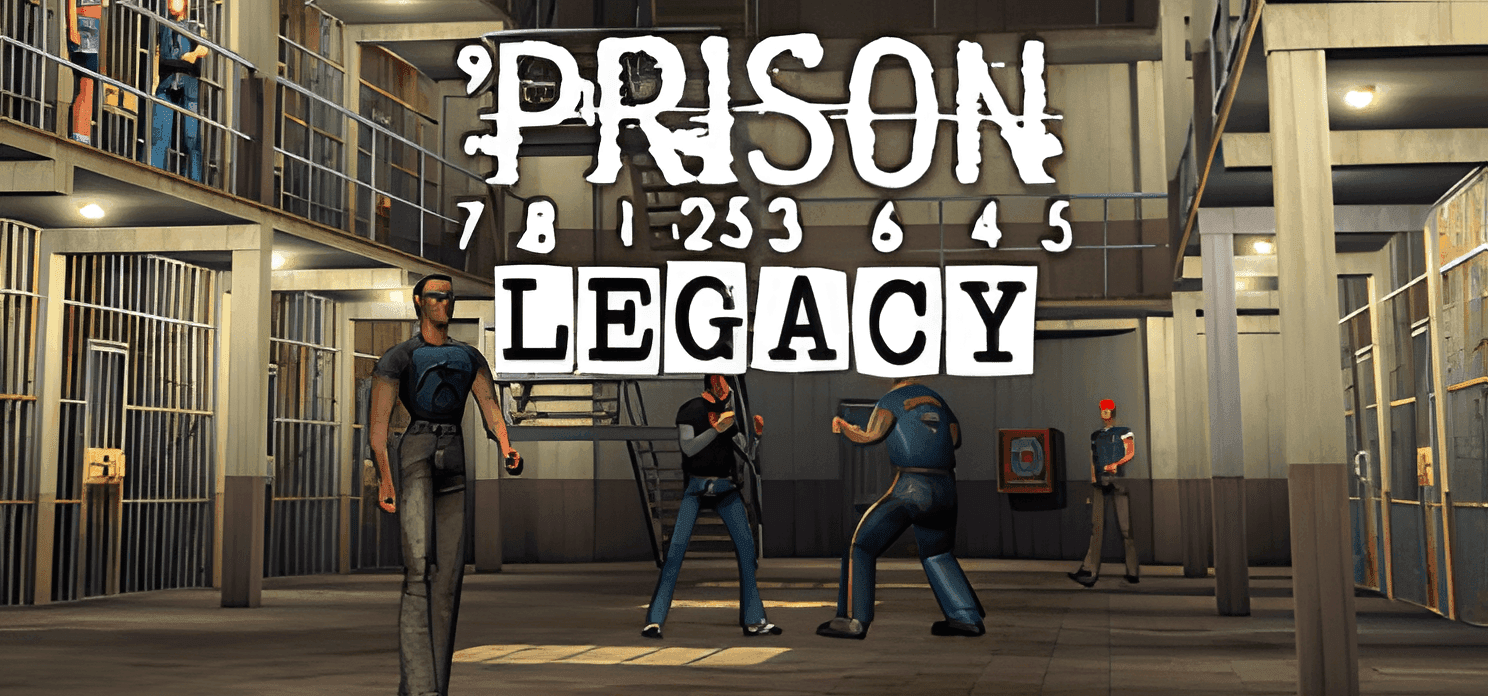
A social prison sandbox MMORPG featuring tactical turn-based combat, faithfully modernizing the cult 2000 Spanish classic La Prisión. Locked inside a maximum-security penitentiary across 12 distinct c...
Quick take: Prison Legacy is the official modern revival of the cult Spanish role-playing game La Prisión, originally launched in 2000 as the Iberian Peninsula's very first MMORPG. Developed by Descargas Digitales—a studio founded by veterans of the original project—the game has been rebuilt on a proprietary 64-bit engine powered by the Vulkan API, featuring native Steam Deck support and the game's first-ever official English localization. The title delivers an uncompromising prison sandbox experience: turn-based tactical combat governed by Action Points, twelve distinct criminal archetypes, illicit contraband crafting, gang warfare over cell blocks, and a barter economy where a pack of cigarettes and a handcrafted shiv matter far more than any mythical fantasy loot.
In October 2000, while the nascent MMORPG genre was defining its core principles through the sprawling freedom of Ultima Online and the early 3D boom of EverQuest, Madrid-based studio Dinamic Multimedia embarked on a daring experiment. Instead of rolling out another Tolkien-inspired landscape populated by elf rangers, the Spanish developers locked players inside the concrete walls of a maximum-security penitentiary. La Prisión became the pioneer of Spanish online gaming. In an era of sluggish 56k dial-up connections and screeching modems, the game cultivated a fiercely dedicated Spanish-speaking community that constructed elaborate social hierarchies, mafia syndicates, and black markets behind virtual bars.
What makes this project extraordinary is not merely its survival through the collapse of Dinamic Multimedia and subsequent publishing shifts under Cryo Networks, but its astonishing longevity. The servers of the original La Prisión operated continuously until 2018—an unbroken eighteen-year run. For the broader gaming world, however, the title remained an isolated Iberian cultural artifact. Regional barriers and a strict Spanish-only client prevented international recognition, turning the game into a semi-mythical relic of the early internet underground.
The arrival of Prison Legacy on Steam is far from a cheap nostalgic cash-in or an emulated retro wrapper. The core team at Descargas Digitales undertook a monumental engineering task. The obsolete proprietary renderer—plagued by severe incompatibilities with modern operating systems and GPUs—was completely scrapped. In its place stands a brand-new client built atop the Vulkan API, featuring native binaries for Windows and Linux distributions.
The true appeal of this comeback lies in its unapologetic game design philosophy. In 2026, when mainstream MMOs are overrun by automated quest markers, frictionless action combat, and predatory monetization, Prison Legacy feels like a visitor from another timeline. There is no world to save from an ancient evil. Your avatar is an unnamed convict serving a life sentence, and the entire playable universe is bounded by razor wire, watchtowers, and drab concrete corridors. It is a gritty sociological study of human nature disguised as a tactical turn-based MMO, where reputation, cellmate trust, and a well-timed shiv in the ribs hold infinitely more weight than gear score numbers.
In the vast majority of modern online multiplayer games, combat revolves around mechanical twitch reflexes, low network latency, and uninterrupted ability rotation spam. Prison Legacy deliberately pulls the rug out from under action-oriented expectations. Its defining signature feature, carried over directly from the foundation of classic La Prisión, is deep turn-based tactical combat governed by strict Action Point management (Action Points, historically known as Puntos de Acción / PA). Here, the outcome of a prison altercation is decided not by how fast you click, but by cold geometric calculation and resource discipline.
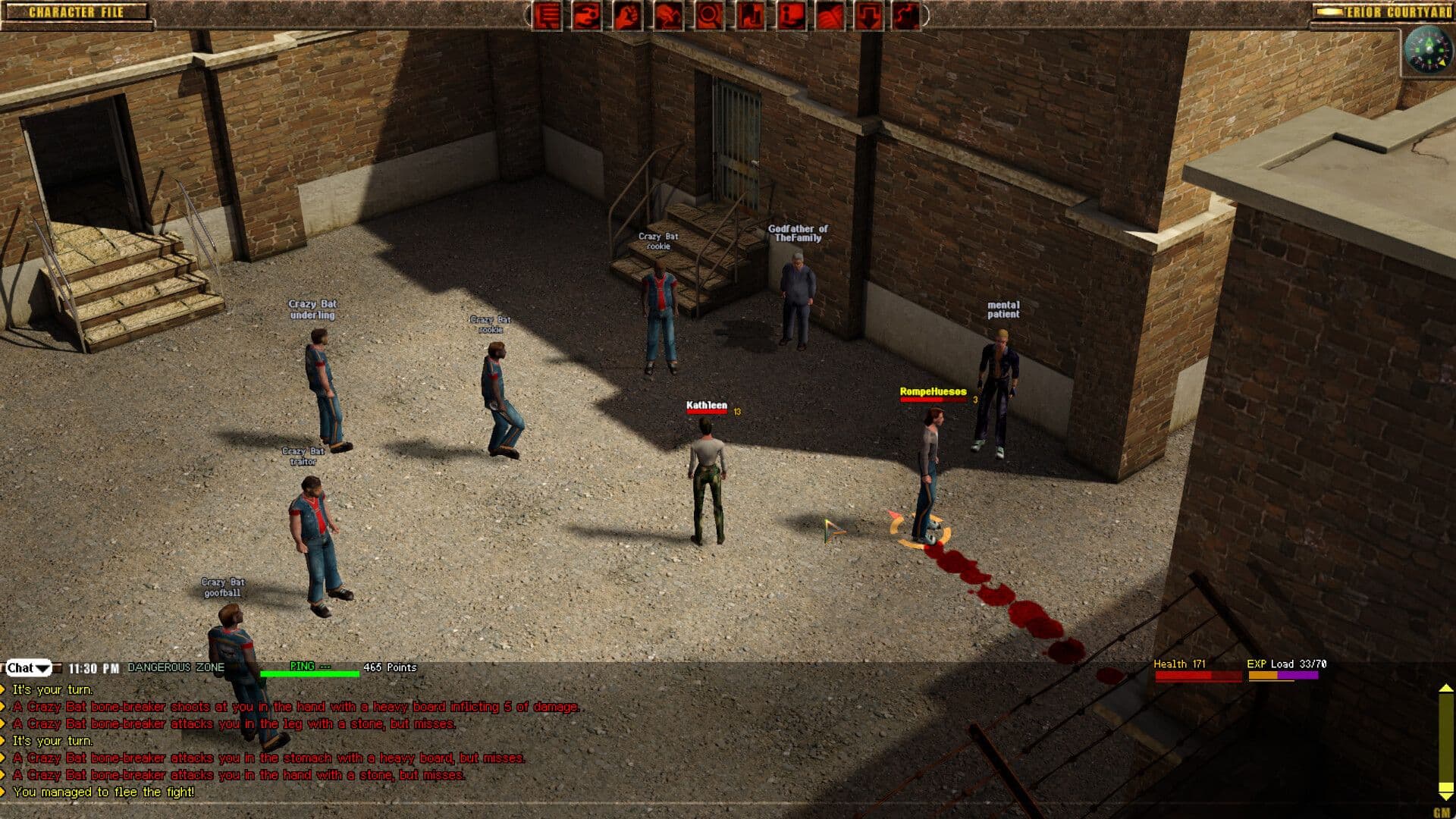
The moment a confrontation between inmates or a clash with a patrolling guard escalates into open violence, the surrounding hallway or yard transforms into a tactical stage. Each combatant possesses an individual pool of Action Points consumed by virtually every action: taking a step along the tiled floor, turning your body, shifting grip on an improvised knuckle-duster, raising a defensive block, or executing a dirty technique. Action Points regenerate at the start of each round, forcing players to weigh every second of the ticking turn timer. Do you blow your entire reserve on a sudden sprint and a haymaker, leaving yourself defenseless for the opponent's turn, or do you hunker down in the corner of a cell to bank points for a counter-attack?
[Positioning / Block Geometry] ➔ [PA Calculation] ➔ [Shiv Thrust / Disarm / Trip] ➔ [Loot Recovery / Chapa Dog Tag]
The prison brawl arsenal is cynical and entirely stripped of chivalrous romance. Combat mechanics feature thirty-two specialized skills designed to incapacitate opponents through the dirtiest means available:
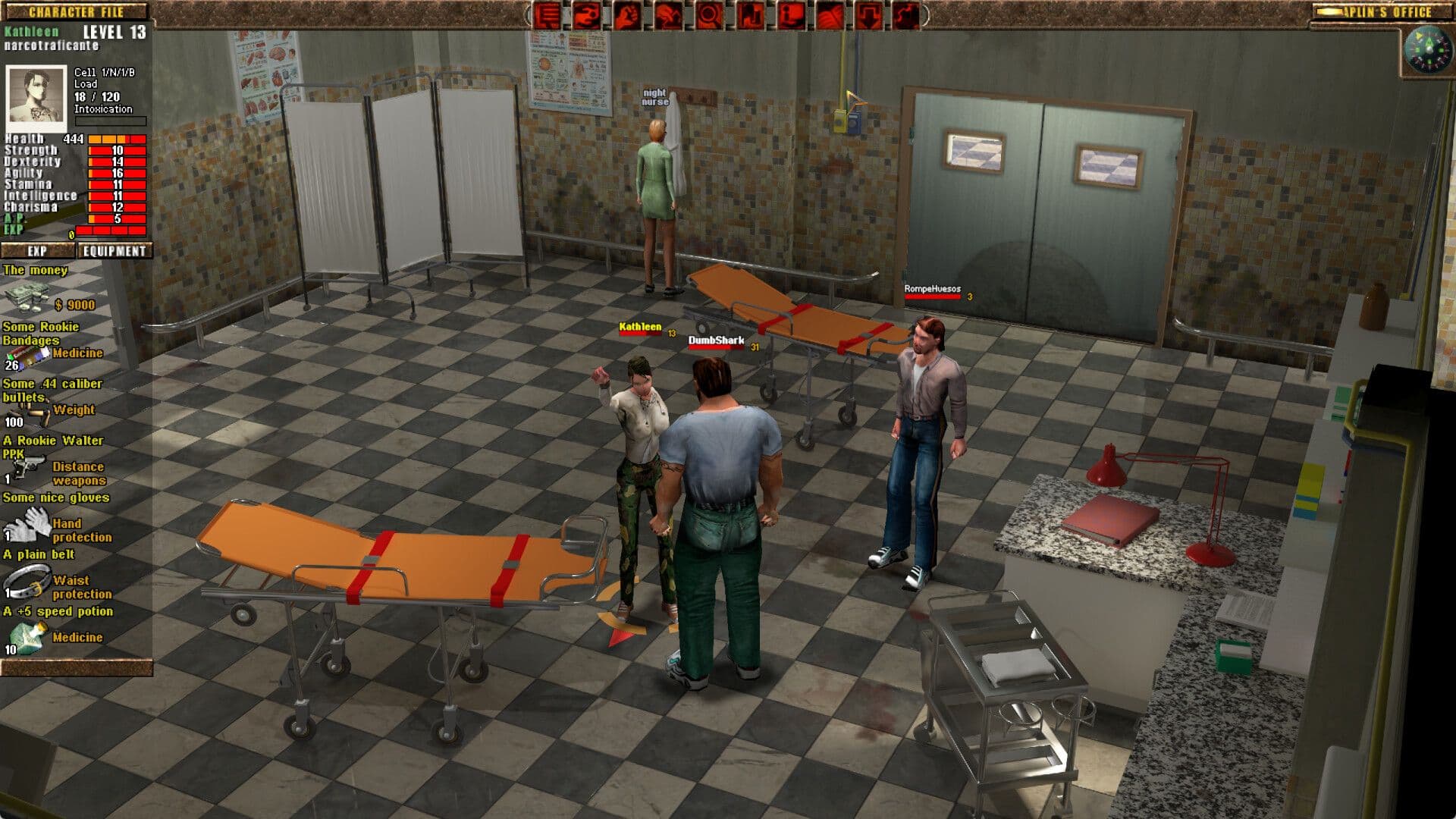
Equipment and illicit contraband dictate tactical flexibility. There are no magical mana potions: their role is fulfilled by bootleg chemical stimulants sourced from underworld cooks, packs of harsh cigarettes that shave down stamina fatigue, and improvised splints applied mid-fight to fractured limbs. Weapon choices completely alter your tactical approach: a heavy lead pipe demands hefty Action Point investment per swing but reliably bashes through improvised phonebook armor, whereas a sharpened toothbrush or razor delivers rapid puncture wounds that trigger heavy bleeding statuses.
Where lies the true tension of this combat loop in an MMORPG? In its raw publicity and high stakes. Fights do not unfold inside isolated instanced arenas: brawls erupt directly in shared communal spaces—exercise yards, mess halls, or cramped corridors—in full view of dozens of other inmates. While you meticulously calculate your Action Points, an audience of onlookers gathers to cheer, jeer, or place bets in local chat. Furthermore, if the brawl takes place in an open PvP zone, defeat carries brutal consequences.
The victor earns the right to partially loot the fallen opponent: peeling away contraband, seizing crafted weapons, and claiming the victim's identifying prisoner tag (Chapa). Hoarding these prisoner dog tags is the supreme badge of criminal authority within the penitentiary. Meanwhile, the loser faces an extended recovery in the infirmary or a grim stint in solitary confinement, locked out of communal areas and forfeiting valuable training time.
Traditional role-playing games have long conditioned players to rely on the holy trinity of tank, healer, and damage dealer, wrapped in the robes of mages and the plate armor of paladins. Creating a character in Prison Legacy introduces an entirely different system of identity. There are no fantasy races or spellcasting schools: your role-playing identity is determined by the specific criminal offense (Delito) for which you were convicted and handed a life sentence. The developers at Descargas Digitales preserved the original roster of twelve criminal archetypes, each establishing initial attribute distributions, access to thirty-two distinct skills, and a tailored survival niche within the penitentiary ecosystem.
[Frontline Heavies: Mercenario / Atracador] ➔ [Stealth Assassins: Asesino / Ladrón] | ↓ ↓ | [Intellectuals: Hacker / Político / Timador] ➔ [Criminal Underbelly: Caníbal / Pandillero / Narco]
The entire roster is divided into four distinct functional branches:
The hidden trap of this class system lies in its absolute permanence. There is no respec shrine or coin-paid attribute wipe. If you roll a physically frail hacker or smooth-talking swindler, you must accept that surviving a one-on-one yard clash against a muscular mercenary is virtually impossible. The game enforces interdependency from day one: intellectuals must barter cigarettes to hire muscular muscle, while brute enforcers are forced to bargain with thieves and chemists for reliable shivs and pain relief.
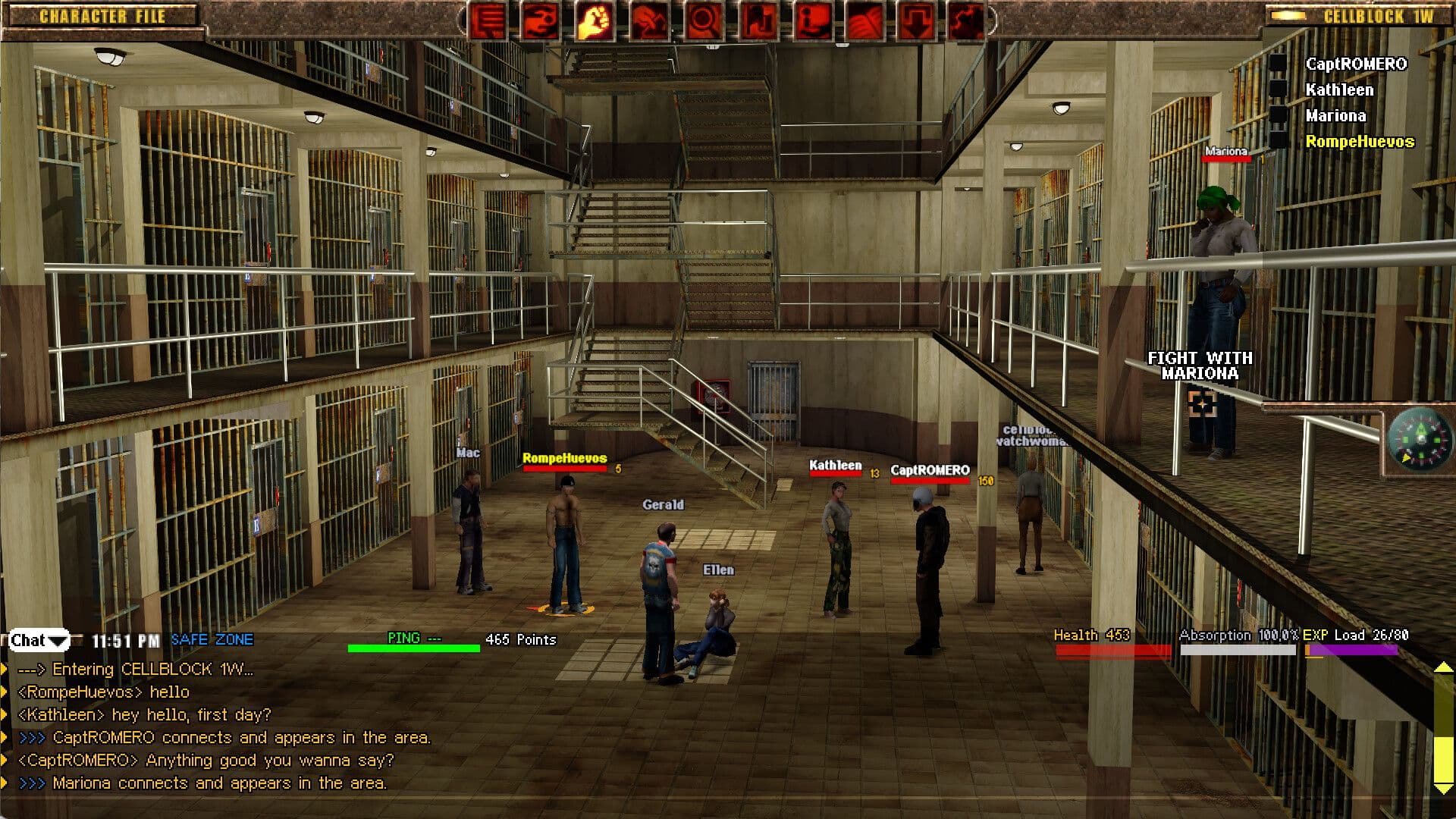
The vast majority of online RPGs invite players into endless horizons, verdant glades, and floating citadels. The geography of Prison Legacy is engineered to achieve the exact opposite effect: it deliberately confines players with suffocating claustrophobia, peeling plaster, and the relentless hum of fluorescent lights. The entire world exists within the high-security walls of a single penitentiary. There is no seamless open wilderness—the environment is divided into specialized sectors, residential cell blocks (Módulos), industrial workshops, and secured corridors governed by strict prison regulations.
The focal point of social life and criminal politics is the iconic Sports Pavilion (Pabellón Deportivo). In the lore of classic La Prisión, this space held revered status. Here, amid rusted iron barbells and weathered punching bags, presides the legendary NPC Boris Bichkov—the prison's perennial kingpin. Through Boris, all core social mechanisms unfold: newcomers gain access to strength conditioning, official gangs are registered, gang jumpsuit colors are approved, and rival syndicates negotiate treaties or declare territorial warfare.
[Cell Block / Inmate Stash] ➔ [Mess Hall / Showers (Ambush Zones)] | ↓ ↓ | [Boris Bichkov's Gym (Social Hub)] ➔ [Solitary Isolation / Celdas de castigo]
Other prison wings serve distinct functional and tactical purposes:
Landing in solitary is not a trivial screen pause; it is a crippling mechanical penalty that tears your character away from the prison's social and economic fabric. Inside the isolation cell, the screen goes dark, chat channels are muted, and all crafting, bartering, and training are suspended for hours of real time. The only defense against losing your contraband is building secret stashes. Players must conceal their valuables behind air vents, beneath loose floor tiles, or inside thin mattresses, hoping rival thieves do not plunder their cell before the shift concludes.
Online role-playing economies typically rest upon rich mithril veins, rare herbs, and ancient magical forges. In Prison Legacy, craftsmanship is grounded in gritty penal realism. Here you find no exalted jewelers or runecrafters; their place is filled by resourceful inmates capable of converting a stolen cafeteria spoon into a lethal blade inside a dim machine shop. Illicit contraband crafting forms the lifeblood that sustains every prison gang's combat readiness.
Resource gathering is tied to forced institutional labor. To acquire base scrap, players report for shifts in official prison workshops (Talleres). Manning industrial lathes or sorting refuse consumes stamina but grants chances to slip scrap metal, bolts, springs, electrical tape, and canvas strips into concealed pockets. Alternatively, thieves pull off risky break-ins into guard supply closets or purchase stolen supplies from bribable supply guards.
[Forced Labor / Secret Pocket] ➔ [Scrap, Chemical & Fabric Loot] ➔ [Underground Workshop Craft] ➔ [Shiv / Stimulant / Lockpick]
Crafting disciplines are grouped into four practical avenues:
The risk in illicit manufacturing stems from tools and guard patrols. Crafting outside scheduled maintenance hours constitutes a serious infraction. If a patrolling officer catches you sharpening metal, the guard confiscates both the weapon and all accumulated inventory scrap. Furthermore, crude tools break unpredictably, and shiv durability depends heavily on your dexterity and crafting skill: a poorly fashioned blade will shatter on enemy vest armor during the opening round of a brawl.
In the standard online multiplayer game, commerce is reduced to a sanitized auction house window: list an item, pay a system fee, and collect gold from your mailbox. In Prison Legacy, such convenience does not exist. Inside the confines of a maximum-security penitentiary, trade runs on the raw laws of the black market, where interpersonal trust is far more valuable than virtual currency, and the definitive medium of exchange has remained packs of cigarettes and direct barter for twenty-six years.
Official commissary funds—earned as meager wages from laundry or kitchen duties—are heavily monitored by the administration. They can only purchase basic necessities from the prison tuck shop: tasteless gruel, coarse soap, and government-issue stationery. The authentic, thriving prison economy operates in the shadows:
[Official Prison Account (Commissary)] ➔ Illiquid | [Cigarette Packs / Medicine Vials] ➔ Hard Black-Market Currency | [Personal Cell Shops] ➔ Direct Barter ➔ Gang Common Treasury
The key players in this economic web are the Timador (Con Artist) and Mafioso archetypes. Con artists possess passive bonuses to evaluate contraband and minimize barter losses, enabling them to corner the scrap market from inexperienced inmates. Prominent syndicates assemble immense treasuries, using stored contraband to finance contract hits and enforce supply monopolies.
Yet this unregulated barter system carries inherent dangers of fraud and ambush. With no automated auction escrow protecting open exchanges, meeting in a deserted corridor to trade components frequently turns into a coordinated ambush. While you navigate the trade interface, your partner's associates can flank from the shadows, land a concussive stun, and strip all goods from your waist. Economic survival in Prison Legacy hinges on reputation and muscle: an untrustworthy merchant will quickly find workshop access permanently denied and a lucrative bounty placed on their Chapa dog tag.
A loner in a maximum-security prison is a marked victim whose survival is measured in minutes before an inevitable ambush in a darkened corridor. Social self-preservation in Prison Legacy is paramount: to survive, an inmate must pledge fealty to an established syndicate or organize their own crew. The gang structure, inherited from the origins of La Prisión, mirrors authentic criminal hierarchies governed by violence, resource monopolies, and strict discipline.
Founding a gang demands preparation and clout. An aspiring leader must amass sufficient cigarette cartons to bribe prison guards and report to the Sports Pavilion (Pabellón Deportivo) before Boris Bichkov. Upon paying registration fees, the gang is formally recognized: the leader designates gang uniform colors, unlocks the private crew channel (/clan), and gains access to diplomatic lines with confederates (/aliados).
[Boris Bichkov Registration] ➔ [Gang Robes & Treasury] ➔ [Cell Module Conquest] ➔ [Workshop Tribute Collection]
The core objective of organized crews is territorial sovereignty over residential modules (Módulos) and fabrication shops. Neutral ground is virtually nonexistent: every block, communal shower, and lathe shop is either owned by a specific syndicate or contested in active turf wars. Controlling a module yields immense operational advantages:
Gang conflicts unfold under tactical rules. Large-scale turf clashes activate turn-based squad encounters where geometric positioning proves decisive. Frontline Mercenarios seal narrow doorways with heavy bodies to halt advances, while Pandilleros—bolstered by squad synergy damage buffs—shred opposing lines. Simultaneously, allied Hackers remotely lock bulkheads to cut off approaching enemy reinforcements.
Yet open warfare is merely the visible layer of prison politics. The real contest for dominion occurs through backroom intrigue, bribery, and contract hits. In the underworld of Prison Legacy, hiring a professional Asesino a sueldo (Hitman) is often far more efficient than launching a frontal breach against a fortified module. A veteran assassin stalks the target during yard recreation, waits until the victim exhausts their Action Points on pull-up bars, and executes an instant lethal backstab.
Modern MMO design has largely conditioned players out of organic interpersonal communication. Automated matchmaking, external voice servers, and omnipresent navigational beacons have reduced most online worlds to solitary tours amidst mute avatars. Prison Legacy stands in radical opposition. Forged at the turn of the millennium under the influence of text-based MUDs and IRC chat culture, the game thrives on text, raw social interaction, and direct dialogue.
Within the user interface, the chat pane occupies central prominence, matching the 3D viewport in mechanical importance. Every meaningful prison interaction begins with text. There are no hovering prompt bubbles: to locate who hoards stolen industrial solvent, you must walk across the exercise yard and initiate direct conversation in local chat. Social interaction operates through command syntax:
[Local /say Chat] ➔ [Smoker Corner Dialogue] ➔ [Deal / Betrayal] ➔ [Text Glory or Execution]
The cultural phenomenon of classic La Prisión was anchored entirely in its community. For nearly two decades, the GenteLaPrision movement flourished across Spain: players organized real-world meetups in Madrid, Barcelona, and Valencia, where leaders of warring in-game gangs shared drinks before returning to their monitors to resume turf clashes. Emergent roleplay developed organically. Inmates adopted penal slang, maintained unwritten behavioral codes, and held informal tribunals on yard benches to try suspected informants.
The pivotal historical milestone for 2026's Prison Legacy is the integration of its first official English localization. From 2000 until 2018, the game remained a closed enclave for Spanish speakers: any foreigner unable to communicate in Spanish became an immediate outcast. Releasing on Steam opens the prison gates to an international audience.
Yet this cultural integration brings immediate friction. The impending collision between veteran Spanish-speaking inmates who know every prison brick and waves of English-speaking novices promises to turn recreation yards into a powder keg. Language barriers in a game where survival hinges on rapid communication may lead to nationality-based gangs and territorial wars across blocks. In Prison Legacy, your word is deadlier than a steel shiv, and a single misplaced remark in public chat can ignite an all-out turf war.
The fundamental challenge in reviving a twenty-year-old classic lies in preserving historic identity without forcing modern players to endure obsolete technical hurdles. The original La Prisión was engineered around legacy DirectX and software rendering: it crashed on modern Windows builds, lacked widescreen support, and choked on high resolutions. The developers at Descargas Digitales rejected lazy emulation in favor of ambitious engineering: the game client was rewritten from scratch on a proprietary 64-bit engine powered by the low-level Vulkan API.
Selecting Vulkan provides several decisive technical advantages:
[Legacy 2000 Renderer (DirectX/Win98)] ➔ SCRAPPED | ↓ | [Custom 64-bit Engine on Vulkan API] ➔ [Windows / Native Linux / Steam Deck] | ↓ | [Business Model: Buy-to-Play on Steam] ➔ No 2000s Subscriptions or P2W Paywalls
System requirements for Prison Legacy remain remarkably accessible by 2026 standards. Smooth performance requires only a modest dual-core processor, 4–8 GB of RAM, and a Vulkan 1.1 compliant GPU such as a GeForce GTX 1050 Ti or Radeon RX 570 with 2–4 GB VRAM. Storage demands sit around 5–8 gigabytes with no SSD requirement: level data caches swiftly from mechanical hard drives or budget MicroSD cards.
The game's commercial model has also undergone a modern overhaul. In 2000, La Prisión demanded monthly subscription fees via credit cards or prepaid time cards—a formidable barrier in the dial-up era that turned away countless players. For 2026, the studio adopted a straightforward Buy-to-Play model: a single Steam purchase unlocks permanent access to all prison wings and upcoming content updates without recurring fees.
The aesthetic consideration of this remake lies in its preserved retro look. Developers intentionally retained the sharp, low-poly character geometry and animations of the original release. Beneath the surface runs high-performance Vulkan code with cleaned textures and overhauled lighting, yet blocky inmate models in orange and blue scrubs openly declare their early-2000s roots. For players who prize mechanical depth and emergent social gameplay over photorealistic visual benchmarks, this aesthetic minimalism serves as a welcome portal to an era when gameplay reigned supreme.
Evaluating Prison Legacy through the lens of modern theme-park MMOs inevitably triggers cognitive dissonance. This is not a guided theme park loaded with endless daily task checklists, glowing path trails, and reward chests for every step taken. The project from Descargas Digitales is an uncompromising time capsule, ported from the golden age of online sandboxes onto a modern Vulkan graphics stack.
Prison Legacy is a singular, rare release for 2026 that shatters modern genre complacency. It is not an industrialized corporate product, but a sincere labor of love from the original creators who steered the game through the dial-up era and have now granted it a second life on the global stage.
If you seek a cinematic visual showcase with lavish budgets and hand-held quest markers, stepping through these prison gates will lead only to frustration. But if you yearn for the days when online worlds were genuine social experiments—where your reputation in chat mattered more than your gear score and every turn-based duel made your pulse race over the risk of losing a prized shiv—Prison Legacy on Steam demands your immediate attention.