 Buy To Play
SpiritVale
MMORPGEarly access
SpiritVale is a class-based action MMORPG from Australian indie studio Baikun Interactive, set in the fractured world of Nevaris. Choose from seven cl...
Minimum and recommended PC specs to run the game
← Back to game reviewIf your PC can run this game, you'll also be able to play these:
Buy To PlaySpiritVale is a class-based action MMORPG from Australian indie studio Baikun Interactive, set in the fractured world of Nevaris. Choose from seven cl...
 Buy To Play
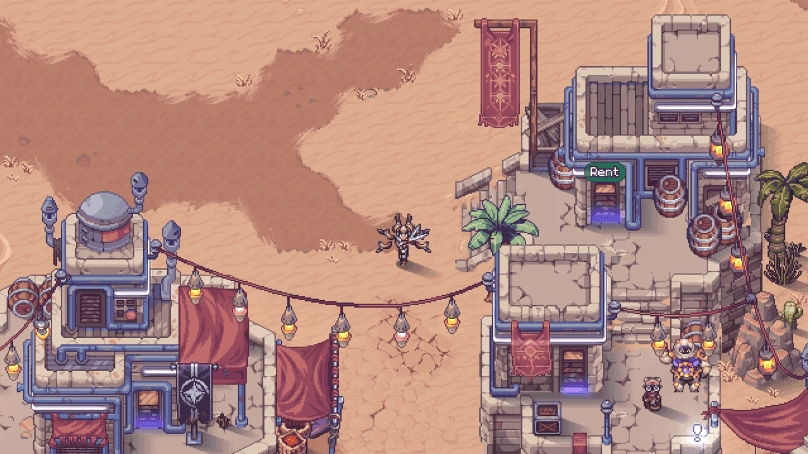
Soulbound: Online is a pixel-art action MMO where fast bullet-heaven dungeon runs sit alongside a peaceful overworld of mining, fishing, cooking and c...
 Free To Play
MapleStory is a free-to-play 2D side-scrolling MMORPG from Nexon that has run continuously since 2003, now home to more than 260 million registered ac...
PUBG: DED.NET has been engineered from the ground up on Epic Games' flagship Unreal Engine 5 by PUBG Madison. Representing a major generational leap over legacy battle royale architecture, the title pairs 60-player synchronous lobbies with high-density open-world terrain, authentic ballistic trajectories, physical environmental destruction, and dynamic global illumination powered by Lumen.
The Central Processing Unit (CPU) bears substantial computational weight driven by high-frequency networked physics simulations. The engine simultaneously calculates real-time ballistic projectile drop and air resistance, navigational routines for roaming mutated abominations and occult cultists, complex ragdoll meshes, and dynamic interactive objects such as detachable vehicle door shields. High single-core instruction throughput (IPC) and sustained clock speeds exceeding 4.0 GHz are vital. While entry-level 6-core processors such as the Ryzen 5 3600 or Core i5-10400F can initialize the client, maintaining competitive framerates without severe frametime spikes during chaotic multi-squad firefights demands modern 8-core CPUs like the Ryzen 7 5700X3D / 7800X3D equipped with expansive 3D V-Cache buffers.
Graphics Processing Units (GPU) and Video RAM (VRAM) manage dense wilderness geometry via Nanite virtualization alongside volumetric atmospheric rendering. Cascadia's signature coastal fog and smoke plumes from burning vehicles operate as true volumetric voxel simulations that scatter headlight cones and muzzle flashes in real time. A baseline capacity of 6–8 GB VRAM (comparable to a GeForce RTX 2060 Super or Radeon RX 6600) suffices strictly for 1080p outputs with scaled-down post-processing. Achieving fluid 60+ FPS competitive stability at 1440p requires GPUs in the tier of the GeForce RTX 3070 Ti / RTX 4070 or Radeon RX 6800 XT featuring 12 to 16 GB of VRAM to prevent asset thrashing during rapid camera sweeps.
System Memory (RAM) serves as the primary streaming conduit for high-resolution woodland textures, industrial sawmill geometries, and custom mercenary loadouts. While 16 GB of RAM covers standard solo reconnaissance at conservative draw distances, intensive roguelite expeditions involving multiple squads clashing inside enclosed motel wings trigger aggressive caching of audio banks, perk animations, and physics meshes. A dual-channel configuration of 32 GB DDR4/DDR5 with optimized XMP profiles stands as the benchmark for eradicating micro-stuttering and ensuring seamless asset streaming across Unreal Engine 5's world partition grid.
Storage architecture strictly mandates a high-speed NVMe Solid State Drive (SSD) with at least 75–90 GB of available space. Legacy mechanical hard drives (HDDs) cannot keep pace with modern geometry streaming pipelines; slow random read latencies inevitably induce texture pop-in, terrain rendering failures beneath player avatars, and debilitating hitching when cycling high-magnification optical scopes. A fast NVMe SSD ensures swift match deployment and hitch-free navigation across Cascadia's rugged landscapes.