 Buy To Play
SpiritVale
MMORPGEarly access
SpiritVale is a class-based action MMORPG from Australian indie studio Baikun Interactive, set in the fractured world of Nevaris. Choose from seven cl...
Minimum and recommended PC specs to run the game
← Back to game reviewIf your PC can run this game, you'll also be able to play these:
Buy To PlaySpiritVale is a class-based action MMORPG from Australian indie studio Baikun Interactive, set in the fractured world of Nevaris. Choose from seven cl...
 Free To Play
MapleStory is a free-to-play 2D side-scrolling MMORPG from Nexon that has run continuously since 2003, now home to more than 260 million registered ac...
 Free To Play
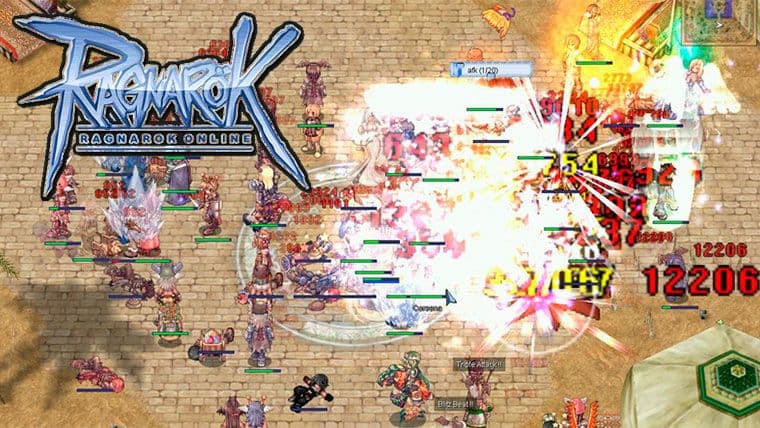
Ragnarok Online has been running since 2002, and the card system it introduced — socketing monster drops into weapons and armor — is still one of the ...
Sea of Thieves runs on a heavily customized version of Unreal Engine 4, powered by a proprietary hydrodynamic simulation engine engineered in-house by Rare. The primary computational challenge lies not merely in rendering picturesque tropical vistas, but in executing real-time ocean physics synchronized down to the centimeter across both the host server and every connected client. Every wave peak, trough, and swell dynamically interacts with vessel hulls, determining pitch, roll, buoyancy, and displacement. Coupled with dynamic volumetric weather systems and seamless world streaming, this architecture establishes a distinct hardware workload profile.
The central processing unit (CPU) bears continuous duty cycles managing buoyant object physics, sail aerodynamics against shifting wind vectors, multi-projectile cannonball ballistics, and ship flooding calculations. The engine favors robust single-thread throughput and high instructions-per-clock (IPC) performance to sustain stable frame pacing during rapid helm maneuvers. While legacy quad-core chips such as the Intel Core i3-4170 or AMD FX-6300 satisfy entry-level boot thresholds, dense emergent encounters — such as contesting a Fort of Fortune or boarding The Burning Blade flagship amidst multi-crew naval warfare — demand a modern 6- or 8-core CPU like an Intel Core i5-8400 or AMD Ryzen 5 2600 to eliminate frame pacing drops.
The graphics processing unit (GPU) processes sophisticated multi-layered ocean water shaders, volumetric cloud formations, subsurface scattering through wave crests, and dense gunpowder smoke effects. Legacy GPUs like the NVIDIA GeForce GTX 660 or AMD Radeon R9 270 (2 GB VRAM) provide playable performance only at scaled 720p or 1080p resolutions under minimal graphical presets. To experience Rare's stylized painterly aesthetic at high-fidelity settings with extended horizon sail draw distances, full temporal anti-aliasing, and screen-space water reflections, an NVIDIA GeForce RTX 2060 or AMD Radeon RX 5700 XT equipped with 6 to 8 GB of VRAM is strongly recommended.
System memory (RAM) serves as an essential buffer to mitigate asset streaming hitching during open-ocean navigation. Memory allocation continuously caches island geometry, Siren Shrines, and a vast compendium of cosmetics, costumes, ship liveries, and companion pets belonging to encountering crews. While 8 GB meets minimum requirements, approaching busy outposts or loading multiple customized galleons can saturate this pool and induce pagefile stutter. A dual-channel configuration of 16 GB high-speed RAM is the recognized standard for seamless, hitch-free gameplay.
Storage architecture directly influences crew survival and combat responsiveness. With an install footprint approaching 100 GB, hosting the client on a high-speed Solid State Drive (SSD) is practically mandatory. Random-read access speeds govern transitions through the spectral doorway of the Ferry of the Damned as well as underwater Diving travel sequences. On traditional mechanical hard drives (HDDs), extended black loading screens upon respawning can leave an avatar immobilized for 15–20 critical seconds, frequently returning the player to find their vessel already sunk beneath the waves.