 F2P · Live
Lineage 2
Aden's castles never stay in the same hands for long, and Lineage II has built an entire twenty-three-year…
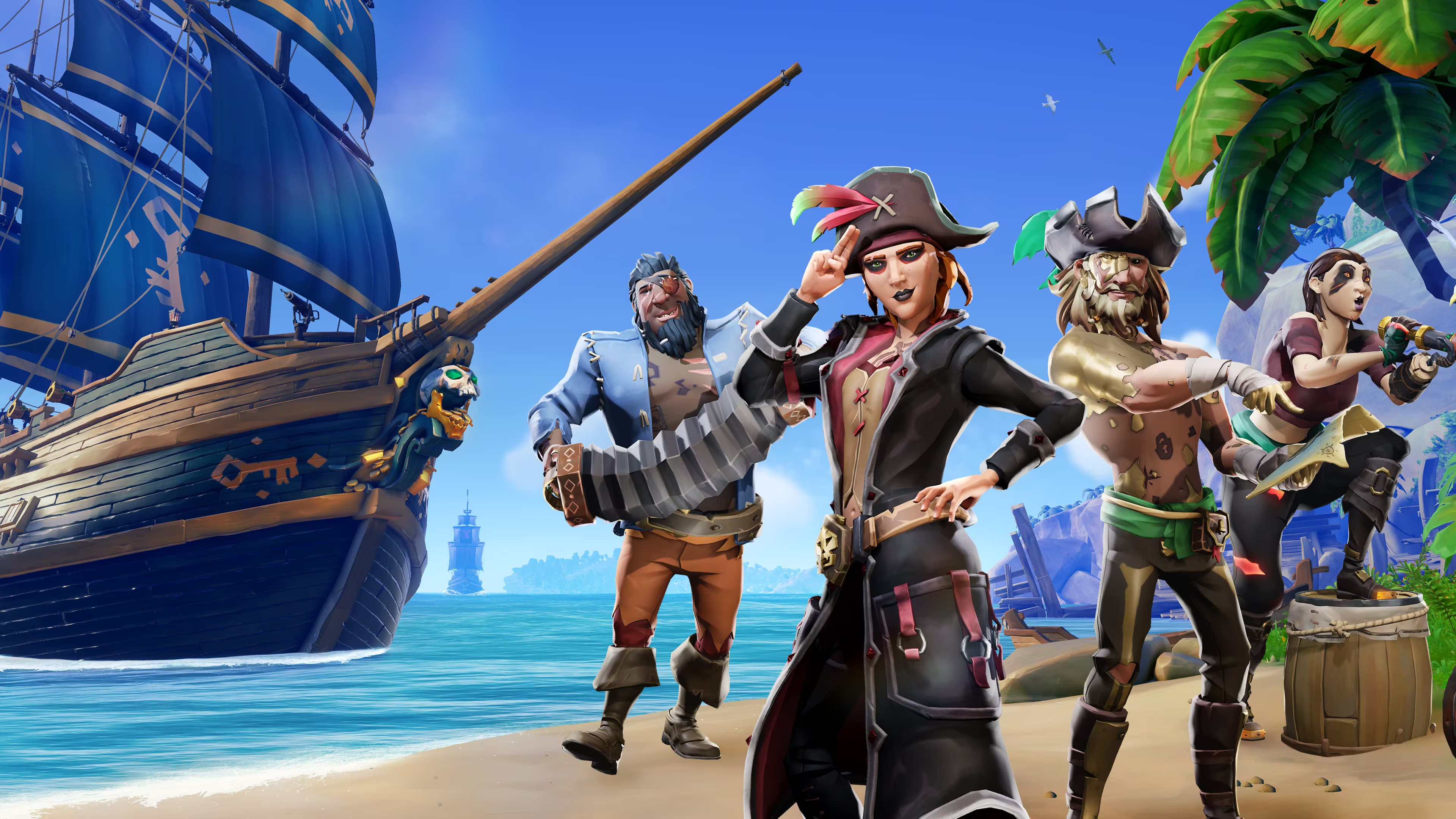
The iconic first-person multiplayer pirate sandbox adventure developed by Rare. Sail a vast seamless ocean aboard sloops, brigantines, and galleons, master tactile physics-driven ship management, hunt...
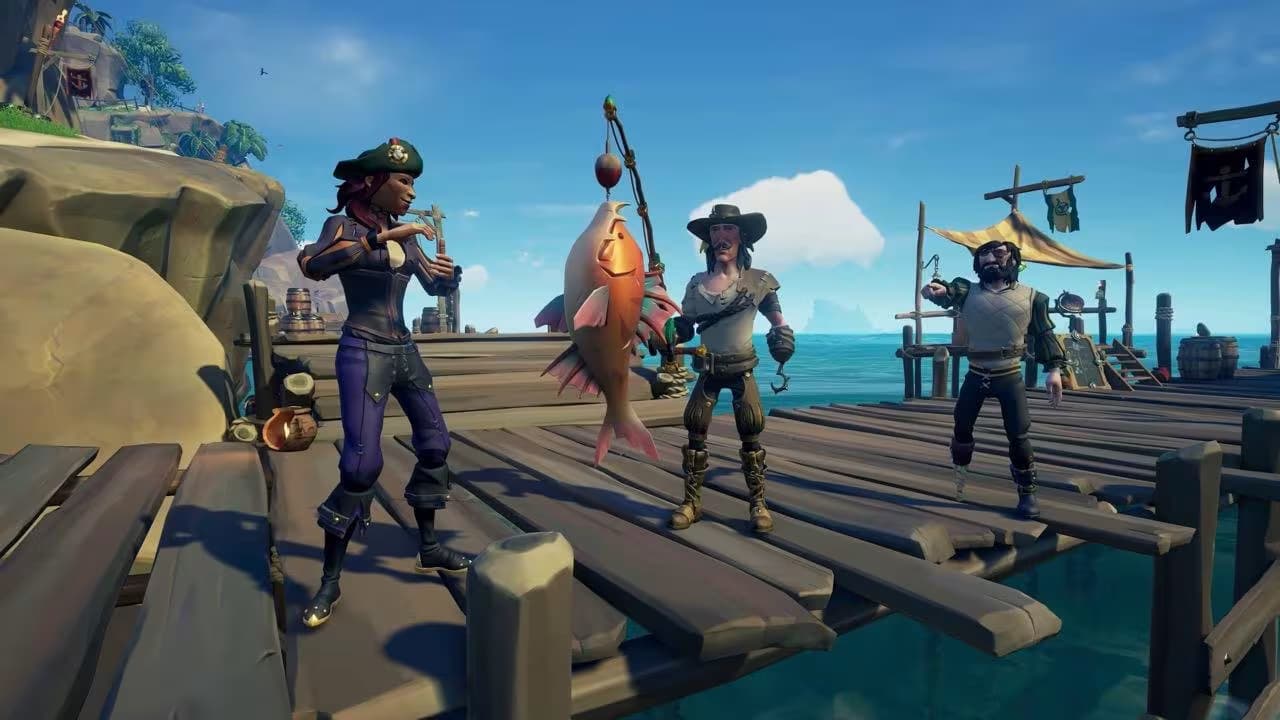
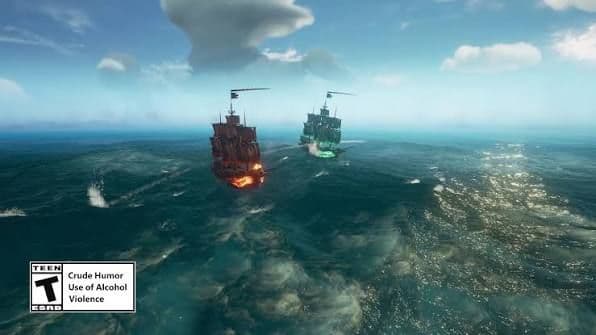
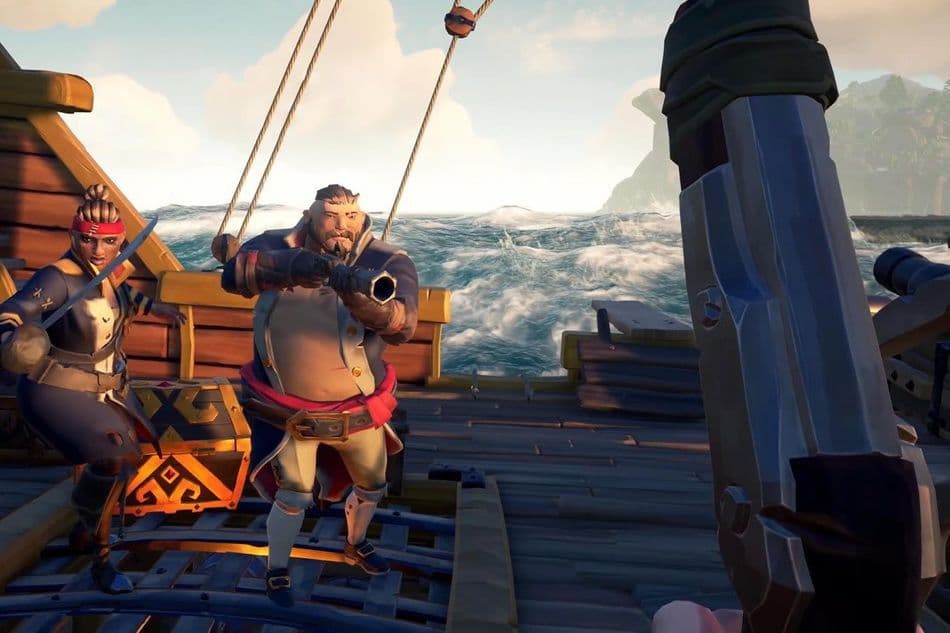
Sea of Thieves is a shared-world first-person multiplayer pirate action-adventure developed by the storied British studio Rare and published by Xbox Game Studios in March 2018. The game delivers an expansive, seamless oceanic sandbox where player-crewed sailing vessels navigate turquoise swells, unearth buried chests, battle cursed skeleton hordes, and engage in high-stakes naval skirmishes with rival corsairs at a moment's notice.
Upon its initial release, the title faced sharp criticism from gaming outlets and early adopters alike. While critics universally praised its mesmerizing water physics and whimsical charm, the game was widely panned as a "gorgeous but hollow sandbox." In 2018, the core gameplay loop offered little beyond repetitive voyage grinding and sporadic outpost skirmishes. Rather than abandoning course, Rare embarked on one of the most remarkable post-launch live-service turnarounds in gaming history, systematically expanding the base framework into a content-rich juggernaut sustained by regular seasonal updates, full-length narrative campaigns, and deep interwoven game systems.
By 2026, the game's lifetime player count has surpassed 40 million pirates worldwide. A watershed milestone arrived in spring 2024 with the title's blockbuster launch on PlayStation 5, dissolving platform barriers and surging fresh blood into server ecosystems. Today, the game operates under a seamless, unified cross-play architecture connecting PC, Xbox One, Xbox Series X/S, PlayStation 5, and the handheld Steam Deck, standing unchallenged as the definitive pirate experience in the modern gaming landscape.
The foundational reason Sea of Thieves has remained peerless for nearly a decade lies in its unapologetic commitment to tactile, analog seamanship. Unlike conventional MMOs or arcade naval combat games, there are no "full ahead" hotkeys, steering assists, or mini-maps cluttering the HUD. A sailing vessel here is a physical, mechanical entity composed of dozens of interactive rigging points, operating on an ocean governed by mathematically continuous wave displacement, tidal currents, and shifting wind vectors.
Controlling a ship demands genuine, tactile crew coordination. Setting sail requires players to manually uncoil rigging lines, drop canvas from the yardarms, and angle each sail toward the wind by observing fabric billowing and wind streaks across the sky. Catching a full billow tilts the hull and propels the vessel into the surf. Ocean swells continuously torque the ship's bow off course, requiring constant corrective rudder input. On larger craft, billowed sails completely obscure the helmsman's forward horizon, making a dedicated spotter on the bowsprit or high in the crow's nest calling compass bearings an absolute operational necessity.
The vessel's damage and survival model transforms every broadside exchange into an adrenaline-soaked emergency:
The fleet is divided into three distinct ship archetypes, each engineered around specific crew sizes:
This is where the game's core brilliance shines. Victory in naval combat is never determined by inflated statistical advantages, but by how seamlessly a crew functions as a cohesive machine. While the cannoneer leads targets across surging waves, the deckhand trims the sails to match shifting winds, and the captain carves tight turning arcs to keep hostile hulls locked inside the broadside firing lane.
The uncharted world of Sea of Thieves remains cloaked from the outside world by a catastrophic natural barrier. Encircling the entire nautical map lies The Devil's Shroud — a toxic, blood-red fog bank. If an inattentive helmsman strays into this ominous mist, navigational compasses spin frantically, radioactive crimson water eats into the timber, and the hull fractures with deafening groans in mere seconds. Only crews possessing the ancient Shroudbreaker relic can carve safe passage through this lethal shroud.
Sheltered within this veil lies an island archipelago divided into four distinct geographical biomes, each presenting unique atmospheric conditions, navigational hazards, and artistic identities:
The overarching narrative spine revolves around two mythical figures. On one side stands the Pirate Lord (Ramsey Singh) — the legendary trailblazer who first breached the Shroud and drafted the Pirate Code, whose spectral spirit now guides aspiring legends from a subterranean tavern. On the opposing flank rages Captain Flameheart — an immortal skeleton warlord whose towering flaming visage frequently burns across the sky, commanding armadas of spectral ghost fleets and preaching eternal war.
Even mortality itself is woven into a compelling diegetic gameplay loop. Death in this world avoids flat respawn screens; a slain pirate is instantly transported to the spectral deck of the Ferry of the Damned. At the helm stands the silent Ferryman, while on deck burns the mystical Well of Fates. Depending on the exact cause of your demise — lightning strike, venomous viper bite, shark jaws, fire, skeleton blade, or rival player cannon fire — your lantern absorbs one of six distinct colored Flames of Fate. After serving a brief penalty timer, the creaking stern doors swing open, allowing your soul to materialize back upon your ship's deck.
Every voyage in Sea of Thieves begins with an identical cinematic touch: your pirate stirs awake at a heavy oak table inside a sunlit outpost tavern, holding a foaming tankard of grog as sea salt breezes filter through open shutters. The opening fifteen minutes form a sacred preparatory ritual. Crew members haul empty storage crates down the pier, systematically stripping outpost barrels to pack ship holds with cannonballs, chainshot, repair lumber, and juicy healing pineapples. Setting sail into the horizon without adequate provisions is an invitation to be sent straight to the seabed during your very first naval encounter.
For years, the game's greatest pacing bottleneck was protracted open-water transit. Reaching an island to unearth a single treasure chest or hunt down a skeleton captain frequently devoured twenty to thirty minutes of real time battling unfavorable headwinds. However, with the launch of Season Eleven, Rare orchestrated a foundational navigation overhaul by redesigning the shipboard Quest Table inside the captain's cabin.
Captains no longer need to sprint between outpost merchants purchasing paper voyage scrolls. Every available Trading Company contract, narrative Tall Tale, and World Event is organized directly on the interactive table. More importantly, the update introduced the Diving travel mechanic:
The most consequential decision, however, occurs before your ship even materializes on the water. The game is fundamentally bifurcated into two separate server environments:
Yet absolute safety extracts a steep price. To preserve the vitality of the shared open world, Rare placed stringent restrictions on Safer Seas: company reputation caps at level 40 (precluding the coveted Pirate Legend status), gold payouts are severely diminished, and Emissary flags, captaincy perks, guilds, and Athena's Fortune endgame voyages remain entirely locked. It is a fantastic rehearsal stage, but genuine pirate infamy is forged exclusively in waters where every distant sail could signal a fight for your life.
For players steeped in conventional RPG or MMO mechanics, combat in Sea of Thieves can feel like a profound paradigm shift. The game completely eschews vertical character progression. There are no character levels, skill trees, stamina pools, or tiered weapons granting +15% critical strike bonuses. An ornate rapier forged from solid gold costing a million gold coins deals the exact same baseline damage as the rusty, notch-riddled blade issued to a sailor on their very first hour of play.
At its heart lies an absolute commitment to horizontal balance: a veteran with five thousand hours under their belt maintains an advantage strictly through muscle memory, animation timing, spatial positioning, and predictive movement. Every pirate equips precisely two weapons chosen from the ship's armory chest. For years, the foundational competitive meta rested upon the canonical original quartet:
Across Seasons Twelve and Fourteen, Rare dramatically expanded the combat sandbox, introducing new instruments for tactical stealth and diversified skirmishing:
Deck skirmishes are further energized by throwable ordinance: kinetic blunderbombs blast enemies off capstans and disrupt revives, while firebombs ignite wooden deckplates into raging infernos. In the hands of an experienced crew, hand-to-hand combat turns into a fast-paced, high-stakes first-person duel where survival hangs on split-second reaction times, mid-air blunderbuss swaps, and daring leaps over shark-infested waters.
If gear in Sea of Thieves confers no statistical dominance, what compels sailors to sink hundreds of hours into this boundless ocean? The driving incentive lies in a multi-tiered framework of social and factional prestige. The archipelago is overseen by five primary Trading Companies, each offering distinct contract types and nurturing completely different operational mindsets:
The economic engine powering this progression is the Emissary System. Before departing an outpost, crews vote to hoist an Emissary Flag for their chosen company. As relevant treasure is hauled aboard, the flag ascends from Grade 1 to Grade 5 (Emissary Grade 1–5). Reaching Grade 5 bestows a staggering +150% bonus (a 2.5x multiplier) on all gold and reputation payouts, while granting an exclusive high-tier Emissary quest. Monthly crew earnings feed directly into the competitive Emissary Ledger, rewarding top-tier sailors with exclusive ship liveries and weapons.
Yet this lucrative multiplier carries a lethal trade-off. Flying an Emissary flag paints a glowing target on your hull. A severed Grade 5 flag commands exorbitant bounties at The Reaper's Hideout. Worse still: crews flying the flag of the Reaper's Bones who achieve Grade 5 unlock dark sight — gaining real-time map tracking of every other active Emissary vessel across the entire server. The moment you achieve maximum earnings, your routine voyage transforms into an all-out fight for survival.
The crowning milestone of any pirate's career is achieving Level 50 across any three Trading Companies, unlocking the revered title of Pirate Legend. In any outpost tavern, a hidden subterranean trapdoor swings open, revealing the entrance to the fabled underground Athena's Fortune hideout. Here, amid spectral sea shanties, the Pirate Lord unlocks the elite Athena's Fortune company, exclusive voyages to unearth the mythic Chest of Legends, and radiant ghostly curses. For those who push beyond the level 100 threshold, the Distinctions prestige system allows players to reset company ranks up to five times, adorning their fingers with ornate rings of distinction as badges of relentless dedication.
For an extended period, vessels in Sea of Thieves felt like disposable utility rentals — generic craft granted upon login and evaporating the instant a session concluded. This dynamic changed permanently with the launch of Season Seven, which delivered the long-anticipated Captaincy system. Pirates can now invest hard-won gold to permanently purchase their own ships, christening them with custom names that are permanently engraved onto a polished wooden crest hanging proudly above the captain's quarters.
Captained status reshapes the emotional bond between sailor and ship:
Yet Captaincy's single greatest quality-of-life innovation arrived via the Sovereigns. Prior to their introduction, concluding a massive voyage was an agonizing chore: unloading a hundred chests, skulls, and trade crates required crew members to spend twenty real-world minutes manually sprinting back and forth across lengthy outpost docks to individual faction vendors. The Sovereigns' lavish purple tent, crowned with a towering harpoon platform at the end of the pier, eliminated this friction entirely. Captained vessels dock directly beneath the tower, harpoon all treasure off the deck in under two minutes, and hand the entire mixed haul to a single aristocratic vendor, receiving full gold value and complete reputation distribution across every corresponding company.
This social architecture expanded further in Season Ten with the introduction of Guilds. These collaborative brotherhoods unite up to 24 players under a shared guild crest, custom motto, and heraldic colors. The defining mechanic is the shared fleet: any captain can pledge their personal vessels to the guild roster, allowing guildmates to sail those ships and earn guild reputation even when the owner is offline.
As guild levels climb, members unlock distinctive uniforms, nautical roles, and prestigious heraldry, culminating in the right to raise the versatile Guild Emissary Flag. Unlike company-specific flags, the Guild Emissary enhances payouts across literally every item type in the game — from basic tea crates to Athena relics. Naturally, flying this omni-flag paints a massive target on your masts, ensuring that enemy Reaper crews will relentlessly pursue your vessel across the waves.
The open sea in Sea of Thieves operates as an autonomous, living ecosystem. A crew might be coasting back from a fruitful expedition at sunset, singing sea shanties to banjo strums, when suddenly the clear turquoise water around their vessel turns pitch-black as if drenched in squid ink. The ship grinds to a dead stop. Seconds later, a deafening oceanic roar shatters the twilight as a dozen cyclopean, barnacle-encrusted tentacles breach the surface — you have crossed into the grasp of the legendary Kraken.
Emergent encounters against deep-sea monstrosities demand immediate, disciplined crew crisis management:
Naval voyages are constantly steered by dynamic World Events projecting colossal luminous markers across the clouds. A radiant skull with green eyes pinpoints an active Skeleton Fort, where crews must defeat waves of plant, shadow, and gold skeletons to claim the vault key. A fractured crimson skull heralds the brutal Fort of Fortune — a grueling siege against three Ashen Lords guarding an immense Athena loot cache and the coveted Chest of Fortune. Meanwhile, the foggy center of the sea conceals the Fort of the Damned, a player-activated raid requiring six distinct Flames of Fate collected from the Ferry of the Damned alongside a ritual skull to unlock.
The crown jewel of World Events arrived in Season Thirteen with the deployment of The Burning Blade. This ten-cannon war dreadnought commanded by Captain Flameheart patrols the seas, incinerating foes with a devastating forward-facing flamethrower. Upon subduing this massive vessel, conquering crews face an extraordinary choice:
One of the most consequential achievements engineered by Rare was dismantling the persistent assumption that multiplayer sandboxes cannot deliver emotionally resonant narrative storytelling. With the introduction of Tall Tales, the game unlocked an expansive, highly cinematic story framework rivaling premium single-player adventure epics. Instead of clicking through dry dialogue windows, players experience fully staged, voice-acted story sagas supported by live orchestral recordings, mystical journals, and intricate environmental puzzle-solving.
The original benchmark for narrative depth was established by the nine-chapter Shores of Gold saga:
Yet the pinnacle of narrative design was reached through two monumental crossovers with iconic pop-culture franchises, permanently embedding the game into gaming lore:
The A Pirate's Life campaign emerged from an unprecedented creative collaboration with Disney, seamlessly grafting the cinematic universe of *Pirates of the Caribbean* into the physics-driven fabric of Sea of Thieves. Players sail into the spectral purgatory of the Sea of the Damned to rescue Captain Jack Sparrow. Alongside Jack, crews explore a haunting ship-graveyard metropolis, board the iconic Black Pearl, and engage in an apocalyptic naval war against Davy Jones and his Flying Dutchman. Scaling a colossal oceanic spire amidst lightning-streaked ghost fleets while Hans Zimmer's soaring orchestral score roars through the speakers delivers blockbuster thrills of the highest order. Crucially, the campaign's core chapters utilize instanced ocean bubbles, insulating player immersion from wandering griefers.
A second triumphant tribute arrived via The Legend of Monkey Island, crafted with direct blessings from the creators of the seminal LucasArts adventure classics. Transported to moonlit Mêlée Island, the sandbox adapts the deliberate pacing of 1990s point-and-click puzzles. Pirates can belly up to the grog-stained counter at the Scumm Bar, collect absurd inventory items like rubber chickens and corrosive mugs, converse with the megalomaniacal talking skull Murray, and aid the earnest Guybrush Threepwood in rescuing Elaine from the spectral clutches of Captain LeChuck. It stands as an exquisite love letter to retro gaming, faithfully recreated within a cutting-edge 3D engine.
Following the permanent sunsetting of the standalone "Arena" lobby in March 2022, the competitive PvP community demanded a refined matchmaking mechanism for honorable naval duels that did not require scouring empty horizons for hours. Rare's definitive answer arrived in Season Eight with the Hourglass of Fate — an interactive brass chronometer fixed to the captain's table that forged an on-demand, skill-matched competitive ecosystem.
The system operates with streamlined precision:
Yet beyond formal matchmaking rings, Sea of Thieves thrives as an unpredictable social petri dish that routinely spawns emergent human comedy and psychological betrayal. Directional spatial voice chat, amplified across hundreds of meters using the brass Speaking Trumpet, allows captains to negotiate truces, bluff, scream battle cries, or whisper mocking insults while swimming beneath an enemy hull with an armed keg.
The game's musical repertoire anchors its distinct cultural charm: hurdy-gurdies, concertinas, banjos, and marching drums allow any player — whether a loyal crewmate, a rival captain on neutral docks, or a prisoner trapped in the brig — to automatically harmonize into an acoustic sea shanty perfectly matched in tempo and key. Fierce, hour-long cannon exchanges have spontaneously dissolved into drunken ceasefires simply because opposing crews stood atop sinking wreckage to perform a synchronized concert.
However, the supreme test of human psychology remains the Alliance system. By hoisting an alliance pennant at the masthead, disparate crews form an armada: every piece of loot cashed in by your allies grants your crew a free 50% cut of gold and reputation without deducting a single copper from the seller. It presents the illusion of pure co-op, yet the structural catch is profound: friendly fire cannot be disabled. Nothing stops an "allied" captain from spending hours clearing a grueling Fort of Fortune shoulder-to-shoulder with you, only to blast a blunderbuss into your back as you hoist the Athena chest, detonate hidden gunpowder in your lower deck, and sail away with the entire haul. In this ocean, trust is far rarer than gold, and healthy paranoia is the only dependable armor.
The monetization philosophy maintained by Rare commands genuine respect in an era saturated with exploitative live-service microtransactions. Sea of Thieves operates under a traditional Buy-to-Play model alongside inclusion within the Xbox Game Pass catalog. The game enforces an uncompromising, cast-iron rule: not a single real-world cent can be spent to purchase numerical, combat, or operational advantages.
The economy circulates across three distinct currencies:
Seasonal progression is driven by the Plunder Pass across 100 Renown tiers. Crucially, the free track is remarkably generous: simply playing the game, sailing miles, and clearing encounters showers players with gold, doubloons, cosmetic gear, and modest drops of Ancient Coins. The optional paid track unlocks exclusively high-tier cosmetics and weapon skins, firmly rejecting any trace of pay-to-win mechanics.
Under the hood, the title harnesses a heavily tailored iteration of Unreal Engine 4. Its enduring technical miracle remains the proprietary server-synchronized ocean simulation: every wave swell, foaming crest, and tidal valley is rendered simultaneously across all clients with sub-centimeter accuracy, making broadside collisions and maritime ballistics feel organically grounded in physics.
In spring 2024, Rare fortified PC security by implementing the kernel-level Easy Anti-Cheat (EAC) protocol. This decisively curtailed flight-hacks, cannon aimbots, and wall-hacks that once plagued high-tier encounters, all while maintaining seamless compatibility on the handheld Steam Deck and Linux distributions running via Proton.
The engine's single enduring imperfection is network hit registration (Hitreg). Due to the staggering complexity of calculating projectile vectors across pitching, rolling decks between high-ping players, gunshots can occasionally produce visual blood splatter and auditory confirmation without the server registering actual damage. While successive patches have dramatically stabilized bullet validation, hitreg anomalies can still induce occasional frustration in hyper-competitive deck duels.
Sea of Thieves in 2026 represents a quintessential pirate adventure brought to breathtaking maturity. Having evolved from a spartan sandbox into one of the most vibrant online worlds in existence, Rare has crafted a peerless odyssey. It is a game where progress is measured not in spreadsheet damage numbers, but in the legendary stories forged along the way: surviving a kraken in pitch-black storm waters with a flooded hull while your crewmate plays a frantic concertina tune as the mainmast crashes down.
If you crave rigid MMO vertical power grinds with guaranteed safety for accumulated gear, this tempestuous ocean will feel merciless. But if you can gather a crew of trusted friends, seize the wheel of a creaking galleon, and embrace the romance of an open horizon where adventure and danger meet at every island — there is simply no finer maritime journey in video game history.