 F2P · Live
Lineage 2 Essence
Lineage 2 Essence is NCSoft's free-to-play take on the classic Korean MMORPG Lineage II, built around faster…
Diablo IV pulls players back into a grim Sanctuary: eight classes, an open world that stays busy with world bosses, and seasons that now carry the entire content roadmap since Blizzard confirmed no mo...
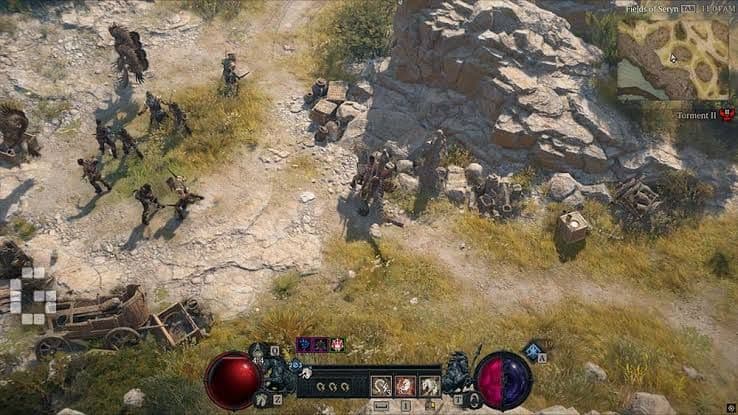
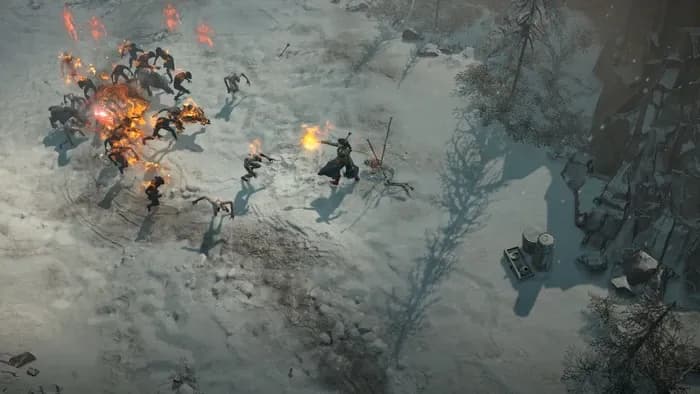
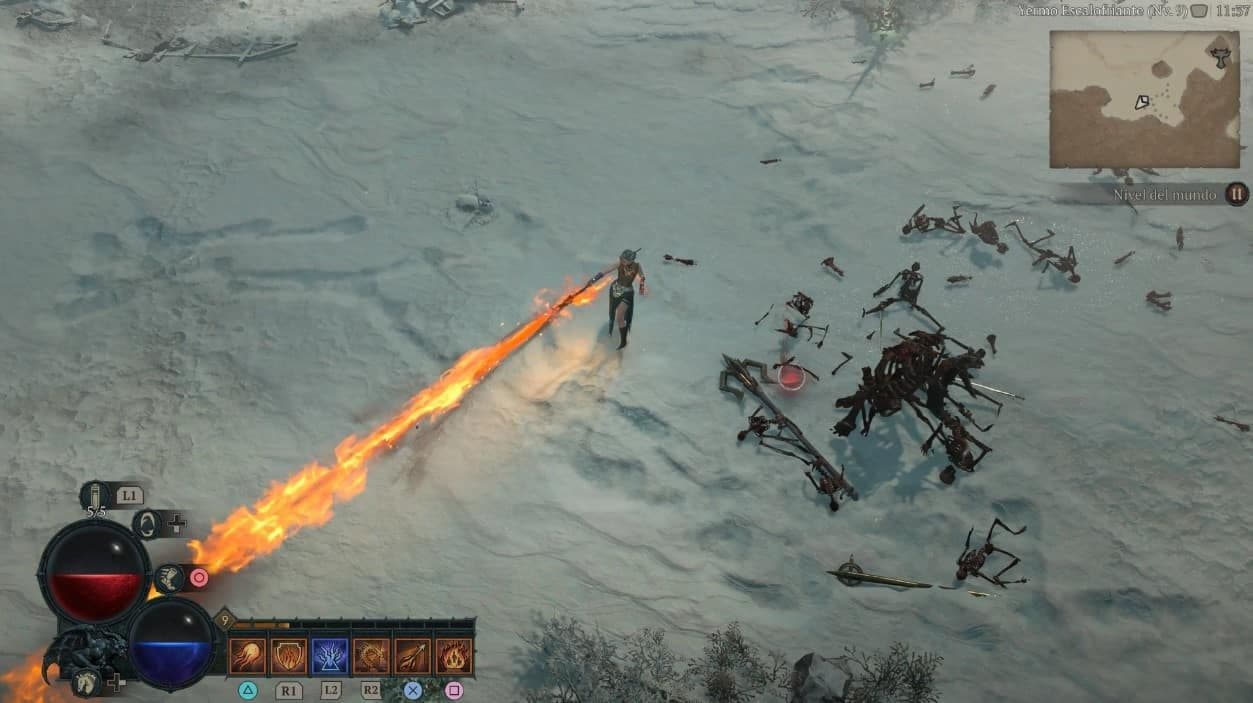
Diablo IV is Blizzard Entertainment's fourth mainline entry in its demon-hunting action-RPG series, released on June 5, 2023. Two paid expansions followed — Vessel of Hatred in October 2024 and Lord of Hatred in April 2026 — and in September 2026, on the franchise's thirtieth anniversary, Blizzard confirmed there won't be a third: the studio is shifting to free seasonal content while it builds Diablo V. That same month the game landed on Nintendo Switch 2 for the first time in series history, as the Diablo IV: Age of Hatred Collection. Diablo IV crossed ten million players in its first month back in 2023 and passed a billion dollars in lifetime revenue by the following fall — commercially, it's the strongest launch the franchise has had, and that base is exactly what Blizzard is now leaning on to carry the transition toward Diablo V.
Winding down the expansion cycle tracks with the series' own history: eleven years separated Diablo II and Diablo III, and Blizzard has said outright it doesn't want to repeat a gap that long. The plan instead is to keep Diablo IV alive through seasons running in parallel with Diablo V's development, which is set a century after the current story, in a Sanctuary where Diablo has already won.
Quick take: Diablo IV still delivers on the class-fantasy fundamentals — eight distinct classes, a genuinely alive open world, and crafting that finally rewards planning instead of luck. The trade-off is structural: there's no multi-group raiding, and with expansions now off the table, everything Blizzard adds from here funnels through seasons alone.
Sanctuary looks exactly like a world about to be devoured: cathedrals buried in ash, villages sinking into mud, a permanent storm hanging over Scosglen. Blizzard deliberately abandoned Diablo III's near-cartoonish palette for something desaturated and grim, and it earns its keep against a story built around Mephisto's daughter. Five base-game zones — Scosglen, the Fractured Peaks, Hawezar, Kehjistan, and the Dry Steppes — sit on one continuous map with no loading screens between them; riding a horse from one edge to the other takes a good ten real-world minutes.
The campaign opens fifty-three years after the events of Diablo III: Reaper of Souls. Lilith returns to Sanctuary chasing her father's power, and the player — an unremarkable Wanderer — is simply the one who keeps getting in her way. The ending resists a clean, triumphant kill; critics at launch singled out that willingness to sit in a bleaker, more ambivalent resolution rather than reach for catharsis, which is rarer than it should be at this scale. The expansions extended the map rather than bolting content on beside it: Vessel of Hatred added the jungles of Nahantu, complete with ancestor shrines, and Lord of Hatred pushed the story into the Yshari Sanctum against Mephisto himself. Both are reachable on foot from Kehjistan — no separate loading zone, no premium-feeling detour.
Each zone also carries its own weather and color grading — snowbound peaks read nothing like the scorched south — so it's usually obvious which part of the map you're in from the palette alone, before a single landmark comes into view. It's a small touch, but it does real work keeping five distinct zones from blurring together across a 25-hour campaign.
There's no tutorial voiceover easing you in — the game opens with a storm dumping the Wanderer at the gates of a backwater village, and the starting weapon comes off a corpse on the road. Eight classes are available at this point: Barbarian, Druid, Necromancer, Rogue, Sorcerer, Spiritborn (added with Vessel of Hatred), and Paladin and Warlock (both added with Lord of Hatred). Each reads differently within the first half hour. The Barbarian carries four weapon loadouts and swaps between them mid-combo; the Druid shifts into a bear or wolf form mid-swing; the Rogue threads bow and blade attacks into one combo chain; the Sorcerer juggles elemental schools and armor-shredding passives. Spiritborn fights bare-handed and with a glaive, chaining animal-spirit boosts; the Necromancer raises a skeleton army straight from the bones of the enemies it just killed, no skill-tree investment required first; Paladin leans on holy wards and totems; Warlock summons demon familiars and spends its own health for damage.
The campaign runs 25–30 hours and lands on the game's real question: what comes after. Character progression runs through the skill tree up to level 60 — the cap was cut down from 100 when Vessel of Hatred launched — after which Paragon points take over, capping at 300 and slotting into separate tactical boards full of nodes and glyphs that level up independently through Pit of the Artificer runs. Anyone who's already cleared the campaign once can skip straight to endgame on a new character, which is a meaningfully more respectful use of a player's time than forcing the same story beats on repeat.
Difficulty is handled through World Tiers: higher tiers mean tougher monsters and better drops, and moving between tiers is gated by standalone trial encounters rather than by character level. Item affixes on rares and legendaries can also roll as "greater affixes" — a stat that landed at the very top of its possible range, marked with a gold border — and chasing that specific line rather than the item itself becomes its own late-game hunt.
Diablo IV's open world isn't quest scenery — it's a content source in its own right. Every couple of hours a Helltide event lights up somewhere on the map: harder monsters, a stacking currency, and a countdown that eventually boots everyone out of nearby dungeons and back outside. Demon legions push out in periodic invasions that need to be held off alongside whichever strangers happen to be nearby, and world bosses like Ashava or Wandering Death pull in dozens of uncoordinated players at once — this is the point where the game genuinely leans toward MMO territory instead of just faking a crowd for scale. Strongholds scattered across the map are one-time cleanups that convert into permanent waypoints with vendors attached.
The Tree of Whispers in Kehjistan hands out map-wide bounties and turns routine clearing into something closer to a checklist with payoffs. A separate per-region Renown system steadily unlocks extra skill points, potion charges, and Paragon-board slots, so early-game exploration converts directly into character power rather than staying a completionist side hobby. Season 15, Hell's Legacy, launched September 15, 2026 alongside the Switch 2 port and centers on Deckard Cain's return: players descend beneath Tristram Cathedral to fight an Echo of Diablo, then climb Mount Arreat to face an Echo of Baal. This season's twist is risk-based — the more dangerous path through the Dark Wanderers' fractured memories, the better the reward, and failing a run wipes progress on that specific branch.
Crafting runs through three specialists — the Blacksmith upgrades and modifies gear, the Jeweler handles gems, and the Occultist rerolls affixes and extracts legendary auras. Materials like iron chunks or ferrous flakes get picked up on the way and land in a shared, account-wide stash rather than a per-character one, so any class can spend what any other class gathered. Legendary affixes can be pulled off one item and imprinted onto another, which turns itemization into a kit: a rare, ugly chestpiece with the right stats can wear the appearance of any armor you've ever found through transmog. That separation between look and function is one of the quieter quality-of-life wins Blizzard shipped after launch — it means a genuinely strong drop never forces a visual downgrade just to keep using it.
Lord of Hatred added the Horadric Cube, which lets players feed piles of unwanted gear into targeted upgrades on a specific item instead of rolling for random stats the way crafting worked before. There's still no auction house, and Blizzard has been explicit about why: it doesn't want to repeat Diablo III's real-money auction house, which took ten years to get removed after the backlash over pay-to-loot. Trading is direct, party-only, and several item categories — uniques, sets, Occultist-enchanted gear — can't be traded at all. That restriction is deliberate rather than an oversight: Blizzard has said the primary source of gear should stay killing monsters, not buying your way past the grind.
Past level 60, the loop is Nightmare Dungeons with stacking modifiers and difficulty tiers — keys drop from regular dungeons and burn on use, so every run costs a specific resource rather than a free button press. The Pit of the Artificer in Cérrigar is a timed vertical run with no side objectives, purely a race to the boss to level Paragon glyphs. A rotating roster of world bosses on permanent respawn covers anyone who doesn't want to organize a group in advance. A separate currency drops from bosses and Nightmare Dungeons alike and feeds into a shared seasonal crafting node, so even a failed run rarely feels like time thrown away entirely.
The Fields of Hatred are the game's opt-in PvP zone — entry requires flagging — where killing other players drops the corrupted blood needed to craft the season's strongest gear. There's no multi-group raiding here, full stop, but the density of solo- and duo-friendly content covers that gap reasonably well. On the story side, dungeon set pieces like the Yshari Sanctum from the latest expansion are built around specific boss mechanics rather than grind — no amount of raw power substitutes for reading the attack patterns correctly. That's a deliberate design choice worth calling out: Blizzard could have let gear scaling trivialize these fights the way it does in most of the open world, and chose not to. It's the closest thing Diablo IV has to a proper raid-tier encounter, even without the multi-group scale.
Diablo IV runs on Blizzard's own engine, built around one unbroken open world with no loading screens between zones — the same underlying approach World of Warcraft uses, scaled up to a much denser and more destructible environment. On PlayStation 5 and Xbox Series X|S the game holds dynamic 4K at 60 frames per second; last-gen consoles settle for dynamic 1080p at 30. PC scaling runs wide, from a modest rig pushing 30 frames at a 720p render on Low all the way to a genuine 4K/60 on Ultra with ray tracing enabled — though that top end needs a strong CPU as well as a strong GPU, since open-world simulation load doesn't scale off the graphics card alone.
The Nintendo Switch 2 release ships with two modes — a Quality mode running 1440p docked, and a Performance mode targeting a steady 40fps in either docked or handheld state. Beyond portability, the port adds controller rumble, GameChat support, and several accessibility options that weren't part of the original 2023 release — an unusually generous move for a port arriving three years after launch rather than a stripped-down one.
Clans function close to guilds in a traditional MMO — shared chat, a resource bank, access to clan events — but without territory control or clan-versus-clan warfare; Blizzard deliberately kept Diablo out of sandbox-politics territory. Party groups for dungeons and open-world content cap at four, and cross-play plus cross-progression cover every platform, including the new Switch 2 release, so playing with friends across consoles carries no save-transfer penalty. The Switch 2 version specifically adds touchscreen input and USB mouse-and-keyboard support — an uncommon case of a late port getting an expanded control scheme instead of a trimmed one. Mounts — horses in a range of breeds and colors — roughly double travel speed and level up on their own axis, with total distance ridden raising the maximum gallop speed over time, while purely cosmetic companion pets sit alongside the character without affecting combat at all.
Diablo IV sells as a one-time purchase, roughly $50 for the base game, with both expansions available separately or bundled. A cosmetics shop running on premium currency and a seasonal battle pass with free and paid tracks sit on top — neither touches character power. Steam concurrent players peaked at 64,518 on May 3, 2026, five days after Lord of Hatred shipped, though most of the population still sits on Battle.net and consoles, where Blizzard doesn't publish numbers. The game is officially Steam Deck Verified as of its Steam launch, and Blizzard's own advice is to skip the optional high-resolution texture pack if you're playing on a handheld. The Paragon system caps out at 300 points, and grinding it out in full is realistically a couple of weeks of steady play within a single season rather than a single evening's project.
Diablo IV isn't reinventing the loot loop — it's tightening one that already worked and finally giving crafting a reason to exist beyond hoping for a good roll. Whether it's still worth starting in late 2026 comes down to what you're after: as a season-driven, class-fantasy grind with a genuinely alive open world, it delivers; as a substitute for a raid-structured MMO, it never was one and isn't pretending to be now. The bigger open question is what happens once every future update has to come from a season budget instead of a paid expansion's — that's the bet Blizzard is asking players to make while Diablo V gets built.
Yes, if you want a class-fantasy action-RPG with a living open world and regular seasonal content — the core loop holds up three years post-launch, though it now runs without future paid expansions.
No. Both expansions add classes, zones, and systems like the Horadric Cube, but the base game and its free seasons remain fully playable on their own.
Yes — cross-play and cross-progression cover PC, PlayStation, Xbox, and the new Switch 2 release, with purchases and saves carrying over.
Blizzard confirmed in September 2026 that no further paid expansions are planned; content going forward runs through free seasonal updates while the studio develops Diablo V.