 Free To Play
Aion 2
MMORPGReleased
AION 2 brings NC's Elyos-versus-Asmodian war into Unreal Engine 5, with a seamless rebuilt Atreia, tactical flight combat, and faction sieges fought o...
Minimum and recommended PC specs to run the game
← Back to game reviewIf your PC can run this game, you'll also be able to play these:
Free To PlayAION 2 brings NC's Elyos-versus-Asmodian war into Unreal Engine 5, with a seamless rebuilt Atreia, tactical flight combat, and faction sieges fought o...
 Buy To Play
SpiritVale is a class-based action MMORPG from Australian indie studio Baikun Interactive, set in the fractured world of Nevaris. Choose from seven cl...
 Buy To Play
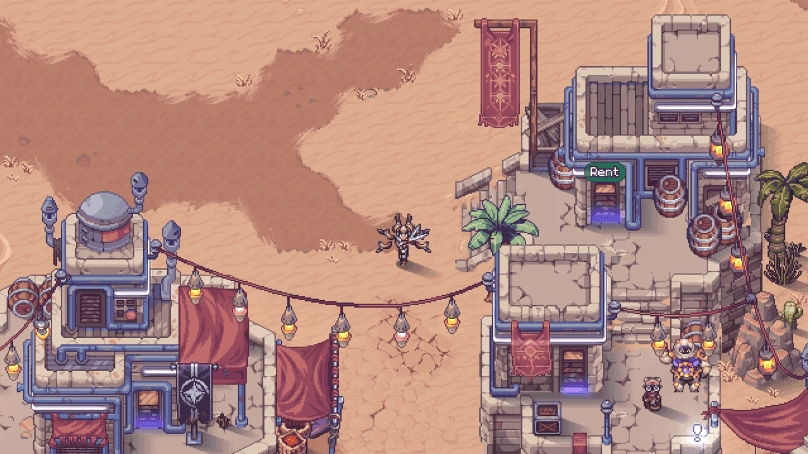
Soulbound: Online is a pixel-art action MMO where fast bullet-heaven dungeon runs sit alongside a peaceful overworld of mining, fishing, cooking and c...
World of Jade Dynasty is engineered as an uncompromised technological benchmark utilizing Unreal Engine 5, built strictly for high-performance desktop PC hardware. The architectural pipeline leverages Nanite virtualized micropolygon geometry, fully dynamic real-time global illumination via Lumen, and Chaos physics simulation for flowing silk garments and spiritual energy particle fields. The published system specifications accurately reflect the computational demands of a modern ninth-generation graphics pipeline requiring seamless synergy across all system components.
The Central Processing Unit (CPU) bears heavy computational throughput handling world tick simulation, three-dimensional spatial coordinates for hundreds of airborne players, and multithreaded network packet parsing. While a capable 6-core processor such as a Core i5-10400 or Ryzen 5 3600 maintains consistent frame pacing in solo dungeons and sparse wilderness zones, large-scale sky sieges involving guild warship armadas demand elevated single-core instruction efficiency (IPC). Processors equipped with expansive Level-3 cache architectures, particularly AMD's 3D V-Cache line (Ryzen 7 7800X3D), prove critical in eliminating 0.1% low framerate stutters when processing high-density network clusters.
Graphics Processing (GPU) and Video Memory (VRAM) establish the baseline for rendering fidelity and framerate stability. Entry-level 1080p gameplay requires a minimum of 6 GB of VRAM (GeForce GTX 1060 / RTX 2060), whereas maximizing high-fidelity assets at 1440p mandates modern GPUs equipped with at least 12 GB of VRAM (GeForce RTX 4070 / Radeon RX 7800 XT). This VRAM threshold is enforced by hardware Lumen ray-tracing passes, volumetric procedural cloud layers, and cascading particle arrays from high-tier sect abilities. Insufficient video buffer capacity results in severe geometry pop-in and streaming stalls during high-velocity sword-flight maneuvers.
System Memory (RAM) functions as an indispensable buffer for seamless world asset streaming. The baseline 16 GB allocation accommodates solo progression, but densely populated capital cities and decorated flying homesteads aggressively cache player character models, cosmetic armors, and multi-layered sound banks into RAM. Equipping 32 GB of dual-channel high-speed memory (DDR4-3600 / DDR5-6000) ensures smooth transitions between vertical airspace zones and prevents operating system paging file bottlenecks during peak combat events.
Storage architecture presents strict, non-negotiable prerequisites: the installation exceeds 100 GB and strictly necessitates high-throughput NVMe SSD media on a PCIe bus. This substantial footprint stems from uncompressed high-resolution textures and dense Nanite meshes designed for dynamic lighting rather than pre-baked lightmaps. Attempting to run the client from a mechanical hard drive (HDD) triggers crippling asset streaming hitches, causing sheer mountain ranges and palace compounds to materialize seconds after high-speed transit has already occurred.