 Buy To Play
SpiritVale
MMORPGEarly access
SpiritVale is a class-based action MMORPG from Australian indie studio Baikun Interactive, set in the fractured world of Nevaris. Choose from seven cl...
Minimum and recommended PC specs to run the game
← Back to game reviewIf your PC can run this game, you'll also be able to play these:
Buy To PlaySpiritVale is a class-based action MMORPG from Australian indie studio Baikun Interactive, set in the fractured world of Nevaris. Choose from seven cl...
 Buy To Play
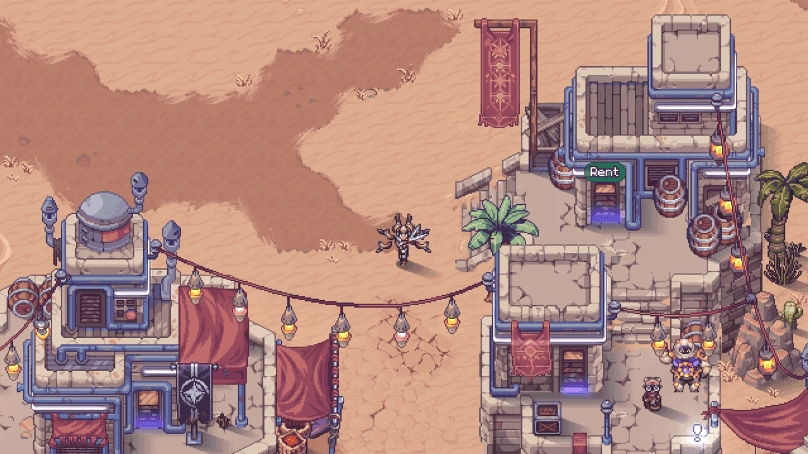
Soulbound: Online is a pixel-art action MMO where fast bullet-heaven dungeon runs sit alongside a peaceful overworld of mining, fishing, cooking and c...
 Free To Play
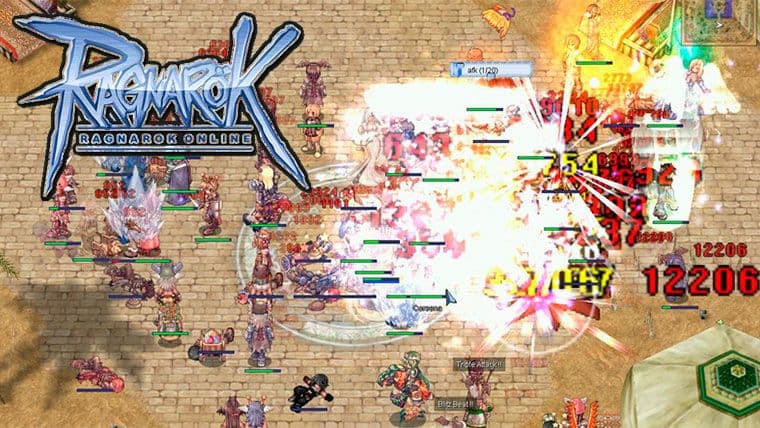
Ragnarok Online has been running since 2002, and the card system it introduced — socketing monster drops into weapons and armor — is still one of the ...
Where Raid: Shadow Legends can get away with hardware from a decade ago, Wuthering Waves asks for something closer to a genuine mid-range gaming rig, and that gap comes down to one word: real time. This is a seamless open world rendered continuously as you run, climb, and ride through it, not a sequence of static arena backdrops loaded between turns.
First, the graphics card. An open world means the GPU is never just drawing a fixed camera angle with a handful of character models — it's streaming and rendering terrain, foliage, water, and lighting in every direction, in real time, as the player moves. Wuthering Waves also layers in dynamic weather and time-of-day lighting, plus visual effects tied to combat timing (the slow-motion dodge window, elemental bursts, Outro Skill transitions) that all need to render smoothly enough not to throw off the player's reaction window. That's why even the minimum spec calls for a GTX 1060 or RX 570 rather than an integrated chip: 4–6 GB of VRAM is the baseline for keeping open-world texture streaming and combat VFX from stuttering, and the RTX 2060 / RX 5700 XT recommendation exists mainly to hold a stable frame rate once draw distance and effect density are turned up.
Second, the processor. Combat here isn't decided by a turn-order calculation once per round — it's decided by inputs read many times per second. Dodge timing, parry windows, and the Intro/Outro swap system all depend on the CPU processing player input, hit detection, and physics (ragdolls, cloth, hair, motorbike handling) continuously rather than in discrete steps. On top of that, the open world itself needs a CPU thread dedicated to loading new terrain chunks and NPCs as you traverse it, which is a very different workload from a game that only has to redraw the same few battle arenas. Six real cores is the floor for keeping that combined load — combat physics plus world streaming — off a single bottlenecked thread; eight cores in the recommended tier gives the engine room to keep both jobs running without competing for cycles.
Third, the network model. Despite the multiplayer-adjacent co-op events, the bulk of Wuthering Waves — exploration, story, boss fights, the Tower of Adversity — runs as a fundamentally single-player experience with your own hardware doing the heavy lifting locally. The server's job is mostly bookkeeping: saving your account state, validating gacha pulls, and syncing whatever co-op instance you drop into for limited-time content. That's a much lighter network footprint than an MMO with shared-world positional syncing, which is part of why the game tolerates average home broadband without the input lag more server-authoritative titles are prone to.
Finally, the 16 GB RAM requirement, which is notably steeper than most mobile-originated gacha titles. An open world this size keeps a wide radius of terrain, NPCs, and streamed assets resident in memory at once so that new areas can load in without a loading screen every few hundred meters — something a stage-based game never has to do. Add Windows itself, background overlays, and the game's own client, and 8 GB starts getting tight fast; 16 GB is the point where asset streaming stops competing with the OS for memory and the frequent hitching that shows up on lower-RAM systems mostly disappears.