 F2P · Live
Lineage 2
Aden's castles never stay in the same hands for long, and Lineage II has built an entire twenty-three-year…
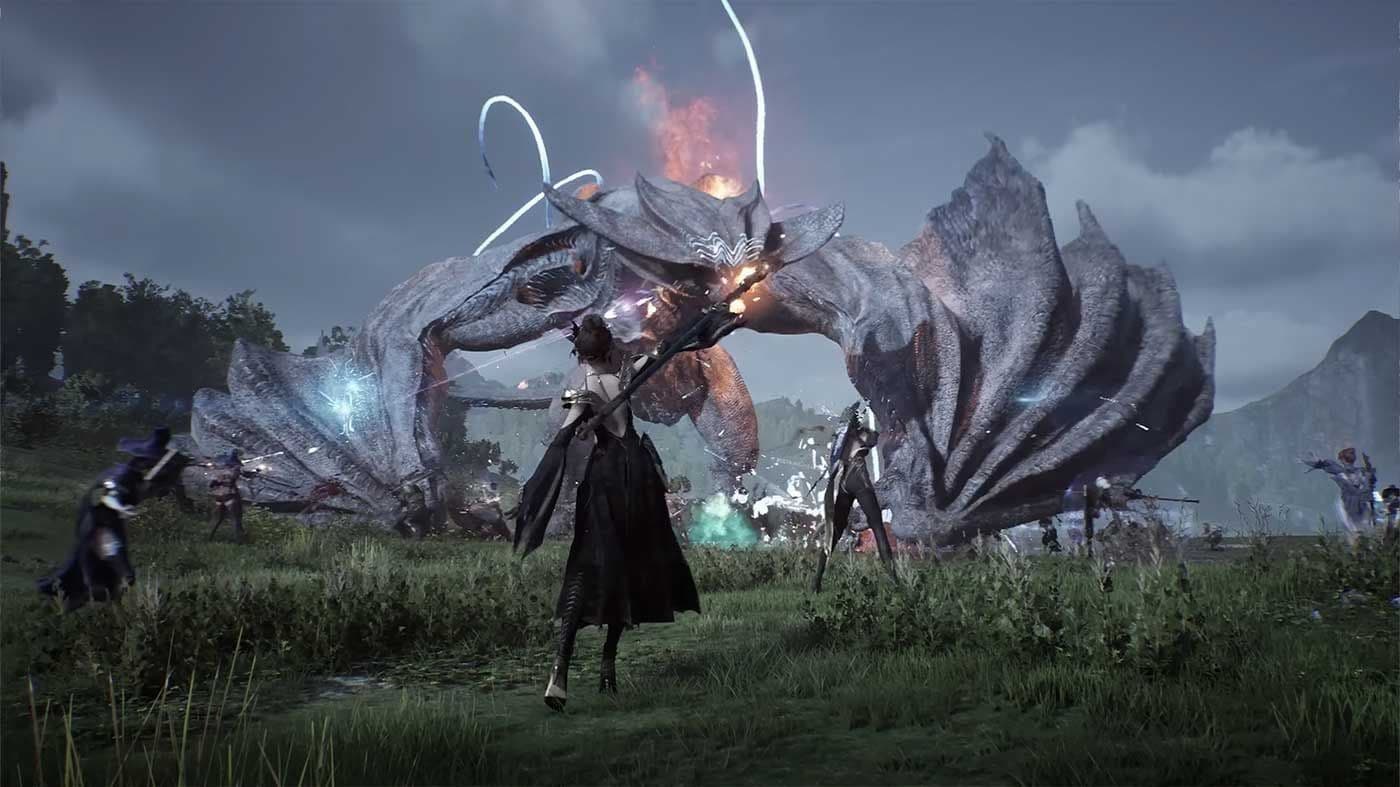
Chrono Odyssey is an open-world action MMORPG from Chrono Studio and Kakao Games, built in Unreal Engine 5 around the Chronotector — an artifact that stops, rewinds and replays moments of combat. Six ...
Chrono Odyssey is an open-world action MMORPG in development at South Korean studio Chrono Studio, published globally by Kakao Games and built in Unreal Engine 5. Announced in 2021 and once aimed at a late-2025 launch, it has slipped twice since its only public test and now sits on a Q1 2027 release window. Its signature system is the Chronotector, a wrist-mounted artifact that stops, rewinds and replays moments of a fight.
The Chronotector is not what the game is currently known for, though. Its June 2025 closed beta pulled a large crowd and a harsh consensus, and the year since has been spent publicly rebuilding the parts testers complained about. What follows is what the project is aiming at, what the test actually delivered, and what has changed on paper in the months after.
The endgame plan centres on small groups, not mass warfare. Executive producer Sangtae Yoon has outlined 10-player raids and five-player dungeons as the ceiling of organised PvE, with expedition dungeons and Trials tuned for parties of three to five. There is no announced siege system, no territory war, and no guild-versus-guild ladder — a deliberate narrowing that separates the game from most Korean MMOs reaching the West.
Solo players get their own lane rather than a consolation prize. Chrono Gates are one-on-one boss arenas built along souls-like lines, where reading a wind-up matters more than a gear score, and Labyrinths mix environmental puzzles with combat in pockets of broken spacetime. Trials add a roguelike run with randomised encounters. The team has said progression to max level is possible without touching either group PvE or PvP, with the Life Skills track — gathering, crafting, fishing — feeding character growth on its own.
PvP is contained rather than central. Certain zones flag players automatically, and a PvPvE area called Eden pits groups against a shared threat and each other, with the studio warning that a deeper run carries no guaranteed way back. Eden was not part of the 2025 test and remains one of the systems nobody outside the studio has touched. Players who want nothing to do with any of it can opt out of open-world PvP entirely.
Gearing is the part of the pitch most likely to reassure genre veterans. Yoon has stated that drops and crafting will be equally viable routes to endgame gear, that perks can be extracted and moved between pieces, and that item enhancement will avoid the K-MMO staples of gear shattering on a failed upgrade or perks gated behind absurd roll rates. Endgame progression is described as horizontal rather than an endless vertical treadmill.
Combat is action-based and role-flexible, with six classes: Swordsman, Ranger, Berserker, Paladin, Sorcerer and Assassin. None are gender-locked. Each class has access to three weapons, two equipped at a time, and each weapon carries its own skill tree, so a Swordsman running sword-and-shield plays a different role from the same character in dual blades. Swapping happens mid-fight, which is where the tactical weight sits — an emergency tank phase is a keypress away, not a respec.
Resource systems differ by class rather than being a shared mana bar with new art. Swordsman and Berserker build Rage through dealing and taking damage, which drains outside combat; Paladin and Sorcerer draw on Mana; Ranger and Assassin regenerate Vigor through movement and dodging, and the Assassin layers Bloodlust on top, built from critical hits and kills to fund a finisher. Ultimates exist for each class and are meant to be folded into a rotation rather than saved for a boss timer.
The Chronotector is the piece the marketing rests on, and it does more than slow a clock. It covers time stop and rewind in combat, and at Chrono Gates it captures the soul of a defeated boss, letting that enemy be summoned later as a specter that fights on the player's side. Stronger kill, stronger ghost. In the 2025 build, this was one of the few systems reviewers described without a comparison to another MMO.
The setting frames the player as a Sentinel defending Setera, a lush world next in line for a cosmic force called the Void that has already consumed eleven others. The opening does something most MMOs avoid: the player character dies in the first clash and is thrown twelve months into the past by an unseen power, with the year that follows serving as the run-up to a fight already lost once. It is a tidy justification for both the levelling curve and the Chronotector sitting on your wrist.
Exploration is built for wandering rather than waypoint-chasing. Setera's regions connect without loading screens, and the moment-to-moment activities outside quests are world events, resource nodes, bounty boards pointing at tough optional targets, and chests hidden behind environmental riddles and jumping puzzles. Gathering, crafting and fishing sit under a Life Skills track that feeds character progression directly, so time spent away from combat is not time spent standing still.
No, but the comparison came from testers rather than from rival marketing, which makes it harder to shrug off. Reviewers who played the June 2025 beta repeatedly landed on New World as a reference point for the gathering loop, the crafting flow, the interface language and the general feel of moving through the world. Massively Overpowered's write-up called the build a less polished version of the game it resembled; MMORPG.com's tester described three days of play that read closer to a blurry photocopy than a new chapter for Korean MMOs.
The specific complaints were mostly technical rather than conceptual. Frame rates swung on high-end hardware. Asset quality varied sharply between regions and fell short of the trailers. Menus took over the full screen instead of overlaying, and the interface offered little customisation. Combat drew the loudest criticism: hit feedback landed late, animations felt heavy in the wrong way, and movement was tied to camera direction, which made repositioning awkward for controller players in particular.
Not everything landed badly. The character creator was widely praised, deep enough that some testers used it to build deliberately ridiculous characters. Crafting and gathering were called intuitive and well tuned, with content producing the materials a player needed at that level. The main story was rated more engaging than most MMO openings, even as side quests fell back on fetch work. Boss encounters were the other bright spot — several players who disliked minute-to-minute combat still rated the bosses highly.
Scale is worth stating plainly, because it explains why the reception mattered. The test peaked near 65,000 concurrent players on Steam across its three days, and Kakao Games told investors afterwards that interest ran into the millions. That is a lot of witnesses for a build the studio later admitted was months old — an internal version repurposed for stress testing rather than a slice of the current game.
Chrono Studio's response to the beta has been unusually specific for a Korean publisher. Rather than a vague apology and a delay, the team published a two-part post-mortem in July 2025 naming combat responsiveness, animation quality, camera behaviour, performance and visual fidelity as the areas that missed the mark, then followed with numbered developer notes tracking the fixes. A full rewrite of the main storyline was included in that list.
Developer's Notes #4, published in January 2026, addressed the control complaints directly. Movement was decoupled from camera direction, allowing strafing and backing off without the camera dictating facing. Sprint now triggers on input with no startup animation. A Guard Crush system and reworked hit reactions were added so that heavy blows visibly stagger both sides, and healing potions became a rechargeable fixture rather than an inventory item, with food demoted to long-term buffs.
Developer's Notes #5 in May 2026 introduced the Matrix System, a node-based progression grid replacing the beta's linear skill paths. Each weapon branches into distinct combat styles, and because every class carries multiple weapons, two players on the same class and loadout can end up with different rotations depending on stat allocation, passives and gear attributes. In a Discord Q&A that followed, Yoon confirmed custom loadouts, said some nodes require resources earned from specific content rather than levels alone, and stated that a single character cannot fill the entire grid.
Two smaller additions from the same note matter more than they look. The Supporter System lets players bring an NPC companion into certain encounters from the first Chrono Gate onward, aimed squarely at the difficulty spikes testers hit in the open world. Monster Equipment turns kills into gear that mirrors the creature's appearance and traits — helmets built from Void remains, weapons pulled off bounty targets — with transmog attached so the collection has a use beyond stat lines.
Chrono Odyssey is a buy-to-play game with no subscription, confirmed by Kakao Games at Epic's State of Unreal event in March 2024. On top of the box price, Yoon has committed to a store limited to cosmetics only: weapon and mount skins, emotes, a battle pass, and stated across multiple interviews that no power or enhancement items will be sold. He was pressed on the point three separate times in one interview and gave the same answer each time.
Community trust in that promise is thin, and the reason is the publisher's history rather than anything in the game. Kakao Games' Steam forums carry a steady run of posts predicting cosmetic-only monetization at launch followed by convenience items later, drawing on how other titles in the publisher's catalogue evolved after release. The studio has also promised global parity — no region getting exclusive content or earlier updates — which is the sort of commitment that only becomes verifiable once a live service is running.
Nothing about the model can be confirmed until a storefront exists. There is no announced price, no regional pricing, no expansion policy, and no cash shop to inspect. What can be said is that the stated design leaves less room for pay-to-win than a free-to-play structure would: a box price plus cosmetics is a harder model to quietly corrupt than a free client that needs to monetize progression.
The current target is Q1 2027, and it is the third window the game has occupied. Kakao Games' earnings calls moved the project from Q4 2025 to Q4 2026 in August 2025, then to Q1 2027 in February 2026, with the publisher framing the second slip as build completeness and optimisation work meant to reduce operational risk at launch. No second closed beta has been dated as of August 2026, more than a year after the first.
That silence is the central unknown. Every improvement described above exists as developer notes, work-in-progress clips and Q&A answers — none of it has been tested by players. Combat feel in particular cannot be verified from an edited GIF, since the original complaint was about latency between input and response, which is exactly the quality that video hides. The next test is the only thing that will settle whether the rebuild worked.
The competitive picture has tightened while the game sat in development. Kakao's own ArcheAge Chronicles is holding a Q4 2026 window, putting two of the publisher's MMORPGs within a few months of each other, and the wider genre calendar for 2026 and 2027 is crowded with Korean releases chasing the same Western audience. Arriving in early 2027 with the New World comparison still attached would be a poor outcome after eighteen extra months of work.
Chrono Odyssey has already spent its first impression, and it spent it on a build the studio knew was out of date. That decision cost the project its reputation as a technical showcase and handed the community a shorthand — jankier New World — that a year of developer notes has not dislodged. Anyone assessing the game in 2026 is assessing a recovery effort, not a debut.
The recovery effort reads well. Decoupling movement from the camera, adding Guard Crush and staggering reactions, replacing linear skill paths with the Matrix grid, adding NPC Supporters for difficulty spikes — these are answers to the specific complaints testers made, not generic polish promises. A studio that misdiagnoses its own beta does not produce a fix list this precise.
None of which is worth anything until people play it. The single most important fact about Chrono Odyssey in August 2026 is that no second test has been scheduled, thirteen months after the first, for a game due within roughly two quarters of the current window. Wishlist it, watch for the CBT2 announcement, and judge the combat when hands are on it — a game whose entire identity rests on how a swing feels cannot be evaluated from footage the developer edited.
Kakao Games currently targets Q1 2027 for a worldwide launch on PC (Steam and Epic Games Store), PlayStation 5 and Xbox Series X|S. No exact date has been announced, and the window has already moved twice.
No. It uses a buy-to-play model with a one-time purchase and no subscription, confirmed publicly in March 2024. The price has not been announced.
Executive producer Sangtae Yoon has repeatedly stated the store will sell cosmetics and a battle pass only, with no power or enhancement items. That commitment cannot be verified until the game launches with an actual storefront.
One closed beta ran on Steam from June 20 to 22, 2025, with three of the six classes playable and a single region open. A second test has been promised repeatedly but has no announced date.
Six: Swordsman, Ranger, Berserker, Paladin, Sorcerer and Assassin, none of them gender-locked. Each has access to three weapons and can equip two at once, with separate skill trees per weapon.