 F2P · Live
Lineage 2 Essence
Lineage 2 Essence is NCSoft's free-to-play take on the classic Korean MMORPG Lineage II, built around faster…
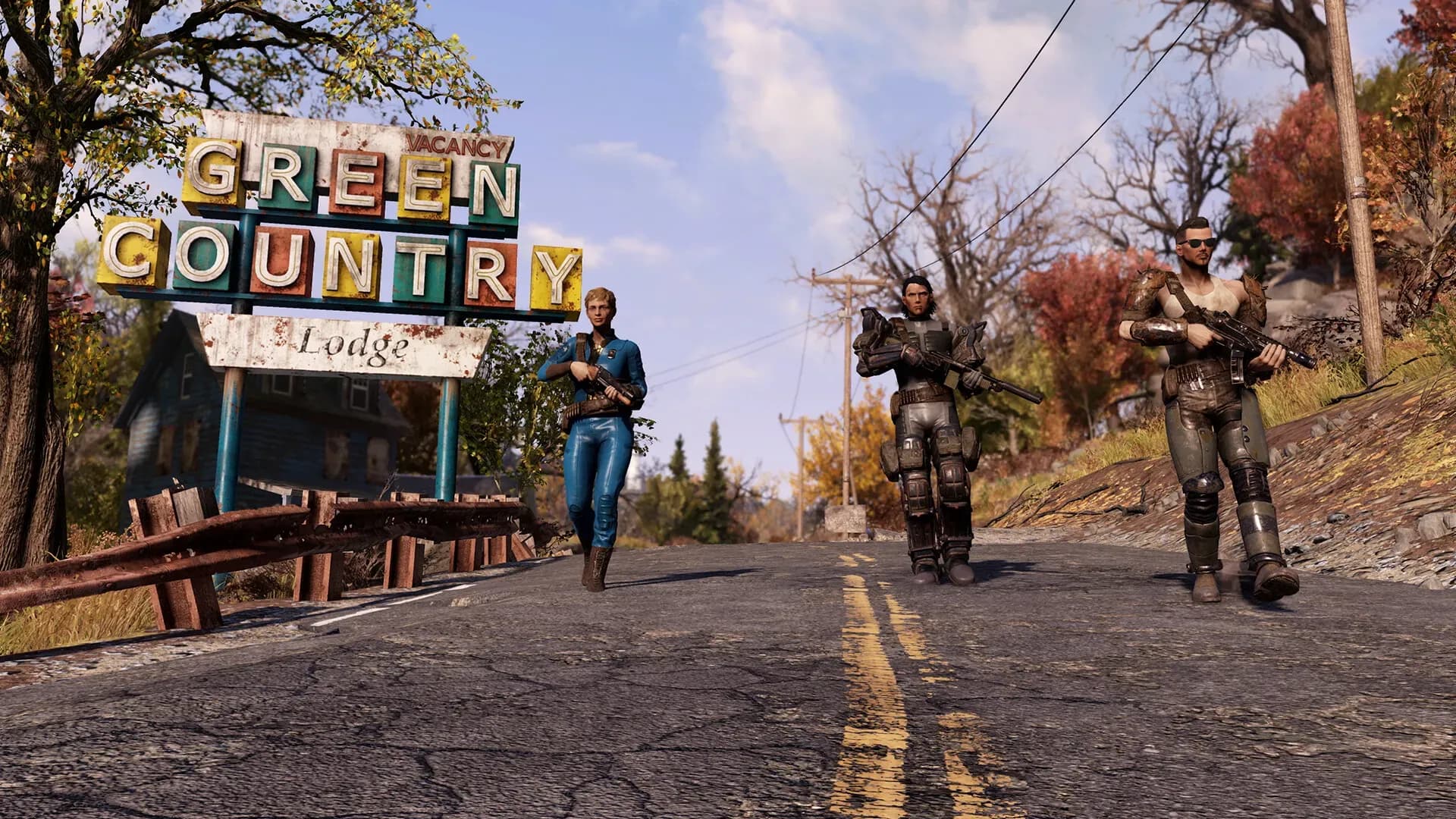
Fallout 76 is Bethesda's online Fallout, a persistent post-nuclear West Virginia that has grown across eight years of free updates into a wasteland spanning two states, complete with human factions, b...
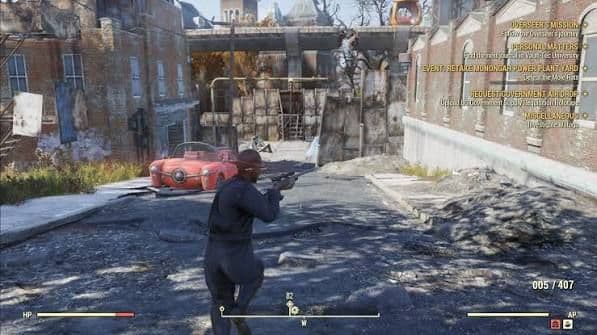
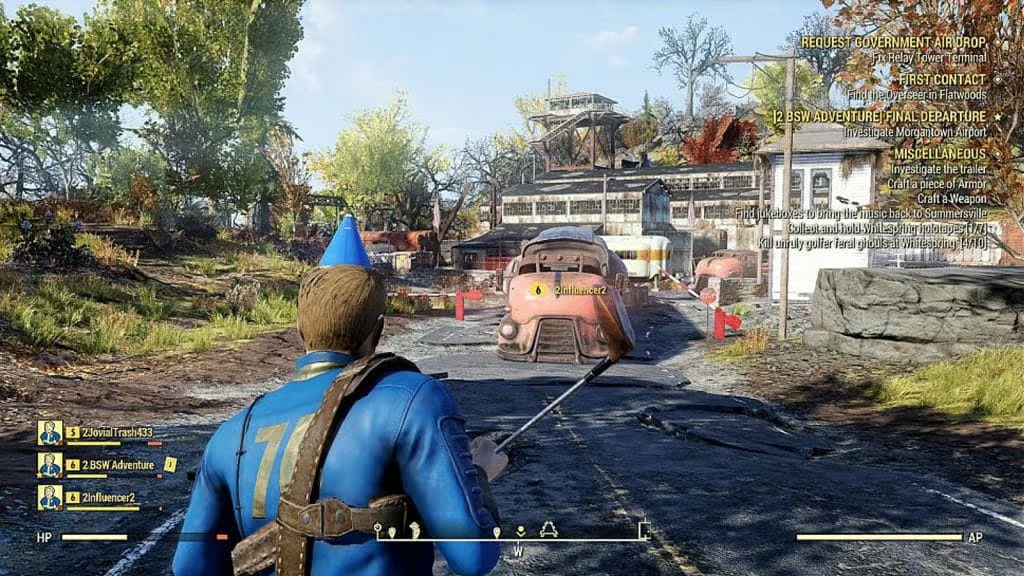
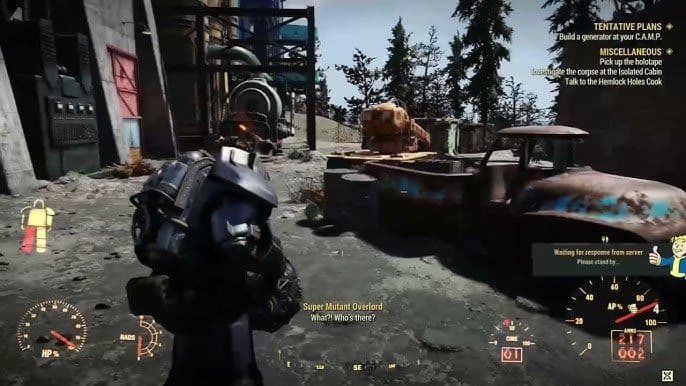
Fallout 76 is Bethesda Game Studios' online entry in the Fallout series, released in November 2018 to the worst reception in the studio's history and rebuilt in public ever since. Twenty-seven major updates later it is the only mainline Fallout anyone can currently play, with a map that has grown past West Virginia into post-war Ohio, a four-player raid, and a season that turns over every three months. This review looks at where the game stands in August 2026 through two sets of eyes: the newcomer who arrived through the Prime Video series, and the returning player who last saw Appalachia when there wasn't a single living human in it.
The world of Fallout 76 is substantially larger than the one that shipped in 2018, and the two expansions that grew it pull in opposite aesthetic directions. Skyline Valley added the Shenandoah region in 2024, sealed under a permanent storm. Burning Springs, which went live in December 2025, sends players west across the rebuilt Point Pleasant bridge into rural Ohio — dry, red-dirt country full of deathclaws and raiders that creative director Jon Rush described as built on exactly those three pillars. It is the largest map expansion the game has had, and it looks nothing like the mossy Appalachian hills the game is named for.
For a newcomer, none of that history matters; the map simply reads as one big region with several climates. For someone who quit in 2019, the more important change came earlier. Wastelanders put talking human NPCs back into a game that launched without any, and the world has been filling in around them ever since — settlements, factions, quest-givers, and in Burning Springs, The Ghoul from the television show, voiced by Walton Goggins, handing out bounty contracts from a bar in Highway Town.
The seams are visible if you look for them. Content authored eight years apart sits side by side, and the original Forest region still tells its story mostly through terminal entries and corpses arranged into little tableaux, while the newer regions are built around repeatable activities for characters who already have endgame gear. Neither approach is wrong. They just belong to different games, and Fallout 76 is now both at once.
The opening of Fallout 76 is a scavenger hunt with a construction game hidden inside it. You leave Vault 76 at level one, follow the trail of the Overseer through a string of audio logs, and pick up junk compulsively — coffee tins, typewriters, teddy bears — because everything scraps into components. Somewhere in the first hour you place your C.A.M.P., the portable base that is the real reason people stay: a foundation, a generator, a water purifier that quietly fills a bucket with purified water while you're offline, and enough workbenches to keep your gear repaired.
Character building runs on SPECIAL and perk cards. Every level gives a point in one of the seven attributes and a card to slot under it, and cards can be swapped freely, which means a build is a loadout rather than a commitment. Respeccing is cheap. Experimenting is encouraged. That's a meaningfully friendlier system than the one veterans remember from launch, when perk card packs felt like a lottery.
Public events are the other early hook. Icons appear on the map every few minutes, anyone can fast-travel in for free, and enemy levels scale to the group, so a level 15 character can stand next to a level 400 in power armor and still contribute. New players routinely end an event with legendary weapons they had no business owning, dropped by strangers who had spares. The community's reputation for this is not marketing — it shows up in Steam reviews with tedious regularity.
The friction arrives around level 40, and it is inventory. Junk has weight, ammunition has weight, and the stash has a hard cap that fills long before your ambitions do. Managing it is a genuine part of the game for some players and a chore for everyone else, and the cleanest solution to it costs money every month — which brings us, eventually, to the subscription.
Combat in Fallout 76 is serviceable and much improved since launch, but it is not the reason to be here. This is the Creation Engine shooting model: weighty, slightly loose, better with a shotgun than a rifle, and propped up by V.A.T.S., which in a multiplayer game can't pause time and instead runs as a real-time percentage-to-hit assist. Players who want tight gunplay will find Fallout 76 mushy. Players who want a Fallout game where you build a lunatic character and watch numbers get silly will find exactly that.
Where the depth actually lives is in legendary effects. Weapons and armor roll modifiers — extra damage against a creature type, faster reload while aiming, damage that scales as your health drops — and stacking those against the right perk cards produces the builds that carry the endgame. Bloodied builds that keep you at a sliver of health, stealth commando builds, heavy gunner power armor builds: the archetypes are well documented and the community will happily explain all of them, at length.
The cost of that system is enemy health. High-level legendary enemies absorb an enormous amount of damage, and if your build isn't optimized you'll notice it as a wall of bullet sponges long before you notice it as a challenge. That gap between an optimized character and an ordinary one is wider in Fallout 76 than in most MMOs, and nothing in the game explains it to you.
The economy of Fallout 76 runs on plans and materials rather than gear, because gear drops constantly. Every camp can host a vendor, so wandering into someone's roadside shop and buying a plan you've hunted for weeks is a normal Tuesday. Legendary items are broken down into scrip at machines, scrip buys modules, modules craft new legendaries, and the loop absorbs an unreasonable number of hours once it clicks.
Building is where the game is at its most distinctive. The C.A.M.P. system lets you place a structure almost anywhere on the map, pack it up, and drop it somewhere else, and the community has spent years pushing it well past what Bethesda designed for — multi-storey bars, functioning shops, museums of collected junk. Camp budget limits are the constraint everyone complains about, and complaints about the budget are among the most persistent threads in the game's forums.
What the game still lacks is a central marketplace. There is no auction house, so serious trading happens on Discord servers and subreddits, with prices set by community convention and deals completed by meeting up in-game. It works, in the way that unofficial systems work: fine if you're already plugged in, invisible if you're not.
Fallout 76's endgame is younger than the game itself, and it has been arriving in annual increments since 2024. The Gleaming Depths raid, added in December of that year, was the first content of its kind: five encounters built for a team of four, ending with the Ultracite Terror, and rewarding a new four-star legendary tier that pushed the gear ceiling higher for everyone. Coordinating it in a game with no meaningful in-game chat tools is its own puzzle, and most groups solve it with voice comms and a guide open on a second screen.
Ghoul Within followed in March 2025 and is the strangest progression system Bethesda has shipped in years. At level 50 you can choose to become a ghoul: radiation heals rather than harms you, hunger and thirst are replaced by a feral meter you manage against your own humanity, and some human factions treat you accordingly. It is framed as an endgame choice rather than a starting option, and it changes enough of the moment-to-moment survival layer to justify a second character.
Around those pillars sits the rotating middle layer, which is where most veterans actually spend their evenings. Daily Ops drop a squad into a randomised instance with mutated enemies and a timer, rewarding better loot the faster you clear. Expeditions send teams out of Appalachia entirely, to the industrial ruin of The Pitt or the casinos of Atlantic City, on repeatable missions with their own currencies and reward tracks. Neither is deep. Both exist to give a maxed-out character a reason to log in on a Tuesday, and paired with the daily and weekly challenge lists, they mostly succeed.
The most recent addition, Infestations, went live in June 2026 alongside Season 25. Familiar locations across the map get seized by hostile forces at semi-random, your paper map points you to the general area, and clearing one out rolls for four-star legendary mods. It is repeatable endgame content in the plainest sense — a reason to log in on a day with no event you care about — and it does that job without pretending to be more.
Bethesda's own read on the last year is worth noting here, because the studio said it out loud. In the Infestations release notes the team acknowledged that season rewards had not met player expectations for several seasons running and committed to higher-value, better-themed rewards starting with Season 26. Publicly conceding that your battle pass has been underwhelming is not a small thing, and it lines up with what the game's forums had been saying for months.
Fallout 76 is a multiplayer game that mostly declines to force multiplayer on you. Servers hold a few dozen players, teams cap at four, and joining a public team — casual, exploration, daily ops — hands out passive bonuses without requiring anyone to speak. Whole sessions pass in comfortable parallel play: you fight the same Scorchbeast, nobody types a word, everyone leaves richer. Guild-style organisation is thin by MMO standards, and the social structure that exists is largely external, run out of Discord and Reddit.
The hard limitation is platforms. There is no crossplay in Fallout 76 in any direction, including between Xbox Game Pass on PC and Xbox Game Pass on console, and characters do not transfer between platforms. Choosing where to play is a permanent decision, and it is the single most common complaint from players trying to join friends.
No — you cannot buy power in Fallout 76, and after eight years that has held. The Atomic Shop sells cosmetics, camp decorations, skins and a handful of convenience consumables; weapons, armor, legendary effects and four-star mods come out of the game and only out of the game. What you can buy is comfort, and the game is unusually direct about charging for it.
That comfort is called Fallout 1st, and it costs $12.99 a month or $99.99 a year. Members get private worlds for up to eight people, a Scrapbox with unlimited crafting-component storage, an ammunition box, a survival tent that acts as a second fast-travel point, 1,650 Atoms a month, and the premium season track. Read that list against the inventory problem described earlier and the design intent is obvious: the subscription's headline feature is a fix for the game's most persistent annoyance. Non-subscribers can buy the premium season pass separately for 1,500 Atoms, which is earnable in-game slowly or purchasable outright.
Whether that's acceptable depends on what you're comparing it to. Nothing behind the paywall makes your character stronger, seasons are free to participate in, every map expansion has been free, and the base game frequently sells for around ten dollars. Set against that, charging a monthly fee to solve a storage constraint the developer designed remains the most cynical thing about Fallout 1st, and the 2019 backlash over it has never entirely faded from the community's memory.
The next major update lands on September 15, 2026, and it is the biggest technical change the game has had. Season 26, Beware the Blood Moon, arrives with The Slasher — a multi-week mystery in which players excavate graves and hunt down a fanatic wearing the mantle of the Pint-Sized Slasher, with a unique power armor set and the Super Slasher weapon as the payoff. The same day brings native PS5 and Xbox Series X|S versions targeting 60 frames per second with improved draw distance and shadows, plus optimisation work for older consoles.
Two smaller items in that update matter more to long-term players than the headline. Unique weapon crafting will let players change legendary mods on the 80-plus named weapons scattered across the map, retiring a decade of "great gun, useless roll" frustration. And Legacy Seasons will run a past season alongside the current one, sharing a ticket pool, so players who missed the 2020 boards can finally work through them. Bethesda has kept to a rhythm of a major update and a new season roughly every three months, and 2026 has followed that pattern without a slip.
Fallout 76 is worth playing today, with a caveat that should be stated plainly rather than buried: it is a very good Fallout game and a fairly ordinary MMO. The parts that shine are the parts Bethesda has always been good at — a hand-built world dense with small stories, junk worth hoarding, a base-building system players have turned into an art form, and a character system that rewards obsessive tinkering. The parts that feel thin are the multiplayer ones. Grouping tools are basic, there's no trading infrastructure, no crossplay, and the endgame consists of one raid and a rotating pool of repeatable activities.
For a newcomer, particularly one arriving from the show and finding the game included with a subscription they already own, the value is hard to argue with. The first hundred hours are full: two map expansions, a main questline with actual NPCs, factions, and a construction game deep enough to eat entire evenings. Nothing about that stretch demands a subscription, a group, or a wiki.
For a returning player who left in 2019, the honest answer is that the game you bounced off no longer exists in any recognisable form, but the reasons you left may still apply. If it was the emptiness, the bugs, or the absence of a point, those have been addressed. If it was the shooting, the engine's rough edges, or a dislike of live-service seasons, the 2026 version will not change your mind — those are structural. Come back for the world and the building. Set expectations accordingly for everything wrapped around them.