 Buy To Play
SpiritVale
MMORPGEarly access
SpiritVale is a class-based action MMORPG from Australian indie studio Baikun Interactive, set in the fractured world of Nevaris. Choose from seven cl...
If your PC can run this game, you'll also be able to play these:
Buy To PlaySpiritVale is a class-based action MMORPG from Australian indie studio Baikun Interactive, set in the fractured world of Nevaris. Choose from seven cl...
 Free To Play
MapleStory is a free-to-play 2D side-scrolling MMORPG from Nexon that has run continuously since 2003, now home to more than 260 million registered ac...
 Free To Play
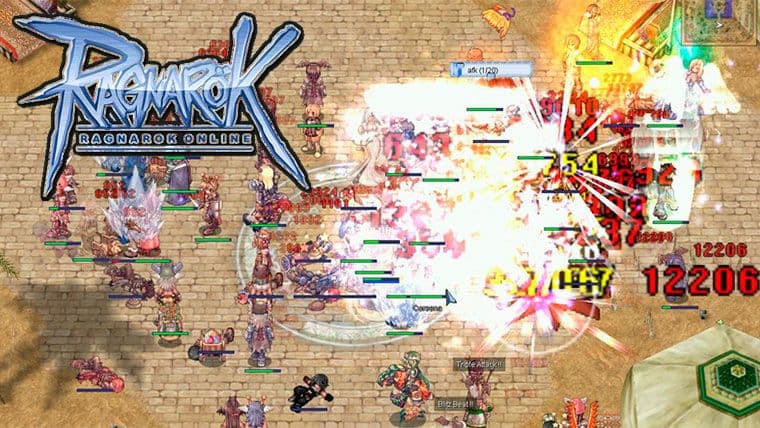
Ragnarok Online has been running since 2002, and the card system it introduced — socketing monster drops into weapons and armor — is still one of the ...
Last Oasis is powered by Unreal Engine 4, yet the defining characteristic of its technical architecture lies not in mere visual rendering, but in continuous physics simulation. Unlike traditional survival sandboxes with static voxel buildings, every walker functions as a dynamic kinematic armature composed of dozens of articulated joints, drive shafts, gears, and adjustable sails responding directly to wind direction and terrain elevation. Coupled with volumetric dust storms and dynamic sand displacement, this introduces a distinct and demanding hardware workload.
The central processor (CPU) serves as the primary computational backbone of the engine. The game relies heavily on single-thread efficiency and high instructions-per-clock (IPC) performance, as physics iterations for multi-legged chassis, grappling hook tension calculations, and hundreds of airborne projectile trajectories reside on the main physics thread. While an entry-level quad-core chip such as the Intel Core i5-2400 satisfies minimum boot requirements, large-scale fleet skirmishes necessitate a modern 6- to 8-core CPU (Intel Core i7-3770, AMD Ryzen 5 3600, or better) to prevent frame pacing stutter during dense network packet synchronization.
The graphics processing unit (GPU) manages atmospheric sunlight scattering, granular sand shaders, and thick sandstorm particle effects. Baseline GPUs like the NVIDIA GeForce GTX 770 or AMD Radeon HD 7870 (2 GB VRAM) provide playable frame rates only at 1080p under minimal graphical settings. To maintain fluid combat and render distant ship masts at higher presets, a GPU equivalent to an NVIDIA GeForce GTX 1070, RTX 2060, or AMD Radeon RX Vega 56 with 6 to 8 GB of VRAM is strongly recommended.
System memory (RAM) plays a vital caching role across vast open-world maps. While the client lists 8 GB as the minimum floor, real-world sessions quickly exhaust this allocation when multiple crewed walkers with custom deck stations and storage chests enter render distance. Systems limited to 8 GB often suffer severe micro-stutters from pagefile paging. A dual-channel configuration of 16 GB of high-speed RAM is essential to ensure smooth asset streaming and hitch-free traversal.
Storage bandwidth dictates world-streaming speed and session transitions. With an installation footprint of approximately 60 GB, deploying the game onto a Solid State Drive (SSD) is practically mandatory. High-speed read operations significantly reduce server-hopping load times on the world map and eliminate delayed pop-in of environmental collisions and hostile walker models during high-speed desert chases.