 Free To Play
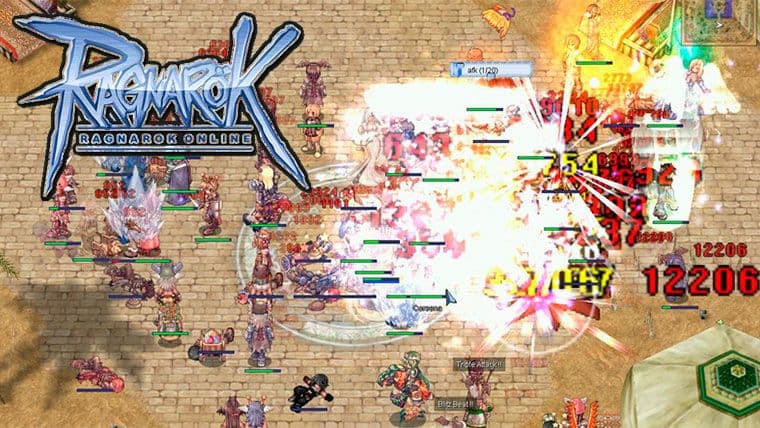
Ragnarok Online
MMORPGReleased
Ragnarok Online has been running since 2002, and the card system it introduced — socketing monster drops into weapons and armor — is still one of the ...
Minimum and recommended PC specs to run the game
← Back to game reviewIf your PC can run this game, you'll also be able to play these:
Free To PlayRagnarok Online has been running since 2002, and the card system it introduced — socketing monster drops into weapons and armor — is still one of the ...
 Free To Play
Tibia is the 1997 fantasy MMORPG that never stopped shipping updates — nearly 29 years in and still adding new classes, new bosses, and new content. F...
 Free To Play, Pay To Play
A legendary classless sandbox MMORPG delivering uncompromising progression, rich handcrafted narrative quests, and a fully player-driven economy. In t...
Raid: Shadow Legends may look surprisingly polished for a cross-platform title, but its hardware demands are shaped by where it was born: on phones. The deliberately broad official specs — any x86/x64 processor with SSE2 (Arm64 is covered too) and any GPU that speaks DirectX 11 or Vulkan — signal a game engineered to boot on virtually any working office machine while still producing a clean, modern image.
Start with the rendering. Raid pours its polygon budget into one place: the champions themselves, with dense models and detailed armor textures. Everything around them is intentionally cheap to draw. Battle arenas are fixed backdrops with no destructible geometry, no real-time global illumination, and no simulated cloth or particle physics. In practice, even a basic integrated GPU only has to render ten detailed characters against a pre-built stage and layer some glow effects on top when skills fire. The DirectX 11 / Vulkan requirement isn't there to unlock cutting-edge graphics features — it exists for compatibility with current Windows drivers and to let the engine schedule this fairly light rendering work efficiently.
The CPU side is just as forgiving, and the reason is the genre. This is a turn-based RPG, so combat math happens in discrete steps rather than as a continuous simulation. Where an action MMO or a bullet-heaven game forces the processor to track thousands of projectiles and collisions every frame, Raid's CPU workload boils down to filling Turn Meter bars, rolling RNG checks for crits and debuff resistance, and applying attack-versus-defense damage multipliers. Any entry-level dual- or quad-core chip handles that arithmetic without breaking a sweat — which is exactly what the 2-core minimum and 4-core recommendation reflect.
The network layer follows the same philosophy. Despite the online wrapper, most PvE content (Campaign, Dungeons) works on a request-and-report model: before a fight, the client pulls the starting data from the server; the battle itself is then computed locally on your machine — which is why a brief connection hiccup mid-round doesn't cause stuttering — and once it ends, the client sends back a single results packet. There is no constant real-time synchronization of player positions with other people, so the networking code adds almost no load to the system.
That leaves the seemingly generous 8 GB RAM requirement. The game itself rarely consumes more than 2–3 GB even in the PC client with HD textures enabled. The figure accounts for the environment around it: Windows 10/11 needs headroom so it doesn't push game data into the slow pagefile on disk (a recipe for micro-stutters when new enemy waves load in), and the Plarium Play launcher has to keep running in the background. Under those real-world conditions, 8 GB is simply today's baseline for a smooth, hitch-free experience.