 F2P · Live
Lineage 2 Essence
Lineage 2 Essence is NCSoft's free-to-play take on the classic Korean MMORPG Lineage II, built around faster…
One egg, no second chances, and an entire lifetime to lose — that's The Isle. This hardcore multiplayer survival game puts you inside a dinosaur's full life cycle, from a vulnerable hatchling to an ap...
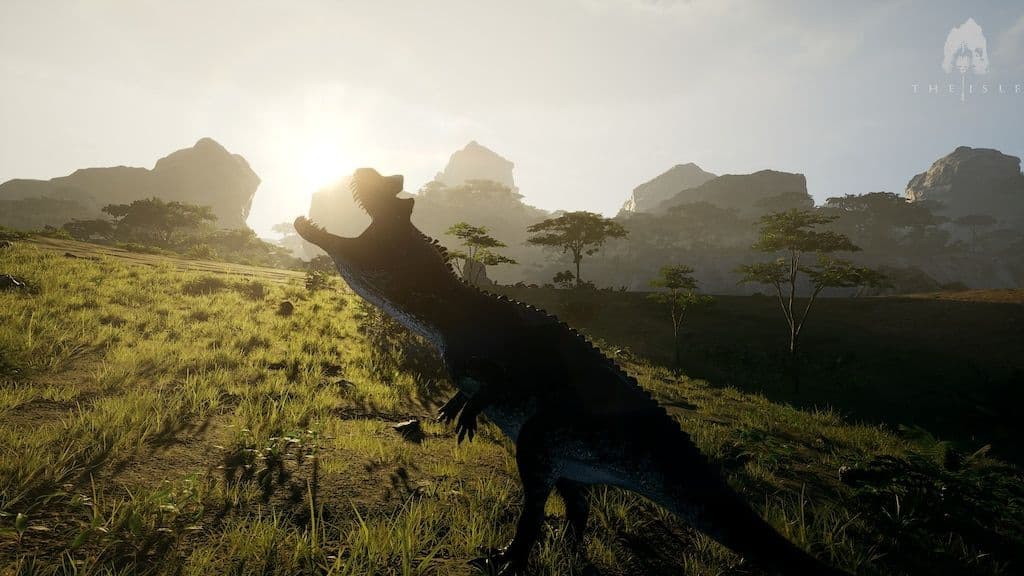
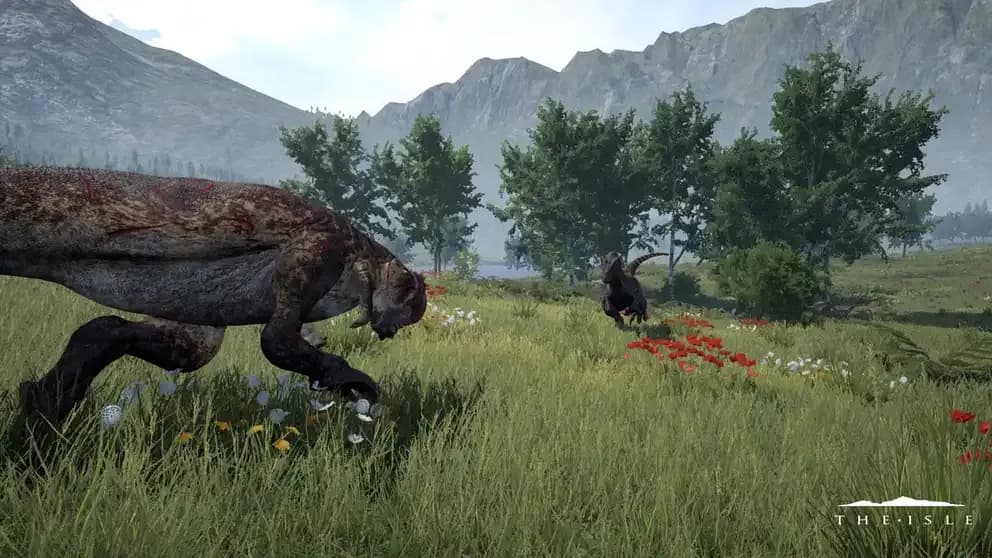
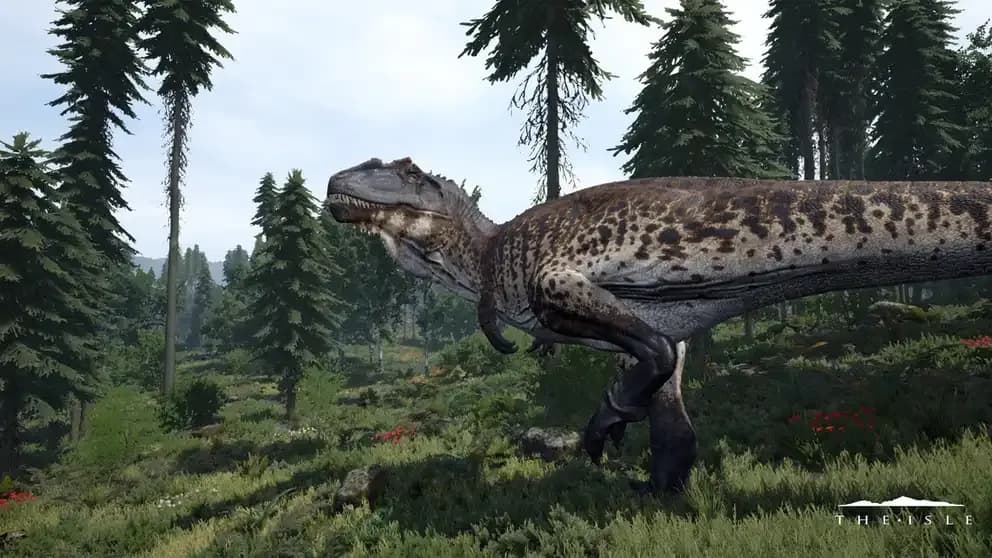
The Isle is a hardcore multiplayer dinosaur survival game developed and published by Afterthought LLC, which entered Steam Early Access on December 1, 2015. Players spend a full in-game life as one of roughly twenty playable species, growing from a defenseless hatchling into an adult predator or herbivore across a single, permanent character. Active development is now concentrated on the Evrima branch, a deep technical rebuild on Unreal Engine 5 that is gradually replacing the older Legacy version, and the game currently holds a concurrent player count in the fifteen-to-eighteen-thousand range.
Quick take: The Isle is worth your time if you want a genuine survival simulation with real consequences for failure, not if you want a polished, feature-complete game. Ten years into Early Access, its ambition still outpaces its stability.
Evrima's action plays out on Gateway, the branch's current and only map, which replaced an earlier location called Isla Spiro. It mixes open grassland, dense forest, swampland, and river systems, and the developers are still filling in gaps — redwood groves and mangrove wetlands were added relatively recently and are still tagged as works in progress. Scattered across the map are watering holes, migration corridors, and mud wallows that aren't scenery so much as load-bearing parts of the survival loop: which plant or water source sits nearest you can be the difference between a hatchling that grows up and one that doesn't.
There is no quest log and no onboarding narrative. What story exists lives in environmental fragments — ruins, a distant nighttime signal the game never explains, scattered hints about something called AE. Piecing together what any of it means is a job the community has taken on collectively rather than something the developers hand you directly.
The day-night cycle isn't cosmetic lighting; it's a functioning system. Visibility drops hard after dark, and players lean on hearing, smell, and species-specific night vision to compensate, which hands a real advantage to whichever predator's senses happen to be sharpest once the sun goes down. Weather does its own work: rain washes out scent trails and makes tracking prey harder, while open ground during a storm becomes noticeably riskier simply because you can't see as far. None of this is explained through text — it's something you feel the first time a storm rolls in while you're miles from cover.
There's no clean way to summarize The Isle as a checklist of features, because almost nothing about it is separable from the passage of time. A single session can run from a shaky first hour as a hatchling to a tense evening standoff at a watering hole, and the systems that matter shift depending on which stretch of that arc you're in. The clearest way to explain what playing actually feels like is to walk through one, start to finish.
You break out of an egg as a creature barely taller than the grass around it, with exactly one immediate problem: figuring out what your species actually eats. A smell-based sense system overlays icons on nearby food — a leaf for edible plants outside your diet, a drumstick shape for meat — but reading them correctly is a skill, not a given. Herbivores can graze standing grass by holding an interaction key, which tops hunger up to roughly a fifth of the bar; some plants need to be dug up by the roots, others only become edible once their fruit drops to the ground. None of this is explained in a tutorial. You learn it by getting it wrong, sometimes fatally, in your first ten minutes.
Nutrition is the game's central mechanic, and it's stricter than it first appears. Eating something outside your species' diet fills your hunger meter but delivers zero nutrients, and nutrients you have earned decay at roughly one percent every thirty seconds regardless. New players routinely get stuck chasing whatever food is closest instead of what their body actually needs, and keep weakening anyway. Food distribution follows the map's biomes rather than convenience, so travel becomes a constant trade-off between the safest route and the one that actually leads to a meal — and predators track the same trade-off through migration patterns, since herbivore herds move between regions on a rough schedule that experienced hunters learn to read.
Growth itself runs on real biological logic: every dinosaur passes through several life stages, gaining weight and unlocking new abilities like nest-building along the way. Small species mature in a few hours; apex predators such as the Tyrannosaurus or the crocodile-like Deinosuchus take the longest to reach adulthood and stay correspondingly fragile for most of that stretch. For anyone who doesn't want to repeat the full climb after every death, Sandbox mode lets you spawn in as a fully grown adult with no death penalty — a deliberate off-ramp for players who want the ecosystem and the combat without the survival grind underneath it.
Fights in The Isle reward positioning, stamina management, and species-specific knowledge over reflexes. Every dinosaur carries its own attack kit — some built around a hold-and-bleed bite, others around a hard charge or a heavy tail swing. The recently added Kentrosaurus can shift into a defensive stance that reflects damage back at anything foolish enough to strike its spiked back, while this summer's Austroraptor arrival can launch itself straight out of the water, turning riverbank ambushes into their own subgenre of danger.
Injuries carry weight here that most survival games skip. A broken bone heals slowly and limits movement for the duration, certain bites inflict poison or infection that has to be managed rather than shrugged off, and stamina drains from aggressive actions of every kind, including a small species' spit attack — meaning even a simple chase becomes a calculation about whether you have the energy to finish it. There's no damage number floating over your target's head. You read the fight through behavior, and that reading only gets sharper with repetition.
Reproduction is a full system rather than a checkbox: dinosaurs court, build nests, and lay eggs that need to be incubated. A recent patch made unattended eggs hatch automatically after a delay, closing a long-standing problem with abandoned clutches. Offspring can inherit mutations — some affecting bone durability or healing speed — though a handful, including one called Reabsorption, are unstable enough that the developers periodically switch them off mid-patch until they're fixed.
Packs and herds aren't cosmetic. Herbivore juveniles cluster for safety in numbers, and predators frequently coordinate hunts by flanking larger prey from multiple angles. Territory isn't claimed with a flag — it's held by physical presence, whether that's a nest a pack actively defends or a hunting ground at a watering hole contested against rival predators of the same species. There's no built-in guild system; every social bond runs on voice chat, trust, and shared near-death experiences. And at night, all of this gets harder to read: visibility drops sharply, and night vision quality varies by species, handing a real tactical edge to whichever predator's senses are sharpest in the dark.
The Isle's history splits cleanly into two eras. The Legacy branch, which defined the game for most of its first decade, ran on a simpler "grow and don't die" loop with a far larger species list but shallower diet and growth systems underneath it. Rather than keep patching that foundation, the team chose to rebuild from the ground up: new engine, new animation and audio work, and survival mechanics with a much stronger claim to realism. The trade-off is obvious in the roster count — Legacy's dozens of species against Evrima's steadily growing but still much shorter list, rebuilt one creature at a time. Evrima is where all current development effort sits, and it's the version this review covers throughout.
The current Evrima roster sits around twenty playable species, and the developers keep adding to it at a steady pace — this summer alone brought both the Kentrosaurus and the Austroraptor. The role spread is genuinely even: tiny, fast herbivores like the Dryosaurus and Hypsilophodon that avoid combat almost entirely and win through speed and stealth; mid-sized generalist carnivores built around bleed damage and fast recovery; specialized waterside hunters and nocturnal ambush predators with the sharpest night vision in the game; and, at the top, apex predators — the land-based Tyrannosaurus and the water-based Deinosuchus — that take the longest to grow but become nearly unkillable one-on-one once they do.
Both the developers and the community steer newcomers toward small herbivores first. They demand less combat literacy, buy time to learn the map and the diet system, and don't put hours of accumulated growth on the line for a beginner's mistake. Playing a carnivore is a deliberate step up — you're tracking not just your own kit but your prey's behavior too, and one badly timed bite can cost you your whole stamina bar and, right behind it, your life.
Whatever species you land on, appearance is customizable through a color-and-pattern skin system, and players can share saved combinations with each other. It has no effect on stats, but on a crowded server it's a real way to stand out — a distinctively colored Carnotaurus gets recognized on sight in a way the default texture never does, and it turns into a low-key status marker inside long-running communities.
No. The Isle is a straight one-time purchase around twenty dollars, with no cash shop and no subscription attached. Cosmetic skin patterns and color variants exist and can be shared between players, but they're unlocked through in-game customization tools rather than sold for real money. For a genre where competitors frequently push premium species or growth boosters, that's a meaningfully different stance to take.
Official server capacity doesn't come close to meeting demand, which has produced an entire cottage industry of third-party hosting — companies renting out servers with the full species roster, mutation support, and remote admin tools. Some communities layer their own structure on top, running roleplay clans with internal hierarchies; others stay casual and prioritize newcomer-friendliness over territorial competition. Without an official guild system, this is effectively the only durable way to find a consistent group — on a crowded server, surviving without a pack or at least a couple of reliable allies gets considerably harder.
That reliance on informal structure extends to something the game never teaches directly: reading intent from a stranger. A new player who spots another dinosaur in the treeline has no reliable way to know whether it's a potential ally or something waiting for an opening. Veterans work around this with an unofficial vocabulary of body language and slow, deliberate approaches that experienced players recognize as peaceful — none of it built into the interface, all of it passed down server to server. It's an odd artifact of a game with no chat wheel and no formal diplomacy system: a meaningful chunk of the social experience exists entirely outside the game's own UI.
The developers run closed balance tests, called Hordetests, before pushing major patches to the public branch, which helps catch obvious problems — like a damage-reflection bug on a newly added species — a little faster, at the cost of a server environment that's constantly shifting underneath the playerbase. That constant iteration comes with a real technical cost: performance dips noticeably even on strong hardware, a dedicated graphics card is a hard requirement, and the studio's own minimum specs — a quad-core CPU at 3.0 GHz, 8 GB of RAM, and a GTX 960-class card — undersell what the Unreal Engine 5 rebuild actually asks for in practice on a crowded server. The developers have been upfront about this in the game's own Early Access notes, treating optimization as ongoing work rather than a box that's already been checked, and Steam Workshop mod support has been on the roadmap long enough that its continued absence has become something of a running joke in the community.
No. It's a one-time purchase around twenty dollars on Steam, with no free tier and no recurring fee attached to it.
Yes, and it's largely unavoidable — most of the map is open to any predator or rival herbivore, and Survival mode's permanent death means a lost fight can end your entire run.
You can, particularly as a small herbivore or in Sandbox mode, but Survival as a growing carnivore gets considerably safer with at least one or two reliable allies nearby.
No. It has been in Early Access for a decade, and the Evrima branch is still actively rebuilding features and species that once existed in the older Legacy version.
The Isle still hasn't finished becoming the game it set out to be. Steam Workshop support and playable human factions were promised years ago and remain absent, and the performance issues that have followed the Evrima branch since its start haven't fully gone away. None of that is a small asterisk — it's worth weighing seriously before you buy. But almost everything that has shipped, from the nesting system to the way a carcass gets stripped down organ by organ, has clearly been built with real care rather than rushed out to hit a roadmap date, and that's a meaningful signal about where the studio's priorities sit.
There's no leveling system here, no gear score, nothing but a body, a hunger meter, and other players who want exactly what you want: to survive one more day. So ask yourself honestly — do you find the idea of a genuinely indifferent ecosystem more compelling than a scripted campaign, or do you need a clear goal and predictable progress to stay engaged? The Isle only makes sense as a purchase if your answer points toward the first one.