The Ultimate LOTRO Starter Guide: Starting Fresh in Middle-earth
If you have ever dreamed of walking the paths of the Fellowship, pulling up a chair by the hearth at the Prancing Pony in Bree, or venturing into the colossal subterranean halls of Khazad-dûm — The Lord of the Rings Online (LOTRO) remains the definitive virtual realization of J.R.R. Tolkien’s legendarium. Operating continuously since 2007, the game is not merely surviving; it is currently riding one of its strongest technical and content revivals to date.
Quick take: In 2026, the level cap sits at 160, server infrastructure operates on modern 64-bit architecture, and all content from level 1 through 95 is completely free forever. You can also pick up your free mount at level 1 within three minutes of finishing the tutorial.
LOTRO in 2026: Level 160 Cap & Modern State
LOTRO is a classic, story-driven MMORPG powered by traditional tab-targeting combat, deep narrative immersion, and an enormous seamless open world. Developed by Standing Stone Games (SSG), it shuns flashy anime wings, skimpy bikini armor, and neon visual clutter in favor of grounded, book-accurate worldbuilding. The haunted barrows of Eriador, the golden boughs of Lothlórien, and the ash-choked wastes of Mordor look exactly as Tolkien envisioned them.
Your campaign runs parallel to the Fellowship of the Ring. You do not replace Frodo or Aragorn. Instead, your hero secures their flank: unraveling Angmar's conspiracies in the north, buying crucial hours for the Ring-bearer's departure, and storming Sauron's citadels in the deep south. The scale is staggering. Walking on foot from the green hedges of the Shire to the gates of Mordor takes hours of real-time travel.
In late 2025, SSG released the massive Kingdoms of Harad expansion (Update 46). It pushed the borders far to the south, added four wild desert and coastal regions, and raised the character level cap to 160. Despite this vast scope, the pacing remains refreshingly deliberate. Nobody pushes you to hit max level in three days. This is an adventure about the journey, exploring hidden valleys, and enjoying rich quest writing.
The 64-Bit Server Revolution: Ending the "LagTRO" Era
For years, the game's greatest Achilles' heel was the legacy network code of its old 32-bit server architecture. Veteran players coined the bitter moniker "LagTRO" — crowded raids caused regional stutter, skill queues delayed inputs by whole seconds, and hitching struck whenever dozens of players crossed zone boundaries.
That era is officially over. The full deployment of dedicated 64-bit server infrastructure introduced upgraded enterprise hardware, reworked packet handling, and massively expanded bandwidth capacity. The difference in responsiveness is night and day. Skills trigger instantly, frame delivery remains stable during peak hours, and massive open-world clashes in the Ettenmoors no longer degenerate into slide shows.
Server Selection: Finding the Right Home in 2026
With the transition to 64-bit architecture, legacy 32-bit worlds stepped aside for six fresh worlds separated by geographic region and community focus.
Orcrist is the premier European 64-bit standard world, boasting minimal latency across Europe, an active multi-language community, bustling auction houses, and round-the-clock group finders. Glamdring is the primary North American server, offering peak population for US evening hours. Choose between these two based purely on your prime gaming timezone.
Official roleplay worlds. The pace here is relaxed and community-driven. Local taverns regularly host live player bands, towns feel lively, and players respect immersive naming conventions. You do not have to speak in archaic prose 24/7, but if you want Middle-earth to feel like a living, breathing world rather than an endgame sprint, these are superb homes.
A secondary North American server with a steady, moderate player base. Perfect for players who want a responsive economy without the frantic hustle of peak hub congestion.
A lower-density European world. If your goal is solitary landscape exploration without competing for quest mob spawns or resource nodes, Grond offers uninterrupted peace.
The bottom line: if you want maximum activity and quick group formation, roll on Orcrist if you are in Europe or Glamdring if you are in the Americas.
Client Installation: Standalone Launcher vs. Steam
You can install LOTRO either through Steam or by downloading the client directly from the official website at lotro.com.
Veteran players strongly recommend using the standalone client from the official site. The Steam client frequently experiences file validation loops during large content patches, which can trigger unwanted redownloads of the entire 40+ GB game directory. In addition, account creation and store transactions run through SSG's web backend regardless, so Steam offers no practical account shortcut.
Configuring Your Client: Fixing UI Scaling on 1440p and 4K Displays
LOTRO's graphical interface was conceived in the era of 1024x768 CRT displays. If you boot the client on a modern 1440p or 4K monitor without prior tweaking, quest text shrinks to unreadable specs and action bar icons become tiny squares.
Immediately after logging in, press O to open the Options menu and configure these essential settings:
- Global UI Scaling (UI Settings): The single most important toggle for high-res monitors. Drag this slider between 1.2 and 1.5 to scale the entire interface cleanly without distortion.
- DirectX 11 (Graphics → General): Ensure your graphics hardware is set to DirectX 11 instead of legacy DX9. This unlocks dynamic foliage shadows, volumetric lighting through tree canopies, and realistic water surfaces.
- Selection Indicator: Turn on the ground indicator circle and directional line toward your current target. In frantic encounters with clustered packs, this keeps your melee strikes and ranged shots locked firmly on the right target.
- Always Loot All: Enable automatic looting. Defeated foes instantly transfer their spoils into your bags upon interaction without annoying loot confirmation windows.
- Show Trivial Quest Icons: Check this box immediately. The game will display quest rings over NPCs even if your character has outleveled the content. Without it, you will accidentally walk past world-class side questlines in earlier regions.
- Unified Bags: Click the small gear icon on your inventory interface (key I) and toggle your bags into a single consolidated grid. Instead of managing five separate pouch windows, you get one clean, modern container.
Essential Community Resources & Addon Tools
LOTRO has one of the most dedicated, supportive communities in all of gaming. Bookmark these essential third-party tools to smooth out your leveling experience:
- Lotro-Wiki.com: The definitive bible of Middle-earth. Every single quest, deed coordinate, virtue reward, and item drop rate is rigorously documented here. If you ever get stuck finding an elusive deed location, Lotro-Wiki has the exact map pins.
- LotroInterface & Plugin Compendium: LOTRO natively supports Lua plugins. By downloading the standalone Plugin Compendium client, you can install lightweight quality-of-life addons with one click — such as TitanBar (system trackers and currency tallies), MoorMap (enhanced map overlays), and PrimePlugin (combat alerts).
- Official Discord & Kinship Finders: Joining an active Kinship (LOTRO's term for guilds) transforms your experience. Friendly veterans routinely supply newcomers with crafted bags, buff food, and guidance through group content.
This LOTRO beginner guide walks you through every major progression system step by step, starting with how the modern business model actually operates.
Few MMORPGs suffer from as many persistent monetization myths as LOTRO. Outdated forum posts and ancient Reddit threads still warn prospective players that the game "hits a brutal paywall at level 30," demands paid quest packs for every zone, and nickel-and-dimes you to unlock your gold limit. Throw those misconceptions out the window. Over the past few years, Standing Stone Games completely overhauled the business model in favor of the player.
Quick take: From level 1 through 95, the entire game — including the epic campaign and five complete expansions — is 100% free to play. The gold cap is gone forever. The single smartest financial investment for any beginner is buying exactly one month of VIP to permanently unlock fast travel on all your characters.
The Level 30 Paywall Myth: What is Actually Free Up to Level 95
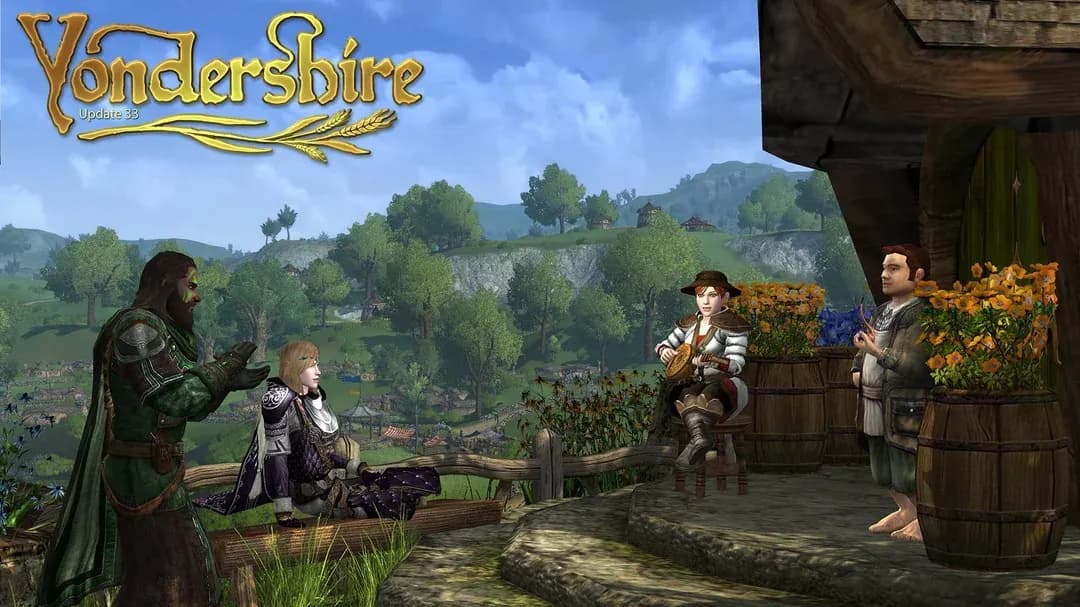
In the early days of LOTRO, free players slammed into a rigid paywall upon reaching the Lone-lands around level 30–32, where quests abruptly froze behind paid quest packs. That archaic setup is history. With the landmark release of Update 33, the developers permanently unlocked all content released between 2007 and 2013 for every account on the servers.
You can comfortably level from 1 to 95 without spending a solitary cent — an authentic free-to-play LOTRO experience that includes a gargantuan slice of Middle-earth:
- The entire original Eriador landmass: The Shire, Bree-land, Ered Luin, the Lone-lands, the North Downs, Evendim, Forochel, the Misty Mountains, the Trollshaws, and Angmar.
- Mines of Moria expansion (levels 50–60): The legendary subterranean dwarf realm, complete with all its world quests, instances, and epic book chapters.
- Siege of Mirkwood expansion (levels 60–65): The corrupted forests east of the Anduin and the golden boughs of Lothlórien.
- Rise of Isengard expansion (levels 65–75): Dunland, the Gap of Rohan, and Saruman's fortress at Orthanc.
- Riders of Rohan expansion (levels 75–85): The sweeping plains of the Eastemnet featuring open-world mounted combat.
- Helm's Deep expansion (levels 85–95): Western Rohan and the defense of the Hornburg.
This represents hundreds of hours of high-caliber story campaigns. A typical new player takes anywhere from two to four months of steady playtime just to hit the boundary of the free content. You will not face sudden quest locks or paywalled story chapters throughout your early adventure.
Currency & Storage Reforms: Gold Caps Removed
Old beginner guides constantly warn players about a punitive 2-gold cap on free accounts that forced you to escrow excess coin. Forget about it. Starting with Update 32, SSG abolished the Gold Cap permanently for all account types.
Amass thousands of gold coins, trade freely on the auction house, and hoard wealth without restrictions. Nothing goes into escrow. Additionally, every player now receives the Premium Wallet automatically. Regional barter tokens, festival badges, crafting guild marks, and skirmish currencies no longer clog up your physical backpack slots; they automatically route directly into a dedicated wallet tab on your UI.
The Three Account Tiers: Free, Premium, and VIP
LOTRO operates on a transparent three-tiered account structure. Here is how the tiers compare in practice:
The standard monthly subscription. Unlocks all intermediate quest packs between levels 95 and 140 (including Mordor, Minas Morgul, and the War of Three Peaks), grants 500 LOTRO Points per month, provides daily resting XP bonuses, unlocks town service items (mobile mail and merchant vendor summoned anywhere), and grants full access to stable-master swift travel.
Granted permanently the moment you spend any real money on the game (even purchasing the cheapest LOTRO Points bundle or a single month of VIP). Removes mail-sending restrictions, expands baseline character slots per world, increases auction house listing limits, and locks in permanent perks for characters logged in during active VIP.
Zero financial commitment. Complete access to all narrative content up to level 95, uncapped gold capacity, standard 45-slot inventory, and full freedom to earn and spend LOTRO Points for store unlocks purely through in-game play.
The "One Month of VIP" Trick: Unlocking Permanent Account Perks
If you ever decide to spend a dime on LOTRO, do it with surgical efficiency. Do not buy cosmetic outfits, premium mounts, or convenience potions from the in-game store. The absolute highest return on investment in the game is subscribing for **exactly one month of VIP**, then promptly canceling renewal.
The brilliance of this strategy lies in what veteran players call "unlocked perks." Any character logged into the game world at least once while VIP is active retains powerful quality-of-life benefits permanently, even after the subscription lapses back to Premium status:
- Swift Travel: Instant, loading-screen travel between distant stable-masters across the entire map. For purely free accounts, many remote stable routes are locked, forcing you into slow real-time horse rides. Unlocked Swift Travel saves hundreds of hours over the course of your leveling journey.
- Permanent removal of all virtue trait slot restrictions.
- Permanent inventory expansion up to 75 bag slots per character.
- 500 LOTRO Points deposited into your account wallet, yours to keep forever.
Farming LOTRO Points (LP): Earning Store Currency for Free
LOTRO Points (LP) serve as the premium cash shop currency used to purchase post-95 expansions, cosmetic outfits, wardrobe upgrades, and shared vault storage. LOTRO remains one of the few MMORPGs on the market with a completely legal, developer-sanctioned method to farm premium currency infinitely through regular gameplay.
Every completed Deed in your character's log — whether it is slaying 60 goblins in the Shire, scouting ancient ruins in Bree-land, or collecting lore monuments in Rivendell — rewards 5 to 15 LP straight into your account wallet. This balance is shared across all characters and all servers on your account.
Fully clearing the slayer and exploration deeds across the four starting zones (The Shire, Bree-land, Ered Luin, and the Lone-lands) nets approximately 800 to 1,000 LP on a single character. Dedicated players frequently create alternate characters (alts), speed-run through low-level deeds in an evening or two, bank the LP, and recycle the slot. You can fund late-game expansion packs entirely out of game achievements without opening your wallet.
Late-Game Expansions and Seasonal Sales
Once your character crosses level 95 and leaves Helm's Deep behind, you step into late-game expansion territory: Gondor, Mordor, Minas Morgul, Gundabad, Umbar, and Harad.
Never buy late-game expansions at full retail price on day one. By the time you reach level 95, you will have accumulated a substantial hoard of in-game LP through natural leveling deeds. More importantly, Standing Stone Games runs major recurring sales throughout the year:
- Anniversary Event (April): The most generous promotional period on the calendar. SSG routinely offers legacy expansion quest packs for a token cost of 99 LP each alongside massive login reward bundles.
- Black Friday (November): Massive store-wide sales slashing expansion web market prices by 50% to 80%.
- Limited-Time Promo Codes: SSG periodically releases universal redeemable codes (such as the historic EXPLOREOURWORLD campaign) that permanently unlock massive packages of quest content with a single click. Always check official announcements before purchasing content packs.
The smart progression path is straightforward: play completely free to level 95, pick up one month of VIP along the way to cement your Swift Travel perks, complete exploration deeds as you travel, and pick up post-95 expansions at steep discounts during seasonal promotional windows.
Choosing your race and class lays the bedrock for your entire journey across Middle-earth. In LOTRO, class design is unapologetically old-school, deep, and distinct. You will not find homogenized jack-of-all-trades archetypes here. Every class brings a well-defined combat cadence, specialized toolkits, and an irreplaceable role in group compositions.
Quick take: Pick your race for aesthetics and lore — racial passives impact endgame performance by less than 1%. Ten out of the twelve classes are 100% free to play, including the Rune-keeper, Warden, and Beorning. For the smoothest starting experience, roll a Hunter (world-class travel ports and range), a Champion (devastating AoE melee), or a Beorning (virtually unkillable tri-role shapeshifter).
Races of Middle-earth: Aesthetics & Lore Over Min-Maxing
LOTRO features eight playable races. The golden rule for new players is simple: **racial passives do not dictate endgame viability**. A minor agility boost on an Elf or a tiny morale bump on a Dwarf feels noticeable during your first two hours in the starter zones, but it completely washes out against endgame stat pools. Pick the race whose running animations, battle shouts, and cultural heritage speak to you most.
Historically, strict racial boundaries locked players out of desired class combinations. Recent game updates demolished almost all of those archaic restrictions, giving you immense cosmetic and thematic freedom.
Man: The versatile archetype with access to nearly every class and a clutch racial 20% self-heal unlocked at level 20. Elf: Graceful archers and guardians with innate bow damage boosts and reduced falling damage. Dwarf: Stalwart mountaineers boasting heavy physical damage mitigation and block resilience. Hobbit: Cozy Shire-folk equipped with an iconic feign death ability to drop enemy combat threat instantly. High Elf: Ancient Firstborn elves featuring an epic prologue depicting the fall of Gondolin and a permanent out-of-combat movement speed boost (unlocked 100% free since Update 33).
The only unified race-and-class entity in LOTRO. Fierce skin-changers from the Vales of Anduin who seamlessly transform into raging bears mid-combat. Fully free for all players.
Stout-axe Dwarf: Former enslaved dwarves who broke free from the volcanic pits of Mordor, featuring a grim survival backstory. River Hobbit: Slender, aquatic hobbits hailing from the river valleys of the Wilderland. Both are purchased via LOTRO Points purely for custom cosmetic flair and unique racial emotes.
Modern Race & Class Availability: Debunking Old Restrictions
Do not rely on ancient wiki pages or decade-old class matrix charts. Standing Stone Games dramatically broadened class availability across all heritage trees:
- The Captain is no longer restricted to Men; Dwarves, Stout-axes, High Elves, and River Hobbits can now lead companies into battle.
- The Lore-master can now be played by Hobbits and River Hobbits (you can summon a loyal combat badger!).
- The Rune-keeper is fully available to Men, not just Elves and Dwarves.
- Both the Champion and Guardian are open to Shire Hobbits who want to brawl on the front lines.
All 12 Classes Breakdown & Trait Tree Specializations
Every class in LOTRO utilizes three distinct Trait Trees, standardized by universal color identities: Red (damage), Blue (defense, healing, or survivability), and Yellow (crowd control, utility, or support).
Guardian — Heavy Armor & Indomitable Shield
The traditional anchor of fellowship groups and an impenetrable fortress clad in full plate armor. If you hate dying to stray monster critical hits, the Guardian is built for you. Extremely forgiving of positional errors and capable of holding massive enemy packs indefinitely.
- The Defender of the Free (Blue Tree): The pure sword-and-board tank. Massive shield block ratings, heavy incoming damage mitigation, and powerful forced taunts to anchor boss encounters.
- The Keen Blade (Red Tree): A brutal two-handed heavy bruiser. Stacks crushing bleed effects and chews through landscape quests with steady, reliable damage.
- The Fighter of Shadow (Yellow Tree): Two-handed parry tanking, light-damage procs, and radiating debuffs that sap enemy attack ratings.
Champion — The Whirlwind of Steel
The premier melee berserker, powered by an escalating combat resource called Fervour. Champions hit buttons at a blistering cadence, spin through whirlwind strikes, and shred packs of standard mobs in seconds. The undisputed king of AoE trash clearing.
- The Deadly Storm (Yellow Tree): The legendary melee meat-grinder. Delivers non-stop 360-degree cleaving damage across 5 to 8 enemies simultaneously. The single fastest landscape leveling spec in the game.
- The Berserker (Red Tree): High-octane single-target burst damage reliant on colossal critical strike multipliers.
- The Martial Champion (Blue Tree): Defensive brawler spec capable of off-tanking mid-tier instances through high parry responses and bubbles.
Hunter — Long-Range Sniper & Master Guide
The most widely played class in the history of LOTRO, and for good reason. Hunters obliterate targets from up to 40 meters away, lay ensnaring traps, and carry the ultimate quality-of-life toolkit: Guide Skills that instantly teleport their entire fellowship to key regional hubs across Middle-earth.
- The Bowmaster (Red Tree): Long-range stationary artillery. Massive bow damage from maximum distance. Mobs routinely drop dead before closing the gap to melee range.
- The Huntsman (Blue Tree): Highly mobile skirmisher. Fire shots continuously while sprinting without cast inductions, backed by rapid focus generation and steady self-heals.
- The Trapper of Foes (Yellow Tree): Advanced field control. Deploy crowd-control wire traps, decoys, and devastating root effects to lock down dangerous threats.
Minstrel — The Song of War & Salvation
A combat skald whose anthems knit together wounded allies while piercing ballads and piercing war cries shatter enemy eardrums. The quintessential fellowship healer.
- The Watcher of Resolve (Blue Tree): The primary raid-healing spec. Massive direct heals, rolling group regenerations, protective bubbles, and clutch emergency triage.
- The Warrior-Skald (Red Tree): Aggressive acoustic DPS. Crushes enemies from medium range using instant sonic shouts and light damage. Red Minstrels level through landscape content faster than many dedicated DPS classes.
Captain — Commander of the Front Line
A plate-armored battlefield tactician accompanied by a faithful herald companion bearing a war standard. The beating heart of any raid group. Captain shouts multiply party damage output and turn lost encounters into decisive victories.
- Lead the Charge (Red Tree): The premier offensive support spec. Deals hefty two-handed melee damage while delivering colossal group-wide damage multipliers and critical buffs.
- The Leader of Men (Blue Tree): One of the strongest main tanks in the endgame meta. Boasts an astronomical morale pool, defensive shields, and reliable group positioning tools.
- Hands of Healing (Yellow Tree): Dedicated healing-support hybrid that restores morale across the party through rallying cries and strike procs.
Lore-master — Nature Scholar & Crowd Controller
A mystical tactician who bends natural elements to their will. The comprehensive class overhaul in Update 41 eliminated slow stationary cast times, providing fluid mobile gameplay and modular pet mechanics.
- Master of Nature's Fury (Red Tree): A pure elemental caster that dispenses with pets entirely to rain fiery meteors, lightning strikes, and seismic fissures upon enemy clusters.
- Keeper of Animals (Blue Tree): The classic beastmaster. Summons ferocious bears, lynxes, and sabre-tooths that hold enemy aggro and tank encounters while the master commands from safety.
- The Ancient Master (Yellow Tree): Unmatched battlefield lockdown. Blinds, stuns, disarms, and strips resistances across entire enemy waves in difficult group content.
Burglar — Shadow Striker & Debuffer
A cunning stealth operative specializing in positional strikes from behind, critical bursts, and initiating coordinated group combos known as Fellowship Maneuvers.
- The Quiet Knife (Blue Tree): Lethal assassinations from stealth. High burst damage and positional multipliers when striking enemy flanks.
- The Gambler (Red Tree): An unpredictable risk-and-reward style based on rolling dice, stacking damaging bleed tiers, and capitalizing on debuffs.
- The Mischief-maker (Yellow Tree): Dedicated debuffing. Applies crippling Tricks that reduce enemy damage, attack speed, and defenses to trivialize raid bosses.
Warden — The Gambit Virtuoso
One of the most complex, mechanically rewarding classes in the MMORPG genre. Clad in medium armor with a spear, javelin, and specialized Warden shield. Rather than filling action bars with 40 individual skills, the Warden uses three core builder strikes — Spear, Shield, and Fist — to weave complex musical sequences called Gambits in real time.
- Determination (Blue Tree): Self-sustaining evade tank. Absorbs colossal punishment by maintaining a rolling chain of continuous healing-over-time (HoT) and defensive buffs.
- Recklessness (Red Tree): Master of multi-layered physical and light bleeds. High skill ceiling, exceptional sustained single-target and AoE damage.
- Assailment (Yellow Tree): Ranged javelin artillery. Delivers armor-shredding debuffs and ranged bleed rotations.
Rune-keeper — Weaver of Word & Element
Wielding paired rune-stones, the Rune-keeper operates on a dynamic Attunement bar. Casting destructive incantations shifts the gauge toward Battle Attunement, while weaving restorative wards shifts it toward Peace Attunement.
- Cleansing Flame (Red Tree): Incinerates targets with stacking fire-based damage-over-time effects.
- Solitary Thunder (Yellow Tree): Fast-paced electric artillery that casts instantly while running, chaining lightning shocks and stuns into enemy packs.
- Benediction of Peace (Blue Tree): Proactive triage healing through preemptive wards, damage absorption bubbles, and rolling restoration pulses.
Beorning — Wrath of the Skin-Changer
A savage warrior shifting freely between human and bear forms powered by accumulating Wrath. Inside bear form, armor doubles and heavy swipes tear through enemy formations without consuming mana or power resources.
- The Claw (Red Tree): Brutal mauling attacks and heavy bleed stacks that decimate single targets.
- The Hide (Blue Tree): A colossal meat-shield tank boasting one of the highest effective health pools in the game.
- The Roar (Yellow Tree): Powerful hybrid healing that dispenses massive area-of-effect triage through primal roars.
Brawler & Mariner — Modern Store Classes
Brawler (unlocked via Fate of Gundabad or the store) fights bare-knuckle with spiked battle gauntlets, building Mettle to unleash earth-shattering slams and devastating uppercuts. An outstanding off-tank and sturdy brawler.
Mariner (introduced in Corsairs of Umbar) embodies the swashbuckling swordmaster. Manages a fluid Steady/Afore/Aft nautical balance gauge, weaves rapier flourishes, and rallies companions with stirring sea shanties.
Best Starting Classes for Beginners: The Verdict
If you are setting foot in Middle-earth for the first time, avoid high-complexity input classes like the Warden or Burglar until you understand game fundamentals. Instead, focus on the battle-tested starter trio:
- Hunter: The undisputed #1 beginner recommendation. Instant travel ports, out-of-combat sprint speed, and 40-meter range will save you dozens of hours of travel time across early Eriador.
- Champion: The absolute gold standard for effortless solo questing. Gather five enemies in a circle, press two AoE buttons, watch them melt, and move on.
- Beorning: The ultimate versatile survivor. Allows you to test all three holy trinity roles (DPS, Tank, Healer) on a single character, never runs out of power/mana, and is virtually unkillable in landscape content.
Your first couple of hours in Middle-earth determine whether you fall in love with the game or bounce off due to early friction. Classic MMORPGs rarely advertise their biggest conveniences upfront, frequently burying game-changing quality-of-life mechanics behind unheralded NPC dialogue.
Quick take: Pick up your mount and permanent riding skill at level 1 for free through the "A Little Extra Never Hurts" store quest — do not walk on foot until level 20. If regular open-world enemies feel too weak, enable Landscape Difficulty at the Hardened Traveller NPC to earn prestigious character titles and cosmetic armor sets.
Two Starting Paths: Shadows of Angmar vs. Before the Shadow (Swanfleet)
During character creation, LOTRO prompts you to choose between two fundamentally different starting storylines:
- Classic Shadows of Angmar Prologue: The authentic 2007 opening. Men fight through the burning streets of Archet, Hobbits deliver pies and mail across the rolling green Shire, Elves witness the tragic fall of Edhelion, and Dwarves explore the frosted halls of Thorin's Gate. It is a slow, deeply atmospheric lore experience that naturally funnels all adventurers into the central hub of Bree by level 15.
- Before the Shadow Prologue: A modern storyline beginning in the settlement of Mossward within the Swanfleet wilderness. Quests are grouped tightly, pacing moves briskly, and the narrative directly confronts Nazgûl incursions and the lost kingdom of Cardolan, carrying you from levels 1 through 32.
If you are playing LOTRO primarily for Tolkien nostalgia, select the classic prologue. Rescuing hobbits from brigands, exploring the Old Forest, and drinking ale at the Prancing Pony form the timeless soul of the early leveling experience.
Free Riding Skill & Mount at Level 1: "A Little Extra Never Hurts"
Outdated leveling guides still advise beginners: *"Walk on foot until level 20, then hike north of Bree to Hengstacer Farm to buy your riding skill for silver."* Ignore that archaic advice. Slogging across Eriador on foot for twenty levels is the fastest way to burn out.
The developers built an official shortcut right into the tutorial zones that awards your Riding Skill and a starter mount in less than three minutes completely free of charge:
- Locate your intro quest NPC in the tutorial area: Jon Brackenbrook in Archet, Dwalin at Thorin's Gate, the Elven instructors in Celondim, or blacksmith Skardí Bendblade in Mossward.
- Accept the starter tutorial quest titled "A Little Extra Never Hurts — Part 1".
- Speak to the indicated NPC nearby. Completing this dialogue instantly deposits 10 LOTRO Points into your account balance.
- Open the in-game LOTRO Store (shortcut Ctrl+S), search for "A Little Extra Never Hurts — Part 2", which costs exactly 10 LP, and purchase it with the currency you just received.
- Turn in Part 2 to the quest-giver. You will immediately receive the permanent passive Riding Skill and a starter horse or pony granting +62% movement speed.
Landscape Difficulty: Turning On Real Challenge with the Hardened Traveller
Modern LOTRO landscape difficulty is tuned low by default to accommodate casual story readers. Standard landscape mobs die in two or three hits, and your morale bar rarely drops below 90%. For MMO veterans, this can make early combat feel unchallenging.
To restore the danger and tactical depth of classic RPGs, visit the Hardened Traveller NPC stationed in every starting village and outside the Prancing Pony in Bree.
Speaking to him allows you to switch your Landscape Difficulty profile at will:
- Normal (Difficulty 0): The baseline story mode. Mobs deal negligible damage and crumble instantly.
- Hardy / Dangerous (Difficulty 1–2): A slight tuning bump. You must begin utilizing defensive buffs and crowd control.
- Fearless (Difficulty 3): The sweet spot for seasoned players. Monsters hit hard, health pools expand, and the Eye of Sauron periodically manifests combat corruptions — dropping explosive fire pools and stacking debuffs you must actively dodge.
- Heroic / Deadly (Difficulty 4–9): Brutal hardcore mode. Pulling two enemies simultaneously is lethal without active consumables, crafted food, and flawless skill rotations.
The best incentive: if you activate Fearless difficulty before reaching level 11 and maintain it without dropping below Difficulty 3 until levels 50 and 130, you earn prestigious server-wide titles. Defeating landscape monsters under these difficulties also awards special barter tokens to buy unique cosmetic armor sets and weapon auras.
Bree: Your Primary Early-Game Logistics Hub
By level 15–18, all roads inevitably lead to Bree. It serves as the primary trade, logistical, and social metropolis for the first 50 levels of the game.
Do not sprint straight through Bree to the next quest objective. Spend twenty minutes getting organized:
- Bind your Milestone: Interact with the Milestone stone at the South Gate of Bree or near the Prancing Pony. This provides an instant teleport skill back to town whenever your bags fill up or you need an auction house run.
- Visit the Vault: Bree’s bank vault sits just off the central marketplace. Deposit crafting materials, rare crafting recipes, ore ingots, and gems into storage. Sell common gray junk to vendors, but never discard purple or teal gear.
- Unlock Stable-masters: Speak to the stable-masters at both the West Gate and South Gate to add Bree to your travel network. Direct transit routes link Bree to the Lone-lands, Rivendell, and Swanfleet.
Three Golden Habits for Smooth Leveling Progression
Adopting these simple gameplay habits during your early levels will save you bags of gold and endless storage headaches later:
- Hoard Task Trophies: Defeated beasts drop trophies marked with the keyword *Task*. Do not sell these to vendors for coppers. Settle in at regional Task Boards found in every hub and turn them in stacks of 10. You will earn heaps of character experience and climb faction reputation tiers without spending a penny.
- Prune Your Quest Log: LOTRO enforces a cap of roughly 40 to 50 active quests. When you move to a new region, abandon lagging side quests. You can always reacquire them from their original quest NPCs if you decide to return.
- Follow the Golden Ring: Main storyline quests (Epic Quests) are marked with a blazing gold ring above the quest-giver's head. Even if you skip secondary farm chores, advancing the Epic questline guarantees high-grade blue gear rewards and guides you through Tolkien's most memorable set pieces.
LOTRO’s combat system feels measured at first glance: strikes trade back and forth beneath the steady pulse of a global cooldown. But step into mid-tier instances or bump up your landscape difficulty, and combat quickly morphs into high-stakes tactical chess. Flanking angles, interrupt timings, and stat algebra dictate whether you triumph or collapse.
Quick take: Forget visiting class trainers — abilities learn automatically upon leveling, and trait trees swap freely out of combat (key J). The Fate stat no longer restores mana mid-combat. After level 50, the single most critical offensive secondary rating is Finesse, which pierces enemy block, parry, and evade defenses.
Tab-Targeting Mechanics & Positional Play
Combat in Middle-earth revolves around auto-attacks and queued hotbar abilities. To squeeze maximum damage out of your character, master two core mechanics:
- Flanking & Back Attacks: Enemy hitboxes obey physical laws. If an orc raises a shield, he only blocks strikes coming from the front. Reposition behind your target, and he loses 100% of his ability to block or parry your incoming strikes. Back attacks also carry an innate bonus to critical hit chance.
- Skill Queueing & Animation Canceling: Abilities fall into three execution tiers: Normal (tied to lengthy animations), Fast, and Immediate. Immediate skills forcibly clip and cancel the tail-end animation of preceding attacks. Queueing an Immediate strike the millisecond a heavy two-handed swing lands is the secret to competitive burst DPS.
Trait Trees: Total Freedom Without Class Trainers
At level 2, your character unlocks the specialization panel (hotkey J), allowing you to specialize in one of three color-coded trees.
Do not waste time hunting down class trainer NPCs in starter towns. Modern LOTRO automatically deposits new abilities into your spellbook upon leveling up. The trait system is completely autonomous:
- Dual Build Tabs: Every character comes standard with two unlocked configuration specs (Spec 1 and Spec 2). Tune Spec 1 for solo landscape damage (Red tree) and dedicate Spec 2 to your group tanking or healing duties (Blue tree).
- On-the-Fly Switching: Swap specs anytime you are out of combat. Click the alternate tab, wait three seconds for the cast induction, and your entire hotbar profile realigns.
- Trait Point Costs: Spending points within your specialized color costs 1 point per rank. Dipping into an off-spec tree for utility perks costs 2 points per rank.
- Trivial Respec Fees: Want to rebuild your build from scratch? Click the Re-spec button at the bottom of the trait window for a negligible handful of copper coins.
Morale, Power, and Unique Class Gauges
Player health in Tolkien's legendarium is tracked as Morale rather than physical hit points. When your Morale bar hits zero, your character does not die in a pool of blood; your hero is defeated in spirit and retreats to the nearest rally circle.
Defeat inflicts a heavy Dread debuff: the screen desaturates into gloom, ominous clouds hover overhead, and maximum Morale shrinks temporarily. Rest beside campfires, wait out the timer, or have a Minstrel cast uplifting Hope tokens to purge the darkness.
Mana is titled Power. Several iconic classes completely discard standard power pools in favor of custom combat gauges:
- Champion generates escalating Fervour pips, burning them on whirlwind strikes and execute finishers.
- Beorning uses Wrath instead of mana. Attack in human form to build Wrath, then transform into bear form to unleash earth-shaking mauls and defensive roars.
- Rune-keeper manages a dynamic Attunement gauge: fiery incantations pull the slider rightward into Battle Attunement, while healing wards slide it leftward into Peace Attunement.
Core Stats & The Major Fate Rework
Character attributes divide into five Primary Stats and an array of Secondary Ratings:
The five core attributes are Might, Agility, Vitality, Will, and Fate.
Match your gear’s primary attribute to your class damage profile:
- Might: Guardian, Champion, Captain, Brawler. Multiplies physical mastery and expands shield block ratings.
- Agility: Hunter, Burglar, Warden, Mariner. Boosts physical weapon damage and scales critical strike ratings.
- Will: Minstrel, Lore-master, Rune-keeper. Multiplies tactical spell mastery and outgoing healing potency.
- Vitality: Universal priority for every class in the game. Scales raw Morale capacity and broadens incoming damage mitigations.
Secondary Ratings: Demystifying the Finesse Stat
Once your character crosses level 50 and marches into Moria, you will encounter a frustrating wall: enemy combat logs suddenly flood with *Miss*, *Blocked*, and *Parried*.
This introduces the single most important offensive secondary stat: Finesse.
High-level monsters possess massive natural avoidance ratings. Finesse directly bypasses and reduces an enemy's block, parry, and evade percentages. If a damage dealer neglects Finesse on their gear, roughly 20% to 30% of their offensive rotation vanishes into thin air. Maintain approximately 15% to 20% Finesse on your character sheet to ensure your attacks land cleanly.
The second essential offensive driver is Critical Rating. This stat does double duty: it raises standard critical hit chance up to a hard cap of 25% while scaling Devastating Critical strike damage up to 75%.
Tactical Survivability: Potions & Interrupts
You cannot rely on pure DPS to clear difficult content. Veteran players master interrupts and debuff cleanses from day one:
- Interrupt Enemy Inductions: When an orc shaman or Nazgûl begins channeling a glowing yellow induction bar above their head, a devastating nuke or fear wipe is imminent. Hit your class Interrupt skill instantly. This immediately snaps the channel and negates the cast.
- Cleanse the Four Corruptions: Foes constantly afflict you with four distinct debuff types: Poison (green), Wound (red), Disease (yellow), and Fear (purple). Always stock on-level cleanser draughts on your belt. Swigging a prompt poison cure clears deadly stacking ticks faster than five health potions ever could.
The Deed and Virtue system is LOTRO’s signature character progression pillar. In modern MMOs, achievements are superficial checklists designed merely to show off a cosmetic badge. In Middle-earth, Deeds are a direct engine of character power, rewarding premium store currency and massive permanent stat scaling.
Quick take: Deeds are no longer locked to specific virtues. The modern Virtue XP (VXP) system lets you designate any virtue as "Earning", funneling all experience from any deed worldwide into that single trait. Even unequipped virtues grant permanent passive stats to your hero simply for being leveled.
The Deed Log: How Achievements Function
Press Shift + L to open the Deed Log. The interface organizes achievements cleanly across tabs for regional geographic zones, races, classes, and epic story chapters.
Deeds divide into four foundational categories:
- Explorer Deeds: The most relaxing tasks. Simply scout the key landmarks of a region (ancient barrows, ruined fortresses, farmsteads, and watchtowers). You complete these naturally along your quest routes, reaping rapid LOTRO Points and VXP bundles.
- Slayer Deeds: Classic monster hunts targeting regional enemy types (such as hunting 30 spiders in Bree-land, followed by an advanced tier of 60). Completing them awards character titles and generous VXP caches.
- Lore Deeds: Hunting down missing pages of ancient manuscripts, cataloging lore monuments, or solving regional historical mysteries.
- Class Deeds: Require executing specific combat abilities a set number of times (such as landing 250 critical hits or applying 150 defensive barriers). These complete automatically in the background through standard combat rotations.
The Virtue XP Revolution: Modern Progression
Old guidebooks from years past outline horrific grinds: *"If you want to level Valour, travel to Angmar and slay 300 worms."* That punishing design was banished years ago.
With Update 24, Standing Stone Games completely rebuilt the architecture, introducing a unified universal currency: Virtue Experience (VXP):
- Every completed deed, epic book milestone, or weekly mission awards a flat bundle of experience (typically +1,000 to +2,000 VXP).
- Open the Virtues tab in your Character Journal (hotkey C).
- Select any of the 21 virtues on the wheel and click the "Earning" toggle button. A glowing green indicator locks onto the icon.
- All set! Every single drop of VXP you earn from any activity anywhere in Middle-earth now streams directly into that designated virtue until it caps out.
Hidden Power: Passive Stats from Unequipped Virtues
Your character sheet features five active virtue slots. Trait gems socketed into these active slots provide primary combat ratings (such as thousands of points of mastery or mitigation).
However, the system harbors a crucial mechanic: **the remaining 16 unequipped virtues continue working in passive mode**, even while sitting on the bench!
Every single rank earned on any virtue grants permanent baseline passive bonuses (Passive Ratings) — extra Morale, physical mitigation, or tactical defense. The more virtues you rank up over your character’s lifespan, the sturdier and more lethal your hero becomes.
Top 5 Starter Virtues by Role
To avoid scattering your early VXP across too many nodes, concentrate your points on the premier five-piece setups for your role:
Zeal (primary physical mastery and Morale pool), Confidence (critical rating and armor penetration), Wit (massive Finesse boost), Valour (flat physical mastery scaling), and Fidelity (essential tactical mitigation against elemental spells).
Wisdom (tactical mastery and outgoing healing output), Confidence (critical spell chance and healing multipliers), Loyalty (Morale buffer and armor), Empathy (incoming physical mitigation), and Fidelity (shadow and magical resistance).
Loyalty (heavy Vitality and max Morale pool), Honour (balanced physical and tactical mitigation), Fidelity (shadow and flame protection), Innocence (melee damage reduction), and Tolerance (tactical mitigation and parry rating).
Leveling Strategy: How to Avoid Deed Burnout
The classic rookie mistake is planting your boots in a valley and mindlessly grinding hundreds of wolves for a slayer deed. That is a surefire recipe for immediate burnout.
Adopt the pragmatic approach used by veteran players:
- Clear Exploration Concurrently: While running story quests through a region, detour into marked landmark ruins and outposts. Finishing an exploration deed takes two minutes, instantly granting LP and VXP packets.
- Finish Low-Hanging Fruit: Finished all regional storyline quests? Check your Deed Log (Shift + L). If a slayer tier only needs 5 or 6 more orcs to pop, knock them out before you leave. If it still demands 80 kills, leave it behind and ride to the next zone.
- Farm VXP via Weekly Missions: Starting at level 20, mission hubs (in Mossward or the War of Three Peaks) offer weekly wrappers. Completing the 15-mission weekly wrapper showers you with massive Virtue XP chests without touching a single field mob grind.
For a complete breakdown of all 21 virtues, passive stat bonuses, and optimized trait builds by role, explore our in-depth LOTRO Virtue System Guide.
For over a decade, LOTRO’s crafting framework was crippled by an obsolete relic of early 2000s design: professions locked permanently into rigid triplets called "Vocations." If you wanted to tailor leather gear, the game forcibly burdened you with unwanted cooking. In recent updates, Standing Stone Games dismantled that barrier, granting players total modular freedom.
Quick take: Fixed "Vocations" are extinct — pick any three professions from the ten available disciplines. Resource tracking radar displays ore and timber simultaneously on your minimap. For a first character, a pure gatherer setup generates astronomical starting gold by flipping raw materials on the auction house.
Modular Crafting Freedom: How the System Works
To begin your crafting career, visit a Master of Apprentices inside any major crafting center — such as the Bree Three-Farrow Crafting Hall, Thorin's Gate, Celondim, or Mossward.
Instead of choosing a prepackaged bundle, you now choose any three standalone professions from ten independent crafts:
- Raw Material Harvesters: Prospector (mines metal ores and excavates uncut gemstones), Forester (logs timber and cures beast hides), and Farmer (grows grains, pipe-weed, and vegetables).
- Armor & Weapon Fabricators: Metalsmith (forges heavy plate armor and guardian shields), Weaponsmith (crafts swords, daggers, axes, and maces), Tailor (stitches light cloth robes, medium leather armor, and cloaks), Jeweller (cuts gems for necklaces, rings, earrings, and bracelets), and Woodworker (shapes bows, crossbows, staves, spears, and clubs).
- Consumable Alchemists: Cook (prepares stat-boosting travel feasts and in-combat regeneration rations), and Scholar (inscribes battle damage scrolls, brews corruption draughts, and mixes cosmetic outfit dyes).
Simultaneous Tracking: No More Blind Gathering
One of the greatest quality-of-life updates in recent years transformed resource gathering. In legacy LOTRO, players who trained both mining and logging could only toggle one radar ping at a time: clicking Track Mines hid all wood nodes, and clicking Track Wood hid all ore veins.
The game now supports concurrent multi-tracking. Activate both Track Mines and Track Wood simultaneously: your radar radar highlights copper veins, barrow-iron, rowan branches, and oak logs concurrently on your minimap.
Top 3 Profession Combinations for Beginners
Do not fall into the trap of forging heavy armor on your first character. Crafting plate sets demands hundreds of refined ingots that outlevel your gear within a few evenings of questing.
Stick to these battle-tested starter combinations:
The ultimate gathering engine. You harvest every single node in the open world: metal ore, raw gems, wood logs, beast hides, and ancient lore vases. Selling raw stacks of low-tier copper, rowan wood, and light hides on the Bree auction house yields hundreds of gold coins. Endgame veterans gladly pay premium prices to bypass low-level farming.
A closed-loop consumable setup relevant from level 1 to 160. The Farmer grows ingredients in town fields, the Cook bakes morale food and resistance trail food, and the Scholar concocts cure draughts and battle scrolls. You will never need to buy consumables from the auction house.
Prospector fuels two distinct manufacturing disciplines simultaneously. The Jeweller crafts all seven jewelry slots (rings, bracelets, earrings, necklace), while the Metalsmith supplies heavy armor and shields.
Mastery Tiers and Critical Success Crafting
Crafting progression advances through tiers: from Apprentice and Journeyman all the way to the endgame Umbar and Harad tiers at max level.
Each tier requires filling two distinct progress bars:
- Proficiency: The bronze bar. Filled by processing raw materials or forging basic items. Completing it unlocks access to the recipes of the next crafting tier.
- Mastery: The gold bar. Completing this unlocks the power of Critical Success. When crafting critically succeeds, you forge an enhanced version of the item — featuring purple or teal borders, upgraded primary stats, and extra socket slots.
Boost your critical chance by adding optional rare additives (such as resin for woodwork or rock-flax for tailoring) and equipping superior crafting tools.
Crafting Guilds: Guaranteed Top-Tier Gear
Upon achieving the Expert tier in any production profession, immediately join your corresponding Crafting Guild. Guild representatives reside in the Three-Farrow Crafting Hall in Bree, Rivendell, and Thorin's Gate.
Characters can hold membership in two Crafting Guilds simultaneously. Crafting and turning in daily guild crests advances your reputation standing, unlocking exclusive guild recipes that craft supreme leveling gear with a guaranteed 100% critical success rate without RNG.
To master modern guild progression, modular professions, and endgame Umbar recipes, check out our comprehensive LOTRO Crafting Guide (Update 38+).
Reaching level 45–50 brings your hero to the most monumental gateway in Middle-earth: the Doors of Durin outside Khazad-dûm. Unlocking Moria reveals the mechanical beating heart of LOTRO’s progression: the modern Legendary Items (LI 2.0) system. Say goodbye to discarding weapons every few levels for random quest drops. Your legendary weapon becomes a living artifact that journeys alongside you from the subterranean depths of Moria all the way to the sun-scorched sands of Harad at level 160.
Quick take: Your first pair of legendary items is awarded through the Moria epic prologue. Always Reforge your weapons at a Forge-master every 5 levels to keep base DPS scaled with the world. Keep a vigilant eye on Ancient Script: the wallet enforces an unforgiving hard cap of 10,000 units, and excess currency evaporates into nothingness!
Acquiring Your First Legendary Items
Your first legendary gear setup cannot be missed or purchased through the store. It is awarded strictly through the epic storyline: Volume II, Book 1 (Mines of Moria). The questline kicks off in the Eregion wilderness near the Black Pool.
After battling through the opening chapters and driving back the Watcher in the Water, your character receives two foundational items:
- Legendary Main-Hand Weapon: A sword, bow, axe, staff, or rune-stone tailored to your class.
- Legendary Class Item: A specialized secondary artifact, such as a Guardian's belt, a Lore-master's tome, a Captain's emblem, or a Minstrel's songbook.
Both items equip into dedicated weapon slots on your character sheet and grow concurrently as you play.
The Tracery Sockets: Four Distinct Types
The old legacy system requiring players to level dozens of disposable weapons and gamble on randomized legacy extractions was swept away years ago. Modern Legendary Items function as modular socket frames. Pressing Shift + I opens the weapon socket interface, exposing slots for specialized runic enhancements known as Traceries.
Traceries are strictly categorized into four distinct socket sockets:
- Heraldic Tracery: The stat foundation. Bestows massive raw primary stats (Might, Agility, or Will), heavy physical or tactical mastery, and flat Morale pool bonuses.
- Word of Power: Universal combat multipliers. Sockets here boost critical magnitude, amplify area-of-effect healing, provide defense penetration, or reduce power consumption across all skills.
- Word of Mastery: Class-defining enhancements. These traceries directly transform specific class abilities — boosting your primary damage strike by 35% to 50% or lopping 5 seconds off an essential defensive cooldown.
- Word of Craft: Auxiliary utility sockets manufactured by players. Provide supplementary armor ratings, critical ratings, and activate two-piece set bonuses when matching words are socketed across your weapon and class item.
The Golden Rule of Reforging
The single most common rookie trap between levels 60 and 80 is watching character damage drop off a cliff. Landscape mobs that previously died in seconds suddenly take minutes to kill. In almost every case, the culprit is a forgotten reforge.
Every 5 levels (at 51, 56, 61, 66... up to 160), visit any settlement NPC bearing the title Forge-master and click the Reforge button.
Reforging costs a trivial handful of silver coins and performs two non-negotiable upgrades:
- Immediately scales your weapon's baseline white damage (DPS) and class item stats directly to your character's current level. Without reforging, a level 50 weapon swung at level 75 deals negligible damage.
- Unlocks newly available Mastery and Power tracery sockets as your legendary artifact matures.
Ancient Script: The Hard Cap Trap
The economic lifeblood of the legendary item ecosystem is Ancient Script. You spend this barter currency at library vendors to purchase desired class traceries and enhancement runes. You earn Script by disenchanting unwanted traceries with the Flame of Ancalamír and turning in high-level quests.
Where do you purchase traceries? The premier library in Middle-earth is situated in Rivendell on the second floor of the Last Homely House inside the Archives of Traceries. Rows of Elven librarians stock class-specific traceries neatly organized by level bracket.
The Reward Track: Free Account-Wide Progression
Introduced in Update 32, the Legendary Item Reward Track acts as a 100% free seasonal battle pass built directly into the game (accessed via Character Menu → Reward Track).
The system brings three major advantages:
- Account-Wide Progression: All Item XP earned through quests and monster kills on characters level 50+ across your entire server feeds into one unified progress bar. Playing your main character or leveling an alt advances the exact same reward track.
- 100 Reward Tiers Every Quarter: The track refreshes on a regular 3-month seasonal cycle, distributing hundreds of reward boxes containing purple, teal, and gold tracery tokens, thousands of Ancient Script, and enhancement runes.
- Zero Cash-Shop Monetization: You do not need to invest real-world money to keep your legendary weapons in peak condition. Simply playing the game yields all the materials required to maintain maximum combat performance all the way to level 160.
While Middle-earth is widely celebrated as a paradise for solo questers, the true mechanical depth of LOTRO’s combat shines in cooperative encounters. The game supports a unique content ecosystem designed to satisfy both hardcore progression raiders and dedicated soloists.
Quick take: You can earn competitive raid-tier gear entirely solo through the Delvings system (modifier tiers 1 through 12 applied to missions). If you want instant PvP action, jump straight into Monster Play to control max-level orcs, spiders, and wargs without spending months leveling a hero.
Skirmishes: Scalable Battles & Customizable AI Companions
At level 20, an introductory quest directs you to a Skirmish Camp. Skirmishes are flexible siege and defense scenarios that dynamically scale to your character's exact level and group size — from true solo to full 12-player raids.
The standout feature of skirmishes is your personal AI companion, the Soldier. In the skirmish camp, you can train and customize your soldier to fulfill any combat role: an Herbalist for healing, a Protector for shield tanking, or an Archer for long-range damage.
Clearing skirmishes awards universal barter currencies: Marks and Medallions. You can exchange these at camp vendors for high-tier crafting ingredients, on-level gear boxes, and cosmetic outfits. Skirmishes serve as a fantastic catch-up tool whenever you outpace your equipment or fall behind quest level bands.
Missions: Bite-Sized Daily Encounters
The Missions system was introduced as a modern alternative to sprawling, time-consuming dungeons. Available starting at level 20 from regional hubs (Mossward in Swanfleet, Annâk-khurfu at the Three Peaks, Gundabad, and Umbar), missions are compact 5-to-10-minute scenarios tuned for solo or duo play.
Objectives vary across runs: sabotaging enemy catapults, freeing hostages, extinguishing fires, or eliminating elite commanders.
Completing weekly 15-mission and 45-mission wrappers rewards substantial chests packed with Virtue XP (VXP), Legendary Item enhancement runes, and high-tier crafting bars. They form the backbone of modern daily character maintenance.
Delvings (Tier 1–12): The Solo Path to Raid-Tier Gear
Beginners frequently mistake Delvings for standard dungeon difficulty tiers. That is completely inaccurate.
Introduced in the Before the Shadow expansion, Delvings were specifically engineered for solo players who cannot commit to the rigid schedules of raiding kinships. The system offers a viable pathway to farm gear that directly rivals Tier 2 and Tier 3 raid equipment!
Here is how the loop functions:
- At max level, your character claims a specialized modifier stone called a Delving Gem.
- Upon entering an eligible mission, interact with the Malice altar near the door and socket the gem, selecting a difficulty from Tier 1 up to punishing Tier 12.
- The instance instantly mutates under active Malice modifiers: monsters gain explosive damage auras, trigger lethal poison clouds upon defeat, or cast stacking healing debuffs.
- Successfully defeating the mission upgrades your gem to the next tier and unlocks high-tier loot chests containing top-grade traceries and endgame armor pieces.
Classic Instances & Raids at Level 160
For traditional group PvE, open the Instance Finder (shortcut Shift + F) to queue for dungeons across Middle-earth.
Group instances follow three standard formats:
- Small Fellowship (3 players): Compact dungeons ideal for casual friends, requiring a balanced holy trinity setup (Tank, DPS, Healer).
- Fellowship (6 players): The classic group composition: Tank, Primary Healer, Offensive Support (Captain or Lore-master), and three Damage Dealers. Six-player content unlocks coordinated Fellowship Maneuvers, where party members enter simultaneous color combos to unleash devastating group attacks or emergency full-party heals.
- Raids (12 or 24 players): The absolute summit of endgame PvE. In the Kingdoms of Harad expansion at level 160, raid companies siege grand desert fortresses across escalating difficulty tiers from Tier 1 to Tier 5.
For detailed level 160 gear progression ladders, raid strategies, and Mûr Ghala currencies, consult our LOTRO Endgame Mastery Guide.
PvMP: Monster Play in the Ettenmoors
LOTRO features one of the most innovative PvP architectures in the genre: Player vs. Monster Player (PvMP).
Tolkien's lore strictly prohibits Elves and Men from butchering each other in arenas. To preserve lore integrity, developers split players into two opposing armies locked in an open-world war within the Ettenmoors:
- Freeps (Free Peoples): Players participating on their max-level heroes.
- Creeps (Monster Players): The armies of Angmar and Sauron, controlled directly by live players.
The best part for new players: **you do not need to level a hero for months to experience PvP**. Click the Monster Play button on the main character select screen. You immediately spawn a ready-to-fight max-level monster warrior with a full suite of combat abilities.
Choose from specialized servants of the Dark Lord: the dual-wielding berserker orc (Reaver), the stealth-stalking shadow warg (Stalker), the venomous brood spider (Weaver), the long-range uruk sniper (Blackarrow), or the healing tribal shaman (Defiler). Capture fortress outposts, clash in massive open-field skirmishes, and earn Infamy ranks to unlock dark combat traits.
Many LOTRO veterans will tell you candidly: they do not log into the game to chase DPS leaderboards. They stay for the unmatched warmth and communal heart of Middle-earth. Here, you can build a welcoming hobbit smial, organize a 15-piece acoustic rock orchestra atop Weathertop, or spend tranquil weeks tracking rare birds through ancient forests.
Quick take: Purchase your first personal house at level 15 for just 1–2 gold. The cosmetic outfit system lets spellcasters wear heavy plate armor visuals without affecting stats, and native .ABC file support turns your character into an acoustic rock virtuoso in taverns with a single command.
Player Housing: Owning a Corner of Middle-earth
Upon reaching level 15, visit any of the regional residential neighborhoods known as Homesteads. Middle-earth offers architectural styles tailored to every aesthetic preference:
- The Shire Homesteads: Round oak doors, vibrant floral gardens, and snug underground hobbit smials tucked beneath grassy mounds.
- Bree-land Homesteads: Solid timber-and-stone country manors with crackling stone fireplaces.
- Falathlorn Homesteads: Graceful elven open-air pavilions elevated above crystalline waterfalls along the River Lhûn.
- Thorin's Hall Homesteads: Monumental dwarven vaults carved straight into monolithic mountain granite.
- Premium Neighborhoods (Belfalas, Rohan, Rivendell): Grand oceanfront villas with private docks in Belfalas, and sweeping horse estates in Rohan featuring personal equestrian paddocks.
A standard starter house costs a modest 1 to 2 gold coins — an amount you will easily accumulate by level 20. Both the interior rooms and exterior yards feature Decoration Hooks. Furnish your estate with hand-crafted rugs, armchairs, bookshelves, taxidermy raid trophies, and private storage chests.
Cosmetic Outfits and the Account-Wide Wardrobe
LOTRO features one of the most generous cosmetic frameworks in online gaming. What your character wears for stats and how you look visually are entirely separate systems.
Open your Character Journal (key C) and click into the Outfits tab:
- Zero Class Restrictions: You can project the appearance of any armor weight. A cloth-wearing Minstrel can project the visual armor of a plate-clad knight, while a ferocious Champion can battle barefoot in peasant linen.
- Custom Outfit Dyes: Every garment can be tinted using dozens of scholar-crafted dyes — from royal sea blue and Rivendell gold to ranger green and midnight black.
- The Account-Wide Wardrobe: A shared vault specifically for cosmetic items. Storing an item in the Wardrobe permanently unlocks its appearance for every hero on your account, even if other characters lack the level, class, or armor proficiency to wear the piece physically.
The ABC Music System: Rock Anthems on Acoustic Lutes
LOTRO’s native music engine stands as a technical masterpiece with no equivalent in the MMORPG genre. Characters can equip genuine acoustic instruments: lutes, harps, flutes, theorbos, clarinets, bagpipes, and marching drums.
Typing /music in the chat window activates live performance mode, mapping your physical computer keyboard into a 3-octave musical keyboard.
Even better is the game's native support for musical score files in the .ABC text format:
- Download your favorite songs formatted as .abc files from player archives (such as The Fat Lute).
- Drop the downloaded files into your local The Lord of the Rings Online/Music directory inside your Documents folder.
- Equip an instrument in-game, type /music, and then enter /play [filename].
- Your avatar will perform intricate acoustic arrangements without missing a beat — from classic renaissance airs to rock tracks by Queen and Metallica.
Organized player bands regularly coordinate 15-musician multi-part symphonies, hosting annual real-time concerts like the legendary Weatherstock music festival, which draws hundreds of player spectators to the summit of Weathertop.
Peaceful Hobbies: Fishing and Birding
When you need respite from bloody war campaigns, visit the local hobby masters in town centers:
- Fishing: The classic past-time. Equip a fishing pole and cast lines into rivers from the Shire to the Great River. Catch rare fish, cook them over campfires, mount prize catches as wall decorations, or complete regional angling deeds.
- Birding: A modern hobby introduced in Update 40. Equip field binoculars, scout regional avian species across the wilderness, and catalog sightings in your illustrated naturalist journal to unlock custom portrait frames, yard pets, and garden statues.
Seasonal Festivals of Middle-earth
Life in Middle-earth follows the real-world calendar. Once a quarter, major settlements transform into carnivals filled with dancing, scavenger hunts, and fireworks:
- Spring Festival: Hedge mazes, four-leaf clover hunts, and springtime floral cosmetics.
- Summer Festival: Tavern pub crawls, speed fishing tournaments, and evening firework displays.
- Harvestmath (Fall): Haunted basement labyrinths in the Shire, spooky pumpkin decor, and harvest banquets.
- Yule Festival (Winter): The undisputed centerpiece of LOTRO. The alpine valley of Winter-home in Frostbluff opens for snowball fights, theatrical performances at the Globe Theatre, holiday gift exchanges, and heartwarming charity questlines.
Festivals offer the best opportunity to claim free themed mounts, unique dancing emotes, and lavish estate decorations without spending a cent.
Stay tuned for class builds, festival calendars, and upcoming expansion deep-dives in our comprehensive Lord of the Rings Online Guides directory.