 F2P · Live
Lineage 2 Essence
Lineage 2 Essence is NCSoft's free-to-play take on the classic Korean MMORPG Lineage II, built around faster…
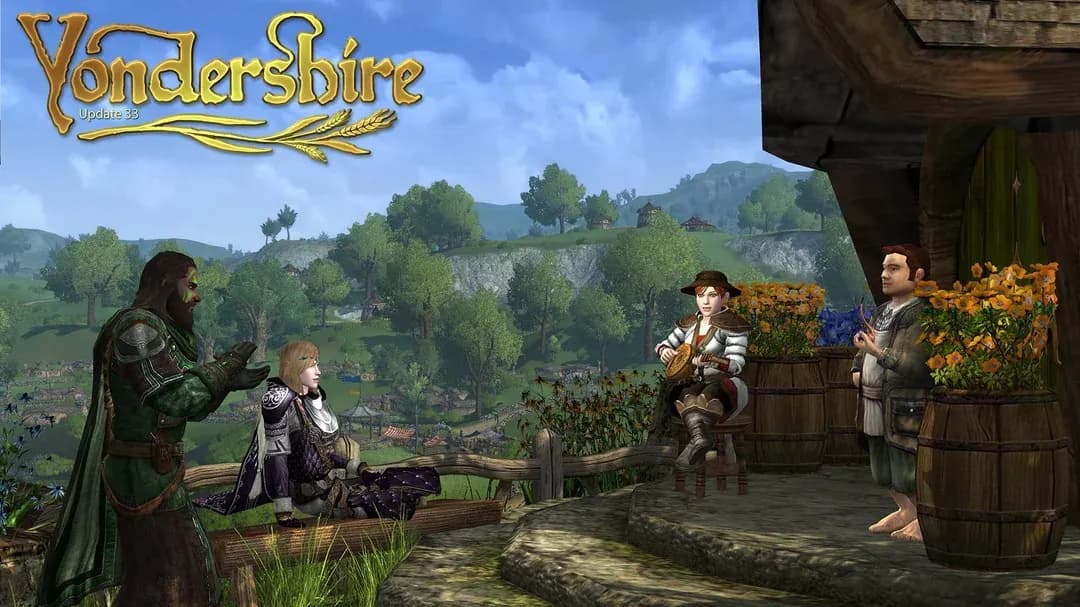
Lord of the Rings Online invites players into a near-literal recreation of Tolkien's Middle-earth, from the Shire's rolling hills to the deserts of Harad, with nineteen years of continuous story, a di...
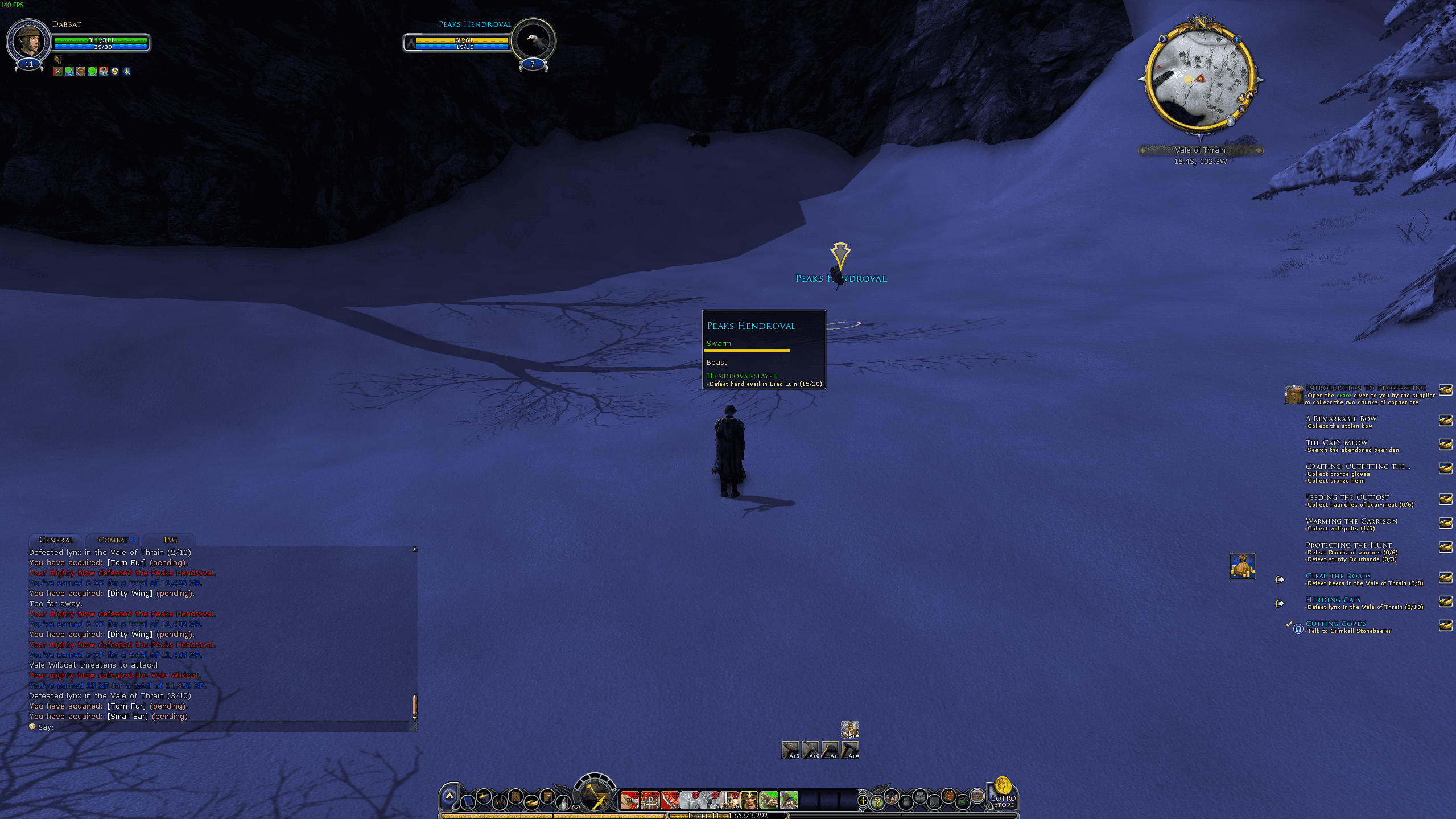
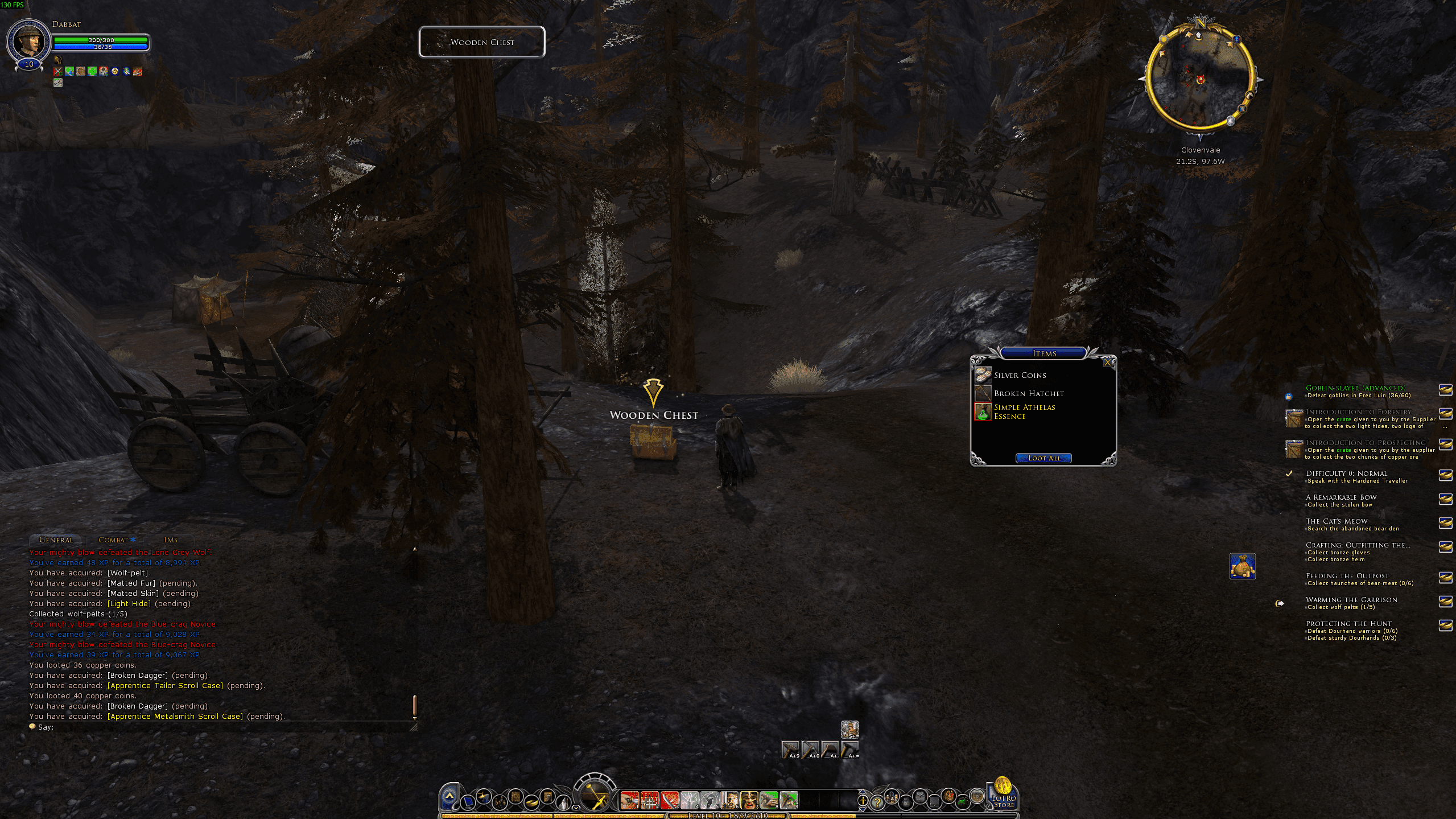
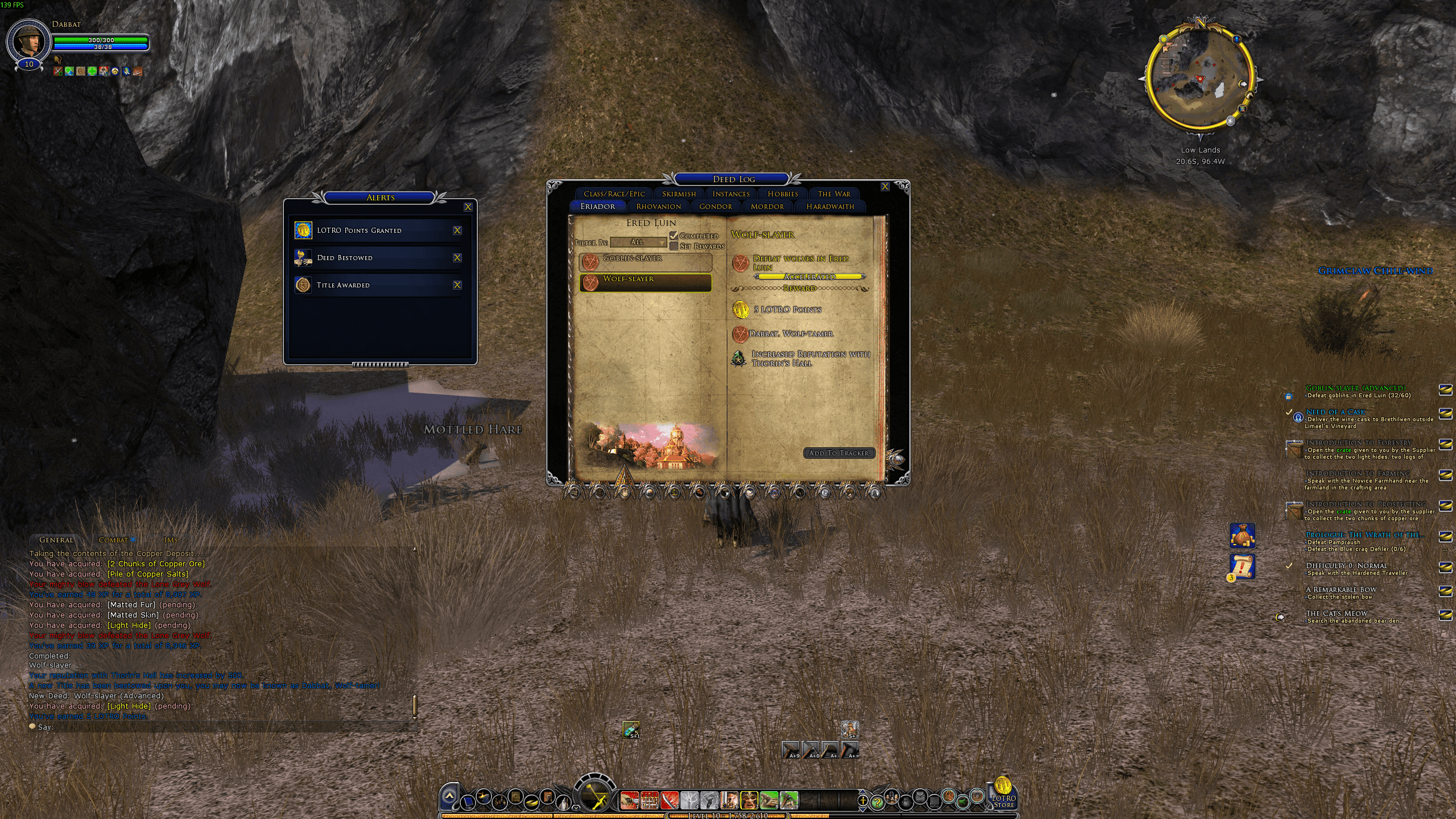
Lord of the Rings Online is a fantasy MMORPG built on the Turbine G3 engine, developed by Boston-based Standing Stone Games and published by Daybreak Game Company under the Enad Global 7 umbrella. It launched in April 2007, went free-to-play in 2010, and in December 2025 shipped its thirteenth expansion, Kingdoms of Harad, pushing the level cap to 160 as the game entered its nineteenth year. What sets it apart from almost every other fantasy MMO on the market isn't a system or a mechanic — it's the setting itself, rendered with a fidelity to Tolkien's text that no licensed game before or since has matched. Whether that fidelity is still worth your time in 2026, against a genre that has moved on to faster combat and shorter attention spans, is what this Lord of the Rings Online review sets out to answer.
Middle-earth here isn't a backdrop dressed up with elf ears and stock dragons — it's a near-literal cartography of Tolkien's geography, built zone by zone in the same order the story unfolds. The Shire looks like the Shire. Bree-land's crossroads town feels lived-in rather than staged. Moria is a genuinely oppressive underground labyrinth rather than a corridor with mushrooms glued to the walls. Successive expansions have marched the timeline forward from the Fellowship's early chapters through Mirkwood, Rohan, Gondor, Mordor, and now south into Harad, the most recent of three expansions in the "Song of Waves and Wind" story cycle that began with Corsairs of Umbar. The writing leans hard on environmental storytelling and side-quest texture rather than cutscene spectacle, and it's the rare licensed game where reading the source material actually deepens the experience instead of exposing the gaps between them.
The tradeoff is visible the moment you compare it to anything built in the last decade. Character models, animation, and lighting all carry the weight of an engine that predates most of its current competitors, and Standing Stone Games has spent years promising a graphical overhaul without fully delivering one. Newer zones look noticeably better than the original Shadows of Angmar content from 2007, but the seams between eras never fully disappear. If you came here for cutting-edge visuals, this isn't that game. If you came here because you want to stand on Weathertop and feel like you're actually standing on Weathertop, it still delivers that better than anything else on the market.
Character creation splits along two axes that matter more here than in most MMORPGs: race and class both carry real lore weight, not just stat modifiers. Playable races now include Humans, Elves, Dwarves, Hobbits, Beornings, and High Elves, each tied to a specific starting region and each written with a distinct voice in early quest text. Classes have grown slowly and deliberately over nineteen years rather than in the annual waves typical of the genre — the current roster runs Burglar, Captain, Champion, Guardian, Hunter, Loremaster, Minstrel, Rune-keeper, Warden, and Brawler, the last of which arrived with Fate of Gundabad in 2021 as the first new class added in seven years. That scarcity is deliberate: Standing Stone Games has said plainly that it prefers refining what exists over constantly expanding the roster, which means each class has had years to get its rough edges filed down.
Combat itself runs on a familiar tab-target hotbar system, and nobody would call it the game's selling point. Rotations are simple, animation feedback is dated, and players who've spent time in more kinetic action-combat MMOs will notice the difference within the first fight. What the class design gets right instead is flavor: the Loremaster commands a bear or eagle companion pulled straight from Radagast's tradition, the Rune-keeper channels overtly magical damage that still generates lore-nerd arguments about how "un-Tolkien" it is, and the Minstrel heals through music rather than spellwork, fitting neatly into a world where songs carry real narrative weight. Combat here isn't the draw. The role you're playing inside the story is.
A new character starts in one of several small introductory zones — the Shire, Bree-land, Ered Luin, or the newer Before the Shadow prologue region — and from there follows a single, continuous epic story thread that, as of Kingdoms of Harad, runs from level 1 to level 160 without a hard break. That continuity is the game's quietest achievement: very few MMORPGs let you play through nearly two decades of accumulated expansions as one unbroken narrative rather than a patchwork of disconnected zones. Quest packs that once gated large chunks of that journey behind purchases have been steadily converted to free content over the years, and as of recent updates the leveling path through roughly the first ninety-five levels is fully accessible without spending a cent.
The pacing shows its age in places. Older zones from the Shadows of Angmar and Mines of Moria era ask you to run more fetch-and-kill quests than a modern MMO would tolerate, and the jump in quality once you reach the more recent Gondor and Harad content is obvious enough that veterans openly recommend using the Mission system — scalable, repeatable objectives introduced with War of Three Peaks — to skip past the slowest stretches. Mounts, meanwhile, arrive early and often: a starter horse is within easy reach by the mid-teens through in-game reputation grinding, well before most competitors let you off your own two feet.
Where most MMORPGs hand out weapons and let you forget about them until the next tier drops, Lord of the Rings Online ties its entire endgame identity to the Legendary Item system, introduced back in Mines of Moria and overhauled substantially with Fate of Gundabad. Every weapon and class item you wield levels up alongside you, gains passive traits called legacies, and can be reforged, relic-socketed, and titled into something that's functionally unique to your account. The 2021 rework stripped out a lot of the older system's fussier steps — identifying, imbuing, deconstructing — in favor of something closer to a straightforward gear-progression track, and Kingdoms of Harad added its sixteenth reward track on top of that foundation.
It's a genuinely distinctive hook, and it means your weapon tells a small story of its own by the time you've carried it through a few expansions. The friction is that new players staring down sixteen reward tracks and a legacy-and-relic vocabulary built up over a decade and a half face a wall of jargon that the in-game tutorials only partially clear away. Community wikis do more of the actual teaching than the game itself does, which is a pattern LOTRO shares with a lot of long-lived MMORPGs but hasn't solved any better than its peers.
Crafting runs on a profession system split into Vocations — Armourer, Armsman, Explorer, Historian, and Tinker — each bundling three related trades such as Weaponsmith, Woodworker, and Farmer. The loop is straightforward and satisfying in the way old-school crafting systems tend to be: gather raw materials out in the world, refine them at the appropriate station, and use the refined goods to produce gear, food buffs, or consumables that feed back into your own leveling or into the auction-house economy. Guild recipes exist for players who commit to a single trade over dabbling in several, rewarding specialization the way a real medieval economy would.
The Auction House keeps that economy moving between players, though its usefulness has waxed and waned with the game's population over the years — thin server populations mean thinner listings, and crafted goods compete against drops from the game's steady stream of instances and raids. It's not a system built to fascinate a dedicated economy-gamer the way some sandbox MMOs are, but it does exactly what it needs to: gives solo players a reason to gather, and gives the world a sense of goods actually moving between hands rather than vanishing into vendor windows.
The endgame ladder for a level-160 character runs through 6-man instances, 12-man raids tied to the current expansion cycle, and skirmishes — instanced encounters you can staff with NPC soldiers if you're short a group. Kingdoms of Harad added a new raid connected to its story and opened the Mûr Ghala instance cluster in the early-2026 update, keeping the raid-and-instance treadmill turning at roughly the pace it has for years. Delvings, a mission-style system that lets you dial difficulty up across ten tiers for progressively better rewards, have become the game's primary vehicle for repeatable endgame grinding, and the mid-2026 update specifically focused on bringing Delving rewards up to date after they'd fallen behind the current gear curve.
None of this content is punishingly hard by contemporary raiding standards, and that's by design rather than neglect — LOTRO's raiding community has always skewed toward an older, story-invested demographic more interested in seeing the next chapter than chasing a world-first clear. If you're coming from a game where endgame means execution checks and enrage timers, the ceiling here will feel low. If you're coming from a game where endgame means "there's nothing left to do," LOTRO's steady trickle of instances, raids, and Delving tiers will feel like more than enough.
PvP in Lord of the Rings Online has always meant one place: the Ettenmoors, a persistent open-world zone where Free Peoples characters fight Monster Play characters — players who roll orcs, wargs, spiders, and other creatures built from the ground up as PvP-only classes rather than palette-swapped versions of the Free Peoples roster. It's a genuinely unusual structure by modern standards, closer in spirit to a designed faction war than to arena queues or battlegrounds, and the mid-2026 summer update added the first new Monster Player class in nearly twenty years, a sign that Standing Stone Games still considers the zone worth investing in rather than maintaining on life support.
The honest caveat is that the Ettenmoors has never been the game's main draw, and its population reflects that — it's a zone that lives or dies on whether enough people log in on a given evening, and a quiet night can leave you circling an empty map. Players who came to LOTRO for the story and world exploration tend to treat Monster Play as a curiosity rather than a commitment, and the game has never really tried to force that to change.
Guilds here are called Kinships, and they function as the expected hub for group content, shared banks, and social chat, without much beyond that in the way of guild-versus-guild systems. Housing exists as a genuinely old-school feature — personal and Kinship-shared neighborhoods with decorable interiors — that has fallen out of fashion in newer MMORPGs but still has a dedicated following among LOTRO's veteran base, who treat furnishing a hobbit-hole in the Shire as its own long-term hobby distinct from questing or raiding entirely.
No, and the answer has gotten cleaner over the years rather than murkier. LOTRO runs a three-tier account model — Free, Premium, and VIP — where Free accounts can now level all the way through roughly level 95 of story content without spending anything, a threshold that has crept steadily upward as Standing Stone Games converts older paid quest packs into permanently free content. VIP, running around fifteen dollars a month, adds a monthly allotment of store currency, bonus experience, unlimited fast travel via the game's swift-travel network, and access to newer expansions and quest packs for the duration of the subscription; buying those same unlocks outright with real money or grinded-out points remains an option for players who'd rather not commit to a recurring charge. None of it touches combat power directly — there's no gear or stat advantage sold in the store, and the friction is almost entirely about convenience and content access rather than strength.
The genuinely fair criticism is that the system used to feel stingier than it does now, and long-time players still remember eras when quest-pack paywalls interrupted the story at inconvenient points. That's mostly history at this point. A player willing to grind deeds for store points, as the community has documented extensively, can work through hundreds of hours of content and buy their way to the game's older expansions without ever opening their wallet, and Steam's review base — sitting at Very Positive across more than 14,000 reviews — reflects a playerbase that's largely made peace with how the free-to-play model actually works today.
Population trackers put concurrent Steam numbers in the thousands rather than the tens of thousands, with July 2026 settling in the neighborhood of seven thousand players after a modest month-over-month dip — figures that undercount the real playerbase given how many veterans still use the standalone launcher instead of Steam, but figures that also confirm what anyone following the game already knows: LOTRO isn't growing, and it isn't collapsing either. It occupies a stable, specific niche with an older, deeply loyal fanbase that keeps the servers running content update after content update, year after year, largely immune to the churn that sinks flashier live-service launches within eighteen months.
There's a particular kind of MMORPG that doesn't compete for your attention so much as wait patiently for you to come back to it, and Lord of the Rings Online has settled fully into that role after nineteen years. It won't out-fight the sharpest action-combat games of 2026, and it won't out-dazzle anything built on a modern engine. What it offers instead is closer to a well-worn path through a familiar forest — every bend recognizable, every landmark exactly where the books left it, the destination less important than the walk itself. If you've read the source material and want to actually live in it for a few hundred hours, free of charge, that path is still there, still maintained, and still leading somewhere worth arriving. If you need your MMO to sprint, this one only knows how to walk — but for the audience it was built for, that's never once been the complaint.