 F2P · Live
Lineage 2
Aden's castles never stay in the same hands for long, and Lineage II has built an entire twenty-three-year…

A vibrant 3D casual side-scroller MMORPG powered by Unreal Engine 5, centered on seamless interaction with autonomous, LLM-driven AI companions. Explore the world of Aetherian Haven, team up, trade, a...
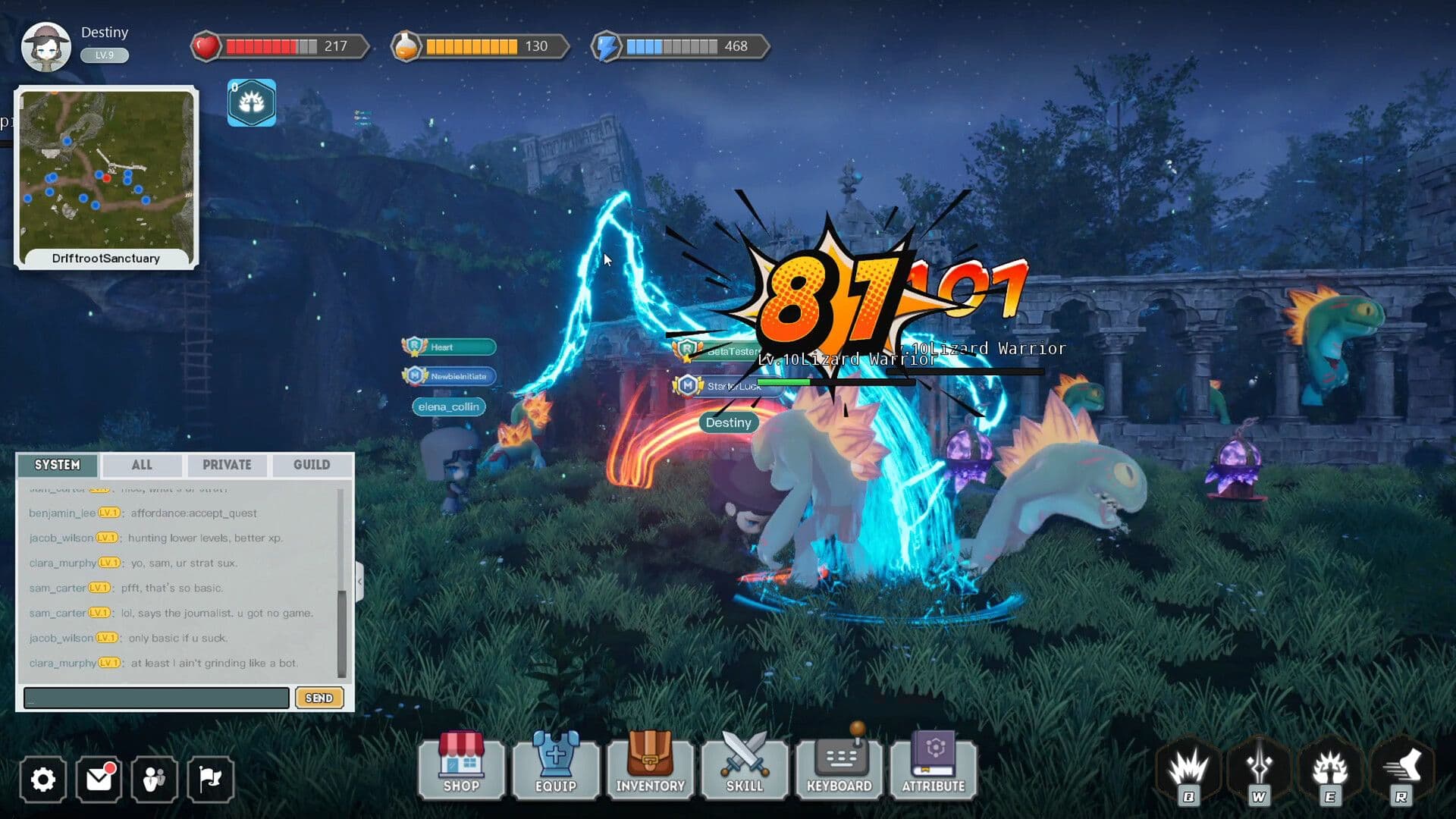
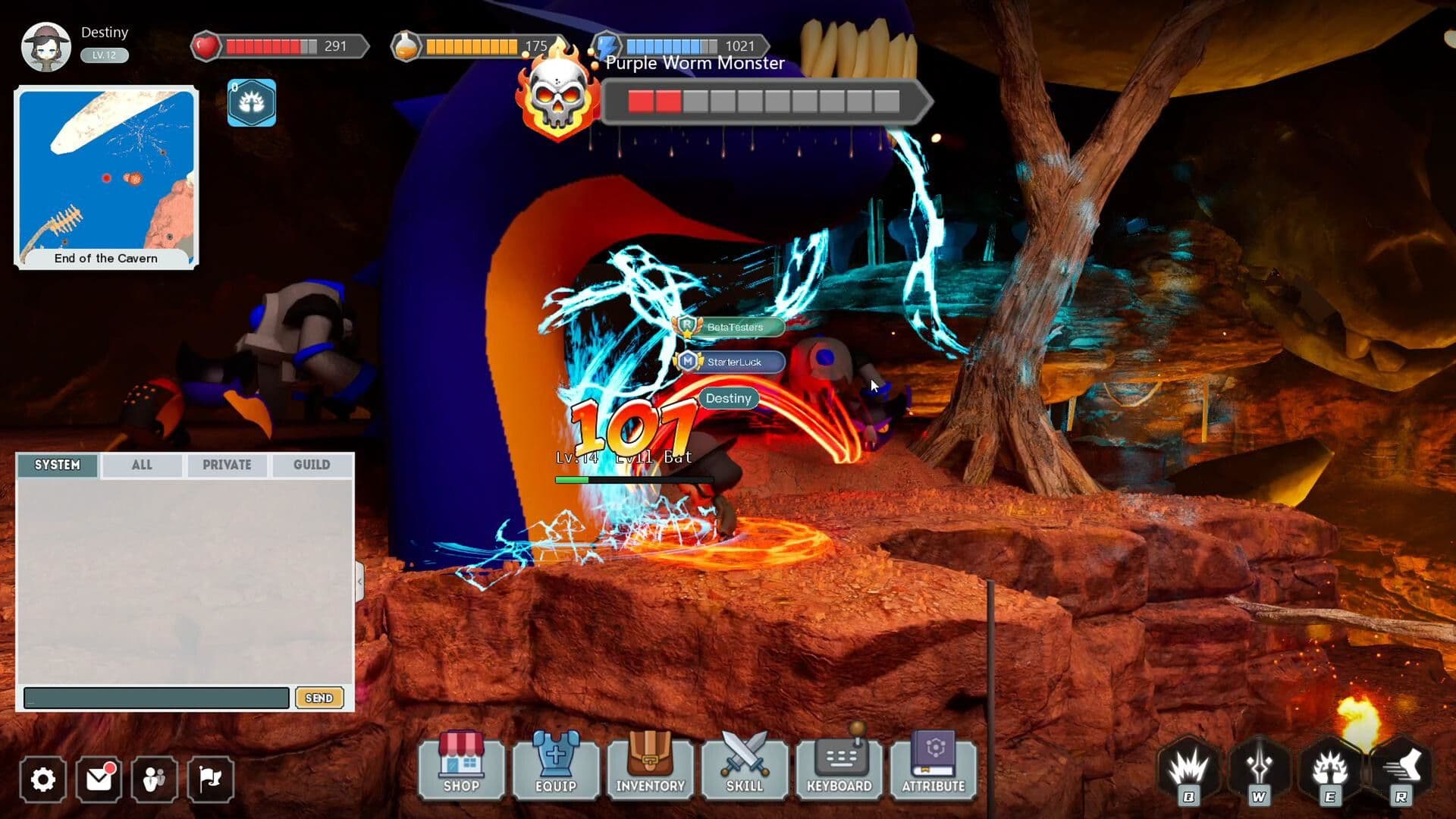
Quick take: Aetherian Chronicles is an ambitious indie experiment bridging the gap between classic side-scroller MMORPGs and living virtual world simulations, developed in Unreal Engine 5 by Kingfisher Platforms Ltd. Its defining signature feature is the seamless integration of autonomous AI companions powered by Large Language Models (LLM), living in the persistent world alongside real human players. These virtual adventurers independently explore biomes, engage in natural conversational chat, accept party invites, trade items, and tackle colossal dungeon bosses. Reimagining the nostalgic, meditative loop of MapleStory and La Tale with contemporary 3D visuals, the game offers a cozy adventure where loneliness, queue anxiety, and social toxicity are eliminated by design in a Free-to-Play framework.
The golden era of 2D and 2.5D side-scrolling MMORPGs etched unforgettable memories for an entire generation of gamers. Leaping across tiered platforms, unleashing vibrant screen-clearing AoE spells across packs of quirky creatures, and congregating in bustling town centers to display rare cosmetic vanity hats created an unparalleled sense of festive community. However, over the past decade, the broader MMO industry shifted drastically toward hyper-competitive rat races, artificial time-gating, and rigid guild commitments that turned casual gaming into an unpaid second job.
Independent developer Kingfisher Platforms Ltd. aims to rekindle that lost spirit of lighthearted, accessible adventure. Conceived as a modern yet faithful cozy MMORPG, Aetherian Chronicles transitions the genre onto Unreal Engine 5. This technical foundation preserves the intuitive clarity of side-scrolling platforming while introducing volumetric lighting, layered depth, dynamic particle physics, and fully realized three-dimensional backdrops.
Every online RPG enthusiast has encountered the two most disheartening pitfalls of modern multiplayer games:
Aetherian Chronicles resolves both bottlenecks through its core breakthrough: a simulated online society powered by AI companions. The game does not quarantine the player into an isolated offline sandbox, nor does it abandon traditional multiplayer matchmaking. Instead, the realm of Aetherian Haven is shared simultaneously by real human adventurers and autonomous virtual companions driven by advanced language models.
These virtual citizens are far from static pet mercenaries tethered to your hip. They lead active in-game lives: traversing lush meadows, grinding rogue automatons, exchanging rumors by the campfire, managing their own inventories, and enthusiastically answering your call when you need an extra sword against a fearsome cavern boss. Whether your real-life friends are offline or active server hours are quiet, the world never feels abandoned. You enjoy the bustling vitality of a living MMORPG entirely on your own terms, without social friction or mandatory scheduling.
Most historical attempts to introduce artificial companions into MMORPGs fell into two predictable, primitive patterns: either scripted tavern henchmen mindlessly following a leash and cycling cooldowns on cue (reminiscent of Guild Wars 1 or the Duty Support system in Final Fantasy XIV), or illicit gold-farming clickers running along predetermined waypoints. The team at Kingfisher Platforms Ltd. approached the dilemma from an entirely distinct philosophical angle.
In Aetherian Chronicles, AI companions are powered by Large Language Models (LLM) and endowed with contextual agency. This architectural foundation enables virtual adventurers to exhibit human-like behavioral traits:
For players whose busy personal and professional schedules clash with the rigid raiding timetables of traditional MMO guilds (complete with Mandatory Discord roll calls and attendance penalties), this companion system delivers unmatched liberation. The agonizing ritual of lingering for forty minutes in a Looking for Group (LFG) queue, frantically pleading for a missing healer or tank, is completely obsolete.
Upon stumbling across an elite creature camp or gearing up for an assault against the perilous Worm Boss deep in the swamp caves, you can assemble a balanced party in a single click by inviting nearby AI companions. They accept immediately, coordinate targeting in battle, peel attackers off vulnerable squishies, and never rage-quit in global chat over an accidental wipe. This creates an extraordinarily welcoming haven for introverts, casual adventurers, and anyone seeking high-quality multiplayer gameplay without the social baggage.
Where does the potential catch lie in this cutting-edge framework? The foremost technical hurdle involves inference latency and split-second combat reflexes. Processing real-time queries through large language model backends demands substantial compute overhead. While a brief two-second delay during casual town banter feels natural (mimicking a human player typing on a physical keyboard), even a fractional lag in a fast-paced boss fight would prove catastrophic.
To overcome this bottleneck, the developers partitioned companion logic into a dual-tiered architecture: split-second combat reflexes (active dodges, hitbox tracking, skill rotations) are governed by lightning-fast local deterministic scripts, while the remote neural model drives dialogue, emotional disposition, market valuation, and overarching travel decisions between zones.
The continent of Aetherian Haven is structured as a vibrant, interconnected tapestry of varied biomes, each boasting an unmistakable visual identity and tailored gameplay pacing. Rather than sprawling, desolate flatlands designed to artificially inflate travel times, the game's zones are engineered with dense, multi-tiered verticality:
Transitioning the side-scroller template into Unreal Engine 5 yields enormous dividends in spatial immersion. While player movement remains locked to an intuitive 2.5D tracking plane, the surrounding environments are fully realized in three dimensions. Distant horizons come alive: majestic castle spires pierce cloud cover in the background, foliage sways under dynamic wind currents, and torchlight casts realistic volumetric shadows across tiered stone ledges.
This vertical topography continually rewards keen observation. The development team has scattered secret platforms, hidden alcoves, and precarious overhangs throughout every zone, accessible solely through precise acrobatic sequences. Reaching these tucked-away vantage points rewards players with vanity costume chests, rare crafting reagents, and playful developer easter eggs.
What firmly sets Aetherian Chronicles apart from traditional, sweat-drenched Korean grindathons is its unwavering dedication to the cozy gaming aesthetic. The game refuses to strap you into an unforgiving treadmill of daily chores and anxiety-driven leaderboard decay.
Following an intense cavern run or an afternoon of monster hunting, players naturally congregate in the capital hub to socialize, trigger synchronized dance emotes on the cobblestone square, or unwind beside warm campfires alongside humans and AI companions alike. Central to this comforting loop is the Permanent Pet system—charming non-combat companions that accompany your hero everywhere, automatically collect scattered mob drops, and let you showcase your individual flair.
The principal compromise inherent to this design is its directional containment. Gamers accustomed to unrestricted 360-degree freedom across immense open-world landscapes like World of Warcraft or Black Desert may initially feel constrained by a single plane of movement. Side-scrollers inherently celebrate the disciplined art of platforming rhythm and lateral traversal—a stylistic choice that rewards lovers of arcade precision while naturally eschewing true panoramic exploration.
The combat architecture of Aetherian Chronicles embraces fluid non-target action mechanics. You will not find passive Tab-targeting lock-ons here: every sword swing, bow shot, and magical incantation demands disciplined spatial awareness, correct character orientation on the platform, and manual range control.
A player's combat repertoire consists of basic attack chains, heavy charged finishers, timed evasive dashes, and impactful area-of-effect (AoE) crowd-clearing spells. Calibrated seamlessly for both keyboard/mouse and gamepad controllers, the platforming physics allow you to execute aerial strikes, juggle knocked-up enemies in mid-air, and fluidly maneuver out of telegraph hazard zones before high-damage boss attacks land.
The creature catalog inhabiting Aetherian Haven leans intentionally into whimsical, fairy-tale aesthetics. The developers deliberately sidestepped generic grey wolves and copy-paste skeletons in favor of imaginative, memorable adversaries:
Clearing creature packs never feels like a mundane slog thanks to crisp visual and acoustic impact feedback. Every landed blow delivers a satisfying crunch accompanied by sparks, floating critical damage figures, and ragdoll knockbacks. It captures that quintessential tactile gratification that kept gamers glued to classic side-scrolling brawlers for decades.
The pinnacle of combat mastery manifests in organized group expeditions against legendary monsters (Boss Runs). The standout encounter in the game's early endgame is the colossal Worm Boss, concealed deep within the flooded cavern biomes.
The battle unfolds across several escalating phases. The giant subterranean predator periodically burrows into the cavern floor, causes heavy ceiling stalactites to collapse, blankets platforms in caustic acid pools, and lashes out with sweeping tail strikes designed to knock adventurers into hazard pits. Success hinges on disciplined party coordination: frontline tanks hold the leviathan's attention, ranged damage-dealers target vulnerable carapace weak points, and supportive healers prioritize cleansing lethal poison stacks from the team.
Where does this encounter structure place the greatest stress on the game's systems? It lies in AI companion survivability during instant-wipe mechanics. While virtual party members excel at standard monster grinding, intricate boss mechanics requiring tight positioning (such as taking cover behind a specific rock formation within a strict three-second window) pose a significant challenge. The development team must ensure that AI routines prioritize defensive survival without getting bogged down in pathing loops that leave them standing in hazard puddles.
Character presentation has always held sacred significance in side-scrolling RPGs. Unlike top-down isometric titles where avatars appear as diminutive silhouettes amidst chaotic battlefields, a 2.5D or 3D side-scroller places your avatar front and center. Every newly acquired hat, tailored cape, and idle flourish is immediately prominent to everyone around you.
In Aetherian Chronicles, character personalization is elevated to a core gameplay system. The visual suite allows adventurers to customize facial structure, hairstyles, skin tones, and critically, freely layer cosmetic apparel over combat armor. Whether you envision your avatar as a steel-clad paladin, a chic scholar in academy robes, or an eccentric adventurer sporting a comical oversized plush mascot hood, the game removes class-based aesthetic restrictions and fully embraces player expression.
Traditional MMORPG economies frequently collapse into two frustrating extremes: heavily congested mega-servers suffer runaway inflation, while low-population servers experience marketplace stagnation where essential crafting recipes sit unsold for months. Aetherian Chronicles bypasses this structural flaw through a hybrid player-to-player trading (Player Trading) system co-inhabited by autonomous virtual citizens.
AI adventurers actively participate in the market cycle. They list surplus ores, harvested herbs, and surplus dungeon equipment for sale, while simultaneously buying goods listed by real players whenever prices align with fair market valuations. This creates permanent market liquidity: even during late-night sessions when human server population dips, your auction listings have a genuine chance of selling to an AI artisan seeking materials for their own progression.
Crafting in the game favors self-sufficiency and tangible achievement. Traversing diverse biomes yields rich veins of ore, rare herbal flora, and potent boss trophies that can be brought back to the great forges of Castle Keep to forge customized swords, recurve bows, arcane staves, and protective talismans.
Gear enhancement follows a refreshing, deterministic progression model. The developers explicitly rejected predatory mechanics that risk destroying high-value equipment upon a failed upgrade attempt—a notorious trope that has plagued online gaming for decades. Upgrades are designed to deliver reliable stat increments and gameplay satisfaction rather than manipulating players into purchasing fail-safe protection charms from a cash shop.
What represents the most glaring vulnerability of an AI-driven economy? It is the danger of unconstrained currency generation. If virtual companions grind endlessly and inject uncontrolled gold reserves into the economy, the currency risks rapid hyperinflation. To safeguard player purchasing power, Kingfisher Platforms Ltd. must maintain stringent deflationary sinks—including auction transaction taxes, gear maintenance costs, and high-tier gold drains tied to inventory expansions and exclusive cosmetic prestige items.
Aetherian Chronicles is positioned as a Free-to-Play title. For an indie MMORPG, adopting this distribution model is a strategic choice: removing the upfront purchase barrier ensures a broad influx of real players at launch, while optional in-game purchases sustain development strictly through cosmetic and lifestyle personalization.
The developers at Kingfisher Platforms Ltd. have pledged full transparency regarding the avoidance of Pay-to-Win mechanics. The in-game store focuses exclusively on aesthetic apparel sets, celebratory dance emotes, custom skill visual effects, and decorative vanity skins for pets. Direct sales of overpowered weaponry, stat-boosting elixirs, or paid dungeon ticket entries are firmly off the table—character power must be earned through active gameplay.
Selecting Unreal Engine 5 for a side-scrolling MMORPG might appear unconventional at first glance, but it proves to be an engineering triumph. Epic Games' flagship technology provides atmospheric volumetric lighting, soft environmental shadowing within caverns, reflective water shaders, and fluid depth-of-field transitions. Crucially, because the camera is fixed along a lateral tracking plane, the engine is spared from rendering multi-kilometer open-world horizons, yielding tremendous performance headroom.
The official hardware specifications published on Steam highlight exceptional hardware accessibility:
This accessible barrier to entry ensures rock-solid 60 FPS performance across aging home desktop rigs, thin-and-light laptop hardware, and portable gaming handhelds such as the Steam Deck, opening the gates to an expansive international player base.
Currently, Aetherian Chronicles is in active development, polishing its core combat framework and expanding network stress tests ahead of public Alpha Playtests. The studio is fostering its community via Discord and Steam storefront updates, rewarding early registrants with an exclusive permanent pet upon full release.
The primary engineering milestone of current tests centers on validating backend scalability under heavy LLM inference workloads. A commercial release is targeted for 2026, with planned post-launch expansions introducing high-tier biomes, guild systems, and seasonal festivities.
What constitutes the primary operational vulnerability for the project? It is the ongoing compute cost per active concurrent user. In a conventional MMO, server-to-client network traffic transmits basic positional coordinates and hit numbers—a remarkably low-cost data overhead. In a simulated world where hundreds of autonomous AI companions continuously process natural language queries through LLMs, the studio incurs substantial compute and cloud inference bills. The studio must demonstrate that purely cosmetic Free-to-Play monetization can reliably support this heavyweight infrastructure over the long haul.
Aetherian Chronicles takes a daring leap toward a new horizon of interactive online entertainment. Weaving generative artificial intelligence directly into the foundational DNA of an MMORPG is not an empty marketing gimmick; it serves as a pragmatic antidote to the pervasive burnout facing contemporary online gaming communities.
The game's most compelling strengths include:
Nevertheless, prospective adventurers should weigh several critical risk factors before launch:
Aetherian Chronicles is tailored specifically for gamers who cherish the quintessential loop, colorful aesthetics, and meditative rhythm of MMORPGs—leveling, hunting rare cosmetic drops, honing gear builds, and toppling boss titans—but simply lack the time, energy, or patience to endure the toxic social friction of modern hardcore raiding cultures.
It represents an ideal sanctuary for introverts, casual adventurers, retro side-scroller aficionados, and busy adults who wish to log on for forty-five minutes, effortlessly recruit a squad of pleasant, competent AI companions, conquer an epic dungeon, and log off feeling thoroughly rewarded. If Kingfisher Platforms Ltd. successfully navigates the technical tightrope of economy balancing and inference stability, Aetherian Chronicles could very well establish the gold standard for solo-friendly, hybrid virtual worlds.