 F2P · Live
Lineage 2 Essence
Lineage 2 Essence is NCSoft's free-to-play take on the classic Korean MMORPG Lineage II, built around faster…
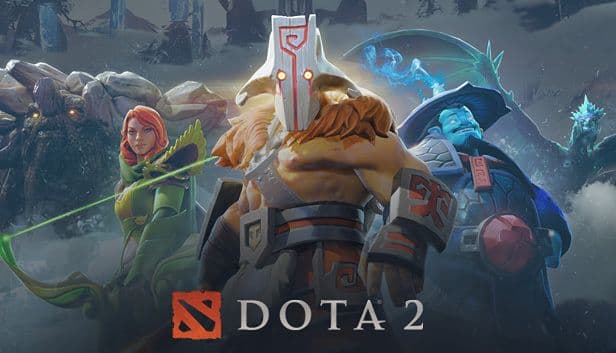
Dota 2 is Valve's team-based MOBA, where all 127 heroes are free from day one and the outcome rides on frame-level execution, not spending. Thirteen years after launch, it's still getting major patche...
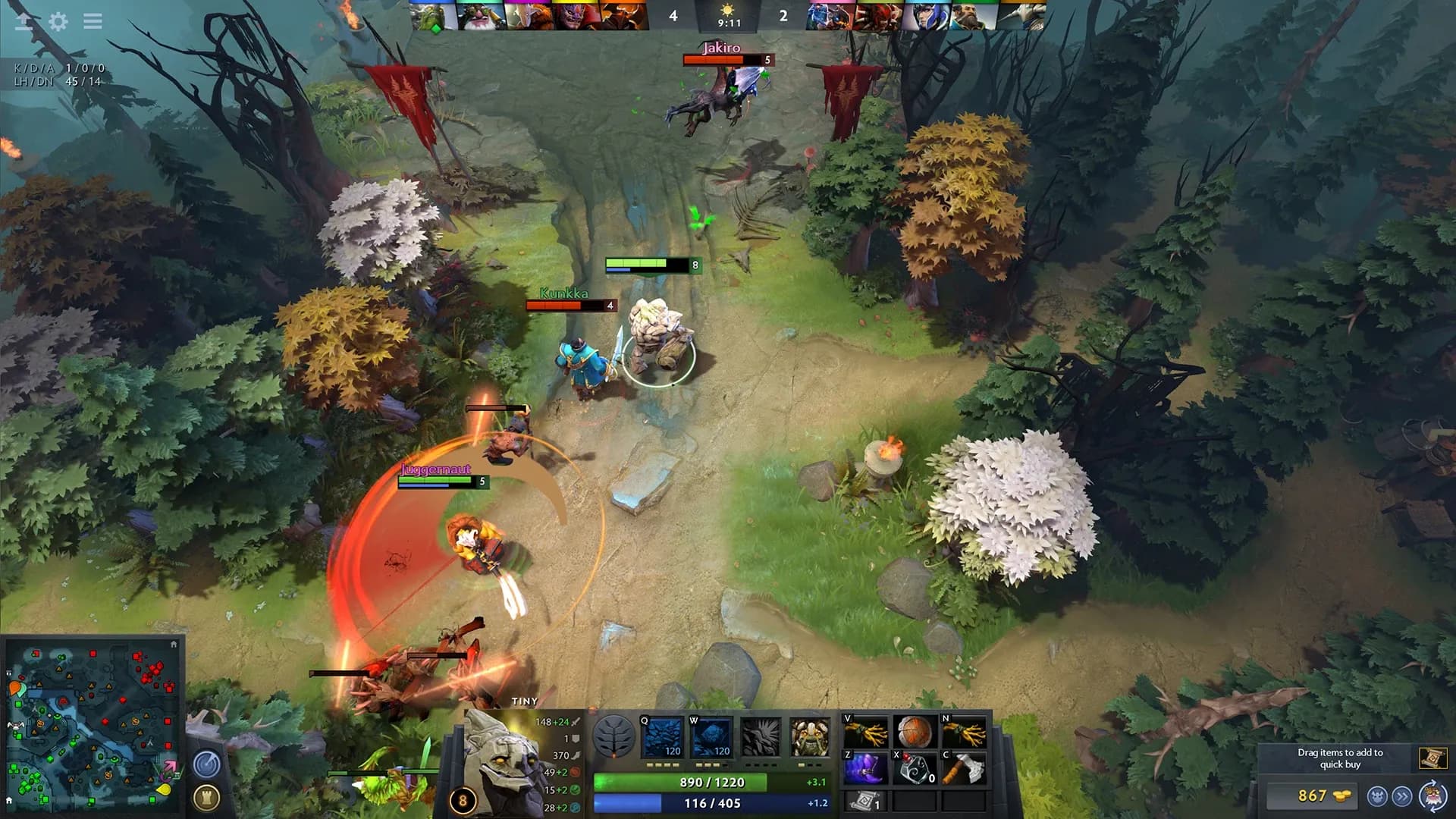
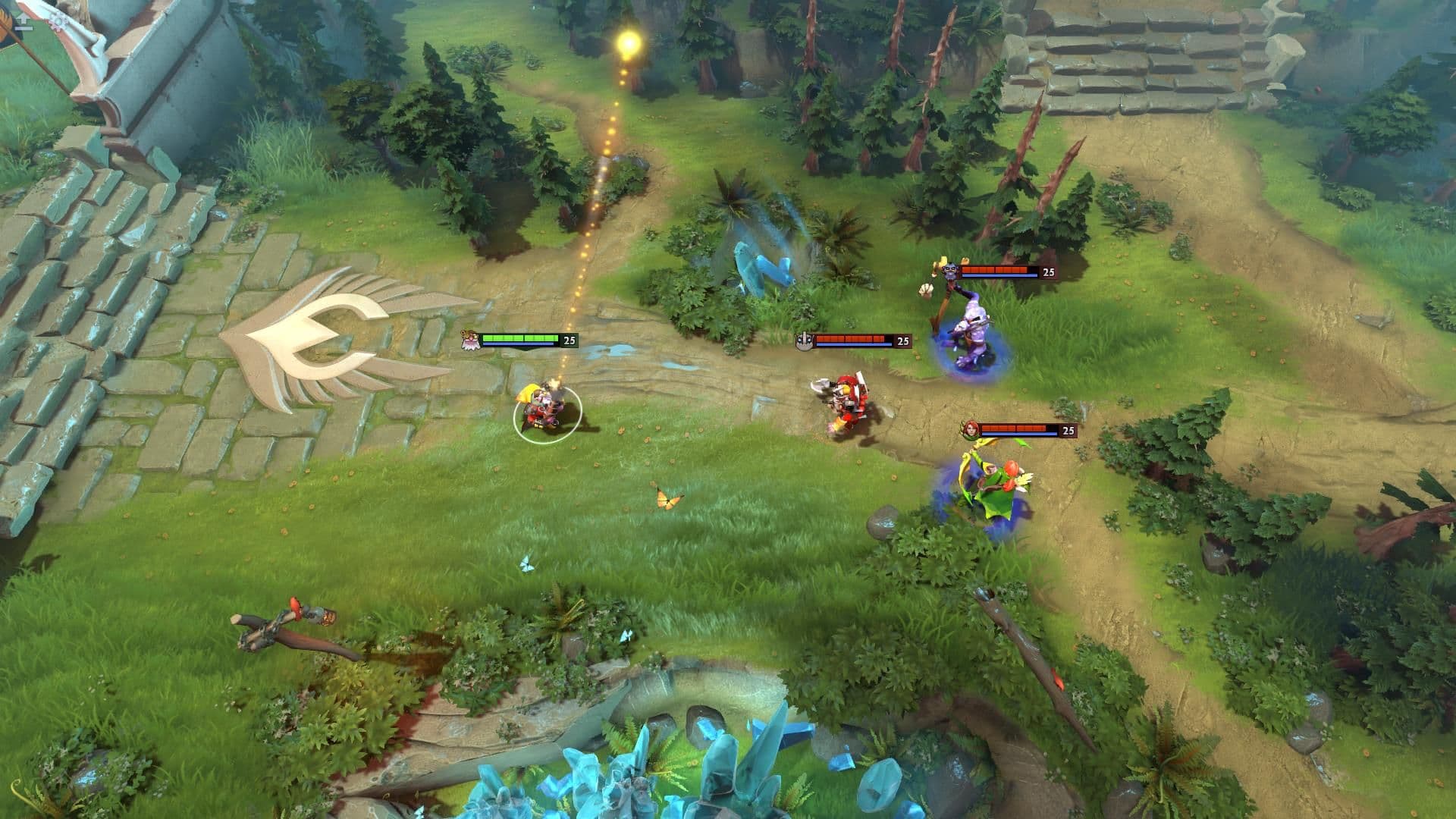
Dota 2 is Valve's team-based MOBA, released on July 9, 2013 on the Source 2 engine, and it is still one of the most-played games on Steam: daily peaks regularly clear 800,000 concurrent players, with a recent monthly average sitting around 600,000 — a real recovery from the 2023 slump, when the Battle Pass disappeared and The International's prize pool collapsed to a fraction of its old size. Dota 2 is free, all 127 heroes are unlocked from the first login, and Valve makes its money entirely on cosmetics.
Thirteen years in, this isn't a game limping along on nostalgia — it's still getting structural patches. Patch 7.41, released in March 2026, removed the Facets system that had been layered in a couple of years earlier and reshuffled the meta around a fourth attribute, Universal, sitting alongside Strength, Agility, and Intelligence. The newest hero, Largo, joined the roster at the end of 2025 — a Strength support built around a colony of singing frog subjects. Roughly 112 of those 127 heroes trace back to the original Warcraft III mod; Valve now adds one or two originals a year, a pace that's slowed noticeably since the game's early years.
Quick take: Dota 2 is still the deepest MOBA on the market, and thirteen years of patches haven't dumbed it down — the mechanical ceiling (animation canceling, action queuing, item timing) is arguably higher than any competitor's. It's a rough first twenty hours for anyone starting cold, but the payoff for sticking around is real.
Dota 2 skips the genre's usual "save the kingdom" setup entirely. Its lore surfaces sideways — through hero voice lines, the Dark Carnival comics, short films produced for The International, and Netflix's Dota: Dragon's Blood. What emerges is a dark-fantasy world where scheming gods manipulate mortal affairs and entire continents go uncharted: the same region, Ancyra, is a homeland to some heroes and a forgotten colony to others, and the game never bothers to reconcile the two readings.
The map itself has aged like a museum piece rather than a construction site — the symmetric Radiant-versus-Dire arena, split by a river, with three lanes, three tiers of towers per side, and an Ancient anchoring each base. Thirteen years of patches added streams, jungle paths, and Outposts that grant bonus experience for holding territory, but the skeleton never changed. Learning that map at hour one thousand still means relearning it, because balance patches move the pieces around far more often than they touch the rules of the board. Day-night cycles aren't cosmetic either — vision range drops after dark, and enemy movement through the jungle goes effectively invisible without a ward or a night-vision item.
A match opens with a draft: All Pick hands out the full roster freely, Captain's Mode turns picks and bans into a duel between team captains, and Ability Draft assembles a hero out of other heroes' skills, buffet-style. Starting gold is 600, the shop is open from second one, and new players hit a wall immediately — item recipes are never explained in-game. You either already know that Boots of Speed plus Gauntlets makes Power Treads, or you're alt-tabbing to a wiki to figure it out.
From there it's lane farming: every last-hit on an enemy creep pays gold and experience, and the first ten minutes largely decide who's setting the pace for the next thirty. Every two minutes, runes spawn at the two river bounty spots — double damage, invisibility, haste, regeneration — and fighting over them early can matter more than a couple of clean trades on the lane. A hero kill pays a gold bounty and denies the loser experience on the lane for a stretch, so getting stuck in that hole at minute fifteen usually means spending the next twenty as a body for the team to hide behind. None of it carries forward: level, gold, and items all reset the moment the Ancient explodes, and the next game starts from zero — the only thing that persists between matches is what the player learned.
Dota has no formal classes, but every match still runs on an unwritten five-role split, and confusing them breaks a game faster than a weak draft ever will. The carry scales exponentially with items but is weak for the first fifteen minutes and entirely dependent on getting fed farm uncontested. The mid laner runs a solo lane one-on-one, usually on a hero built for early ganks or a fast power spike. The offlaner absorbs a hard 2v1 lane, trading personal farm for space and experience the rest of the team can use. Two supports buy wards, Smoke of Deceit, and other consumables, keep the map lit, and rarely take a last hit if a carry is standing nearby.
Roles aren't hard-locked to specific heroes — most can theoretically fill several positions — but almost every hero has one or two natural slots where its kit actually clicks. Ranked matchmaking asks for one or two preferred roles before it starts searching, and at higher MMR that preference becomes close to mandatory: the system won't stack five carries on one team, and it won't hand out the same role five games in a row.
The early-game loop is lane farming, tracking the neutral jungle creep spawn timer, and keeping wards up so a gank doesn't arrive unseen from the tree line. Once the laning stage breaks down, the game shifts to five-player ganks: group up near a river rune, drop down onto an enemy lane, get the kill, and retreat before creeps respawn and punish the rotation. Animation canceling and action queuing is the mechanic that separates Dota from the rest of the genre — a skilled player cancels an attack's windup with movement to hit faster than the base animation allows, and stacks several commands in a queue ahead of time. That layer of micro is most of what separates a 2,000 MMR player from a 6,000 MMR player playing the exact same hero — same kit, different hands, different map awareness.
By the late game, the map's power centers shift to neutral objectives. Roshan — a boss camped in a pit on the map — drops Aegis of the Immortal, which revives a dead hero on the spot, and controlling that fight often decides who wins the final team fight at the enemy Ancient. Outposts have layered another objective onto the mid-to-late game as well, turning territory control into its own strategic thread rather than a side effect of kills.
Dota doesn't have crafting in the MMO sense — no gathering nodes, no refining chains. Item building happens entirely at the shop through recipes: basic components sell pre-made, and stronger items like Divine Rapier or Black King Bar come together by buying the missing pieces and combining them in the inventory. The match economy runs purely on gold — from creep kills, from hero kills, from a small passive trickle every few seconds — plus a separate Scrap currency earned from Ranked and Turbo games, tradeable for tickets into seasonal events like Dark Carnival.
Inventory space is capped at nine slots, six visible in combat and three more tucked into a backpack accessible only at base or through the courier. The courier itself is a small unit worth protecting — it's what physically hauls purchased items from base to the lane, and losing it at the wrong moment can cost a team an expensive item and thirty seconds of dead time nobody can afford. A separate, much longer-lived economy exists outside the matches entirely: the Steam Marketplace, where players buy and sell hero sets, skins, and rare items from old Battle Passes, forming a small but genuine secondary market Valve doesn't directly control.
There's almost no real PvE here: co-op vs. bots exists, but it's a training tool for new players, not standalone content. The core of the game is 5v5 PvP, and "endgame" means Matchmaking Rating rather than character level — a seasonal ladder running from Herald up to Immortal that partially resets each new season. Past a certain MMR, role queue kicks in, forcing a choice of hero and one of five roles up front, so nobody gets stuck in a position they never agreed to play.
Lighter formats exist alongside the standard game: Turbo compresses a match to roughly half its length by inflating farm and gold, and Ability Draft turns hero selection into an ability-assembly puzzle. Once a year, The International adds itself on top of the regular season — the single biggest event in esports — and the entire major-patch calendar tends to orbit it. The 2026 edition, held in Shanghai, went to Team Spirit, who took their third Aegis in a row and cemented themselves as the most decorated organization in the tournament's history.
Dota 2 is fundamentally a PC game — Windows is the default platform, but the client officially supports macOS and Linux/SteamOS too, each with its own listed minimum requirements. On Steam Deck, it holds a "Playable" rating rather than "Verified," mostly because parts of the interface still assume a mouse and keyboard and some text runs too small for a handheld screen — but in practice it launches fine and holds up well, especially docked to a monitor. There's no console release for PlayStation or Xbox, and cross-play isn't a relevant question here — the game has simply never shipped anywhere outside PC and portable Windows/SteamOS devices.
Solo queue and five-stack parties cover the basics of playing with friends, but Dota also runs a larger structure on top: guilds, capped at fifty-five members, each with its own profile, chat channel, and weekly points tallied on a regional leaderboard. Any Dota Plus subscriber can found one; joining is free for everyone, with roles split between Guild Leader, Officer, and Member, and daily contracts give members a reason to log in beyond just queueing for a match.
The other social layer sits outside the client entirely — the professional scene: fan communities, fantasy-league betting during The International, and endless forum and stream debate over captain drafts. None of it is required content for a casual player, but it's exactly what keeps the game visible to millions of people who rarely queue for a match themselves. The International has run the largest prize pool in esports history for most of its history, and even the 2022–2023 dip, when the total dropped from roughly forty million dollars down to single digits, didn't kill the tournament — it just forced a shift away from player-funded crowdfunding toward direct investment from Valve and its partners.
Dota 2's model is Free To Play in its rarer, honest form: every hero is free from day one, and nothing purchasable affects combat outcomes. Money goes toward cosmetics — hero sets, killstreak announcers, music packs — and the main seasonal product these days isn't a traditional Battle Pass but event-driven content like Dark Carnival and Quartero's Curios, where progress unlocks sets and "antiques." Whether Dark Carnival gets a second act is genuinely unclear — the first chapter wrapped before The International 2026, and Valve hasn't announced a follow-up date, leaving side content like Quartero's Curios to fill the gap.
A separate Dota Plus subscription bolts on cosmetic extras and conveniences — build suggestions, hero statistics, guild-creation access — but none of it changes the balance of a match: a prompt telling you what item to buy next doesn't substitute for knowing when to actually use it.
Dota's reputation as one of the least newcomer-friendly online games isn't undeserved: five strangers under rating pressure and a strict timer is fertile ground for a toxic chat, particularly at low and mid MMR where mistakes get punished immediately and blame follows just as fast. Valve's response is a reporting system with automated chat and matchmaking bans, a behavior score that affects queue times, and the option to mute all incoming chat and voice outright. None of it solves the problem completely — it reduces the noise rather than eliminating it — and that's worth knowing before your first ranked match, not discovering mid-game.
No, though it helps. Solo queue is a first-class way to play, and the ranked ladder is built around it — role queue exists specifically so a lone player doesn't get stuck filling whatever position the other four already claimed. What solo queue can't fix is communication: a five-stack coordinates calls and rotations by voice in a way a mixed lobby of strangers rarely manages, which is a large part of why win rates tend to climb once players start queuing with even one or two regular teammates instead of five random ones every game.
Yes, but not casually. Thirteen years of patches haven't smoothed the game into something approachable — if anything, the systems have only gotten denser, and nothing about the onboarding has caught up. What you get in exchange is a MOBA where no update has ever traded depth for accessibility, where frame-level execution still matters at the highest levels, and where the free-to-play model never quietly becomes pay-to-win. Anyone willing to spend the first twenty hours losing on purpose, as a student rather than a competitor, will find there's still a genuinely long runway of things left to learn.
Yes — every hero is unlocked for every player from the first login, and Valve's revenue comes entirely from cosmetic items, not gameplay advantages.
127, as of the current roster, with roughly 112 tracing back to the original Warcraft III mod and the rest added by Valve since 2013.
Most players who've tried both say yes — Dota's mechanics (denying creeps, animation canceling, item recipes not explained in-client) add a layer of execution and knowledge that League's more streamlined systems don't require.
Yes, though it carries Valve's "Playable" rating rather than "Verified," due to some UI elements assuming a mouse and small on-screen text at handheld resolution.