 F2P · Live
Lineage 2
Aden's castles never stay in the same hands for long, and Lineage II has built an entire twenty-three-year…
Prime World Legends brings Nival's 2014 MOBA-and-castle hybrid back from the dead, rebuilt by volunteers under an official non-commercial licence. Capture territory with terramorphing, assemble 36-tal...
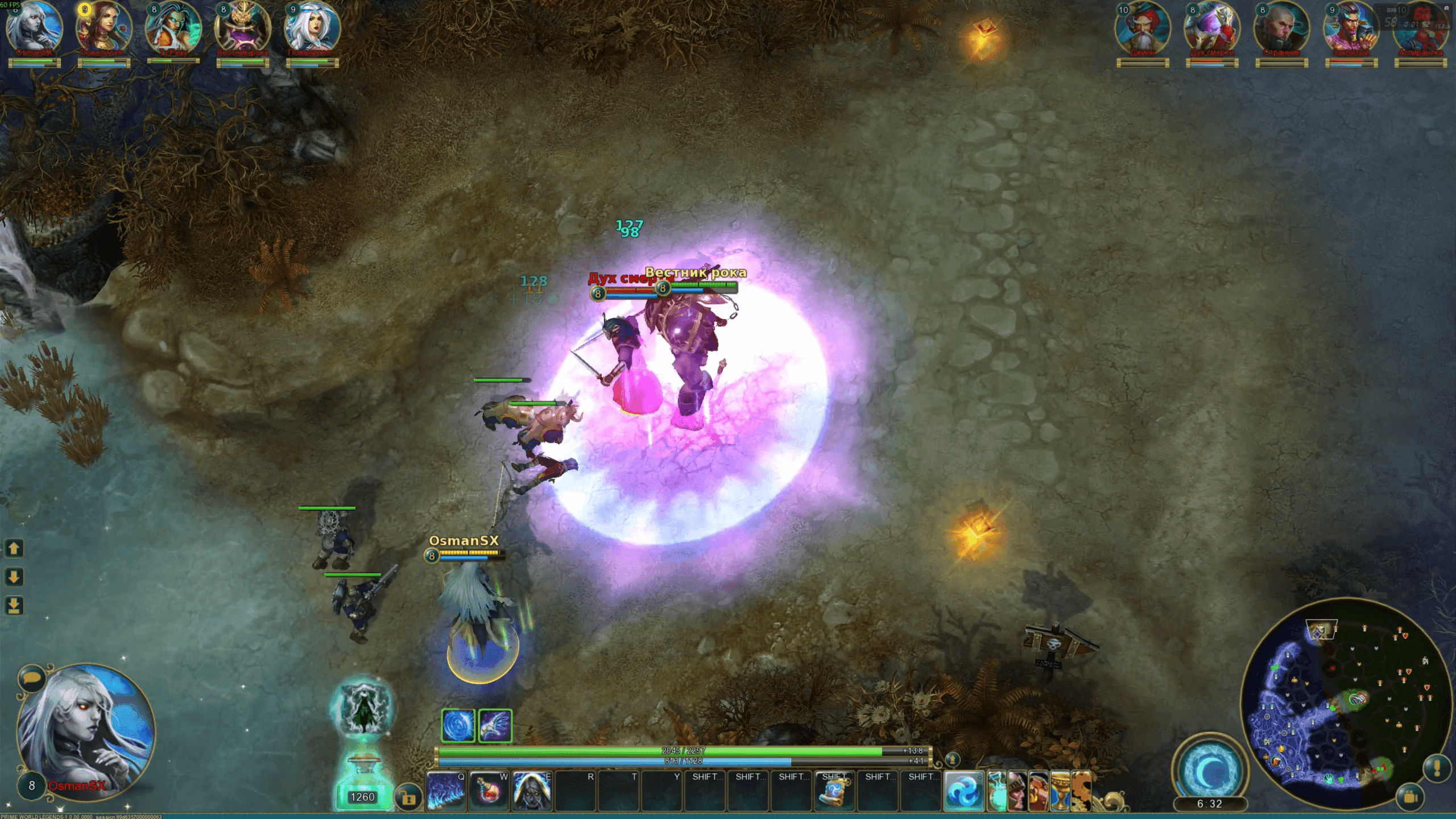
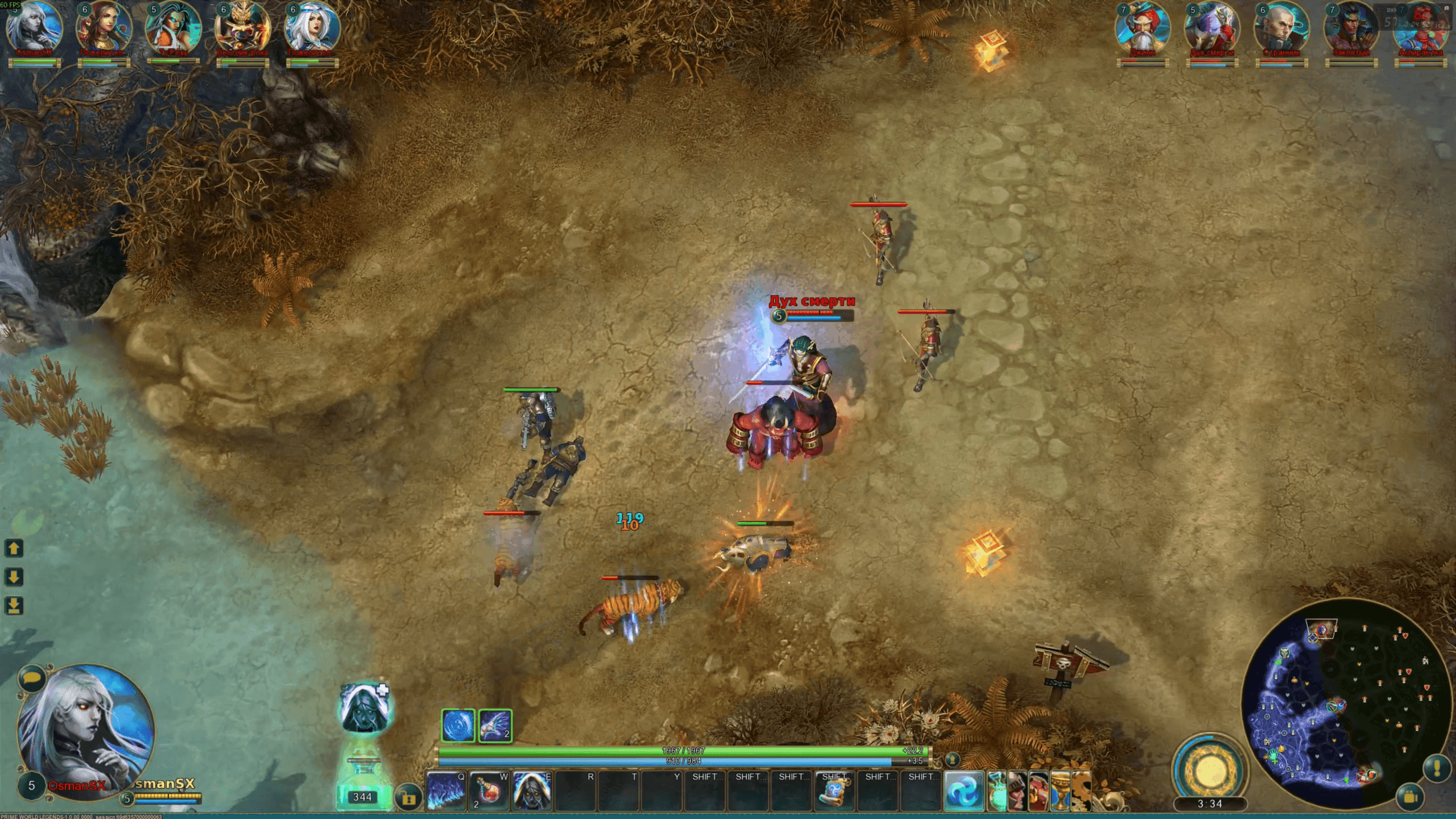
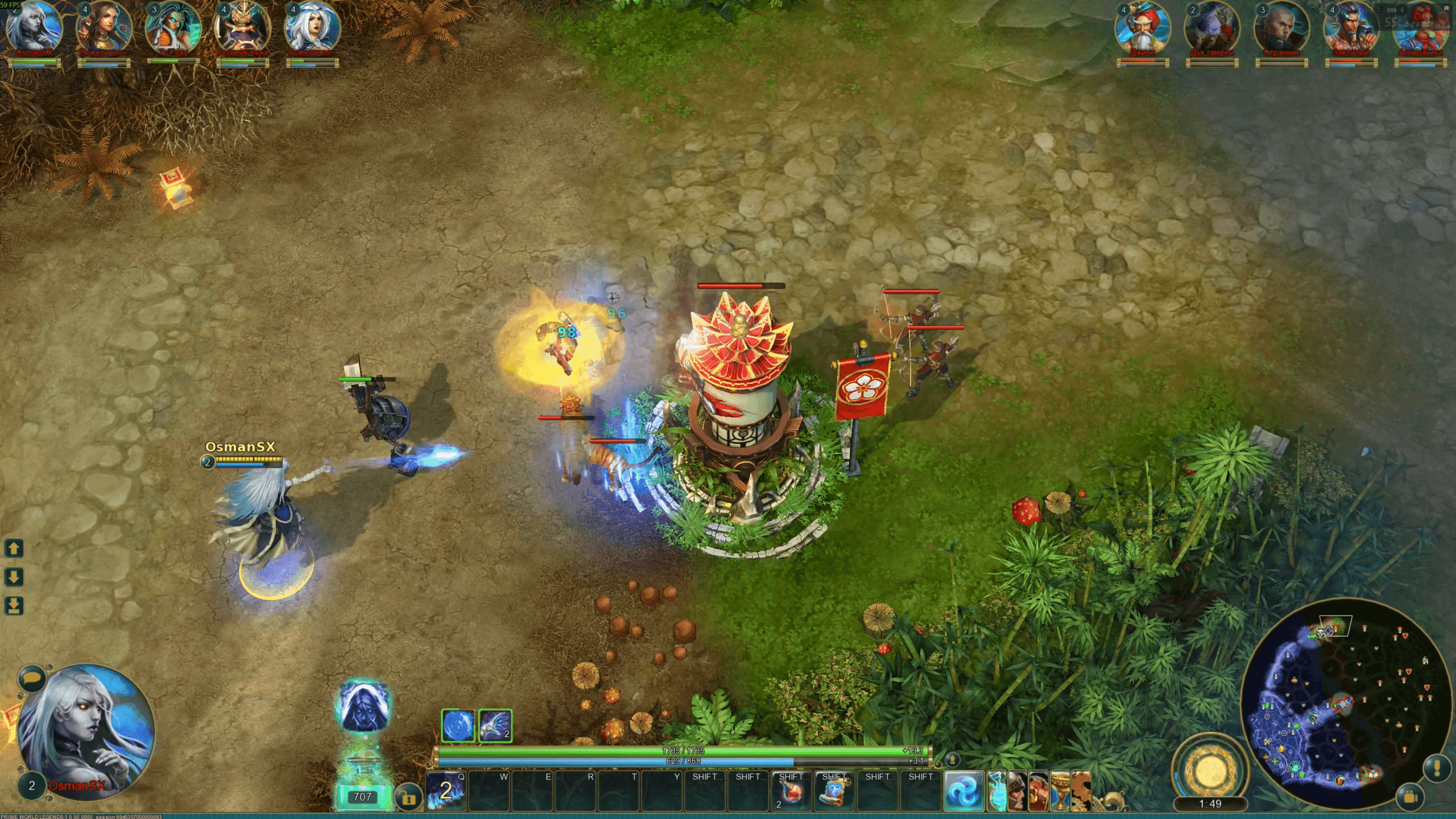
Prime World Legends is a non-commercial fan revival of Prime World, the 2014 MOBA-and-castle-management hybrid from Russian studio Nival, rebuilt by a volunteer team working as Avocado Gamelab under licence from Nival International Ltd. Its servers are live and actively patched, but its Steam release has now slipped three times and the store page currently carries no date at all. It is also not the only Prime World revival in circulation, which is where most of the confusion around this game begins.
There are two separate fan-run Prime World projects, they are not compatible, and choosing the wrong one costs you an evening. Prime World Legends is the Avocado Gamelab version, distributed through its own client at primeworld.top with a Steam page that has been sitting on "coming soon" since spring 2025. Prime World: Classic is the work of a team calling itself the Prime World: Classic Team, and it launched properly on Steam in late June 2025.
Both operate under the same permission from Nival, and both are barred from making money. Beyond that they have diverged. Classic keeps the original's Zuma minigame and the odd hero role that grew up around it; Legends deleted the minigame outright in May 2026. Classic ships 34 Steam achievements and a menu you can read in English; Legends supports Russian only. Classic's Steam reviews sit at mixed, with roughly half of nearly 400 reviews positive — a figure worth treating as a rough signal rather than a score, given how small the sample is and how much of it predates recent patching. Legends has no Steam reviews at all, because it has not released.
Accounts do not carry across. Neither do progress, heroes or clan membership. If a friend tells you Prime World is back and sends a download link, check which of the two you just installed before you spend a week building a castle on it.
Nival closed Prime World's servers on 31 March 2021, then three years later handed the code to the people who missed it. The original launched in 2014 after a long beta, built on the studio's in-house C++ engine, and told a fairly thin story about two nations — the Dokht Imperium and the Keepers of Adornia — fighting over prime, an alien substance that functions as both magic and industry. What kept people playing was never the lore.
In 2024, Nival co-founder Sergey Orlovsky put the game on GitHub under terms that permit community development and forbid commercial use. That release came with a limit that shapes both revivals: the published code covered the battle side, not the castle. The persistent base where players produce talents, recruit heroes and store resources was not part of the handover, so any team rebuilding a full Prime World has to reconstruct that half themselves. Nival's repository credits the Classic community for its documentation and bug fixing, which is a reasonable indication of who was doing the early work.
A standard match is a five-versus-five fight on Borderlands, a three-lane map that will look familiar to anyone who has played Dota 2 — until you notice the flags. Each lane holds five capture points, one at the river crossing and two more sheltered under each side's towers. Taking one converts the surrounding ground into your faction's native land, which strips the fog of war from that area and strengthens any talent whose description carries a native-land clause. Territory is not a side objective here; it is the currency the whole map runs on.
That system, terramorphing, is the single mechanic that most clearly separates Prime World from its competitors. Push a lane and the ground changes colour behind you, your abilities hit harder on it, and the enemy loses vision. Lose the lane and the effect reverses across the same tiles. It gives ground a memory, which is a strange thing to encounter in a genre where lanes are usually just corridors between towers.
The forest between the lanes is populated by chud — the game's neutral creeps — clustered in camps that reward prime for clearing them. Golden packs guarded by a woodwose drop glyphs, temporary buffs that survive the carrier's death: kill a glyph holder and the glyph drops at the corpse for either side to grab, though it burns out roughly three times faster in second-hand form. Hidden shops tucked into the jungle on each side sell items you cannot buy from the base. Matches in the original routinely ran forty minutes, and Legends has not made them dramatically shorter.
It is, and it remains the clearest argument for playing Prime World Legends instead of a bigger MOBA. Rather than buying items during the match, you assemble a build beforehand from talents — a mix of passives and actives that you slot into a hero's grid and then unlock row by row as the match progresses. A full build runs to 36 talents, class skills included — a figure the Classic project documents publicly, and one that carries over here because both revivals work from the same original game data. The same character can be rebuilt into something with a different job entirely between one match and the next.
The original ran hundreds of shared talents, upgradeable four times each by consuming other talents, plus up to nine hero-locked ones that could not be upgraded at all. That is a lot of collectible surface for a game with a three-lane map, and it is why Prime World attracted the sort of player who enjoys spreadsheet work between fights as much as the fights themselves.
Legends has softened one of the system's older frictions. Previously a talent row stayed locked until you had invested in the row above it, which meant your in-match choices were largely predetermined by the shape of the grid. That gate is gone for every tier except the fifth, where the strongest effects live. The result is more improvisation mid-match and, for veterans, a mild sense that a familiar puzzle has been loosened.
The castle is the reason Prime World was never quite a MOBA, and it is also the part neither revival inherited. Between matches you sit in a top-down base building production structures, recruiting heroes with silver, running quests and manufacturing the talents you will later take into battle. It behaves like a browser strategy game bolted to the side of an arena shooter, and in 2014 that combination was genuinely unusual.
Because Nival's code release stopped at the battle layer, everything in that base is reconstruction work rather than restored original. That has two practical consequences. Progression pacing in either revival reflects choices made by volunteers in the 2020s rather than Nival's original tuning, and the castle is where the two projects have the most room to drift apart over time. Anyone returning after a five-year gap should expect the numbers to feel adjacent to memory rather than identical to it.
In May 2026 Legends shipped the first significant Borderlands rework in over ten years, an update the team named Погранwald. Lane roles were redistributed, new areas were added along the map's edges, and the terrain itself was adjusted. Extra chud camps now sit on the lanes, marked with gold indicators, and the first wave of soldiers raises capture flags on its own rather than waiting for a hero to do it.
The combat maths moved too. Damage from monsters and the environment is now calculated from the gap between a character's defensive stats and the attacking object's power, and defensive towers deal fixed damage to soldiers and summoned creatures, which makes holding ground under a tower a viable plan for the length of a match rather than only early on. Neutral bosses were reworked for pace as well, among them Zmey Gorynych, Kot Bayun and the castle ghosts.
The most contentious change is the removal of Zuma. The original bolted a tile-matching minigame into the match itself, and a whole hero archetype existed around it: weak early characters would go and play Zuma to catch up on scrolls, then re-emerge dangerous in the mid-game. Legends cut it and moved scroll acquisition to chud shops and neutral kills. Newcomers will never miss it. Veterans lose a role they spent years defending in forum arguments, and Classic still has it, which gives returning players a real reason to compare the two.
Queue times got attention as well. Players can now search several formats at once — 5v5 and 4v4 on the reworked map, plus faster 3v3, 2v2 and 1v1 skirmishes — with the system dropping them into whichever lobby fills first. That is a sensible answer to the problem every small MOBA has, and an implicit admission of the problem.
There is nothing to buy. Nival's licence prohibits commercial use of the project and any form of in-game purchase, so every hero, skin and talent is earned in-game with no storefront attached. For a game whose original decline is widely attributed by its own community to monetization pressure creeping into the balance, that is not a small detail — it removes the mechanism that soured the game the first time.
The trade-off is structural. A project with no revenue is a project running on volunteer time and donated infrastructure, and volunteer time is the least predictable resource in games. Three missed release windows in fifteen months is not evidence of bad faith — the team publicly delayed the August 2025 date to bundle the launch with a larger update — but it is evidence of a schedule set by people with day jobs. Anyone weighing whether to invest months in a castle should factor that in honestly.
Not comfortably. The client supports Russian only, with the Steam page explicitly flagging English as unsupported, and requests for an English build have been sitting in the game's discussion forum since 2025 without a stated timeline. Prime World: Classic, by contrast, lists an English interface alongside Russian.
That matters more here than it would in most MOBAs, because Prime World's depth lives in text. The talent system is the game, and talents are paragraphs of conditional effects — native-land bonuses, stacking rules, upgrade interactions. Playing without reading them reduces a build-craft game to clicking on a minimap. Community wikis and guides exist in English, largely inherited from the original's lifespan, but working from a wiki while the client speaks a language you don't is a poor substitute for a menu.
Population is harder to pin down. With no Steam release there is no public concurrent-player chart for Legends, and the project's own statistics page is the only counter available; the daily double-rewards event the team runs in the evening on Moscow time suggests the schedule is built around a Russian-speaking audience concentrated in a few peak hours. Treat any specific number you see quoted for this game with suspicion, including on the project's own channels.
Prime World Legends is the more ambitious of the two revivals and the harder one to actually recommend. The Погранwald update is the kind of work a studio does when it intends to keep a game alive for years rather than preserve it in amber — reworking a decade-old map, rewriting damage formulas, cutting a beloved-but-awkward minigame because it no longer earns its place. That is a design team with opinions, not a preservation society, and it is the more interesting of the two projects to follow.
It is also the one you probably cannot read. For an English-speaking player in August 2026, the ambitious revival is locked behind a language wall while the less ambitious one has an English menu, a Steam page that works, and a release date in the past. That is an uncomfortable thing to write about a project doing the more thoughtful work, but it is the situation. Prime World Legends is worth watching, worth wishlisting, and worth installing the moment either an English build or a Steam launch actually arrives — and until one of those happens, recommending it to anyone who doesn't read Russian would be a favour to the developers rather than to the reader.
No. They are separate fan projects run by different teams under the same non-commercial licence from Nival. Legends is developed by Avocado Gamelab and is not yet on Steam; Classic released on Steam in June 2025. Accounts and progress do not transfer between them.
Yes, and it has no purchases of any kind. Nival's licence forbids commercial use and in-game transactions, so everything is earned through play.
No date is currently listed. The team has announced and missed May 2025, August 2025 and June 2026; as of August 2026 the store page shows "coming soon" with a playtest instead of a launch.
Not currently. The client supports Russian only and the Steam page marks English as unsupported. Players who need an English interface should look at Prime World: Classic instead.
No. The listed minimum is a 2 GHz Core 2 Duo, 2 GB of RAM and a GeForce 8600 GT with 128 MB of VRAM, with 3 GB of disk space — figures inherited from a game built in the early 2010s.