 F2P · Live
Lineage 2
Aden's castles never stay in the same hands for long, and Lineage II has built an entire twenty-three-year…
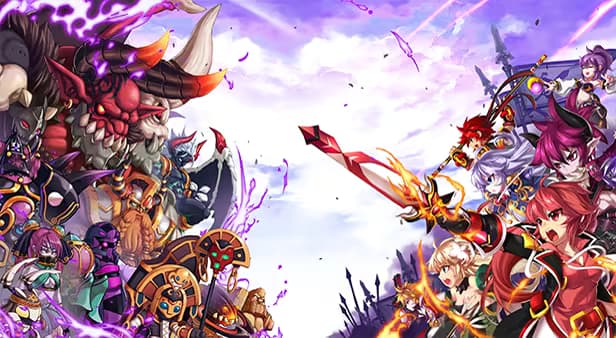
A cult-classic 2D side-scrolling action MMORPG and arcade beat 'em up featuring a rich roster of 24 unique playable heroes. The game seamlessly blends high-speed combo juggles, invincibility frames, a...
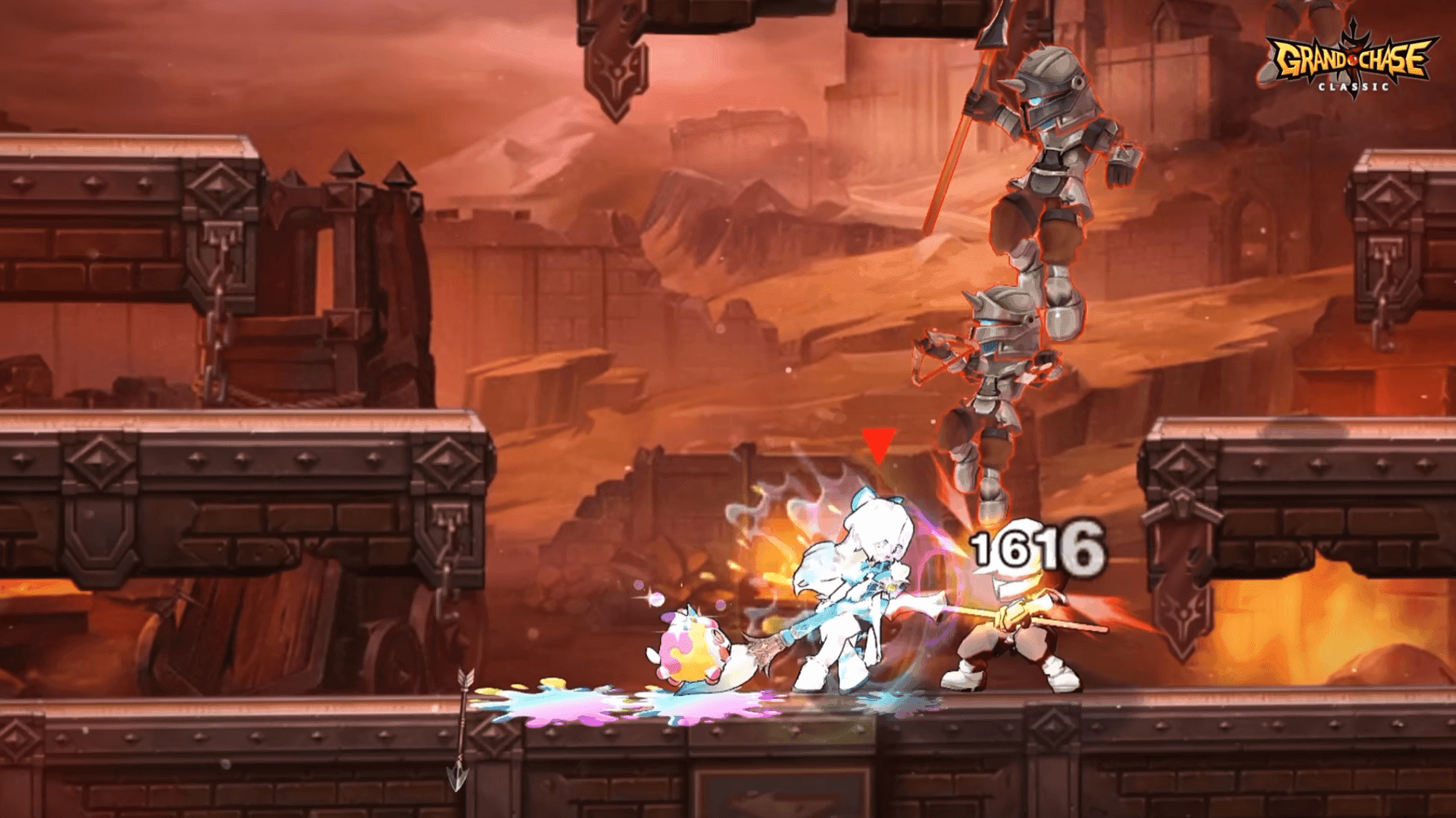
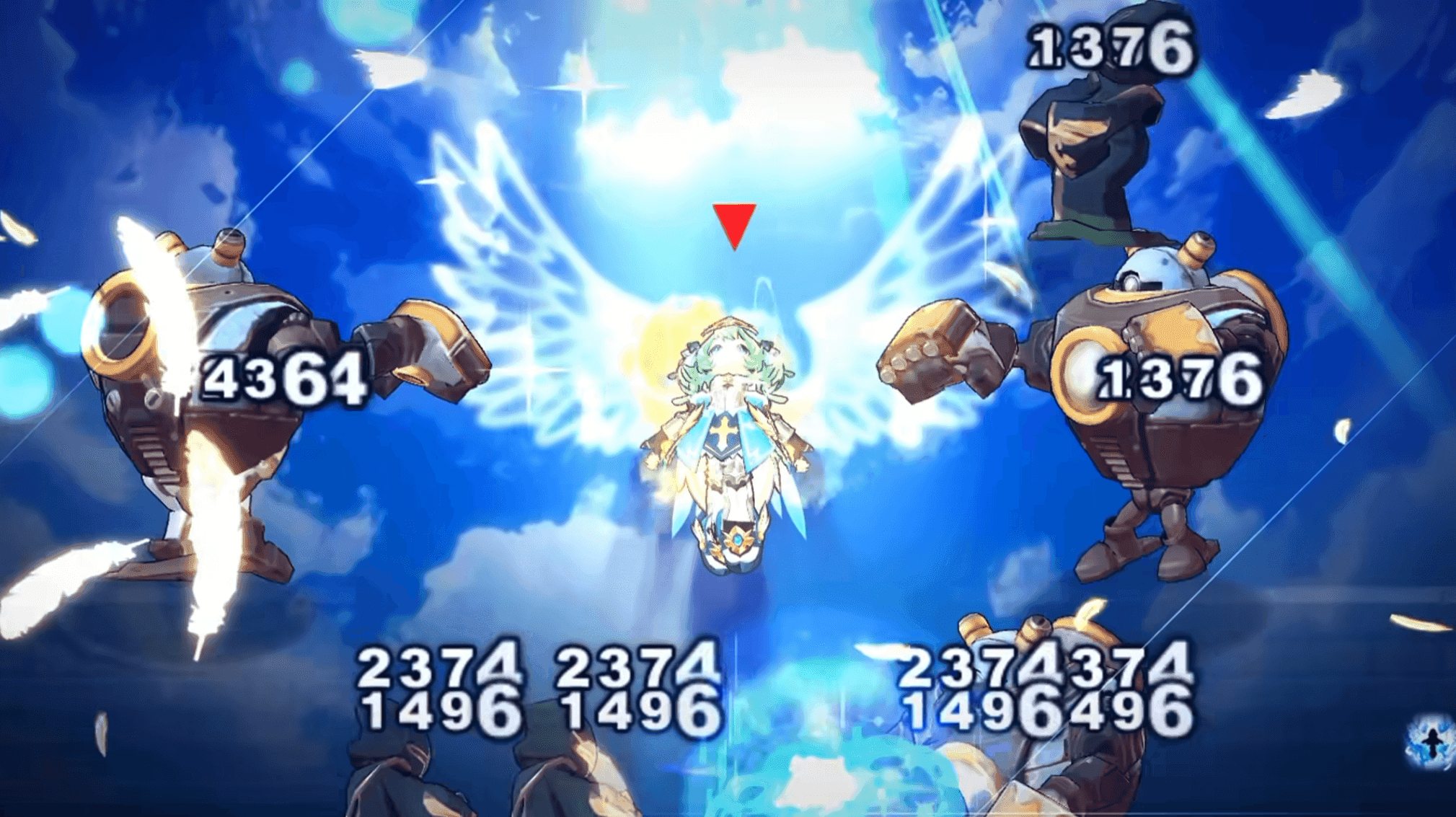
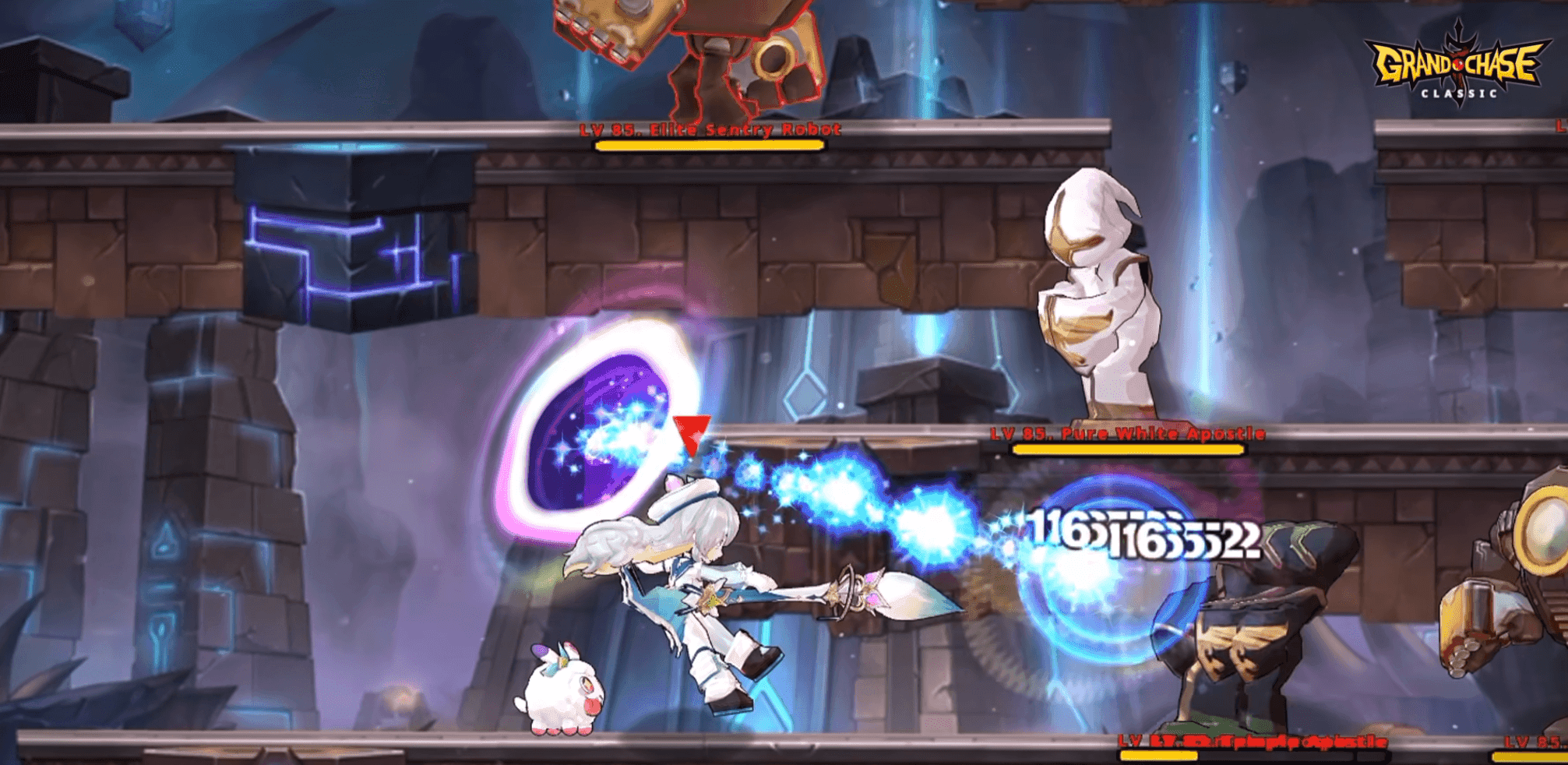
Quick take: High-octane 2D platforming, fighting-game combo depth, and an expansive 24-character champion roster turn this revived classic from KOG Studios into an uncompromising speedrun action experience. Distributed as Free-to-Play on Steam, the game embraces old-school corridor grinding with a self-contained solo economy, challenging dedicated raiders to breach endgame hurdles on the hunt for the elusive one-million combat power benchmark.
Long before the multiplayer industry became dominated by sprawling open-world sandboxes and leisurely life-skill simulations, South Korean developer KOG Studios proved in August 2003 that captivating an online generation required little more than a 2D plane, responsive aerial mobility, and frame-tight arcade combat. Launching at the dawn of high-speed broadband adoption, GrandChase evolved into an authentic cultural phenomenon across East Asia and Latin America. In Brazil, the title reigned supreme as the nation's premier online game for nearly a decade, drawing hundreds of thousands of concurrent players. When official service shuttered in December 2015, the passionate player base refused to let the flame die, keeping the game alive across private servers for six long years. In July 2021, KOG executed an ambitious return to the PC arena, relaunching the title on Steam under the banner of GrandChase Classic. The resulting wave of nostalgic enthusiasm exceeded industry expectations: veteran players flooded the servers, driving peak concurrent counts past 80 000 players during opening week. Nostalgia hit full force. While the initial relaunch suffered rocky monetization decisions and server instability, decisive developer pivots — including unlocking all characters for free and re-engineering the endgame loop — stabilized the experience. Today, the title maintains a loyal player base fluctuating between 2 000 and 3 500 concurrent users, heavily concentrated on the South American and East Asian regional clusters. In an era where mainstream MMOs continually streamline mechanics toward passive convenience, GrandChase stands as a rare bastion of hardcore side-scrolling action, sharing the genre space alongside titans like Dungeon Fighter Online and its spiritual sibling Elsword.
Core arcade philosophy: the game makes no pretense of being a slow cinematic epic. This is pure speedrun adrenaline, where party survival hinges on muscle memory, frame knowledge, and lightning-fast reads within compressed two-dimensional corridors.
The longevity of the project rests upon three enduring gameplay pillars that keep fans devoted despite an aging engine:
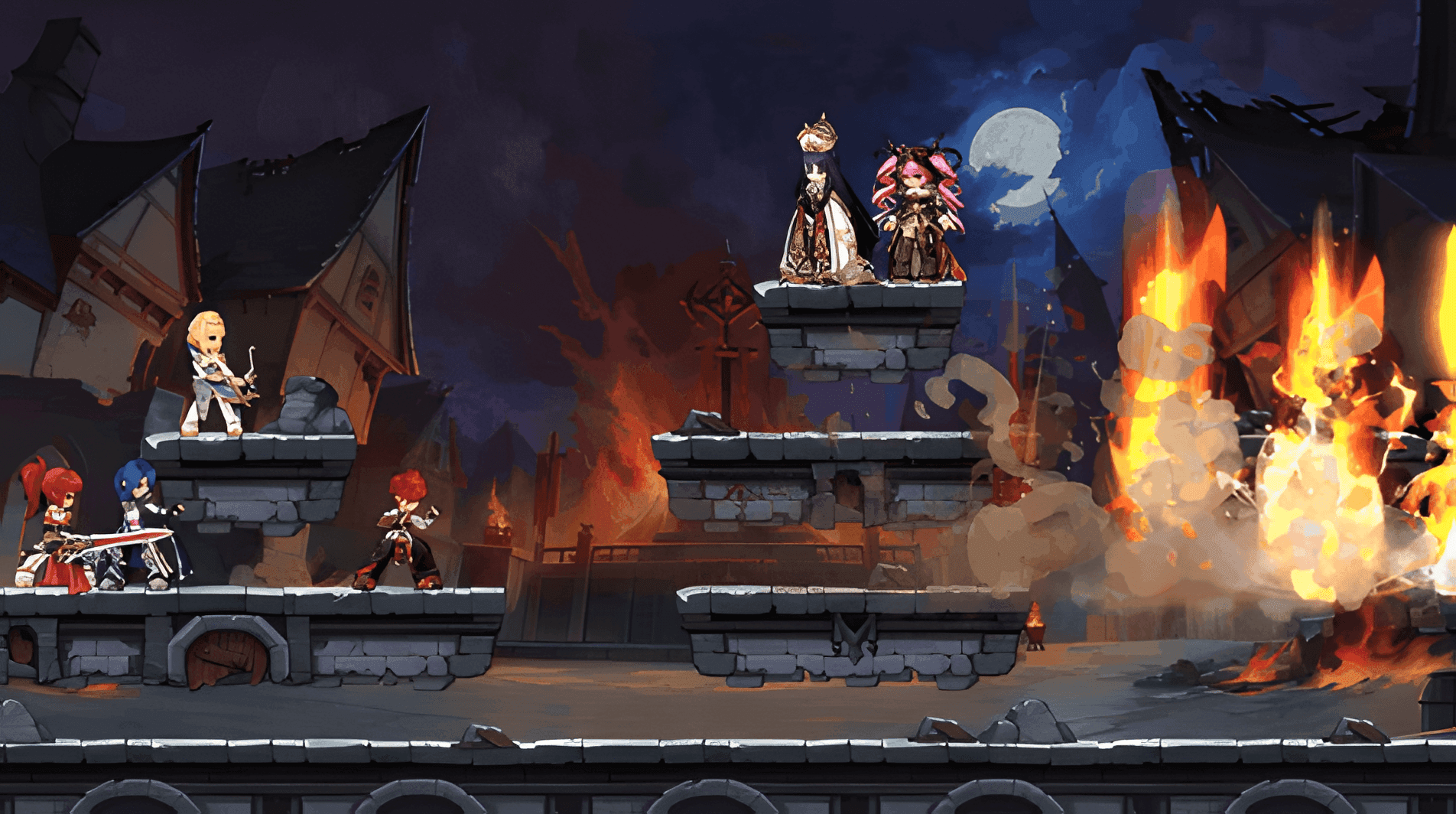
60 FPS during chaotic boss encounters.## Combat in Two Dimensions: Combo Dynamics, i-Frames, and Fighting Mechanics For players accustomed to tab-targeting hotbar rotations in traditional MMORPGs, the foundational mechanics of GrandChase offer an immediate, kinetic wake-up call. The combat framework is constructed strictly upon the principles of vintage arcade beat ’em ups and tournament fighting games: a two-dimensional battle plane, rigid hitbox interactions, animation cancellations, and relentless checks on reaction speed. A single primary attack button, Z, paired with directional arrows ↑, ↓, ←, and →, unlocks a branching tree of maneuvers — from rapid dashes and low sweeps to vertical launcher uppercuts. Positional mobility dictates every engagement. Combatants do not simply run along horizontal floors; they actively navigate multi-tiered scaffolding and vertical platforms. Dropping instantly through ledges via ↓ + Space, executing mid-air recovery dashes, delivering descending strikes, and immediately initiating ground pickups (OTG mechanics, or On-The-Ground) represent second-nature motor reflexes for experienced players. Opponents launched into the air become targets for sustained aerial juggles (juggling), where synchronized party strikes prevent monsters from touching the floor before their health pools dissolve completely.
The golden rule of survival: in high-tier dungeons, boss attacks inflict lethal damage. A raider's ultimate shield is not passive armor, but invincibility frames (i-frames) baked directly into skill casting animations. Timing a special ability to absorb an incoming screen-wide wipe is an essential raiding fundamental.
The secondary defensive pillar is the game's iconic combo-breaking tool — Mana Break (frequently referred to as Counter). When caught inside a devastating multi-hit juggle or trapped against a corner hazard, holding down the Z key initiates an emergency gauge fill. Once the gauge crosses the break threshold, the character forcibly drops to the ground with brief invulnerability, shattering the enemy combo at the expense of accumulated resources. In competitive PvP and unforgiving boss fights, this mechanic provides a crucial second chance. Furthermore, the character roster splits across three distinct resource philosophies:
The true catch behind this apparent arcade simplicity manifests near the level cap. While introductory story dungeons crumble beneath mindless button mashing, endgame raid encounters feature super-armor bosses immune to knockback that unleash sudden one-shot mechanics. Speed defines survival. A tenth-of-a-second miscalculation on skill recovery animation sends raiders straight to the respawn screen, providing an uncompromising reminder of the game's arcade origins. ## The Pantheon of Bermesiah: 24 Champions and Job Advancements While traditional MMORPGs ask players to sculpt a faceless avatar through a single rigid class tree, GrandChase adheres to the philosophy of a character-driven fighting game. There is no cosmetic character creator: in its place, players command an expansive roster of 24 distinct heroes. Each champion carries individual narrative lore, bespoke voice acting, specialized animations, and a completely segregated combat engine. The roster's evolution encapsulates twenty years of live-service history. The journey begins with the canonical trio: knight commander Elesis, elven archer Lire, and royal mage Arme. Progressing through the campaign unites players with iconic veterans from the golden era — demon assassin Lass, druidic shapeshifter Ryan, spell knight Ronan, idol performer Amy, martial artist Jin, disciple Asin, immortal gladiator Sieghart, and ancient technomancer Mari. Demonic rulers and dimensional wanderers like rapier duelist Edel and entropy lord Veigas soon follow, culminating in the newest additions of the Classic era — dark vessel Decanee, cybernetic sniper Ai, aerial valkyrie Kallia, and blood-forged swordsman Uno. The defining mechanical brilliance of classic characters lies in their four-tier career progression — the Job Advancement system (Job Advancement). Rather than simply conferring passive stat boosts, advancing a job fundamentally transforms how the character operates in combat:
The horizontal roster mandate: the game strongly discourages main-only purism. Through the Hero Collection system, leveling secondary characters injects permanent, account-wide stat bonuses across total attack, critical damage, and resource recovery. A thriving stable of leveled alts directly fuels the combat power of your primary fighter.
For champions surpassing level 85, developers introduced the comprehensive Awakening framework (Awakening) and its high-tier continuation, Awakening Expansion - Unleashed. Reaching Level 90 unlocks rigorous trial missions where players expend Stone of Liberation and Stone of Transformation reagents to unlock fourth-bar mana skills (MP4). These ultimate abilities deliver immense cinematic multipliers, while customizable awakening cores permanently anchor critical rate, minimize skill cooldowns, and infuse basic strings with lingering elemental procs. The result is remarkable mechanical depth: initiating play as a single character inevitably blossoms into commanding a fully realized tactical squad, where every hero demands distinct motor rhythms, weapon swaps, and dedicated gear optimization. ## World of Continents and Corridors: Dungeon Architecture and Campaign Pacing In modern MMO design, open-world landscapes frequently devolve into vast, barren expanses filled with monotonous travel between quest waypoints. GrandChase decisively rejects that convention. There is no seamless continuous world in the contemporary sense: the architectural foundation draws inspiration from early console action titles on PlayStation and arcade coin-op machines. The entire realm is presented through an interactive world map divided into thematic continents, where engagement unfolds through session lobbies accommodating one to four players. The overarching geography guides raiders through a steadily escalating continental conflict:
Dungeon progression unfolds as a linear succession of interconnected chambers linked by dimensional portals. Movement occurs strictly across horizontal planes: upon clearing enemy packs from left to right, players leap over spike chasms, navigate crushing pistons, and scale ropes toward the exit. Every run culminates in an climactic confrontation against a zone boss packing multi-phase patterns and arena-wide firestorms. Seasoned veterans can trigger Champion Mode (Champion Mode), infusing chambers with elite mini-bosses bearing randomized invulnerability and damage-reflection shields.
Speedrun doctrine: standard story instances take between two and five minutes to clear. Each chamber functions as a compact combat puzzle, where coordinated parties immediately pull mob packs together with vacuum skills to vaporize them in concentrated crossfire without breaking stride.
Narrative storytelling is delivered through illustrated visual novel sequences: vibrant 2D character portraits, animated dialogue boxes, and emotionally charged voice exchanges. What begins as a vengeful pursuit of Kaze'aze, who engineered war between rival kingdoms, gradually expands into a cosmic struggle against ancient gods and the unraveling of reality by primordial Chaos. Crucially, modern campaign progression in GrandChase Classic moves at breakneck velocity. The grueling, multi-month leveling curve of the original game has been thoroughly eliminated. Progression never stalls. Today, raiders surge from Level 1 to 85 over the course of two or three evening sessions. The entire narrative journey has effectively transformed into an exhilarating interactive tutorial — a stylish training montage that familiarizes players with global lore and hero mechanics before plunging them into the unforgiving crucible of the endgame. ## The Apex of Power: Chaser Level, Reinforcement, and Total Attack The moment a character reaches the nominal level cap, developer KOG strips away the welcoming veneer of a casual arcade brawler, revealing a mathematically ruthless Korean grind engine beneath. In the endgame, the nominal rank of champions such as Elesis or Lass ceases to matter: the sole metric of status, tactical viability, and raid eligibility becomes an all-encompassing combat power score — Total Attack (TA). The game's underlying math dictates every build decision. Numbers tell no lies. Raw attack power provides only modest baseline growth. The true exponential surges in output are driven entirely by multiplicative stat layers: critical strike probability (Critical Strike Chance), critical multiplier scaling (Critical Strike Damage), and direct percentage amplification for abilities (Special Attack). Hardcore players painstakingly tune every fraction of a percent to breach the psychological benchmark of 1kk TA (one million combat power). Without this credential, finding parties in high-tier lobbies across Archimedia risks turning into an agonizing cycle of immediate lobby kicks. Endgame character scaling rests upon four interconnected progression pillars:
999 levels. Earned points invest across an account-wide passive tree, boosting ability damage, shaving cooldown timers, bypassing boss defenses, and accelerating gold generation.+15 to +17 triggers punishing RNG: failed attempts degrade enhancement levels or shatter equipment entirely without premium protection scrolls.Stat optimization mandate: distributing attributes evenly across broad metrics is a fatal error in GrandChase. The reigning meta demands extreme hyper-specialization: first achieve a 100% critical strike rate and elevate critical damage beyond 700%, and only then funnel remaining resources into special attack scaling and mana recovery velocity.
The inherent trap of this architecture is its cyclical nature. Farm-clearing the most demanding raid chambers demands optimized gear, yet obtaining that gear requires running those exact encounters hundreds of times. For players willing to master this mathematical labyrinth of percentage rolls and enhancement stones, the gameplay payoff is immense: a fully realized endgame champion obliterates entire room waves in seconds, transforming the monitor into a nonstop barrage of yellow critical strikes. ## Endgame Gauntlets: Berkas' Lair, Tower of Disappearance, and Harrier Dimension The authentic lifeblood of GrandChase truly ignites where campaign cutscenes and dialogue sequences draw to a close. While introductory leveling feels like an accessible arcade jaunt, high-level progression engineered by KOG transforms into an uncompromising raiding examination. Here, the experience is dominated by Hero Dungeons (Hero Dungeons), relentless clear timers, and screen-filling monstrosities designed to punish the slightest party desynchronization. The primary gateway to early endgame gear is the renowned dragon confrontation — Berkas' Lair. This six-player cooperative raid pits heroes against an armored draconic behemoth across a multi-tiered platform arena. Success hinges on precise role delegation: while primary damage dealers dodge sweeping tail whips and volcanic breath cones, designated teammates must man siege ballistas, power restraint generators, and stagger the dragon out of mid-air flight phases. Greed invites instant doom. Triumphant clears yield foundational materials to forge the gold-standard relic tier — True Iron Dragon armor and weapons. Immediately following lies the Tower of Disappearance, a vertical time-attack ascent where floor timers relentlessly tick down. Guarding the summit is the shadow knight Kaziel, who blankets the arena in waves of dark energy. Conquering this spire provides raiders with dimensional earrings and piercings, unlocking crucial accessory sockets essential for scaling combat power.
The corruption barrier: crossing into the distorted dimension of Harrier exposes raiders to the crippling environmental debuff known as Taint. Without dedicated resistance stats (Harrier Resistance), a character's damage output is slashed by up to 90%, transforming standard corridor mobs into immovable damage sponges.
To survive within the Harrier dimension and breach the outer perimeter of late-endgame challenges, players must conquer a demanding weekly circuit:
The defining challenge of this endgame structure is rigorous timegating. Nearly every premier raid tier enforces strict daily or weekly entry quotas. Missing a scheduled dragon raid or weekly tower clear falls behind the communal progression curve by weeks, cementing the game as a committed daily ritual for dedicated raiders. ## The Gladiator Arenas: PvP Community, Balance, and Delay Mechanics While modern audiences perceive GrandChase predominantly as a cooperative PvE dungeon crawler, the franchise originally earned global acclaim through intense competitive player-versus-player duels. During the mid-2000s, competitive arenas stood shoulder-to-shoulder with tournament fighting games. In GrandChase Classic, this competitive heartbeat remains alive, cultivated as a specialized discipline by a committed community of tournament veterans. The competitive arena offers several distinct battle formats:
Competitive duel physics differ drastically from casual button inputs. The central mechanical phenomenon is animation pause (Screen Freeze). When a combatant initiates a special ability, the entire game environment freezes for a fraction of a second to render the startup frame. Master duelists exploit this freeze as a tactical instrument: triggering an ability on reaction to intercept an airborne foe, sidestepping incoming bursts via invulnerability phases, or interrupting opposing skill windows.
The psychological edge: victory hinges on exploiting opponent mistakes. One slip means defeat. Baited reactions that force an opponent to expend resources on a premature Counter, catching their landing recovery frames, and executing a frame-tight wall juggle define the boundary between novice and master.
Nevertheless, competitive PvP faces clear balance hurdles. Across 24 champions and dozens of specialized job advancements, absolute competitive equilibrium is practically impossible. Foundational heroes like swordsman Elesis or archer Lire must commit seconds to manually charge energy via Z, whereas advanced champions like gunslinger Rufus, demonic noble Dio, or aerial striker Kallia command instantaneous hotkey cooldowns, swift gap closers, and debilitating status effects. Furthermore, the game lacks a modern automated matchmaking system with ranked seasonal ladders. Competitive activity thrives entirely inside custom player lobbies. In gear-enabled rooms (Stats On), raiders sporting refined True Iron Dragon sets dominate through overwhelming raw numbers. Conversely, tournament purists gather in normalized lobbies (Stats Off), where gear disparity is stripped away entirely, leaving match outcomes to pure mechanical dexterity, spatial spacing, and millisecond frame timing. ## The Economy of Grind: Property Rolling, GP Farms, and Crafting The financial architecture of GrandChase frequently surprises veterans of traditional MMORPGs. There are no bustling merchant plazas, overcrowded auction houses, or cross-continental player trade caravans. Developer KOG deliberately constructed a strictly isolated, self-contained economy where direct item trading between accounts on Steam is entirely blocked. The monetary engine operates across two primary currencies:
Crafting bypasses the conventional tedium of tradeskill leveling: there are no artisan ranks for blacksmithing or alchemy. All item fabrication is centralized within the forge interface (Forge). Armed with required recipes and boss fragments claimed from raid encounters like draconic overlord Berkas, shadow knight Kaziel, or celestial god Harkion, players directly craft top-tier True Iron Dragon armor and prestigious Void Gear sets alongside runes and enhancement materials. However, the primary sink for gold and temporal investment in the endgame is not raw fabrication, but perfecting item attributes. Every relic-grade equipment piece bears four randomized substat slots. Transforming an item into an instrument of peak combat power demands specialized property alteration scrolls — the targeted Single Property Scroll alongside gold-purchasable GP Prop Scroll bundles.
The toll of perfection: assembling an ideal raiding set requires locking in four optimal substats on every armor piece: critical strike rate, critical damage, ability scaling (Special Attack), and energy regeneration speed (MP Recovery). RNG respects no pedigree. Sinking tens of millions of GP and dozens of specialized scrolls to roll that final missing stat line represents the universal endgame drama.
This closed economic philosophy exhibits two opposing extremes. On one hand, the complete absence of open trading permanently eliminates gold-selling spammers, real-money trading syndicates, and market manipulation by guild cartels. On the other hand, progression transforms into an uncompromising solo marathon: raiders cannot buy carry services, purchase completed sets, or trade spare drops with friends. Every percent of combat power is earned solely through personal perseverance and dedication. ## Monetization Under KOG: Seal Breaker Gacha, Coordi Stats, and the P2W Factor When dealing with early 2000s Korean free-to-play revivals, financial design is always an immediate red flag. In the tumultuous history of GrandChase, aggressive monetization repeatedly ignited community rebellions. The disastrous 2021 reboot on Steam almost doomed the launch within its first week: developer KOG attempted to charge real money for character unlock slots and locked classic heroes behind predatory paywalls. Player outrage was swift and brutal. Facing overwhelmingly negative reviews, the studio retreated, overhauling the cash shop into its current, far more tolerable form. Today, all 24 roster champions are completely unlocked and playable for free from day one. Paywalls did not vanish entirely, however; they shifted into progression accelerators and high-end cosmetic lotteries:
The F2P vs. P2W Reality: Can a purely free-to-play fighter reach the coveted
1kk TAceiling? Yes. The game injects generous quantities of free VP through leveling rewards, daily logins, and seasonal celebrations. The difference is time. A paying player buys this milestone in two weeks, while a free-to-play gladiator must grind methodically for four to six months.
The psychological hook relies on competitive friction. Equipping a full premium Coordi wardrobe alongside a top-tier Seal Breaker pet immediately grants an astronomical leap in burst damage and resource sustainability. Early progression feels effortless for paying accounts, leaving unassisted newcomers to wrestle with raw execution. Yet by modern Asian live-service standards, KOG maintains reasonable restraint. No story chapters, raid dungeons, or dimensional corridors are gated behind hard toll gates. Everything from the Tower of Disappearance to the hostile depths of Harrier remains entirely conquerable through grit and daily persistence. In GrandChase Classic, money buys velocity, not invincibility. Cash cannot parry. ## Technical Infrastructure, Network Netcode, and the 2026 Verdict Underneath the colorful anime exterior, GrandChase Classic stands as a living fossil from the golden age of PC internet cafes. The game runs on developer KOG's proprietary two-dimensional rendering pipeline built around legacy DirectX 9.0. For modern players, this architectural foundation brings both remarkable hardware leniency and eccentric engineering compromises born twenty years ago. Hardware barrier to entry is essentially zero. The entire game occupies a humble 20 GB of storage, requires no mandatory solid-state drive, and runs effortlessly on low-spec office notebooks powered by integrated graphics like an Intel Core i3 paired with four gigabytes of RAM. Sprite animations and background rendering are strictly locked at a fluid 60 FPS, preserving microsecond-precise input registration for combo execution. Native gamepad support allows players to replicate an authentic console beat ’em up setup straight out of the box. Yet that vintage architecture exacts a noticeable toll on online matchmaking. Cooperative dungeons and PvP operate over a classic P2P (Peer-to-Peer) protocol, designating one party member as the session host:
Final Verdict: GrandChase Classic is an unapologetic retro delicacy. It never tries to compete with modern graphical titans or sprawling open-world simulators. Its power lies in pure, kinetic beat ’em up momentum, where every execution window delivers visceral tactile satisfaction.
Who belongs in Bermesiah in 2026?
Pure arcade adrenaline. Through studio shutdowns, generational shifts, and corporate mismanagement, GrandChase survived on pure mechanical brilliance and fan devotion. Two decades later, its blades remain razor sharp.