 F2P · Live
Lineage 2
Aden's castles never stay in the same hands for long, and Lineage II has built an entire twenty-three-year…
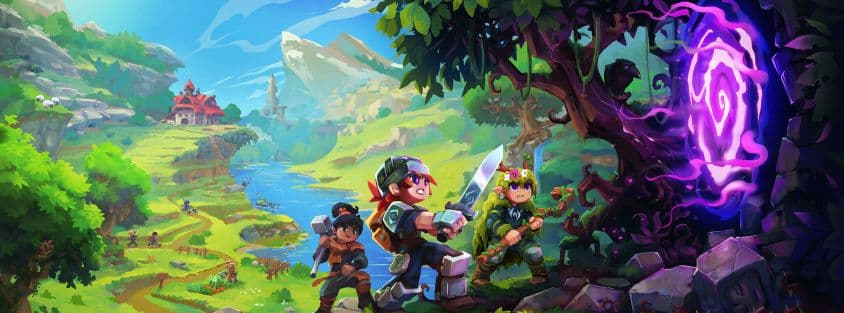
Hytale was canceled in June 2025 after Riot Games shut down developer Hypixel Studios, ending a ten-year project that had built one of gaming's biggest cult followings sight unseen. Original founder S...
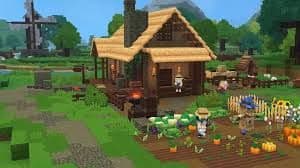
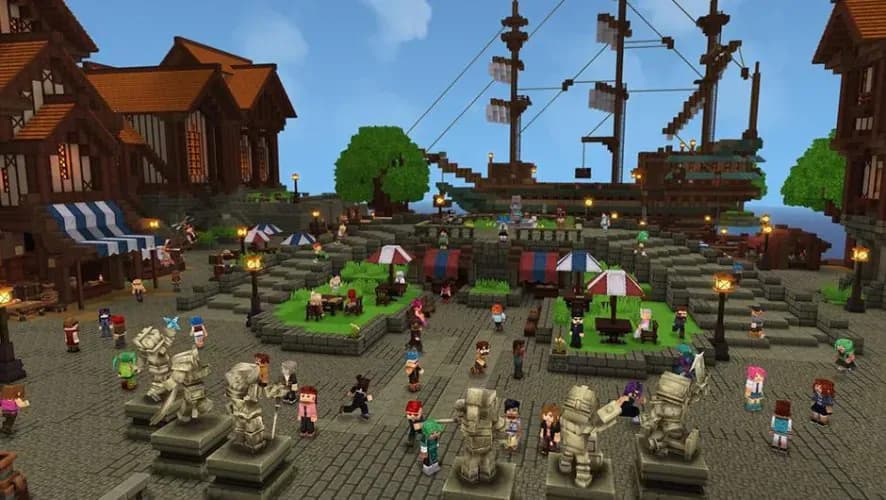
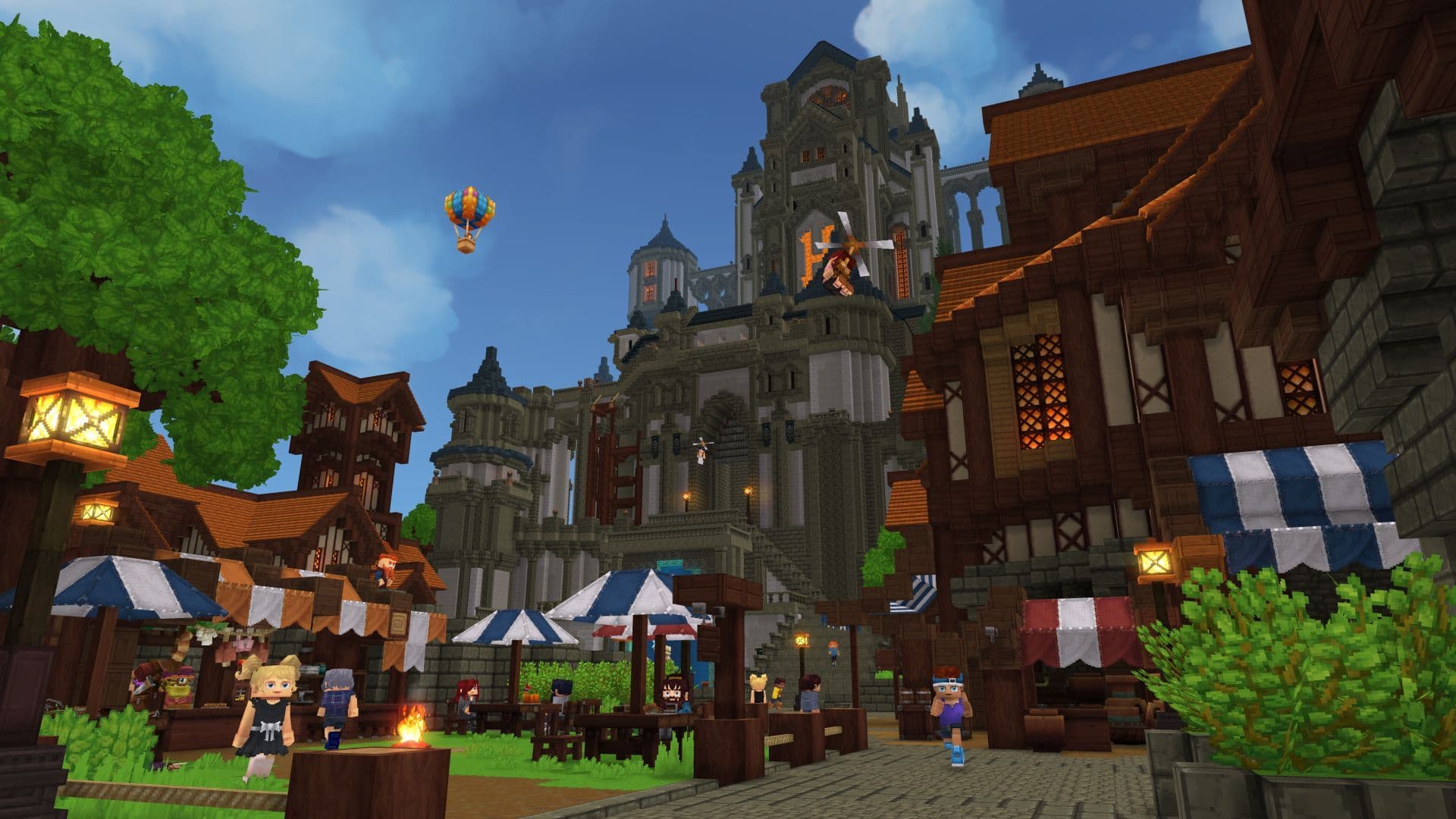
Hytale is a voxel-based sandbox RPG from Hypixel Studios, the Canadian team best known for building one of Minecraft's largest community servers before turning that reputation into a game of its own. It entered Early Access on January 13, 2026, for $19.99 through its own launcher on Windows, macOS, and Linux, ending a decade of development that included a full acquisition by Riot Games, a cancellation, and a founder-led buyback that most studios never get the chance to attempt. This Hytale review covers what actually shipped, what the game's own troubled history explains about it, and whether it's worth the price of entry right now.
Hytale's setting is Orbis, a procedurally generated world currently split into four zones, each pairing a distinct biome with a distinct difficulty tier. Zone 1, the Emerald Wilds, is lush forest and rolling hills populated by the Kweebecs — small, tree-dwelling critters who serve as the game's friendliest introduction to a world that gets considerably less friendly the farther you wander. Zone 2, the Howling Sands, swaps grass for dunes and low-level threats for Thorium-bearing enemies that demand better gear before you engage them. The two zones beyond that push into ruined, gothic structures and finally a frozen, volcanic-scarred badland — community naming for these later areas has shifted between builds, which is itself a small sign of how much is still moving under the hood.
None of this reads as a story-driven world yet, and that's by design at this stage. Hypixel Studios has been explicit that Adventure Mode — the layer meant to carry quests, NPC storylines, and a narrative through-line — hasn't shipped. What exists today is Exploration Mode: four zones, their creatures, and the crafting ladder built around surviving them, plus a separate Creative Mode for players who came for the building tools rather than the fights.
Understanding what Hytale is in 2026 means understanding how it almost never arrived at all. Hypixel Studios began work on the game in 2015, building on the reputation the team had earned running one of Minecraft's most popular custom servers. The 2018 reveal trailer generated the kind of hype few indie sandbox games ever see, and an initial 2021 release window followed — a target the studio missed repeatedly as the project's ambitions grew.
In 2020, Riot Games acquired Hypixel Studios outright and funded the next phase of development. That backing came with resources most sandbox studios never touch, and it also came with years of silence punctuated by delay after delay. The arrangement ended abruptly in June 2025: Riot canceled Hytale, with internal overambition cited as a central reason the project never converged on a shippable version. For a game with this much built-up anticipation, cancellation looked like the end of the story.
It wasn't. In November 2025, founder Simon Collins-Laflamme repurchased Hytale from Riot outright, on one significant condition — the roughly four years of development work done under Riot's ownership had to be discarded entirely. The build that launched into Early Access on January 13, 2026, is therefore closer to an older, pre-Riot version of the game brought forward and modernized than it is a continuation of whatever Riot's team had been building. Collins-Laflamme has since committed personal funding through at least 2036, an unusually long runway that explains why the studio talks about Early Access lasting years rather than months.
A new character drops into the Emerald Wilds with nothing and picks up the same basics familiar to anyone who's played a block-based survival game — gather wood, craft simple tools, put up walls before nightfall. What separates Hytale from that template shows up the moment you actually move. Momentum carries through jumps and slides, mantling lets you scramble up ledges Minecraft would have made you build stairs for, and the traversal alone has led early players to describe the older genre standard-bearer as noticeably stiffer by comparison.
Combat asks more of the player than block-game combat usually does. Weapon choice actually changes how a fight plays out: daggers reward fast, evasive aggression, battleaxes stagger enemies who get greedy, and shields open counter-attack windows if you time a block correctly. Archery and magic exist too, though multiple hands-on accounts describe both as noticeably less polished than melee — functional, but clearly earlier in their development cycle. There's no class-select screen anywhere in this system; what you're carrying and how you use it defines your role far more than any character sheet does.
Progression runs on gear tiers tied to zone difficulty, supplemented by the Memory System, which rewards players for encountering and studying new creatures rather than just killing them for loot — spot a new monster type, and the game logs it as a discovery worth a permanent progression bonus, not just a corpse to loot. Cobalt and Thorium gear act as the visible checkpoints of that ladder, each tied to the zone that drops it, so a player's equipment doubles as a rough map of how far into Orbis they've actually traveled. It's a smart touch for a game built around exploration, though several early accounts note the curve can feel front-loaded — a rush of new systems in the first several hours, followed by a stretch where progression starts to feel exhausted before the next zone's content picks the pace back up.
Push past the first zone and the game opens up sideways as much as forward. Farming and animal husbandry feed into cooking at the Chef's Stove, where recipes range from simple sustenance to buffs worth planning a trip around. An arcane magic system layers in teleporters and craftable artifacts on top of the base survival loop, and potion brewing rounds out a crafting web that rewards players willing to experiment rather than follow a guide start to finish. That's a deliberate trade-off: Hytale's own community frequently notes that figuring out what an unfamiliar item does is part of the intended fun, at the cost of a new player occasionally feeling lost without outside research.
Performance has been a genuine bright spot through all of this. The game holds a steady frame rate on hardware as modest as a GTX 1060-class GPU, which matters for a studio whose stated ambition includes running on machines a AAA open-world title would leave behind. It's a technical foundation solid enough that the rougher edges elsewhere read as incomplete rather than poorly built.
No — Hytale isn't pay to win in any sense, because there's currently nothing to buy beyond the base game itself. The Early Access purchase is a flat $19.99 for the Starter Edition, with no gacha system, no loot boxes, and no cash shop layered on top of the core game. What Hypixel Studios has built instead is a creator economy: server owners and modders keep 100% of their revenue for the first two years after launch, a rate that can rise afterward but is contractually capped at 20% — a fraction of the 30% cut platforms like Steam typically take. The studio's End User License Agreement explicitly bars pay-to-win mechanics on third-party servers, which closes off the most obvious way this kind of freedom usually gets abused.
The trade a player makes for that clean monetization is patience. Community Server Discovery and an in-game mod browser are both live, the modding scene has already produced everything from Call of Duty-style gun-game servers to Smash Bros-inspired combat modes, and a Nitrado-partnered mod jam ran within weeks of launch. Full MMORPG-style servers with persistent leveling and instanced content are a stated long-term goal rather than something running today, and that gap between vision and shipped feature is a pattern worth watching as the platform matures.
Hytale's Early Access debut produced one of the messier player-count stories in recent memory. A screenshot appeared to show founder Simon Collins-Laflamme reporting 2.8 million concurrent players on launch day — a figure that would have rivaled the largest launches in PC gaming history and that dozens of outlets repeated within hours. It was fake. A bug in the early build let anyone join a server under any display name, including impersonating the developers, and a Hytale subreddit moderator confirmed the screenshot as fabricated once the exploit was patched.
The real picture is calmer but still respectable for a game sold entirely outside Steam's tracking tools. Hypixel Studios has said actual demand exceeded its own million-player expectation for day one, and Twitch viewership cleared 420,000 concurrent viewers at peak. Independent estimates from March 2026 put daily active players around 125,000 with peak concurrency near 52,000 — numbers that should be read as directional rather than precise, since no third-party platform has direct access to hytale.com's launcher data. Whatever the exact figure, a decade-old project that Riot Games shelved in mid-2025 relaunching to genuine, sustained interest six months later is not a small thing.
None of this makes Hytale a finished product, and the game doesn't pretend otherwise. Villager AI is a known weak point — Polygon's review documented a case where accidentally striking a neutral Kweebec turned an entire village hostile at once, a bug-shaped incident that's become a running community joke rather than a hidden flaw. Some of the more dangerous zones feel under-stocked for the risk they advertise; the harshest current biome has been singled out for offering intimidating scenery without quite enough to actually fight or find there. Adventure Mode's absence means there's no structured story to chase yet, and the lack of both a Steam listing and console support narrows who can easily try the game today.
Hypixel Studios has been shipping weekly pre-release builds and a major update roughly every two to six weeks since launch, which at least puts these gaps on a visible clock rather than an indefinite one. Worldgen V2, a planned overhaul of how Orbis generates its terrain, is the next headline item on that roadmap.
No. Hytale is a one-time purchase starting at $19.99 for the Starter Edition, with no free tier and no cash shop layered on top of the base game.
Not currently. Hytale is sold and updated exclusively through its own launcher at hytale.com; a Steam release has been mentioned as a future goal but has no announced date.
There's a Competitive Multiplayer mode alongside Exploration and Creative, and the modding scene has already built PvP-focused game modes of its own, but there's no ranked or large-scale realm-versus-realm system built into the base game yet.
If weekly updates and an unfinished feature set don't bother you, the current build has enough combat depth and building freedom to justify the price; if you want a complete story-driven RPG experience, Adventure Mode's absence means that game isn't here yet.
Hytale earns its price for exactly the audience it's built for and asks for patience from everyone else. Players who enjoy watching a sandbox grow in public — reading patch notes, poking at half-finished systems, building on servers before the tools around them are fully baked — will find twenty dollars well spent on a foundation with real combat depth and an unusually player-friendly business model behind it. Players hoping for a complete RPG experience with a story to follow should wait; Adventure Mode isn't here, and the current build is honestly closer to a well-funded alpha with survival-game trappings than to the finished vision Hypixel Studios has been describing since 2018. Given the decade it took just to reach this point, and the studio's stated decade-long funding commitment going forward, there's little reason to expect either outcome to change quickly.