 F2P · Live
Lineage 2 Essence
Lineage 2 Essence is NCSoft's free-to-play take on the classic Korean MMORPG Lineage II, built around faster…
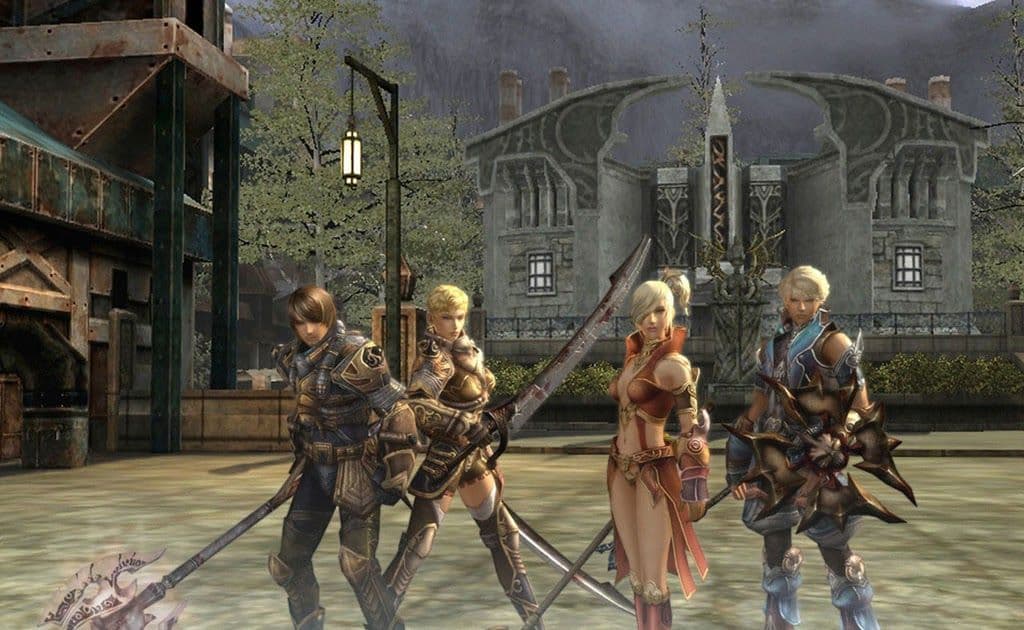
Ethergia is a world still reeling from the Thanatos Incident, a catastrophe that fractured its four core races and left them fighting for survival against darkness both external and within. Requiem: D...
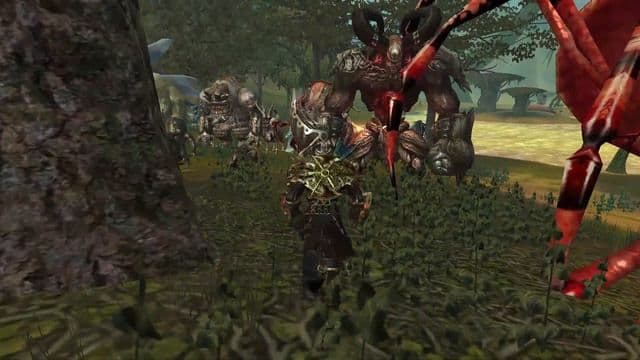
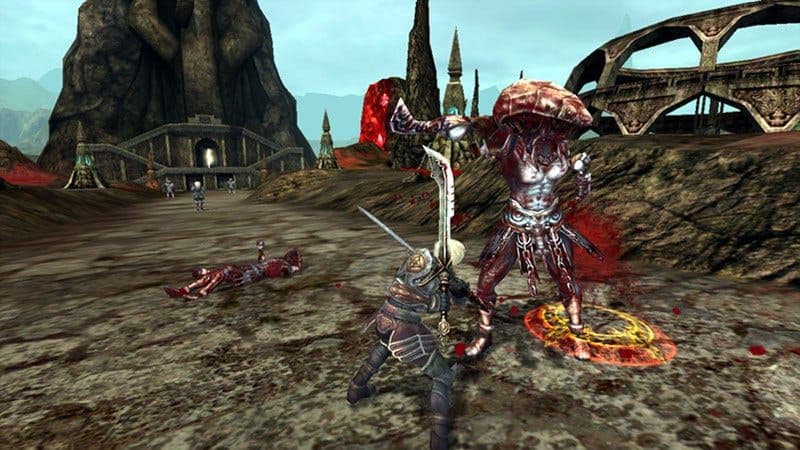
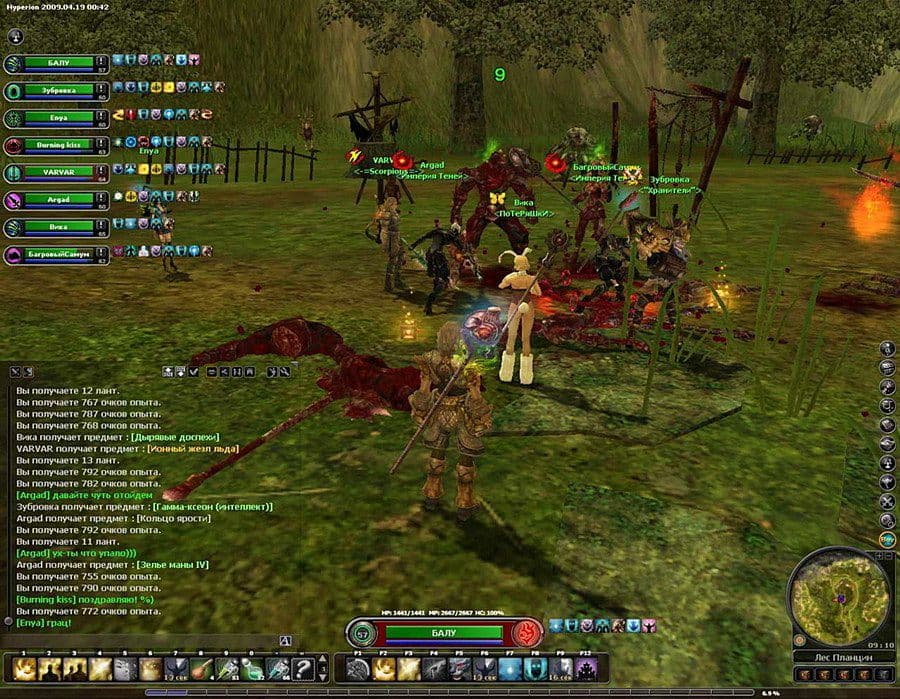
Requiem Online — officially rebranded Requiem: Desiderium Mortis since its 2022 relaunch — is a horror-themed MMORPG originally developed by Gravity in Korea and released in North America on June 19, 2008, with Gravity Interactive (now trading in the West as WarpPortal) taking over development in 2013. It built its early reputation on blood-drenched combat and unrestricted open-world player killing, a rarity even in an era when PvP servers were common. As of April 2025, the game has formally entered maintenance mode: no further content updates, no new events, just the servers left running for whoever still logs in. This Requiem Online review looks at what's left standing after seventeen years, and whether it's worth your time now that the developer has openly said no more is coming.
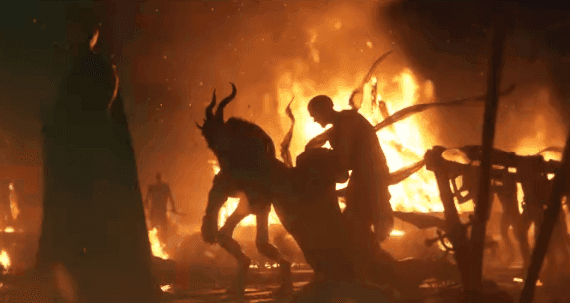
Requiem's setting is built around a single catastrophic premise: the Thanatos Incident, an ancient collision of science and forbidden magic that tore the world of Ethergia apart and filled it with monstrous fallout. Four races survive the wreckage, and the game leans on visual shorthand rather than exposition to tell you what each one is. The Turan are the closest thing to a baseline human, balanced across strength, agility, and intelligence but weak against magic. The Bartuk are hulking brutes prone to losing themselves to rage mid-fight, carrying old tension with the Turan and the Xenoas that the lore gestures at without ever dramatizing. The Kruxena carry a monstrous, oversized right arm as a permanent mark of the Incident, a design choice that still reads as unsettling rather than decorative. The Xenoas look childlike and delicate, which has always sat oddly against a world this violent — a tonal clash the game never fully resolves, though it's part of what made Requiem memorable rather than generic. None of this lore gets explained through cinematic set pieces; it arrives in loading-screen text, item descriptions, and NPC dialogue delivered in the flattest possible tone, which was standard for 2008 and hasn't been revisited since. The night-and-day cycle adds one small piece of atmosphere that still works: a recurring nightmare window in which tougher monsters spawn across the map, occasionally forcing solo players to group up or simply avoid a zone until it passes.
A newcomer booting up Requiem for the first time in 2026 picks one of the four races, each locked to two base classes with four available subclasses — a Turan Templar can branch into Radiant or Tempest, a Bartuk Shaman into Forsaker or Mystic, and so on down the tree. Face and hairstyle options are limited by modern standards, and the tutorial dungeon that follows is functional rather than memorable: move here, kill this, accept that quest, learn which button triggers a basic attack versus a skill on cooldown. Taken on its own, it reads like any other mid-2000s MMORPG onboarding sequence, competent but unremarkable.
Past the tutorial, the loop that carries a fresh character through the first several hours is straightforward: clear a quest hub's kill list, turn it in for experience and coin, spend that coin on whatever gear an NPC vendor happens to be selling, and repeat in the next zone once the current one stops giving useful drops. There's no crafting economy of any real depth to distract from that rhythm — no player-run auction house driving prices, no gathering-into-recipe chain worth specializing in. What Requiem asks a new player to actually learn early on is combat timing against the nightmare-hour spawns and, eventually, how to fill that Hardcore Bar consistently enough to have a Possession Beast ready when a fight actually calls for one.
A veteran registering a fresh account today notices something else layered under that same loop: how much of the old friction has quietly been sanded down. The leveling curve that used to eat weeks of grinding now moves noticeably faster, a direct result of the 2022 relaunch's stated goal of getting players to the level 69 cap without the punishing pace that used to push people toward buying experience boosts from the item shop.
A veteran logging back in sees something different layered underneath that same tutorial: a quieter version of a much rougher game. Requiem originally shipped as a full open-world PvP title, where getting jumped while grinding a quest hub wasn't an edge case, it was the entire pitch. That version is gone. The 2022 Desiderium Mortis relaunch explicitly reworked PvP-focused classes to function in PvE content and replaced unrestricted world PK with structured modes — 10-versus-10 Battlegrounds and an occasional 50-versus-50 War — while raising the level cap to 69 and trimming the leveling curve. For someone who played Requiem when a "sharp blade was worth more than life," as the old marketing put it, the current build can feel like a different, tamer game wearing familiar skin. For a first-time player, it's simply the only version that exists, and on its own terms it plays like a fair, if dated, action MMORPG rather than a PvP gauntlet.
Combat itself runs on standard hotbar skill rotations powered by the Gamebryo engine with Havok handling physics, and the hit reactions still carry a satisfying, exaggerated brutality — strike something hard enough and it visibly comes apart. The system that set Requiem apart from its contemporaries, though, is Beast Possession. Fill a "Hardcore Bar" by surviving and fighting — historically requiring it to sit near full before use — and a character can temporarily transform into a Possession Beast, gaining an entirely different skillset, higher damage, and more health for a limited window. It's a mechanic closer to a fighting game's super meter than anything typical of 2008-era MMO design, and beasts like Giont and Rebria became genuinely iconic within the community that stuck around.
The newcomer's first activation of a Possession Beast tends to land as a pleasant surprise: a system this distinctive rarely turns up in a game this unassuming otherwise. The veteran's reaction is closer to relief that it's still there at all — Possession Beasts were pulled from the game entirely in September 2009 over balance concerns and only restored months later with two replacement beasts, a mechanic important enough to survive its own removal. That history is worth knowing going in, because it explains why the system feels slightly bolted-on rather than fully integrated: it was designed, cut, and stitched back in more than fifteen years ago, and nothing since has smoothed those seams.
Past the leveling curve, Requiem's endgame is modest by any current standard, and the maintenance-mode announcement means it will stay exactly this size going forward. The 50-versus-50 War stands as the closest thing to a spectacle the game still offers, and the smaller Battlegrounds provide a repeatable structured alternative for players who want combat without the commitment of a full-scale event. Dungeon content exists at the level cap but hasn't been meaningfully expanded in years — the "Rise of the Reaver" expansion from 2013 was the last update most veterans point to as a genuine content addition, and everything since has been maintenance, events, and now silence.
A newcomer arriving expecting a modern gear-and-raid ladder will hit that ceiling fast; there simply isn't one built to current genre expectations. A veteran, by contrast, already knows the ceiling is low and measures the game by something else entirely — whether the specific feel of Requiem's combat and its Beast Possession loop still scratches an itch nothing newer quite replicates. Both perspectives are honest. Neither should pretend the other is wrong.
Requiem has never been a game built around elaborate social infrastructure, and it isn't pretending to be one now. Guilds exist, and an active one still matters for filling out a 50-versus-50 War roster or simply having people to run the nightmare-hour spawns with, but there's no sprawling guild-progression system, no housing, no player-driven economy layered on top of membership the way a sandbox MMORPG might build one. For a newcomer, this reads as refreshingly low-commitment: join a guild if you want company, skip it if you'd rather solo the leveling grind. For a veteran, it's a reminder that Requiem was never really selling a living online world so much as a small, tight combat sandbox with PvP bolted to the side — and on that narrower promise, it mostly still delivers.
This is the section where Requiem Online most needs a direct answer rather than a vague gesture at "still active." Steam concurrent player counts currently sit in the high teens to low twenties on a typical day, against an all-time peak of 325 concurrent players recorded around the 2022 relaunch. Steam reviews land at a Mixed rating, roughly 621 positive against 299 negative out of just over 900 total, which tracks with a game whose loyalists still show up to defend it and whose critics point at outdated systems and a currently frozen roadmap. None of this makes Requiem a ghost town in the dramatic sense — there are still real people logging in, still guilds and Battleground queues filling often enough to function — but a small, aging population is simply the honest population, and pretending otherwise would do a disservice to anyone deciding whether to install it.
The maintenance-mode notice from Gravity Interactive/WarpPortal, posted in April 2025, is the piece of context that changes how everything above should be read. The game hasn't announced a shutdown date, and the servers remain up and accessible. But "maintenance mode" is the industry's polite way of saying development has stopped: no new events, no further balance work, no roadmap beyond keeping the lights on. That's a meaningfully different proposition than an actively supported niche MMORPG, and it's worth being direct about rather than soft-pedaling.
Is Requiem Online pay to win? The honest answer has two timestamps. Before 2022, the cash shop sold power-affecting items alongside cosmetics, and an optional subscription reduced experience loss on death and boosted stat gains — a fairly standard, if dated, free-to-play structure that let spending meaningfully smooth progression. The Desiderium Mortis relaunch specifically walked some of that back: the patch notes cited removing several cash shop items "deemed too influential in player power," along with the loot-box-style "luckyboxes" that had drawn the most criticism. What remains still includes convenience and cosmetic purchases and, per the game's own support documentation, ongoing subscription-style benefits — so calling it pay-to-win-free would overstate the cleanup, but it is a shop that got a deliberate haircut rather than one that quietly stayed the same and got rebranded.
So which player is this review actually for — the one who never touched Requiem in 2008, or the one who still remembers what Giont felt like the first time it triggered? If you're new, ask yourself honestly whether a frozen, low-population MMORPG with one standout mechanic and everything else dated around it sounds like a few interesting evenings rather than a long-term home, because that's precisely what's on offer and nothing more is coming to change that calculation. If you're a veteran wondering whether to reinstall, the more useful question is whether you're chasing the specific feeling of Beast Possession and Requiem's particular flavor of brutality, because the open-world PK era you might actually be nostalgic for is gone for good, replaced by something calmer and considerably less dangerous. Requiem Online isn't dying in any dramatic sense — it's just stopped moving, and whether that stillness is peaceful or sad depends entirely on which of those two players is asking.