 F2P · Live
Lineage 2 Essence
Lineage 2 Essence is NCSoft's free-to-play take on the classic Korean MMORPG Lineage II, built around faster…
Riot Games' untitled Runeterra MMO has spent six years in development without a single screenshot reaching the public — but 2026 brought a wave of World of Warcraft veterans to the team, a near-acquis...
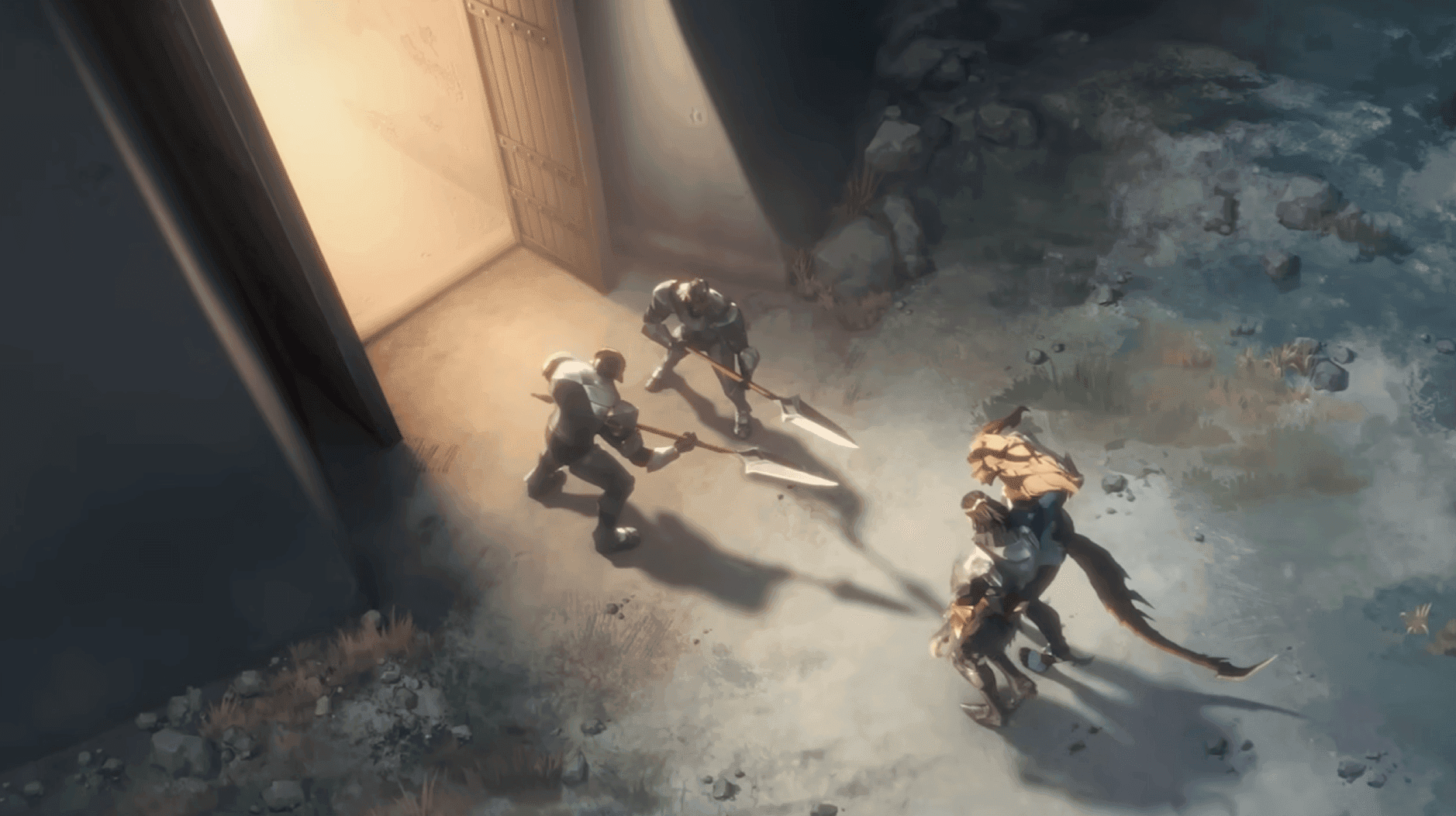
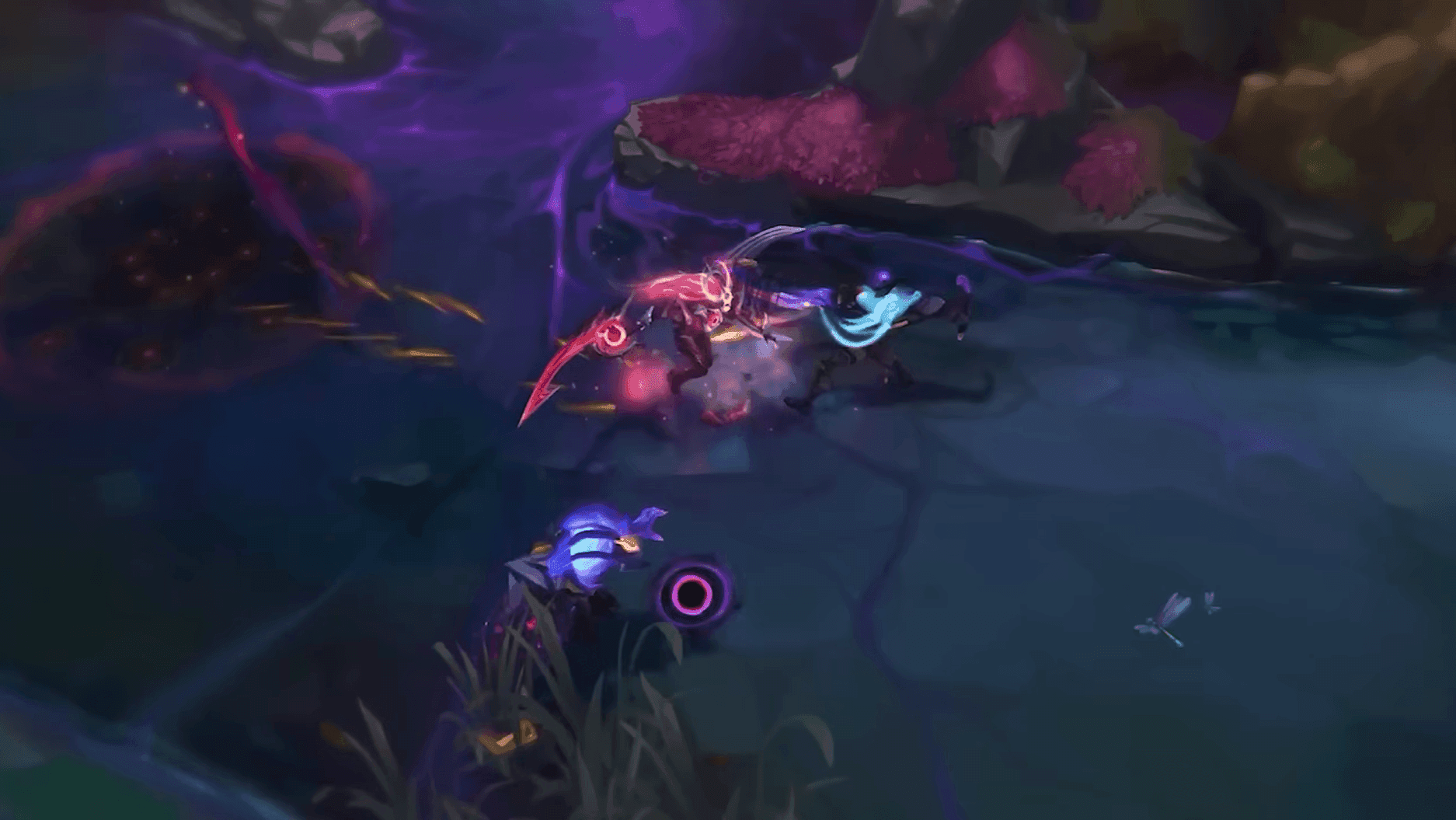
Riot Games' untitled Runeterra MMO — the game most people simply call "the Riot MMO" — was first announced on December 17, 2020, and as of mid-2026 it still has no title, no release window, and not a single screenshot or trailer to its name. What it does have is a persistent creative reset behind it, a fresh wave of World of Warcraft veterans hired throughout 2026, and a co-founder who keeps insisting, patiently and repeatedly, that the project is very much alive. This preview covers exactly what's known, what's rumor, and what six years of near-total silence actually tells us about a game that could end up being the most-watched MMO launch of the decade.
The one detail Riot has locked down since day one is where the game takes place. It's set in Runeterra, the shared world behind League of Legends, and its lore will slot into Riot's now-unified Runeterra canon alongside Arcane and Legends of Runeterra — a continuity effort the company formalized in late 2023 specifically so its games, show, and card game would stop contradicting each other. Beyond that geographic and narrative anchor, though, almost nothing about the actual game world — which regions are playable, how large it is, whether it launches with a fraction of the map or all of it — has been described in any concrete way.
Understanding where the project stands means walking through how it got there, because the story of this MMO is, so far, mostly a story about the people running it.
2016–2020 — Quiet groundwork. Riot's internal research into a League of Legends MMO reportedly began as early as 2016, years before anyone outside the company knew it existed. The public chapter opened on December 17, 2020, when Greg "Ghostcrawler" Street — a seven-year Rioter and a former lead systems designer on World of Warcraft — confirmed on social media that Riot was building an MMO in the League universe. It was a low-key announcement by design: Street later explained the company wanted to get ahead of leaks, help with MMO-veteran recruiting, and give players something to be excited about, all without a trailer or even a name attached.
2021–2022 — Vague, deliberate patience. Riot spent the next two years saying almost nothing specific. Early comments described a "very large" open world and a design philosophy built around respecting player time — less FOMO, less obligation, an MMO you could step away from without feeling punished. Street was candid that the team would rather move slowly and get the foundation right than rush a reveal, a stance that read as either admirable restraint or corporate stalling depending on how many years you'd already been waiting.
March 2023 — Street departs. Greg Street left Riot, citing a mix of personal and professional reasons, and handed the project to technical director Vijay Thakkar. Street went on to found his own studio, Fantastic Pixel Castle, to build a different MMO called Ghost — a project that, worth noting for context, lost its NetEase funding and shut down in November 2025. Street's exit didn't kill the Riot MMO, but it did remove the one person who'd served as its public face for two and a half years, and the silence that followed his departure only deepened.
March 2024 — The reset. This is the hinge point of the entire project's history. Riot co-founder Marc Merrill announced that development had been reset some time earlier, explaining bluntly that the existing build "wasn't different enough" from MMOs players could already play — internally, the team had apparently drifted toward a fairly conventional trinity-and-dungeons structure, an outcome that made sense given a WoW veteran had been steering it, but one Riot decided didn't justify a brand-new AAA MMO in this decade. Fabrice Condominas, a BioWare and EA veteran who'd worked on the Mass Effect series and Star Wars: Squadrons, took over as executive producer. Merrill also announced the project would "go dark" for several years, framing radio silence as a feature rather than a warning sign: no news, he said, should be read as good news.
Late 2024–2025 — Occasional proof of life. True to that promise, updates stayed sparse. Merrill told an audience at the League of Legends World Championship broadcast that the MMO was "the project I personally spend the most time on" and that the team had found "a great direction" with real momentum. A job posting surfaced in October 2025 describing the game as a "persistent sandbox world" with "innovative gameplay concepts" — one of the only concrete phrases Riot has put in writing about design intent since the reset, and still vague enough to fit almost anything.
2026 — A hiring spree that reads like a mission statement. This is where things picked up noticeably. Raymond Bartos, a former lead producer on World of Warcraft, joined as senior game producer in January. In April, Riot confirmed — via a report rather than an announcement — that it had seriously explored acquiring Intrepid Studios, the developer behind the now-defunct Ashes of Creation, for a reported $250 million, before ultimately walking away from the deal. Then in June, Brian Holinka, who spent years as WoW's lead combat designer overseeing class balance and PvP systems, joined as principal game designer. Stack those hires against Thakkar's technical direction and Condominas's production leadership, and the Riot MMO's brain trust now reads like a reunion of people who spent a decade shaping World of Warcraft's endgame — a team profile that says a lot about where combat and class design are headed, even with zero footage to confirm it.
Riot has been careful to avoid the word "theme park" since the reset, and the language it has used instead is worth sitting with. The October 2025 job listing's phrase — a persistent sandbox world — is a meaningfully different pitch from the WoW-adjacent, quest-hub structure the pre-reset build reportedly leaned toward. Sandbox MMOs tend to emphasize player-driven systems, territory, and emergent behavior over a linear story-and-dungeon pipeline, and pairing that language with Holinka's PvP pedigree suggests a game more interested in structured player conflict than in another raid-and-loot treadmill. That said, this is inference stacked on a single job posting and a handful of hires, not a confirmed design document, and Riot has given itself years of cover to change course again before anyone outside the studio sees a frame of gameplay.
Pre-reset reporting also described the game as third-person with a focus on action combat rather than tab-targeting, and Street once suggested a pay-to-play or subscription model was unlikely given Riot's house style of free-to-play games funded by cosmetics. Both of those details predate the 2024 reset by years, and neither has been reconfirmed since Condominas, Bartos, and Holinka came aboard — worth remembering before treating either as settled fact rather than a snapshot of an earlier, since-discarded version of the project. The persistent sandbox world language is, for now, the newest and most direct phrase Riot has attached to the rebuilt version.
What's unusual about this project isn't just how little Riot has shared — it's how much coverage that silence still generates. Community trackers and MMO-focused YouTubers have built entire channels around parsing job postings and LinkedIn updates for scraps of information, and outlets that normally cover shipped games or open betas run recurring "everything we know" explainers on a title that has shown nothing. Massively Overpowered listed it among the most-anticipated upcoming MMOs of 2025 despite having zero hands-on material to reference, a ranking built almost entirely on IP strength, Riot's resources, and the sheer size of League of Legends' existing player base. That gap between visible output and public interest is itself a data point: whatever Riot ships, it will land in front of an audience that has been primed to care for the better part of a decade before playing a single minute of it.
The revelation that Riot seriously pursued buying Intrepid Studios is one of the more telling data points in this entire timeline, and not simply because of the number attached to it. Ashes of Creation was, for years, the sandbox MMORPG most directly competing for the attention of the exact audience Riot is trying to win over — node-based territory control, a living economy, real consequences for war between guilds. That Riot considered spending a quarter-billion dollars to acquire that codebase and expertise, rather than build everything from scratch, suggests the company saw real value in buying its way past some of the hardest, slowest parts of sandbox MMO development. That Riot ultimately walked away — and that Ashes of Creation's own development troubles became public not long after — cuts the other way: whatever Riot saw in its own internal build, it apparently judged it a better bet than acquiring a studio already deep into building the same kind of game.
Is the Riot MMO going to be free-to-play? Nobody currently working on the project has said, one way or another, since the 2024 reset. The only concrete comment on record is Greg Street's, made back in 2022, that a subscription or pay-to-play model seemed unlikely given Riot's track record with League of Legends and Valorant — both free-to-play, both monetized through cosmetics rather than power. That's a reasonable guess based on company history, but it's a guess from a person who no longer works on the game, made before the design itself was scrapped and rebuilt. Nothing said by Condominas, Merrill, Bartos, or Holinka has touched pricing, and given how far out a release still sits, treating any monetization model as settled would be getting ahead of the studio itself.
The case for taking this seriously isn't just IP goodwill. Riot backing away from a $250 million acquisition because it liked its internal direction better is a genuine signal of confidence, not just a passing quote in an interview. The 2026 hiring wave brought in people who spent years on the exact systems — combat design, PvP balance, live production — that make or break an MMO's endgame, and doing that recruiting quietly rather than as a press event suggests a team building toward something specific rather than one still hunting for an identity. Merrill's repeated insistence that this is the project eating most of his own time, restated across multiple public appearances over more than a year, is at minimum a costly signal for a co-founder to keep making if the project were genuinely adrift.
Set against that: six years without a single screenshot is an extraordinarily long silence even by AAA MMO standards, and the 2024 reset means the team is arguably still working through the early stages of a second attempt rather than polishing a first one. Wikipedia's own timeline of the project — pieced together almost entirely from job postings, conference-sideline comments, and the occasional confirmed hire — is a fair proxy for how little Riot has actually shown, as opposed to said. A studio's best PvP and combat designers can produce a mediocre MMO if the surrounding systems, content pipeline, and live-service management don't hold up, and none of that is visible yet. Fandom-managed lore, meanwhile, is already treating the game as canon-adjacent to Arcane and Legends of Runeterra, which raises the stakes on narrative consistency before a single region has been confirmed playable.
As of mid-2026, the honest summary is this: Riot has a growing, increasingly senior team, a reaffirmed commitment from leadership, a design vocabulary that's shifted from "MMO you've already played" toward "persistent sandbox," and continued radio silence on everything that would let a player form a real opinion — no combat footage, no class system, no confirmed engine, no monetization model, no release window beyond a vague "before 2030" that traces back to a YouTuber's interview rather than an official Riot statement. That's not nothing, but it's a very long way from a game.
Here's the honest question worth asking yourself before bookmarking anything about this project: are you the kind of player who finds a well-staffed, well-funded team with a clear reset story genuinely reassuring, or does six years of silence and one scrapped attempt already tell you everything you need to know about how far away a playable build actually is? Both reactions are defensible from the same set of facts, and that's precisely the state this MMO is in — not hyped on marketing, not doomed by delay, just genuinely, unusually unknowable. Riot has the IP, the money, and now the personnel to make something worth the wait. Whether it will is a question this preview, by its nature, cannot answer, because Riot hasn't answered it either.