 F2P · Live
Lineage 2
Aden's castles never stay in the same hands for long, and Lineage II has built an entire twenty-three-year…
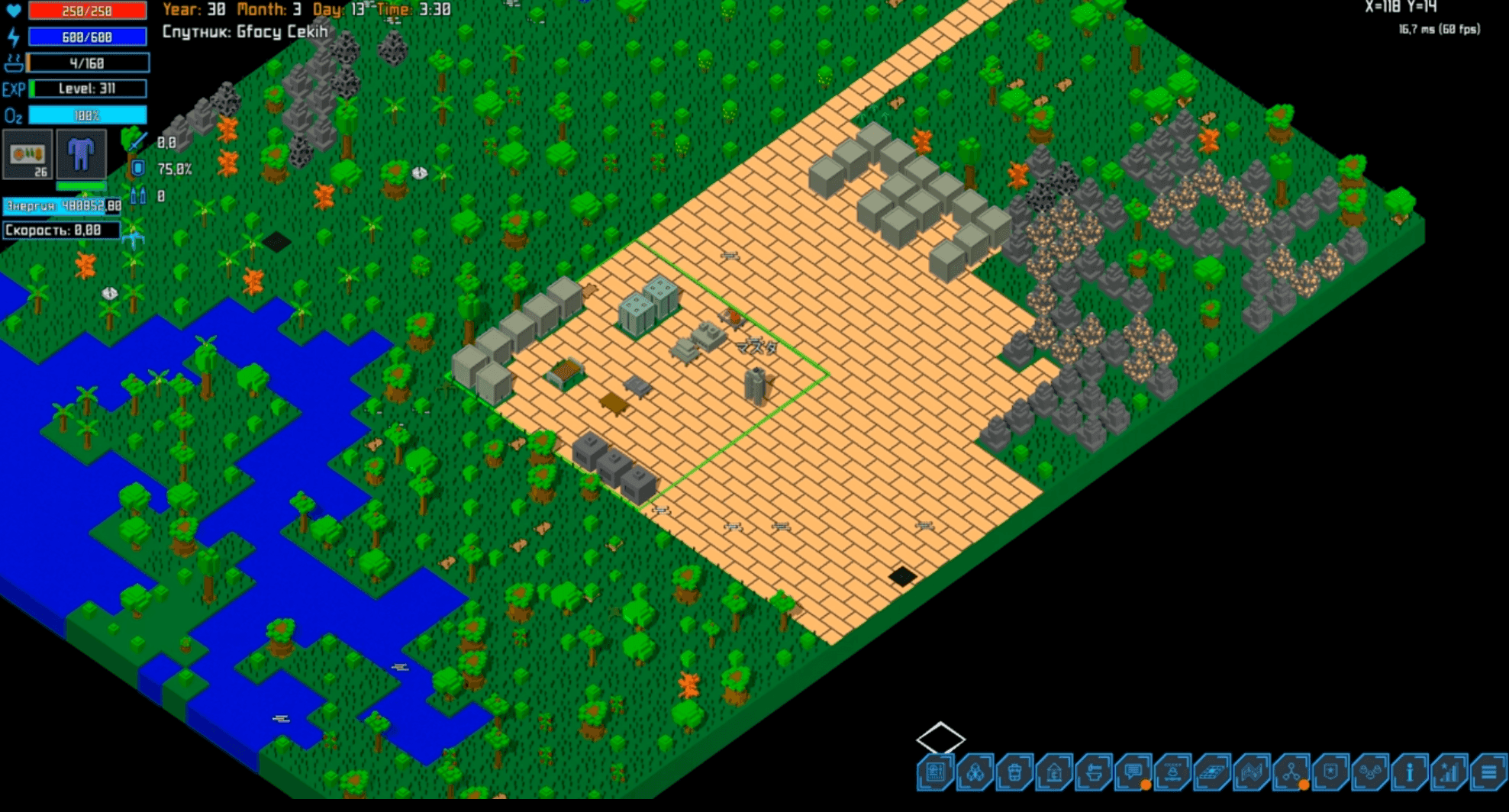
Industry that poisons the ground it stands on, robots you program instead of command, and a particle collider you assemble by hand to fuel quantum jumps — Sigma World Online is a solo-developed isomet...
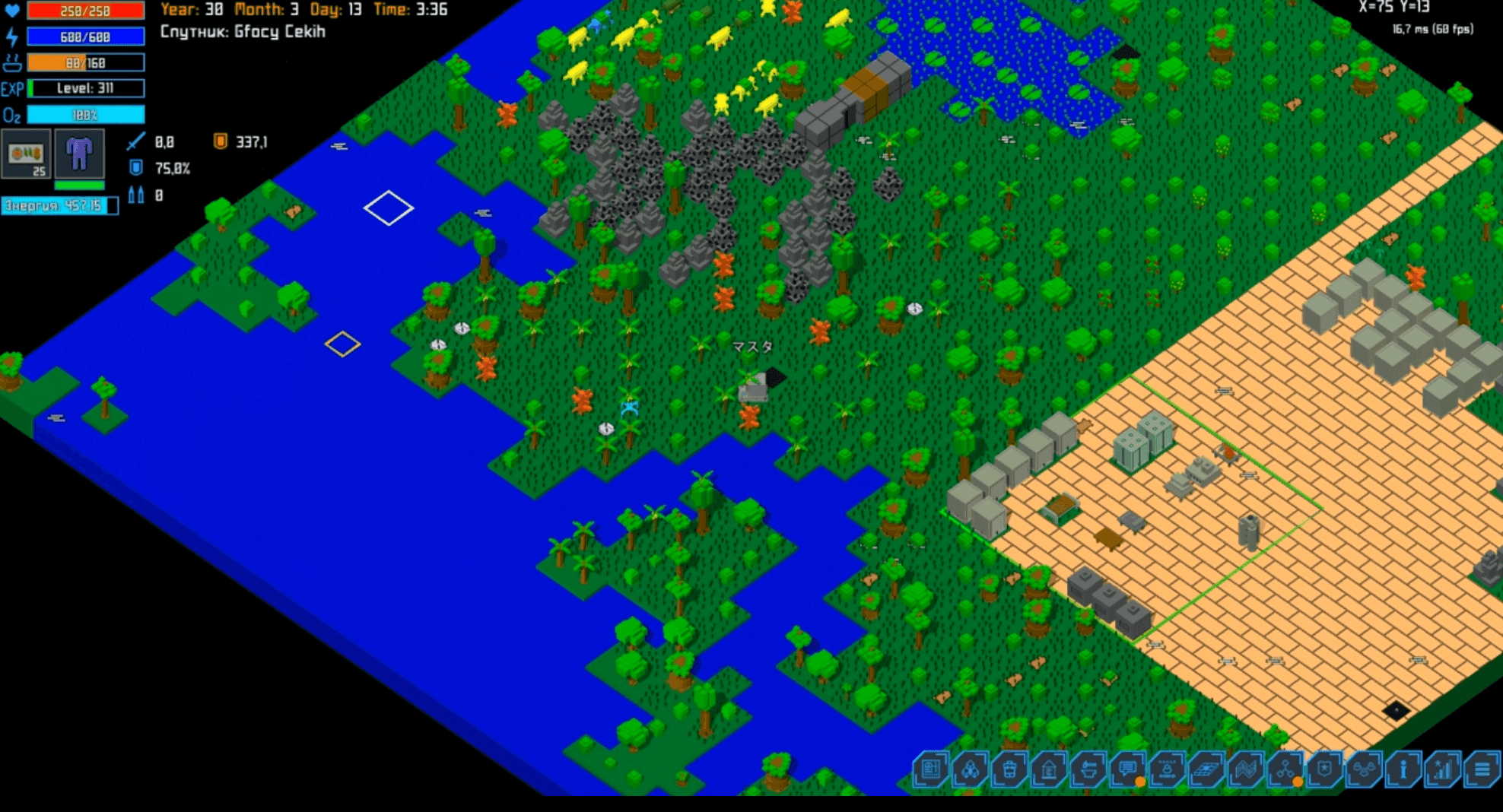
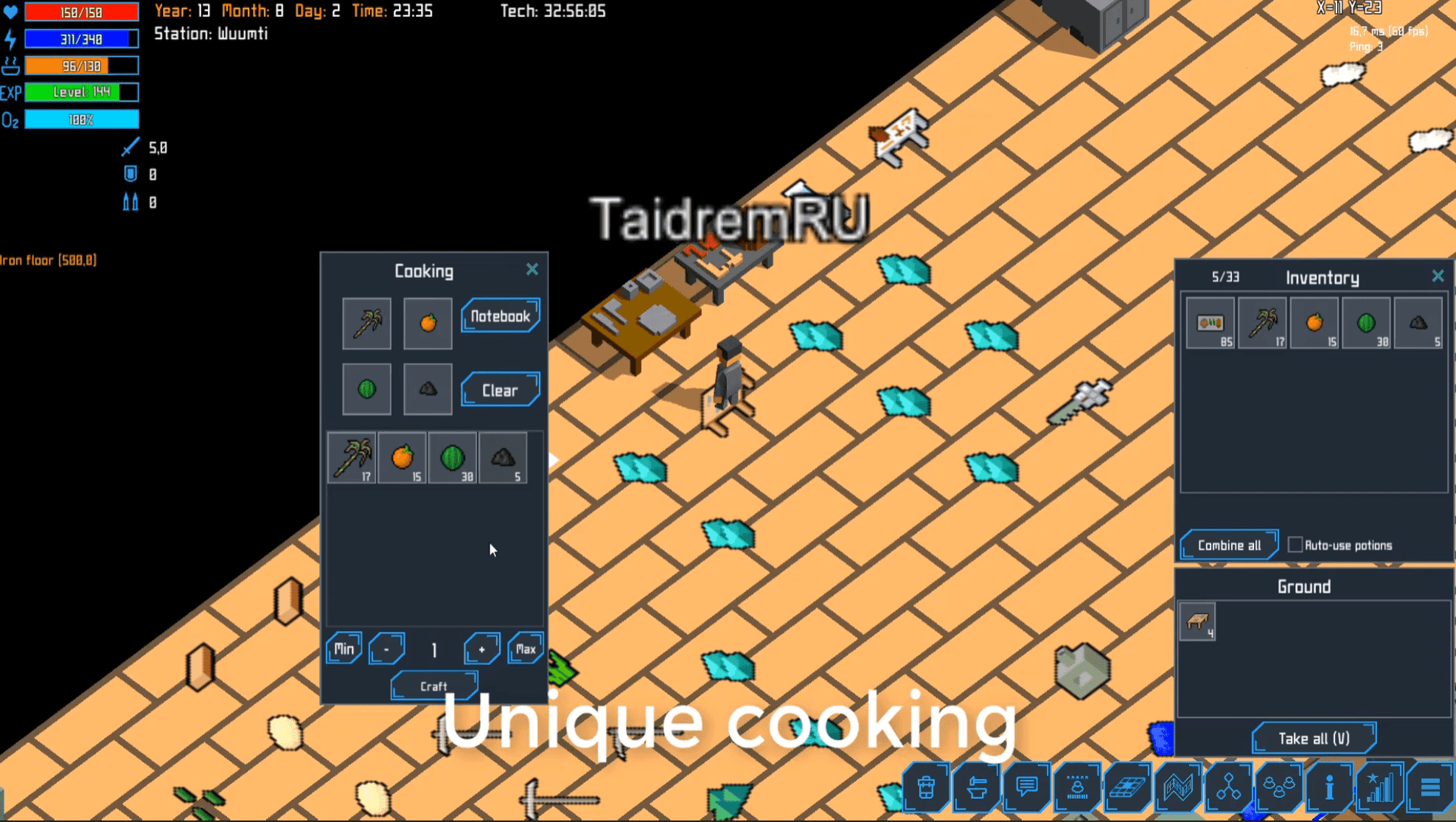
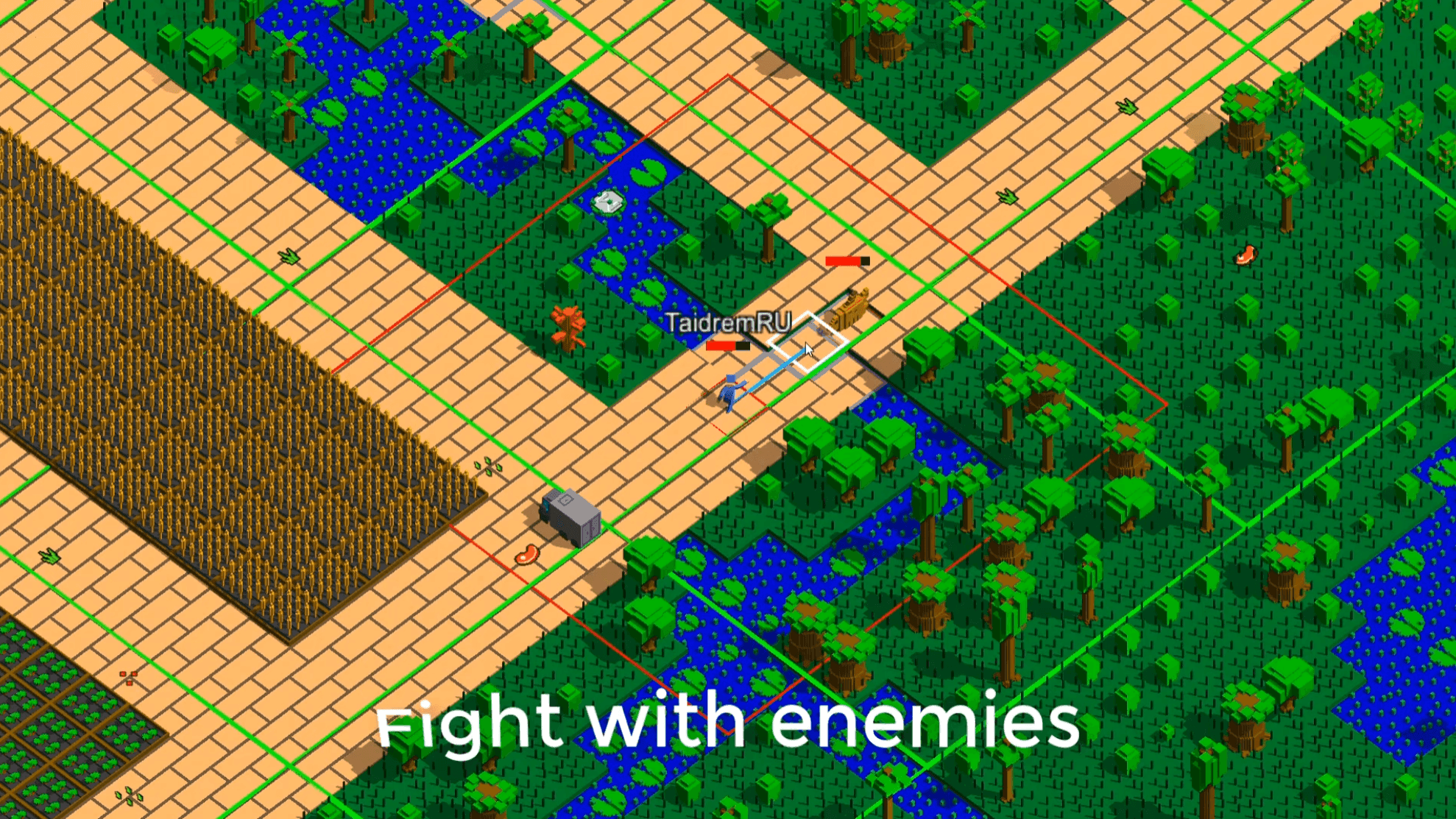
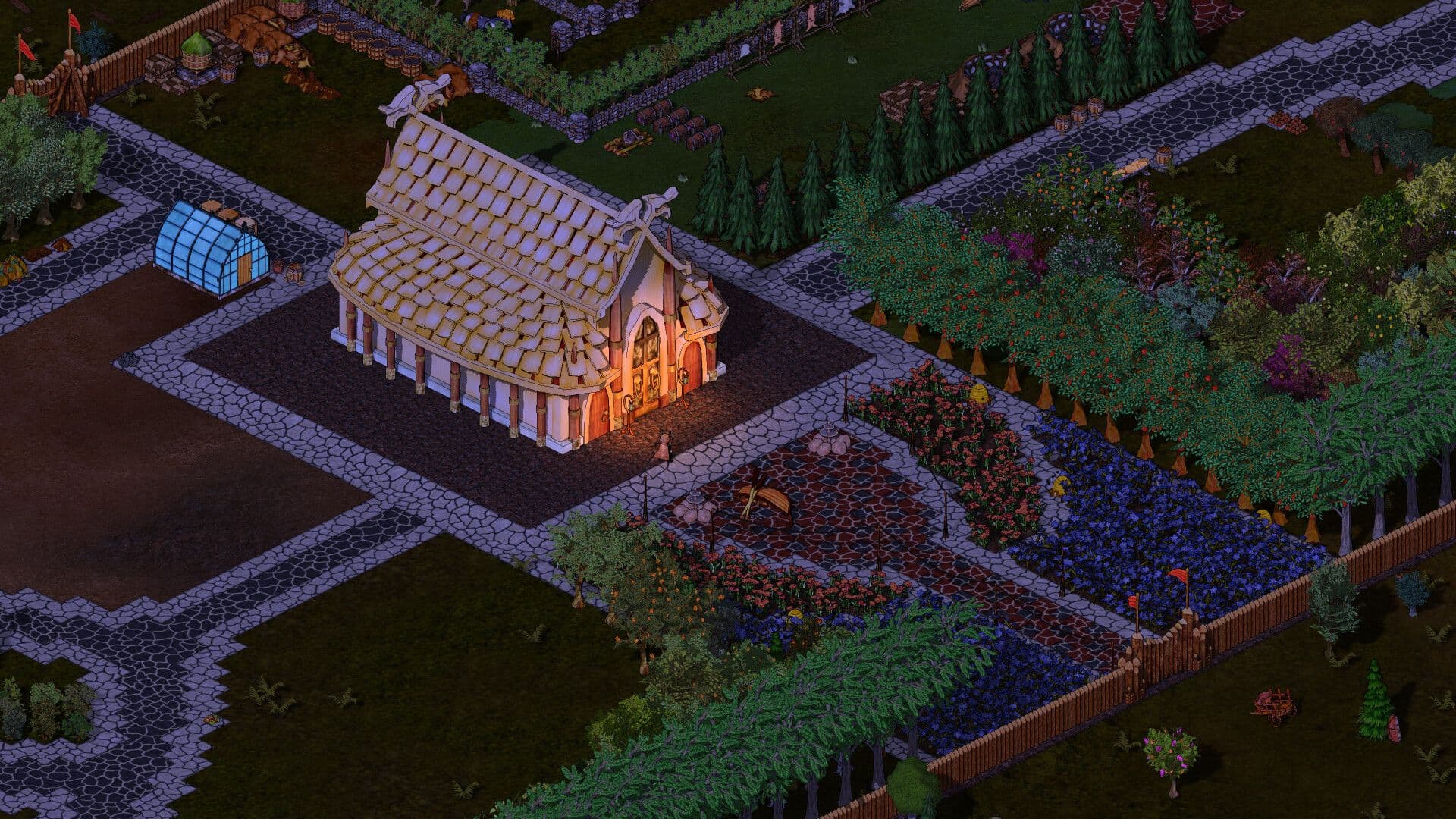
Sigma World Online is an isometric sandbox MMO about survival, industry and space travel, developed single-handedly by Crematorium of Time — a one-person studio run by a programmer the community knows as UncleAlex. It arrives on Steam on 27 August 2026 after roughly six years of direct distribution from the developer's own website. The game runs on Unity, shows its universe from a fixed overhead angle across blocky voxel terrain, and assigns no class at all: you become a miner, a cook, a trader, a scientist or a rocket pilot by doing that work rather than by picking it from a menu.
The store page carries one detail worth flagging before anything else, because it looks like a typo. Minimum requirements are a 2 GHz processor, 1 GB of RAM, 1 GB of video memory and 150 MB of disk space. That is accurate — the downloadable build weighs around forty megabytes. Whatever else this game is, it is an MMO that will start on a decade-old office laptop.
The far end of Sigma World Online is a player-built particle collider producing antimatter to fuel a quantum hyperdrive. That drive spends one unit of antimatter per jump, at any distance — a flat cost replacing the nuclear rods that fuel the earlier long-range engine. Starting at the ceiling rather than the tutorial makes the game legible in a way that a feature list does not, because everything below exists to get you there.
The collider is not a crafting recipe. It is a build order with spacing rules: collider blocks sit three tiles diagonally from the installation, containers three tiles along the vertical and horizontal. Get the geometry wrong and it doesn't run. Alongside it sits a quantum workbench that produces resources out of null matter, which is roughly where the game stops pretending to be about survival.
Space stations are the other endgame asset. You build one, expand it, and it offers nearly everything a planetary land claim does except farming — and then it flies. Mount rocket engines on the station itself, fuel them, and your base relocates. Clan-owned stations turn the whole thing into shared property, and renaming one costs half a million silver coins, which tells you something about the scale the late economy operates on.
Getting to antimatter by hand is not realistic, which is why the game's most interesting mid-game system is industrial automation. Sigma World Online includes programmable robots — machines assigned to a zone and given behaviour through software modules rather than machines that follow you around.
The module list is where the design shows its hand: collecting items from the ground, loading materials into equipment, moving goods between containers, refuelling equipment, planting crops, and refuelling other robots. Around that sit parking points for idle units, activation and deactivation timers, a remote control that reports robot coordinates, and a hammer that disassembles a bad build. Processors are bought separately. Robot technologies live in the clan research branch, so automation is designed as a group objective rather than a solo one.
The effect is that the mid-game hands you an assembly line you script instead of operate. It also has a deliberate limit: robots do not function on the fiery and acid planets added later, and those planets hold resources found nowhere else. The game pulls you back to manual labour exactly when you had stopped doing it.
Recipes in Sigma World Online come from technologies, not character level, and technologies research in real time. The tree is divided into tiers, and the next tier only opens once 80 percent of the current one is researched. There is no way to grind science faster by playing harder; the queue advances on its own schedule whether you are online or not.
Three things shorten the wait. The drafting table produces blueprints that cut research time, and it consumes paper, which is crafted from wood at a workbench — a small chain that quietly makes forestry a science-support industry. Technology accelerators drop from mobs, sit inside random containers in space (some holding fifty at once), and are handed out for daily tasks that refresh once per in-game month. The third was historically the premium account, which doubled research speed.
This single decision sorts the audience more sharply than anything else in the game. The developer has said publicly that his players measure their time in months, that some have played for half a year without researching everything, and that the game suits people keeping it open in the background — he added a hotkey to hide the window in the taskbar. Read that as a design statement, not an apology.
Yes, and unusually so for a project of this size — the production chains in Sigma World Online run from ore through several distinct machine types into finished components, and two of the side systems have real experimental depth. Furnaces, crushers and industrial mixers producing steel powder and gunpowder handle the industrial half. Drills and saws run on kerosene that must physically sit in your inventory. A recycling workbench breaks an unwanted item back down and returns roughly 80 percent of what went in, adjusted for remaining durability.
Cooking is where it gets strange in a good way. Dishes are assembled from combinations of ingredients, and compatibility between products is something players discover through trial rather than read from a recipe book. Working combinations produce better results; poor ones produce edible mediocrity. Discovered recipes go into an in-game notepad because holding them in your head is not viable. Food spoils, so a refrigerator holding fifty slots becomes essential infrastructure, and produce from tamed animals raises the chance of a higher-quality dish.
The laboratory table works on the same principle with worse consequences for hoarders. Potions are mixed from mob drops, giving buffs and debuffs, with the vial's colour hinting at the dominant effect. Potion recipes reset periodically, so nobody keeps a monopoly on the good formula for long. Knowledge here expires at the same rate as stock.
Industry in Sigma World Online pollutes the planet you built it on, and pollution has mapped consequences rather than a number in a menu. Past five percent contamination, poisonous moss appears — it spreads, destroys roads and grass, and blocks seeds from germinating, hitting your farm and your logistics in the same stroke. Past twenty percent, acid pools form. Mining or moving near them is dangerous, though a pump extracts sulphuric acid from them for industrial use.
Countermeasures exist. A landscaping generator adds a thousand units of greenery in one go, and a planetary stabiliser holds a world back from further decay. The result is a closed loop: the harder you produce, the worse the ground under your own base becomes, until you either invest in remediation or move the factory to a fresh planet. Very few games connect manufacturing to environmental state this directly, and the fact that a solo developer shipped it is the strongest argument for taking this project seriously.
Terraforming completes the picture. Terrain can be dug out or filled in, bodies of water created or drained, bridges thrown across rivers. The environment is almost entirely destructible, so the land around a mature base looks precisely as its owner rebuilt it.
Worlds come in several types — ordinary, airless, fiery and acidic — and the type sets the rules, not just the palette. Airless planets host silicon life, mechanical-looking creatures dropping ores usually found on asteroids. The later hostile worlds hold exclusive resources and disable your automation.
Animal life is generated rather than authored. The game creates races with their own parameter sets, then lets them develop and breed in the environment; the counter on the older version's website reports over 52,000 generated animal races. That number describes a method more than it describes variety — most of those creatures differ in statistics rather than behaviour, and it would be dishonest to sell it as fifty thousand distinct monsters.
Taming is the part that earns praise. Each animal is lured by one specific food, and a bioscanner tells you which food and what your odds are. A tamed animal eats only that bait, so every species you keep obliges you to run a dedicated feed operation. Feeders come in plain and refrigerated versions, tamed animals breed, and a dedicated transport carries up to five livestock units and fits aboard a spacecraft. Farming stops being decoration and becomes a supply problem.
New characters start on a shared beginner planet that is deliberately forgiving: mob aggression is disabled there, mountain resources regenerate, and characters below level five cannot starve to death. The opening loop is familiar — chop wood, mine stone, place a workbench, make shovels and picks.
Two things break the familiarity. The first is energy: nearly every action spends it, and when it runs out your character simply stops working. Food, potions and, oddly, cigars restore it, and the pool refills while you are logged out. The second is the land claim, which must be occupied and then have its lease extended or it reverts to the world. Friends receive granular access — the friends window specifies which functions of your plot each person may use.
New arrivals years after launch are handled better than most sandboxes manage. A fresh starter star system is generated every three in-game years, which works out to 36 real days, so everyone who joins in the same window lands in unspoiled territory among other beginners while veterans are off in distant clusters. Server resets preserve character achievements and extracted resources, and characters at level twenty or above are not deleted for inactivity.
Documentation, though, barely exists. Starting quests and a tutorial cover the basics and nothing else — food compatibility and pollution maths are not explained anywhere official. The developer has acknowledged that the game is largely undocumented and that veterans pass knowledge to newcomers directly. Systems knowledge here is oral tradition, and whether that reads as charming or as a wall depends entirely on your patience.
The economy runs on silver coins dropped by mobs, and trade is layered in two tiers. Trading stations placed on your own land hold up to twenty goods and complete sales while you are offline — personal shops, essentially, embedded in a world where someone has to physically travel to your base. Above that sits a trading terminal reachable from anywhere in the universe: anyone may buy from it, but only clans may list goods on it, and it checks whether a seller has been absent for more than ten days.
Clans are expensive by design. Founding one costs a million silver coins, and each additional member slot costs another million. Internally there are ranks including a corporal tier that, unlike a rank-and-file member, chooses its own specialisation; specialisations grant one benefit and one penalty each, making roster composition a calculation. Clan flags are 16×16 PNG images uploaded by the leader for half a million coins, and clan rating decays over time, so standing has to be maintained rather than won once.
All of which runs into the project's central difficulty. The older version's site reports 2,219 registered players across its entire history; the newer Foundation branch showed 29 at the time of writing. A universe-wide commodity terminal restricted to clans is built for a market that has not arrived, and no amount of good design fixes that on its own.
Weapons exist in quantity — melee, machine guns, shotguns, a flamethrower, an electric gun, armoured suits — and vehicles arm up from machine-gun cars through tanks and combat amphibians, dropping their installed equipment on the ground when destroyed. Space has its own combat layer with ship guns, shell types and recoverable cargo.
Who all this is pointed at is less clear. Against generated fauna and the inhabitants of distant clusters, certainly. Player conflict is implied by the toolset: land claims exclude outsiders, a planet blocker bars landings for 25 hours to anyone without a claim there, and unloading vehicles on someone else's territory is forbidden. But no public source states the rules — whether players can attack each other in the open world, or what is lost when they do. The honest summary is that this is a production game with conflict tools available, not a PvP game.
Nothing has been announced for the Steam edition, so the only concrete information is historical. The developer first introduced a subscription that activated at character level thirty, then replaced it with an optional premium account at 200 roubles per month granting doubled research speed, doubled experience, doubled action speed and doubled clan point accrual. That premium is currently switched off on the older version's site and marked as in development on the new one. The client itself downloads free.
Judgement has to wait for a price, but the shape of that old package deserves attention. In a game where research is measured in days, halving research time is not cosmetic. How this gets balanced at launch is the single largest open question hanging over the project.
Sigma World Online is a specialist's game that happens to be an MMO, and its Steam release is less a launch than an introduction to an audience that never knew it existed. The systems are the reason to look: an ecology model that punishes your own industry, automation you program rather than command, cooking and alchemy that expect experimentation, and a space layer that ends in a hand-built collider. None of it is padding. All of it was written by one person over six years, and the coherence between the parts is better than that fact has any right to produce.
What it cannot promise is company. The trade terminal, the clan economy and the shared universe are designed for a population the game has never had, and a store page is not guaranteed to deliver one. Anyone joining should expect to spend the first stretch alone, learning undocumented systems from strangers in a chat window, watching research bars advance on a schedule they cannot influence. That is either the appeal or the deal-breaker, and it is worth being clear with yourself about which before the release date.
The recommendation, then, is conditional but not lukewarm. If long production chains and slow compounding progress are what you actually enjoy — if the phrase "the robots handled the ore while I was at work" sounds like a good evening rather than a wasted one — this is worth the download regardless of how it looks in screenshots. If you need visual polish, a populated world, or an evening that ends in a visible achievement, wait and watch the reviews. The game has spent six years being exactly what it is, and launch day will not change that.
The Steam release is scheduled for 27 August 2026. The game has been playable for years via a free client from the developer's own website, and continues to be.
The client distributed from the developer's site is free, and pricing for the Steam edition has not been announced. An optional premium account previously cost 200 roubles per month and is currently marked as in development on the new version's site.
Combat systems exist for ground and space, and the game includes territorial protections such as land claims and a 25-hour planet blocker. The specific rules governing player-versus-player fighting are not published anywhere official.
Yes — Steam lists both single-player and online co-op, and the full production chain from hand tools to quantum engines is achievable alone. Robot research and listing goods on the universe-wide trading terminal are the two features that require a clan.