 F2P · Live
Lineage 2
Aden's castles never stay in the same hands for long, and Lineage II has built an entire twenty-three-year…
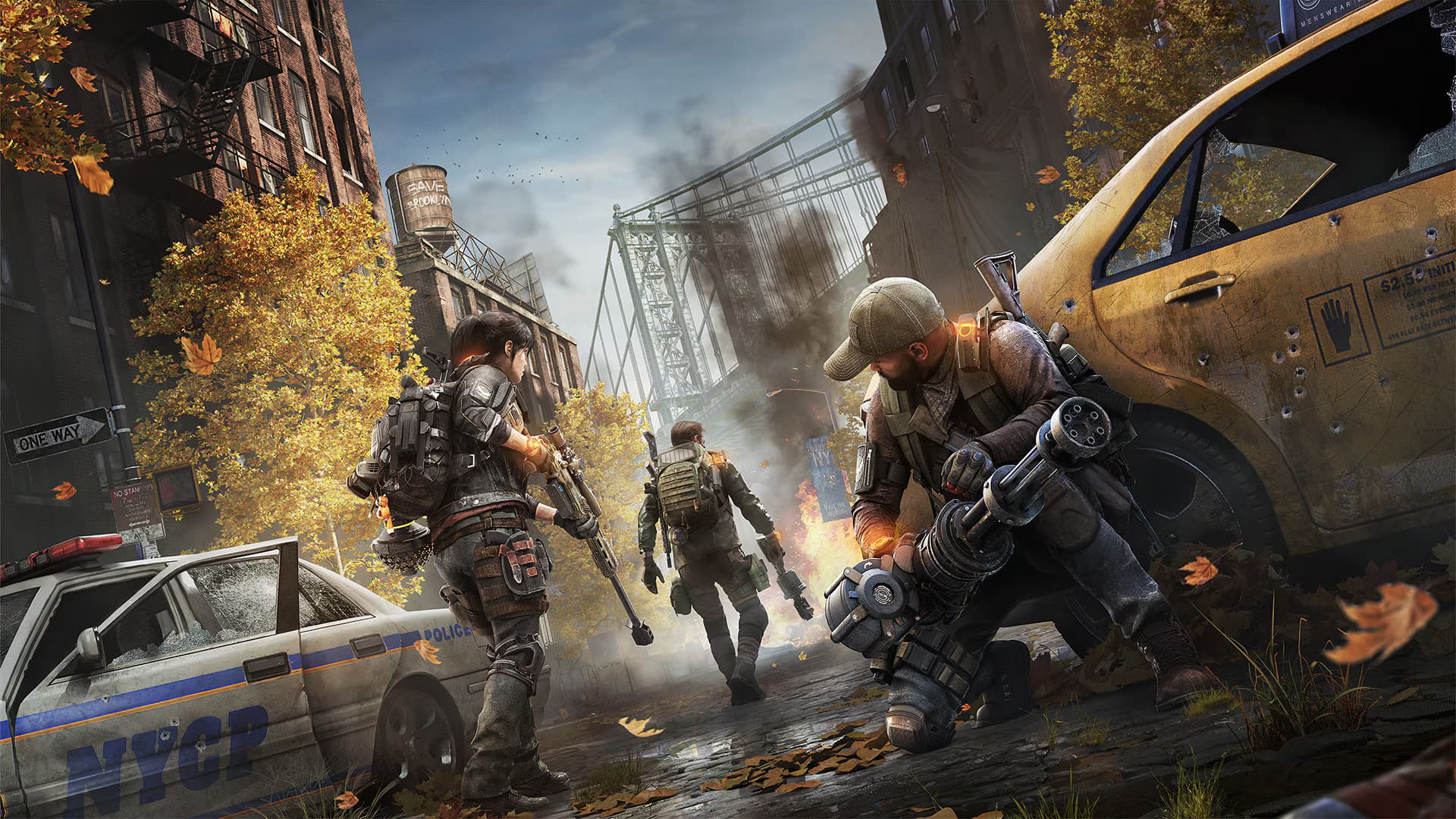
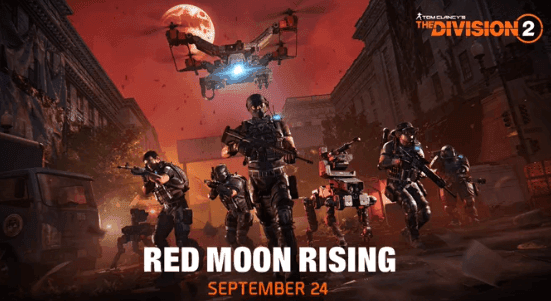
Suit up as a Division Agent, pick a specialization, and take back a Washington, D.C. gutted by a bioweapon attack — one faction, one gear set, one Dark Zone extraction at a time. The Division 2 casts ...
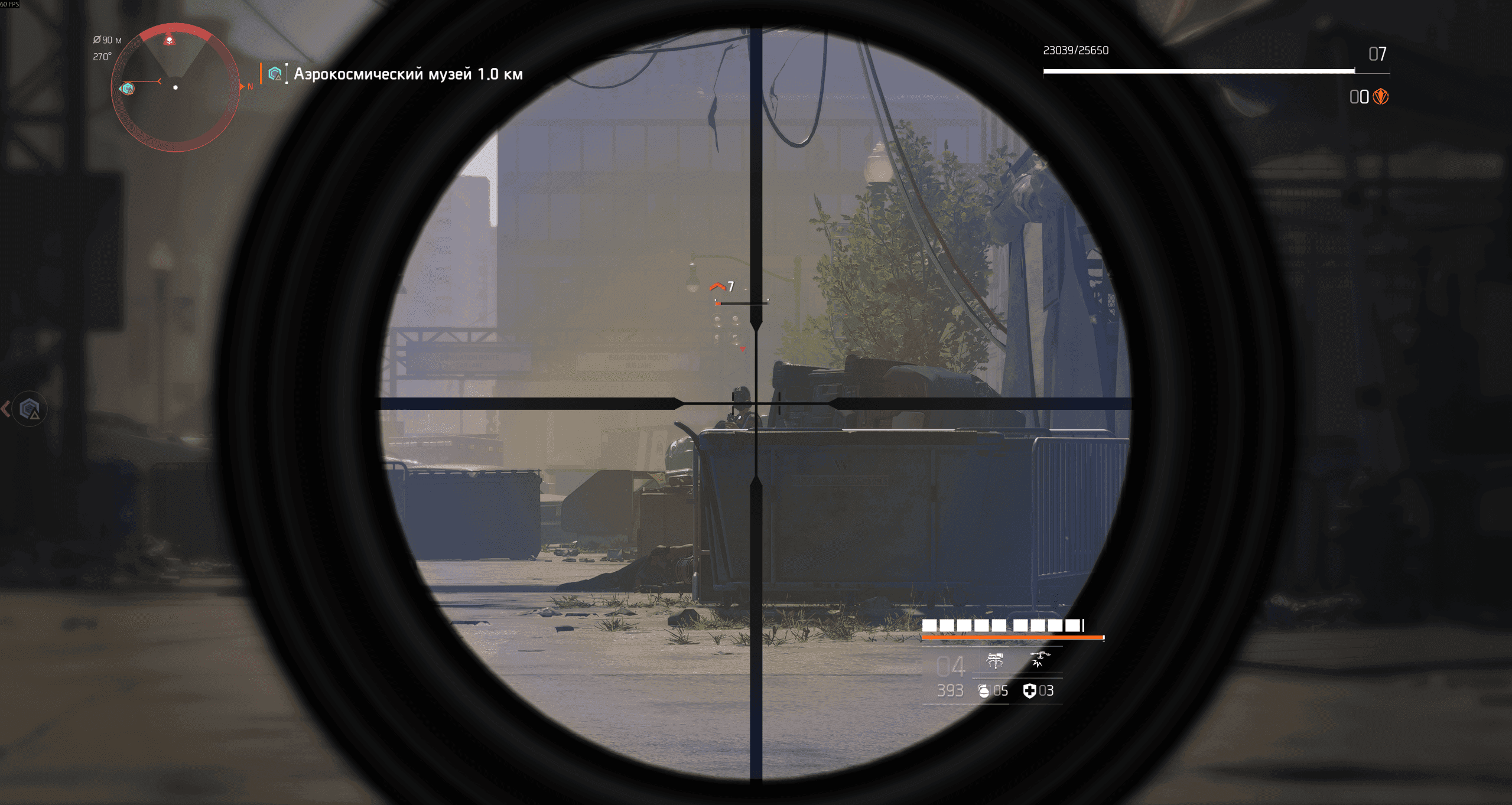
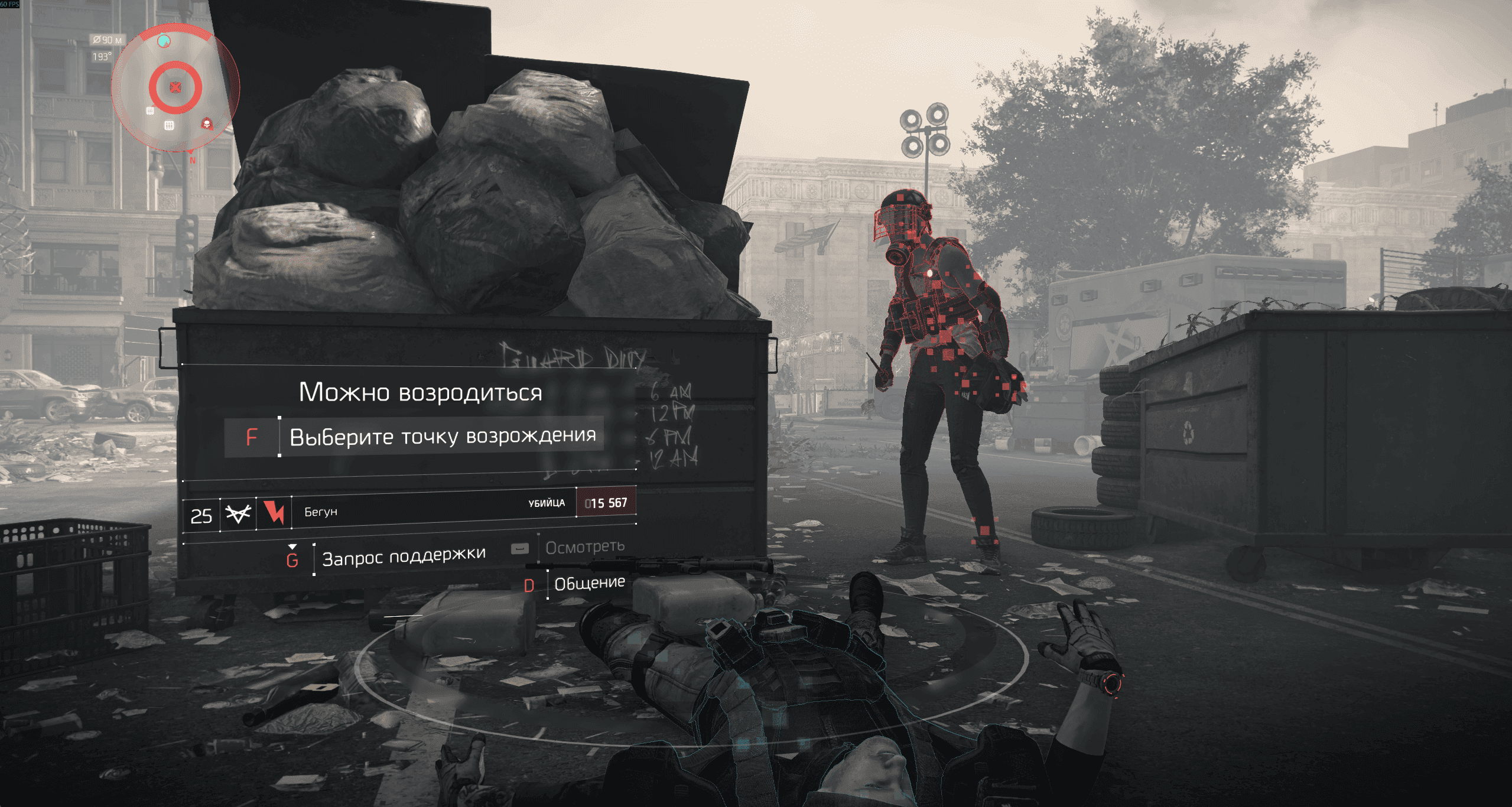
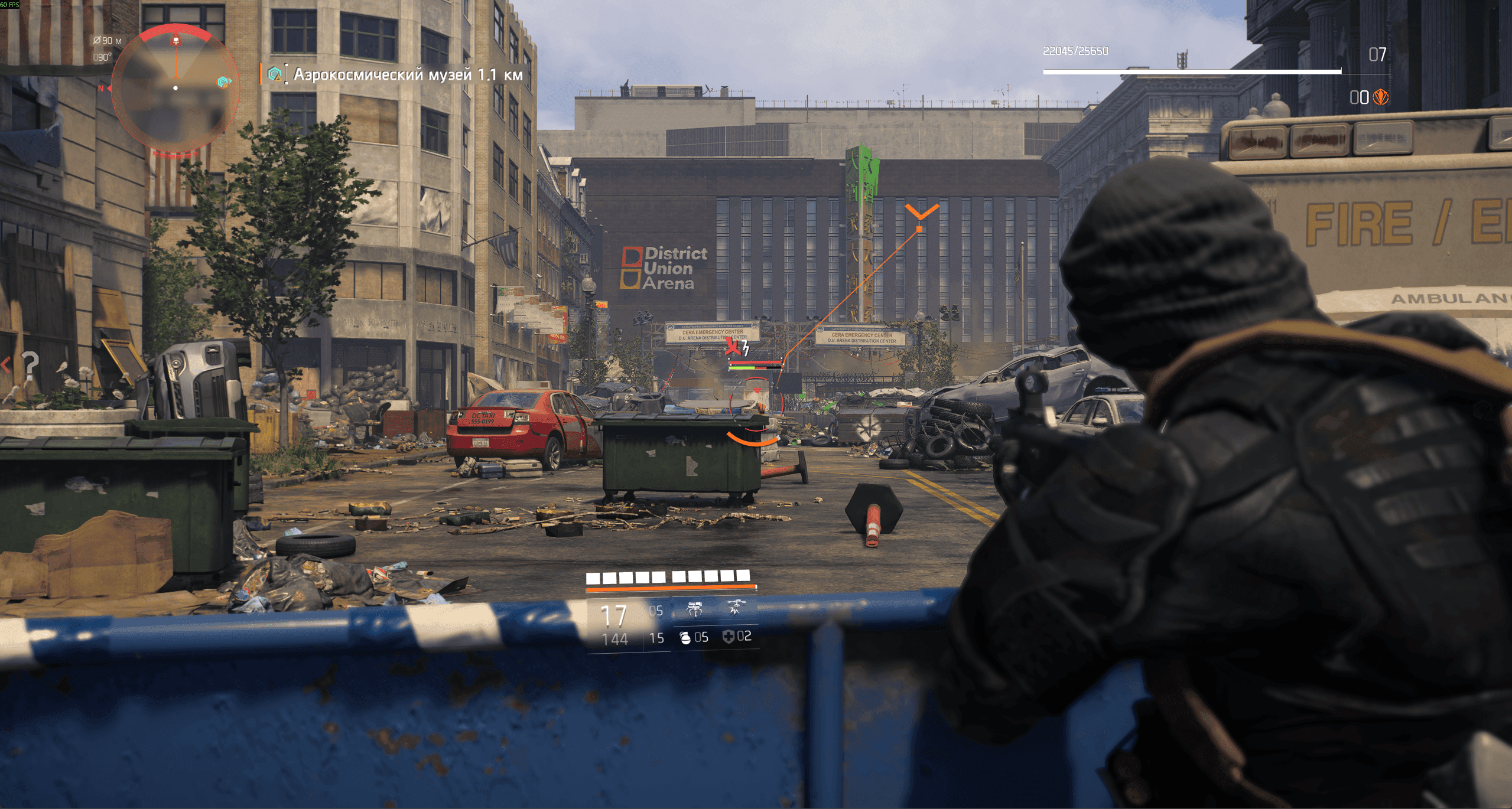
The Division 2 is a third-person looter shooter developed by Massive Entertainment and published by Ubisoft, released on March 15, 2019, as the follow-up to 2016's The Division. It swapped a snowbound New York for a Washington, D.C. gutted by a genetically engineered virus, and built its identity on cover-based gunplay layered with RPG-style gear stats. Seven years on, in the middle of a promotional push tied to the franchise's tenth anniversary, it's become one of the more unlikely survival stories in live-service gaming — a project written off more than once that just posted its highest concurrent player count on Steam since launch.
Most reviews build up to the endgame. The Division 2 is built around it, so it's worth starting there. Once an agent hits the level cap, the game stops being about a campaign and starts being about a rotation of increasingly demanding activities that all feed the same gear treadmill from different angles.
Operation Dark Hours, added two months after launch, is still the game's signature test: eight agents storm Ronald Reagan Washington National Airport with no respawns allowed, meaning a wipe means starting the encounter over from scratch. The centerpiece fight against the armored Razorback vehicle demands four sub-teams triggering generators in sync, then blasting open weak points with a Specialization's crossbow bolts before anyone can land real damage — the kind of fight that separates a coordinated voice-chat squad from a group that just happened to matchmake together. A second raid, Operation Iron Horse, followed in mid-2020 with a similar eight-player, no-mercy structure.
Below the raids sits a wider spread of smaller-group content. The Summit sends up to four agents up a hundred-floor tower where the enemies and hazards get meaner with every stretch of stairs, and stopping partway through still banks useful loot. Countdown, added with Season 9 in 2022, drops a four-agent team into a failing nuclear plant with a hard fifteen-minute clock — miss the timer and the mission fails outright, which gives it a tension the rest of the game rarely bothers with. Descent, the newest of the bunch, strips agents down to basic gear and rebuilds them mid-run through a chain of encounters, borrowing the escalating-stakes shape of a roguelite without committing to permadeath. None of these modes replace each other; they're different shapes of the same core promise, which is that better gear is always one more run away.
Working backward from that endgame, the road to it starts with a fairly familiar loot-shooter shape. A new agent lands in D.C. seven months after a weaponized flu — referred to in-fiction as the Green Poison — collapsed the government, and the first hours are spent retaking settlements, running campaign missions against the Hyenas, True Sons, and Outcasts factions, and slowly filling out a Base of Operations that unlocks new perks as its wings get upgraded. Gear Score climbs alongside character level, and by the time the campaign wraps, the newly arrived Black Tusk faction escalates the difficulty and unlocks Specializations — the game's version of a subclass.
Here's the wrinkle worth knowing before buying: for years, reaching the true level cap of 40 required owning the Warlords of New York expansion, a separate purchase that shifted the setting to a rogue-agent-controlled Manhattan. That changed with 2024's "One Endgame" update, which folded the level-40 progression into the base game for everyone, DLC or not. Warlords of New York still exists as a paid add-on, and it's worth owning for the Manhattan story and its own gear tier, but it's no longer a toll gate blocking access to the actual endgame described above.
Moment to moment, The Division 2 plays like a slower, gear-obsessed cousin of Gears of War — snap into cover, lean out to fire, reposition when a flanking enemy forces the issue. What separates it from a straight shooter is the skill loadout layered on top: a turret, a healing hive, a seeker mine, a pulse scan that reveals enemies through walls. Two skill slots and a handful of mods mean team composition matters even in a genre that often lets players ignore it.
Specializations add the sharpest identity. Clear the campaign and an agent can unlock the Sharpshooter's TAC-50 anti-materiel rifle, the Demolitionist's M32A1 grenade launcher, or the Survivalist's explosive crossbow, each tied to a signature weapon that recharges through kills rather than ammo pickups. Later additions brought the minigun-toting Gunner, the missile-launching Technician, and the shield-focused Firewall. Every one of them can be unlocked and swapped freely rather than locked to a permanent class choice, which turns raid prep into a genuine logistics conversation about who's bringing what. Layer in the game's named Gear Sets and Brand Sets — bonuses that reshape a build around, say, permanent overheal or stacking critical hit chance — and the character-building depth holds up well against genre peers that gate similar systems behind harsher grinds.
Crafting exists but stays modest by design: agents break down unwanted gear into materials, feed those materials plus a blueprint into a crafting station, and walk away with a weapon, armor piece, or mod at a known stat range. There's no player-run marketplace and no way to trade named items with other agents, so the entire economy runs through drops and personal crafting rather than a community market. It's a smaller wheel than some competitors spin, but it means nothing here demands the hours a full trading economy would.
The campaign world and the endgame activities above are cooperative. PvP lives in its own space, split across two very different modes. The Dark Zone — three separate zones spread across Union Station, the western district, and Georgetown — is an open-world extraction area where looted gear has to be carried to an extraction point to actually count, and any agent can "go rogue" and hunt others for their loot along the way. It's tense in the specific way extraction shooters are tense: the best gear tempts you deeper in, and every other player becomes a variable the moment you're carrying it. Conflict, by contrast, is standalone and symmetrical — Skirmish and Domination matches on dedicated maps, no loot risk, closer to a conventional shooter playlist for agents who want the gunplay without the extraction anxiety.
The honest caveat belongs here: PvP has always been the part of The Division 2 that split its own community hardest, and the 2026 roadmap's promised PvP balance pass exists precisely because years of gear-based power creep made high-end Dark Zone encounters feel less like skill checks and more like build checks.
Clans give The Division 2 its social backbone, pooling projects and providing the pool of eight players a raid actually needs — worth noting since Operation Dark Hours famously launched without matchmaking at all, a decision the community pushed back on hard enough that it's still referenced in patch notes years later. Most content below raid-tier does support matchmaking, and the campaign is fully soloable if the co-op crowd isn't your thing.
One frequently searched question deserves a direct answer: is The Division 2 getting crossplay? Partially, and not yet fully live as of mid-2026. Massive announced expanded crossplay between consoles and PC at the franchise's tenth-anniversary showcase in March 2026 as part of the year's roadmap, but no firm release date had been attached to it as of this writing, and the announcement was explicitly about play-together crossplay rather than cross-progression — a console agent still won't be able to carry a character over to PC. Treat it as coming later in 2026 rather than available today.
No, and this is one of the more straightforward answers in the genre. The Division 2 is buy-to-play: a one-time purchase (frequently discounted to a fraction of its original price during sales) covers the base game and its free seasonal content, with Warlords of New York available as a separate paid expansion. There's a premium currency used almost entirely for cosmetic Apparel Events — outfits, weapon skins, emotes — and a season pass structure tied to each content season, but none of it touches the gear stats that actually determine combat power. That power comes exclusively from playing: farming Gear Score, chasing specific Gear Sets, and grinding the loot tables of the modes described above. A wallet can buy convenience and looks. It cannot buy a raid clear.
Population numbers are worth stating plainly rather than dressing up. In the days before Massive's tenth-anniversary showcase on March 3, 2026, Steam concurrency for The Division 2 sat around 3,500 — respectable for a six-year-old shooter, unremarkable next to its glory days. Within a week of that showcase, driven by the reveal of a genuinely substantial roadmap, the game hit a new all-time Steam peak of 27,482 concurrent players, nearly double its previous record. It's worth adding the context most trackers skip: Steam has never been where the bulk of this game's PC audience lives, since a large share of players run it through Ubisoft's own launcher, so the visible Steam numbers understate total population even at their lowest points.
The anniversary season itself brought Realism Mode, a limited-time harder difficulty that strips away some of the game's usual generosity, plus a crossover event pass pulling cosmetic items from Rainbow Six Siege, Splinter Cell, and Ghost Recon, and temporary free access to Warlords of New York for the duration of the celebration. The season that follows, Rise Up, arrived in April 2026 built around the returning Black Tusk faction, a new Prototype gear tier sitting above the long-standing High-End rarity, and a fresh push on PvP balance. Later in the year, Massive has committed to a Steel Creek incursion, the return of Classified Assignments, a new Central Park expansion adding a fresh explorable slice of New York, and an extraction-focused mode called Survivors. Taken together, it answers the other question people search alongside population figures: no, The Division 2 is not dead in 2026 — it's arguably having its best year since Warlords of New York launched.
Seven years is old enough for a live-service shooter to have died twice over, and by most accounts The Division 2 nearly did — its Steam charts spent long stretches looking like a flatline before this year's anniversary showcase put a defibrillator to them. What's left standing is a looter shooter that never abandoned the systems that made it distinctive: cover-based gunplay with real weight, Specializations that turn a four-person raid team into a logistics puzzle, and a Dark Zone that still makes a loot run feel like it has something to lose. The road to level 40 is smoother than it's ever been now that the old expansion requirement is gone, and the 2026 content slate reads like a studio genuinely trying to earn back a lapsed audience rather than coasting on nostalgia. If a co-op shooter with real gear depth and no subscription fee sounds appealing, this is a good year to reinstall — Washington, D.C. has had a decade to rebuild, and for once, it shows.