 F2P · Live
Lineage 2 Essence
Lineage 2 Essence is NCSoft's free-to-play take on the classic Korean MMORPG Lineage II, built around faster…
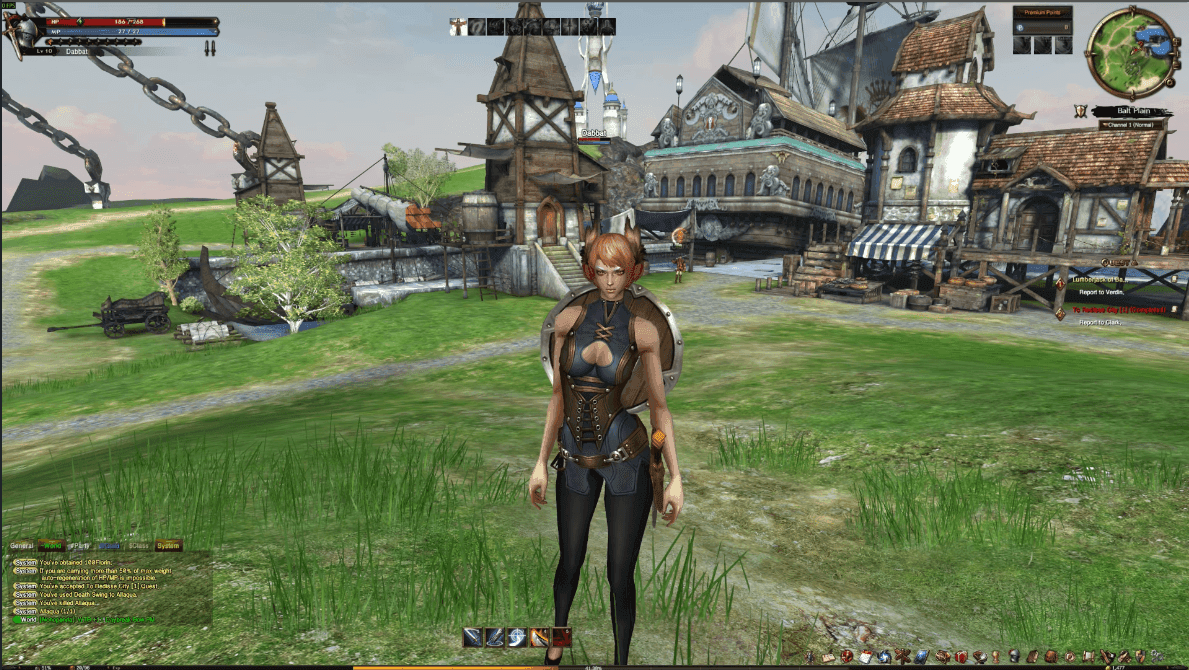
DK Online is a classic Korean MMORPG built around weekly castle sieges, guild warfare and a transformation system with more than a hundred collectible forms. Free to play on Steam, it offers five race...
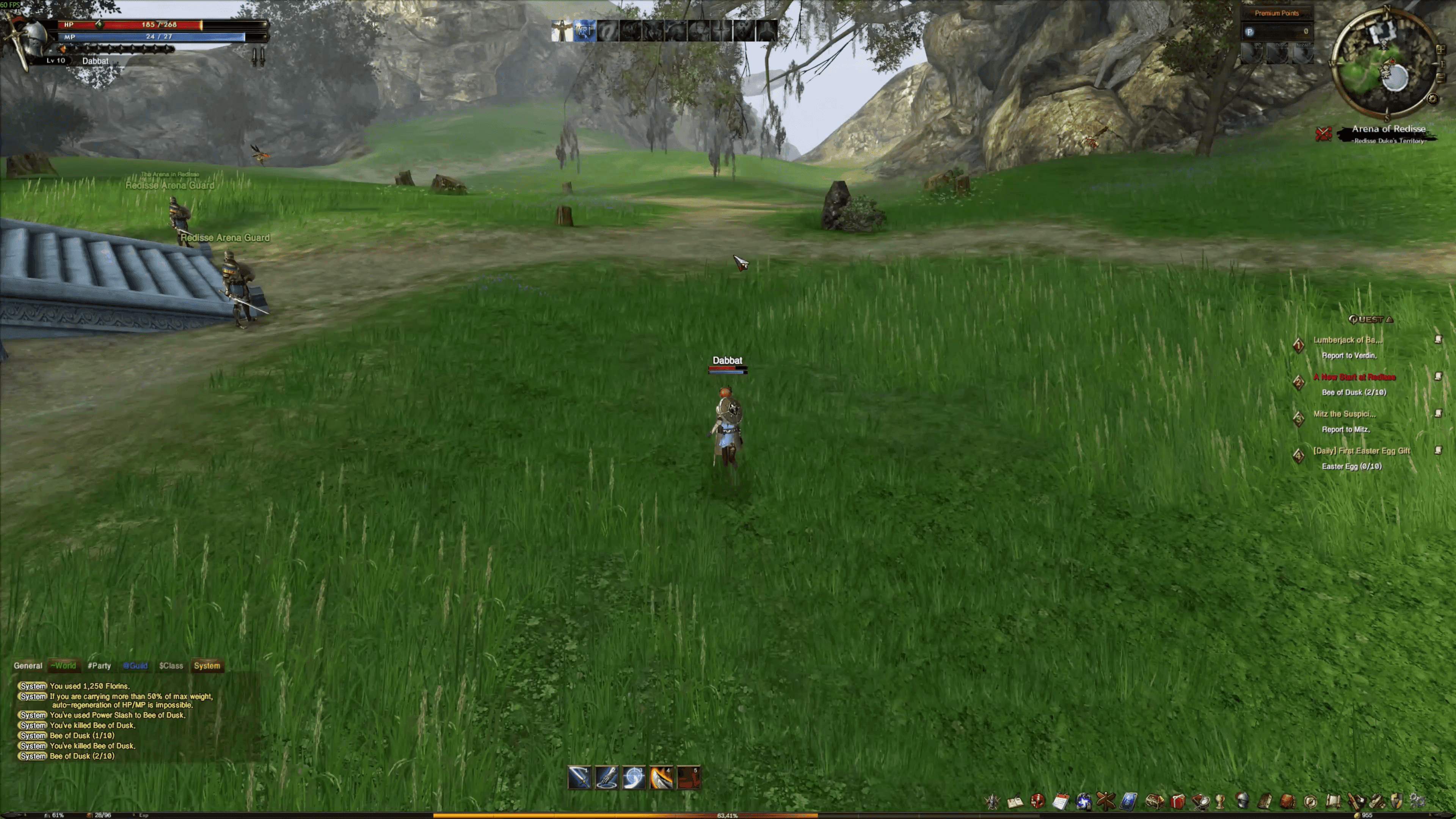
DK Online is a Korean fantasy MMORPG developed and published by Masangsoft, first launched in the West by Aeria Games in 2013, taken offline months later, and relaunched on Steam in March 2019 by its original developer. It is a tab-target, PvP-first design built around scheduled castle sieges, collectible monster transformations, and gear enchanting that can destroy the weapon you feed it. Seven years after the Steam relaunch it is still receiving content: Season 4: Annihilation opened on 25 November 2025 and has been patched through 2026.
Quick take: DK Online is worth a weekend to anyone who wants a 2010s Korean siege MMO with genuine consequences, and worth avoiding for anyone who expects a level playing field. The Saturday castle wars and the alignment system that governs open-world killing both still function as designed; the levelling grind, the dated client and the shop's grip on progression are exactly as they were a decade ago. Its 48% Steam score reflects a split audience rather than a broken game.
Everything DK Online asks of a player points at one hour a week, Saturdays 11:00 to 12:00 UTC. That is when castle sieges run. Applications open on Sunday afternoon and close Saturday morning, guilds need to be level 2 or higher to register, and the sign-up happens at a Herald NPC near a village entrance. The documented targets are the duke's castles of Redisse, Laden and Emtland.
The rules reward preparation over improvisation. Gates come in an outer and inner pair, and a destroyed gate cannot be rebuilt while the siege is running, so a defending guild that loses its outer gate in the first ten minutes spends the remaining fifty with a hole in the wall. Registered participants take no death or PK penalty inside the zone. Anyone who wanders in unregistered does take one, which makes bystanders free targets rather than a nuisance. Attackers can plant a guild camp that restores health and mana within a radius; defenders cannot. Teleport scrolls stop working across territory lines for the duration.
Victory runs through a single item. The attacking guild leader who breaks the castle and claims the Authority of the Duke takes ownership immediately — a midterm victory — at which point the gates and castle regenerate and the new owner flips to the defending side for whatever time is left. Whoever holds the item at the final bell is registered as lord, the gates come back at half health, and every character outside the lord's guild is dumped in the nearest town. The lord then sets and collects the tax rate across the territory. An hour of fighting produces a week of income and a name on a map, which is roughly the deal Lineage-descended siege MMOs have offered since the early 2000s.
Siege results are decided at the enchant window days before anyone reaches the gate. Weapons upgrade with 100% certainty from +1 through +6, and from +7 onward a failed attempt destroys the item outright. Masangsoft publishes the tables, which is more than many of its peers do, and the numbers are bleak by design: +6 to +7 succeeds 18% of the time, the next two steps land at 10% each, +11 to +12 sits at 5%, and the final upgrades on top-tier greatswords run 0.75%, 0.25% and 0.07%. Armour is safe to +4, accessories to +2.
The practical effect is a hard wall in the middle of every character's life. Reaching +6 costs materials and patience. Reaching +9 costs a pile of destroyed weapons, and the scrolls that fuel the attempts are the exact commodity the cash shop is built around. Players who have cleared that wall talk about it the way gamblers talk about a table, because mechanically that is what it is.
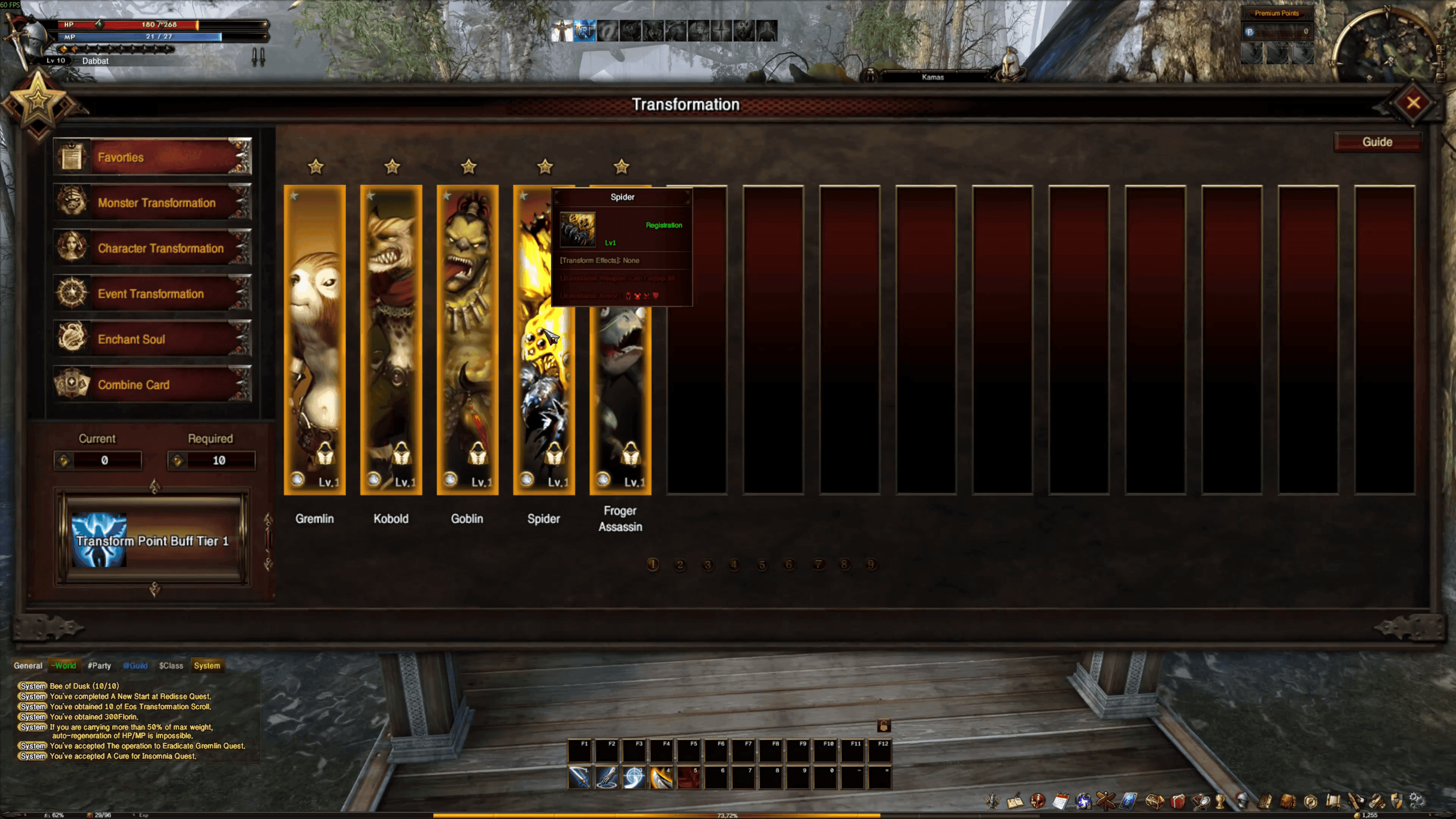
Transformation is the second character sheet, and Season 4 pushed it further than the rest of the game combined. There are over a hundred collectible forms, from named heroes to raid bosses, each arriving as a transformation card. Cards feed Transformation Points that apply as passive stats whether or not you are currently wearing a monster, so collection matters even to players who never use the shapeshift in combat. Soul registration layers additional bonuses on top, and Season 4 introduced SSS-grade cards as a new ceiling above the existing S and SS tiers.
The shapeshift itself ignores class restrictions, which is unusual and genuinely fun. A Paladin can wear a lizardman. The catch is equipment: a monster body that cannot hold a bow will simply unequip yours, and the interface flags which slots each form blocks before you commit. It is a system with real texture, and also the system most directly attached to the store, which is the tension the whole game runs on.
Yes, in the plain sense of the phrase: DK Online sells character power, not only convenience. Season 4's Steam DLC runs from a free First Steps Pack through $8.99 Growth and Convenience packs to a $49.99 Limitless Boost Pack, and a $1.99 pack sells transformation cards directly. The higher tiers guarantee an SS-grade card, an exclusive mount and stacked premium buffs with improved drop rates. Steam's own store labelling lists chance-based purchases, and the Premium Point counter sits permanently in the main interface next to the health bar.
Steam reviews sit at 48% positive across 741 posts, and monetisation is the through-line of the negative half — a recurring complaint is that progress past the middle levels becomes impractical without shop items. The counterweight is the season structure. On a freshly opened season server the gap between a paying player and a patient one is narrower for the first few weeks, before the enchant wall reasserts itself, and that early window is a large part of why Masangsoft keeps opening new servers instead of expanding old ones.
The road to all of the above is a conventional 2010s Korean levelling grind, delivered without apology. New characters pick one of five races — Human, Elf, Gray Elf, Lycan and Diel — and one of five classes, Warrior, Sorceress, Warlock, Paladin or Archer, with each class open only to certain races. Balt Island handles the tutorial, then the questing moves through Redisse territory into Laden, Emtland and Chronobe, with the wiki organising the middle game into hunting-ground brackets rather than a story.
Combat is tab-target with a hotbar and one clever wrinkle. A rage gauge charges as you kill and unlocks a rage skill when it fills, which gives long grinding sessions a rhythm. Monsters are typed as beast, undead, elemental or demon, and you match Magical Catalysts to the type on screen, so consumable management is a live concern rather than a menu chore. Inventory weight is the other constant: worn gear counts toward the limit, and players warn that a loaded character stops regenerating, which turns every trip back to town into a decision about what to leave behind.
Instanced content fills the gaps between siege weekends. There is a Time Dungeon, a Colosseum, the Chamber of Secrets, the Prison of Judge, and a Lava Dungeon that was rebuilt in January 2026 as Nadkas Lava Dungeon, where guilds compete for control of the Haunted Barrier. In February the Dream Labyrinth was reworked into a PvP dungeon open from level 45, with free-form group entry instead of guild registration.
Open-world PvP is unrestricted, and the accounting happens afterwards through the Inclination alignment system. Characters start Neutral with a white name; grinding monsters without attacking anyone pushes toward Lawful and a blue name, which grants scaling defence and magic defence bonuses above 10,000 points. One kill on a lawful player drops you straight to Chaotic at −5,000, then deducts a further 3,000. Killing another chaotic player costs only 750, which quietly sorts the server into people who hunt each other and people who hunt everybody.
Below −28,000 the penalties bite. A Warn Outlaw debuff broadcasts your status to nearby characters, guards attack on sight, and a chaotic corpse drops considerably more items than a lawful one. On the battle server the item-drop rule applies to everyone regardless of alignment, so even a spotless Lawful character can lose gear on death. Death has weight here in a way that most 2026 MMOs have carefully engineered away.
The guild is the unit of play, and the game barely pretends otherwise. War declarations, alliances, heraldry, guild quests and guild dungeons all sit in the main menu, and the recruitment board exists because a solo character stalls. That stalling is the most common complaint in Steam's recent posts: early levels are manageable alone, the mid-game increasingly is not, and players advise finding a group through Discord before committing time.
Season 4's headline social addition is the Earl's Castle, reopened on 23 December 2025 as a monthly prize. The guild topping the monthly rankings takes a private stronghold with restricted entry, discounted shops, a recovery buff and fast-travel scrolls, and ownership resets on the first of each month. It is a smart piece of design for a small population — a second competitive objective on a different clock from the Saturday siege, so guilds have something to organise around midweek.
DK Online is small but demonstrably running. Steam concurrency has been in the low hundreds through 2026: trackers logged figures ranging from roughly 90 to 350 depending on the day and the source, against a 2024 high of 477 and an all-time Steam peak near 890, with SteamSpy estimating owners somewhere between 200,000 and 500,000. Those figures move fast and should be read as a range rather than a measurement. Steam also captures only part of the picture, since Masangsoft distributes the game through its own client as well and operates a separate Korean service.
The update cadence is the more useful signal. Nadkas Lava Dungeon arrived in January 2026, the Dream Labyrinth rework and a Steam PvP Fest DLC followed in February, and seasonal events and maintenance windows have continued through the summer. On 30 July 2026 Masangsoft opened pre-registration for a hardcore season server due to launch on 27 August, with the Challenge and Item Collection systems removed after player feedback and greatsword balance readjusted — a studio that still reads its forums, whatever else you make of the shop.
The client shows its age and makes no attempt to hide it. DK Online is a DirectX 9 game whose store page still lists Windows XP, Vista and 7, with a minimum of a GeForce 7600 and 2 GB of RAM, a recommendation of a GeForce 8800 and 3 GB, and 15 GB of storage. Art direction is late-2000s Korean high fantasy: heavy plate, oversized weapons, dark stone castles, and a colour palette that never quite escapes brown. On any machine built this decade it runs at whatever frame rate your monitor asks for.
The Steam tag cloud, meanwhile, includes both "Souls-like" and "Anime," which says more about how tag voting works than about anything in the game.
The most honest thing to say about DK Online is that its cash shop is not a flaw sitting on top of the design — it is load-bearing, and the game is more coherent for never having pretended otherwise. Masangsoft publishes the enchant odds, labels the chance-based purchases, prices the boost packs on the store page, and then builds a game where the consequences of all three are visible every Saturday at eleven. Nothing here is a bait and switch. It is a bill, presented up front.
What that bill buys is a set of stakes the genre has spent fifteen years removing. A weapon that can be destroyed. A kill that marks you for days. A castle that generates income and can be taken from you in an hour by a guild that organised better. Modern MMOs have replaced almost all of that with systems designed to never punish anyone, and the result is that very little in them matters. DK Online matters, aggressively, in both directions at once.
So the question is not whether the game is good in the abstract. It is whether you want a 2013-vintage Korean PvP MMO badly enough to pay its entry fee in either money or months. Most people don't, which is why 48% of Steam reviewers were unhappy and the servers hold a few hundred players instead of a few hundred thousand. The ones who do want it have a live, patched, still-argued-over game to play, and there are not many of those left.
Yes. The client is free on Steam, with optional DLC packs priced between $1.99 and $49.99 and an in-game shop selling premium buffs, enchant scrolls and transformation cards.
It is. Season 4 has received dungeon reworks, seasonal events and balance patches through 2026, and Masangsoft opened pre-registration for a new hardcore season server in July.
Not full loot, but death drops items, and chaotic characters drop noticeably more than lawful ones. On the battle server, every character can lose items on death regardless of alignment.
Up to a point. The early levels are comfortable alone, but dungeons, sieges and the Earl's Castle are guild content, and Steam reviewers consistently report the mid-game slowing to a halt without a group.