 F2P · Early Access
World of Sea Battle
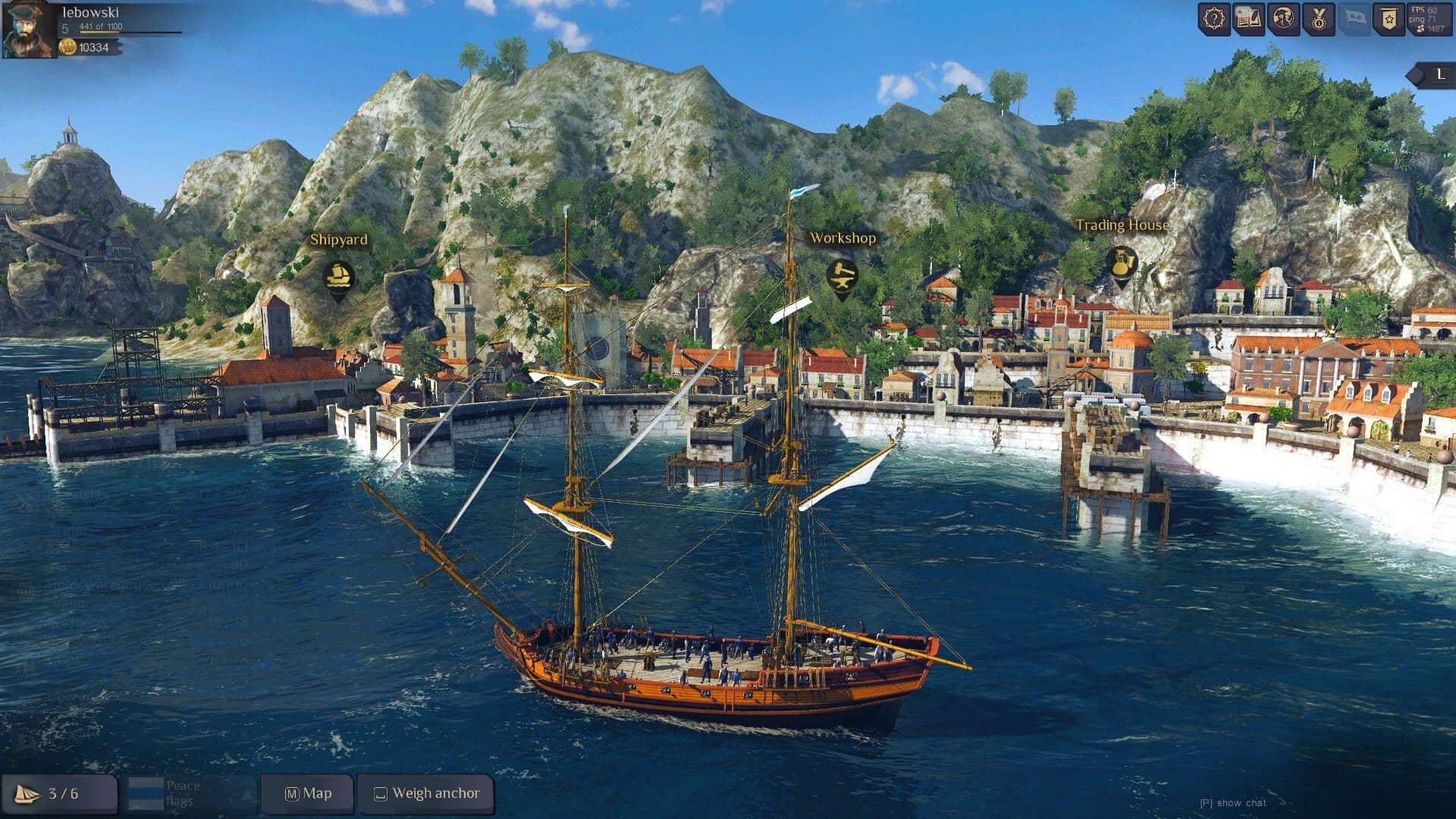
A grand Age of Sail open-world naval MMO sandbox featuring authentic wind rose physics, manual broadside ballistics, and territorial port conquests.
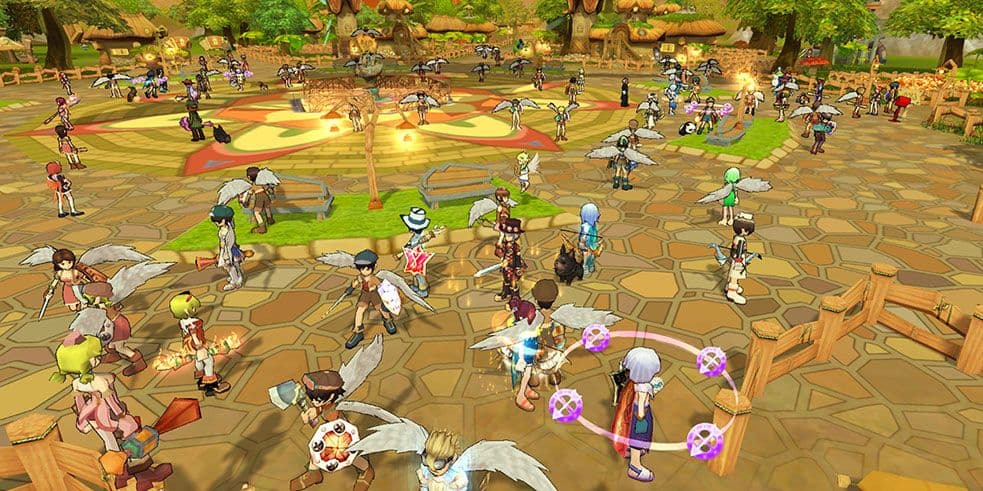
A browser-based rebirth of the legendary classic MMORPG featuring instantaneous launch with zero client downloads. Set in the floating skies of Madrigal, heroes master seamless three-dimensional fligh...
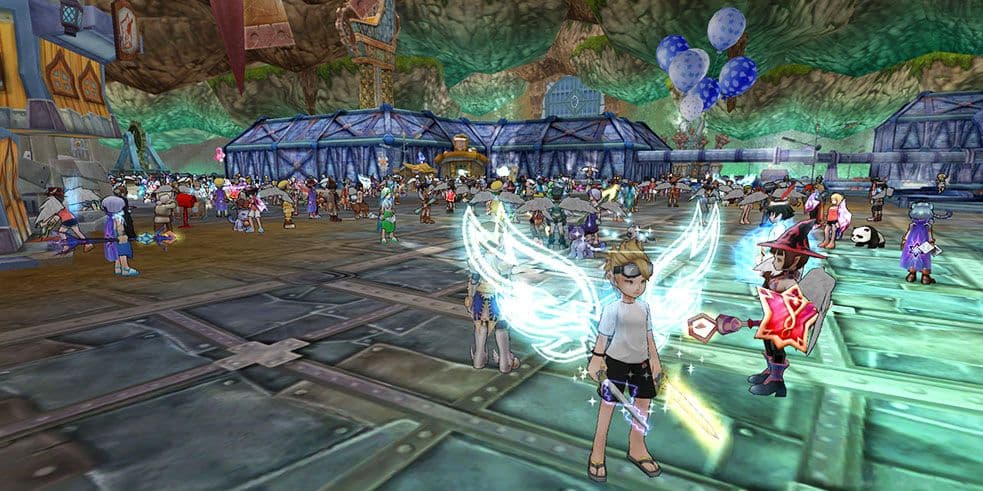
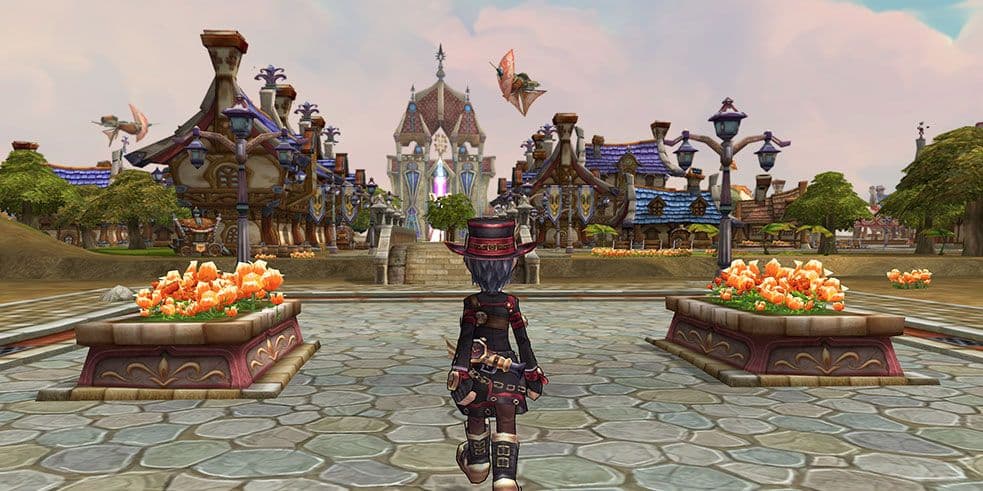
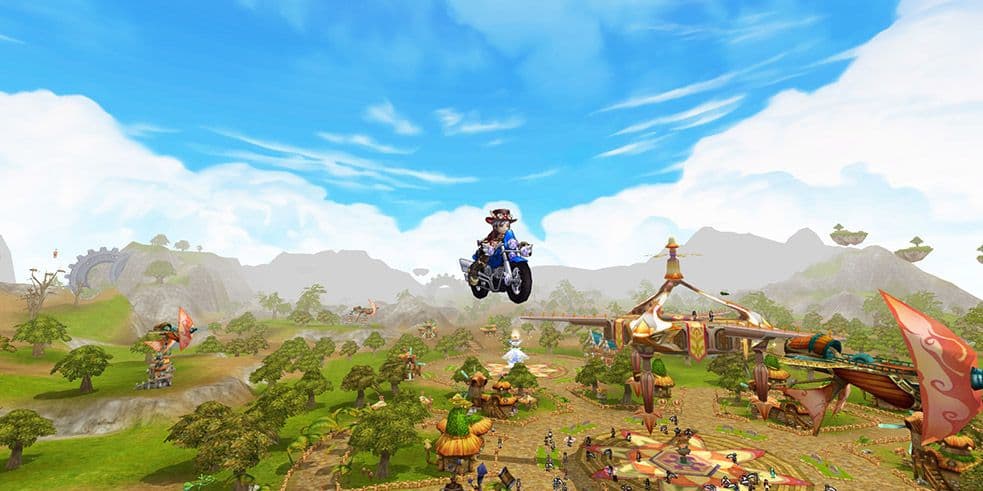
Quick take: This browser-native revival of classic Korean MMORPG Fly For Fun resurrects the golden era of online grinding with zero client downloads. Built around seamless three-dimensional flight across the floating islands of Madrigal, an expansive three-tier class progression capped at level 190, meditative mob farming, bustling open-air bazaars in Flarine, and intense Guild Siege bloodbaths, the game delivers pure old-school role-playing. It is tailored for veterans craving group-dependent progression, yet demands readiness for heavy party-buff reliance and cash-shop enhancement protection scrolls.
One click. Zero launchers. In an age where mainstream online blockbusters demand upwards of one hundred and fifty gigabytes of disk space, hammer solid-state drives, and force players to endure excruciating shader compilation screens, launching a full 3D universe inside an ordinary browser tab feels like an optical illusion. You punch in a web address, tap enter, and within seconds a sprawling realm unfolds before you: hundreds of active players, hoverboards streaking across the sky, and bustling town squares teeming with trade. French developer Sniegu Technologies, collaborating directly with the franchise's original creators at Gala Lab, pulled off a technological masterstroke that early-2000s gaming could only dream of.
By rebuilding the archaic 2004 engine from scratch on modern HTML5, WebGL, and WebAssembly architecture, the team stripped away decades of technical baggage. There are no proprietary patchers, no conflicting third-party anti-cheat drivers, and zero operating system friction. The game maintains a locked sixty frames per second, featuring clean dynamic lighting, high-resolution texture filtering, native anti-aliasing, and expansive view distances whether running on an enthusiast desktop rig, a portable Steam Deck, or an entry-level tablet.
Yet visuals are merely the entry ticket. The real triumph lies in the uncompromising preservation of classic gameplay DNA. This is no hollow mobile auto-battler masquerading as an RPG. It is a genuine golden-age virtual world. Every stat point is allocated by hand. Every fraction of a percentage toward the next level cap requires dedication, and an untimely death out on the hunting fields slashes your hard-earned progress. The skies of Madrigal do not coddle newcomers: they toss you onto green pastures with nothing but a wooden blade, trusting you to master flight, build social alliances, and chase rare upgrading cards.
The name Fly For Fun was forged from an ambitious mandate twenty years ago: liberate players from flat ground and surrender the sky to their control. While early 3D and isometric role-playing games trapped avatars along mountain valleys and invisible boundaries, developer Gala Lab positioned aerial traversal as the foundational pillar of the entire game. In Flyff Universe, that freedom operates at full throttle, sweeping away artificial restrictions.
Sovereignty over the skies unlocks at level twenty. Having accumulated modest pocket change, an aspiring pilot visits the station master in the central hub of Flarine or the sun-drenched plains of Saint Morning, buys a creaky wooden Broom or sleek Flying Board, equips it, and taps the jump key. The ground drops away. Your avatar ascends into the upper atmosphere. No stamina bar. No countdown timers or invisible ceilings: as long as your hands steer the craft, the sky is entirely yours.
The geography of Madrigal is a surreal celestial archipelago, shattered by the mythical wrath of goddess Rhisis. Between the rolling green hills of Flaris, the desert canyons of Saint Morning, the grim smokestacks of Darkon, and the northern cliffs of Kaillun yawns an endless expanse of clouds. While earthbound travelers remain shackled to scheduled airships and teleportation charms, a broom pilot simply sets a course for the horizon, crossing the void in a straight line.
Flight is far more than a scenic transit system; it is an active combat arena. Flocks of ferocious airborne beasts — Air Masquerpets — drift across the cloud corridors. Engaging them requires sharp dogfighting instincts. Entering combat mode locks camera focus onto the target, allowing pilots to weave through the air, manipulate altitude, and unleash spells, arrows, or lunging strikes on the fly. Hunting aloft rewards specialized crafting components and abundant experience pools, offering a peaceful alternative away from crowded ground farming rotations.
As progression mounts, that beginner broom gives way to an impressive hangar. Rare hoverboards, luminous angel wings, mechanical gliders, and mythical dragon mounts propel adventurers at blistering velocities. Yet aerial freedom carries lethal risk. Potions cannot be consumed in mid-air to top off health. Accidentally tapping the dismount key thousands of feet above the earth results in a terrifying terminal velocity plunge onto jagged rocks or ocean waves. You hit the ground, die instantly, and watch a chunk of hard-won experience evaporate. A bitter lesson in altitude awareness.
Every journey in Flyff Universe begins at absolute ground zero. You awaken on the sun-soaked meadows outside Flarine as a lowly, classless Vagrant. In your hands is a crude practice wooden sword, on your back a ragged linen tunic, and ahead lies a countryside overrun by hopping Aibat bats, wide-eyed Mushpang mushrooms, and snarling Burudeng tree stumps. Those initial fifteen levels serve as a trial by fire, testing a newcomer's appetite for old-school monster grinding.
Reaching level fifteen unlocks your foundational crossroads. Speaking to class mentors in town grants graduation into one of four basic callings:
The real character specialization ignites at level sixty, where each foundational archetype fractures into two distinct elite professions. A Mercenary faces an existential choice: forge themselves into a dual-wielding Blade, delivering unmatched single-target damage through blinding attack speeds, or become an unyielding Knight, locking down monolithic bosses behind tower shields or cleaving entire armies with greatswords. Acrobats choose between the single-target critical assassin Jester and the undisputed king of ranged mob kiting, the Ranger, whose volley attacks scour whole valleys clean.
For mages, the fork in the road is equally stark: take up the two-handed staff of an Elementor to blanket fields in fiery storms and blizzards, or master the psychic dominance of a Psykeeper, crushing foes with gravity wells, punishing attackers with Crucio, and ruling dueling circles. For Assists, the decision dictates their entire social identity: become the revered cornerstone of every raid as a pure Ringmaster, or walk the path of a self-sufficient martial artist as a Billposter, whose legendary Asalraalaikum strike incinerates your entire mana pool for an instantaneous one-shot kill.
The arrival of the Muran's Awakening expansion pushed character progression to a grand level 190 cap, introducing the third job tier. Hardened veterans ascend to supreme roles: Slayer, Templar, Harlequin, Crackshooter, Arcanist, Mentalist, Seraph, and Force Master. Each ultimate class unlocks distinct active and passive mastery trees that redefine endgame combat dynamics.
Yet there is a severe mathematical catch. Attribute points — STR, STA, DEX, and INT — are allocated strictly by hand upon each level-up. Pumped stamina instead of dexterity into your archer? Your damage profile collapses into mediocrity. Messed up your build? Pay up. The developers do not hand out free resets. Correcting stat mistakes demands real-world currency in the cash shop or millions of gold coins farmed on the market. Precision planning is mandatory.
The combat architecture of Flyff Universe is grounded in traditional Tab-target mechanics, but its internal tempo is relentless. There are no sleepy lulls in rotation. Engagements split cleanly into two polarized playstyles: single-target meat grinders (1v1) and wholesale mob train herding (AoE).
The 1v1 duelist pursuit is a manic race toward absolute attack speed and critical multiplier thresholds. Dual-wielding Blades, Bow Jesters, and strike-build Billposters push their Action Speed stat straight to the hard cap of one hundred percent. Under full party buffs, attack animations blur into an auditory jackhammer. Monsters dissolve within two to three seconds. Your operational loop is pure kinetic meditation: hammer Tab, manage immediate positioning, and chain spawn points at peak kills-per-minute efficiency.
Area-of-Effect grinding offers a radically different adrenaline surge. Sturdy knights, archers, and elemental sorcerers hunt by the herd. They sprint across meadows, rounding up thirty or forty shrieking masquerpets into a dense parade. A Knight absorbs that crushing wave through heavy armor ratings and shield block percentages. Fragile casters have no such luxury: one stray swipe means instant death. Their survival hinges on the legendary Hit & Run doctrine — weaving broad concentric spirals while casting ground-targeted spells and slowing volleys on the move without receiving a single scratch.
Tying the mechanical suite together is the Action Slot. This dedicated five-slot interface allows players to assemble custom ability sequences. Pressing a single hotkey executes the entire chain seamlessly, granting stacking bonuses to animation speed and skill potency with every successive hit. For sorcerers, it compresses long elemental cast times into a devastating salvo. For melee bruisers, it guarantees an opening stun precisely before dropping an executioner strike.
Yet simplicity masks mortal peril. Monster movement speeds and aggro thresholds punish complacency without mercy. Suffer a micro-stutter in network latency? Clip an awkward polygon along a hillside? That forty-monster train swallows you whole in a fraction of a second. Stun-locked. Annihilated. And death out in Madrigal strips away a painful chunk of your hard-farmed experience bar. No safety nets.
Solo wanderers do not thrive in Madrigal. In most modern online playgrounds, grouping is an afterthought reserved for brief dungeon queues before everybody disbands. In Flyff Universe, communal cooperation is an absolute religion. The harsh realities of the open world drive that lesson home within your first few hours.
A party in this game functions as an independent, living entity possessing forty tiers of progression. As squad members fell monsters, the group accumulates points that unlock formidable team-wide passives. A party leader triggers Link Attack, amplifying every member's damage output in direct proportion to how many allies are active in the roster. They toggle Lucky Drop to coax rare armor from boss corpses, or summon a scattered fighter across continents using Call. Experience divides either evenly among similarly leveled adventurers (Level) or strictly by damage contribution (Contribution), establishing an enduring culture of «leechers» — passive party fillers who maintain roster headcounts so the main combatants reap maximum multiplicative bonuses.
Yet the true deity of group play is the support class. The Assist and its master evolution, the Ringmaster, are the most sought-after entities in the entire game. Without them, you are virtually paralyzed. Haste accelerates basic attack animations by almost double. Cannon Ball injects dozens of raw dexterity points. Beef swells physical attack ceilings, while Heap Up doubles total health pools. A warrior stripped of Ringmaster buffs feels sluggish, underpowered, and constantly on the brink of falling to a stray critical hit. Elite healers are lavishly wined, dined, geared for free, and guarded like royalty.
Companionship extends into an intricate pet ecosystem. Pets fall into two strictly defined branches: automated scavengers (Pick-up Pets) and cultivated battle beasts (Raised Pets). Scavengers are indispensable quality-of-life tools: mechanical pandas, kittens, or dragons that vacuum gold Penya and equipment across your screen, saving your fingers from manual clicking fatigue. Combat pets are temperamental hatched companions scaling from rank D up to elite rank S. Tigers boost strength, Dragons enhance pure attack power, and Lions fortify stamina. Forget to feed them on schedule? Your pet perishes. Permanently. Reviving a neglected companion demands a steep fee in recovery scrolls.
Romantic bonds offer tangible combat advantages as well. The Couple System enables two characters to exchange rings and nurture relationship levels by fighting alongside one another. The longer a pair grinds together on the fields, the higher their intimacy level climbs, unlocking passive attribute enhancements, decorative couple titles, and instantaneous map-wide teleportation to your partner. In Madrigal, companionship pays dividends.
No sterile auction house windows. No one-click purchases from distant database menus. Commerce in Flyff Universe is an energetic, bustling open-air bazaar where transactions happen face-to-face across cobblestone streets.
The beating heart of trade pulses through the eastern avenues of Flarine and the plazas of Saint Morning. Hundreds of player avatars sit in orderly rows running individual merchant stalls (Personal Shops). Glowing marquee banners advertise bargains: cash-shop scroll buyouts, clean level 105 armor sets, bulk elemental cards, and historic bows. Sniping an underpriced relic requires pacing through aisles and inspecting inventories manually. Dedicated traders invest in offline vendor permits, allowing their stalls to operate around the clock while their PCs sleep.
Fueling this thriving marketplace is the gold currency of Madrigal — Penya. While rival virtual economies suffer rampant hyperinflation, Penya retains immense purchasing power because it is aggressively incinerated by a punishing, multi-layered equipment refinement gauntlet:
A pristine +10 armor set packed with quadruple attack cards elevates a character to near-deity status. Yet the path to perfection is paved with millions of vaporized Penya and frayed nerves. The risk is staggering. The thrill is undeniable.
Once character progression eclipses the level one hundred milestone, mindless mob farming on sunny pastures steps aside. Real endgame PvE begins. Flyff Universe refuses to confine veteran adventurers inside sterile instanced hallways, pairing open-world field boss hunting with demanding guild raids.
The first tier of elite hunting is tracking down Giants (Giants). On major spawn grounds, an immense version of standard masquerpets periodically materializes. These titans boast massive health reservoirs and devastating Area-of-Effect shockwaves. When their health drops below thirty percent, they enter a berserk state (Enrage), multiplying attack frequency and critical strike chances. Surviving this onslaught pays out generously: Giants drop coveted «Green» class sets (Green Sets) that grant potent set bonuses, along with premier unique weaponry. The addition of rare Violet monsters (Violets) turns standard exploration into a constant jackpot lottery.
For organized guilds, the game lays out a rigorous dungeon hierarchy. Mid-tier progression guides parties through the gloom of Dekane Mines and into the jungle thickets of The Wilds, where shaman Khan tests squad interrupts. Yet the crowning achievement of classic raiding remains the Clockworks titan — Clockworks. This colossal clockwork automaton sits trapped inside a cyclopean iron cage deep within Darkon. The encounter is a masterclass in raid discipline: tanks swap aggro under flying cogs, healers funnel life into frontline anchors, and ranged damage dealers toe the perimeter to evade lethal radial blast waves. Conquer Clockworks, and even greater terrors await: the volcanic dragon Red Meteonyker and the shadowy lord Kalgas.
The Muran's Awakening expansion pushed endgame boundaries into the far north. The rugged continent of Kaillun and the beastfolk stronghold of Eillun unlocked hunting territories scaling all the way to level 190. Here lies the sprawling open-world dungeon Euphresia and the lair of the god of death — Ankou's Asylum. Inside Ankou's sanctuary, raiders must coordinate altar activations to shield against lethal boss wipe mechanics, while The Mysterious Castle challenges squads to a rapid boss-rush endurance run.
The catch of high-end PvE lies in brutal territorial competition. Open-world Giants operate on tight, variable spawn timers, sparking vicious tag disputes between rival guilds. Inside high-tier sanctuaries like Ankou's Asylum, a single positioning lapse from one party member triggers an instant party wipe, wiping expensive food buffs in seconds. Nerves are always frayed.
No multi-hour castle sieges battering wooden gates. No tedious marathons through empty ramparts. Guild warfare in Flyff Universe is boiled down into rapid, ultra-concentrated gladiatorial bloodsport. The Guild Siege mode is pure distilled adrenaline.
Battles erupt inside a compact circular arena. Competing guilds submit a lineup of defenders and frontline strikers, each allocated a limited pool of shared lives. The gates swing open, and the clash begins instantly. Rounds conclude in minutes. Life totals dwindle in seconds. The victor is whichever guild racks up the highest kill tally while keeping their own champions standing until the final bell tolls.
Siege tactics are mercilessly calculated. The signature gambit is the infamous kamikaze trade executed through Asalraalaikum. A Billposter or Force Master sneaks across the field under stealth, dumps their entire mana reserve into a single punch, and instantly obliterates an enemy star sorcerer. One second, one kill. The striker is immediately countered and dropped by ranged archers, but the strategic trade is already cemented. Triumphing in Siege awards prestigious Red Chips (Red Chips), exchanged for the strongest dedicated PvP gear and cloaks in the game.
For lovers of raw chaos, dedicated PK channels permit open combat outside safe zones. Yet the karma penalty is harsh: red-named murderers risk dropping valuable gear alongside experience points when hunted down by vigilantes. Meanwhile, structured competitive play received a major boost with the Madrigal Tournament overhaul, shifting competitive skirmishes into a tactical 4v4 format backed by seasonal ladders.
The premier competitive phenomenon remains the FWC (Flyff World Championship). This annual tournament server operates on accelerated progression multipliers for experience, drop chances, and upgrade odds. For several months, players worldwide enter a feverish race to conquer the level 190 cap and claim tournament supremacy. The stakes are immense: real-money cash prizes, permanent prestige titles like The First Vindicator, and golden player statues erected in town squares. Once the championship concludes, all characters and accrued wealth transfer freely onto permanent home servers.
Yet competitive reality is unforgiving for undergeared aspirants. Veterans wielding fully upgraded +10 armaments and quad-slotted attack card armors erase novices with a flick of the wrist. On the Siege floor, only the sharpest builds and deepest pockets survive.
Entry is free. No subscriptions. You can roam the floating continents of Madrigal without spending a dime. But as progression approaches the endgame, an imposing monetization iceberg inevitably emerges: the fCoin cash shop.
The beating heart of the game's commercial engine is enhancement insurance. From +4 upward, every hammer strike with a Sunstone risks atomizing your weapon into nothingness. Insurance costs real money. Base gear requires Scroll of SProtect, armor piercing demands Scroll of AProtect, and the level 180 tier from Muran's Awakening mandates the specialized Scroll of PProtect. Attempting high-level enhancement without these safeguards is outright financial suicide. Flanking these are experience boosters like Scroll of Amplification, automated scavenger pets, bag expansions, and seasonal Universe Pass tracks.
What saves this ecosystem from pure predatory extortion is the open player market. Cash shop scrolls do not bind to accounts upon purchase. Big spenders regularly liquidate them through personal vendor stalls across the avenues of Flarine for in-game Penya. A diligent free-to-play grinder who farms Green sets from Giants and flips elemental cards can easily fund their entire enhancement journey purely through gameplay effort. Time converts into tangible progression.
Flyff Universe in 2026 is an audacious technological statement. Studios Sniegu Technologies and Gala Lab pulled off what the industry once deemed unfeasible: taking a beloved twenty-year-old Korean classic and transplanting it onto a native web stack without sacrificing visual fidelity or mechanical depth.
There are no automated mobile autoplay toggles here. Instead, you get the wind howling past your ears on a wooden broom, the bustling bazaar chatter of Flarine, and the hypnotic cadence of honest grinding. Fire up your browser, tap the spacebar, and climb into the clouds. The skies of Madrigal are wide open.
F2P · Early AccessA grand Age of Sail open-world naval MMO sandbox featuring authentic wind rose physics, manual broadside ballistics, and territorial port conquests.
 F2P · Live
Aden's castles never stay in the same hands for long, and Lineage II has built an entire twenty-three-year…