 F2P · Live
Lineage 2 Essence
Lineage 2 Essence is NCSoft's free-to-play take on the classic Korean MMORPG Lineage II, built around faster…
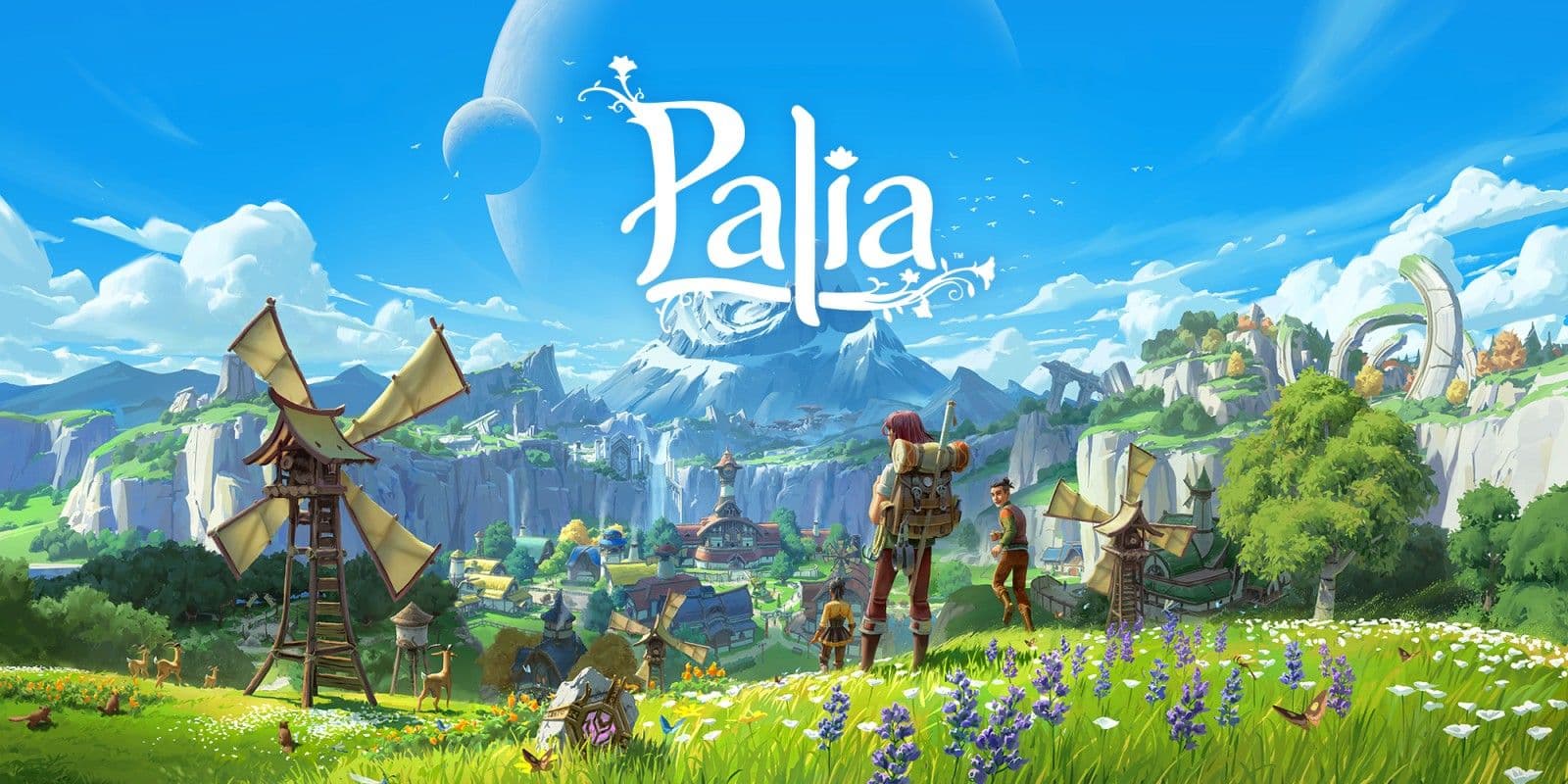
Palia is a free-to-play multiplayer life sim where you farm, fish, cook and build a home in a fantasy valley that had given up on humans three hundred years ago. Nine skills, twenty-six villagers to b...
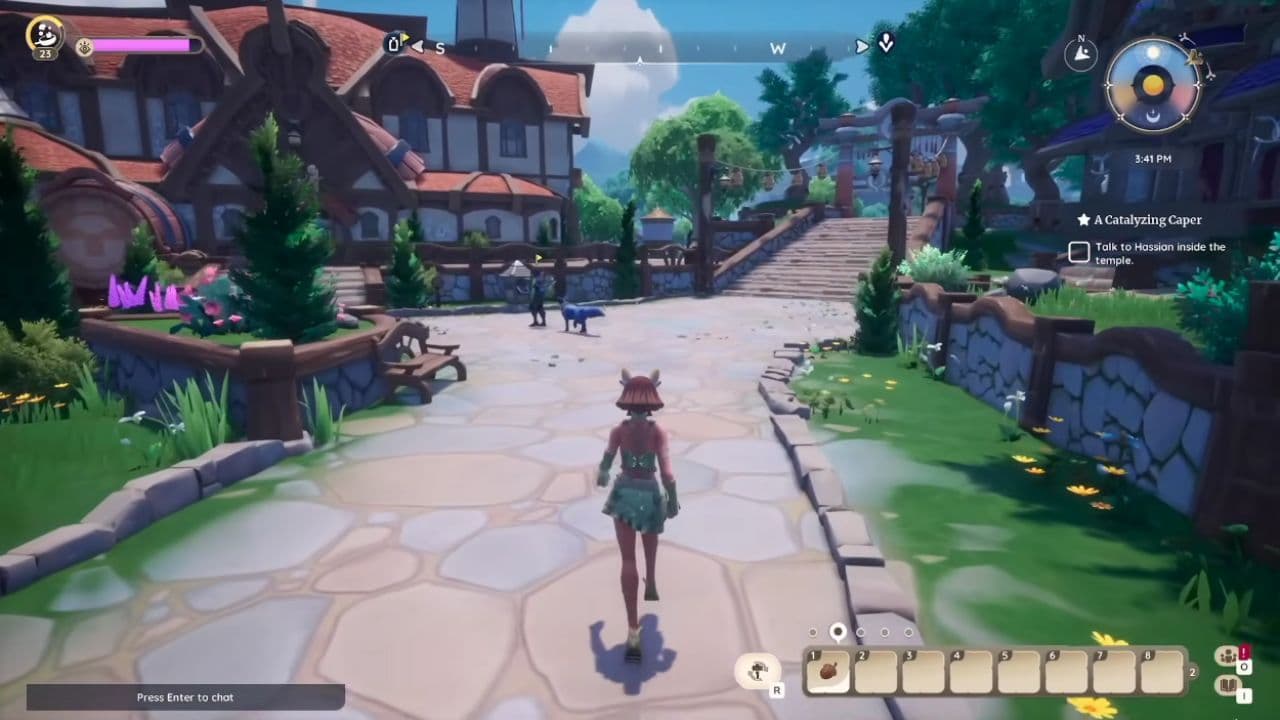
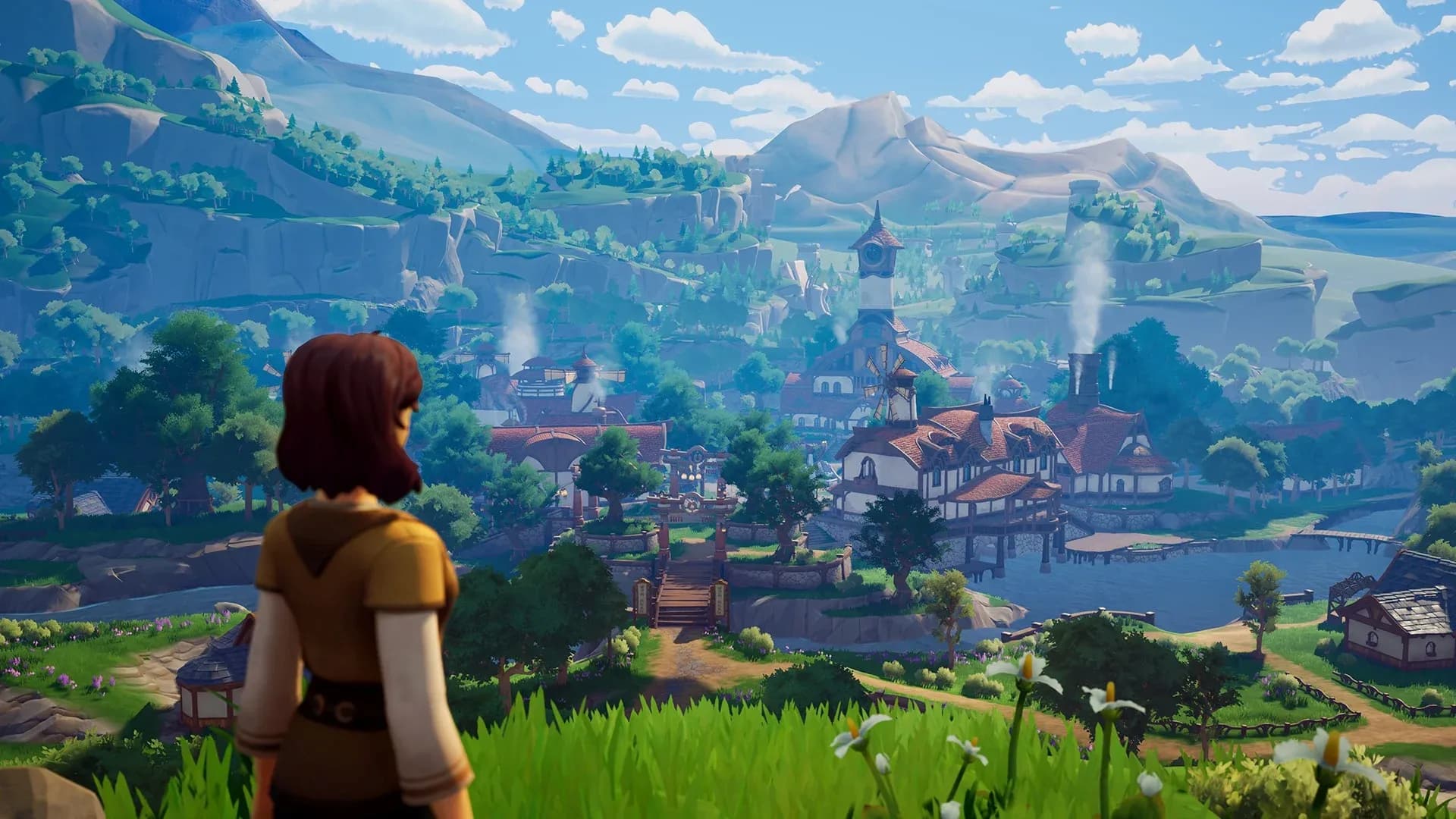
Palia is a free-to-play multiplayer life sim from Singularity 6, launched in open beta on PC in August 2023 and now playable on Nintendo Switch, PS5, Xbox Series X|S and Steam with full crossplay and cross-save. In place of combat trees and gear tiers it runs on farming, fishing, hunting, cooking and house-building, set in a fantasy valley whose residents believed humans had died out three centuries ago. Two free expansions later — Elderwood in May 2025, the Royal Highlands in May 2026 — the game has passed ten million registered players and is still, on paper, in beta.
Quick take: Palia is worth playing in 2026 if you want a life sim with other people in the room and no bill attached — the villager writing, the housing tools and the skill loops all hold up, and none of it is paywalled. Treat the MMO label as decoration rather than a promise. What Palia asks of you is patience with a game that never raises its voice, and never gives you a deadline either.
Palia's opening hour hands you land and tools, then steps back. You arrive in Kilima Valley as a human — the species the Majiri living there had written off centuries ago — and inside twenty minutes you own an axe, a pickaxe, a bug net, a fishing rod, a bow, and a housing plot with a foundation and nothing standing on it. There is no class to pick and no stat sheet to read.
The villagers handle the tutorials. Ashura teaches foraging, Hodari runs the mining guild, Einar takes fishing, Hassian takes hunting, and each introduction closes with a recipe rather than a reward chest. That framing matters more than it sounds. From the first hour, the thing you are being given is capability, not progress.
The loop shows itself quickly. You chop sapwood in the fields outside the village, carry it back to your plot, run it through a worktable into planks, then combine those planks with Chapaa fur — dropped by the small, skittish creatures that scatter the instant you draw a bow — to make a chair you can sit in. Every step in that chain belongs to a different skill, and every skill has its own guild store, its own medals to spend there, and its own tool upgrades that exist nowhere else.
Friction arrives early too. Stamina drains fast on a starting pickaxe, inventory fills faster than that, and the walk between Kilima Village and the ore-rich edges of Bahari Bay is long before you have a glider path worked out. None of it is punishing. It is simply slow in a way the game clearly considers a feature.
Palia has no character level. Progression splits across nine separate skills — Foraging, Mining, Fishing, Hunting, Bug Catching, Gardening, Cooking, Furniture Making and Ranching, the last added in patch 0.195 — each levelled purely by doing the thing it describes. Cook enough dishes and Cooking rises; nothing else moves.
The system's one hidden lever is the Focus Bonus, a percentage that stacks on top of every point of experience you earn. The formula is plain arithmetic: base XP plus base XP multiplied by your Focus percentage, so a new player at 20% Focus turns a 20-XP grilled meat into 24. Cooking pays the most reliably, since each dish awards its minigame step count multiplied by twenty — a six-step recipe is worth 120 XP, and every player who takes a portion from a shared cooking session collects the same base amount. Mining and Foraging sit at the other end, which is why they take the longest to grind by repetition alone.
There is no hard level cap, but there is a practical one, and it arrives sooner than veterans of other MMOs will expect. Essentially every tool recipe and guild-store item lands by skill level 10, after which each additional level costs a flat 5,000 XP for almost nothing. Gardening is the exception worth pushing past ten, because higher levels raise your odds of star-quality crops. For everything else, ten is the finish line, which means a dedicated player runs out of skill progression well before they run out of things to build.
Not in the sense the acronym usually promises. Palia distributes its world across instances of roughly 25 players, offers no player-to-player trading at all, and caps its guild equivalent — Communities — at 25 members with management tools most players describe as minimal. The original justification for having no trade was bot prevention, and it has never been revisited.
Cooperative hooks do exist, and they are genuinely pleasant when they fire. Fishing beside another player shortens your catch time. Hunting and mining share loot among everyone who contributed damage or swings. Cooking splits a recipe's steps across several people at once, and pays each of them the full base experience. On a busy server, a Bahari Bay ore run with three strangers is faster and friendlier than the same run alone.
The problem is that none of it is ever required. A reviewer at Seasoned Gaming logged over 150 hours and put roughly 95% of that time in solo, reporting that nothing in the game demanded a second player or meaningfully rewarded grouping. Palia sits at a 78 average across ten OpenCritic reviews, several of which note that the pacing and thin group features would suit a streamlined single-player game better. Long-running Steam threads make the harsher version of the argument: twenty-five players and a handful of zones is not "massively" anything.
What Palia actually delivers is ambient company. Other people are scenery that waves back, occasionally helps with a rock, and shows up in the chat channel when a world event spawns. Whether that sounds charming or hollow is the single best predictor of how you will feel about the game.
The villagers are Palia's strongest work, and the writing carries them. Twenty-six residents live across Kilima and Bahari Bay, ten of whom can be romanced with no restriction on who you pursue, and their friendship quests are where the story actually lives — the Ancient Human mystery unspools through people rather than through lore tablets.
Friendship is earned through conversation, one gift per day, and Weekly Wants — a rotating list of things each villager currently needs, refreshed every week, with more slots opening as friendship deepens. Einar asking for a particular fish to keep as a pet, Jel running short on silk: the requests come with a line or two of justification, which is why the system survives dozens of hours without curdling into a chore list.
It is also rate-limited by the calendar, and that is the honest complaint. One gift a day and weekly resets mean the deepest villager content is gated by real time rather than effort, so a player with a free weekend cannot spend it advancing the relationships that hold the narrative. The Of Barns & Briars update softened the daily loop with more than 200 rotating daily quests, two of which arrive each day, but the friendship ceiling still moves at the speed it wants to move.
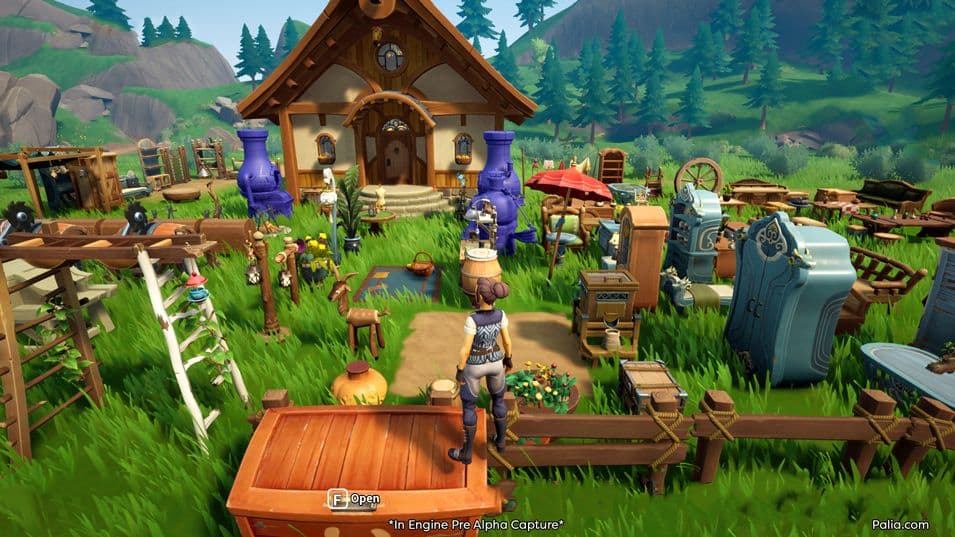
Housing is the system Palia has invested in hardest, and it is the reason players stay past hour one hundred. Your plot supports a 3,500-item decoration cap, raised from 3,000 with Elderwood, and a builder can spend a hundred hours without approaching it.
The September 2025 Home Lines update rebuilt the framework around modular, placeable components — multi-level building, open-air patios, and themed sets starting with the Alchemist's Cottage. The Royal Highlands pushed further, adding rococo-styled aristocratic decor, ancient-human architecture, and a three-story housing capstone awarded through the Path of the Pony seasonal track. Ranching, meanwhile, gave the plot a working function beyond display: barns, breeding stock, and production cycles that need tending.
Access rules are worth knowing before you plan a housewarming. A plot is visible to others only while you are standing on it and have it set to public, or set to community, which opens it to the other players sharing your housing server — strangers included. Private keeps everyone out. There is no persistent neighbourhood to wander while its owners are offline, which keeps Palia's building scene personal rather than shared.
Palia's release schedule is healthier now than at any point in its history. Elderwood arrived in May 2025 alongside the PS5 and Xbox Series launch, adding vertical exploration, a darker zone palette, magical relics that buff a party, and artifacts as a new equipment type. The Royal Highlands followed on 12 May 2026 as the largest adventure zone the game has shipped: golden open country, ancient human ruins, a new villager in Eshelon, a clothing dye system, and mounts — horses with adjustable gaits and stamina, breedable and raisable through Ranching.
The numbers responded. Royal Highlands launch day pushed Palia to 24,104 concurrent players on Steam, its highest peak ever, and Steam counts only a fraction of a playerbase spread across Switch, PlayStation, Xbox, Epic and the game's own launcher. Concurrency has since settled toward the mid-single thousands on Steam — treat any single figure as a snapshot, not a population count, since the platform mix makes precise totals impossible from outside.
Since autumn 2025 the studio has run on a seasonal cadence tied to real-world seasons. Fall Fantasy opened it, Spring Spectacle: Toadstool Tales brought the Zendruu Tree and the reclusive Ulfe in March 2026, and Sunkissed Summer has shipped in waves through June and July — Bahari Bliss, an Amberlight Affair with an elemental ranching critter, and another beach patch in late July. The gaps between builds have averaged under a month across the game's life.
Palia's studio nearly did not survive its own launch year, which is context any prospective player deserves. Singularity 6 cut 49 employees — 35% of staff — a month after the Steam release in 2024, then a further 36 people, roughly 40% of what remained, in May of the same year, marking the third round of layoffs since September 2023. Coverage at the time openly questioned whether the game would continue.
Daybreak Game Company acquired Singularity 6 and Palia in July 2024, and the game now sits in a portfolio alongside EverQuest, DC Universe Online and The Lord of the Rings Online — a publisher whose entire business is running MMOs for a very long time. Parent company EG7 opened a new Canadian studio, Ravenwake, in May 2026 to support Daybreak's MMO lineup.
The practical effect is a far more stable game than the one limping through 2024. The caveat is that Daybreak's model is patient, low-cost longevity rather than aggressive investment — a fit for Palia's ambitions, but not a sign that the group content the MMO crowd keeps asking for is on the way.
Palia is free to play with cosmetic monetization, and nothing sold in the store affects gameplay. Every skill, every villager relationship, every story quest, every zone and both expansions are free. What money buys is Palia Coins, spent on outfits, pets, glider skins, decor sets, and supporter packs such as the Highlands and Royal Highlands bundles that arrived with the expansion.
The seasonal battle pass is the Lunar Path, and it is where most of the community's frustration collects. Free tiers exist and reward genuine items — including, in the Royal Highlands track, the three-story housing capstone — while diamond-marked rewards need a premium unlock at 1,975 Palia Coins. A separate, more expensive purchase skips the levelling entirely, and the two options were labelled confusingly enough that players bought the pricier one expecting it to include premium access. The studio's response was reasonable: refunds of 1,975 coins or a granted premium path for anyone who bought both, plus a promise of clearer in-client wording.
Two older complaints persist. Coin bundles are sized so that you routinely overbuy to reach a single item, a practice players have flagged since 2024 and one the studio has not addressed. The sharper flashpoint came in May 2026, when a horse earned through quest completion turned out to need a purchase of around €25 to actually ride — a reward structure at least one prominent negative review called insulting. That reviewer later amended their post after the free, quest-earned Riffroc mount arrived, calling it the correct model. The pattern is a studio that oversteps occasionally and walks it back under pressure — a better record than most free-to-play peers manage.
Palia is one of the best free games on the market and one of the least convincing MMOs, and those two facts have never once interfered with each other. Everything it is actually good at — the villagers, the housing, the unhurried skill loops, the total absence of anything asking for your wallet — works whether or not the twenty-four other people on your shard exist. The multiplayer is a garnish that the marketing keeps presenting as the main course.
Three years of live operation have made the case better than any launch trailer could. The Royal Highlands is a real expansion with real ambition, Daybreak has stabilised a studio that was visibly bleeding out in 2024, and the seasonal cadence has been reliable enough that "will this game still exist next year" is no longer the first question in the room. Palia earned that.
Where it still falls down is depth for the player who finishes everything. Skill tracks stop mattering around level ten, villager relationships advance on a calendar rather than on effort, and there is no group content waiting at the far end to justify staying. The players who log two thousand hours here are builders and decorators, and Palia serves them extraordinarily well. Everyone else should expect a warm, generous eighty hours and a natural stopping point — which, for a game that costs nothing, is a fair trade rather than a disappointment.
Yes, completely. Palia is free on Steam, Epic, GeForce Now, Nintendo Switch, PS5 and Xbox Series X|S, and both expansions were released at no cost. Spending is limited to cosmetics, decor and the premium tier of the seasonal Lunar Path.
No. There is no competitive element to win at, and nothing purchasable affects skills, quests, resource gathering or story access. The most common complaint is the sizing of coin bundles and occasional paid unlocks on cosmetic rewards, not any gameplay advantage.
Yes, and most people do. Every skill, quest line, romance and zone can be completed alone; cooperative bonuses like shared mining loot and group cooking speed things up without ever being required.
Only hunting, using a bow against creatures such as Chapaa and Sernuk. There is no PvP, no dungeons and no combat-based progression, though at least one main story chain in the Royal Highlands expects hunting materials.
Roughly 60 to 100 hours covers the main story, both expansions and most villager relationships. Housing and decoration have no real endpoint, which is where players logging hundreds of hours spend them.