 F2P · Live
Lineage 2 Essence
Lineage 2 Essence is NCSoft's free-to-play take on the classic Korean MMORPG Lineage II, built around faster…
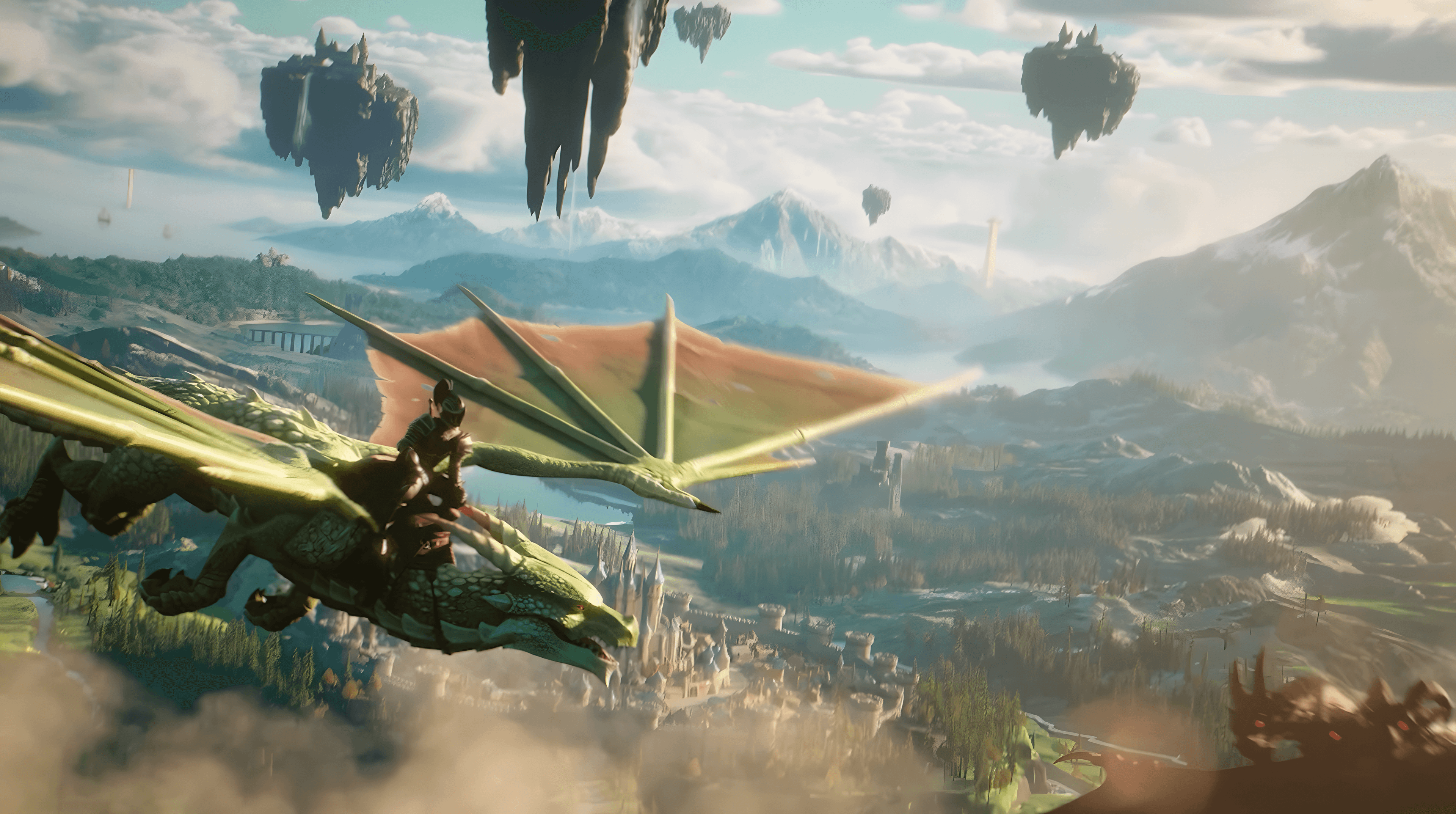
A brand-new standalone flagship MMORPG in the legendary RuneScape franchise, built from the ground up on Unreal Engine. The game translates the series' iconic classless progression, deep trade skills,...
Quick Take (Executive Summary):
When Cambridge-based studio Jagex took the main stage at RuneFest 2026 in October 2026, franchise veterans expected familiar talking points: an updated seasonal roadmap for Old School RuneScape, localized graphical overhauls for RuneScape 3, or post-launch expansions for the recently debuted survival title RuneScape: Dragonwilds. Instead, the developers delivered an industry-shaking bombshell: the official announcement of RuneScape 4 (currently bearing the working codename RS4).
For the broader multiplayer gaming landscape, this marks an unprecedented milestone. For over twenty-five years, the RuneScape intellectual property has followed an entirely singular path. While contemporary MMOs cycled through engine migrations, visual reboots, or eventual server shutdowns, the world originally crafted by the Gower brothers stubbornly adhered to structural design choices dating back to 2001. Both active iterations—the preservationist time capsule of 2007-era OSRS and the feature-heavy RS3—remain tethered to massive legacy architecture. Greenlighting a true fourth mainline installment represents a candid corporate acknowledgment: endlessly patching a quarter-century-old foundation has reached its absolute ceiling.
Critically, studio leadership moved swiftly to reassure the community's millions of active subscribers: RS4 is neither an enforced graphical upgrade nor a replacement for existing worlds. The project is being engineered as an entirely independent, standalone flagship MMORPG that will coexist alongside Old School RuneScape and RuneScape 3. Jagex confirmed there will be no server sunsetting, forced database mergers, or compulsory character migrations; the existing titles will continue to receive dedicated live-service updates from their respective teams.
The foundation of RuneScape 4's production strategy rests on proactive co-development with players. Having learned costly lessons from past history—where controversial top-down updates almost alienated the core player base—Jagex opted to reveal the game at this formative stage explicitly to integrate community feedback, iterative polling, and early technical playtests into every layer of system design.
The definitive technological manifesto of the RS4 reveal was Jagex's resolute commitment to building the game on Unreal Engine. To comprehend the magnitude of this architectural departure, one must examine the defining mechanical constraint that has shaped the franchise for a quarter of a century. Every iteration of RuneScape—from the earliest browser applets in 2001 to high-tier boss encounters in 2026—has functioned under two rigid dogmas: discrete tile movement (grid-based movement) and a fixed server quantum lasting precisely 600 milliseconds (tick rate 0.6s).
A 0.6-second server cycle dictates that the simulation advances like an unyielding metronome: every command entered by the player—initiating movement, triggering an auto-attack, swallowing a potion, or toggling a defensive protection prayer—is queued into a buffer and evaluated by the server only on the subsequent clock pulse. To any gamer acclimated to the instantaneous input response of contemporary action-RPGs, this structure feels inherently sluggish and heavy. Over decades, seasoned veterans adapted to this design ceiling, transforming engine latency into celebrated competitive disciplines: high-frequency skilling via tick manipulation and frame-precise Prayer flicking, which demands rhythmic inputs within microsecond windows.
Transitioning to Unreal Engine shatters these structural limitations once and for all. Modern engine architecture affords the project true geometric collision detection, seamless continuous character locomotion unbound by grid coordinates, and server polling rates operating in sub-millisecond fidelity. Gone are artificial input delays, awkward animation sliding, and stifling fog-of-war render distances where entire vistas vanished beyond twenty tiles. Players are finally granted tactile, intuitive agency over their avatars, where every swing of a warhammer or evasive sprint registers with immediate physical feedback.
Yet herein lies the project's most formidable design trap. The esoteric appeal and mechanical mastery of RuneScape have historically rested upon the calculated predictability of its tick cadence. Dismantling that rhythmic structure obligates the developers to redesign combat balancing from first principles: recalibrating defensive prayer mechanics, ability cooldown tempos, and combat cadence. Whether Jagex can preserve the deliberate, strategic pacing of its intellectual property without devolving into an anonymous dodge-roll action brawler stands as the primary question looming over impending technical playtests.
The most fascinating production insight surrounding RS4 lies in its origin story. The project did not originate as an abstract mandate drafted in an executive boardroom; rather, its structural framework was forged within an entirely different internal endeavor. The game initially took shape as Shadows of Ashenfall—an expansive narrative expansion planned for RuneScape: Dragonwilds, the cooperative open-world survival title that Jagex brought to full release in September 2026 following Early Access.
However, during private playtests and community focus groups, developers encountered an overwhelming, unanimous sentiment from their testing cohort. While players roundly praised the rich art direction, the hostile atmosphere of the northern frontier, and the reworked spellcraft mechanics, they adamantly pushed back against the limitations of a four-player cooperative lobby structure. The core audience demanded the defining soul of RuneScape: bustling crowds congregating outside regional banks, a unified continental market, faction rivalries, and emergent open-world events. Recognizing that the survival sandbox container was too restrictive to accommodate the scope of the assets and mechanics being built, Jagex leadership made a bold executive pivot: cancel the expansion and reconstitute the production pipeline into a full-scale, numbered MMORPG on the same engine.
The staging ground for RuneScape 4 will be the rugged northern realm of Ashenfall, previously introduced in Dragonwilds but advanced several years forward in chronology. Narratively, the world is situated within Gielinor's Sixth Age (Sixth Age). This represents one of the most tumultuous epochs in franchise lore: an era scarred by the shattered Edicts of Guthix, divine war among returned gods, and the cataclysmic awakening of Kuldra the Dragon Queen. With the divine pantheon diminished or banished, mortal factions are left to reconstruct civilization amid ancient ruins, contend with lingering draconic corruption, and struggle for dominion over scarce reservoirs of primal runic power.
Selecting this particular canvas accomplishes two vital creative objectives. On one hand, it grants worldbuilders a fresh slate in a distant geographic theater, avoiding the canon conflicts and narrative clutter accumulated across twenty-five years of legacy quests in Misthalin and Asgarnia. On the other, the gritty backdrop of the Sixth Age provides fertile ground for traditional roleplaying immersion: a frontier fraught with forgotten barrows, territorial skirmishes, and wilderness hazards, where every traveler begins as an ordinary mortal carving out an identity without the burden of an ordained 'chosen one' trope.
Whenever a franchise undergoes an engine overhaul and a fundamental combat modernization, the paramount risk lies in abandoning the essence of what made the original beloved. The leadership at Jagex recognizes this peril explicitly, and from the initial reveal, laid out the immutable gameplay pillars governing RS4. The game unconditionally retains the foundations that have anchored the community for decades: complete classless freedom of character development, the enduring permanent value of accumulated progression, and the societal simulation of a living medieval realm.
Character progression adheres faithfully to the celebrated maxim: "you are what you do." In RuneScape 4, players are never confined to static archetypes such as paladins or rogues upon character creation. Every avatar begins as an empty slate: hefting a woodcutter's hatchet against ancient yew trees advances your timber craftsmanship (Woodcutting); hammering heated bronze ingots over an anvil unlocks martial metallurgy (Smithing); channeling defensive runes amid the chaos of skirmishes expands the esoteric domain of magic (Magic). Crucially, the studio reaffirmed the principle of permanent progression: there are no seasonal level wipes or gear devaluation tiers rendering non-combat ranks obsolete—every invested hour of skilling remains permanently etched into the character's legacy.
The second indispensable pillar is a dynamic, player-driven economy anchored by open trade institutions like the Grand Exchange (Grand Exchange). Unlike modern theme-park MMOs where top-tier items bind to a player upon pickup, RuneScape's economic ecosystem has historically depended on full item liquidity and an intricate division of labor. A warrior delving into the lethal crypts of Ashenfall relies continually on high-grade herbalist concoctions, restorative culinary rations prepared by dedicated chefs, and fletched broad-tipped ammunition crafted by domestic gatherers. This interdependence between combatants and non-combat artisans remains the cornerstone of the game's social architecture.
Finally, the hallmark of the fourth installment must be the preservation of Britain's premier narrative quest design. The RuneScape universe has never subscribed to generic genre tropes of killing twenty boars for an anonymous villager. Every quest in Gielinor is an intricate detective mystery, a witty comedic escapade laced with dry British satire, or a sprawling epic requiring puzzle solving, spatial awareness, and lore comprehension. Translating this storytelling tradition into modern cinematic sequences, dynamic physical environmental puzzles, and rich conversational branches within Unreal Engine has the potential to set a new benchmark for narrative immersion in the genre.
Adopting a modern, industry-standard technology stack fundamentally transforms the franchise's platform horizons. Historically, RuneScape established its legacy as a PC-centric phenomenon: first conquering browser tabs during the dial-up era, then shifting toward proprietary desktop clients, and eventually deploying touch-screen mobile adaptations. However, selecting Unreal Engine signals unequivocally that RS4 is being architected from day one for cross-platform play across PC and current-generation consoles—specifically PlayStation 5 and Xbox Series X/S. The commercial success of RuneScape: Dragonwilds across consoles and subscription ecosystems like Xbox Game Pass demonstrated that living-room players are eager for complex sandbox economies paired with intuitive gamepad ergonomics.
The most sensitive and fiercely debated question remains the title's commercial monetization model. Franchise history presents two diametrically opposing precedents. On one side stands the pristine reputation of Old School RuneScape, supported cleanly through standard monthly memberships (Membership), tradeable bonds (Bonds), and a categorical rejection of invasive microtransactions. On the other sits the scarred track record of RuneScape 3, which drew persistent community criticism over predatory Treasure Hunter loot boxes and direct progression monetization. Representatives at Jagex have publicly emphasized their commitment to preserving "game integrity" (integrity) in RS4, ruling out pay-to-win mechanisms and leaning toward an ethical subscription tier featuring a free-to-play introductory slice or a premium Buy-to-Play foundation.
Regarding launch timing and player milestones, patience is essential. As of the October 2026 reveal, the project remains in early production. Developers deliberately initiated public discourse ahead of standard industry timelines to ensure historical blunders—such as unpolled combat changes—are never repeated. Detailed developer diaries, combat showcase demonstrations, and invitations to initial closed alpha playtests are targeted for 2027. A full commercial launch is not anticipated before 2027–2028, granting the team the necessary runway to ensure this modern vision of Gielinor possesses the depth required to stand proudly alongside its iconic forebears.