 F2P · Live
Lineage 2 Essence
Lineage 2 Essence is NCSoft's free-to-play take on the classic Korean MMORPG Lineage II, built around faster…
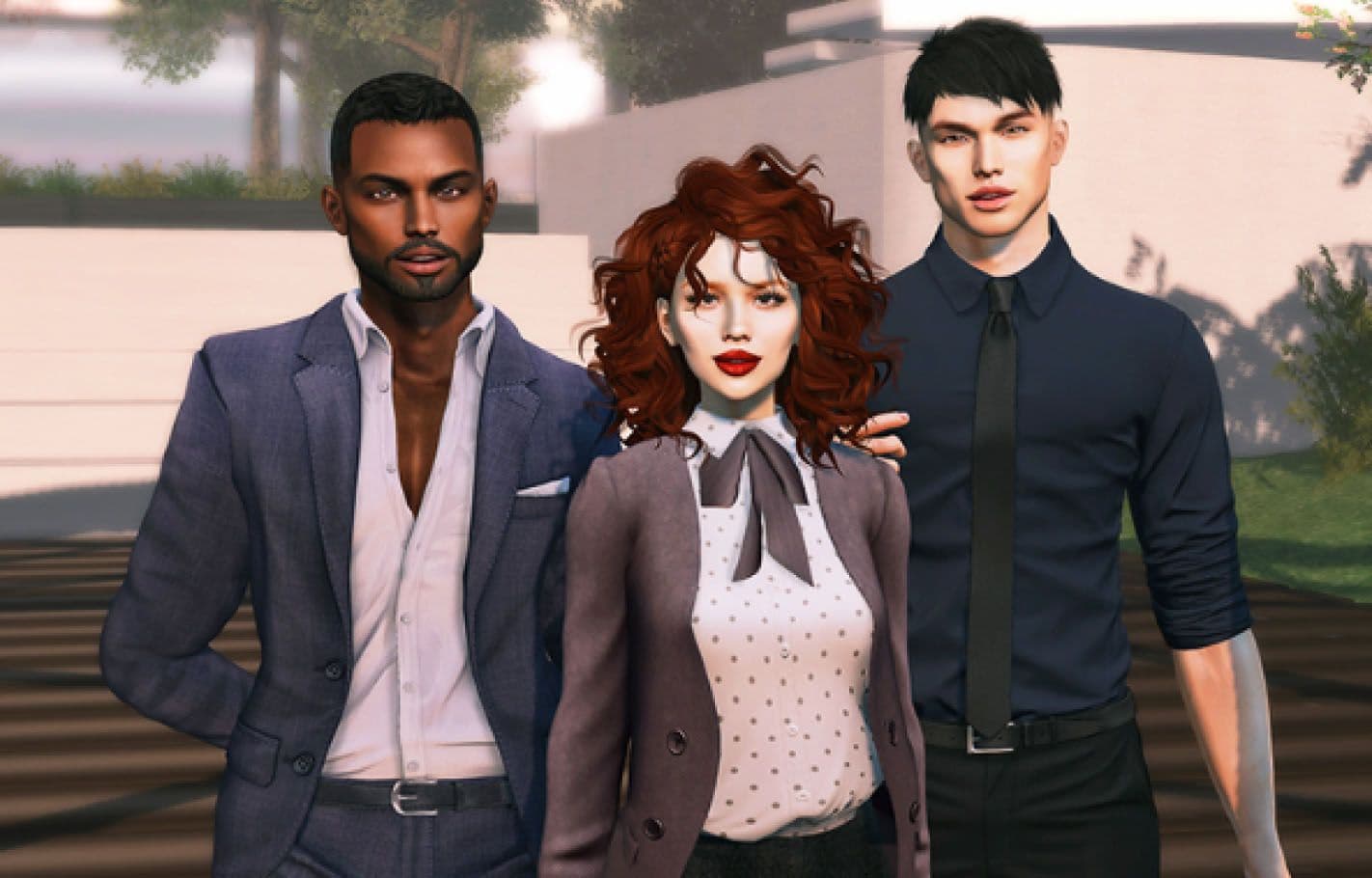
Second Life is Linden Lab's long-running 3D virtual world, built almost entirely by the residents who inhabit it rather than by the studio itself. There's no combat, no quests, and no win condition — ...
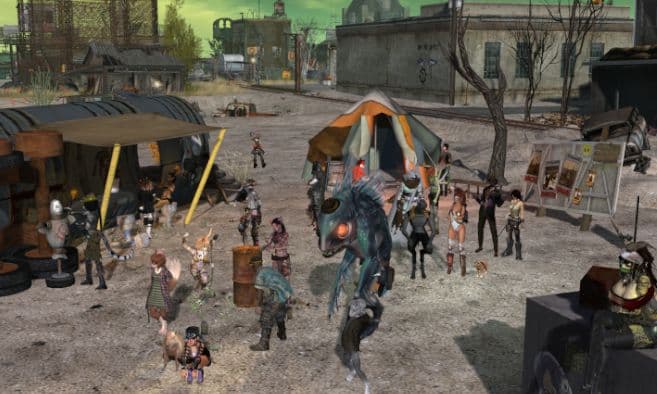
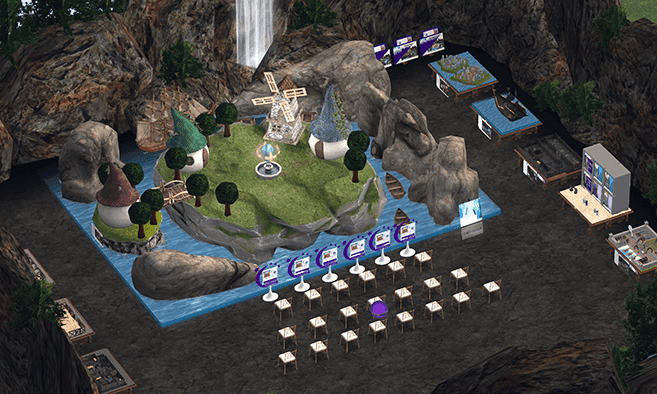
Second Life is a persistent 3D virtual world built and run by Linden Lab, a San Francisco studio that launched it on June 23, 2003 — making it, in 2026, one of the oldest continuously operated online spaces still shipping new features rather than coasting on nostalgia. Second Life has no levels, no quests, and no win condition by design: Linden Lab has said since the beginning that residents build the entire world, and the company's own role is closer to infrastructure than content. Twenty-three years in, it's still running a live economy, a live scripting-language migration, and a daily concurrent population in the tens of thousands — numbers few of its 2003-era contemporaries can claim.
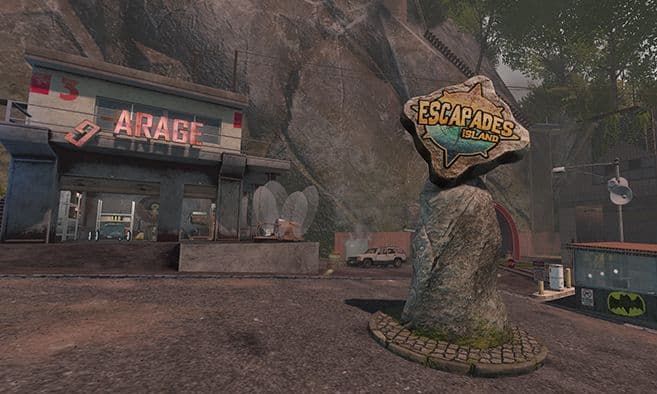
Second Life doesn't have a setting the way a themed MMORPG does — the grid spans more than 27,000 regions, and each one is built, owned, and styled by whoever paid for the land under it. Log into one sim and you're standing in a medieval castle; teleport two clicks over and it's a neon-lit nightclub, a recreation of 1920s Paris, or somebody's literal furniture showroom. There's no lore holding any of it together, and no real attempt to build one — the setting is whatever thousands of individual landowners decided to build this particular month.
The grid itself grew rather than shrank this year. Linden Lab's own tracking shows net growth of more than 300 regions since January 2026, split between private estates and Linden-owned land, which isn't the trajectory most people would guess from the platform's reputation as a 2007 fad that never quite left. Land policy isn't static, either: Linden Lab announced a Mainland consolidation plan earlier in 2026, then reversed it in August after resident backlash, confirming that the Gaeta 1 continent would stay open and promising individual compensation for anyone who'd already relocated under the original plan.
New residents start with a blank avatar, a starter outfit, and a handful of tutorial prompts that mostly just point at menus — there's no equivalent of a starting village or an opening quest, because there's no quest to open. One of the platform's oldest design quirks survives intact: every account still needs a last name, chosen from a list Linden Lab curates and periodically refreshes; a new batch of last names went live this September, more than two decades after the system was first introduced. New arrivals then drift through Linden-run welcome regions before being turned loose on the grid with no more direction than "go somewhere."
Appearance is where the real onboarding happens. Shape sliders control hundreds of individual parameters, and most residents replace the default mesh body and head within their first week with one of a handful of commercial systems that effectively run the fashion economy. None of this is explained in-world — it's explained in years-old YouTube tutorials and word of mouth, and the visual gap between a fresh account and an established one is the platform's single biggest onboarding problem.
A companion mobile app exists for iOS and Android, still labeled beta after several years on the market. It handles messaging, event browsing, and light social features, but doesn't render the main 3D grid, so it's a way to stay connected between desktop sessions rather than a way to actually play Second Life on a phone.
Not in any meaningful sense, and Linden Lab has never pretended otherwise. There's no manufactured conflict, no set objective, and no win state — the company's own description of the platform reads more like a social network's pitch than a game's, promising a place to find friends, join groups, and message people. What it does have is a persistent economy, a scripting language, a real-time 3D engine, and a population that behaves like an MMO's in every respect except the one where anyone is trying to beat it.
That leaves it straddling categories more than sitting inside one: part creation tool, part marketplace, part social network, with the closest functional comparison probably being Roblox with a two-decade head start and an adult-only culture built on top. This review covers it as the nearest available frame — an MMO-adjacent virtual world — because that's the closest fit on offer, not because Linden Lab would agree with the label.
A typical day has no fixed loop, because Second Life doesn't run on gameplay systems in the traditional sense — what it runs on is an enormous, permanent event calendar. On any given afternoon there are live DJ sets, hundreds of photography-focused destinations rotating through the official Destination Guide, roleplay sims running their own internal storylines with zero involvement from Linden Lab, and merchants timing sales to seasonal shopping events. The most recent anniversary celebration, SL23B, ran for a full month and logged more than 600 live music performances across upward of 480 participating merchants — numbers that would be respectable for a dedicated festival, let alone a recurring background hum that repeats every June.
Movement itself carries some of the platform's oldest choices: every avatar can fly by default, no mount or unlock required, which turns exploring a themed region into something closer to drifting through a diorama than walking one. Sailing has its own dedicated community centered on Blake Sea, a stretch of connected water sims built specifically so residents' boats have somewhere legal to go without crossing the Mainland borders where watercraft are banned. None of it requires a group, either — a solo resident can shop, build, decorate, and wander the Destination Guide indefinitely without ever needing a party, which is not something most of this catalog's entries can say.
If Second Life has a core gameplay loop, it's creation rather than consumption: model something in Blender, export it, upload it through the in-world Build tools, and it becomes an object other residents can buy, rez, and script. That pipeline only got this direct in 2025, when Linden Lab shipped native glTF mesh import — before that, creators exported through the older COLLADA format, which had no built-in support for the physically based materials modern tools produce by default.
Scripting is where Linden Lab is doing its most significant technical work in years. Second Life's twenty-year-old scripting language, LSL, is being joined rather than replaced by SLua, a friendly fork of Roblox's own Luau that reached open beta on the production grid in December 2025. Linden Lab's own figures put SLua scripts at roughly half the memory footprint of equivalent LSL scripts on the old Mono engine, plus proper tables, coroutines, and array types LSL never had. The catch is that SLua currently only runs in specific beta-enabled regions — a script written for it won't execute anywhere else on the grid yet, so most working content still ships in plain LSL out of simple compatibility.
The renderer went through its own overhaul when Physically Based Rendering launched grid-wide in 2023, and Linden Lab is still finishing that job — PBR only started reaching the mobile app in 2026, with full parity targeted for a future update the company has labeled the Graphics Care Package internally. Firestorm and Cool VL, the two most widely used third-party viewers, are still catching up to full PBR support themselves, which means what a region actually looks like can depend as much on which client a resident is running as on how the region was built.
Second Life's economy runs on Linden Dollars, a currency traded for real money through Linden Lab's own LindeX exchange. Land is the platform's real scarcity mechanic: owning or renting a parcel means paying a recurring "tier" fee based on total square meterage, and Linden Lab actually cut prices on several private-region tiers in June 2026 after years of complaints about cost. Premium and Premium Plus subscribers also get a Linden Home, a prefabricated house on a residential region reserved for paying members, on top of their land allowance and weekly stipend.
Most day-to-day commerce, though, happens off the land grid entirely, through in-world player shops and the web-based Marketplace, where individual creators sell mesh clothing, animations, furniture, and scripted gadgets directly to other residents. One corner of that economy deserves its own mention: gacha machines, vending kiosks that dispense a random item from a fixed pool for a set L$ price, are a genuine, long-running fixture of Second Life's creator economy rather than a borrowed buzzword. They work exactly like the mechanic the term describes elsewhere in gaming, just running on player-built vendors instead of a studio's live-service backend — nobody at Linden Lab designed this, and realistically nobody there can regulate it either.
This is a real economy in the literal sense, not a gamified points system: Linden Dollars convert back to real currency through LindeX at a floating exchange rate, and Linden Lab has stated it has paid out more than a billion dollars to resident creators over the platform's history. That figure covers everyone from full-time mesh-clothing studios with storefronts across dozens of regions down to a single scripter selling one well-made gadget — the platform takes a cut through land fees and marketplace listings, but the actual sale price and profit margin belong to the creator, the same as any other marketplace built on user-generated goods.
Social structure runs on Groups, the platform's closest equivalent to a guild — a paid membership tier can belong to up to 150 of them at once, and most active communities, from roleplay sims to nightclub regulars, organize around one. Pets have their own dedicated breeding economy, complete with genetics, trait rarity, and a secondary market for rare bloodlines, and it has run continuously since the mid-2010s with almost no promotion from Linden Lab itself.
Second Life also runs an actual, in-platform partnership system: residents can marry inside the client, and an entire cottage industry of wedding chapels, officiants, and photographers exists to serve it — functioning less like a game feature and more like a real service economy that happens to run on avatars.
No, and Linden Lab doesn't pretend otherwise: Second Life is an adult platform first, with every region self-rated by its owner as General, Moderate, or Adult. General regions look like any other themed sim; Adult land requires age verification before it will even load, and it's where the platform's sexual-content and gambling-adjacent communities actually live. This isn't a hidden corner a new resident stumbles into by accident — Adult content sits behind its own access gate, separate from the rest of the grid, and Linden Lab's terms of service require account holders to be 18 or older across the board. Anyone coming from a themed fantasy MMORPG should treat that distinction as a genuine content warning rather than a footnote: nothing here is curated the way a studio-built game's rating board would curate it, because nothing here is studio-built.
Base access has always been free, and still is — the paid tiers layer benefits on top rather than gating the platform itself. As of July 2026 those tiers run from a $5.50-a-month Plus plan up through Premium Plus, and Linden Lab also now sells a no-stipend Premium Plus option at $11.99 a month billed annually for residents who want the land allowance and perks without the weekly Linden Dollar payout. The same June 2026 pricing pass that introduced that option also raised the ceiling on LindeX exchange fees and nudged several subscription prices upward, which the community's reaction made clear it did not read as "more affordable" the way Linden Lab's own announcement framed it.
For the audience it actually serves — creators, collectors, roleplayers, and people who want a persistent space to build rather than a game to beat — yes, and the concurrency numbers back that up: daily peaks have held between roughly 43,000 and 48,000 through most of 2026, down slightly from a March high but nowhere near the "ghost town" reputation the platform still fights in gaming press two decades after launch. For anyone expecting quests, combat, or a visible curve of progress, the honest answer is closer to no, because none of that exists here by design, and no patch is coming to add it.
It's also worth knowing before installing anything that this is a mouse-and-keyboard platform and nothing else. Official controller support has never shipped, and joystick bindings have been described as glitchy by residents on Linden Lab's own community forums for over a decade with no fix in sight — a fair filter for a platform this old to still be applying in 2026, but a filter all the same.
Twenty-three years on, Second Life reads less like a game that refuses to die and more like a city that never got demolished — the crowds have thinned since its loudest years, but the buildings are still standing, the shops are still open, and somebody is always throwing a party in one of them.
Yes. A Basic account costs nothing and includes a full avatar plus building and scripting tools and access to most of the grid; paid Plus and Premium tiers add land allowances, weekly stipends, and a Linden Home on top of that base.
No — daily concurrency has stayed in the 30,000-to-48,000 range for most of 2026, and the grid's total region count has grown rather than shrunk this year, which is a stranger fact than most obituaries for the platform tend to acknowledge.
Not officially. There's no native VR mode as of this review, and the closest options are unofficial workarounds pairing tools like VorpX with a headset, none of which Linden Lab builds or supports.
No. Second Life has never been distributed through Steam, so there's no Steam Deck compatibility rating to check, and the client's lack of controller support applies regardless of hardware.
Nothing has replaced LSL outright. SLua, a modern Lua-based language, has been running in open beta alongside it since December 2025, and Linden Lab has said LSL will keep running on the servers indefinitely even as SLua's availability expands.
Yes. Linden Lab reports having paid resident creators more than a billion dollars in total, earned through selling mesh clothing, furniture, scripts, and other goods on the in-world and web Marketplace, with the platform taking a cut through land tier and listing fees rather than a share of each individual sale.