 F2P · Live
Lineage 2 Essence
Lineage 2 Essence is NCSoft's free-to-play take on the classic Korean MMORPG Lineage II, built around faster…
Twelve years into "early access" and still one of the most active social VR platforms on Steam. No story, no levels — just hundreds of thousands of worlds and avatars built entirely by the community. ...
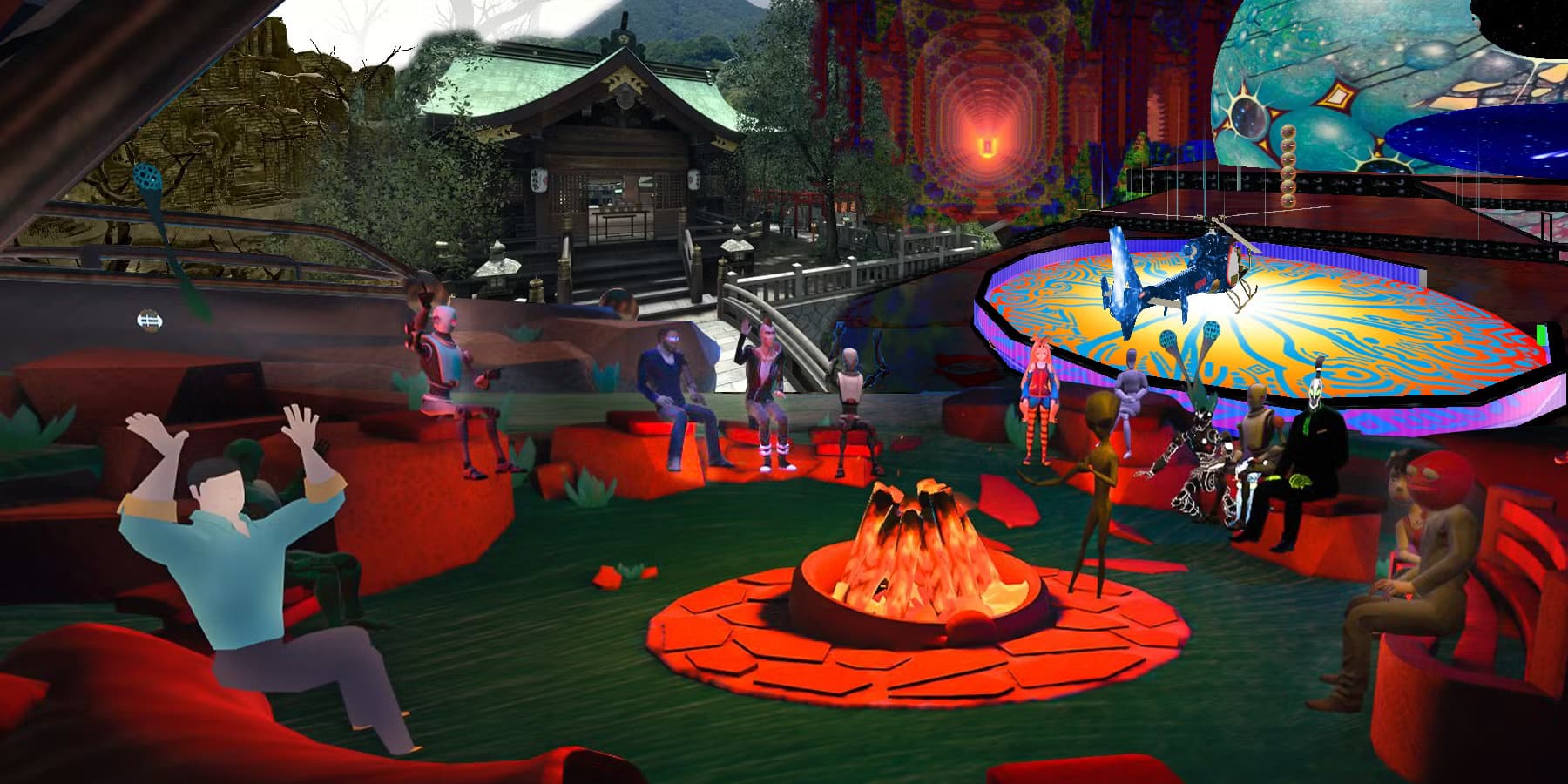
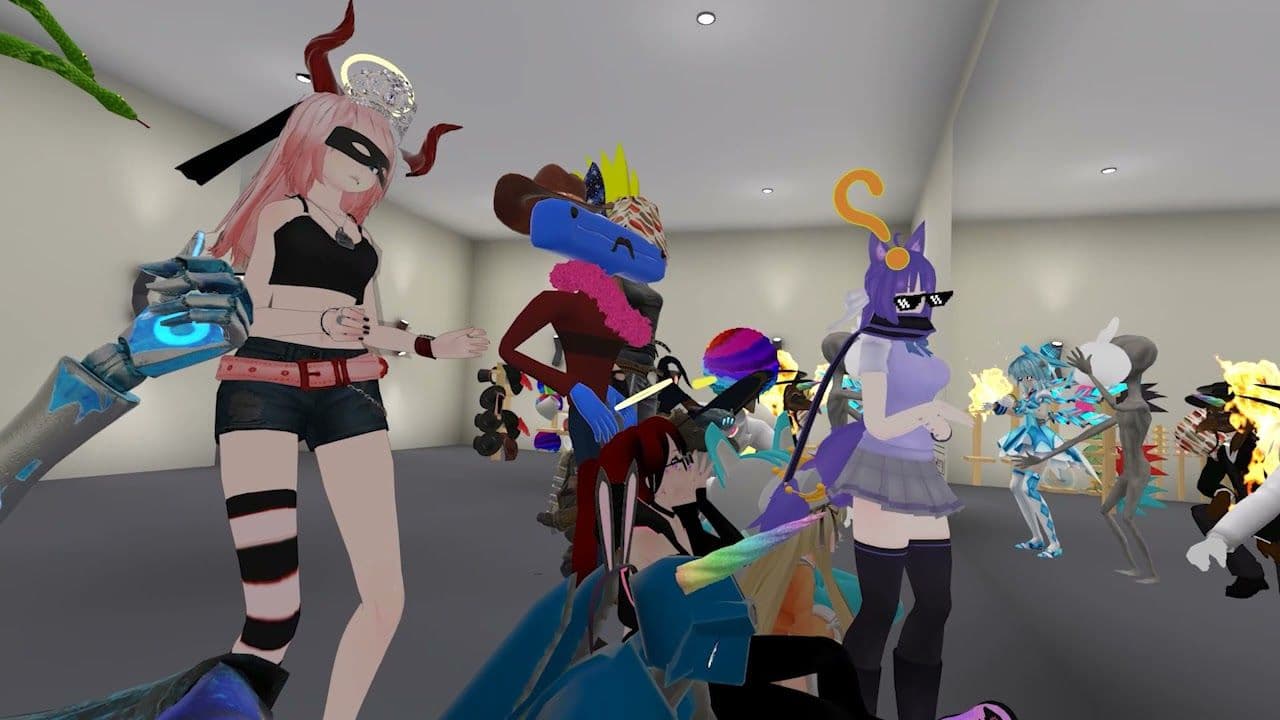
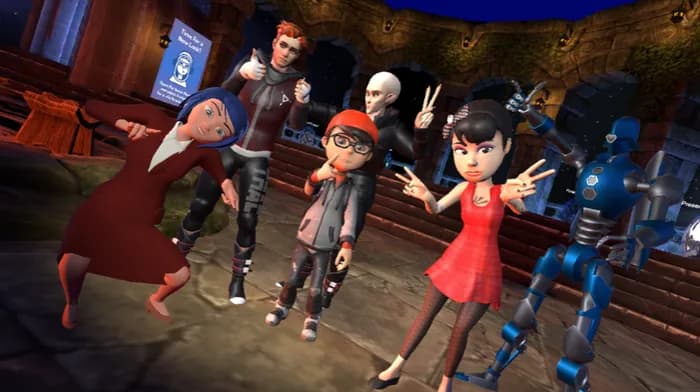
VRChat is a social VR platform built by VRChat Inc., first launched in early access in January 2014 and still officially in that state twelve years later — which says more about the label than the product. There's no scripted campaign, no classes, no traditional endgame. Instead there's a growing library of hundreds of thousands of player-built worlds and avatars running on Unity, plus a userbase that has kept the platform among the more populated titles on Steam for over a decade. In 2026 it's also in the middle of one of its biggest structural changes yet: a platform-wide rollout of age assurance.
Quick take: VRChat isn't a game with a goal — it's a venue, and whether that's worth your time depends entirely on whether you want to build or hang out in one. If you're after progression systems, look elsewhere; if you want the most flexible social VR space on the market, this is still the reference point.
VRChat doesn't have a world of its own — it has a toolkit, and everything you'll see was made by someone with access to the Unity SDK. One instance might be a haunted Victorian mansion; the next portal drops you at a card table with a robot, an alien, and an eight-foot wolf. Official spaces — clubs, planetariums, seasonal hubs — sit next to fan recreations of anime locations, stand-up comedy bars, and physics-based fighting arenas built by a single hobbyist over a few months of evenings.
The variety isn't incidental — it's the entire premise. A given world's genre depends solely on who built it and why. Some are pure hangout spaces with nothing but chat and gestures. Others are full minigames with rules, timers, and leaderboards written in Udon, the platform's in-house scripting language. A large share exist for no practical reason at all: art installations, ambient music visualizers, meditation rooms with a looping rain track.
World creators also have to declare Quest compatibility, and that split shapes what gets built. PC-only worlds get cinematic lighting, volumetric fog, and dozens of real-time light sources; the same location rebuilt for Quest usually loses most of that in favor of baked lighting and low-poly geometry so a standalone headset can hold a stable framerate.
You start by picking an avatar — either a preset from the public library or your own, uploaded through the VRChat SDK if you're comfortable in Unity. From there it's a public hub, then a portal into one of millions of world instances. Progression here is social rather than mechanical: staying active without violations raises your Trust Rank, which gradually unlocks features like uploading your own content or entering private group instances.
The core loop is finding your people: land in a public world, strike up a conversation, get invited to a Group — the closest thing here to a guild — and that group starts running its own private instances, hosting events, and turning into a recurring weekly hangout. Without a group, VRChat quickly becomes an endless scroll through half-empty public lobbies. With one, it becomes a standing appointment.
Voice chat runs on positional audio: the farther someone stands, the quieter they get, and a group around a campfire genuinely splits into overlapping side conversations the way a real room does. New users usually find it disorienting for the first half hour and stop noticing it by the end of the night.
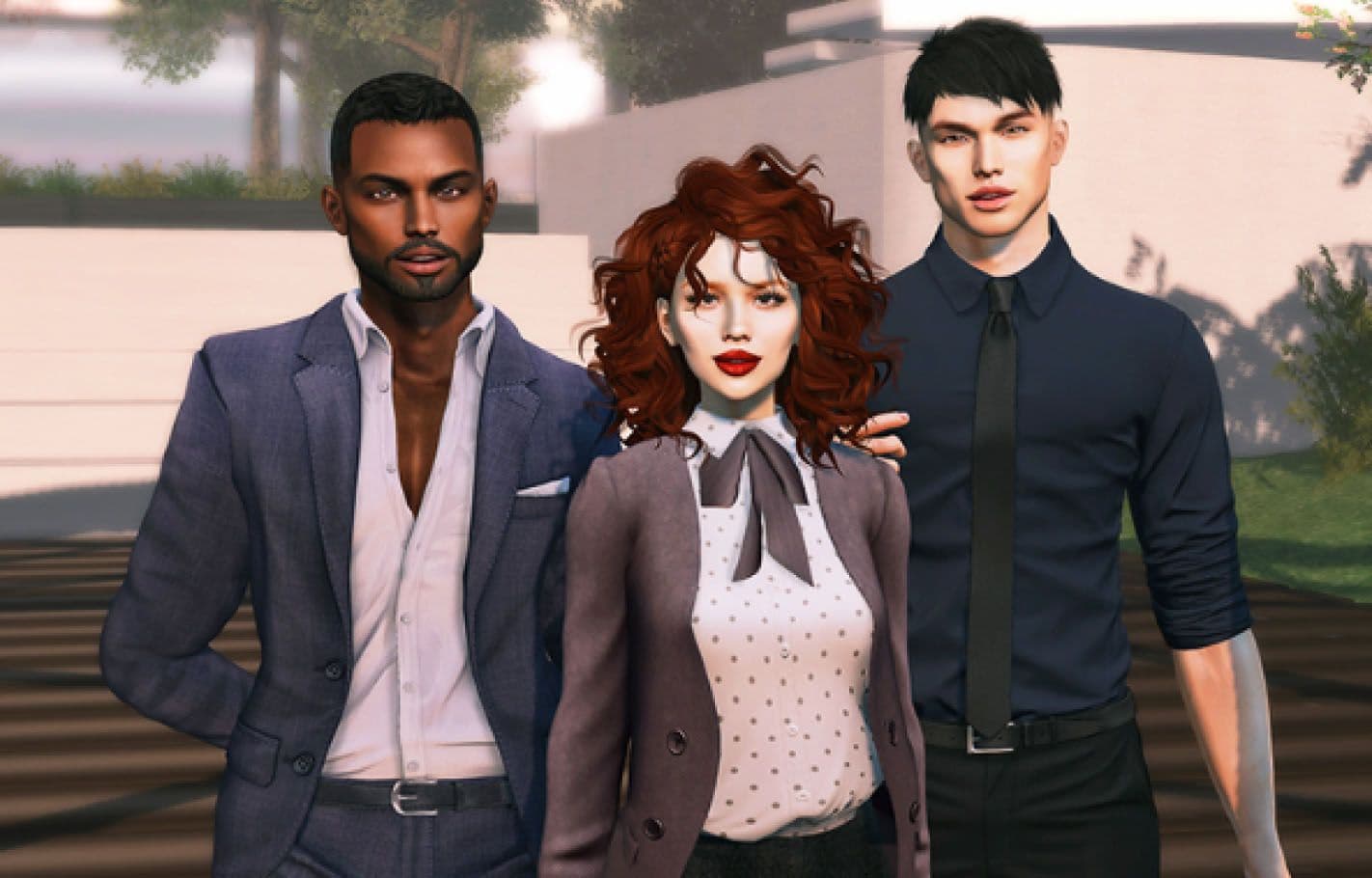
If VRChat has a central mechanic, it's the avatar. Full-body tracking, finger tracking, and face tracking turn a virtual body into a genuine expressive tool — the platform is built on the premise that you can be a talking dog, a sentient glowing shoe that pulses to music, or a floating crystal, and plenty of people take it there. Avatars carry physics through the PhysBones component: tails, ears, and hair react to movement, and the more elaborate builds layer in custom shaders and animation states that represent months of one artist's work.
A separate system — avatar contacts and parameters — lets creators wire up interactive elements: a poke, a hug, a reaction to another player getting close. That foundation supports entire genres of content, from simple visual effects to combat systems where hitboxes read directly off avatar bones. It's the reason VRChat feels categorically different from a video call with cartoon filters: the avatar is a physical object with its own behavior, not a static image sitting over a voice feed.
Playing without full body tracking is still perfectly viable — the system approximates leg and torso position from headset and controller data alone. It's not perfect, but it's convincing enough for ordinary conversation; players chasing precise dance choreography usually end up buying separate waist and foot trackers anyway.
Avatar optimization is its own small craft. VRChat's built-in performance rating — running from "Very Poor" to "Excellent" — scores polygon count, physics components, and material count, and that score decides whether someone on a weaker PC or a mobile headset even sees your model as more than a blurry silhouette. Balancing visual ambition against that technical ceiling has become an actual freelance skill inside the community, with its own portfolios and commission pipelines.
None of this requires expensive gear to get into. Playing with just a headset and controllers — no full tracking suit — still gets you facial expressions through the headset's built-in eye and mouth tracking on newer devices, and most of the community treats a fully tracked setup as a nice-to-have rather than table stakes.
There's no crafting system or resource gathering here — that role is filled by the Creator Economy, VRChat's official monetization layer for user content, launched in 2023. World and avatar creators sell their work through group stores, run subscriptions for exclusive items, and take donations for access to private events. The platform keeps roughly a 15% transaction cut, but the bulk of revenue stays with creators — a genuinely uncommon arrangement for a UGC platform, most of which treat player labor as free inventory for their own storefront.
A grey market runs in parallel: third-party stores sell unofficial avatars and mods that route around the internal economy, frequently ripping models straight from paid packs. VRChat has been fighting leaked and pirated avatars for years without fully solving it — DMCA takedowns are handled manually, and a bad actor can move dozens of stolen copies in the time it takes one request to process.
Custom commission work is its own revenue stream outside the official economy entirely. Skilled Unity creators build clubs, wedding venues, and branded spaces directly for streamers and communities, with prices ranging from a couple hundred dollars to several thousand depending on lighting complexity and how much interactivity is baked in.
Calling anything here "endgame content" feels off, since the entire platform functions as one continuous endgame with no finish line. That said, nearly every genre exists somewhere inside it: co-op horror escape rooms with real jump scares, hand-physics fighting games, zero-gravity go-kart tracks, tabletop games that mirror real rulesets down to the card text, and competitive arenas with their own internal ranking systems. PvP isn't a platform-level feature — it exists exactly as much as a given world's creator built it, which means damage systems, matchmaking, and hitbox fairness all vary wildly from world to world.
Annual events like Spookality, a Halloween avatar-and-world jam, turn the platform into a curated showcase of the community's best work for a couple of weeks, with prizes from VRChat itself. Seasonal hubs — Pride events, space-themed collaborations — run for a month or two before rotating out. These moments keep long-time users engaged far more effectively than a story patch ever could, because each one swaps out the entire storefront of content rather than tacking a few items onto an existing list.
Music has its own established scene inside the platform: DJ sets for a hundred-person crowd are routine, and larger collaborations bring in real performers streaming through motion capture in real time. For a chunk of the userbase, the club scene alone is the reason they log in on a given night.
VRChat runs on PC through Steam or Viveport, on standalone Meta Quest and PICO 4 headsets with no PC required, and — since late 2025 — on iOS and Android with touch controls. Valve has it marked "Verified" on Steam Deck, running through Proton without any manual workarounds, though there's still no native Linux client. Headset support extends well beyond SteamVR staples like the Valve Index and HTC Vive: Quest Link and most WMR headsets connect without wrestling drivers into cooperation.
The safety layer is worth knowing about before your first session. A Safety button mutes, hides, or blocks anyone instantly, no explanation required and no support ticket needed. Personal Space physically keeps other avatars from crowding you without permission — a small detail that matters a lot to anyone who's dealt with pushy strangers in other social VR spaces. Trust & Safety handles reported worlds and avatars, though the sheer volume of user content means a clear violation can stay live for a while before it's actually pulled.
The social structure runs on the Groups system — over 200,000 communities, ranging from tight friend circles to large public organizations with roles, rules, and their own storefronts. A group can run recurring events, outdoor DJ sets, synchronized movie nights across an entire instance, or a weekly minigame tournament. Discord integration lets people find friends before ever launching the platform, and an "online in World X" status saves the nightly work of tracking down who's around.
Groups also function as the platform's real matchmaking layer, in the absence of anything built into VRChat itself. A newcomer without a group tends to bounce between public lobbies looking for a conversation that sticks; someone three months in usually has two or three groups pinging them with event invites on any given evening, which is a meaningfully different experience of the same software.
VRChat is Free To Play — the account, public worlds, and basic avatar uploads all cost nothing, and the studio has stated that's staying the case. The paid VRC+ subscription runs around ten dollars a month or a hundred a year and adds extra avatar favorite slots, a custom profile icon, more upload cache, and priority access to new features, including the current age assurance rollout. It's structured as platform support rather than a content unlock — nothing central to the experience sits behind the paywall.
Recent news: mid-2026 brought Age Assurance, replacing the old opt-in age verification with age estimation that gates access to adult and suggestive content. Anyone under 18, or anyone who hasn't completed the check, automatically gets the sensitive-content filter switched on with no way to turn it off. The UK got first access, VRC+ subscribers get priority in the rollout, and the company has been careful to frame this as ongoing rather than finished.
As of this review, VRChat itself describes Age Assurance as a status update rather than a completed feature — the company hasn't given a firm timeline for a full global rollout of the content filter.
The platform peaked at roughly 79,600 concurrent Steam players in February 2026, nine years after its Steam debut, and concurrent numbers have settled somewhere in the 35,000–60,000 range depending on time of day since then. Steam reviews sit at "Mostly Positive" across more than 177,000 total ratings, with the last thirty days holding around 70% positive — a stable curve for something that's been running this long, not a platform in decline. Population swings tend to track events and content updates rather than any broader downward trend.
What's notable is where that number sits relative to the platform's age. Most social apps see steady erosion a decade in; VRChat's numbers instead move with the calendar of community-driven content, which says something about how much of the retention here comes from the creator base rather than any single studio-run system.
An hour in, VRChat looks chaotic: a random hub, a dozen strangers, someone dressed as a raccoon dancing to music only they can hear through a private player. New users either close the client on the spot or latch onto the first friendly conversation and stay until sunrise. A hundred hours in, the picture is completely different — favorited worlds, a regular group, an events calendar for the week, a friends list that tells you exactly who's online and where. Nothing here hooks you through progression. It hooks you through relationships, or it doesn't hook you at all.
Players coming from traditional MMOs tend to struggle most with the lack of a goal. There's no character level to compare, no gear score to chase — the only progress metric is how lived-in your presence has become, which isn't a number anyone can show you.
Yes. The core platform, public worlds, and preset avatars cost nothing. VRC+ is an optional subscription for extras, not a requirement.
No. Desktop mode with a mouse, keyboard, or gamepad gives full access to worlds, avatars, and voice chat — VR just adds body tracking and a more immersive presence.
Yes, and Valve rates it "Verified." It runs through Proton with no manual configuration required.
Either pick a preset from the public library or upload a custom model through the free VRChat SDK, which requires basic Unity familiarity to set up correctly.
VRChat is one of the rare cases where "early access" stopped meaning anything years ago: the platform runs like a mature, self-sustaining product, with an active creator economy and tens of thousands of concurrent users more than a decade after launch. If you want a structured MMO with goals and gear, this isn't it. If a virtual hangout with no genre boundaries sounds appealing, block off one evening and see where the first random portal takes you.