 F2P · Live
Lineage 2
Aden's castles never stay in the same hands for long, and Lineage II has built an entire twenty-three-year…
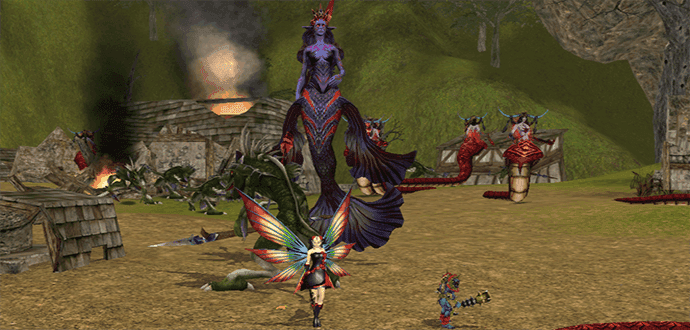
Choose a faction, pick one of twelve race-locked classes, and join a war for control of Teos that can pull in up to 1,500 players a side. Shaiya's signature Ultimate Mode raises the stakes further: di...
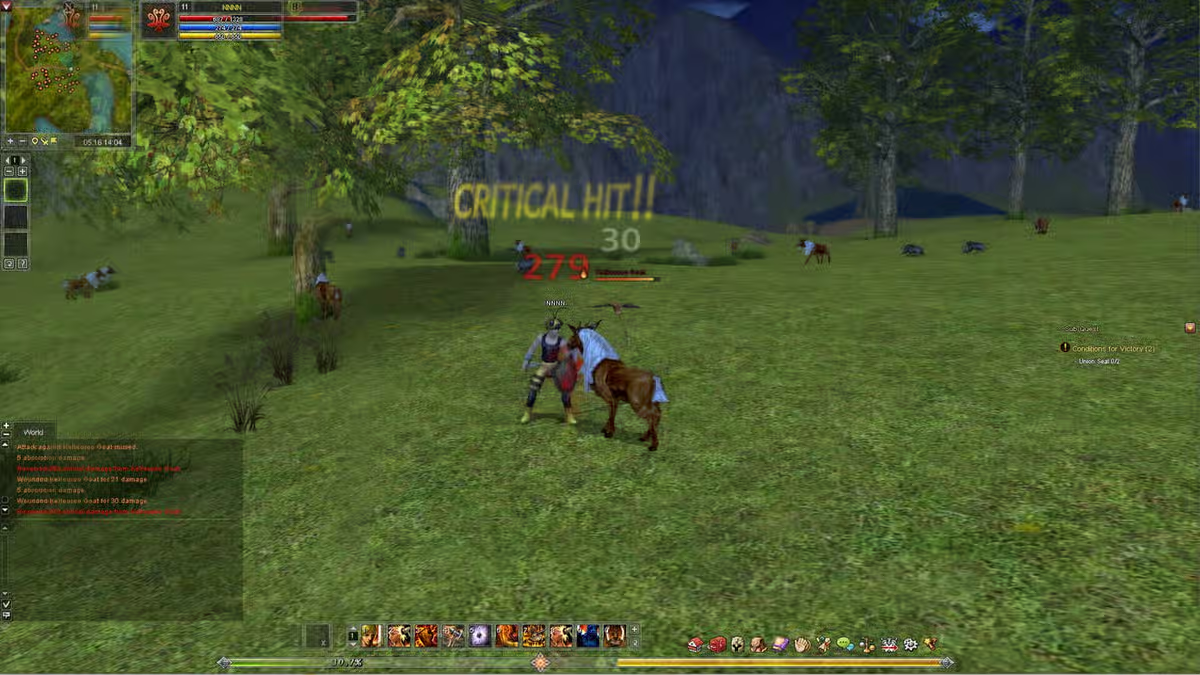
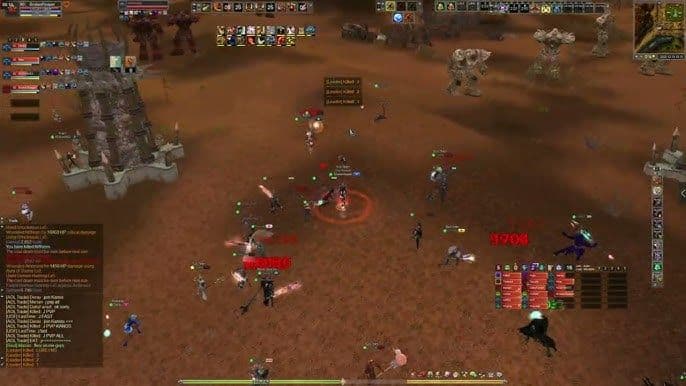
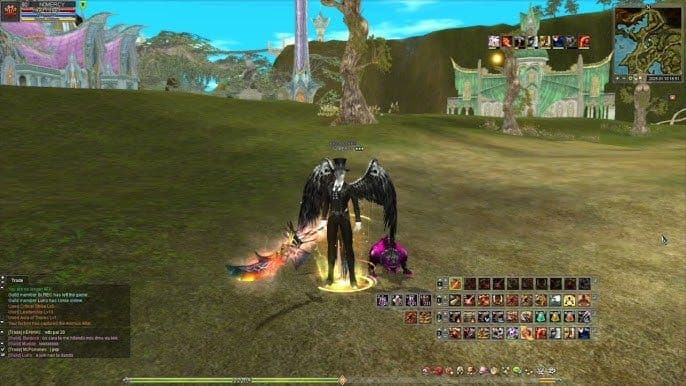
Shaiya is a 3D fantasy MMORPG originally developed in South Korea by Sonov Entertainment (later renamed ChoiRock Games) and launched domestically in 2006, reaching Western audiences through Aeria Games on December 24, 2007. Its calling card is a permanent-death difficulty tier layered on top of a two-faction realm war, a combination few MMOs from its era ever attempted and even fewer kept running this long. Nearly two decades later, the game is still online under a different publisher, still patched, and still drawing a modest but stubborn crowd across its official server and a sprawling private-server scene.
Quick take: Shaiya is a dated, occasionally clunky old-school MMORPG that survives on one genuinely distinctive hook — a permadeath mode wrapped around a large-scale faction war. It's not a game to recommend to someone looking for a modern MMO, but for players who specifically want that risk-reward combination, nothing quite replicates it.
Teos wasn't always split in two. The world's lore starts with a single creator goddess, Etain, whose death at the hands of her own creations shattered her soul into two successor goddesses — one aligned with order, one with chaos. Humans and Elves rallied behind the first and became the Alliance of Light; the Vail and the Nordein, re-emerging from exile as the "Deatheaters," took up the second goddess's cause as the Union of Fury. It's stock fantasy framing by 2026 standards, but it does real structural work: every faction restriction in the game, from race locks to the chat wall, traces back to that origin story rather than feeling bolted on.
Shaiya wasn't a niche release when it launched. GameBorder magazine named it Best MMORPG of 2007 and gave it a graphics award in the same cycle, and it placed among the most anticipated titles in that year's reader polls. That reception matters for context: this wasn't a budget also-ran competing with World of Warcraft and Lineage II for attention — for a stretch, critics and players treated it as a genuine contender in that class. What's changed since isn't the ambition of the original design, but nearly twenty years of a genre moving on around it.
Everything in Shaiya funnels toward one activity: the ongoing war between the Alliance of Light and the Union of Fury for control of the continent of Teos. Each faction claims altars scattered across the map, and holding them grants a server-wide buff called the Blessing of the Goddess. Losing that buff isn't cosmetic — it affects stats for the entire losing side until the balance shifts back. Large fights can pull in up to 1,500 players a side, which is a scale few contemporary MMOs bother to support even with modern server architecture behind them.
That RvR loop is also the reason the rest of the game exists in its current shape. Gear, levels, and guild organization all point toward being useful in a siege, not toward a solo storyline. Players who ignore the faction war entirely will still find dungeons and quests to work through, but they're playing around the edges of a game that was built for something bigger.
Altar sieges aren't scheduled arena matches — they play out on the open continent, which means travel, staging, and scouting matter as much as raw numbers. A faction that shows up disorganized to defend three altars at once will lose ground to a smaller group that picks its fights. That territorial layer is what separates Shaiya's version of realm-vs-realm from a simple queue-and-fight battleground, and it's the piece private servers work hardest to preserve when they rebalance everything else.
Shaiya originally split characters across four difficulty tiers — Easy, Normal, Hard, and Ultimate — each granting more stat and skill points per level than the last in exchange for slower leveling. That system has since been trimmed down to two: a standard Basic (formerly Hard) Mode, and Ultimate Mode, unlocked once a character has proven itself on the lower tier. The trim didn't touch the part that matters. Ultimate Mode characters still gain stronger stats per level than anyone else, and if one dies, the player has three minutes to be resurrected before that character is gone permanently — no rollback, no support ticket that brings it back.
It's a real commitment, not a marketing line. Weeks of leveling, socketed gear, and accumulated enchants all ride on a timer that a single bad pull or a disconnect at the wrong moment can end. Priests and Oracles can revive a fallen ally, and resurrection items exist for solo players, but neither removes the risk — they just narrow the window in which it can go wrong. Shaiya isn't the only MMO to flirt with permadeath, but few build an entire endgame economy around players who chose to live with it.
The payoff is status as much as raw stats. An Ultimate Mode character that's survived to max level carries a kind of currency no amount of gold buys — every guild in a siege knows exactly what it means for that character to be standing on the front line. That's a large part of why the mode hasn't faded even as the rest of the game has: the risk is the point, not an obstacle around it.
Character creation starts with a decision that can't be undone without deleting every character on the account: Alliance of Light or Union of Fury. The Alliance draws from Human and Elf stock; the Union from Vail and Nordein. Chat between factions is walled off entirely, and there's no changing sides later — a design choice that dates the game as clearly as anything else in it, but one that also gives the rivalry teeth a more flexible system wouldn't.
The first hour plays out like most MMOs from its generation: a starting outpost, a handful of kill-and-collect quests against low-level wildlife, and a slow drip of new skills as levels tick up. There's no hand-holding beyond that — no modern quest-marker convenience, no auto-pathing. Expect quest hubs, mob grinding, and a leveling curve that rewards patience more than clever builds. This is a 2007-era MMO in structure, whatever difficulty tier a player picks, and the game makes no attempt to disguise that.
The one decision that does carry weight early is difficulty tier. Basic Mode is the sensible default for a first character — faster leveling, full access to the item shop, and no permanent consequences for a bad death. Jumping straight to Ultimate Mode isn't possible; a character has to prove itself on Basic first, which means every Ultimate Mode player has already sat through the leveling curve once before choosing to make it harder.
Each race locks a player into exactly three of the game's twelve classes, three per race: Humans choose between Defender, Fighter, and Priest; Elves between Archer, Mage, and Ranger; Vail between Assassin, Oracle, and Pagan; Nordein between Guardian, Hunter, and Warrior. There's no multiclassing and no respec into a different race's kit — the choice made at creation defines the character's ceiling.
The roles underneath those names are familiar: Defenders and Guardians tank, Fighters and Warriors carry melee damage, Priests and Oracles heal, Mages and Pagans cast from range, and Archers and Hunters round things out as ranged physical damage. Rangers and Assassins sit closer to hybrid skirmishers, built to duck in and out of a fight rather than hold a line. None of it reinvents the trinity, but the race lock means a player can't simply reroll a healer on the same race if the party needs one — a real constraint in guild organization that more flexible modern MMOs don't impose.
Combat runs on familiar tab-target rules: select a target, queue skills off cooldown, manage a resource bar, watch positioning during group fights. It's not going to surprise anyone who's played a 2000s-era MMORPG, and it shows its age against anything built with modern action combat in mind. What it does reasonably well is scale — the same tab-target system that feels basic in a solo dungeon holds together, if a little chaotically, in a hundred-person siege, which is more than some flashier combat systems manage.
The presentation carries the same era-specific tradeoffs. Character models and environments read as dated next to anything released this decade — flat textures, stiff animation transitions, environments that repeat more than a newer engine would allow. None of that has been rebuilt under Fawkes Games, and there's no indication it will be; updates since 2023 have focused on keeping servers running and balancing new content rather than a visual overhaul. Anyone bothered by an obviously old client should treat that as a real dealbreaker rather than something to look past.
Shaiya's dungeon roster has grown well past its original launch count, spanning instanced group content and open-world raid bosses that need an organized party to bring down. None of it is the main draw — it's the gear pipeline that feeds into the realm war. Weapon and armor sockets accept Lapis, and stacking the right combination is how a character actually gets strong enough to matter in a large fight, more than raw level ever does.
The grind is real and the game doesn't disguise it. Enchanting carries a failure chance that can set a player back rather than forward, and higher-tier Lapis isn't cheap to acquire through play alone. That's where the cash shop becomes relevant to actual character power, not just cosmetics — more on that below.
An Auction House and player-run shops handle the trading side, letting players buy and sell drops, crafted enchant materials, and gear without relying on faction-wide chat. It's a basic system by current MMO standards — no smart search filters, no cross-server listings — but it does the one job it needs to: it keeps Lapis, gear, and gold moving between players instead of locking the enchant grind entirely behind solo farming.
Guilds organize the siege attendance that makes or breaks a faction's control of the map, and on both official and private servers, guild leadership tends to double as the group actually running the war effort. Coordinating a hundred-plus-player siege without in-game voice tools or modern raid-frame UI means most active guilds lean on Discord for callouts, which says something about how far the client's built-in social tools have fallen behind expectations even for a game this old.
Outside of combat, social features are modest by 2026 standards: no housing, no marriage system on the official build, and the faction chat wall means players never interact with half the server's population except across a battle line. It's a small-community game by design, and that shows in how tight-knit the surviving guilds tend to be — there's no anonymity in a population this size, for better and worse.
What's clearer than the exact numbers is where the community actually lives. The independent private-server scene — dozens of projects running everything from faithful Episode 4 and 4.5 recreations to heavily rebalanced custom builds on Episode 5 and beyond — currently accounts for a meaningful share of active Shaiya play, and one community tracker counted 28 active private servers as of August 2026, with a combined community well into five figures across their Discords. Rates on those servers range from close to the original grind up to several hundred times the base experience rate, so the actual pace of play varies enormously from one project to the next even though the underlying client is the same.
Yes, to a real if not extreme degree: Shaiya's cash shop sells convenience and power-adjacent items — resurrection tools for Ultimate Mode, boosts, and consumables that speed up the enchant grind described above — and the game has carried a pay-to-win reputation in the community since its Aeria Games years. It hasn't shed that reputation under its current publisher.
The publisher itself is worth knowing about before investing time. Aeria Games, Shaiya's original Western publisher, shut down its portal in February 2023 after years under parent company Gamigo, and the game moved to Fawkes Games as part of that closure rather than being shut down outright. That transfer wasn't the only outcome on the table — Gamigo was reportedly also negotiating with Nexon to take Shaiya over before Fawkes Games ended up with the rights instead. Ownership of the Shaiya brand has moved at least three times since 2007 — from Aeria Games, through Aeria's acquisition by Gamigo, to Fawkes Games in 2023 — which makes it a second-hand publisher running a game that has already survived one shutdown scare. Worth factoring in for anyone weighing a long-term investment, official server or not.
Yes. Shaiya is free-to-play with an optional cash shop that sells convenience items, cosmetics, and some power-adjacent consumables.
The official server continues to run under Fawkes Games, and a large, independently maintained private-server scene runs alongside it — together they add up to a small but genuinely active playerbase rather than an abandoned game.
The cash shop sells items that meaningfully speed up gearing and enchanting rather than just cosmetics, which is enough to earn the game a lasting pay-to-win reputation among its community.
It has three minutes to be resurrected by an item or another player before it's permanently deleted, with no way to recover it afterward.
It depends on what a player wants: the official server offers continuity and a stable ruleset under a single publisher, while the private-server scene offers custom rates and rebalanced modes for players chasing a faster or more specific experience than the official build provides — at the cost of relying on independent operators rather than a licensed publisher.
Shaiya isn't a game to recommend broadly in 2026, and it would be dishonest to pretend the combat, the visuals, or the questing hold up against anything released in the last decade. What it offers instead is narrow but real: a faction war at a scale most modern MMOs don't attempt, and a permadeath mode that turns every hour of progress into something with actual weight behind it. Players who specifically want that combination have very few other places to find it, on the official server or the private-server alternatives that have kept the game's community going through two publisher changes. The pay-to-win cash shop and the dated systems around it are real costs, not minor quibbles, and they'll matter more to some players than others. Everyone else will find plenty of newer MMOs that do everything else Shaiya does, and do it better.