 F2P · Live
Lineage 2 Essence
Lineage 2 Essence is NCSoft's free-to-play take on the classic Korean MMORPG Lineage II, built around faster…
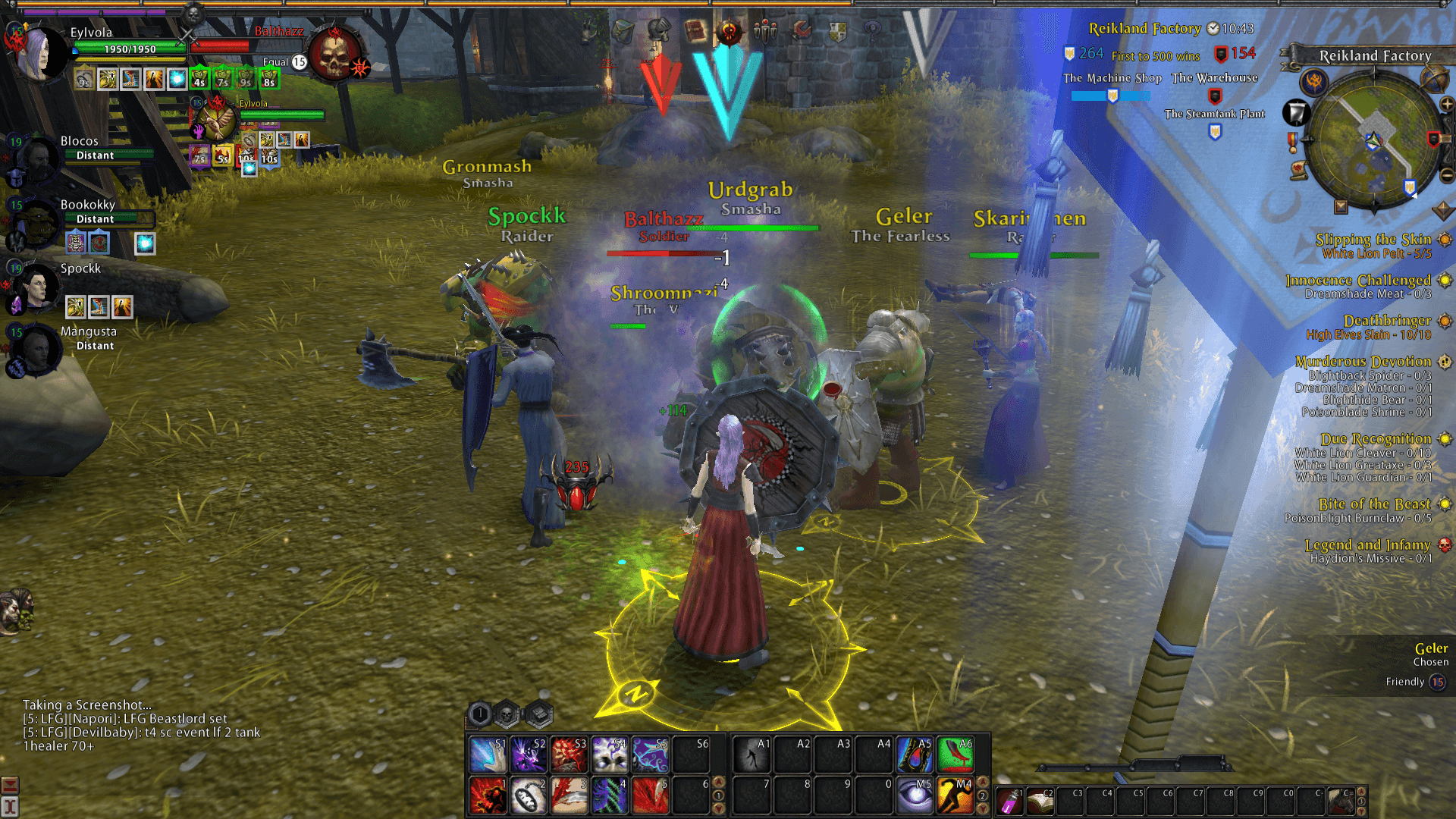
Warhammer Online: Age of Reckoning has been running since 2014 on Return of Reckoning, a volunteer-built private server that restored the game EA switched off in 2013 — and kept developing it. Order a...
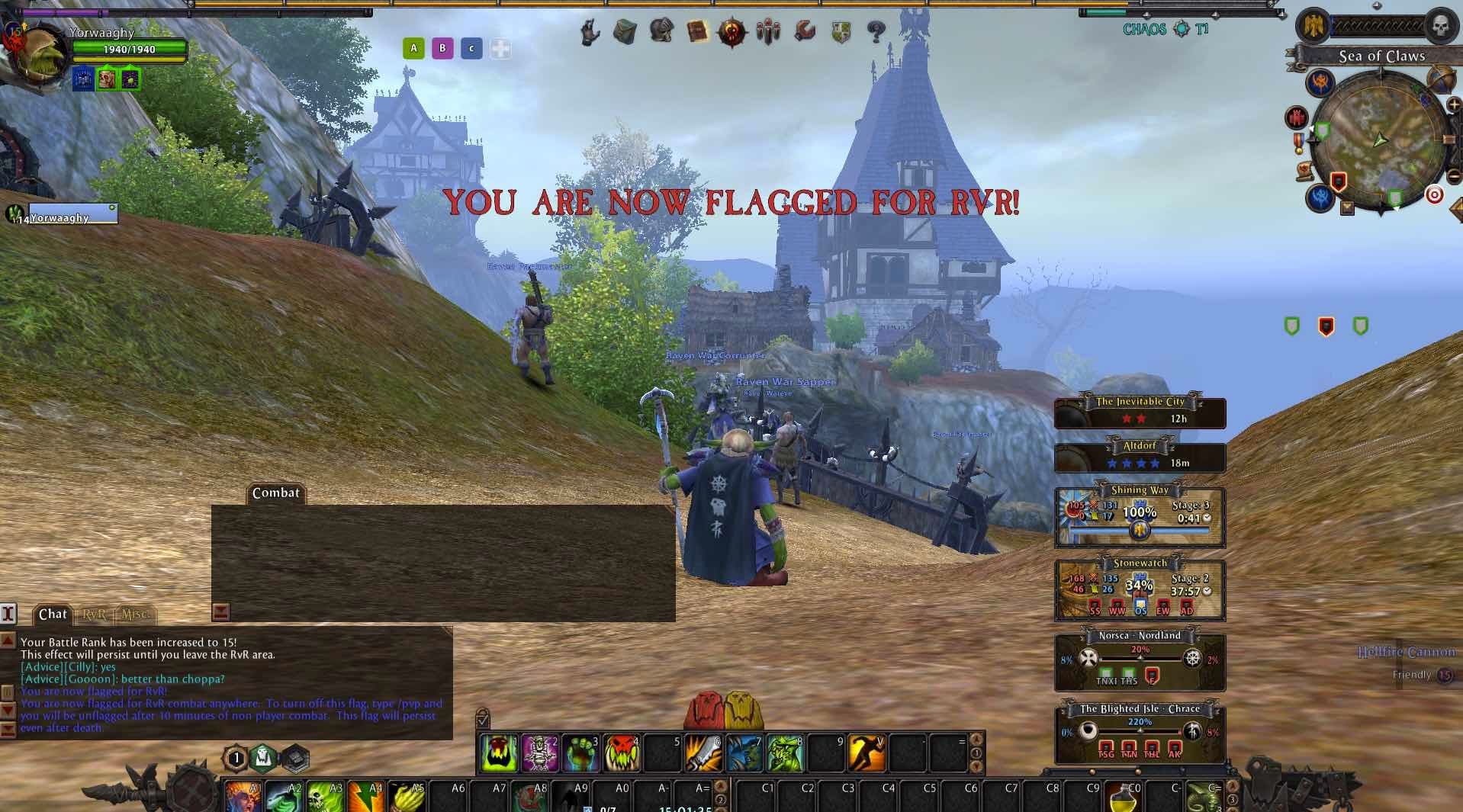
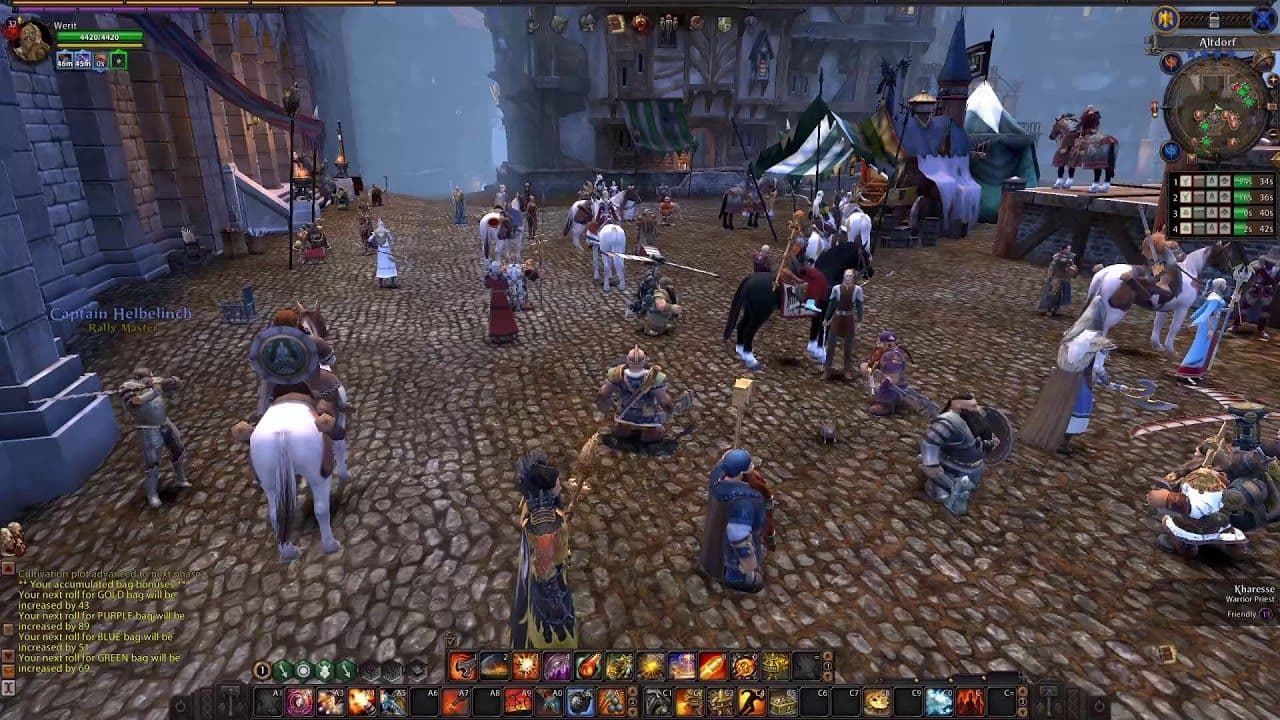
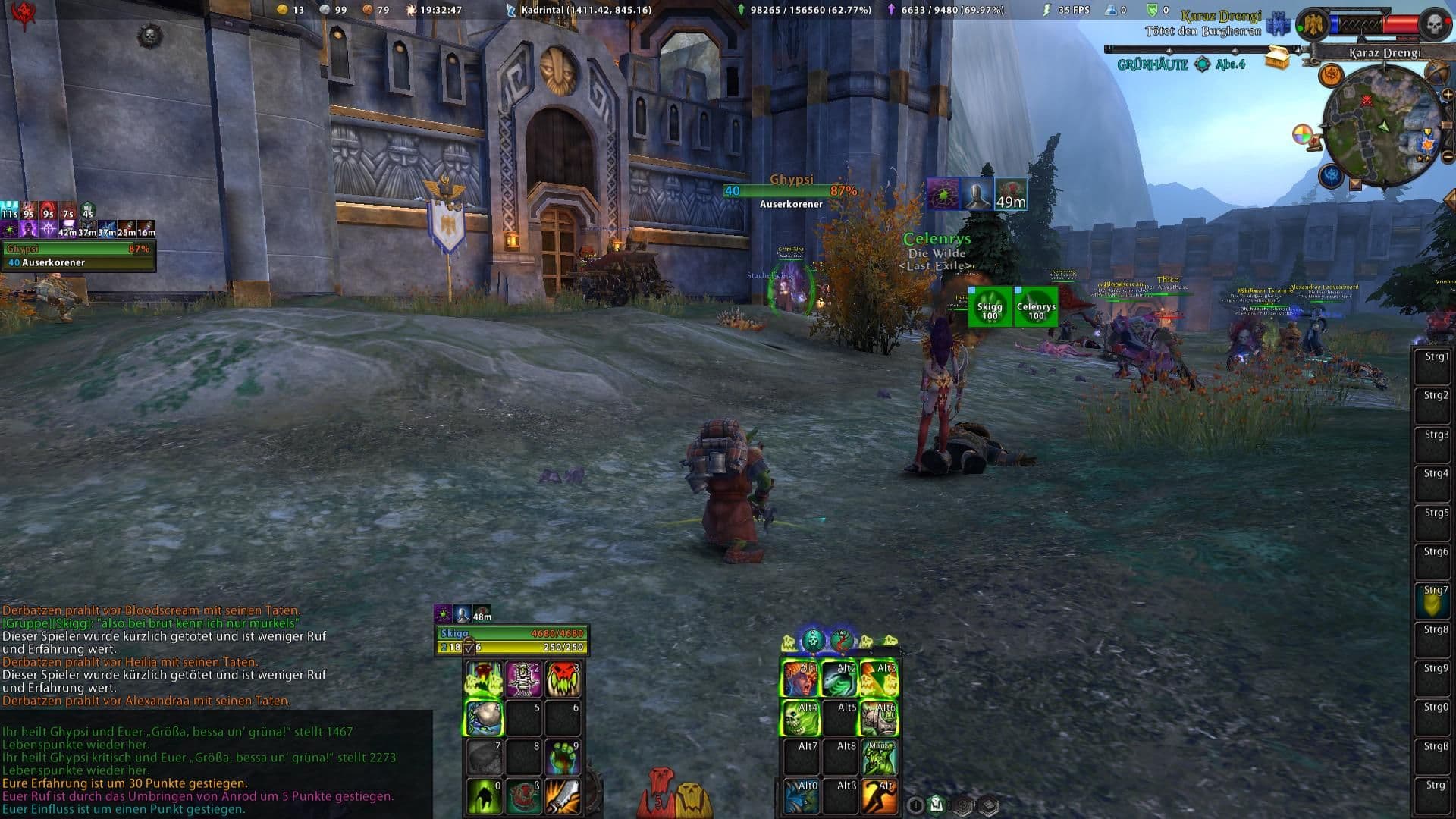
Return of Reckoning is a volunteer-run private server for Warhammer Online: Age of Reckoning, the 2008 MMORPG built by Mythic Entertainment and published by EA, whose official servers closed in December 2013. The project has been live since 2014 and is still patched on a monthly rhythm in 2026, with a development team that publishes roadmaps, balance passes and seasonal live events the way a commercial studio would. It costs nothing, has no cash shop, and refuses donations on principle.
Quick take: Return of Reckoning is the only way to play Warhammer Online in 2026, and in most respects it is a better-maintained game than WAR was on the day EA switched it off. The Realm vs. Realm campaign — battlefield objectives, keep sieges, fortresses, capital-city assaults — is intact and still the sharpest large-scale PvP structure the genre has built. The trade is a 2008 engine, a modest player count, and a balance cycle that rearranges the class meta once or twice a year.
The setting is Warhammer Fantasy at its most militarised: two coalitions, Order and Destruction, locked in a war nobody expects to end. Order fields the Empire, Dwarfs and High Elves; Destruction answers with Chaos, Greenskins and Dark Elves. Six races, three racial pairings, and a tone that runs from grim to openly funny depending on which side of the line you stand — Greenskin quest text has jokes in it, Chaos quest text mostly has entrails.
Every zone is built around that conflict rather than around a story campaign. Questing chapters run parallel on both sides of a shared map, public quests drop groups of strangers into the same objective without any grouping ritual, and the Tome of Knowledge quietly records everything you kill, find and unlock, handing out titles and lore entries as it goes. The world is small by modern standards and dense with hand-placed detail, which is what a Gamebryo-era MMO built before open-world scale inflation looks like.
Getting in takes an account on the project's site and a client download, with a torrent option the wiki recommends as the faster route; the launcher patches the rest. There is no Steam entry, no key, no payment step of any kind. Character creation offers the original game's 24 careers, four per race, split across tank, melee DPS, ranged DPS and healer roles that behave nothing like their equivalents elsewhere — the Warrior Priest heals by hitting people, the Squig Herder drags a pet squig around as a weapon, and the Bright Wizard's damage output is throttled only by how much self-immolation you're willing to risk.
The first fifteen levels play out in Tier 1, a self-contained band of starter zones with its own low-stakes RvR lake where objectives are contested but no keeps exist. Scenarios — instanced, objective-based matches, the game's answer to battlegrounds — can be queued from level one, and the server bolsters under-levelled characters so a fresh alt is a participant rather than a corpse. From level 16 onward you are eligible for the real campaign in Tiers 2 through 4, still bolstered, still outgunned by anyone in endgame renown gear, but no longer separated from where the game actually happens.
New players in 2026 get a couple of structural helps that did not exist a few years ago. February's patch added a Mentor System that rewards veterans for spending time with lower-level players, and the community maintains add-ons that most people install before their second session — State of Realm for reading the campaign map, an auction-house replacement called Emporium, an item finder for the gear grind.
The campaign is a tug-of-war across three racial pairings that resolves, every three days, into an assault on one faction's capital city. Only one zone per pairing is active at a time; locking it pushes the fight into the next zone, from Tier 2 up to Tier 4, and the Tier 4 zones can swing back and forth indefinitely until one realm breaks through to the fortress guarding the enemy capital. Everything below is the machinery underneath that sentence.
Zone control starts with battlefield objectives — flags scattered across the RvR lake. Hold two or more and supply crates spawn at them every forty seconds; carry those crates back to your keep and they raise its rank, which upgrades its defences and improves the loot bags it pays out. This is the unglamorous layer where most playtime goes, and it is also where the campaign is genuinely lost: a realm that ignores supplies arrives at the keep door with a weak ram and nothing to show for the hour.
Keeps in Tiers 3 and 4 have an outer wall and an inner door, and taking one means ramming both while defenders pour oil from above. Once the Keep Lord dies the building becomes a ruin — doors never respawn, defenders lose their oil, and attackers hold the ground. To lock the zone outright the attacking realm then has to keep that keep and hold at least three of the four objectives at the same time, which is why zone locks so often collapse at the final minute when the defending side rides out to flip a flag behind the zerg.
Capturing a Tier 4 end zone opens a fortress battle, a siege on a larger scale with a lord fight at the end, and every fortress taken banks a campaign point for that realm. A city siege fires every 72 hours, going to whichever faction has accumulated more fortress captures in that window; a tie sends the game to a coin flip between Altdorf and the Inevitable City. The siege itself runs as parallel 24-versus-24 instances rather than one mass fight, ending in a thirty-minute confrontation with the defending realm's King, and February 2026's patch reworked how those instances fill — organised warbands are matched against each other, quitters are backfilled, and leftover queues can spawn a smaller scaling instance instead of denying people a pop.
Combat is tab-target with a heavy group-play bias, and its defining mechanic is Guard: a tank can intercept half the damage aimed at a nearby ally, which turns every fight into a question of whether the enemy can break the tank-healer link before your side breaks theirs. Morale abilities charge during sustained fighting and fire off as coordinated bursts, tactics slot in as passive modifiers, and mastery points spend across three career paths as characters climb toward rank 40. The team states plainly that balance is tuned for groups of six and upward, not for duels — a design choice that explains most of what solo players find frustrating here.
2026 has been a heavy year for reworks. A melee-DPS overhaul landed first, and a ranged-DPS pass hit the public test server in July, reworking Shadow Warrior stances, adding a Morale-gated vanish, and rebuilding half a dozen ability formulas. Both patches produced long, argumentative forum threads — Shadow Warrior and Slayer players in particular consider themselves collateral damage — and the pattern is worth knowing before investing three hundred hours into a career.
Scenarios got their biggest structural change in years in February 2026, when the new Scenario Matchmaker replaced a queue system that had been sorting players by little more than arrival order. The matchmaker balances tanks, healers and damage dealers across both sides, pits premade groups against other premades, and pays a renown bonus for queueing as a role currently in demand. Ranked Scenarios were switched off in the process, and the team has said they will not return in their old shape.
Rewards were retuned again in May 2026 to pay for objective play rather than kill farming, and individual performance bonuses — top damage, healing, protection, death blows, objective score — hand out extra crests and renown to the players who actually carried a match. Spawn barriers remain the loudest open argument in the scenario community; the February patch buffed the leaving-spawn window instead of removing the barrier, and a good part of the forum still wants it gone entirely.
Endgame gearing runs on War Crests, a unified currency earned across RvR, scenarios and PvE, spent on armour sets that gate one behind the last. The RvR ladder climbs Conqueror, Vanquisher, Invader, Warlord, and finally Sovereign, an eight-piece set that requires the Invader ward before a single piece can be equipped and Renown Rank 75 to 78 to wear. Renown itself keeps counting well past that — players have pushed into the high eighties and a server-first Rank 90 was posted in May 2026 — but the team capped meaningful gear at Rank 80 deliberately, having watched the original game's higher tiers wreck its balance.
PvE runs a parallel track: Mount Gunbad, the Bastion Stair, the Lost Vale, and dungeon-specific sets that unlock wards the same way RvR gear does. Land of the Dead exists in partial form as timed expeditions into the Necropolis of Zandri, a Tomb Kings zone rebuilt around open RvR rather than restored as the full instanced expansion it once was. The 2026 roadmap promises 24-player raids in captured cities and, for the first time in the server's history, preliminary work on the Captured City system that made the original campaign feel consequential.
Return of Reckoning is free in the strictest sense available: no store, no subscription, no donations accepted. The team has stated repeatedly and publicly that it has no right to profit from someone else's intellectual property and will never open a donation channel, with site advertising covering hosting. There is no premium currency, no cosmetic shop, no experience booster for sale, and no mechanism by which money can buy an advantage — which makes it one of the very few MMOs where the pay-to-win question has a one-word answer.
Group structure is the point of this game rather than a feature of it. Six-player parties merge into 24-player warbands, warbands claim keeps and coordinate over Discord, and guild alliances organise the fortress pushes that decide which capital gets sacked. Guilds level up, earn standards that carry battlefield buffs, and hold their own halls, and the practical difference between a good and a miserable evening in the RvR lake usually comes down to whether anyone in your warband is calling targets.
Solo play is possible and increasingly supported — scenarios queue solo, public quests group you automatically, the matchmaker tries to place unattached players sensibly — but the ceiling on a solo experience here is low. Anyone allergic to voice chat and organised play will see a fraction of what the campaign offers.
Return of Reckoning runs a single server with a 3,500-player cap it rarely approaches. The public counter typically reports a few hundred players online at once, weighted heavily toward European prime time; community figures over the years have described peaks in the thousands and quiet hours in the low hundreds, and Oceanic and North American evenings are consistently the thinnest. Precise numbers are not independently verifiable — the counter is the only public source and players have argued about its accuracy for a decade.
What matters more than the raw figure is where those players sit. This is a game whose population concentrates itself: one active zone per pairing, a scenario queue, and a city siege timer that pulls everyone toward the same event every three days. Several hundred players funnelled into two contested zones produces bigger fights than several thousand scattered across a modern open world.
Return of Reckoning is not a museum piece or a nostalgia server. It is Warhammer Online with twelve years of fixes applied to systems Mythic never finished, run by people who kept building fortresses, city sieges, dungeons and matchmakers long after the company that owned the game had moved on. Fortresses work now. Cities pop on a schedule. The class balance gets argued over because someone is actually changing it.
The honest caveats are all structural rather than qualitative. Ageing technology shows in the animations and in a frame rate that sags when two hundred players collide at a keep door. The gear ladder is long, the underdog faction has hard weeks, and the whole thing rests legally on nobody at Games Workshop or EA deciding otherwise. None of that changes the central fact: the large-scale RvR design that WAR launched with in 2008 has still not been bettered, and this is the only place left to play it.
Anyone who has spent years waiting for a modern MMO to rebuild realm war at this scale should stop waiting and download the client. It costs an evening and no money at all to find out whether a fifty-player push on Fell Landing still does what it did in 2009 — and for most people who try it, the answer arrives inside the first siege.
It is an unlicensed fan emulator, which places it in a legal grey area, though it has operated openly since 2014 without action from Games Workshop or EA. The project takes no money at all, which is widely understood to be why it has been left alone.
No. The full client is downloaded from the project's own site, and no retail copy, EA account or product key is involved.
For players who want large-scale faction PvP with keeps, sieges and capital-city assaults, yes — it remains the only game running that campaign structure in its original form. Players looking for polished modern PvE or a solo-friendly story MMO will find the fit poor.
Reaching career rank 40 takes most players somewhere between one and two weeks of regular play, mixing scenarios, public quests and open RvR. The renown and crest grind toward a full Sovereign set is measured in months rather than weeks.
Population balance shifts between Order and Destruction every few months, so there is no permanently correct answer. Picking the races and careers you actually want to play matters more, since realm-swapping mid-campaign carries lockout timers.