 F2P · Live
Lineage 2
Aden's castles never stay in the same hands for long, and Lineage II has built an entire twenty-three-year…
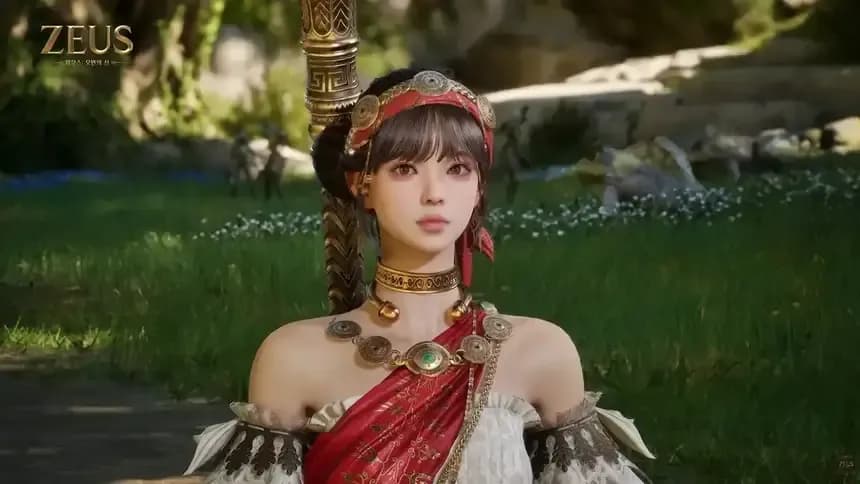
AI-controlled duplicates that fight in your place, and a character that keeps hunting long after you close the client — those two systems define Zeus: God of Pride, the Greek-myth MMORPG from A BUTTON...
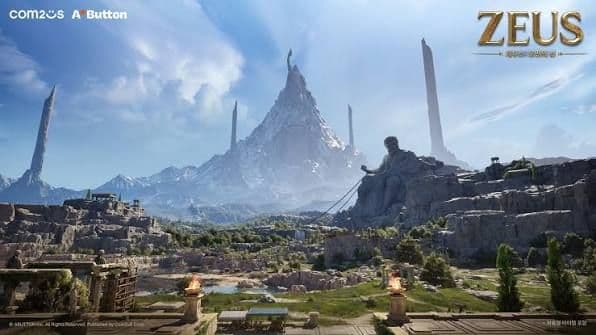
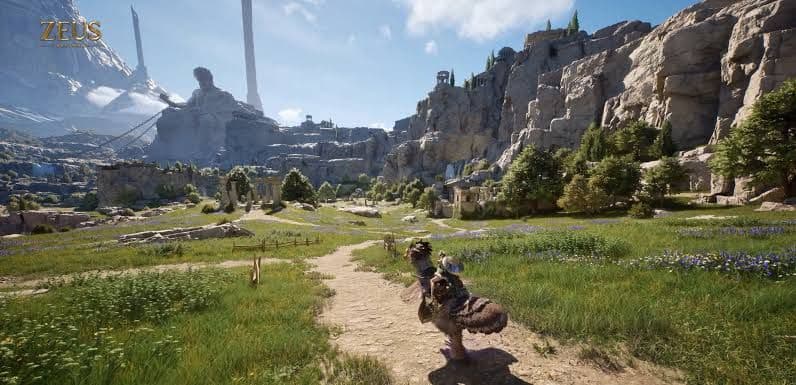
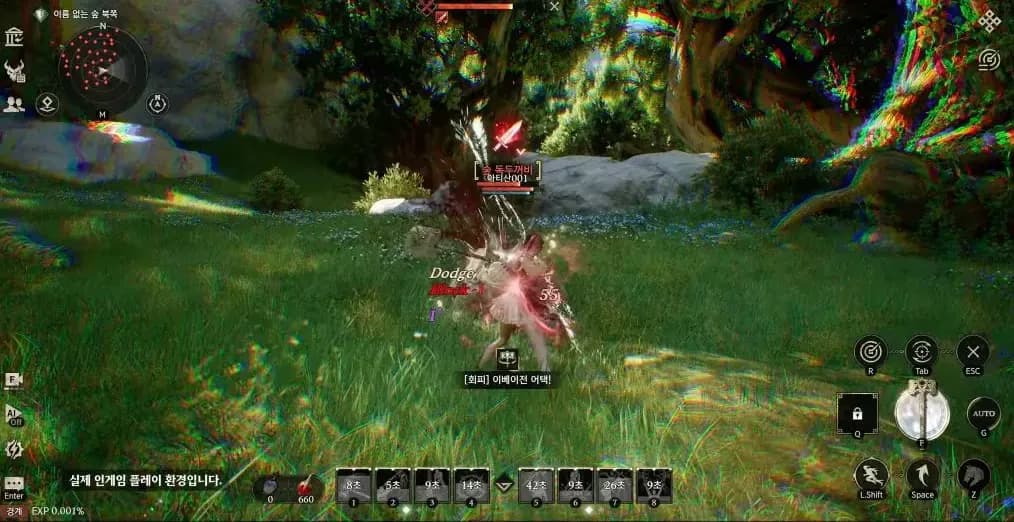
Zeus: God of Pride is a Korean MMORPG developed by A BUTTON and published by Com2uS, launched in South Korea on 26 August 2026. Built in Unreal Engine 5 and set in a reimagined Greek mythology, it arrives with an unusual pitch: a competitive MMORPG designed so that competition isn't reserved for the fifty strongest accounts on the server. The systems built to deliver that promise — offline progression, AI duplicates standing in for absent opponents, a crafting class with no combat role — are more interesting than the marketing around them.
The setting is Theia, a world shared by gods, demigods, humans and monsters, held together by an exchange: the gods issue prophecies, mortals answer with offerings. That arrangement is stable only as long as nobody questions it, and the Olympians in this telling are absolute rulers with no tolerance for challenge.
There's an old wound underneath. The Olympians won their war against Kronos and the Titans but couldn't destroy them, only seal them away. The losers are still down there. Every myth in this world rests on a foundation that could crack, which is where the title comes from — Zeus's arrogance is the plot, not a flourish.
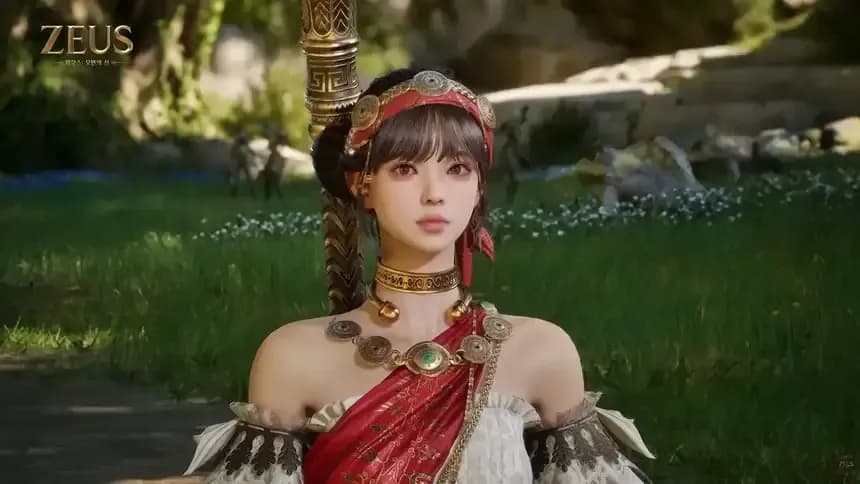
You play a demigod, described in the fiction as a vessel that hasn't yet filled. The goal is to survive the trials the gods hand down and become the strongest such vessel. Two characters guide that journey: Pandora, whose face and voice were built through facial scanning and recording of actress Park Ji-hyun, and Hermes, who explains what the Olympians want from you in the opening hours.
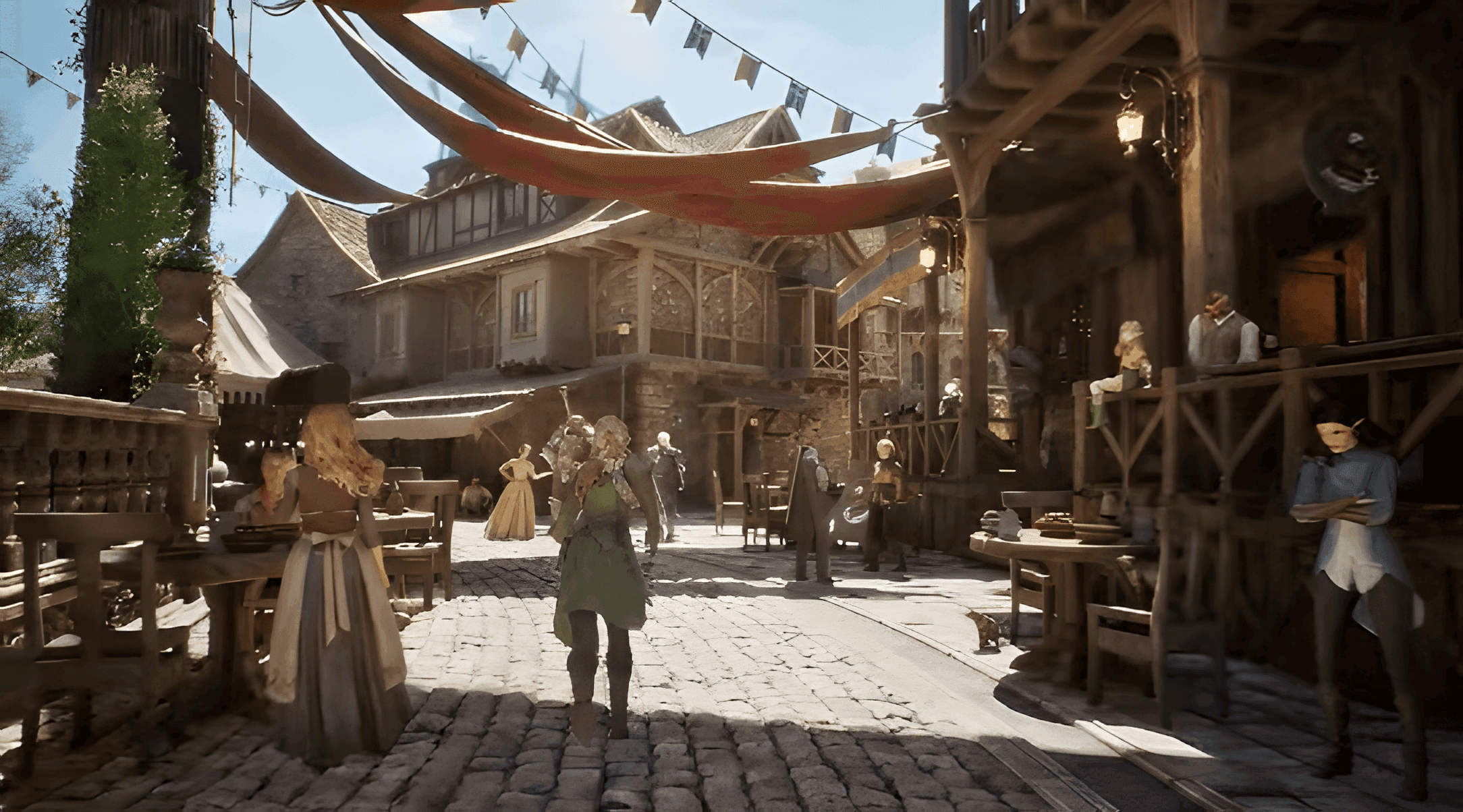
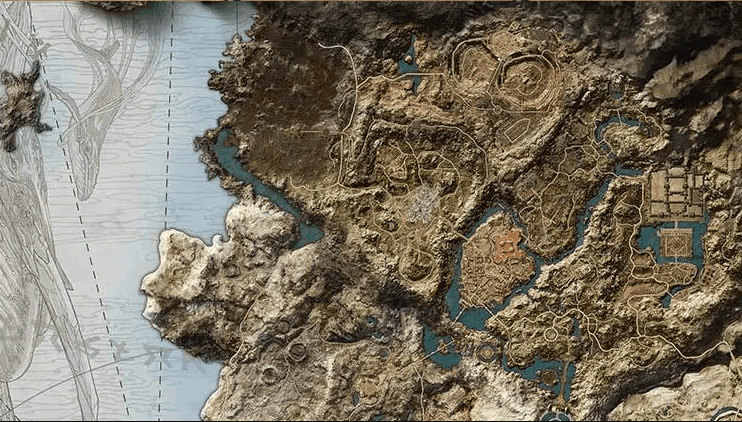
The map spans real climate variety — Thebes, Thessaly and Zahav cover Mediterranean coastline, farmland and desert oasis respectively. The published footage looks expensive, with facial animation on key NPCs that most mobile MMORPGs don't attempt. What footage can't show is whether that fidelity survives a siege with fifty players on screen and a three-year-old phone in your hand.
Four starting classes split into eight after roughly an hour of play, and each branch is tied to a specific god's favor.
Warrior serves Apollo and becomes either Knight, working sword and shield to protect the group, or Berserker, trading protection for two-handed damage. Rogue inherits Artemis's speed and splits into Assassin, who works twin daggers from behind, and Ranger, who kills at distance with a bow. Mage answers to Athena and divides into Elementalist for area damage and Oracle, who heals and shields through orbs.
The fourth branch is the one worth attention. Paragon carries Hephaestus's favor and becomes either Blessed, a holy knight in the familiar mold, or Artisan, a class with no combat specialization at all. Artisan crafts materials and items other players need and supplies them to the market. Its recipe list unlocks through dedicated production skills, and its odds of pulling rare inputs scale with a class-specific stat — a deliberate structure meant to reward long investment and starve throwaway trading accounts.
Every class carries two signature skills that can be swapped between depending on the fight. Appearance customization is generous, and advancing to your second class doesn't reset the character you built.
Gender, though, is locked per class. The stated reason is animation quality — one fixed model per class means every attack can be polished properly. The reasoning holds up technically, and it will still frustrate anyone who wanted a female Berserker or a male Oracle. Locked-gender classes were a compromise players tolerated a decade ago; in 2026 the explanation lands as an explanation rather than a defense.
The design brief A BUTTON has repeated across every public appearance is narrow and testable: most mobile MMORPGs concentrate meaningful competition among a small group of top spenders within weeks of launch, and Zeus is built to prevent that. Four specific systems carry the weight of that claim. Each one is worth examining on its own, because each could plausibly work or backfire.
The AI mode lets a character keep hunting after the client closes. One button starts it. The character stays physically present in the world rather than vanishing into an abstraction — it works a chosen hunting ground, and when healing potions run dry it walks back to town, restocks and returns. You can schedule locations by time of day, and after server maintenance the routine resumes on its own.
You can watch it happen, and the shop, the exchange, inventory management and skill setup stay available while it runs. A conscription feature lets a guild leader pull members out of AI mode and into boss content, with an opt-out for players who'd rather not be summoned and a cap on how many can be called at once.
Free accounts get twelve hours of AI mode per day, subscribers get twenty-four. That gap is the first place the fairness argument gets complicated.
The intent is coherent: automate the repetitive stretch, keep manual control where cooperation and skill decide outcomes, and the game's harder trials do require hands on the controls. Whether that reads as generous or absurd depends heavily on where you live. Korean players have accepted offline progression for years. Western MMORPG audiences have historically treated it as an admission that the moment-to-moment game isn't worth playing, and that reaction is worth anticipating before any global launch.
Competitive content sits under the Odysseia banner and splits between the Colosseum, framed as individual proof, and the Arcadia Festival, framed as collective proof. Beneath those sit an infinite tower, a hall of trials, guild raids and seasonal tournaments. The Arcadia Festival runs as a season-long guild campaign where hunting and other activities earn exclusive effects and guild skills that get spent in the eventual fight, which puts the competition weeks before the battle itself.
The mechanism holding it together is Persona — an AI-controlled copy of a player carrying their appearance and combat statistics. In Colosseum and Arcadia matches you fight the copy rather than the person, so neither of you needs to be online at the same time. The closest familiar comparison is a ghost car in a racing game.
The reasoning is sound as far as it goes. Plenty of players avoid arenas because of the nerves rather than the difficulty, and matchmaking that never has to wait for a human is a real convenience.
The cost is harder to price. Beating an algorithm wearing someone's face is a different experience from beating the person, who adapts, panics and makes mistakes you can exploit. That unpredictability is most of what makes PvP worth doing. Persona may prove a fair trade for accessibility, or it may hollow out the thing it was built to democratize, and there's no way to know which from a slide deck.
The economy is the most original part of the design and the part most likely to be tested to destruction.
Three servers share a single unified exchange, which keeps any one market from suffocating on a small population. Artisan supplies that exchange with crafted growth materials. Sitting behind both is the Vault of Midas, a system that buys gear back from players once it has fallen out of use, paying diamonds spendable on the exchange and in shops. Part of the diamond flow accumulated through trading and purchases cycles back to players through sieges and the vault itself. The point is that a weapon you farmed months ago retains residual worth instead of becoming inventory clutter.
Orichalcum, the core currency, drops only in dungeons and carries a daily cap. That's standard protection against currency collapse, with a familiar side effect: past a certain point each day, playing longer stops paying, and some players read that as the game telling them to leave.
Personal trading is tied to membership, and hero-grade items and materials are excluded from trade entirely. The purpose is obvious enough — close the pipes that gold-farming operations use to move value out. Players used to flipping their own drops will hit that wall without expecting it.
Direct conflict hasn't been softened out of the game. Field bosses, inter-server battlegrounds, point capture and an escalating chain of territory war, fortress assault and full siege are all present. Boss rewards distribute across damage contribution, killing blow and baseline participation rather than going to whoever lands the last hit — a sensible correction in a game where a chunk of the population is farming on autopilot.
Repeat ganking is handled by a slayer system. A player caught farming weaker characters gets flagged, their position broadcast on the world map in real time and nearby players warned. Potion prices spike for them, teleporting out mid-fight is blocked, and hiding in a safe zone doesn't run the penalty clock down.
The severity is unusual for 2026 and clearly aimed at letting new players farm without becoming target practice. The risk is the one every such system runs: an algorithm has to separate legitimate competition over a spawn from predatory behavior, and algorithms get that wrong in both directions.
Guilds function as working structures rather than chat channels. Raid loot goes to the guild vault and is distributed by internal auction or accumulated contribution. Joining isn't mandatory, but core Odysseia content is effectively closed without a guild — an awkward fit with an AI mode designed for players who don't have time for standing commitments.
It's a mobile game with a PC wrapper, whatever the marketing suggests. Com2uS has described Zeus since announcement as a cross-platform title with a PC focus, but no native desktop client exists. The official installation guide states that the PC launcher downloads only through Google Play Games, Google's compatibility layer for running Android builds on Windows. No Steam listing, no standalone installer. What runs on a desktop is the mobile build in a larger window.
That isn't a verdict on quality — Unreal Engine 5 runs on phones and the presentation doesn't suffer for it. It does mean anyone reading "Unreal Engine 5 blockbuster" and picturing a client MMORPG should recalibrate before installing.
Pricing is free-to-play with an optional membership at 9,900 won a month, roughly $7, which unlocks round-the-clock AI mode and personal trading. A season pass, paid accessories, and costume and mount summons with a pity counter round out the storefront.
The operating principle Com2uS keeps restating: every paid item is obtainable through play, and high-performance equipment and core skills are never sold directly — those come from raids, hunting, crafting and player trade. It's a strong commitment, and one that only becomes verifiable around the three-month mark, when the gap between subscribers and everyone else becomes visible. Supporting it are single-client enforcement on PC, identity verification for exchange access, round-the-clock monitoring for anomalous accounts, and a nickname-change freeze at launch to complicate account resale.
One operational decision deserves specific credit. Partnered streamers are confined to six of the thirty servers, and those six stay separated from the rest for the unified exchange, character transfers and matchmaking. Nobody's progression benchmark gets set by whoever has the largest audience.
Six months of roadmap are already public. The main story, the inter-server Tartarus dungeon and field events are in at launch. Guild raids and the Vault of Midas land in week one, the Colosseum in week two. Endgame and RvR — Arcadia occupation, sieges, the hall of trials — arrive around the one-month mark, and a new class plus class-change functionality is scheduled for month four, with monthly boss additions, dungeon reworks and arena seasons in between.
A dated schedule beats vague promises, and this one is dense. The gap worth noticing is that endgame isn't present at launch — it's a month out. Players who consume content quickly will spend that month waiting.
If you're an English-speaking player looking for something to install this week, Zeus: God of Pride isn't it, and won't be for months at minimum. Nothing about the current release is accessible without a Korean account and a tolerance for playing in a language you may not read.
If you follow MMORPG design rather than chasing releases, this one is worth watching closely. A BUTTON has identified a real failure mode — the way competitive mobile MMORPGs calcify into a small circle of top accounts while everyone else spectates — and has built four distinct systems aimed at it rather than one marketing bullet point. Persona, the Vault of Midas, Artisan and the slayer system are all defensible ideas that haven't been tried in this combination before.
If you've watched enough MMORPG economies collapse to be skeptical, your skepticism is appropriate and untestable for now. Economies don't break because of villains; they break because thousands of people independently find the same optimal path. The showcase describes intentions, and intentions have a poor record against a live server two months in.
There's a commercial dimension worth factoring in. A BUTTON was founded in early 2024, has shipped nothing in two years and accumulated losses of 34.8 billion won, while Com2uS has committed roughly 41.5 billion won to the partnership. That kind of pressure sometimes produces disciplined decisions and sometimes produces a quiet softening of monetization principles two quarters later. Which one happens here is the most informative thing that could come out of this launch, and it won't be visible until winter.
No. Zeus: God of Pride launched in South Korea on 26 August 2026 with no English client. Com2uS has stated that overseas service will only be prepared after the game stabilizes domestically, and no international date has been announced.
Yes, with an optional membership costing 9,900 won a month. The membership extends AI mode from twelve to twenty-four hours daily and enables personal trading between players.
Yes, but not through a native client. The PC launcher is distributed exclusively through Google Play Games, which runs the Android build on Windows. There is no Steam release or standalone installer.
Com2uS states that weapons, armor and skills are never sold directly for money and that every paid item can also be earned in-game. That policy is credible on paper but unverified in practice — the meaningful test comes around three months in, once the gap between subscribers and free accounts becomes measurable.