 F2P · Live
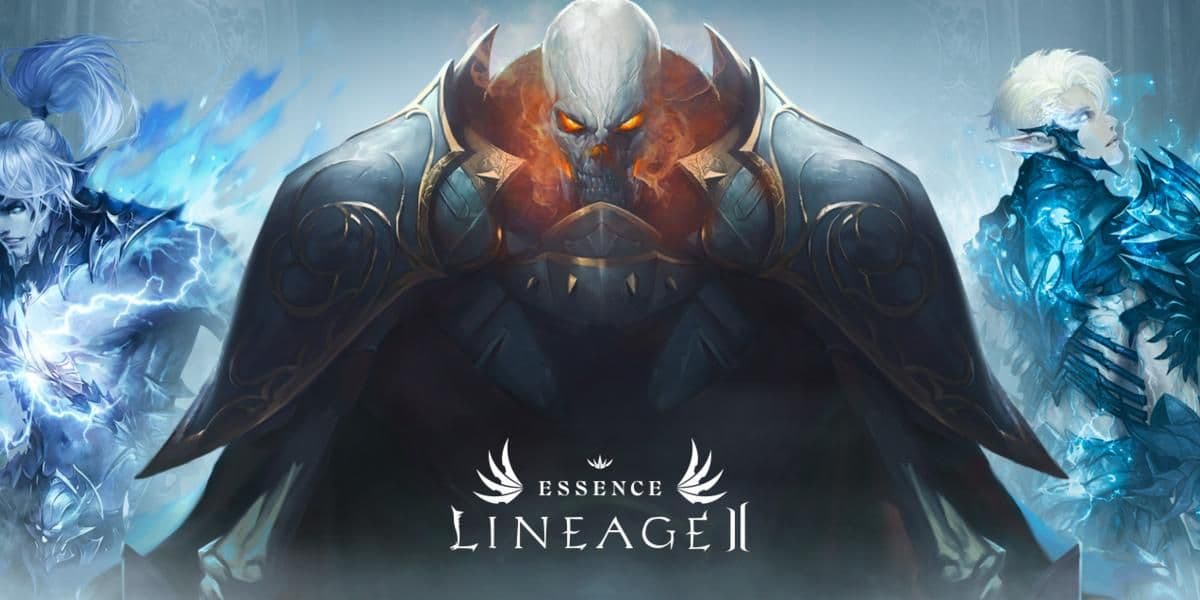
Lineage 2 Essence
Lineage 2 Essence is NCSoft's free-to-play take on the classic Korean MMORPG Lineage II, built around faster…
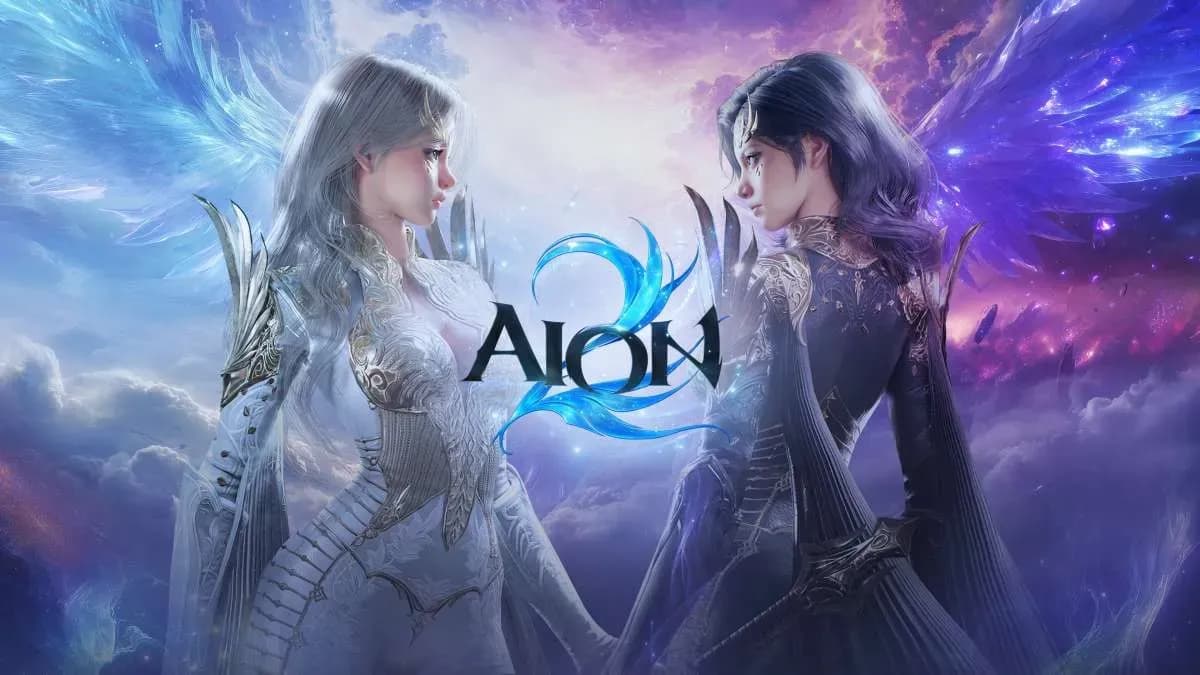
AION 2 brings NC's Elyos-versus-Asmodian war into Unreal Engine 5, with a seamless rebuilt Atreia, tactical flight combat, and faction sieges fought over real territory. Following ten months of live p...
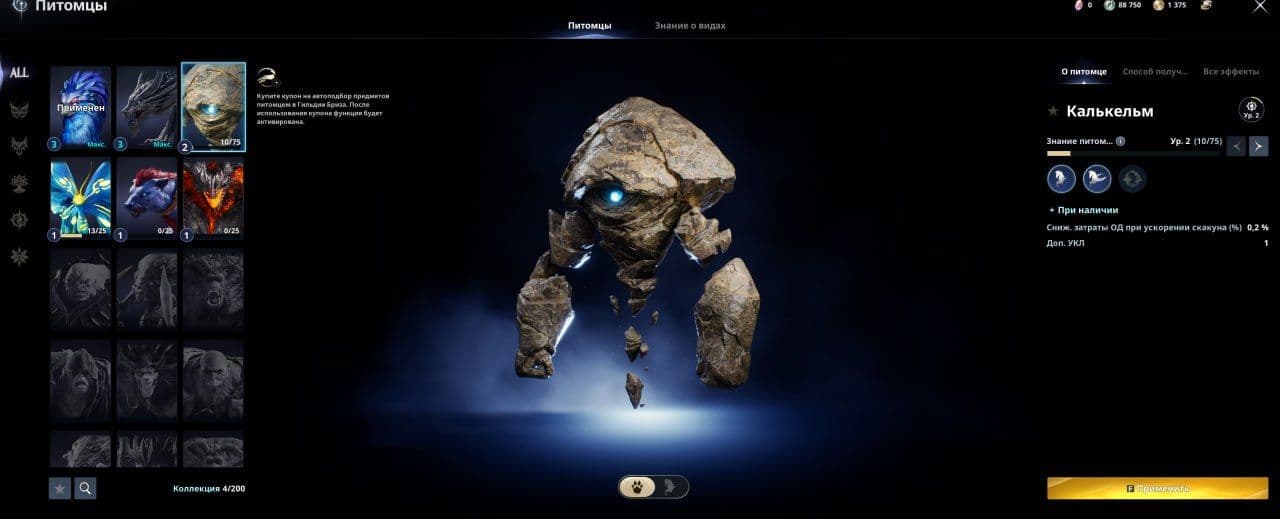
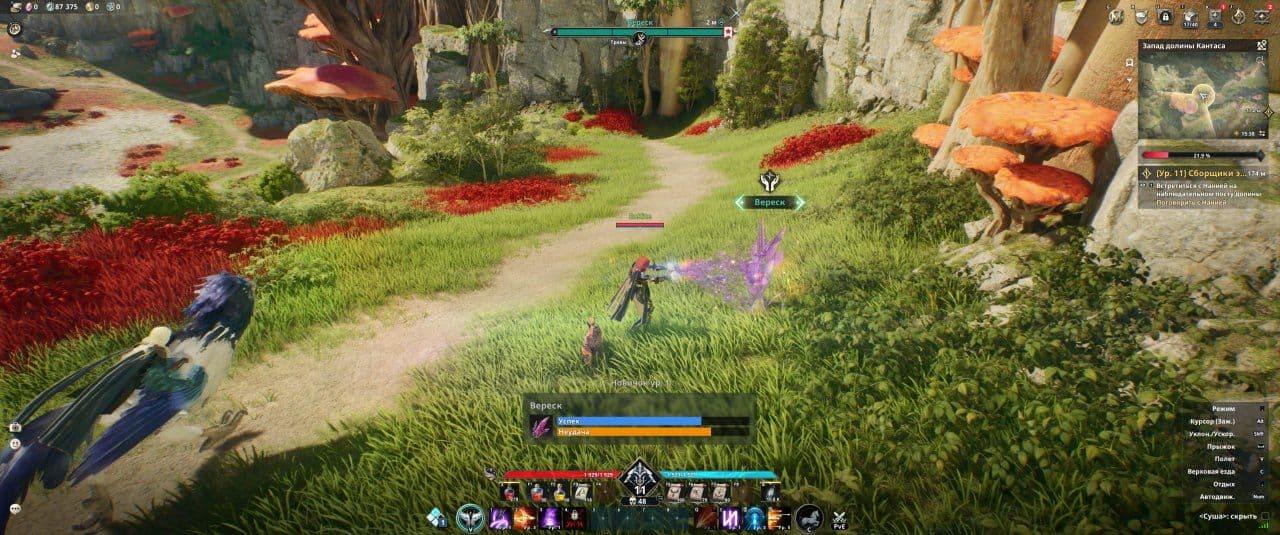
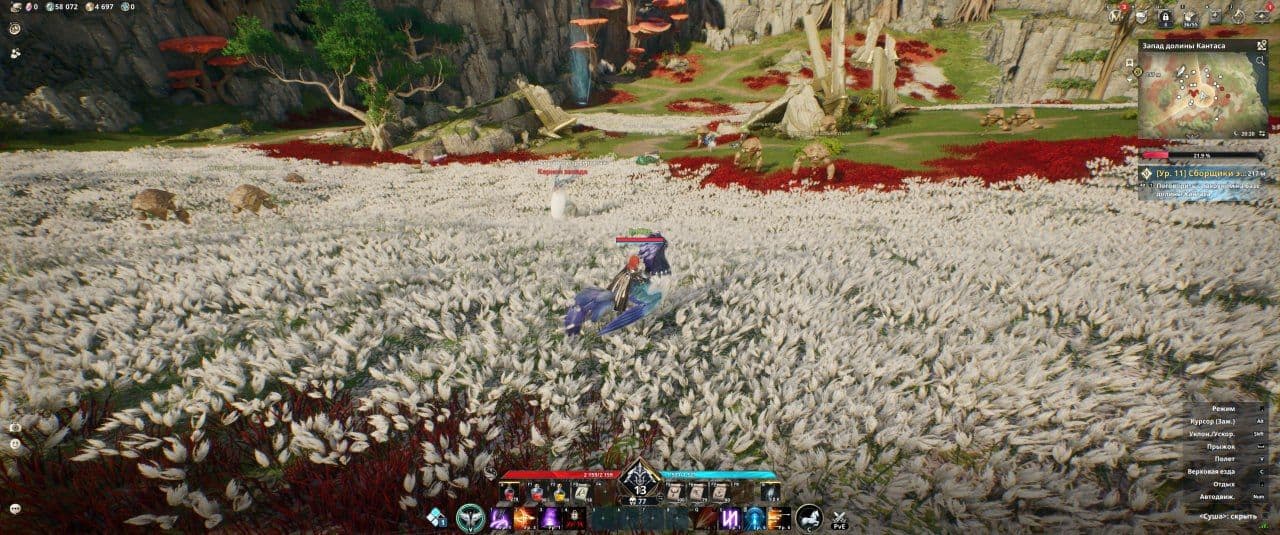
Aion 2 is a high-budget MMORPG developed by NCSOFT on Unreal Engine 5, serving as the direct numerical sequel to the landmark classic of 2008. Seventeen years ago, the original Aion: The Tower of Eternity redefined genre benchmarks by dominating Korean PC cafes for a historic 160 consecutive weeks and granting an entire generation of MMO enthusiasts an unprecedented sensation: genuine three-dimensional aerial combat on outstretched wings. The release of this sequel marks a defining reckoning for the South Korean titan—an ambitious endeavor to reconstruct the foundational pillars of the franchise on modern architecture while discarding the archaic bottlenecks of the past.
The western expansion followed a calculated, pragmatic trajectory. Following its domestic debut in South Korea and Taiwan in November 2025, where the game immediately amassed an active player base of 1.5 million daily users and generated over 100 billion won within its first six weeks, the global rollout took flight. On September 30, 2026, early access servers launched for Founder’s Pack owners across Europe and North America, paving the way for the full Free-to-Play release on October 5, 2026 via Steam and the proprietary NCSoft PURPLE client. European realms such as Siel, Israphel, Nezekan, and Zikel quickly flooded with queue lines, reigniting the nostalgic fervor of a major MMORPG launch.
Yet now that the initial storm of launch euphoria has subsided, giving way to sober mechanical scrutiny, the underlying contradictions of contemporary Korean game design have surfaced. Aion 2 delivers astonishing graphical fidelity, dizzying verticality across floating continents, and an exquisitely polished flight model that is no longer chained to restrictive countdown timers. But right behind this glittering showcase lies a pragmatic monetization framework—from an infamous $15 monthly subscription that cuts free-to-play adventurers off from the auction house, to a contentious PvP redesign that trades raw open-world faction anarchy for strictly scheduled battle sessions.
Back in 2008, the wing mechanic in Aion was largely a scripted spectacle constrained by a suffocating one-to-two-minute countdown, permitting genuine aerial dogfights only within the Abyss or strictly delineated airborne pockets. In Aion 2, the open sky has finally evolved into a seamless, natural habitat. The development team at NCSOFT has transformed the atmosphere into the primary bedrock of level design. There are no longer invisible ceilings bounding starter plains or artificial no-fly zones: you sprint toward the precipice of a thousand-meter chasm, strike the spacebar, unfurl your plumage, and launch into a frictionless glide above the clouds, taking in panoramic vistas of sunken canyons and floating sanctuaries below.
Vertical locomotion relies on sophisticated atmospheric physics. Traversing the expanse of Atreia, players frequently encounter Windstreams—luminous conduits of concentrated Aether weaving through continental skies. Entering a slipstream at the correct angle accelerates flight speed dramatically, catching your avatar in a kinetic surge that traverses vast mountain ranges in seconds with zero resource expenditure. Furthermore, these airstreams are intricately woven into high-tier dungeon mechanics, where entire groups must launch into airborne slipstreams to evade fatal arena-wide ground detonations during boss encounters.
Yet in combat, the application of wings reflects a hard-learned design compromise tailored to address historical balance failures:
Refreshingly, the wing progression system avoids aggressive paywalls. Advanced wings are earned through high-tier quest arcs, raid boss drops, and specialized crafting disciplines rather than direct cash-shop purchases. Different wing variants confer subtle passive perks—slight dive acceleration bonuses, modest increases to total flight stamina, or minor stun resistances. The stat disparity between high-end in-game wings and cosmetic store skins remains negligible, preserving wings as an authentic badge of personal mastery over the skies.
The narrative of Aion 2 unfolds two centuries after the dramatic climax of the original chronicle. The world of Atreia, once a hollow sphere anchored by the colossal Tower of Eternity, lies permanently shattered in the aftermath of what historians term the "Final War." The cosmic axis has collapsed, raw Aether currents surge unpredictably, and the ancient Empyrean and Shedim Lords have faded into mythical obscurity, leaving mortal survivors and reincarnated Daevas to rebuild amid fragmented continents. Yet even planetary devastation failed to extinguish the primal blood-feud between the sundering halves of a broken people: the sun-drenched Elyos and the frost-hardened Asmodians.
In this sequel, writers and visual artists at NCSOFT have thoroughly refined the narrative framework, abandoning the archaic binary of "radiant winged saviors" versus "bestial demons." The Asmodian visual aesthetic has undergone a comprehensive transformation: the exaggerated hunchbacks have been eliminated, spinal manes refined into subtle aristocratic contours, and their pale, ash-toned skin and blazing crimson battle-eyes elevated into refined dark-gothic elegance. Neither faction claims moral superiority; both wage a desperate existential war over finite veins of solid Aether, holding the other accountable for the ruin of their shared cradle.
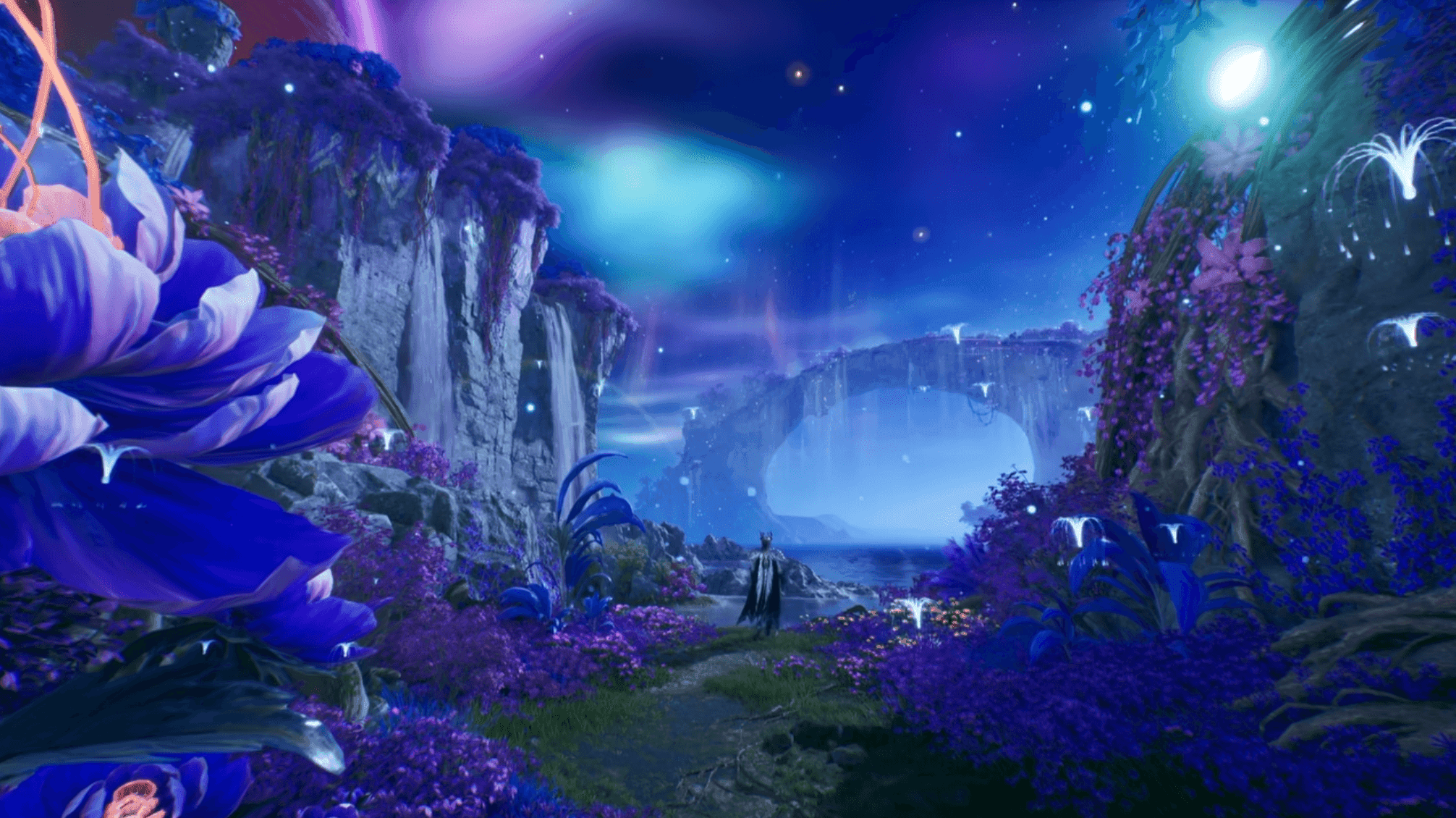
World exploration is defined by vast, seamless vistas realized through Unreal Engine 5:
Nevertheless, the structural organization of faction interaction represents one of the most hotly contested design decisions among veteran players: faction-locked server architecture. In the global release, core game servers are tethered to a single faction—characters are established either on an Elyos world or an Asmodian world. Direct contact between the opposing civilizations is strictly prohibited across home continents. You cannot encounter an enemy infiltrator outside a starting village or near a peaceful herb patch. Cross-faction warfare is concentrated within dedicated inter-server zones: the immense expanse of The Abyss and scheduled Spacetime Rifts. While this architecture decisively shields newcomers from predatory open-world ganking, it strips away the perpetual, electrifying paranoia that defined original Aion, where every shadow behind a rock signaled an imminent ambush.
The combat architecture in Aion 2 reconciles two fundamentally divergent eras: the tactile reflex demands of modern non-target action combat and the calculated, tactical pacing of classic tab-target systems. Rather than forcing a single polarizing compromise onto its audience, NCSOFT implemented a dual-mode control architecture, switchable on the fly with a single keystroke:
At launch, the roster features eight archetypes, mechanically mirrored across Elyos and Asmodians. Unlike the original title, where classes could swap between various weapon types (such as gladiators alternating between polearms and dual swords), the sequel binds each archetype to a single signature weapon discipline around which all motion capture is choreographed:
Character customization draws from an extensive ability library: each class features 40 baseline skills, with exactly 12 assignable to the active combat bar. Yet true build diversification emerges from the revamped Stigma System. Characters unlock up to five Stigma slots to socket specialized Aether stones. Rather than offering basic percentage stat increases, Stigmas fundamentally reshape skill behavior: transforming a single-target heal into a cascading chain wave, infusing a warrior’s leap with a gravitational vortex that pulls foes inward, or granting armor-piercing trajectories to arrows. Backed by instantaneous hotkey presets, a single character can fluidly pivot from a solo dueling spec to a dedicated team utility build before entering a high-tier dungeon.
When engineering PvE progression, NCSOFT moved decisively away from monotonous corridor mob-grinding in favor of a structured instanced dungeon hierarchy. The more than two hundred launch dungeons span a tiered progression ladder: from intimate narrative solo trials and standard 4-player party runs to complex 8, 16, and 32-player raid complexes. For casual players, an accessible Easy Mode displays clear telegraph danger zones beneath boss attacks and provides automated party replacement if a member disconnects, enabling newcomers to internalize mechanics without toxic group kick votes.
For organized guilds, however, the primary attraction lies in specialized endgame dungeon tiers, each delivering a distinct trial of coordination:
Beyond instanced corridors, the open world pulsates with colossal world bosses emerging along regional borders. Bringing down these behemoths demands coordinated aerial wings of hundreds of Daevas evading sky-filling meteor showers and suppressing summoned elite adds. Yet here lies a classic technical bottleneck: during peak European server hours, world boss encounters inevitably grapple with severe framerate drops and particle overload, transforming high-altitude tactical battles into a test of GPU endurance and raid-leader vocal stamina.
For dedicated veterans of the original masterpiece, the very utterance of The Abyss evokes an adrenaline-fueled battle cry. That eternal twilight expanse suspended between the sundered halves of Atreia was the crucible of Daeva existence—a proving ground where Supreme Commander ranks were forged, fortresses captured, and massive aerial dogfights raged across empty voids. In Aion 2, the Abyss returns as a colossal cross-server proving ground built around large-scale RvR (Realm vs Realm) warfare, though re-engineered around modern structural constraints.
The centerpiece of the zone is the scheduled Chaotic Abyss campaign. At appointed hours, entire server populations coalesce into expansive military coalitions, partitioning participants into rival Eastern and Western fronts. Across this vast multi-tiered battleground, factions struggle for strategic dominion:
Yet in open-world PvP design lies the single most polarizing contention among veteran enthusiasts. In Aion 2, unpredictable open-world headhunting has been virtually eradicated. The golden era of wild spatial rifts—which once allowed rogue assassins to spend hours terrorizing enemy quest hubs and reaping Abyss Points from unwary gatherers—has been superseded by rigid administrative timetables. Open-world faction clashes are confined to designated weekly windows and structured events. While this architecture protects casual progression, it fundamentally sanitizes the pervasive, cutthroat danger that cemented the original game’s status as a legend of cutthroat MMORPG warfare.
The economic loop of Aion 2 is intricately intertwined with spatial exploration. Crafting disciplines avoid being relegated to isolated menu clicks; instead, they compel Daevas to actively conquer atmospheric heights. Resource gathering operates across full three-dimensional space: while terrestrial flora, timber, and base mineral veins are harvested across continental landscapes, the most prized crafting reagents—concentrated Aether vortexes and stardust clusters—drift suspended in mid-air, demanding surgical aerial maneuvers among rock bridges and floating islets.
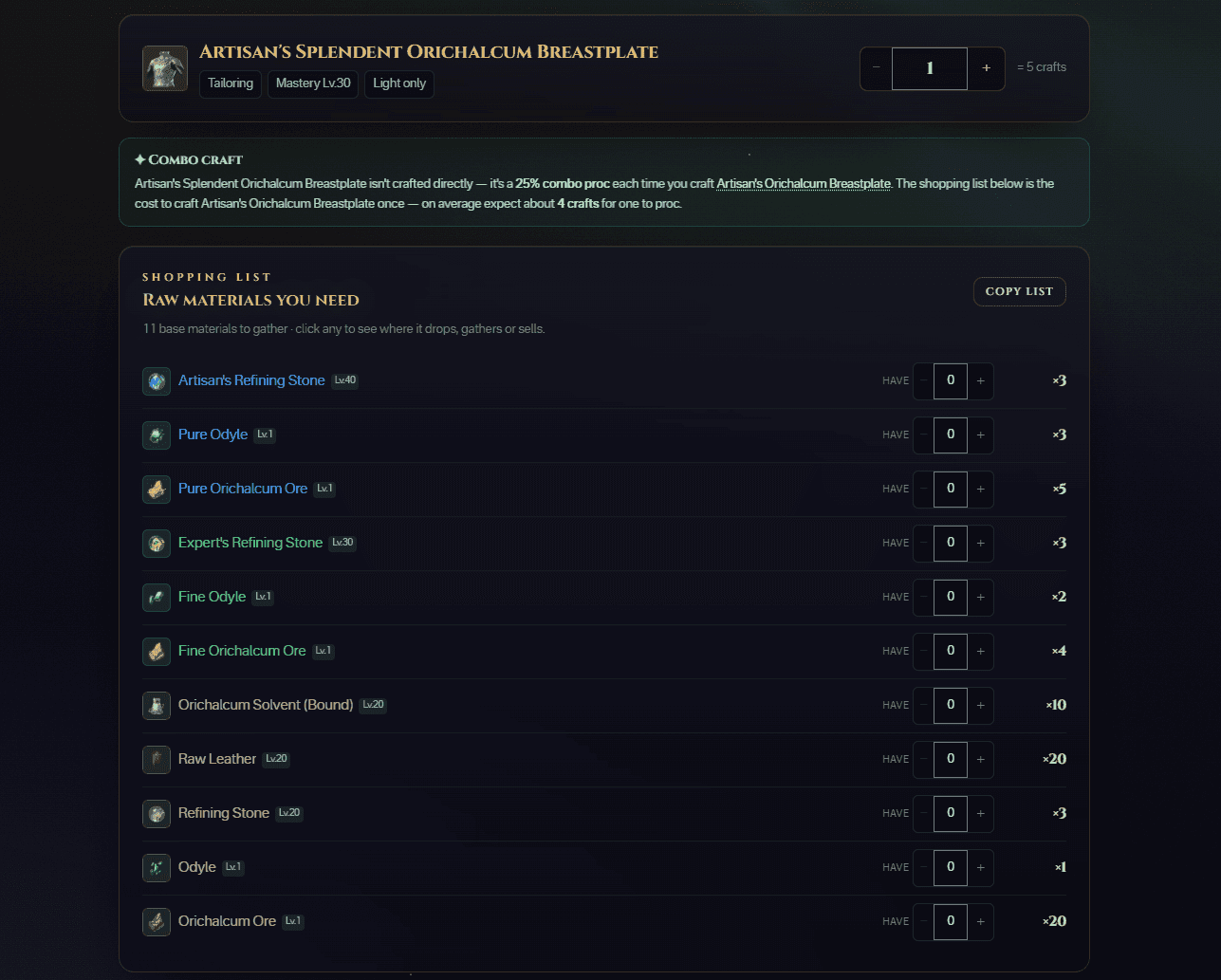
The industrial manufacturing chain encompasses weapons, armor, alchemical draughts, and vital stat-infusion jewels known as Manastones:
However, the macroeconomic framework enforces strict financial segregation, funneling wealth into two divergent channels. Base in-game currency is divided into standard Kinah and Bound Kinah. Bound gold flows abundantly from story quests, daily task boards, and casual dungeons, but is restricted exclusively to personal operating expenses: gear repairs, world teleportation, and NPC crafting station fees. Freely tradeable Kinah is awarded in far sparser quantities—primarily through arduous endgame expeditions and commerce with fellow adventurers.
At the apex of this fiscal hierarchy sits premium cash-shop currency—Quna. Purchased with real money, it can be formally converted into tradeable Kinah via a built-in player currency exchange at floating, market-determined rates. This architecture establishes a legitimate bridge between fiat currency and the player market: affluent players can bypass hundreds of hours of gathering by purchasing raw materials directly from industrious gatherers. Yet for an ordinary adventurer to participate in this ecosystem, they must confront the single most controversial paywall introduced to the genre.
While Aion 2 is officially distributed under a Free-to-Play banner, this free-entry facade conceals one of the most rigorously segmented economic frameworks in modern online gaming. The executive leadership at NCSOFT enacted a radical economic policy that split the community into two unequal tiers: erecting an impassable barrier between unpaying accounts and authentic participation in the player-driven market.
The cornerstone of this model is the monthly Membership subscription, priced in western territories at approximately $15 per month. Operating an account without an active subscription triggers draconian restrictions:
Furthermore, publisher monetization extends across multiple compounding tiers beyond baseline market access:
To NCSOFT’s credit, executive producer Kim Nam-joon fulfilled the promise to eliminate predatory gacha-style gear crates—there are no 0.001% random weapon lottery wheels or hero banners. Yet characterizing Aion 2 as a genuinely free experience is disingenuous. For any player intending to engage in high-tier raiding, contribute meaningfully to a competitive guild, or participate in market dynamics, the $15 monthly membership acts as a mandatory toll: in practice, you are paying a classic MMO subscription for the privilege of full citizenship in Atreia.
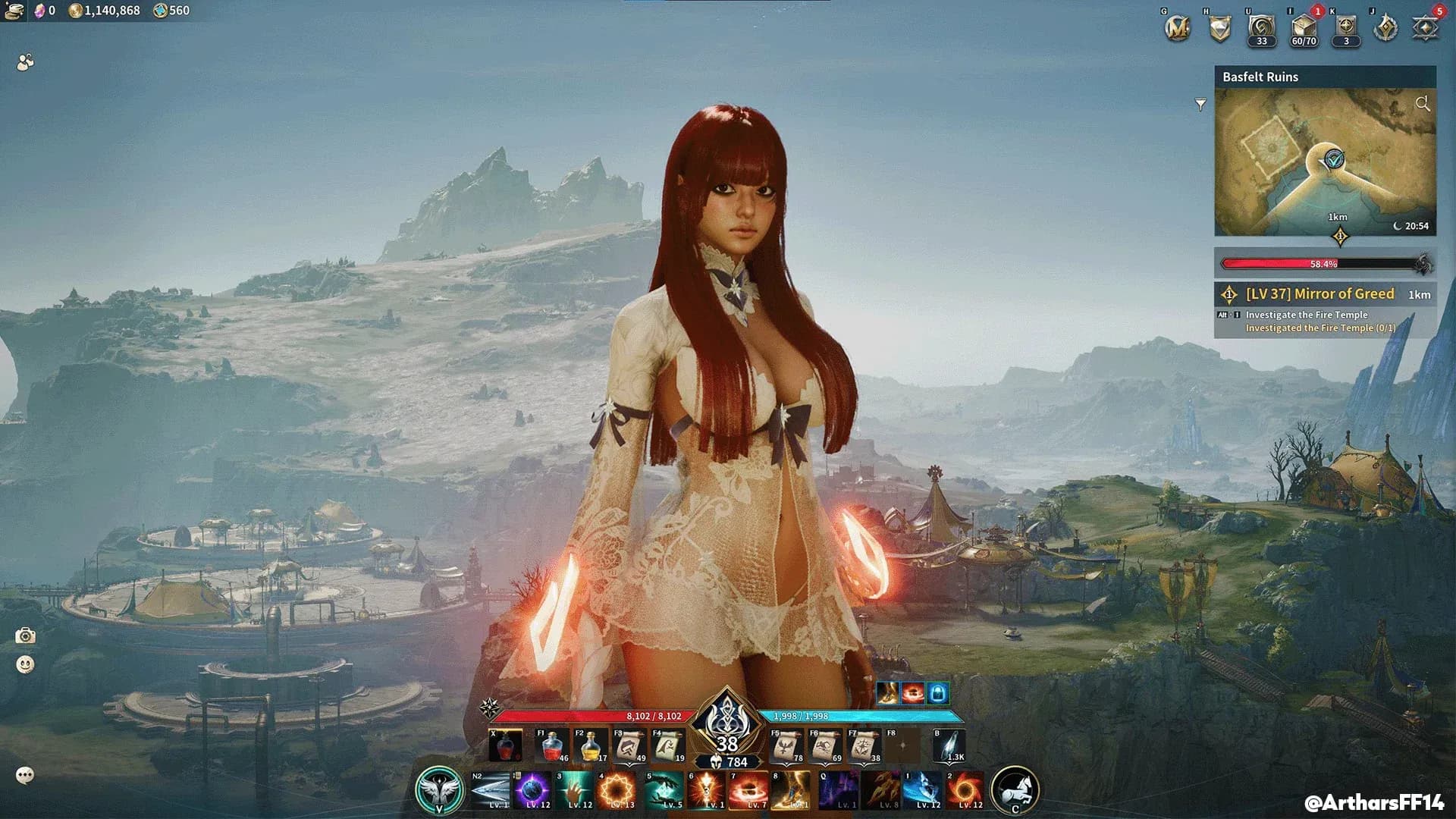
The franchise’s transition to Unreal Engine 5 served as NCSOFT’s premier technological showcase throughout pre-release marketing. The 2008 original operated on a heavily modified CryEngine build that delivered postcard vistas but routinely buckled during large-scale mass encounters. In Aion 2, the graphical architecture reaches an entirely new plateau: Nanite micropolygon geometry virtually eliminates distracting level-of-detail (LOD) pop-in, while Lumen dynamic global illumination turns levitating island chains into a visual triumph—amber sunset rays filter softly through cloud layers, reflecting off polished plate cuirasses and mountain lakes with breathtaking realism.
Yet this visual splendor exacts substantial hardware demands:
The European network infrastructure across realms such as Siel, Israphel, Nezekan, and Zikel demonstrated measurable improvements over the initial Korean launch, which struggled under bot traffic. Latency from most European regions to the central Frankfurt datacenters remains stable between 35–65 ms, an essential threshold for landing precision parries in action combat mode. Server tickrates are consistently responsive, and aerial hit detection no longer suffers the phantom strike anomalies that plagued earlier beta iterations.
Nevertheless, the interface still betrays subtle mobile-first lineage. Although Aion 2 is engineered as a dedicated PC release devoid of auto-combat bots, certain UI elements—chunky square menu tiles, screen-cluttering notification popups, redundant radial selectors, and intrusive quest auto-routing markers—resemble mobile cross-platform adaptations. While post-launch patches have begun introducing deeper PC scaling toggles, completely shedding this mobile-adjacent aesthetic remains an ongoing journey for the development team.
Synthesizing the early trajectory of the European launch, Aion 2 emerges as a monumental yet fundamentally conflicted achievement. The title offers genuine exhilaration for enthusiasts of vertical spatial design and classic trinity group coordination, but it demands an upfront willingness to accept an uncompromising monetization model.
Aion 2 stands as the monumental technological renaissance that dedicated adherents of the original title spent more than a decade and a half longing for. Migrating the franchise to Unreal Engine 5 restores a long-dormant sense of primal grandeur to the MMORPG genre: standing atop a suspended precipice as the spires of ancient Elysium pierce through cloud strata a kilometer below, while squadrons of hundreds of winged Daevas clash overhead without a single loading stutter, is genuinely awe-inspiring. The development team has executed a remarkable feat of spatial engineering, transforming vertical navigation and true 3D aerial combat from an arbitrary gimmick into the physical bedrock of the entire experience.
For players yearning for classic holy trinity coordination (tank, healer, DPS), deep build theorycrafting via modular Stigma gems, and the collective rush of citadel sieges in the Abyss, the title rewards every hour invested into its progression. The capability to seamlessly alternate between kinetic, dodge-heavy action controls and dependable tab-targeting for massive brawls establishes the combat engine as one of the most versatile in contemporary high-budget gaming.
Yet entering this world demands unyielding pragmatism, stripping away the rose-tinted veil of nostalgia. Aion 2 is no philanthropic sanctuary for old-school purists; it is a calculated commercial artifact of modern NCSOFT. Labeling it an authentic Free-to-Play journey ignores cold economic reality: the fifteen-dollar monthly membership toll gating core auction house privileges, compounded by the complete ban on direct peer-to-peer trade, transforms the game into a traditional subscription MMORPG masquerading under a free client. Furthermore, those drawn by memories of ruthless open-world ambush runs and wild rift hunting must accept that contemporary design has prioritized casual safety over survival drama.
Even with its sharp economic edges and structural compromises, the global arrival of Aion 2 remains an undeniable milestone for the genre. In an era dominated by homogenous mobile auto-battlers and sterile corridor lobby games, this is a rare, proud raptor of the high skies, finally permitted to unfurl its wings in full, unbridled majesty. The only question that remains is whether you are prepared to pay the recurring monthly fare to soar alongside it.