Aion 2 Beginner's Guide: Classes, Combat, Leveling & Everything to Know
What is Aion 2, and who this guide is for
Aion 2 is a large-scale cross-platform MMORPG from the Korean studio NCSOFT, built on Unreal Engine 5. It's a direct sequel to the original Aion (2008) and jumps the story forward 200 years in the familiar world of Atreia. The Tower of Eternity has fallen, the Daevas have lost much of their old power, and the two warring races — Elyos and Asmodian — are still fighting to survive in a changed world.
Aion 2 first launched in South Korea and Taiwan on November 19, 2025. The global PC release is confirmed for October 5, 2026, with Early Access running September 30–October 4 for anyone who buys a Founder's Pack. It's published by NCSOFT for the West, free-to-play, on Steam and NC's PURPLE launcher, with regional servers for North America, South America, Europe, and Asia, and client support for English, French, German, Spanish, Brazilian Portuguese, Japanese, Korean, Russian, and both Simplified and Traditional Chinese.
This guide is for anyone just starting out with Aion 2 or getting ready for the global launch. You'll get an overview of classes, the combat system, leveling, gear, PvE and PvP content, monetization, and practical tips to help you dodge the mistakes most newcomers make. If you want a deeper dive into any single class, we've got a separate Aion 2 class guide covering all eight in detail.
How Aion 2 differs from the original Aion
If you played the original Aion, it's worth knowing the key differences up front. Aion 2's world is dramatically larger than the original's and fully seamless — no loading screens between zones. Flight is no longer restricted to special areas: you can take off almost anywhere in the world, and you can also dive underwater and explore beneath the surface.
Combat is noticeably more dynamic. Aion 2 runs a hybrid system that combines classic tab-target (locking a target with Tab or a mouse click) with non-target, action-style combat (aiming from the center of the screen, closer to modern action games). You can switch between the two at any time. There's no auto-battle — even on mobile, you fight manually, managing positioning, dodges, and combos yourself.
The class system keeps the familiar eight archetypes, but each class is now locked to a single weapon type, so you no longer need to farm multiple gear sets for different situations. Groups are more compact on the Korean/Taiwanese service — a standard party there runs 4 players with 8-player raids — but the global release changes this: dungeon parties scale up to 5 players, and the Sanctuary Ludra raid runs 10 players instead of 8. Keep this in mind if a guide or community post quotes the Korean numbers; the Western version isn't a 1:1 copy of the Asian release.
Platforms and system requirements
Aion 2 launches on PC first, with mobile (iOS and Android) support planned to follow, and the developers describe it as a PC-first MMORPG — that's where you get the full experience. Where a mobile client is available, expect it to suit lighter activities like crafting, minigames, and simple daily tasks, while serious content like tough dungeons and PvP is much more comfortable on PC.
Official minimum PC requirements: Windows 10/11 (64-bit), an AMD Ryzen 5 2600 or Intel Core i5-10500, 8 GB of RAM, an NVIDIA GeForce GTX 1050 Ti (4 GB) or AMD Radeon RX 470 (4 GB), DirectX 12, and roughly 100 GB of free storage (SSD recommended). At minimum spec, expect to run the "Very Low" preset at 1080p. Recommended requirements: an AMD Ryzen 7 3700X or Intel Core i7-11700, 16 GB of RAM, and an NVIDIA GeForce RTX 2070 (8 GB) or AMD Radeon RX 5700 XT (8 GB), which should comfortably run the "Low" preset and above.
Factions and character creation
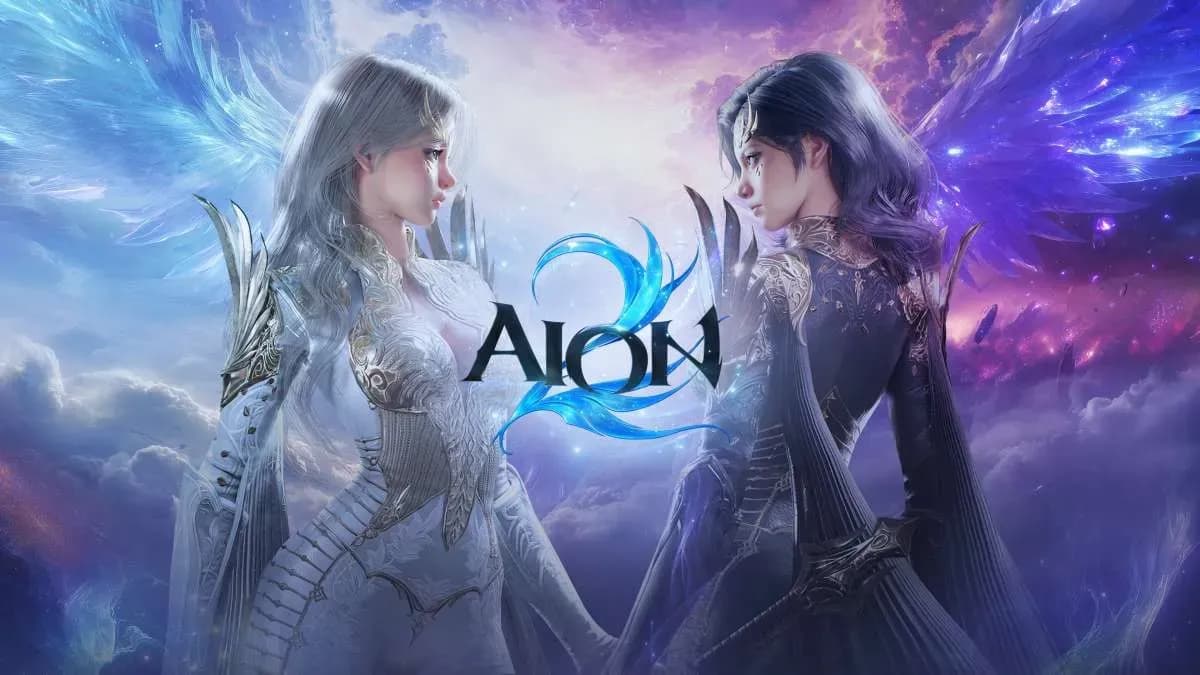
The first big decision in Aion 2 is picking a faction. As in the original, the world is split between two warring sides: the Elyos (the light side, angelic in appearance) and the Asmodian (the dark side, demonic in appearance). In Aion 2 the two races look visually closer to each other than they used to, but the rivalry between them is still the backbone of all PvP content.
The two factions live on separate servers and only meet in specific zones: through Rifts, temporary portals that open periodically and let you invade enemy territory, and in the Abyss, a large neutral zone built for PvPvE fights. When picking a faction, think about which friends you plan to play with — characters on opposite factions can never group together.
Aion 2's character creator is one of the most thorough in the MMORPG genre. You can tune essentially everything: facial features, body shape, hairstyle, eye color, build, and even small details like eyebrow shape or where a beauty mark sits. The developers even let you give female characters a beard, if that's the look you're going for — the range of options is that broad. It's worth spending real time here: your character shows up often in cutscenes, and a face you're happy with makes the story noticeably more enjoyable.
Class overview
Aion 2 launches with eight classes, each filling a specific role in group content. The game keeps the classic "holy trinity" (tank, healer, DPS), so your class choice directly shapes your experience. One key change from the original: Aion 2 enforces a "one class, one weapon" rule, which simplifies gearing considerably.
Templar — the classic tank, wielding sword and shield. Templars have high survivability, generate aggro (pulling monster and boss attention onto themselves), and can protect allies with dedicated abilities. Beyond pure defense, Templar also puts out decent area damage. It's the best pick if you want to be the foundation of any group — Templars are always in demand for dungeons and raids.
Gladiator — a versatile melee fighter with a two-handed sword. Gladiator blends high damage with the ability to partly fill an off-tank role. Its toolkit includes gap closers, powerful AoE attacks, and critical strikes. Despite the heavy weapon, the class plays fast and dynamic, and works well in both PvE and PvP.
Assassin — a stealthy melee specialist with daggers. Assassin focuses on dealing massive single-target damage using backstab mechanics and combo chains. It demands good positioning and a read on boss patterns, but rewards you with some of the highest damage output in the game. In PvP, Assassin can delete an unprotected target almost instantly.
Ranger — a ranged class fighting with a bow. Ranger deals steady damage from a safe distance and has strong mobility. Beyond direct damage, it can apply slows and other control effects. Ranger feels great both farming solo in the open world and in group content, where it can safely attack from outside a boss's danger zone.
Sorcerer — a powerful ranged mage with a spellbook. Sorcerer deals huge magic damage using fire, ice, and lightning spells. Most of its abilities can be cast while moving, keeping the class mobile. Its "Delayed Detonation" mechanic lets damage stack on a target before releasing it all at once, and its "Sleep" spell turns an enemy into a tree, buying you breathing room in tough fights. Sorcerer also has an "Ice Prison" ability that combines the silence and root effects from the original game.
Spiritmaster — a unique class built around summoning elemental creatures. Its summoned companions come in four types — fire, water, earth, and air — each with its own abilities; spirits can attack, heal their master, or shield them. The Spiritmaster itself specializes in debuffs (weakening enemies) and stripping buffs (positive effects) off opponents. Thanks to its summons, Spiritmaster is considered one of the best classes for solo content.
Cleric — the team's primary healer, wielding a mace and shield. Cleric is the only class that can revive allies mid-fight, which makes it essential in dungeons and raids. In Aion 2, Cleric's offensive abilities got a buff compared to the original, so soloing quests isn't a slog. Even so, the class's real strength shows up in a group.
Chanter — a hybrid support class with a staff. Chanter combines healing, buffing allies (attack speed, crit chance, accuracy), and moderate melee damage of its own. Its staff hits in melee and sends out shockwaves ahead of the character. This isn't a helpless support pick — Chanter holds its own in PvP thanks to solid offensive tools.
Which class should a beginner pick
If this is your first MMORPG, or your first time in the Aion series, start with Gladiator or Ranger. Gladiator forgives mistakes thanks to a large health pool and heavy armor, while still dealing enough damage for comfortable solo leveling. Ranger lets you keep your distance and study boss mechanics more safely.
If you want to be in demand for groups, look at Templar or Cleric. Tanks and healers are always needed for dungeons, and you'll find a group fast through the matchmaking system. If you'd rather play solo and focus on exploring the world, Spiritmaster and its summoned creatures make a great companion.
For a full breakdown of all eight classes — strengths, weaknesses, stat priorities, and which one fits solo play, groups, or PvP — see our dedicated class guide.
Combat system
Aion 2's combat is one of its biggest selling points, and also one of the things you'll need to adjust to. The game offers two control modes you can swap between at any time. The first is non-target (action mode): your reticle sits fixed at the center of the screen, the camera follows where you're looking, and roll-dodging is available. This mode feels closer to modern action-MMORPGs and suits melee combat better. The second is tab-target (classic mode): you select a target by clicking it or pressing Tab, then attack it directly. This mode will feel familiar to original Aion veterans and works well for ranged classes and healers.
Each class has roughly 11 base skills mapped to 8 main keys — typically 4 to the left and 4 to the right of the character on the skill bar. Many abilities work as chains: you first apply a skill that creates a specific state (freeze, launch into the air, knockback), and a stronger follow-up skill then takes over that same key, triggering only if the condition is met. For example, you freeze an enemy, and the basic attack slot is replaced by a powerful strike designed specifically for frozen targets. This turns combat into something tactical rather than a button-mashing exercise.
Mana works through a simple but important loop. A basic left-click attack restores MP (mana), while nearly every active ability spends it. This creates a rhythm: you alternate between a mana-recovery phase of basic attacks and a burst phase of powerful skills. Try to spam only strong abilities nonstop and you'll run dry fast, leaving you helpless. Learning that rhythm is the key to fighting effectively.
Dodge-rolling is a critical mechanic, especially in boss fights. A well-timed roll lets you avoid powerful attacks that would otherwise deal massive damage or kill you outright. Keep in mind that dodging has a short cooldown, and many skills lock your character into their animation — you can't roll until the current skill's animation finishes. Because of that, don't fire off a long combo chain when a boss is winding up a dangerous attack; it's better to break off the combo and be ready to dodge.
Aion 2 also implements a backstab mechanic: hitting an enemy from behind deals bonus damage. This matters most for Assassins, but it's useful for any melee class. Positioning is a skill you'll keep sharpening throughout the whole game.
Skills and stigmas
Aion 2's skill system works on two tiers. The first is base skills, available from the start and unlocked gradually as you level. The second is stigmas — the most powerful, build-defining abilities each class has. Stigmas unlock around level 35 through a dedicated quest chain.
Each class has 12 stigma skills, of which you can only equip 4 at once. That choice shapes your playstyle significantly and lets you adapt your class to different situations — some stigmas are better for PvE, others for PvP. Stigmas level up through a separate currency, Stigma Shards, earned from limited sources: arenas, the Shugo Festival, PvP rewards, and daily quests. Since shards are hard to farm in bulk, think carefully about which stigmas to prioritize first.
Every level gives you Skill Points, which you invest in upgrading base skills. Skill mastery boosts more than just damage — it also unlocks special options (specializations) once you cross certain thresholds. The good news: you can respec skills for free at any time, so the game actively encourages experimenting with different builds.
On top of that, your character also grows through Daevanion nodes, soul imprints on gear, the Arcana system, and wisdom stones. You'll pick up all of these gradually as you progress, but it's worth knowing they exist from the start so you don't miss opportunities to power up.
Leveling: the road from 1 to 45
The current level cap in Aion 2 is 45. Rushing it, you could reach it in a couple of days of played time, but there's no need to hurry — many important power systems are unlocked precisely by playing through content on the way to the cap. Leveling splits into two stretches: a comfortable early period (roughly levels 1–32) and a noticeably harder final stretch (levels 34–45).
Your main source of experience is story quests, marked in yellow on the map and in the UI. They guide you through the world, introduce you to the mechanics, and give the most experience per quest. Don't skip the dialogue — it's not just lore, it often hints at game systems too. Alongside the main story, there are also side quests (marked in green), which give less experience but reward resources, gear, and Deviant points — more on those below.
You'll also spot question marks on the map — these are sealed dungeons and forts. They're small combat challenges and instances that reward upgrade stones, Deviant points, and early gear upgrades. These activities are especially useful when the story starts pushing back hard — instead of banging your head against a wall, it's better to switch to side content, build up your power, and come back to the main quest afterward.
The recommended leveling strategy: follow the main story, but don't ignore side quests and sealed dungeons. When enemies start feeling too tough, switch to side content — upgrade your gear, spend your Deviant points. Then go back to the story, and it'll feel noticeably easier. This approach balances a solid leveling pace with avoiding dead ends where a boss becomes unbeatable.
A handy feature for newcomers is auto-run. Press Alt+1 and your character will automatically run toward your current quest objective. This saves time and spares you from puzzling over the map early on. Also keep an eye out for wind streams — semi-transparent blue tubes scattered across the open world. They speed up travel over long distances and act like rails you glide along through the air, similar to leylines in Guild Wars 2.
The Deviant system — your main source of power while leveling
The Deviant system is a growth tree that's one of the main tools for powering up your character on the way to max level. You earn Deviant points from side quests, sealed dungeons, world exploration, and various daily activities. These points go into nodes on the tree, each of which gives a meaningful stat boost or unlocks a new capability.
The power gained through the Deviant system is significant enough that skipping this content is a genuine mistake. By the time you hit the level cap, you'll have accumulated hundreds of Deviant points, and each one makes your character noticeably stronger. Even when side content doesn't give much direct experience, the boosts from the Deviant system let you clear story bosses without trouble and steadily push toward level 45.
Pay attention to nodes that raise key skills to levels 12 and 16 — those thresholds unlock powerful bonus effects that radically change how effective your character is. If you're stuck on a story boss, check your Deviant tree first — a few well-placed points might be all you need.
Gear and upgrades
Aion 2's gear system feels familiar if you've played other MMORPGs, but it has a nice quality-of-life feature: the upgrade mechanics are fairly forgiving and don't let you waste resources for nothing. Your character wears a standard loadout: weapon, headgear, chest piece, shoulder armor, gloves, pants, boots, and accessories (rings, earrings, a necklace). Worth flagging: Aion 2 splits gear into PvE, PvP, and raid sets — you'll need different loadouts for different types of content.
The gear upgrade menu opens with the N key. Here you enhance items using upgrade stones and Kina (the main in-game currency). Always prioritize upgrading your weapon first — it gives the most noticeable damage boost, and you'll feel the effect immediately. Armor gives a more modest defense increase per upgrade level, but adds up to a meaningful survivability gain over time.
Beyond basic upgrades, gear can be enhanced through several additional systems. Soul Stones slot into dedicated gear sockets and add stats. Divine Stones add another layer of enhancement. Eternal Engraving lets you lock certain effects onto an item permanently. Each of these systems unlocks gradually as you progress, and it's easier to learn them one at a time rather than trying to absorb everything at once.
A practical tip: don't sink resources into upgrading gear you're only going to replace during leveling. You'll swap gear often as you work through the story, and any resources spent on it are essentially wasted. Serious investment makes sense once you hit level 45 and unlock endgame gear that's going to stick with you long-term. The exception is your weapon: if you're stuck on a hard story moment, bumping your weapon up a couple of upgrade levels can solve the problem.
Items you pick up in a dungeon or get as quest rewards are typically bound to your character and can't be sold. Crafted items, on the other hand, remain tradeable and can be listed on the auction house. That distinction matters for understanding the game's economy — crafters play a real role in supplying the server's gear.
Cosmetic collection and appearance
Aion 2 includes an appearance collection system — collecting different cosmetic items doesn't just change how your character looks, it also grants permanent stat bonuses. It's an additional power path that runs alongside your main gear. The collection fills up from multiple sources: crafting, dungeons, achievements, and the cash shop.
PvE content: dungeons, raids, and activities
PvE content is the backbone of Aion 2, and the developers put serious weight behind it. According to NCSOFT, the Korean/Taiwanese launch shipped with more than 60 dungeons per faction, with plans to expand that to 200-plus over time. Dungeons split into several types, each aimed at a different audience and group size.
Nightmare Dungeons — solo content with 10 difficulty tiers. A great way to test your skill and gear without depending on other players. Each tier raises enemy strength and boss mechanical complexity, with rewards scaling accordingly. Nightmare Dungeons make solid daily content for steady progress.
Sealed Dungeons — instances built around puzzles and combat challenges, some soloable and some requiring a group. There are more than 60 scattered across the world. Sealed Dungeons are one of the main sources of upgrade stones and gear-improvement materials. Watch for question marks on the map — they mark the entrances to these instances.
Expeditions — group outings for 2–4 players. This format is ideal for playing with friends without needing a full party. Expeditions cover a range of tasks, from clearing camps to hunting open-world mini-bosses.
Transcendence Dungeons — demanding group content built for a full party. On the Korean/Taiwanese service that's 4 players; on the global release, party size for dungeons scales up to 5. Bosses here have multi-phase mechanics that require the whole group to coordinate. Rotation mistakes or missing a boss's tell get punished hard — up to an instant wipe. This is content for players who've already learned the basics and want a real challenge.
Raids sit at the top of PvE content. On the Korean/Taiwanese service they're built for 8 players; on the global release, the Sanctuary Ludra raid runs 10. Season 2 added new raids — Orcus's Tomb and Fafnir's Proving Ground — with Insane and Hell difficulty modes for the most prepared players. Raids give the best gear in the game, but demand a coordinated team with the right class mix.
Ascension Trials are another form of endgame content, which picked up extra difficulty tiers in Season 2. Trials expand the pool of daily activities and hand out fragments toward valuable rewards.
Aion 2 runs an interesting loot system. Boss rewards split into tradeable drops (available to every participant) and personal rewards via Odyle Energy Cubes, which need special tickets to open. This mechanic cuts down on pure luck and makes group-content rewards more consistent.
Dungeons have daily or weekly entry limits. This is standard practice for Korean MMORPGs, designed to stretch out content and stop players with unlimited free time from pulling too far ahead of everyone else. Plan your runs ahead of time and spend your entries on the dungeons with the rewards you need most.
PvP content: arenas, the Abyss, and Rifts
PvP in Aion 2 keeps the original's spirit of factional warfare, but delivers it in more structured formats. If you're not a fan of surprise attacks in the open world — don't worry, Aion 2 offers both opt-in PvP and zones where fighting is unavoidable. Understanding the PvP systems is worth it even if you prefer a peaceful playstyle — some PvP rewards feed into your general progress too.
Arenas are the main structured-PvP format. Available modes include 1v1 duels and 4v4 team fights. Arenas run through matchmaking — you queue up and the game finds you opponents. Season 2 reworked the ranking system to make it fairer. Arenas are also a solid source of Stigma Shards and other PvP rewards.
Battlegrounds are larger-scale PvP fights, 8v8, built around objectives. Season 2, for example, added the Stormslumber Snowfield battleground with a classic capture-the-flag mode. There's also an "Escort" mode reminiscent of similar modes in shooters, where one side defends a moving object while the other attacks it.
Rifts are temporary portals that open between the Elyos and Asmodian servers. Through a Rift, players can invade the opposing faction's territory for PvP fights. Rifts add an element of surprise and dynamism to the open world, though taking part in them is optional.
The Abyss is a large neutral zone carried over from the original Aion. Both factions meet here on shared ground for large-scale PvPvE battles, including aerial combat. At launch, the global release opens Lower Reshanta only, with players earning Abyss Points toward caps. The Abyss is only open a limited number of hours per week (around 7 on the Korean/Taiwanese service), which concentrates players and produces genuinely epic clashes. Fighting for the Abyss earns you Abyss Points — a special currency you can spend on PvP gear.
One important detail: flight in PvP is restricted by special rules. You can't just fly away from an opponent — trying to flee gets punished, and flying players can be shot down with dedicated skills. This stops players from abusing flight and makes aerial combat a real part of PvP rather than an escape button.
For newcomers, it's worth starting with 1v1 arenas — a safe environment where you can learn your class against real players without serious consequences for losing. Don't get discouraged by early losses — Aion 2's PvP has a real learning curve, and skill comes with practice.
Crafting, gathering, and cooking
Aion 2 offers a full set of life professions for anyone who wants more than combat. You can pick up gathering (collecting resources in the open world), crafting (making gear and items), alchemy (potions and enhancements), and cooking (food with useful buffs). Crafters play a real part in the server economy, since crafted items stay tradeable and can be sold to other players on the auction house.
Resource gathering is woven into world exploration. Ore, herbs, fish, and other materials are scattered across Atreia — on land, in the air, and underwater. If mobile support ships alongside the PC version, it should suit life professions well: you could handle crafting and gathering on your phone away from your PC, and save the serious combat content for PC sessions.
Crafting becomes important at endgame, once you start making enhancement and consumable materials for raids. During leveling, professions are useful but not critical — you'll get most of your gear from quests and dungeons. That said, if you start building up a profession early, you'll have a head start by the time you reach endgame.
World exploration: flight, swimming, and discovery
Aion 2's world is built for exploration. The map is dramatically larger than the original's and fully seamless — you can walk, fly, or swim in any direction with no loading screens. It creates the feeling of a genuinely living world rather than a set of disconnected zones.
Flight is the series' signature feature. In the sequel, wings matter even more: you can fly almost everywhere, exploring vertical areas, floating islands, and hard-to-reach corners of the world. Wings are earned through in-game progress rather than bought with real money, and flight duration is longer than in the original, letting you cover greater distances.
Swimming and underwater exploration is a new mechanic that wasn't in the first Aion. Chests with rewards, secret caves, and crafting resources are hidden underwater. Underwater zones add a third dimension to exploration and make investigating every location more rewarding.
Beyond the main quests, the world is scattered with reward chests on land and underwater, secret points of interest, timer-based world events, and various minigames. World events scale with the number of players present — during peak hours, monsters spawn more often to avoid queues for mobs.
Teleporters and the wind streams mentioned earlier handle fast travel between distant points. Make a habit of unlocking every teleport point you pass — it'll save you a lot of time down the line when you need to return to early zones for resources or daily quests.
Monetization: subscription, battle pass, and cash shop
Aion 2 runs on a free-to-play model — you can download the client and start playing at no cost, with full access to content. Like most modern Korean MMORPGs, though, it also offers several tiers of paid services that can noticeably affect your quality of life.
There's an optional subscription priced at roughly $15/month. It unlocks access to the marketplace (auction house), lets you exchange between Kina and Quna, gives access to a subscriber-only section of the cash shop, and includes unspecified "additional gameplay benefits." It applies account-wide.
One of the most-discussed parts of the monetization plan: listing items on the auction house requires an active subscription. Buying items is free for everyone, but selling your own requires the subscription. NCSOFT frames this as an anti-bot and anti-RMT (real-money trading) measure, but for a lot of players it's a real limitation that makes the subscription close to mandatory for a comfortable endgame experience.
The battle pass ("Daeva Pass") is tied to an individual character rather than the whole account, with a free track and a premium track bought with Quna, the premium currency. NCSOFT describes its contents as cosmetics, items, upgrade materials, and other in-game currencies; exact Western pricing hadn't been published as of this writing, though the Korean version's passes ran roughly 1,000–1,500 Quna.
Founder's Packs went on sale ahead of launch in three tiers: $24.99, $49.99, and $99.99. All three include the five-day Early Access window (September 30–October 4), 30 days of membership, early-game consumables, and a unique title; higher tiers add cosmetic armor, weapon skins, pets, and wings — all appearance-only, with no stat bonuses.
The cash shop sells cosmetics (weapon skins, outfits, wings, pets), consumables, and convenience items. According to NCSOFT, shop items "do not affect gear progression or long-term power." That said, players on the Korean launch noticed bundles containing progression boosters, which sparked debate about where convenience ends and pay-to-win begins — worth keeping an eye on as the Western shop rolls out.
The two main currencies are Kina — the standard in-game currency you earn by playing and spend on upgrades, crafting, and NPC purchases — and Quna — the premium currency bought with real money, but also obtainable by trading with other players through the marketplace's currency exchange. Being able to convert Quna into Kina and back creates a bridge between paying and free-to-play players, similar to how Guild Wars 2 handles gold and gems.
Honest advice for newcomers: you don't need to spend real money while leveling. Every story quest and most of the content is fully accessible for free. Start thinking about a subscription once you hit level 45, when the auction house and trading with other players become a meaningful part of your progress.
Practical tips for beginners
Over the game's run on Korean and Taiwanese servers, players have picked up plenty of lessons that can help you sidestep common mistakes. Here are the most useful recommendations, based on real community experience.
Don't rush to blast through the story as fast as possible while leveling. Side quests and sealed dungeons give Deviant points, which are critical for a comfortable ride to the level cap. If a story boss feels unbeatable, that's a clear sign to switch to side content, dump some points into your Deviant tree, and upgrade your weapon. Coming back to the boss afterward will feel a lot easier.
Learn boss patterns instead of mashing buttons. Every boss in Aion 2 telegraphs its powerful attacks with readable animations. Watch for the wind-up before a dangerous hit and dodge at the right moment. Remember that skills lock your dodge — if you fire off a long combo chain, you won't be able to roll until it finishes. It's better to deal a bit less damage and stay alive.
Use scrolls and potions in tough fights. The game gives you consumables for boosting attack, defense, and restoring health. A lot of newcomers hoard them "for later" and end up stuck on bosses that go down easily with the right consumables in play. Aion 2 also lets you auto-use certain potions — turn that on in the settings so you're not fumbling with manual item use mid-fight.
Tab-target is your friend in chaotic fights. Some bosses summon waves of adds that aren't worth fighting — you need to stay focused on the main target. Hit Tab to lock onto the boss and attack it directly, ignoring the smaller mobs.
Don't forget to spend Skill Points on upgrading your abilities. Skill mastery isn't just a flat damage bonus — at certain thresholds (levels 12 and 16) it unlocks powerful specializations that radically change how effective a skill is. Put points into 2–3 key skills rather than spreading them thin across everything.
Join a legion (guild) as early as you can. Even if you prefer playing solo, a legion gives you access to group content, help from experienced players, and the social side of the game that's a big part of what keeps people invested in an MMORPG long-term.
Unlock every teleport point along your route. It sounds obvious, but plenty of newcomers run right past teleporters and then waste time backtracking to a zone later. Also explore off the beaten path — reward chests and secret locations hide in non-obvious places, especially in the air and underwater.
Daily and weekly activities
At level 45, your play sessions will revolve around a set of daily activities, each feeding into your overall progress. Nightmare Dungeons, arenas, daily quests, and gathering all provide materials for gear upgrades, Abyss Points for PvP gear, and Stigma Shards for skill development.
Don't try to clear every activity every single day — that's a fast track to burnout. Figure out your priorities based on what your character actually needs, and focus on 2–3 key activities. Need upgrade stones today? Run dungeons. Need Stigma Shards? Hit the arena and knock out PvP quests. Season 2 also trimmed down the amount of mandatory grinding, so you have real freedom in how you spend your time.
Should you start playing Aion 2
Aion 2 is an ambitious project aiming to revive the spirit of the original Aion with a modern technical foundation. Gorgeous Unreal Engine 5 visuals, a huge seamless world, free-form flight, and a deep class system all add up to a genuinely engaging MMORPG. Combat, while not without rough edges at launch, offers something tactical and engaging without relying on automation.
The game has weaknesses worth being upfront about. Monetization that gates auction-house selling behind a subscription raises fair questions. Dungeons can start to feel repetitive after enough repeat runs. PvP class balance, as of Season 2, still needs more work. Some players note that despite the promised action feel, combat can occasionally feel closer to a mobile MMORPG than a full action game.
That said, the developers have been actively listening to the community and iterating — Season 2 alone brought a long list of balance, ranking, and content improvements. The global launch on October 5, 2026 gives NCSOFT extra time to polish the game based on lessons from the Asian servers. If you're looking for a large-scale MMORPG with a gorgeous world, free flight, and a classic factional rivalry at its core, Aion 2 is well worth your attention.