 F2P · Live
Lineage 2
Aden's castles never stay in the same hands for long, and Lineage II has built an entire twenty-three-year…
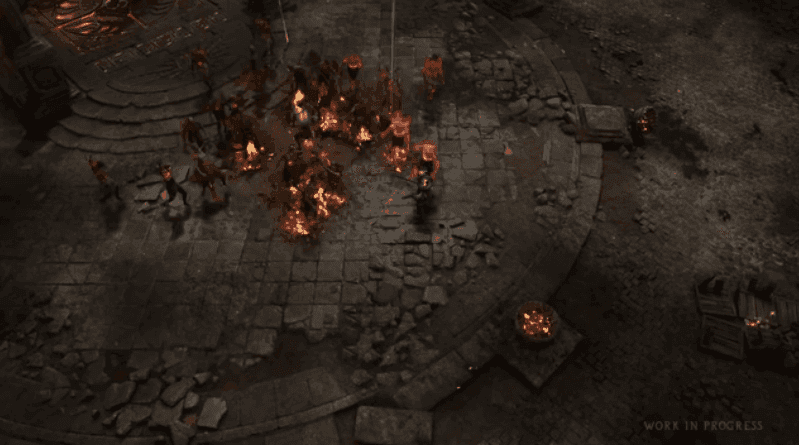
Anathea, the goddess holding the Rift between reality and the demonic Void shut, is dying, and the world she's protected is sliding back toward collapse. Wolcen 2 puts players in control of the Warlor...
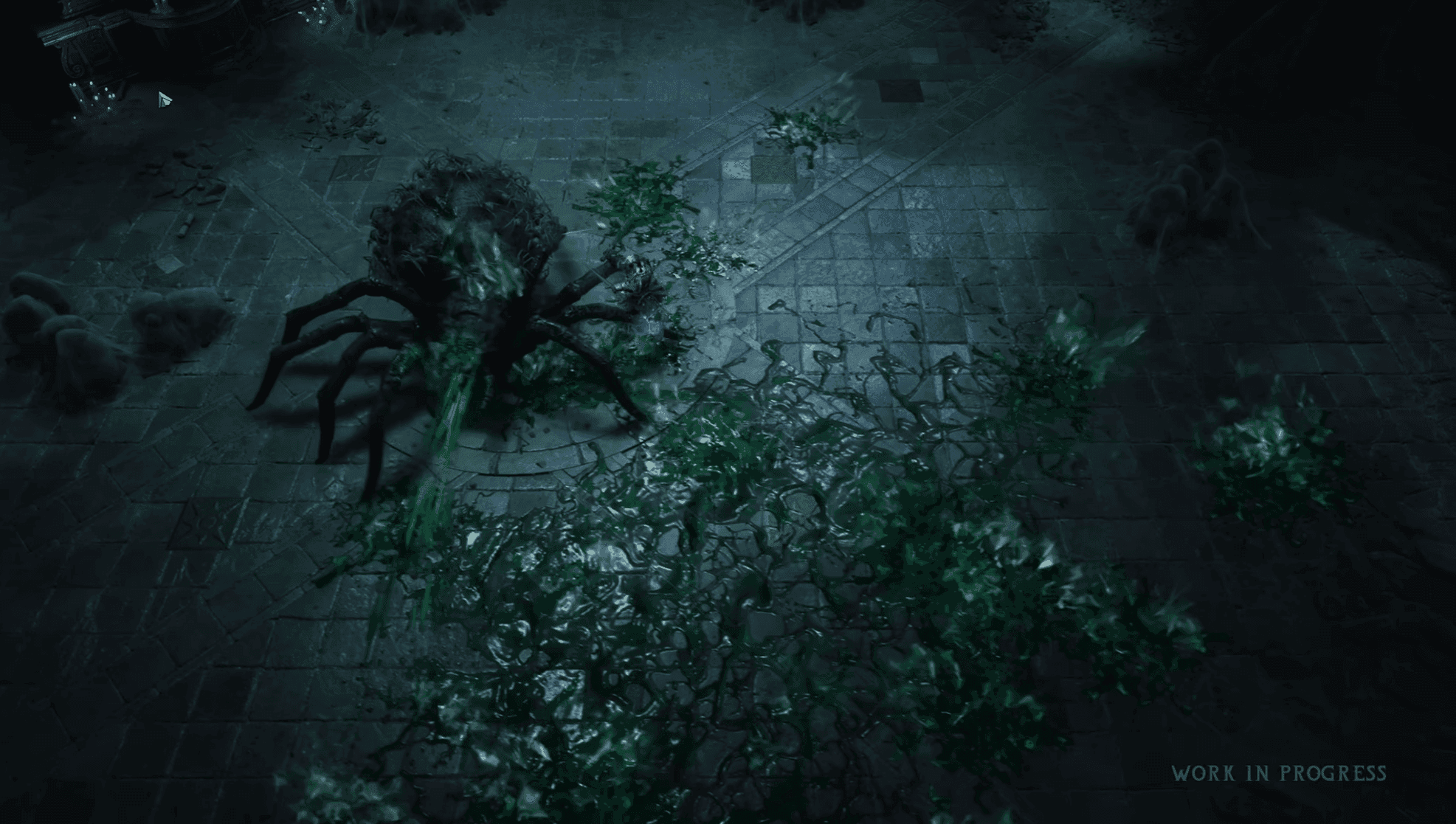
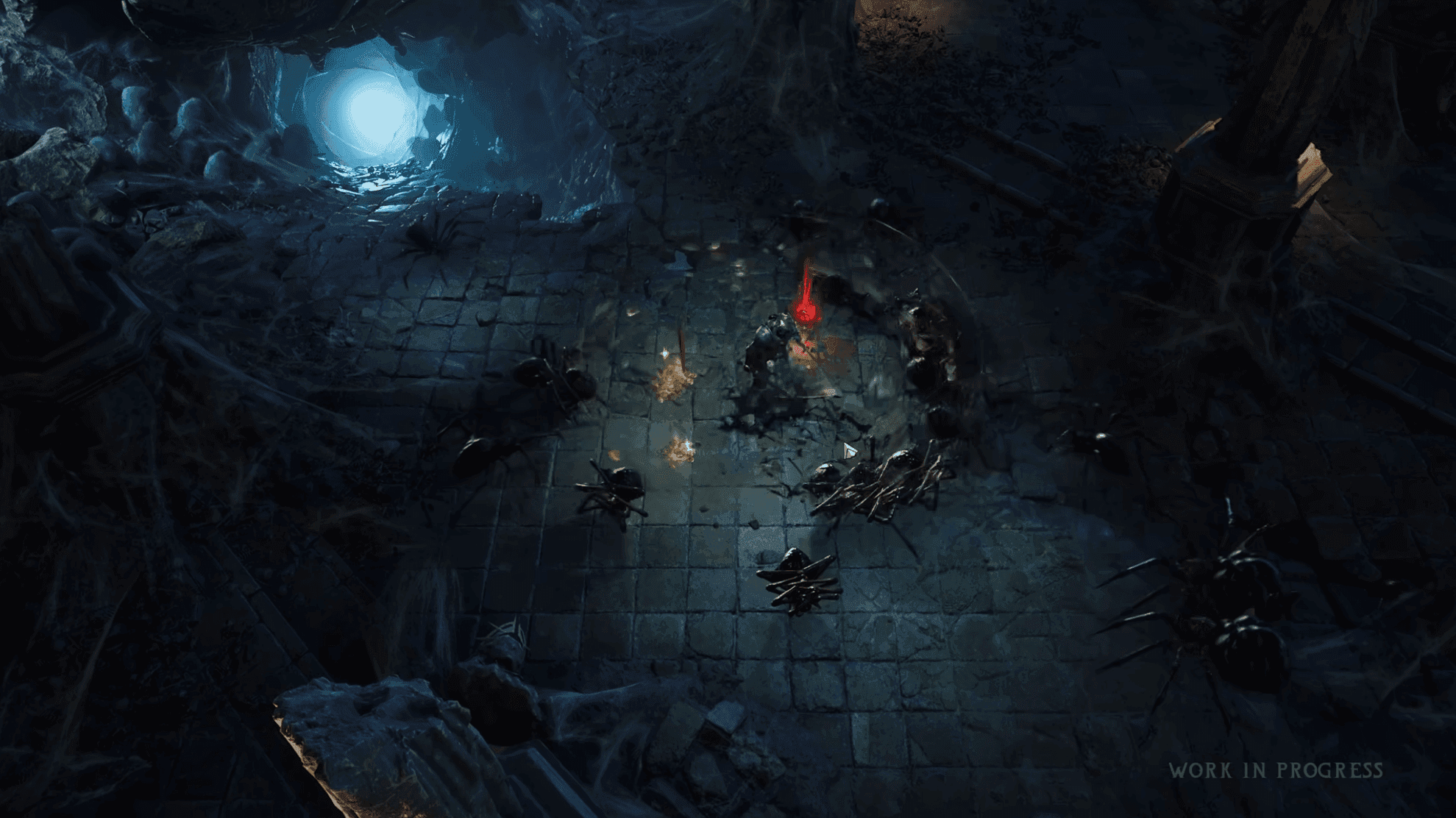
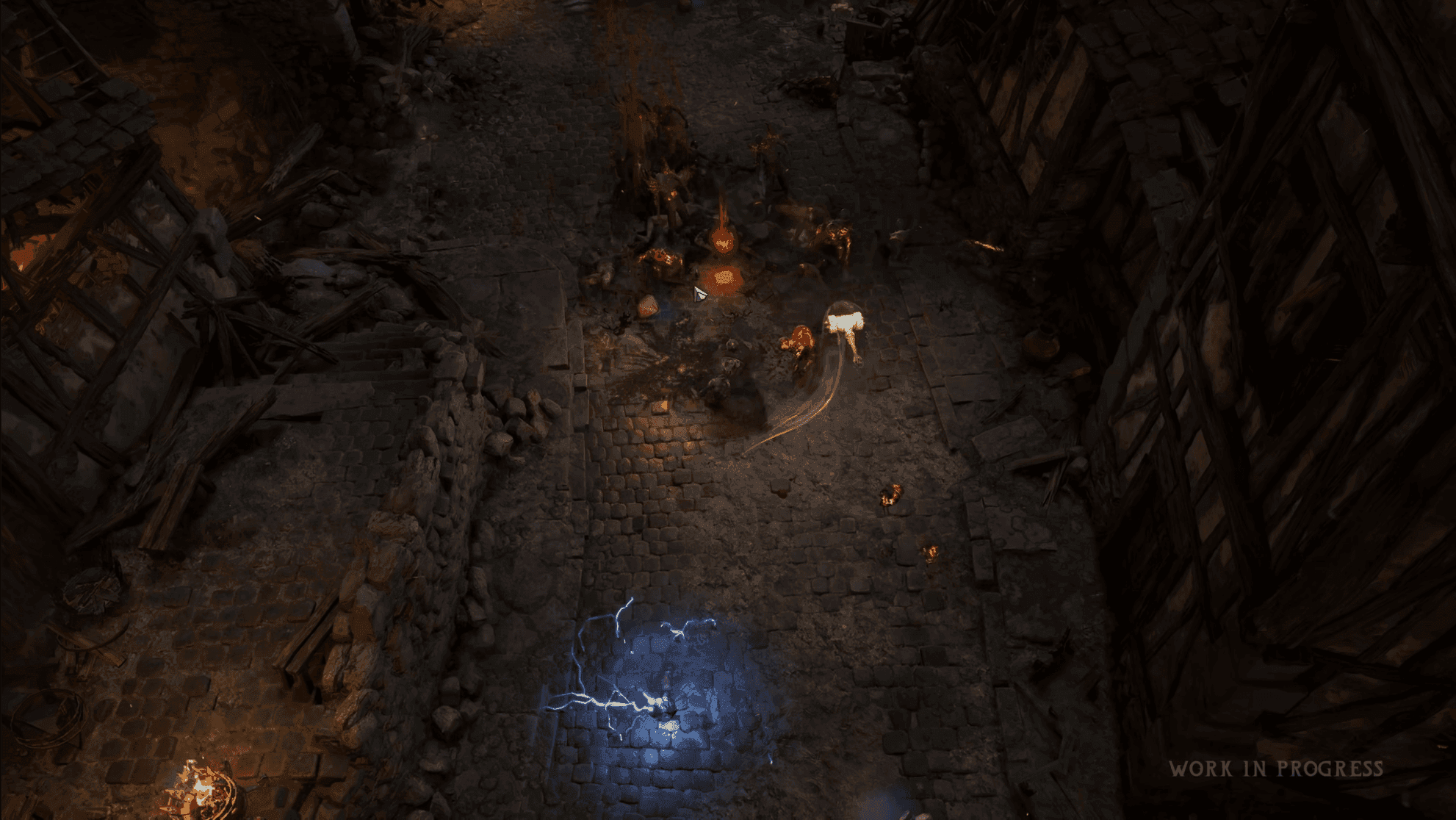
Wolcen 2 is an isometric dark fantasy action RPG from Wolcen Studio, the Nice-based developer behind 2020's Wolcen: Lords of Mayhem, revealed at gamescom 2026's Future Games Show on August 26. It's a direct sequel built from scratch in Unreal Engine 5 rather than the original's CryEngine, playable solo or with up to four players in co-op, and targeting Steam Early Access on PC in 2027 ahead of a full release on PC and current-generation consoles.
Strip away the history and the setup is straightforward: years after the events of Wolcen: Lords of Mayhem, the goddess Anathea, who holds the Rift between reality and the demonic Void shut, is mortally wounded, and the world is sliding toward collapse again. The player takes control of the Warlord, an illegitimate son of the Shadow God dragged out of exile alongside other veterans with a dark past. A prophecy promises salvation and demands sacrifice. His companions accept the price. He's looking for a way around it. That disagreement, not the collapsing world itself, is supposed to carry the story.
Character building keeps the idea that made the original stand out in a genre full of fixed skill trees: there are no predefined classes. Weapons unlock skills — pick up a two-hander and a matching kit opens up, switch to a pistol and the toolkit changes with it. Modifiers, specializations, and a wide passive tree then reshape how those skills behave, and a separate Skill Mastery system governs how individual abilities level up. The studio's own examples land on archetypes like a melee mage, a spellblade, a tank caster, or a gunslinger, though nothing stops a player from landing somewhere none of those labels quite cover.
None of this requires knowledge of the first game. The FAQ says as much directly: playing Lords of Mayhem adds lore context but isn't necessary to follow the sequel. For someone with no history here, that's a fair, low-friction entry point into a genre that usually assumes you already know its shorthand.
For anyone who owns the original, the pitch reads differently, because the history isn't optional context — it's the reason half of this announcement exists. Wolcen began as a 2015 Kickstarter called Umbra that raised more than $400,000 from over 11,000 backers, entered Early Access in 2016, and shipped version 1.0 on February 13, 2020 into collapsing servers and a wave of bugs. The studio kept patching for four years — a fourth act, UI passes, endgame balancing — before ending development in May 2024. Multiplayer went dark on September 17, 2024, pushed back two weeks from the original date so players could finish a challenge tied to an online-only achievement. Owners got an "Import Online Character" button to convert their save for offline play, and the game stayed on sale at a reduced price. Co-op, one of the box's original selling points, simply stopped existing.
Wolcen 2's answer to that history is its single most interesting decision, and it isn't the engine swap.
Wolcen Studio is upfront about a detail a lot of studios in this position would rather not mention: the team making Wolcen 2 isn't the team that made Lords of Mayhem. The company has grown to over 150 people since 2020, and the sequel's pipelines were largely worked out on a different project first — Gods, Death & Reapers, the studio's free-to-play extraction RPG currently in alpha, alongside 2025's Bullet Noir, a smaller narrative shooter. That's a reasonable case for why Unreal Engine 5 already has some mileage behind it going into Wolcen 2. It's also, depending on how charitably one reads it, either proof the studio learned something or evidence there's no one left to hold personally accountable for what went wrong the first time.
Yes, in the sense that matters most: multiplayer runs on a listen-server peer-to-peer setup, where one player hosts a session directly and the studio's own infrastructure never sits in the chain. As long as the campaign itself is playable, so is playing it with friends — that part doesn't depend on servers Wolcen Studio controls or could ever choose to switch off. Studio president Bogdan Oprescu tied the decision to the shutdown explicitly in the announcement, saying the team learned firsthand how it feels when access to something you care about gets taken away.
It's a real trade, not a pure upgrade. Peer-to-peer removes the single point of failure that killed co-op the first time, but it inherits P2P's usual weak spots: session quality rides on the host's connection and hardware, migrating hosts mid-session is its own engineering problem, and anti-cheat is structurally harder without an authoritative server watching every client. For a shared economy with a global auction house, that would be a dealbreaker. For a game where four friends run a campaign and split their own loot, it's a workable trade the genre has leaned on before, in titles from Diablo II Resurrected to half the co-op survival space.
Combat is pitched as fast and rhythmic — chaining abilities through dense packs, then facing down heavier bosses solo or as a group. The centerpiece is Shadow Form, a transformation meant to swing a losing fight back in the player's favor.
Anyone who played the original will recognize the shape of it. Lords of Mayhem had Apocalyptic Form, a late-game transformation into one of four elemental incarnations, each with its own attack set and a resource meter capping how long the player could stay in it. It looked great and hit hard, but it functioned more as a flashy cooldown than a system that interacted with the rest of a build. Whether Shadow Form repeats that pattern or actually ties into the passive tree and modifiers is one of the more consequential open questions here, since it decides whether the game's signature move is a spectacle or a build component.
Hands-on impressions from Cologne lean cautious rather than glowing: hits reportedly land soft, and enemies soak more damage than the pacing seems to want. That's a normal state for a build a year out from Early Access, and it's exactly the kind of feedback playtests exist to catch — but it's also worth tracking rather than waving off, since combat feel is the one thing a genre this crowded can't afford to get wrong.
Skills, weapons, passives, and gear are described as designed to interlock — the studio's language leans on hunting for build-defining items, gathering materials, and crafting toward a specific character rather than treating equipment as an isolated upgrade path.
It's worth pointing out where the original actually struggled, because it wasn't the ambition — it was the follow-through. Lords of Mayhem's own passive tree, the Gate of Fates, packed roughly 490 nodes across three concentric rings that could each be rotated independently, and skills carried up to sixteen modifiers apiece. The scope was genuinely impressive; the problem was that a lot of it interacted in ways the game never explained clearly, and a meaningful chunk of the community's actual understanding came from third-party build calculators rather than in-game feedback. A bigger, better-connected version of that system is a stronger pitch than a simpler one, but only if the numbers are legible this time.
The Steam listing is unusually specific about what Early Access will and won't include, which is worth taking at face value rather than reading as marketing filler. At launch, the studio is promising one full act with its side quests, roughly 32 enemy types and 8 bosses, five weapon types, about 25 abilities, a gear pool of around 150 items, and 10 biomes. The 1.0 release is pitched as an expansion of all of that: three acts, more than 50 abilities, around 70 enemy types, 15 bosses and mini-bosses, roughly 18 biomes, and 200 map tiles. Early Access itself is expected to run about 12 months.
One catch worth flagging: those figures don't quite agree with themselves. The section describing the current build lists 32 enemy types, 8 bosses, and 10 biomes; a few paragraphs later, the section comparing Early Access to 1.0 cites 30 monster types, 6 bosses and mini-bosses, and around 12 biomes for the same starting point. The studio's own disclaimer notes the list isn't final and will shift based on private and public playtests, so this reads more like a page that hasn't been proofread against itself than a deliberate moving target — but it's the kind of small carelessness that, in 2020, was part of a much longer pattern.
The other detail buried in that same list: endgame content — Conquest, where factions keep fighting over territory across dynamically assembled battlefields, and Tower of Wonders, a climb built around specific rewards — is tied to the 1.0 release, not the Early Access launch. Anyone buying in on day one is buying a single act and nothing past it.
The release calendar isn't kind. Path of Exile 2 leaves Early Access and goes fully free-to-play on December 11, 2026 — a complete six-act campaign, twelve base classes, thirty-six ascendancies, and an endgame built around more than a hundred maps. That's a finished, free game arriving roughly a year before Wolcen 2 sells access to a single act. Diablo IV and Last Epoch aren't going anywhere either, and neither carries the specific baggage Wolcen Studio is trying to work off.
What Wolcen 2 has that neither Path of Exile 2 nor Diablo IV can offer by design is the combination of a no-class build system with co-op that doesn't depend on someone else's servers staying funded. Both of those games are built around live infrastructure at their core. For a group of friends who want to run a dark fantasy campaign together and know they'll still be able to in five years, that narrows the field fast. Whether the rest of the game earns that advantage is the actual question.
Wolcen 2 is a one-time purchase, priced lower during Early Access than at full release to lower the entry barrier for people buying in early. Post-launch monetization is limited to optional cosmetics alongside new story content and activities — no subscription, no battle pass mentioned so far. Owners of the original are promised some kind of in-game reward, with details still unannounced.
Two gaps are worth naming plainly. Controller support is planned for "later stages" with no timeline attached, and an offline mode is described the same way — a stated intention, not a committed feature. Given how much of this announcement is built around learning from the first game's promises, both are worth checking again closer to launch rather than assuming they'll simply show up.
No, and the studio says so unprompted. Wolcen Studio has grown and changed substantially since 2020, and the people building the sequel aren't the same team that shipped the original.
No. The story stands alone, though playing Lords of Mayhem adds context for how the world got to this point.
Nothing announced suggests it. The stated plan is a one-time purchase with cosmetic-only monetization after launch, though that's a promise to revisit once actual pricing and store details exist.
A closed playtest opened the same day as the announcement through the Wolcen Studio Playtest Program. Early Access is targeted for sometime in 2027, with no specific date set yet.
Wolcen 2 is being pitched by a studio that's clearly done the reading on its own failure — it named the technical debt, switched the engine that caused it, and rebuilt the one feature it had personally taken away from paying customers so that it can't do that again. That's a more honest starting position than most sequels bother with, and the peer-to-peer co-op decision in particular is the kind of thing that actually costs something to build rather than just to promise.
What's missing is the part no announcement can supply: a finished game to point at. The only people who've touched it came away with combat that felt soft rather than sharp, the endgame doesn't exist until version 1.0, and the same Steam page selling the pitch can't keep its own enemy count straight from one paragraph to the next. Wolcen Studio has built a life raft that will still float even if the studio doesn't. Whether there's a game worth keeping afloat on it is still an open question, and the honest answer is that nobody outside a closed playtest gets to have an opinion on that yet.