About the game
Last Epoch is an action RPG developed and published by Eleventh Hour Games, a studio that started as a Kickstarter project in 2018 and spent five years in Early Access before reaching version 1.0 on February 21, 2024. Built in Unity, it plays like a close cousin of Diablo and Path of Exile — click-to-kill combat, randomized loot, a deep skill tree — but wraps that formula in a time-travel premise and a genuinely unusual trading system that gives it more shared, persistent infrastructure than most games in its genre. It isn't an MMO in any strict sense: there's no open world shared with strangers, no guild wars, no server community in the traditional sense. But the game's central hub is a live, populated space, its economy runs through a real cross-player marketplace, and its seasonal reset structure borrows more from MMO design than from a typical single-player dungeon crawler. That's the angle this Last Epoch review takes.
Eterra and the Premise: Fixing a Broken Timeline
The setting is Eterra, a world your character — a Traveler pulled out of time by the wizard Zerrick — is trying to save from a decayed, monster-infested future by altering events in its past. It's a serviceable framework more than a literary achievement: cutscenes are sparse, voice acting is functional, and most players will forget the specifics of Zerrick's plan somewhere around the fifth chapter. What the premise buys the game mechanically is more interesting than what it buys narratively — every zone you visit exists in two states, a lush "stable" past and a corrupted, harder "unstable" future, and that split doubles as the game's endgame skeleton later on. The presentation leans functional rather than showy: character models and skill effects are clean and readable in the middle of a screen-filling fight, which matters more here than raw fidelity does.
Character Creation and the First Hours
A new Traveler picks from five base classes — Mage, Sentinel, Primalist, Rogue, and Acolyte — each opening with roughly ten to thirteen active skills and its own passive tree from level one. The opening zones are a straightforward tour: clear a beach, chase down a corrupted animal, start collecting the Idols and gear that will define your build. What separates the early game from most of its competitors shows up almost immediately at the Forge, a deterministic crafting station where you spend Runes, Glyphs, and Shards to add or upgrade affixes on gear you already own rather than hoping a drop rolls correctly. Loot in Last Epoch is not something you discard on sight; it's raw material you sit down and shape, and new players who ignore the Forge for the first ten hours are playing the game with one hand tied.
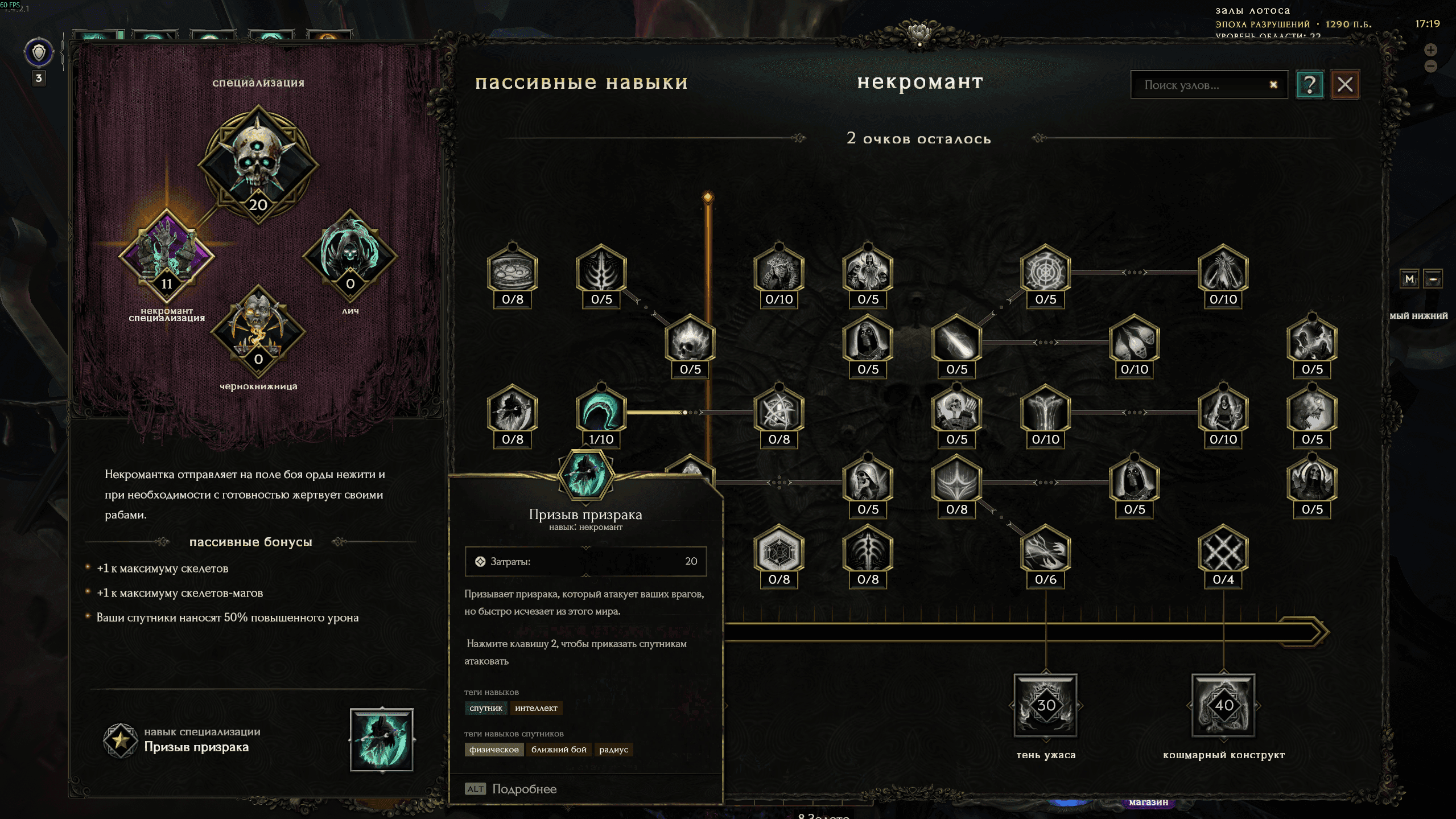
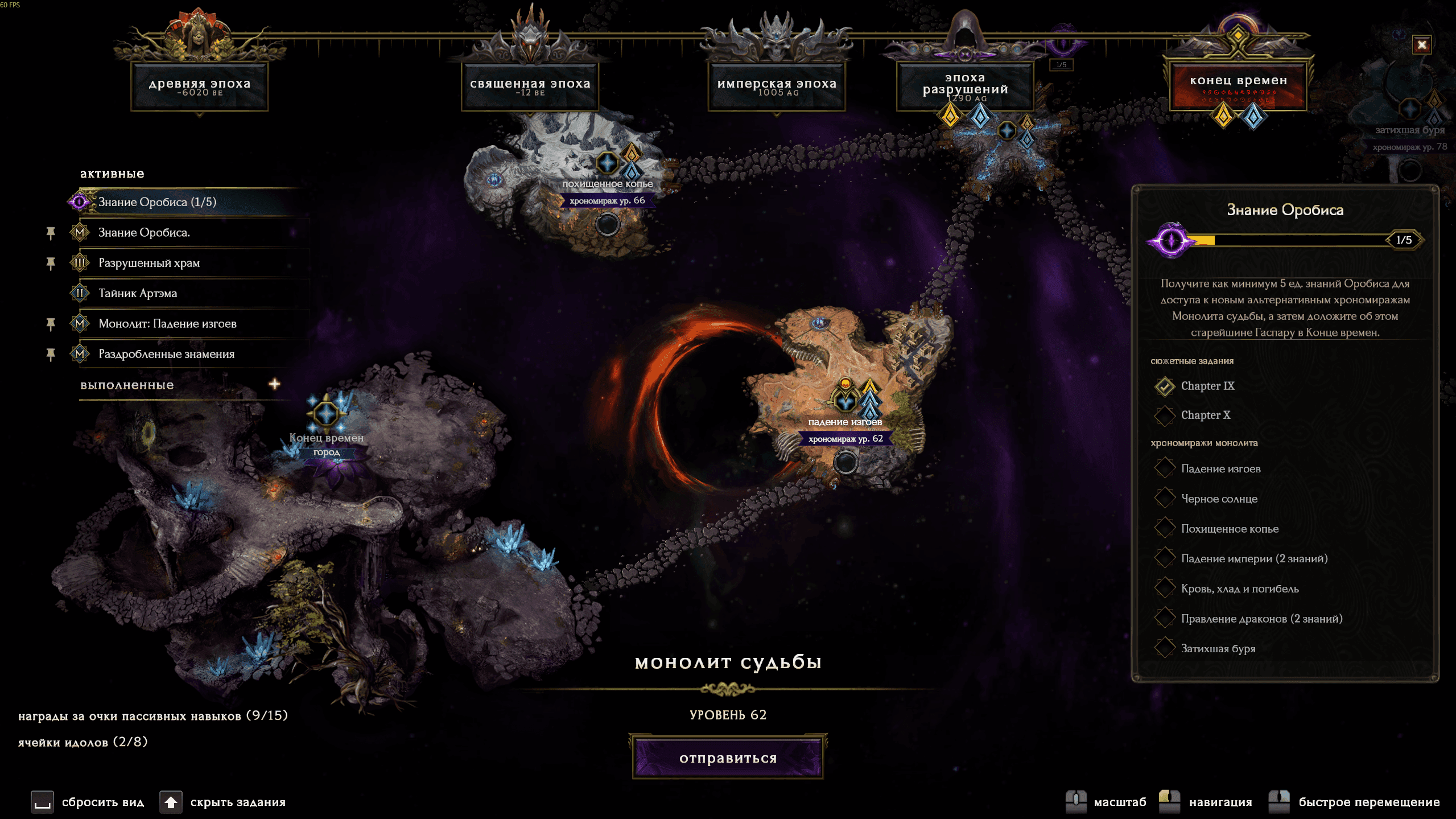
Around level 25, the story delivers you to the End of Time — a hub city that sits outside the timeline entirely, stitched together from fragments of every era you've visited. This is also where the choice that shapes the rest of a character's life happens: picking a Mastery, the specialized subclass built on top of your base class (three per class, fifteen total across the roster), which unlocks a second skill set and a second passive tree layered over the first. Skill points and passive points can be respecced almost for free at any time through an NPC in town, but the Mastery itself is a one-time decision per character — commit to Necromancer over the other two Acolyte paths, and trying Runemaster later means rolling a new Traveler.
Combat and the Skill Tree: Where the Depth Actually Lives
Moment-to-moment combat is action-style rather than tab-target — aim your basic attack, dodge roll through incoming hits, manage cooldowns on four to five specialized skills at a time. It's competent without being the genre's most technical, and that's by design: the real game is what happens when you open a skill's individual passive tree. Every one of Last Epoch's 120-plus skills has its own miniature specialization tree bolted onto it, so a single ability like Necromancer's Summon Skeleton can be pushed toward a swarm of weak minions, a handful of tanky ones, or a build that barely summons anything and instead spends the tree on player-facing bonuses. Layer five of those skill trees on top of two class passive trees and the character planning happens well before you ever load into a fight — the combat itself is where you find out if the plan worked.
The multiplayer side is modest but real: up to four players can group up online, sharing loot instancing and a stash. Solo players aren't boxed out of the systems either — an online solo mode keeps access to the shared stash and the trading economy without requiring a party, while a separate True Offline mode strips out both online features and the cosmetic shop entirely, for players who'd rather never touch a server.
Crafting, Trading, and the Two Ways to Get Gear
This is the section that justifies Last Epoch showing up in an MMO review series at all. Late in the campaign, every character joins one of two Item Factions, and the choice is the closest thing the game has to a philosophy statement. The Merchant's Guild opens access to the Bazaar, a searchable, cross-player trading hub sitting inside Maj'Elka that functions almost exactly like an MMO auction house — list an item, price it, let another Traveler buy it while you're offline. The Circle of Fortune locks trading out entirely but boosts your personal drop rates and unlocks the Observatory, where Favor buys Prophecies and Lenses that steer what your own loot pool looks like. Neither path is objectively correct — the Guild suits players who'd rather buy a specific item than farm for it, the Circle suits players who want every piece of gear to feel self-earned — and the split is deliberately designed so a real player economy exists for those who want one, without forcing it on those who don't.
Crafting itself stays personal rather than communal: there's no gathering-into-recipes profession chain, no blacksmithing minigame. The loop is drop gear, feed it Runes and Glyphs at the Forge to add affixes, spend Shards to upgrade the ones you have, and gamble Glyphs of Hope to protect a roll you don't want to lose. It's shallow by crafting-MMO standards and deep by ARPG standards, which is exactly the niche it's aiming for.
Endgame: The Monolith of Fate and the Arena
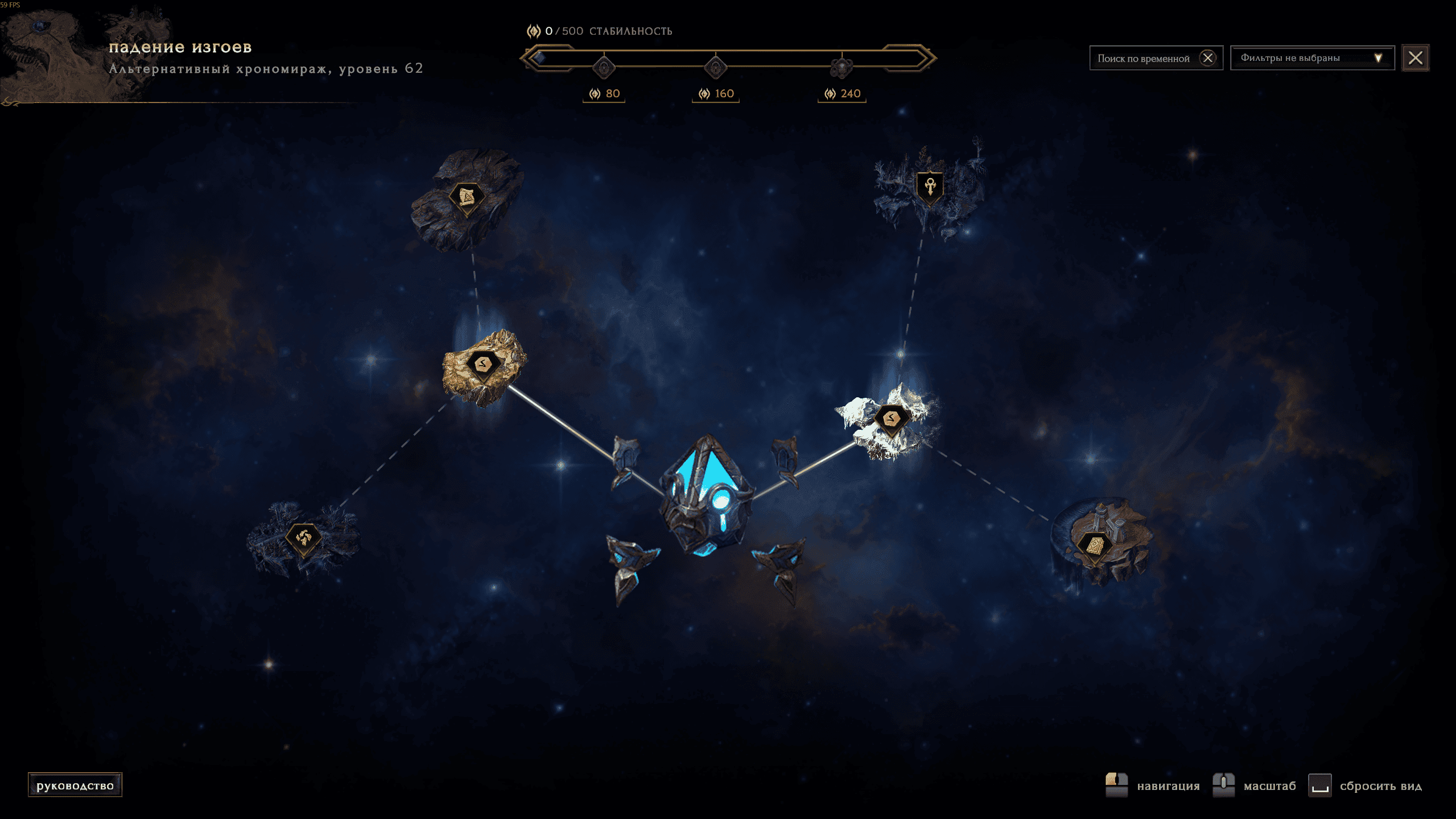
Once the campaign ends, the story's stable-versus-unstable timeline split becomes the entire structure of the game. The Monolith of Fate sends you into procedurally generated Echoes of past timelines, each one pushing a Corruption meter higher as you clear objectives, culminating in a Boss fight that awards a Blessing — a permanent, account-wide passive bonus tied to that Monolith's theme. Push Corruption too aggressively and the difficulty scales past what your build can handle; sit too low and progress crawls. Season 4, Shattered Omens, launched March 26, 2026, and layered a new wrinkle on top called Omen Windows: dynamic wave encounters against Fractured enemies that culminate in a fight against an invincible-until-provoked boss called an Omen, paired with a new Rune of Corruption that can unpredictably reroll gear affixes and a currency, Timeglass Fragments, built around trading and endgame modification.
The Arena sits alongside the Monoliths as the simpler of the two endgame pillars — an endless wave-survival gauntlet that tests raw build strength rather than mechanical variety. Between the two, and the four classic dungeons layered underneath them, there's a genuine amount of late-game runway, though anyone coming from Path of Exile's map-and-atlas system will recognize the shape of what they're doing here immediately. It's not reinventing the endgame loop so much as running a cleaner, less overwhelming version of it.
Seasons, or "Cycles": The MMO-Shaped Habit
Last Epoch runs on a seasonal reset model it calls Cycles — new characters, a fresh economy, and season-exclusive mechanics that either get folded into the permanent game or retired when the season ends, the same rhythm Path of Exile leagues and Diablo seasons have trained an entire generation of ARPG players to expect. Season 4 is the current one as of this writing, with Season 5 and a larger expansion called Orobyss both confirmed to be in active development, though neither has a firm date yet. If you've ever logged into an MMO on patch day specifically because everyone else is logging in too, the Cycle launch crowd at the End of Time will feel familiar — for about a week, then the population thins the way it always does in this genre.
Monetization: Is Last Epoch Pay to Win?
No, and this is one of the more straightforward answers in the genre. Last Epoch is buy-to-play — a single $34.99 purchase on Steam, no subscription — and everything sold afterward through its cosmetic shop is exactly that: skill effects, footprints, weapon and character skins, evade effects, companion pets. Eleventh Hour Games has stated publicly and repeatedly that it will never sell power, stash space, or convenience through the shop, and so far that promise has held; every stash tab and quality-of-life feature in the game is free. The shop isn't cheap by the standards of a full-price game — cosmetic bundles commonly run $9 to $20 apiece, and that pricing drew real backlash when the shop first went live — but it's optional in the fullest sense: the shop is only reachable while playing online, meaning True Offline players never see it at all, and every mechanical system in the game works identically whether you've spent zero dollars or fifty.
Where Last Epoch Stands in Mid-2026
The honest population picture is a seasonal ARPG's usual shape rather than anything alarming: Last Epoch spiked to an all-time peak north of 258,000 concurrent Steam players around its biggest content launches, and daily concurrents have settled into the low-to-mid four figures between Cycles, climbing sharply again each time a new season drops. That's a normal curve for a genre built on scheduled resets, not a sign of a dying game — Diablo 4 and Path of Exile follow the same seasonal sawtooth. First-year revenue topped $34.9 million, and Eleventh Hour Games remains an independent studio funding continued development from that base rather than answering to a publisher's quarterly targets. The game is still Windows-only through Steam; console versions have been "planned" since before 1.0 launched, with no release window announced as of mid-2026, and Traveler patience on that front has worn thin.
Pros and Cons
Pros
- Deterministic Forge crafting turns loot into raw material instead of a lottery ticket, a genuine differentiator from Diablo and Path of Exile
- Fifteen Masteries and per-skill specialization trees give build variety that rewards planning without demanding a spreadsheet
- The Merchant's Guild and Circle of Fortune split lets trade-focused and self-found players coexist without either side compromising
- Cosmetic-only monetization that has held the line since launch, with a True Offline mode that removes it entirely
- Active, well-communicated seasonal content — Season 4's Omen Windows and item corruption show real design ambition, not filler patches
- Cheap, near-instant respeccing keeps experimentation low-risk outside of the one-time Mastery choice
Cons
- Mastery choice is permanent per character, an old-school restriction that clashes with how flexible everything else in the build system is
- Story and setting are functional scaffolding at best; nobody is playing this for the plot
- Cosmetic shop pricing runs high for a full-price, buy-to-play game
- Population thins noticeably between Cycles, and the between-season lull can feel quiet if you're not chasing a fresh ladder
- No console release after more than two years of "it's planned," and no firm timeline in sight
- Endgame structure leans heavily on Path of Exile's map-and-atlas template rather than forging fully new ground
Verdict: Is Last Epoch Worth Playing in 2026?
Picture the genre as a triangle right now, with Diablo 4 holding down accessibility and production polish, Path of Exile holding down sheer systemic depth, and Last Epoch quietly occupying the corner neither of them wants: a crafting system that respects your time, a trading structure honest enough to let you opt out of it entirely, and a business model that has kept its word for three years running. It won't out-spectacle Diablo or out-complicate Path of Exile, and it isn't trying to. It's the corner of that triangle built for players who want to sit down at a Forge, put runes into a weapon exactly the way they planned, and log off knowing nothing about that plan was undone by a loot roll they couldn't control. Season 4 is live, Orobyss is coming, and the game is worth the entry price whether you land there for a week or stay for the Cycle.