 F2P · Live
Lineage 2 Essence
Lineage 2 Essence is NCSoft's free-to-play take on the classic Korean MMORPG Lineage II, built around faster…
An official modern relaunch of NCSoft's iconic MMORPG featuring overhauled core systems and built-in Auto-Hunt on the dedicated Atreia server. The project unites classic Elyos versus Asmodian warfare,...
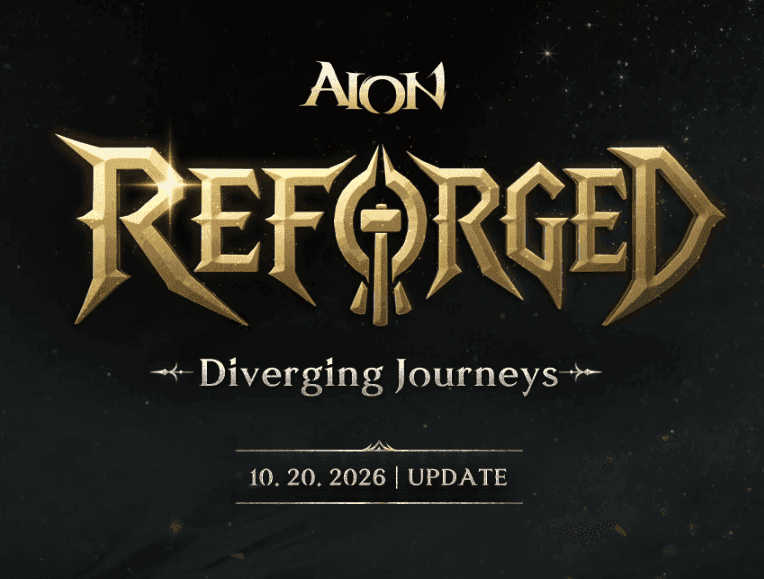
When NCSoft rolled out promotional campaigns in the autumn of 2026 for a new initiative titled Aion Reforged, waves of speculation rippled through the MMO community. Rumors that the South Korean publisher had secretly ported the game to Unreal Engine 5 were quickly dismantled by official details. This is neither an engine-level graphical remake built from scratch nor another nostalgic time capsule modeled after early Aion Classic patches. Instead, Aion Reforged represents a radical structural overhaul of the core live client, launching on the dedicated Atreia server on October 20, 2026.
The strategic intent behind the project is unmistakable: modernize the foundational rules of a sixteen-year-old MMORPG to fit contemporary player habits. As the next-generation sequel Aion 2 prepares to carry the franchise mantle forward, the original game faced a familiar late-lifecycle bottleneck. Over decades of patches, the live game accumulated bloated progression systems, while the brutal hours demanded by manual monster grinding alienated even dedicated veterans. Operating as the Western adaptation of South Korea's experimental Aion Remake project, the Atreia server cuts directly through this systemic clutter.
Rather than reinventing core mechanics, the development team performed targeted surgery on fundamental systems:
Aion Reforged establishes itself as a modernized hybrid platform. It preserves the franchise's signature aerial combat, the bitter ideological warfare between Elyos and Asmodians, and the adrenaline of Abyss fortress sieges, while decisively pruning the antiquated design hurdles that modern schedules can no longer accommodate.
The definitive pillar and most hotly debated addition to the server is the native integration of Auto-Hunt. NCSoft explicitly designates the project as a dedicated auto-hunt server, officially legalizing automated farming routines that the company spent its first decade fighting through anti-cheat software and legal action. For hardcore purists who spent years manually pulling mobs for fractional experience gains, embedding auto-combat into a desktop CryEngine client borders on blasphemy. Yet the decision stems from cold demographic reality: the original audience now balances careers and families, leaving few players willing to spend four hours of an evening mindlessly hacking field monsters just to stay raid-viable.
The automation architecture operates across three distinct dimensions:
This automated shift has fractured the community. Hardcore purists remain firmly rooted in Aion Classic, where manual positioning mistakes and sloppy pulls result in immediate death. Conversely, proponents of Aion Reforged embrace the title as the ideal "second-monitor" MMORPG: avatars build wealth and levels during the workday, ensuring players are battle-ready the moment cross-faction war horns sound in the evening.
Adapting sixteen years of accumulated combat mechanics to modern standards demanded a comprehensive overhaul of three foundational pillars. Marketing materials aptly categorize this system-wide transformation as a coordinated triad: airborne combat integration, class skill restructuring, and a transparent ability socketing ecosystem.
The first breakthrough arrives with Wings Reforged. In original iterations, wings functioned primarily as glorious transport accessories and positional utilities confined to designated flight envelopes like the Abyss. Outside these airspaces, flight was largely reduced to descending glides from cliffs. In Aion Reforged, aerial mechanics are woven directly into the core combat loop. Unfurling wings no longer silences character skill bars, while the Flight Time gauge has evolved from a lethal falling hazard into a dynamic tactical resource. Daevas can execute aerial dashes, mid-air dodges, and steep dives directly inside open combat, dramatically increasing three-dimensional mobility across the world.
The second pillar executes a complete combat overhaul across all 13 playable classes through Skills Reforged. Classic design saddled players with bloated hotbars, forcing classes like Sorcerers and Rangers to manage forty distinct skill binds packed with redundant sub-buffs and conditional triggers. The development team trimmed this excess with surgical precision:
The overhaul culminates in Stigma Reforged. Over years of incremental live-service bloat, Stigma stones turned into a punishing enhancement lottery where failed upgrades could shatter valuable stones and derail build progression. Reforged restores systemic clarity. Stigma slots follow a clean progression tier, unlocking foundational archetype skills reliably as characters advance. Customization pivots toward distinct, readable branches—allowing players to specialize cleanly into sustained single-target execution, devastating area-of-effect control, or frontline squad survivability without enhancement gambles.
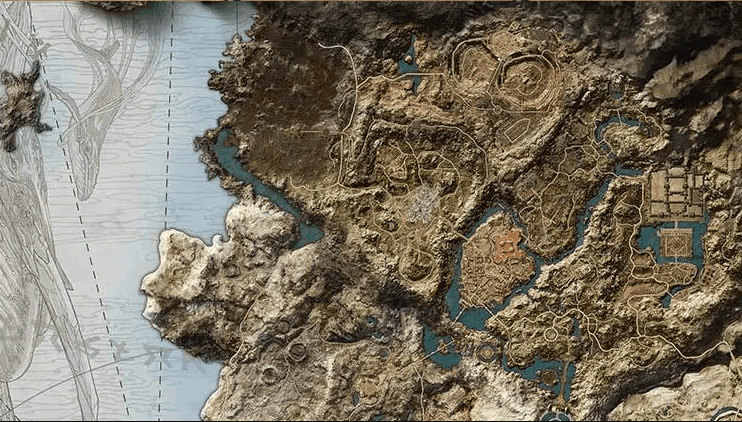
Redesigning the pacing of a classic MMORPG inevitably required restructuring its world geography. The landscapes of original Atreia were drafted when cross-country foot travel across massive empty zones was considered vital for world immersion. On the Atreia server, developers streamlined dead transit space, trimming zone footprints and introducing purpose-built regions engineered around modern play patterns.
Iconic leveling pathways—including the early-game pairings of Poeta and Ishalgen, the arid plateaus of Eltnen alongside the jagged peaks of Morheim, and the high-level domains of Heiron and Beluslan—received rigorous topological trims. Outpost distances were shortened, monster density was condensed into tight farming clusters for continuous engagement, and side-quest arcs were straightened into streamlined progression channels.
The defining geographical shift, however, rests upon newly designed and reconfigured territories:
Compressing the Abyss completely changes aerial reconnaissance. Launching from a staging outpost immediately places Daevas on an intercept vector with enemy scouting wings, converting the airspace surrounding the Sulfur Archipelago into a hyper-dense proving ground for non-stop aerial skirmishing.
The beating heart of the Aion universe has always pulsed with the bitter, irreconcilable feud between the celestial Elyos and the savage Asmodians. Introducing systemic automation to open-world farming confronted developers with a critical design challenge: how to retain the razor-sharp tension of open-world PvP when a portion of the field population operates in semi-automated routines. The team resolved this dilemma through calibrated territorial risk tiers and modernized dimensional mechanics.
The planar Rift system receives a prominent renaissance. Spatial portals still materialize unpredictably across regional boundaries, allowing strike squads to infiltrate enemy homelands. However, cross-border warfare has adapted to new rules of engagement:
Large-scale faction warfare peaks during scheduled Fortress Siege events. Castle warfare in the Abyss remains the definitive domain where automation is utterly powerless. Capturing a citadel demands flawless coordination across hundreds of combatants: breaching gate defensive generators, focusing down elite Balaur strike teams, securing aerial airspace against enemy dive-bombers, and burning down the fortress Deity General before time expires.
The PvPvE dynamic retains its signature three-way drama. Even as Elyos and Asmodian legions grind against each other outside citadel gates, sudden NPC incursions from draconian dreadnoughts can instantly flip territorial control. Triumphing in siege warfare yields regional tax revenues, unlocks deep subterranean treasure vaults, and rewards legion members with vital Abyss Points required to purchase top-tier military gear.
Historically, PvE group content in Aion demanded rigid scheduling and substantial time commitments. Assembling a balanced six-person party for elite instance runs frequently chewed up an hour in recruitment chat, while a single sudden disconnection from a vital cleric or tank routinely disbanded the entire run. Under Aion Reforged, instanced group content undergoes a fundamental redesign: developers systematically dismantled barrier-to-entry friction, transforming sprawling instances into focused, rapid-response encounters.
Sweeping adjustments reshape party sizes and instance architectures:
This structural transformation directly alleviates the most toxic symptom of late-stage MMO cultures: institutional gatekeeping. In classic variants, newcomers lacking fully socketed endgame gear and enchanted weapons were instantly rejected by group finders. In Aion Reforged, scalable party requirements and solo-friendly baseline pathways allow players to independently assemble competitive gear without begging for invites from elite pre-mades.
High-end endgame challenges remain intact for coordinated guilds. Dedicated time-attack leaderboards and demanding Abyss trials still exist, testing precision crowd control, tight spatial discipline, and strict DPS execution checks. Crucially, these brutal encounters function as prestigious summit content rather than rigid progression choke points blocking the wider player base.
Any structural overhaul of a vintage MMORPG ultimately hinges on its macroeconomic circulation. In classic Aion, crafting professions remained the exclusive domain of masochistic purists: crafting masterwork plate or weapons demanded dozens of failed recipe procs, while bags constantly overflowed with fragmented ores, leathers, and aether crystals. On the Atreia server, NCSoft enacted a bold intervention, pairing extensive storage quality-of-life overhauls with an unexpected concession toward cosmetic monetization.
The crafting overhaul operates across three distinct fronts:
Nonetheless, a free-to-play economy steered by NCSoft inherently carries structural monetization hazards. While the client remains free to download and play, monetization centers around convenience accelerators and time-savers:
The publisher faces a delicate tightrope: sustaining the accessibility of craftable cosmetics and progression supplies without degrading the game into overt Pay-to-Win territory where battlefield dominance is bought directly from the cash shop.
The technical architecture underpinning Aion Reforged presents an inevitable double-edged sword. The client continues to run on a heavily customized first-generation CryEngine build. On one hand, this delivers peerless hardware accessibility: launching the game at maximum settings and maintaining a rock-solid 60+ frames per second is easily achievable on entry-level office laptops and handheld PCs. On the other hand, the architectural constraints of the mid-2000s inevitably resurface during massive combat engagements.
The primary bottleneck remains single-thread CPU performance. In sprawling fortress battles where hundreds of Daevas clash around citadel gates or narrow Abyss artifact choke points, crunching massive Draw Calls and server packets inevitably drags down framerates even on cutting-edge desktop processors. Nevertheless, modern UI enhancements, customizable spell effect culling, and compacted zone footprints noticeably reduce hitching and micro-stutters compared to legacy client releases.
Heading into the official launch of the Atreia server on October 20, 2026, the target demographic is crystal clear:
Aion Reforged makes no pretense about what it is. It is not an industry-shattering technological marvel, but a bold, honest, and remarkably pragmatic retuning of an all-time classic. By stripping away decades of accumulated tedium, the project isolates what truly made Atreia legendary: the thunderous snap of wings unfurling mid-air, the ring of steel in the Abyss, and the exhilarating chaos of faction warfare.