 F2P · Live
Lineage 2
Aden's castles never stay in the same hands for long, and Lineage II has built an entire twenty-three-year…
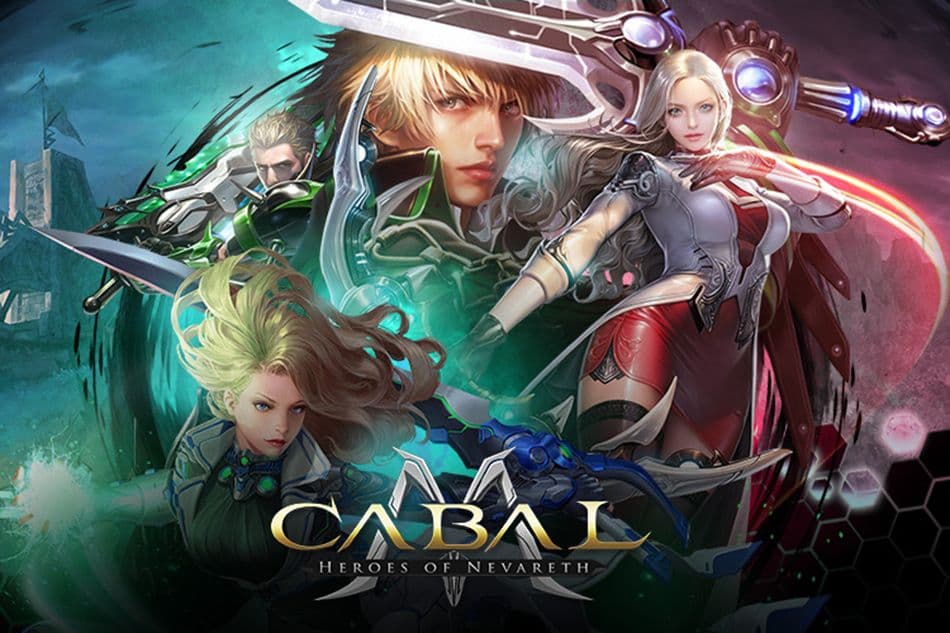
Chain together fast, skill-based combos in Cabal Online, and you'll see why ESTsoft branded the game "Revolution of Action" back when tab-target combat was still the genre norm. The Korean MMORPG has ...
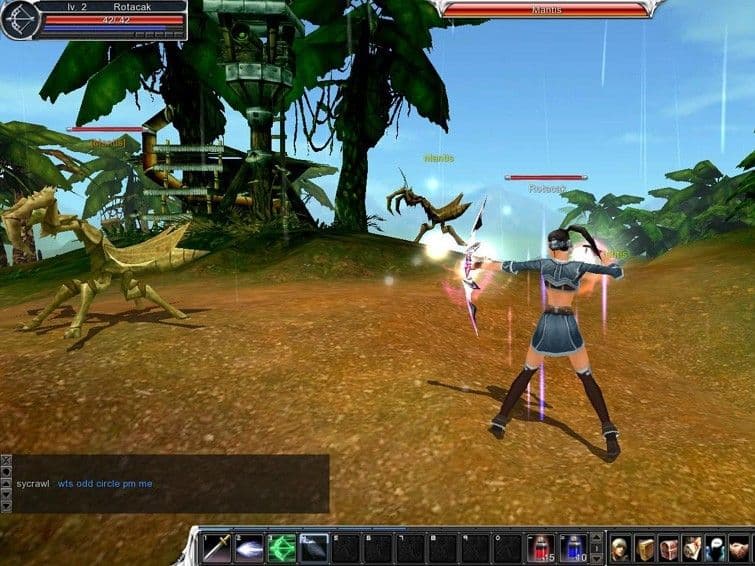
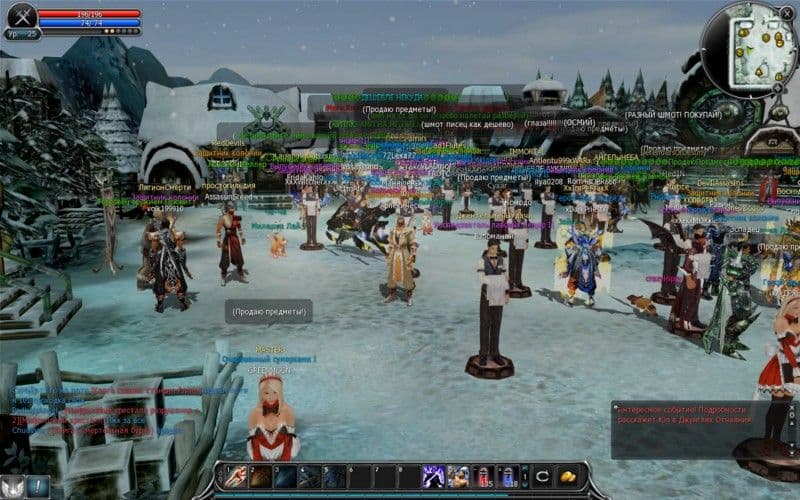
Cabal Online is a free-to-play action MMORPG built by South Korean developer ESTsoft on a proprietary engine made specifically for the game. It launched in Korea in October 2005, reached Europe in September 2006, and arrived in North America in February 2008 through publisher OGPlanet. Two decades on, it's still running, still patching, and still one of the clearer examples of a genre stalwart that never became a household name in the West but never quite left either. What's changed most since its heyday isn't the core game so much as who's running it, and this Cabal Online review spends as much time untangling that as it does the combat.
The setting has aged into something almost quaint by modern MMO standards, and that's not a knock. Nevareth was nearly destroyed a thousand years before the game begins by the CABAL, a group of idealists who tried to engineer a utopia and instead triggered a catastrophe remembered as the Apocalypse. Only eight of them survived, including their leader, Faust, who foresaw a second calamity coming for the land he'd already ruined once. That's the entire premise: a world still living in the wreckage of good intentions, defending itself against forces that never really went away. It's a modest, functional backstory rather than a driving narrative force, and the game has never pretended otherwise — quests exist to justify combat, not the other way around.
What the setting is actually built to support is conflict between two standing nations, Procyon and Capella, whose rivalry frames most of the endgame. The lore explains why they fight; it doesn't do much beyond that, and players who come to Cabal Online looking for story depth will find the world thinner than its history suggests.
Character creation puts you in front of nine classes: Warrior and Blader for melee, Wizard and Dark Mage for ranged magic, Force Archer and Force Gunner for ranged physical-magical hybrids, Force Shielder and Force Blader for classes that split their weight between sword and spell, and Gladiator, a rage-fueled chakram-wielding brawler built around area damage. Each locks into a weapon type and an armor weight class — Warriors in heavy plate with greatswords, Wizards in light robes with orbs — and that choice sticks with the character for good.
The early hours are unapologetically old-school: grind a zone, clear a linear quest chain, repeat in the next zone once you've outleveled the last one. Where Cabal Online still separates itself is in how it wants you to fight while you do it. Combat runs on the Combo System layered under three Battle Modes, commonly shortened to BM1, BM2, and BM3. Each mode reassigns your skill bar to a different rotation, and battling well means chaining hits within a mode before a combo window closes, then swapping modes entirely for burst damage or crowd control. A Wizard, for instance, spends most of a dungeon run firing off wide-area BM3 nukes, but drops into BM2's Double Caster mode to stack magic skills back to back when a single target needs to die fast. It's a system that rewards a kind of muscle memory most modern MMOs don't ask for anymore, and it's aged less like a relic and more like a genre curiosity that never got properly copied.
Leveling itself is straightforward, but the systems layered on top of a max-level character are where Cabal Online gets genuinely dense. The Force Wing is the clearest example: a wearable, levelable set of wings that grants passive stats and eventually active combat bonuses, fed by Force Wing experience earned through normal play and specific materials. Push a Force Wing far enough and it transcends into a Unique-rank wing — at which point its level resets to 1 and the grind starts again, harder, for a stronger baseline. It's a system that intentionally punishes patience with more patience, and whether that reads as depth or treadmill depends entirely on how much you already enjoy the underlying combat.
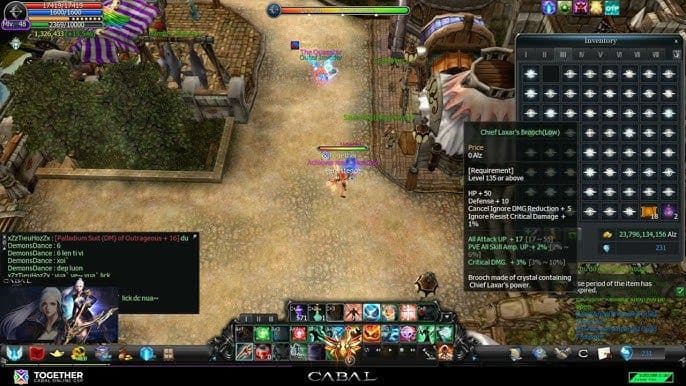
Equipment follows a similar logic. Gear upgrades on a plus scale from +0 to +15, with failure states that can knock a piece back down the ladder at lower tiers, and a parallel system called Anima Mastery lets players slot specific stat options onto gear from pools that get better — and pricier — at higher grades. Layer in rune crafting, which converts raw materials into stat-boosting runes for a currency and material cost that ESTsoft has quietly reduced more than once to keep the ladder from choking new accounts, and you get a progression structure that's less about hitting a level cap and more about a permanent side-game of incremental optimization. Alz, the base in-game currency, underpins all of it — upgrades, runes, the auction house, personal vendor stalls — and the numbers involved get large enough that recent patches have had to raise the storage and trade limits into the trillions just to keep up.
Instanced dungeons scale across the level range and remain the primary source of gear and materials, typically run solo or in small parties rather than full raid groups — Cabal Online was never built around eight-to-twenty-person encounter design the way Western MMOs of the same era were. World Bosses supplement that loop with scheduled, channel-wide spawns: a warning broadcast goes out, players funnel into the right channel, and a shared damage-contribution meter decides individual rewards once the boss goes down. It's a low-commitment, drop-in structure that suits Cabal Online's audience of players logging in for an hour rather than committing to a raid night.
The vertical endgame content — towers and extreme-difficulty dungeon variants that gate the best crafting materials and upgrade stones — is where the earlier progression systems actually get tested. None of it reinvents the dungeon-crawl formula, and a returning player won't find anything here that feels genuinely new next to 2015-era Cabal Online. What's changed is mostly numbers: higher caps, denser reward tables, and quality-of-life additions like save-able equipment presets that let a character swap an entire loadout — weapons, Force Wing, Anima Mastery slots — in a single click instead of manually re-equipping for a boss fight versus a farming run.
Procyon and Capella stop being lore dressing the moment Mission War opens. It's a scheduled, large-scale PvP mode split across level brackets, fought on dedicated maps like Tierra Gloriosa and Memoria Chrysos, where players representing their nation queue in and fight for territorial and prestige rewards handed out to the winning side and its top performers. This is Cabal Online's version of realm-versus-realm warfare, and it's aged well specifically because it doesn't ask for anything the rest of the game hasn't already trained you to do — Battle Mode switching and combo timing matter just as much against another player as they do against a dungeon boss, arguably more, since a human opponent won't stand still through your wind-up.
The honest caveat here is the same one that follows most long-running gear-progression MMOs into PvP: a maxed Force Wing and a fully socketed Anima Mastery loadout will beat equal skill more often than a purist would like. Mission War rewards commitment to the systems above it, not just reflexes, and a fresh account is going to lose lopsided fights against veteran nation stacks before it ever catches up.
Guild membership isn't mandatory in the way it is for siege-heavy sandbox MMOs, but it's the backbone of anything beyond solo dungeon-clearing — guild-level titles, shared achievements, and organized Mission War attendance all run through it. Cabal Online has never had much in the way of a player-driven economy beyond the auction house and personal vendor stalls, so the guild is really the only place the social game happens; there's no housing, no crafting profession web, no marriage system tying strangers together. It's a lean social structure built for a game whose players mostly log in to grind and fight, not to hang out.
That fragmentation is worth dwelling on because it shapes the actual answer to "is Cabal Online still populated in 2026?" Third-party trackers monitoring one of the older official clients put concurrent numbers in the low hundreds through most of 2026, which sounds bleak in isolation but doesn't capture the private-server ecosystem running in parallel — dozens of community-run projects, several reporting concurrent counts comparable to or larger than the official client they're built on, spread across a wide range of experience rates and episode versions. Exact population figures aren't publicly available in any form that unifies both halves of that picture, and any single number quoted for "the game" should be read as a partial view of a genuinely split community rather than the whole of it.
Cabal Online runs on a freemium model that predates most of the industry's worst monetization habits and, for better and worse, still shows it. The item shop sells cosmetics, pets, EXP boosters, upgrade-protection items, and long-term subscription-style bundles for real-money eCoin, refreshed with rotating sales and limited-time offers. Is Cabal Online pay to win? Partially, and honestly — spending real money buys safeguards against failed upgrades and speeds up the Force Wing and Anima Mastery grind considerably, which matters in Mission War specifically. But nothing in the shop skips the ladder outright; every stat boost the shop sells is also obtainable through Alz, drops, and time, which puts it closer to a time-compression model than a pure pay-wall. Compared to the gacha-driven mobile RPGs dominating today's free-to-play conversation, it reads as almost restrained.
Cabal Online has spent twenty years as the MMO equivalent of a well-worn arcade cabinet in the back of a bar — nobody's advertising it, the cabinet's been patched and repainted a dozen times, and the people who still drop coins in it know exactly why they keep coming back. The Combo System hasn't been meaningfully copied by anything since, Mission War still delivers on the RvR premise it was built around, and the progression grind is deep enough to keep a dedicated player occupied for years without ever feeling like padding for padding's sake. What it asks in return is patience with a fractured, occasionally frustrating publishing situation and tolerance for a game that stopped trying to modernize its presentation a long time ago. If timing-based combat and a long optimization ladder sound appealing on their own terms, track down the right client for your region and give it a real session before judging it by its age.