About the game
Corepunk is a top-down MMORPG from Artificial Core, a Dutch studio that spent five years building a hybrid nobody had quite tried at this scale: League of Legends' camera and skill-shot combat grafted onto a persistent open world with dungeons, crafting, and full character progression. It entered Early Access on November 26, 2024, sold exclusively through its own launcher rather than Steam or Epic, and has spent the year and a half since rebuilding large chunks of itself in front of a paying audience. A full 1.0 release is now targeted for the end of 2026. Whether to buy in now, during a period the developers themselves call a work in progress, or wait for that finish line, is the question this Corepunk review sets out to answer.
From Reveal to Restart: How Corepunk Got Here
Artificial Core first showed Corepunk in 2020, spent years in closed alpha testing a small circle of MOBA veterans and MMO players, and finally opened Early Access purchases in November 2024 at prices ranging from roughly $36 to $68 depending on edition. The pitch was unusual enough to draw attention on its own merits: an isometric world called Kwalat, shrouded in fog of war the way a MOBA map is, where instead of one 30-minute match you build a persistent character across hundreds of hours. The studio was explicit from day one about staying buy-to-play with a cosmetics-only shop, a promise that has mostly held even as the surrounding monetization plan has shifted underneath it.
The year that followed wasn't quiet. By spring 2026, Artificial Core had concluded that the Early Access build and the game it wanted to ship were different enough to warrant starting over: on June 25, 2026, the team ran what it branded the Great Reset, a full server wipe timed to a major content and systems overhaul, following an earlier partial wipe the year before. A few months prior, in February 2026, the studio confirmed layoffs without shutting down development entirely, a distinction the community spent weeks parsing in the absence of much other communication. The studio's own year-end roadmap post put it plainly: Corepunk at Early Access launch and Corepunk today are functionally two different games in terms of content and quality, and the full release has been pushed from an original late-2025 target to the end of 2026 while the team prioritizes fixing the technical foundation before adding more on top of it.
None of that is disqualifying on its own — plenty of MMOs have survived a rocky first year of live development — but it does mean this review is describing a moving target rather than a finished product, and that's worth keeping in mind for every section that follows.
Kwalat: Setting and First Impressions
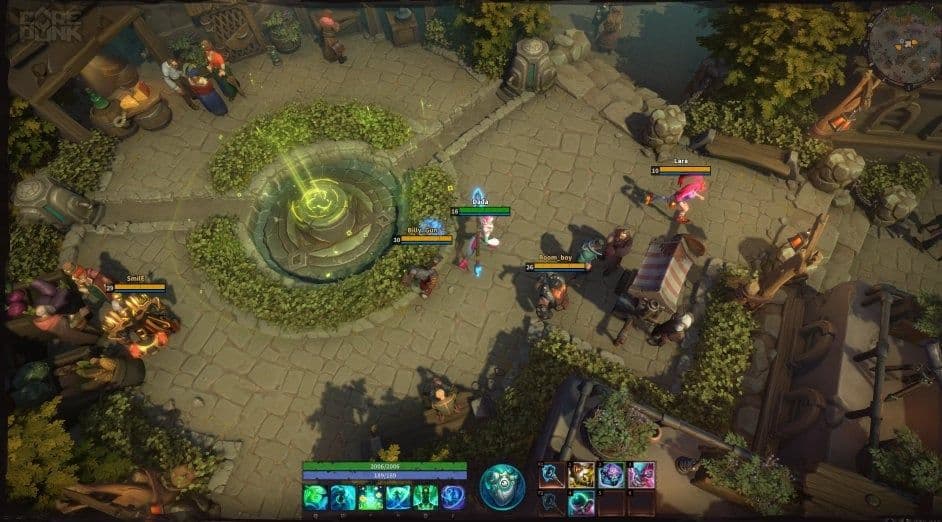
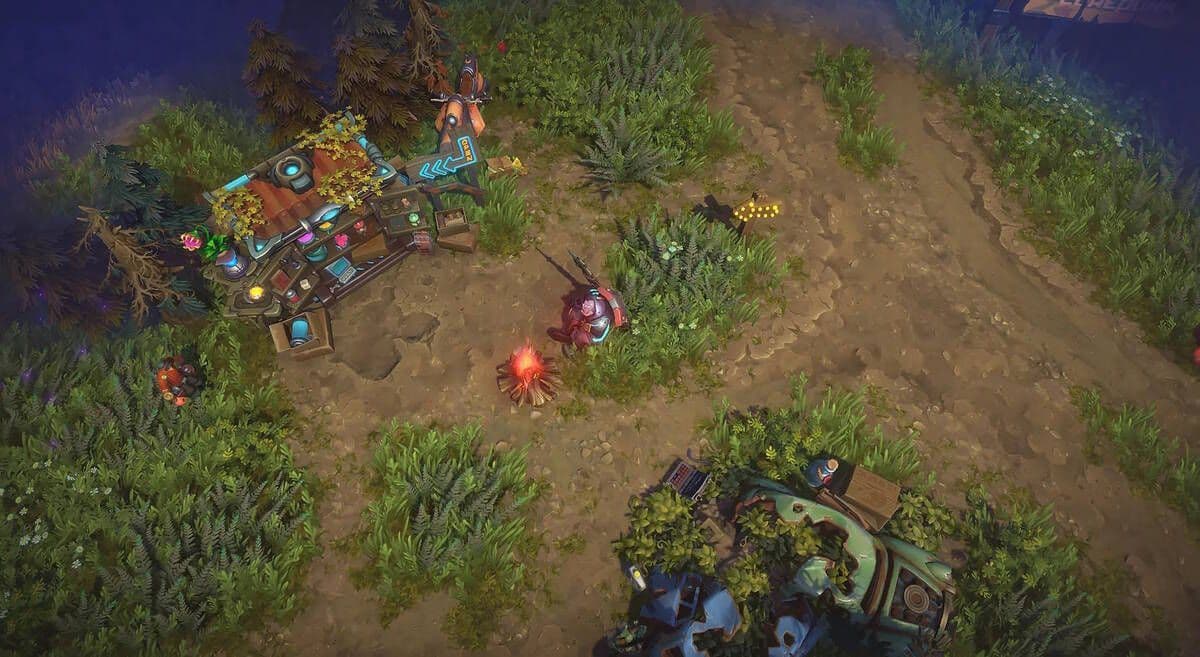
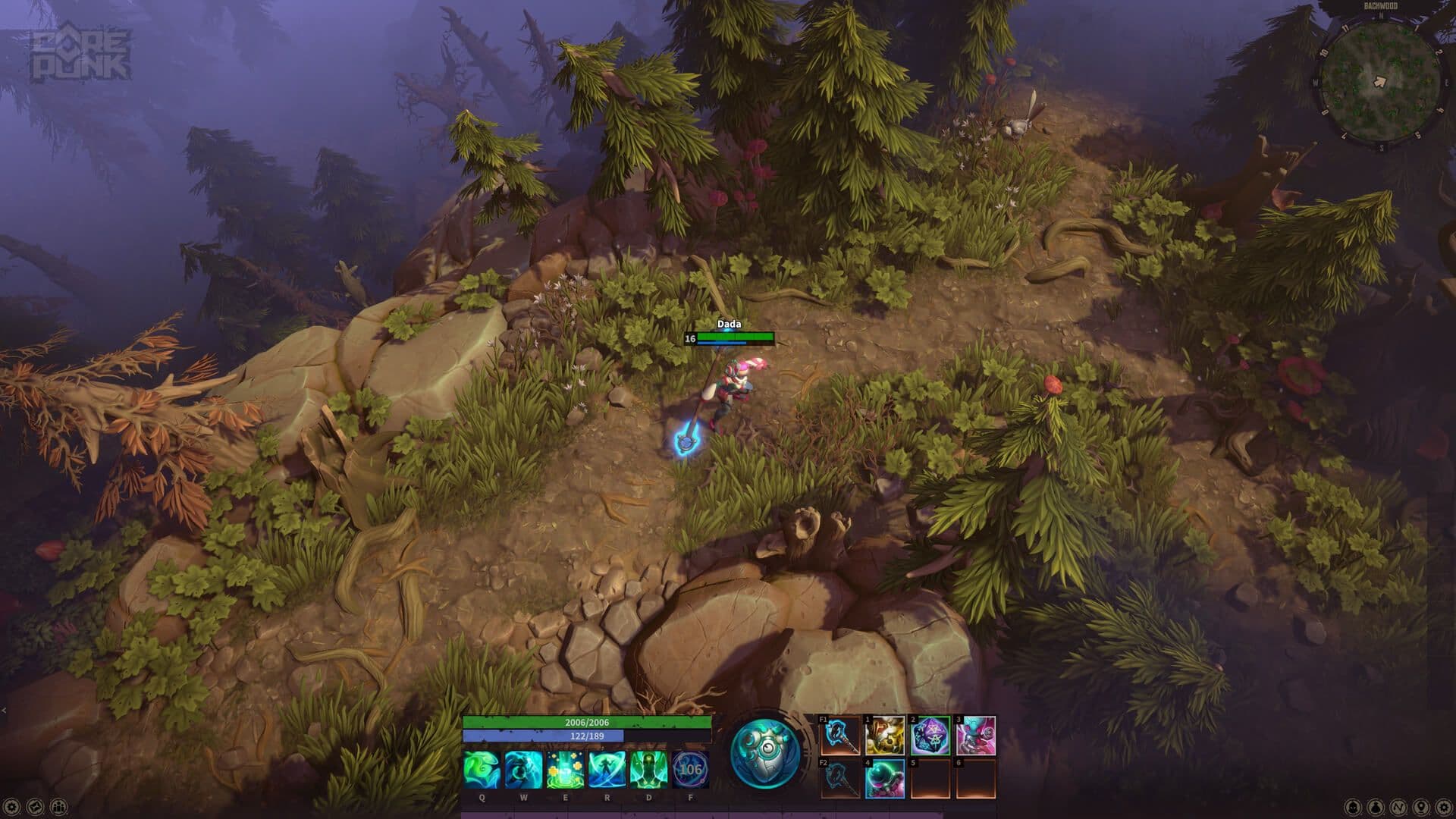
Kwalat is a cyber-fantasy world built around four distinct cultures, rendered in a stylized top-down art style that leans closer to a MOBA's readable, high-contrast character silhouettes than to a traditional MMO's naturalistic scenery. The fog of war is the setting's real personality: unexplored terrain stays dark until you physically walk into it, chests and rare monsters hide inside that darkness, and PvP encounters gain an ambush-and-retreat rhythm that a fully revealed map would flatten out. It's a smart reuse of a MOBA convention in a genre that rarely borrows from one, and it does more to make Kwalat feel dangerous than any amount of environmental detail could.
A new character starts with a class choice among six available Heroes — Champion, Paladin, Warmonger, Mercenary, Bomber, and others added since launch, with twelve planned for the eventual full roster — and picks up quests around the starting settlements that establish the loop early: kill things, gather materials, turn both in, repeat while the level curve climbs. Levels five and eight open universal spells and mounts respectively, and by level six a Catalyst system starts letting you specialize your active abilities down branching talent trees. It's a familiar MMO skeleton, but the combat riding on top of it is where Corepunk stops resembling anything else in the genre.
Hero and Weapon Mastery: How Combat Actually Works
Every Hero in Corepunk carries three Weapon Masteries — essentially subclasses tied to a specific weapon type — and you can only run one at a time, though switching between them out of combat costs nothing but a menu visit. A Bomber choosing Blast Medic plays a battlefield healer built around explosive utility; the same Bomber running Infiltrator becomes a melee assassin; running Grenadier turns them into pure area-damage. Six Heroes times three Masteries each gives eighteen genuinely distinct playstyles from a character roster that would look, on paper, much smaller than it plays.
Combat itself is directional and skill-based rather than tab-target: right-click handles auto-attacks, while Q, W, E, R, and T fire off manually aimed abilities that have to land on a moving target rather than simply activating on whoever's selected. There's no combo-chaining system stitching abilities together automatically, which means sequencing your own cooldowns and debuffs in the right order is entirely the player's job — closer to a MOBA skill rotation than to the auto-attack-plus-buttons rhythm most MMORPGs settle into. Positioning and aim matter more here than gear score, at least until the numbers behind your build start to diverge sharply from an opponent's, which is exactly the kind of skill ceiling the studio was chasing when it pitched Corepunk as WoW Classic's difficulty wrapped in League of Legends' combat feel.
Crafting and the Economy: Gathering, Refining, Building
Character power in Corepunk runs almost entirely through crafting rather than random drops. Four gathering professions — Skinner, Gatherer, Miner, and Lumberjack — feed four crafting ones: Weaponsmith, Artifactsmith, Chemist, and Mystic, alongside secondary professions like Fishing, Butchery, and Cooking that round out survival and utility needs. The actual loop plays out concretely: mine ore in the field, refine it at a workstation into usable ingots, feed those into a Weaponsmith recipe alongside components from a defeated monster, and walk away with gear that's meaningfully better than anything a quest reward would hand you at the same level. Artifacts add a second itemization layer on top of weapons and armor, with reforging and dual-stat tiers that the 2026 roadmap has been steadily expanding.
It's a system that rewards specialization over self-sufficiency by design, and it mostly succeeds at that — a dedicated Chemist selling potions to Champions who never touched the profession themselves is a more interesting economic relationship than most theme-park MMOs bother to build. Where it gets shakier is in how much of that economy still depends on population density that Corepunk, as an Early Access title outside the major storefronts, hasn't reliably had.
PvE: Dungeons, Extraction, and the Hardcore Question
Dungeons are Corepunk's PvE backbone, and the studio has been open that the eventual roster is meant to scale up to raid-style difficulty comparable to a Mythic encounter in a more established MMO. What sets them apart right now is the loot-risk structure layered on top: standard dungeon runs only put your inventory items at risk if you die, while a separate Hardcore mode — including the Oathtaker Ritual added in a recent patch — applies genuine full-loot rules, stripping a fallen character of everything they're carrying. That split is a deliberate answer to a problem that sinks a lot of hardcore-leaning MMOs: full loot everywhere scares off the casual playerbase a game needs to stay alive, while zero risk anywhere bores the players who want something to actually lose. Corepunk lets both camps opt into their own version of the same content instead of forcing a single ruleset on everyone.
Prison Island functions as a rotating focal point for a lot of this — ranked PvP, dungeon delves, and now plans to expand it into its own open-world dungeon zone entirely — and the December 2025 roadmap promised five additional dungeons on top of what's live, spanning everything from a classic linear delve to a full open-world variant. The caveat that comes with all of it: a fair amount of that PvE content exists as a roadmap promise rather than a shipped feature as of this writing, and Corepunk's track record on hitting its own dates has been inconsistent enough that "planned" and "playable" shouldn't be treated as interchangeable here.
PvP: Arenas, Battlegrounds, and Opting Into Danger
Structured PvP runs through arena challenges and battlegrounds, with a karma system explicitly designed to stop a geared-up player from simply farming weaker ones for sport — a mechanical acknowledgment that open combat between mismatched characters needs guardrails to stay fun for both sides. Open-world PvP itself has been an opt-in feature the studio has been rolling out gradually rather than switching on everywhere at once, alongside newer battleground modes built around objectives like planting or defending a bomb at a base, which lean even harder into the game's MOBA ancestry than the dungeons do.
Guilds and guild-versus-guild PvP are still listed as on-deck features rather than finished ones as of mid-2026, which is a real gap for a game this openly inspired by territory control and faction conflict in other MMOs. A fog-of-war ambush is a fine one-off thrill; a guild siege over a held base is the kind of content that actually keeps a PvP-focused playerbase logging in nightly, and Corepunk hasn't fully delivered that side of the pitch yet.
Monetization: Buy-to-Play, Cosmetics, and a Reversed Promise
Is Corepunk pay to win? By every account so far, no. The game sells through a one-time Early Access purchase, and the in-game store has consistently been limited to skins, outfits, mounts, HUDs, and other visual items with no stat impact — a principle Artificial Core has repeated publicly since well before launch, framing it as a deliberate bet that the game could sell itself on concept and execution rather than on monetized power.
That said, the monetization story hasn't been perfectly static. Early in development, the studio explicitly ruled out battle passes as a system entirely. By January 2026, Corepunk had shipped six battle pass tracks, one per major activity, awarding cosmetics, pets, and hero icons through daily tasks — a reversal from an earlier stated position, even if the passes themselves stayed cosmetic-only and free to progress while a season is active, with only lapsed seasons moving into the paid shop afterward. It's a smaller walk-back than it might sound: no gameplay advantage changed hands, and the studio has been transparent that its monetization plan is still being tested rather than treated as finished. But a team that told players "there will be no battle passes" and then added battle passes within about a year and a half is exactly the kind of pattern worth flagging plainly, even in an otherwise fair monetization model.
Where Corepunk Stands Heading Into Its Full Release
Add it all up and Corepunk in mid-2026 reads less like a finished MMORPG and more like a studio's honest, occasionally messy attempt to build one live, with the community watching every wipe, layoff announcement, and roadmap slip in real time. The Hero and Weapon Mastery combat is the clearest success story — genuinely distinct from anything else in the genre, and demanding in a way that rewards the time you put into learning it. The crafting economy is thoughtfully built around specialization rather than solo self-sufficiency. What's still catching up is everything that depends on scale and time: guild warfare, the full dungeon roster, and a population large enough to make the crafting economy's specialization actually pay off for everyone participating in it.
Pros and Cons
Pros
- Genuinely distinctive combat built on directional skill-shots and manual aim rather than tab-targeting or auto-attack chains
- Hero and Weapon Mastery system delivers eighteen distinct playstyles from six base classes
- Crafting-driven economy that rewards specialization and player interdependence instead of solo self-sufficiency
- Fog-of-war exploration and ambush-based PvP add genre-crossing tension a typical open world doesn't have
- Consistently buy-to-play with a cosmetics-only shop, holding to that promise through multiple monetization revisions
- Split loot-risk dungeon structure lets casual and hardcore-minded players opt into their own version of the same content
Cons
- Not available on Steam, Epic, or GOG — no independent storefront reviews, refund protections, or verified concurrent player data
- Guild systems and guild-versus-guild PvP remain unfinished, a real gap for a game built around territory-driven conflict
- A full wipe, studio layoffs, and a pushed-back release date within roughly eighteen months point to a bumpy development cycle
- Battle passes were added after the studio explicitly promised none would exist, even if they stayed cosmetic-only
- Significant PvE content (five promised dungeons, expanded open-world zones) still exists on the roadmap rather than in the client
- Small population outside the game's own launcher makes some of the economy's specialization payoff harder to realize in practice
Verdict: Should You Buy Into Corepunk Right Now?
Here's the honest question to ask yourself before spending $36 or more on an Early Access key: are you the kind of player who enjoys watching a game get built, wipes and layoffs and all, or do you want to log into something that already works end to end? If it's the former, Corepunk's combat system alone is compelling enough to justify the price of admission, and you'll get a front-row seat to a genuinely unusual genre experiment finding its footing in public. If it's the latter, the missing guild content, the roadmap items still unshipped, and a full-release date that has already slipped once are good enough reasons to wait for the promised end-of-2026 launch and see what actually ships. Corepunk has never lied about being unfinished — it's just been more unfinished, for longer, than its own timeline once suggested.