 F2P · Live
Lineage 2
Aden's castles never stay in the same hands for long, and Lineage II has built an entire twenty-three-year…
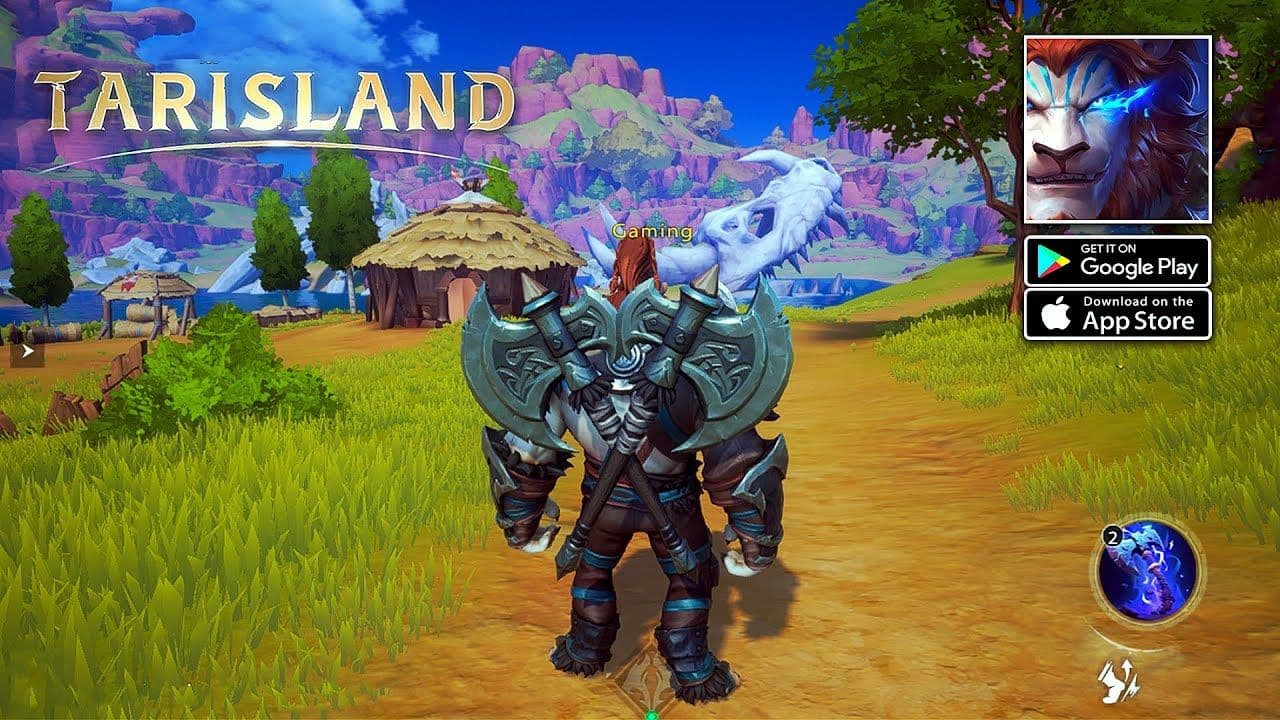
Tarisland was Tencent's cross-platform answer to World of Warcraft, letting PC and mobile players share the same characters, raids, and progression from a single account. Nine classes, five-player dun...
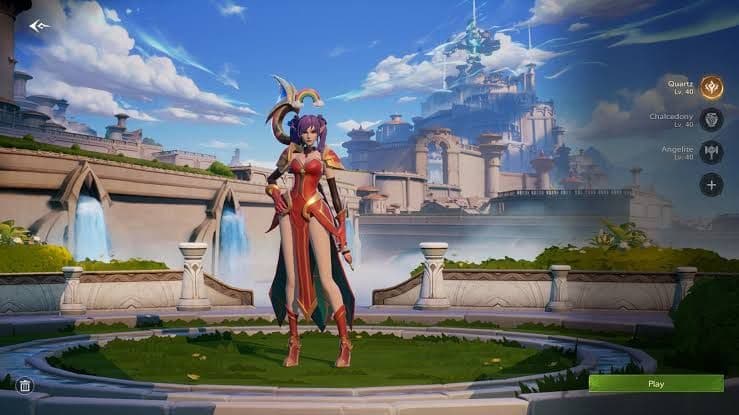
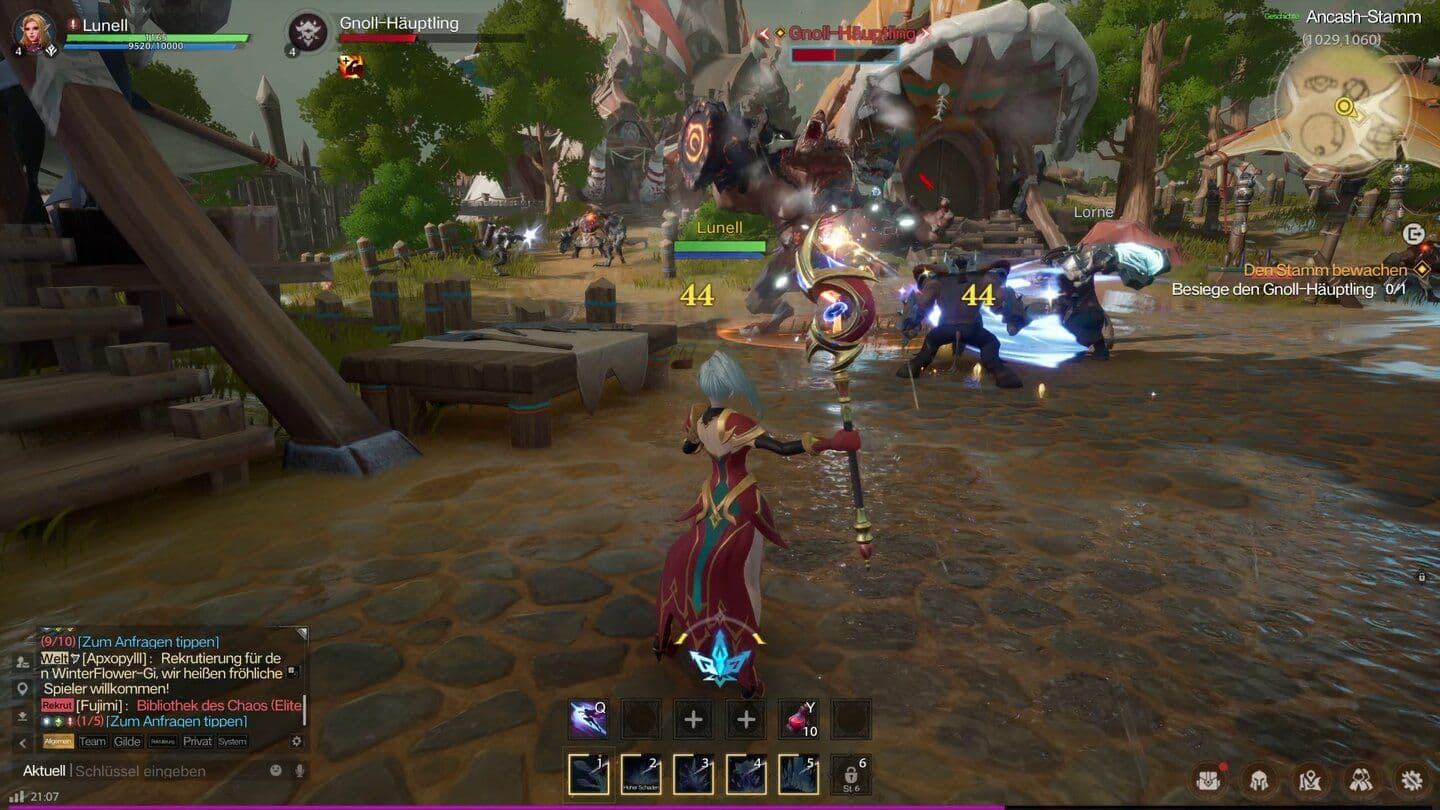
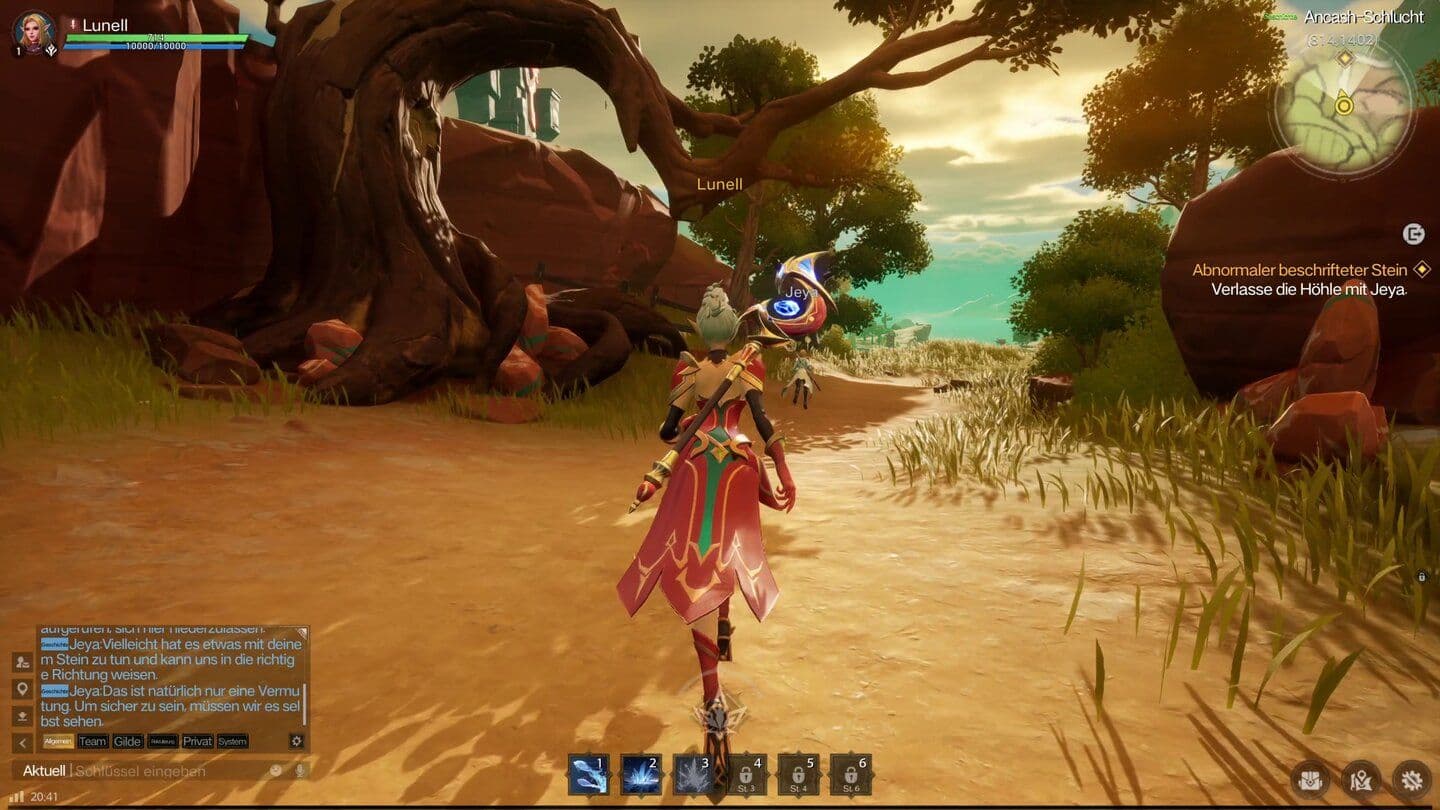
Tarisland was a cross-platform fantasy MMORPG developed by Locojoy and published by Tencent's Level Infinite label, launched worldwide on June 21, 2024 for PC, iOS, and Android. Built on Unreal Engine 4 and pitched from day one as a polished answer to World of Warcraft, it drew millions of pre-registrations, a Steam release that October, and a first content season called Mystery of the Hollows. Sixteen months later, on November 4, 2025, Tencent shut the servers down for good. This is a look back at what the game actually offered while it was running, and at how quickly a big-budget launch turned into a quiet closure.
Locojoy revealed Tarisland in April 2023, timed almost to the week with World of Warcraft going dark in China after Blizzard's licensing split with NetEase. That timing wasn't subtle, and neither was the pitch: a Western-fantasy MMO with airborne cities, dragon-riding, and nine playable classes, aimed squarely at players who'd just lost their game. The launch trailer's closing set piece was the Blight Dragon, a boss described by the developers as having a wingspan nearing 200 meters, and the marketing leaned hard into scale and spectacle from the start.
Closed beta testing in China began later that year, with early access following in a handful of regions by June 2023. Over three million players pre-registered ahead of the global launch, a number Tencent repeated in nearly every piece of promotional material through the spring of 2024. The art direction leaned bright and painterly rather than gritty — floating spires, coastal ruins, and open plains built for a camera pulled back far enough to show scale, closer in mood to a theme-park MMO than a survival sandbox.
None of that ambition was subtle, and it didn't need to be. Tencent had a genre-defining game go dark in its home market and a rough timeline to fill the gap before players scattered to other options. Tarisland's entire marketing push, from the pre-registration milestones to the dragon reveal trailer, read like a company racing a clock it had set for itself.
Close enough that the comparisons wrote themselves, and Locojoy never seemed bothered by that. Silhouettes echoed Warcraft's iconic characters, zones borrowed the shape of Teldrassil and Dalaran without copying them outright, and the UI — action bars, minimap, quest tracker — sat exactly where a decade of WoW players expected it to. Some of that is genre convention rather than imitation; MMORPGs share a common visual vocabulary the way shooters share a reticle. But enough of it was specific to Warcraft that "clone" became the word most reviewers reached for, fairly or not.
The counterargument, made by the game's more sympathetic reviewers, was that Tarisland leaned into a brighter, more cartoonish palette than Warcraft's grounded fantasy, and that its mobile-first accessibility was its own kind of statement rather than a missing feature. Both things can be true — a game can wear its influences openly and still offer something its inspiration doesn't, in this case a phone-to-PC experience built from the ground up rather than bolted on after launch.
What made Tarisland genuinely distinct wasn't its combat or its story — it was that PC and mobile players shared the same servers, the same characters, and the same raid progression, with cross-platform progression handled cleanly enough that reviewers barely noticed friction switching devices. A new character started with the usual quest chain into the opening zone, picking one of nine classes — Warrior, Mage, Priest, Ranger, Paladin, and Bard among them — with two specializations each to diversify a build without a full second class to relevel.
Leveling moved fast by MMO standards. The initial cap sat in the mid-30s at launch, low enough that most reviewers reached it within a weekend, and it climbed with subsequent content updates rather than requiring a purchased expansion. One early reviewer called 40 the right number for a starting cap — quick enough to get through, not so quick it felt hollow.
Quests weren't pure fetch-and-return busywork, at least. Objectives tied into the surrounding zone's plot more often than the genre average, and character creation offered a decent spread of sliders — height, eye color, hairstyle — without pretending to be a full customization suite. The bigger issue reviewers flagged wasn't the leveling curve, it was pacing outside of it: movement speed felt sluggish on foot before a mount unlocked, and NPC animation quality lagged noticeably behind the environment art around them.
Combat ran on tab-target basics dressed up with mobile-friendly polish — clean animations, a cell-shaded art style reviewers compared to Genshin Impact, and boss fights built around telegraphed mechanics rather than twitch reflexes. Group content leaned on the standard tank/healer/DPS triangle, with automated matchmaking sorting players by role for dungeons, which meant a solo player could queue into a full group without ever touching a guild roster.
That accessibility cut both ways. It made the game easy to pick up in a spare twenty minutes on a phone, which was clearly the point of building it cross-platform in the first place. It also meant combat rarely asked for more than reading a telegraph and pressing the counter, a ceiling that veteran MMO players tend to notice within the first few dungeon runs even if newcomers don't.
The class roster's real controversy wasn't mechanical, it was cosmetic: several classes launched gender-locked — a Warrior could only be male, a Priest only female, and so on — and Western player backlash was loud enough that Locojoy publicly committed to rolling out alternate gender models, starting with Mage and Paladin. It was a fix promised in response to pressure rather than a design choice made with the global audience in mind from the outset, and it colored how some players read the rest of the game's Western-market ambitions. A studio courting an audience that had just lost World of Warcraft's character customization tools probably should have anticipated the reaction; instead, it spent the opening weeks of its global launch explaining a decision it hadn't planned to make in the first place.
Endgame content followed a familiar shape: five-player dungeons and ten-player raids, plus battlegrounds and arenas for PvP. The one genuinely distinct mode was the Universal Hall, a linear gauntlet of boss encounters that escalated in difficulty and forced players to pick up mandatory debuffs at each stage — a format that rewarded planning a build around a handicap rather than avoiding one. World Bosses sat in fixed locations and needed little coordination to tag, and seasonal content like the Starlight Amusement Park event added light minigames without touching the core loop.
Professions existed but stayed thin — a handful of gathering and crafting lines that got characters geared quickly without demanding a dedicated economy player. It worked as a fast on-ramp, less so as something to sink hundreds of hours into on its own. A small kart-racing side mode with its own cosmetic customization showed up too, more a marketing flourish borrowed from Tencent's mobile catalog than a system that shaped how anyone actually played.
On the social side, guilds functioned mostly as a container for group finding and a shared chat channel rather than a system with much mechanical weight of its own — no guild halls, no territory to hold, nothing that gave a guild leader real tools beyond recruitment and scheduling. Solo players could reach the same raid content as anyone in an organized guild, provided they didn't mind matchmaking with strangers for every pull.
That lack of a mechanical reason to stay in a guild past your first raid clear is worth sitting with, because it's one of the quieter explanations for why Tarisland struggled to hold players once the initial rush wore off. Retention in MMOs usually comes from social obligation as much as content — the friend who logs in because the guild needs a healer, the raid team that meets every Tuesday. Tarisland's systems didn't build much of that pressure, so when a player's interest dipped, there was little pulling them back.
Not in the extreme sense the term usually implies, but the cash shop still sold advantages, not just looks. Subscriptions cut auction-house fees, boosted daily activity experience, and unlocked auto-fishing — real conveniences that a free player simply didn't get. Pets and equipment ran through a gacha system called Reward of Destiny, and even weapon crafting was randomized rather than player-directed, which mattered because weapons and enemies both carried elemental types.
Cosmetics, the battle pass, and the gacha's currency (obtainable through play or through tokens handed out during maintenance windows) made up the bulk of the shop. Tencent's own marketing called the game non-pay-to-win; the honest read, echoed across multiple contemporary reviews, was closer to "not the worst offender in the genre" than "clean." That gap between the pitch and the shop is a big part of why the pay-to-win question kept resurfacing in player discussions long after launch.
Timing mattered too. At launch, the level cap sat low enough that raw gold from a subscription bought little of consequence — there wasn't much of an endgame economy to buy into yet. The concern reviewers raised wasn't what the cash shop did on day one, it was where the incentive structure pointed once seasons and higher-tier gear arrived. Tarisland shut down before that theoretical ceiling was ever tested at scale.
The warning signs showed up early. By August 2024 — barely two months after a global launch backed by one of the largest publishers in the industry — Tencent was already running a returning-player promotion, the kind of retention campaign that normally shows up a year or two into a live service, not weeks. The Steam release that October gave the PC version a proper storefront presence, and Tarisland kept talking about seasons through the rest of the year.
Season 1 arrived in February 2025. It turned out to be close to the last thing the team announced. Social updates slowed through the following months and stopped entirely by March. When Tencent finally broke the silence on September 4, 2025, it wasn't with a new season — it was with a termination notice: registration and payments closed immediately, and the servers would go dark on November 4, 2025. No refunds were issued, and no offline mode was offered as a consolation. Tencent's statement thanked players for their "love and continued support" and apologized "for any inconvenience caused," language that read, to a lot of the remaining community, as thin for a project of that scale.
Sixteen months is a short run even by the standards of a genre where live-service MMOs close early with some regularity. Games with far smaller marketing budgets have held on longer with a fraction of Tencent's resources behind them, which is part of why the shutdown stung the way it did — this wasn't a scrappy indie project running out of runway, it was one of the world's largest publishers deciding the numbers no longer justified the servers.
Reporting after the announcement pointed to two compounding causes rather than one single failure: gameplay that didn't hold attention past the opening weeks, and a monetization model that drew criticism even by the standards of a genre used to it. Neither killed the game on its own. Together, over sixteen months, they were enough.
No — Tarisland is fully offline. Downloads were disabled alongside the November 4, 2025 shutdown, existing installs can no longer connect to any server, and Tencent has not announced a private server option, an offline mode, or any path back to the game. Anyone curious about it today is limited to video archives, old reviews, and whatever screenshots the community saved before the lights went out.
Would Tarisland have lasted if it had launched with a lighter cash shop and a deeper story? That's the question its shutdown leaves open, and there's no clean answer. The bones were solid — genuinely working cross-platform progression, a competent Universal Hall format, boss design that respected a player's time even on mobile. None of it was bad. Almost none of it was memorable enough to survive the second wave of live-service MMOs that launched around it, and a monetization model that undercut its own "not pay-to-win" pitch didn't help.
The story never gave players a reason to care beyond the mechanics, and reviewers said so consistently from launch onward — competent quest structure, forgettable stakes. In a genre where the biggest successes usually hook players on either deep systems or a world worth living in, Tarisland offered neither at a level that stood out. It offered convenience, cross-platform continuity, and a combat loop that asked little of anyone, and for a while that was enough to fill a Warcraft-shaped hole for a few million curious players. It wasn't enough to keep them. For the players who logged in during that one year and a half, Tarisland was a perfectly serviceable MMO that never became anyone's home.
No. Downloads and new registrations were disabled ahead of the November 4, 2025 shutdown, and the game has been fully delisted from app stores and its own PC client.
Locojoy developed the game on Unreal Engine 4, with Tencent's Level Infinite label handling publishing and global marketing.
Not aggressively, but subscriptions and gacha-based gear did grant real advantages over free-to-play accounts, despite Tencent's marketing describing the game as non-pay-to-win.
Tencent never gave a formal reason, but coverage at the time pointed to declining player interest, gameplay that didn't hold attention past the early game, and a cash shop that drew sustained criticism.
Yes — battlegrounds and arenas offered structured PvP alongside the PvE dungeons and raids, though PvP was never the game's central selling point the way its cross-platform progression was.